
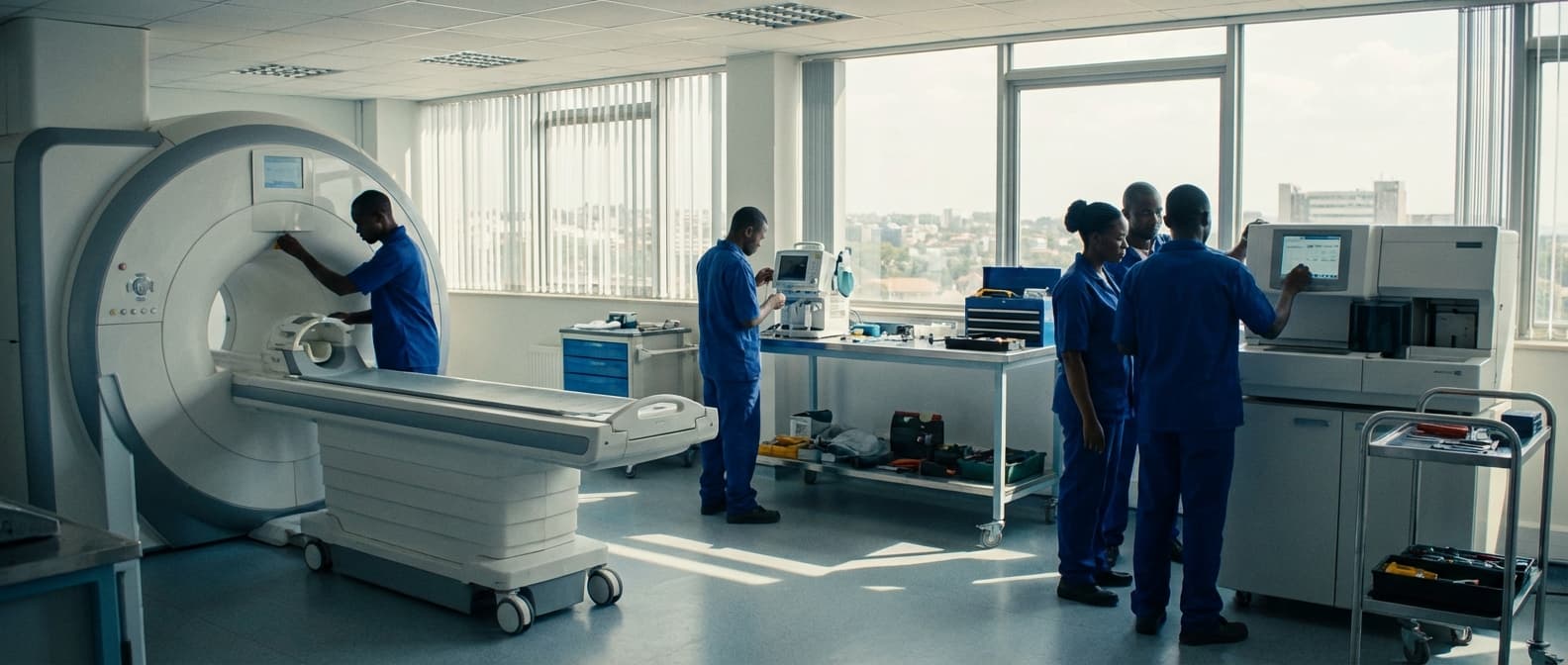
Uptime, Downtime & Root-Cause Analysis Reporting Service in Eritrea
Engineering Excellence & Technical Support
Uptime, Downtime & Root-Cause Analysis Reporting Service High-standard technical execution following OEM protocols and local regulatory frameworks.
Proactive Uptime Monitoring & Alerting
Leverage advanced SNMP and API integrations to continuously monitor critical infrastructure and services in Eritrea, providing real-time uptime dashboards and instant alerts on deviations, minimizing business impact.
Granular Downtime Tracking & Impact Assessment
Automated capture of downtime events with precise timestamps and affected service details. Our reporting service provides comprehensive downtime analysis, quantifying business impact and identifying recurring patterns for strategic mitigation.
Data-Driven Root Cause Analysis (RCA) & Remediation
Aggregate logs, event data, and performance metrics to perform rapid, accurate root cause analysis of incidents. Generate detailed RCA reports with actionable insights and recommended remediation steps to prevent future occurrences and improve system resilience.
What Is Uptime, Downtime & Root-cause Analysis Reporting Service In Eritrea?
Uptime, Downtime, and Root-Cause Analysis (RCA) Reporting Service in Eritrea refers to a specialized offering designed to monitor, document, and analyze the operational availability and unavailability of critical IT systems, network infrastructure, and business processes within organizations operating in Eritrea. This service quantifies the periods during which systems are accessible and functional (uptime) and those when they are inaccessible or malfunctioning (downtime). Crucially, it extends to a rigorous investigation of the underlying causes of any unplanned downtime, aiming to prevent recurrence. The service typically involves automated monitoring tools, manual incident logging, data aggregation, performance metric analysis, and detailed reporting with actionable insights.
| Who Needs It | Typical Use Cases | |||||||
|---|---|---|---|---|---|---|---|---|
| Businesses reliant on digital infrastructure: Any organization whose operations depend on the consistent availability of IT systems, applications, and network connectivity. | Critical Service Providers: Telecommunication companies, financial institutions, healthcare providers, and government agencies requiring high availability for their services. | E-commerce Platforms: Online retailers needing uninterrupted access for transactions and customer engagement. | Cloud Service Providers and Data Centers: Entities hosting applications and data for others, where service level agreements (SLAs) mandate specific uptime guarantees. | IT Operations and Management Teams: Responsible for maintaining the health, performance, and availability of IT infrastructure. | Risk Management and Compliance Officers: Ensuring adherence to internal policies and external regulations regarding system availability and data integrity. | System Administrators and Network Engineers: Directly involved in troubleshooting and resolving downtime incidents. | ||
| Network Outage Investigation: Analyzing the cause of prolonged internet or internal network disruptions. | Application Server Failure Diagnosis: Determining why a critical business application became unresponsive. | Database Performance Degradation Analysis: Identifying factors leading to slow query execution or data access failures. | Cloud Infrastructure Availability Tracking: Monitoring the uptime of hosted services and identifying performance bottlenecks. | Scheduled Maintenance Impact Assessment: Evaluating the actual downtime incurred during planned maintenance windows and comparing it to estimates. | Security Incident Response: Correlating system downtime with potential security breaches and their impact. | Capacity Planning and Optimization: Using historical downtime data to inform infrastructure upgrades and resource allocation decisions. | SLA Compliance Reporting: Demonstrating adherence to agreed-upon uptime targets to clients or stakeholders. | Disaster Recovery and Business Continuity Planning: Validating the effectiveness of DR/BC strategies through post-incident analysis. |
Key Components of Uptime, Downtime & RCA Reporting Service
- Uptime Monitoring: Continuous or periodic verification of system and service availability.
- Downtime Incident Management: Recording, categorizing, and tracking all instances of service disruption.
- Performance Metrics Collection: Gathering data on latency, throughput, error rates, and resource utilization.
- Root-Cause Analysis (RCA): Systematic investigation to identify the fundamental reasons for system failures.
- Impact Assessment: Evaluating the business consequences of downtime incidents.
- Reporting and Dashboards: Generation of regular reports and real-time dashboards visualizing availability, incidents, and RCA findings.
- Trend Analysis: Identifying patterns in downtime to predict and mitigate future issues.
- Recommendations for Improvement: Providing actionable steps to enhance system resilience and prevent future failures.
Who Needs Uptime, Downtime & Root-cause Analysis Reporting Service In Eritrea?
In Eritrea, ensuring the smooth operation of critical infrastructure and services is paramount for economic growth and societal well-being. Uptime, Downtime, and Root-Cause Analysis (RCA) Reporting services are essential for organizations that rely on consistent and reliable performance of their technological systems. These services help proactively identify, diagnose, and resolve issues, minimizing disruptions and optimizing operational efficiency.
| Target Customer Sector | Key Departments/Functions |
|---|---|
| Government Agencies | IT Departments (Network Operations, System Administration), Infrastructure Management, Public Services Delivery Units, Disaster Management Agencies |
| Telecommunications Companies | Network Operations Center (NOC), Service Assurance, Technical Support, Infrastructure Engineering, Operations |
| Financial Institutions (Banks, Microfinance Institutions) | IT Operations, Core Banking System Support, Network Security, Fraud Detection & Prevention, Branch Operations Support |
| Healthcare Providers (Hospitals, Clinics) | IT Departments, Biomedical Engineering, Patient Records Management, Diagnostic Imaging Services, Pharmacy Operations |
| Transportation & Logistics Sector (Ports, Airports, Railways) | Operations Control Centers, IT Departments, Fleet Management, Supply Chain Management, Security Operations |
| Energy & Utilities Companies (Electricity, Water) | Operations & Control Rooms, IT Infrastructure Management, Field Operations Support, Customer Service |
| Mining & Industrial Operations | Production Control, Plant Operations, IT/OT (Operational Technology) Support, Maintenance Departments, Safety & Security |
| Educational Institutions (Universities, Colleges) | IT Services, Academic Systems Administration, Research & Development Facilities, Student Services |
| Large Enterprises (Across sectors) | IT Management, Operations Management, Business Continuity Planning, Project Management Offices |
Target Customers & Departments in Eritrea Requiring Uptime, Downtime & Root-Cause Analysis Reporting Services
- Government Agencies
- Telecommunications Companies
- Financial Institutions
- Healthcare Providers
- Transportation & Logistics Sector
- Energy & Utilities Companies
- Mining & Industrial Operations
- Educational Institutions
- Large Enterprises
Uptime, Downtime & Root-cause Analysis Reporting Service Process In Eritrea
This document outlines the workflow for the Uptime, Downtime & Root-Cause Analysis (RCA) Reporting Service Process in Eritrea. This service is designed to help organizations in Eritrea understand and improve the reliability of their systems and infrastructure by systematically tracking uptime, identifying downtime events, and performing thorough root-cause analysis.
| Stage | Description | Key Activities | Deliverables/Outcomes | Responsible Parties |
|---|---|---|---|---|
| Inquiry & Service Request | Initial contact and expression of need. | Contact initiation, preliminary discussion of needs. | Understanding of client's general requirements. | Client, Service Provider |
| Needs Assessment & Proposal | Detailed understanding of client's environment and requirements. | Infrastructure review, requirement gathering, scope definition, proposal creation. | Detailed proposal document, cost estimation. | Service Provider, Client |
| Service Agreement & Onboarding | Formalizing the service relationship and setting up operations. | Contract negotiation and signing, system access setup, agent installation (if needed), communication channel setup. | Signed Service Agreement, operational monitoring environment. | Client, Service Provider |
| Monitoring & Data Collection | Continuous observation of system performance and availability. | Real-time uptime tracking, performance metric collection, log gathering. | Raw performance data, uptime statistics, event logs. | Service Provider |
| Downtime Event Notification & Triage | Identifying and assessing the impact of downtime. | Alert triggering, incident severity assessment, initial client notification. | Downtime alerts, preliminary incident assessment. | Service Provider |
| Root-Cause Analysis (RCA) | Investigating the underlying reasons for downtime. | Log analysis, data correlation, diagnostic testing, root cause identification. | Identified root cause(s) of downtime. | Service Provider |
| Reporting & Documentation | Communicating findings and analysis to the client. | Compiling downtime reports, generating regular performance reports, documenting RCA findings. | Uptime reports, Downtime Incident Reports with RCA, actionable recommendations. | Service Provider |
| Review & Feedback | Discussing reports and gathering client input. | Report presentation, Q&A sessions, feedback collection. | Client understanding of incidents, identified areas for improvement, refined service requirements. | Service Provider, Client |
| Implementation & Continuous Improvement | Acting on recommendations to enhance reliability. | Implementing preventative measures (by client), ongoing monitoring refinement, process adaptation. | Improved system reliability, reduced future downtime incidents. | Client, Service Provider |
| Service Renewal/Termination | Concluding or extending the service engagement. | Performance review, contract negotiation for renewal, termination procedures. | Renewed service contract or conclusion of service. | Client, Service Provider |
Service Workflow: Uptime, Downtime & Root-Cause Analysis Reporting
- 1. Inquiry & Service Request:
- A client (organization) in Eritrea contacts the service provider with a need for Uptime, Downtime, and RCA reporting.
- The inquiry can be through email, phone, or a dedicated online portal.
- Initial discussions clarify the scope of services required (e.g., specific systems, frequency of reporting, types of analysis).
- 2. Needs Assessment & Proposal:
- The service provider conducts a detailed needs assessment with the client to understand their existing infrastructure, monitoring capabilities, and reporting requirements.
- This involves identifying key systems and applications to be monitored, acceptable downtime thresholds, and historical data availability.
- A formal proposal is developed, outlining the scope of work, methodologies, deliverables, timelines, and pricing.
- 3. Service Agreement & Onboarding:
- Upon acceptance of the proposal, a service agreement (contract) is signed.
- The client and service provider engage in an onboarding process.
- This includes setting up access to client systems (read-only where applicable), installing/configuring any necessary monitoring agents, and establishing communication channels.
- 4. Monitoring & Data Collection:
- The service provider deploys and manages monitoring tools to track the uptime of agreed-upon systems and applications.
- This involves continuous real-time monitoring of critical performance indicators.
- When downtime events occur, detailed logs and metrics are automatically captured.
- 5. Downtime Event Notification & Triage:
- Upon detection of a downtime event, an alert is triggered.
- The service provider's team triages the incident to determine its severity and potential impact.
- Initial communication with the client regarding the detected downtime.
- 6. Root-Cause Analysis (RCA):
- A dedicated RCA team investigates the downtime event.
- This involves analyzing logs, system performance data, network traffic, and any relevant configuration changes.
- Techniques may include '5 Whys', fishbone diagrams, or other structured RCA methodologies.
- The goal is to identify the underlying cause of the downtime, not just the symptoms.
- 7. Reporting & Documentation:
- A comprehensive report is generated for each downtime incident.
- This report typically includes:
- **Executive Summary:** High-level overview of the incident.- **Incident Details:** Timestamp, duration, affected systems, impact assessment.- **Root Cause:** Detailed explanation of the identified cause.- **Resolution Steps:** Actions taken to restore service.- **Preventative Measures:** Recommendations to avoid recurrence.- Regular uptime and performance reports are also provided based on the agreed frequency.
- 8. Review & Feedback:
- The generated reports are shared with the client.
- A review meeting is scheduled to discuss the findings, recommendations, and address any client queries.
- Client feedback is collected to refine the service and reporting process.
- 9. Implementation of Recommendations & Continuous Improvement:
- The client, in collaboration with the service provider, may implement the recommended preventative measures.
- The service provider continues to monitor systems and adapt their RCA process based on learnings and feedback.
- This iterative process drives continuous improvement in system reliability.
- 10. Service Renewal/Termination:
- At the end of the service agreement term, the client can choose to renew the contract or terminate the service.
- A final review of service performance may be conducted.
Uptime, Downtime & Root-cause Analysis Reporting Service Cost In Eritrea
Reporting on Uptime, Downtime, and conducting Root-Cause Analysis (RCA) for IT infrastructure is crucial for businesses in Eritrea to ensure operational continuity and identify systemic issues. The cost of such services can vary significantly based on several factors. These services typically involve monitoring tools, expert analysis, and detailed reporting, all of which contribute to the overall expense. In Eritrea, as with many developing economies, local currency fluctuations and the availability of specialized expertise can also play a significant role in pricing. Businesses should consider the potential cost savings from preventing downtime and improving system reliability when evaluating these services.
| Service Type | Description | Estimated Price Range (Eritrean Nakfa - ERN) | Notes |
|---|---|---|---|
| Basic Uptime Monitoring & Reporting | Periodic checks on server/service availability, basic uptime percentage reports. | 3,000 - 8,000 ERN per month | Suitable for small businesses with simple infrastructure. May be automated with limited human analysis. |
| Comprehensive Uptime & Downtime Reporting | Continuous monitoring of various infrastructure components, detailed uptime/downtime reports with incident logs. | 7,000 - 20,000 ERN per month | For businesses with moderate IT complexity. Includes more granular data and basic incident categorization. |
| Root-Cause Analysis (Per Incident) | Investigation of a specific downtime incident to identify the underlying cause, recommendations for prevention. | 5,000 - 15,000 ERN per incident | Cost depends on incident complexity, required investigation depth, and urgency. May include a retainer for ongoing RCA support. |
| Proactive RCA & Reliability Improvement Service | Regular analysis of historical downtime data, identification of recurring issues, strategic recommendations for system hardening and reliability enhancement. | 15,000 - 40,000+ ERN per month | Targeted at larger enterprises or businesses with a high focus on IT stability. Involves dedicated analyst time and strategic planning. |
| Managed IT Monitoring & RCA Service | Full outsourcing of IT monitoring, uptime/downtime reporting, and proactive RCA as part of a broader managed IT service package. | 25,000 - 70,000+ ERN per month | Comprehensive solution for businesses seeking to offload IT operational management. Pricing is highly dependent on the overall IT managed services agreement. |
Key Factors Influencing Uptime, Downtime & RCA Reporting Service Costs in Eritrea
- Scope of Services: The depth and breadth of monitoring (e.g., individual servers vs. entire network, specific applications vs. all systems), the frequency of reporting, and the level of detail required in RCA reports will directly impact cost.
- Complexity of Infrastructure: Larger and more complex IT environments with diverse technologies (servers, networks, cloud services, applications) will naturally incur higher reporting and RCA costs due to the increased effort in monitoring and analysis.
- Duration of Monitoring: Whether services are required for a short-term project or ongoing, continuous monitoring will affect the pricing model (e.g., one-time fee vs. recurring subscription).
- Service Provider Expertise & Reputation: Experienced providers with a proven track record in IT reliability and RCA may command higher fees, reflecting their specialized knowledge and the quality of their insights.
- Technology & Tools Used: The sophistication of the monitoring and analysis tools employed by the service provider can influence costs. Proprietary or advanced tools might lead to higher service fees.
- Data Volume & Storage: The amount of data generated by monitoring systems and the duration for which it needs to be stored for historical analysis can add to costs.
- Reporting Customization: The need for highly customized reports tailored to specific business metrics or stakeholder requirements can increase the effort and thus the cost.
- Emergency vs. Scheduled Services: Rapid, on-demand RCA for critical outages will likely be priced higher than routine, scheduled analysis.
- Location & Overhead: While difficult to quantify specifically for Eritrea, the operational costs of local service providers, including staff salaries and office overhead, will be reflected in their pricing.
- Contractual Terms: Long-term contracts might offer discounted rates compared to short-term engagements.
Affordable Uptime, Downtime & Root-cause Analysis Reporting Service Options
Our Uptime, Downtime & Root-Cause Analysis Reporting Service offers a cost-effective solution for businesses of all sizes to gain critical insights into their system performance. We understand that budget constraints are a major concern, which is why we've developed flexible value bundles and implemented strategic cost-saving measures. By leveraging our service, you can proactively identify and resolve issues, minimize costly downtime, and optimize your IT infrastructure without breaking the bank. Our tiered service levels ensure you only pay for the features and support you truly need, making advanced monitoring and analysis accessible and affordable.
| Value Bundle | Description | Includes | Price Range (Monthly) | Cost-Saving Strategy |
|---|---|---|---|---|
| Basic Monitoring | Essential uptime tracking and basic downtime alerts. | Uptime Status, Downtime Alerts, Basic Event Logs | $50 - $150 | Ideal for small businesses or non-critical systems, focusing on core needs. |
| Standard Insight | Enhanced reporting with initial root-cause suggestions and performance trends. | All Basic Features + Downtime Duration, Incident Summary, Trend Analysis | $150 - $400 | Balances comprehensive reporting with cost-effectiveness, suitable for most SMEs. |
| Advanced Analytics | Full-featured root-cause analysis, proactive recommendations, and detailed performance metrics. | All Standard Features + Automated RCA, Predictive Insights, Customizable Reports, SLA Tracking | $400 - $1000+ | For businesses requiring deep-dive analysis and proactive optimization, offering significant ROI through downtime reduction. |
| Custom Enterprise | Tailored solutions for complex environments with specific integration and reporting requirements. | Bespoke Feature Set, Dedicated Account Manager, API Access | Contact Us for Quote | Volume discounts and tailored feature sets ensure maximum value and efficiency for large organizations. |
Key Features & Benefits of Our Reporting Service
- Comprehensive uptime monitoring across your entire infrastructure.
- Detailed downtime reporting with incident timestamps and durations.
- Automated root-cause analysis to quickly pinpoint the source of issues.
- Actionable insights and recommendations for performance improvement.
- Customizable reporting dashboards and alert thresholds.
- Scalable solutions to grow with your business needs.
- Dedicated support for efficient issue resolution.
- Proactive threat detection and prevention capabilities.
Verified Providers In Eritrea
Finding reliable and certified healthcare providers in Eritrea can be a challenge. Franance Health has established itself as a premier network, offering a rigorous vetting process that ensures its affiliated providers meet the highest standards of care. This dedication to quality makes Franance Health a trusted name and their credentialed providers the best choice for your healthcare needs.
| Provider Type | Key Credentials Verified | Benefits of Choosing Franance Health Verified Providers |
|---|---|---|
| General Practitioners | Medical Degree, Licensure, Board Certification (if applicable), Clean Disciplinary Record | Reliable primary care, accurate diagnoses, effective treatment plans, continuity of care. |
| Specialists (e.g., Cardiologists, Dermatologists, Surgeons) | Advanced Medical Degree, Fellowship Training, Board Certification in Specialty, Extensive Clinical Experience | Expert diagnosis and treatment for complex conditions, access to cutting-edge medical interventions. |
| Hospitals and Clinics | Accreditation from recognized bodies, Compliance with Health Regulations, State-of-the-Art Equipment, Qualified Medical Staff | Safe and sterile environment, comprehensive diagnostic and treatment facilities, coordinated care delivery. |
| Diagnostic Laboratories | Licensure, Quality Assurance Programs, Certified Technicians, Advanced Diagnostic Technology | Accurate and timely lab results, reliable diagnostic information for effective treatment. |
Why Franance Health Credentials Matter:
- Stringent Verification Process: Franance Health employs a comprehensive evaluation of medical professionals, examining their qualifications, experience, and adherence to ethical practices.
- Commitment to Excellence: The network is dedicated to partnering with providers who demonstrate a consistent commitment to patient well-being and superior medical outcomes.
- Access to Specialized Care: Through its network, Franance Health connects patients with highly skilled specialists across various medical disciplines.
- Enhanced Patient Trust: The Franance Health seal of approval provides an added layer of confidence for individuals seeking medical attention.
- Continuous Quality Improvement: Franance Health actively monitors and supports its providers to ensure ongoing adherence to best practices and evolving medical knowledge.
Scope Of Work For Uptime, Downtime & Root-cause Analysis Reporting Service
This Scope of Work (SOW) outlines the requirements for a Uptime, Downtime & Root-Cause Analysis (RCA) Reporting Service. The service aims to provide comprehensive, accurate, and timely reporting on system availability, service disruptions, and their underlying causes. This ensures continuous improvement in system reliability and performance.
| Component | Technical Deliverable | Standard Specification |
|---|---|---|
| Uptime Monitoring | Real-time Uptime Dashboard | Web-based dashboard displaying current system uptime percentage for critical services. Metrics refreshed at least every 60 seconds. |
| Uptime Monitoring | Historical Uptime Reports | Monthly and quarterly reports detailing uptime percentages for each monitored service, broken down by component. Minimum 99.9% uptime target for critical services. |
| Downtime Monitoring | Downtime Alerts | Automated email and/or SMS notifications within 5 minutes of confirmed downtime for critical services. Alerts to include service name, timestamp, and estimated impact. |
| Downtime Monitoring | Downtime Incident Log | A centralized, searchable log of all downtime incidents, including duration, impact, affected systems, and initial assessment. Log updated in near real-time. |
| Root-Cause Analysis (RCA) | Formal RCA Reports | For any downtime exceeding 30 minutes, a formal RCA report submitted within 48 hours of service restoration. Reports to include: incident summary, timeline, root cause, impact assessment, resolution steps, and preventative actions. |
| Root-Cause Analysis (RCA) | RCA Meeting Facilitation | Facilitation of post-RCA review meetings with relevant stakeholders to discuss findings and ensure accountability for preventative actions. |
| Reporting | Monthly Performance Summary | A consolidated monthly report summarizing uptime, downtime incidents, total downtime hours, mean time between failures (MTBF), mean time to repair (MTTR), and key RCA findings and trends. |
| Reporting | Trend Analysis Reports | Quarterly or ad-hoc reports analyzing trends in downtime incidents, identifying recurring issues, and suggesting proactive measures. |
| Data Integrity | Data Validation & Accuracy | All reported metrics and incident data to be cross-referenced with source monitoring tools and logs. Data accuracy to be verified with a confidence level of 99.5%. |
| Data Security | Secure Data Storage & Access | All reporting data and logs to be stored securely, adhering to industry-standard encryption and access control protocols. Access restricted to authorized personnel. |
Service Objectives
- Accurate and real-time monitoring of system uptime and downtime.
- Timely identification and notification of service disruptions.
- Thorough root-cause analysis for all significant downtime events.
- Clear and actionable recommendations for preventing future occurrences.
- Regular reporting on system availability metrics and incident trends.
- Contribution to the overall improvement of system stability and performance.
Service Level Agreement For Uptime, Downtime & Root-cause Analysis Reporting Service
This Service Level Agreement (SLA) defines the performance standards and remedies for the Uptime, Downtime & Root-Cause Analysis Reporting Service provided by [Your Company Name] (hereinafter referred to as "Provider") to [Client Name] (hereinafter referred to as "Customer"). This SLA aims to ensure the reliable availability of the reporting service and timely communication regarding any service disruptions.
1. Service Description:
The Uptime, Downtime & Root-Cause Analysis Reporting Service is designed to provide the Customer with accurate and timely reports on the operational status of their specified systems, including uptime metrics, documented downtime incidents, and comprehensive root-cause analyses for any service interruptions.
2. Uptime Guarantee:
- Definition of Uptime: Uptime is defined as the percentage of time the Uptime, Downtime & Root-Cause Analysis Reporting Service is available and operational, excluding scheduled maintenance windows and Force Majeure events.
- Guaranteed Uptime: The Provider guarantees a minimum of 99.9% Uptime for the Uptime, Downtime & Root-Cause Analysis Reporting Service, calculated on a monthly basis.
- Exclusions: The following are not considered downtime and are excluded from uptime calculations:
* Scheduled maintenance windows, as communicated in advance.
* Downtime caused by Force Majeure events (e.g., natural disasters, acts of war, widespread internet outages beyond the Provider's control).
* Downtime caused by the Customer's equipment, software, or network configurations.
* Downtime caused by third-party services or applications not managed by the Provider.
3. Downtime Reporting & Incident Management:
- Definition of Downtime: Downtime is defined as the period during which the Uptime, Downtime & Root-Cause Analysis Reporting Service is unavailable to the Customer due to an issue within the Provider's control.
- Incident Notification: The Provider will proactively notify the Customer of any confirmed downtime incident affecting the reporting service via [Notification Method, e.g., email, dedicated portal]. The initial notification will be sent within 15 minutes of the Provider confirming the incident.
- Status Updates: During an active downtime incident, the Provider will provide regular status updates to the Customer. Updates will be provided at a minimum of every 30 minutes until the service is restored or a resolution is provided.
4. Root-Cause Analysis (RCA) Reporting:
- RCA Definition: A Root-Cause Analysis report is a detailed document outlining the underlying reason for a downtime incident, the steps taken to resolve it, and any preventative measures implemented to avoid recurrence.
- RCA Submission Timeline: For downtime incidents exceeding 60 minutes, the Provider will provide a preliminary Root-Cause Analysis report within 24 hours of the service being restored. A comprehensive RCA report, including detailed technical findings and preventative actions, will be submitted within 72 hours of the service being restored.
- RCA Content: The RCA report will include, but not be limited to:
* Description of the incident.
* Timeline of the incident.
* Identified root cause(s).
* Actions taken to resolve the incident.
* Recommendations for preventing future occurrences.
5. Response Times for Support Inquiries (Related to the Reporting Service):
- Critical Incidents (Service Downtime): Response time for critical incidents impacting the reporting service will be within 15 minutes for initial acknowledgment and investigation.
- High Priority Incidents (Performance Degradation): Response time for high-priority incidents causing significant performance degradation will be within 1 hour for initial acknowledgment and investigation.
- Medium Priority Incidents (Reporting Errors/Inaccuracies): Response time for medium-priority incidents related to reporting errors or inaccuracies will be within 4 business hours for initial acknowledgment and investigation.
- Low Priority Incidents (General Inquiries/Requests): Response time for low-priority incidents and general inquiries will be within 1 business day for initial acknowledgment and investigation.
6. Service Credits (Optional - Include if applicable):
- If the guaranteed uptime of 99.9% is not met in a given calendar month, the Customer may be eligible for service credits as outlined in [Refer to a separate Service Credit policy document or detail here].
7. Reporting Frequency:
- The Customer will receive regular uptime and downtime reports on a [Weekly/Monthly] basis. These reports will summarize the service availability and any documented incidents during the reporting period.
8. Review and Modification:
- This SLA will be reviewed and may be modified by mutual agreement of both parties at least annually, or as circumstances require. Any modifications must be in writing and signed by authorized representatives of both the Provider and the Customer.
9. Governing Law:
- This SLA shall be governed by and construed in accordance with the laws of [Jurisdiction].
10. Definitions:
- Force Majeure: An event or circumstance beyond the reasonable control of a party, which prevents that party from fulfilling its obligations under this agreement.
[Provider Company Name]
[Signature]
[Printed Name]
[Title]
[Date]
[Client Company Name]
[Signature]
[Printed Name]
[Title]
[Date]
| Incident Priority | Description | Target Response Time |
|---|---|---|
| Critical | Service Downtime impacting Reporting Service | Within 15 minutes |
| High | Significant Performance Degradation of Reporting Service | Within 1 hour |
| Medium | Reporting Errors or Inaccuracies | Within 4 business hours |
| Low | General Inquiries or Non-Urgent Requests | Within 1 business day |
Key Service Level Objectives
- Guaranteed Uptime: 99.9% (monthly)
- Initial Downtime Notification: Within 15 minutes
- Downtime Status Updates: Every 30 minutes
- Preliminary RCA Report: Within 24 hours of restoration (for downtime > 60 mins)
- Comprehensive RCA Report: Within 72 hours of restoration (for downtime > 60 mins)
- Response Time (Critical Incidents): Within 15 minutes
- Response Time (High Priority): Within 1 hour
- Response Time (Medium Priority): Within 4 business hours
- Response Time (Low Priority): Within 1 business day
- Regular Reporting Frequency: Weekly/Monthly
Frequently Asked Questions

Ready when you are
Let's scope your Uptime, Downtime & Root-Cause Analysis Reporting Service in Eritrea project in Eritrea.

Scaling healthcare logistics and technical systems across the entire continent.