
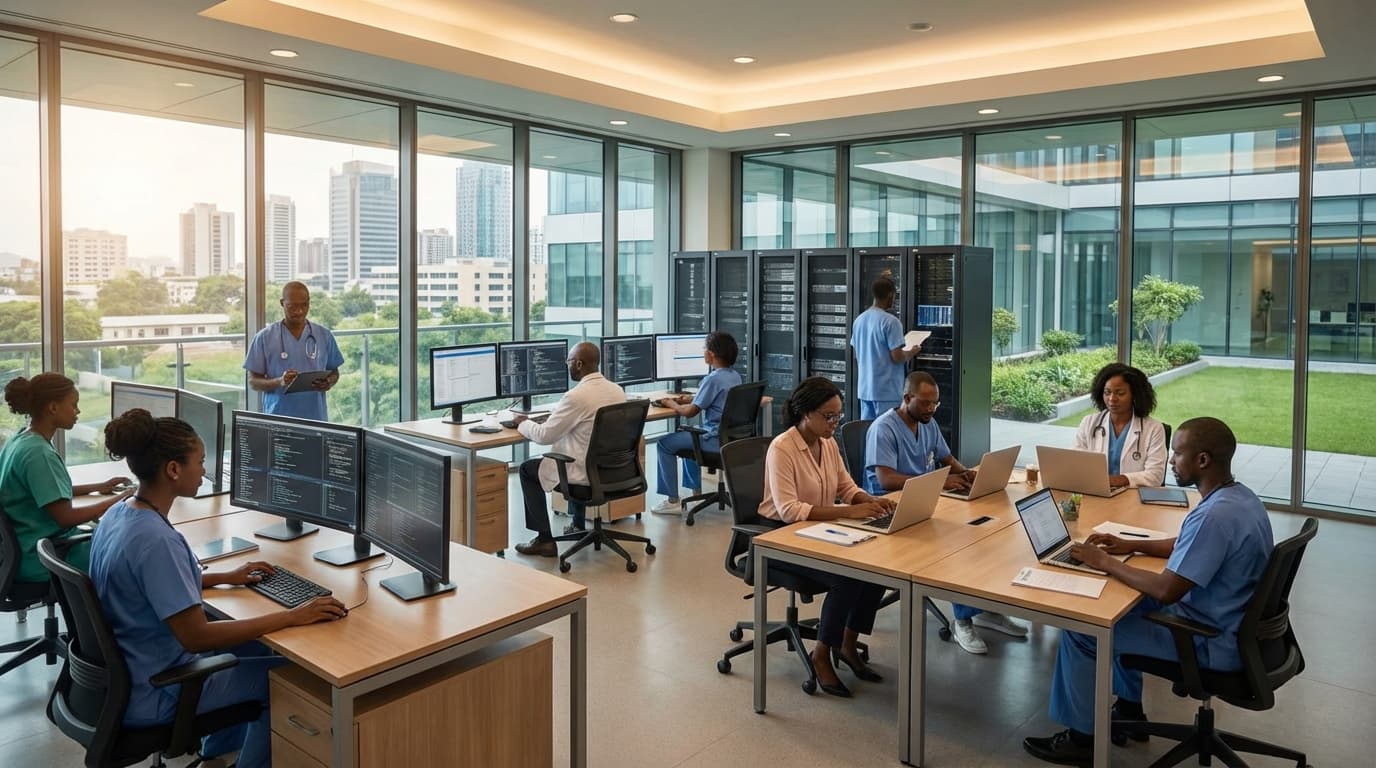
Hospital IT Integration Services in Eritrea
Engineering Excellence & Technical Support
EHR, PACS, RIS and equipment integration High-standard technical execution following OEM protocols and local regulatory frameworks.
Interoperable Healthcare Ecosystems
We architect and implement secure, standardized HL7 and FHIR-compliant integration solutions, enabling seamless data exchange between disparate hospital systems, laboratories, and diagnostic centers across Eritrea. This fosters a unified patient record and improves diagnostic accuracy and care coordination.
Robust Data Security & Compliance
Our integration services prioritize the protection of sensitive patient health information (PHI) by adhering to international security protocols and national data privacy regulations. We implement robust encryption, access controls, and audit trails to ensure data integrity and patient confidentiality within Eritrean healthcare facilities.
Scalable Cloud & Hybrid Integration
Leveraging cloud-native technologies and hybrid architectures, we design flexible and scalable integration platforms that can adapt to the evolving needs of Eritrean hospitals. This enables efficient data management, remote access to critical information, and facilitates the adoption of future digital health initiatives.
What Is Hospital It Integration Services In Eritrea?
Hospital IT Integration Services in Eritrea refers to the strategic implementation and management of interoperable information technology systems within healthcare facilities. This encompasses the seamless connection and data exchange between disparate software applications, hardware devices, and networks, enabling a unified and efficient healthcare information ecosystem. The core objective is to facilitate the secure and timely flow of patient data, administrative information, and operational metrics across the healthcare continuum, thereby enhancing clinical decision-making, operational efficiency, and patient care delivery.
| Who Needs Hospital IT Integration Services? | Typical Use Cases | ||||
|---|---|---|---|---|---|
| Hospitals (Public and Private): To improve patient care coordination, operational efficiency, and data-driven decision-making. | Streamlined patient admission, transfer, and discharge processes across departments. | Real-time access to patient medical history, lab results, and imaging for clinicians at the point of care. | Automated billing and insurance claim processing. | Enhanced data analytics for quality improvement initiatives and public health reporting. | Facilitation of telemedicine services and remote patient monitoring. |
| Clinics and Healthcare Centers: To enable better patient data management and referral coordination. | Seamless sharing of patient records with referring hospitals or specialists. | Improved efficiency in managing appointments and patient flow. | Centralized management of laboratory and diagnostic test results. | ||
| Government Health Ministries and Agencies: For national health data aggregation, policy making, and disease surveillance. | Creation of national health registries and databases. | Monitoring of public health trends and disease outbreaks. | Evaluation of healthcare service delivery and resource allocation. | ||
| Medical Research Institutions: To facilitate access to anonymized patient data for research purposes. | Creation of de-identified datasets for clinical research. | Support for longitudinal studies and cohort analysis. | |||
| IT Vendors and System Integrators: As partners in developing and deploying integrated healthcare solutions. | Development and customization of interoperable healthcare software. | Implementation and support of integrated IT infrastructures. |
Key Components of Hospital IT Integration Services:
- Electronic Health Record (EHR) Interoperability: Connecting different EHR systems or modules to enable comprehensive patient data sharing, regardless of the point of care.
- Picture Archiving and Communication Systems (PACS) Integration: Integrating imaging systems with EHRs and other clinical platforms for streamlined access to diagnostic images.
- Laboratory Information System (LIS) Integration: Connecting LIS with EHRs and other departmental systems to automate test ordering, result reporting, and data analysis.
- Radiology Information System (RIS) Integration: Integrating RIS with EHRs and PACS for improved workflow management in radiology departments.
- Pharmacy Information System (PIS) Integration: Connecting PIS with EHRs for automated medication reconciliation, prescription management, and adverse drug reaction monitoring.
- Billing and Revenue Cycle Management (RCM) Integration: Linking clinical systems with financial and administrative platforms to ensure accurate patient billing and efficient revenue collection.
- Medical Device Integration: Connecting medical devices (e.g., vital signs monitors, ventilators) to EHRs for real-time data capture and patient monitoring.
- Telemedicine and Remote Monitoring Integration: Establishing secure connections for remote patient consultations and data transmission.
- Data Warehousing and Analytics Integration: Consolidating data from various systems into a central repository for reporting, analytics, and population health management.
- Identity and Access Management (IAM) Integration: Implementing robust authentication and authorization mechanisms across integrated systems to ensure data security and privacy.
- Middleware and API Development: Utilizing middleware solutions and Application Programming Interfaces (APIs) to facilitate communication and data transformation between diverse systems.
- Network Infrastructure and Security: Ensuring a robust and secure network foundation to support the demands of integrated IT systems.
Who Needs Hospital It Integration Services In Eritrea?
In Eritrea, the need for robust Hospital IT Integration Services is driven by a desire to modernize healthcare delivery, improve operational efficiency, and ultimately enhance patient care. These services are crucial for various healthcare facilities, from large public hospitals to specialized clinics and potentially emerging private healthcare providers. The primary goal is to create a seamless flow of information between disparate IT systems, enabling better data management, enhanced diagnostic capabilities, and more efficient administrative processes.
| Customer Type | Key Departments Involved | Primary Benefits of Integration |
|---|---|---|
| Government Hospitals | All departments (Clinical, Lab, Pharmacy, Admin, Radiology) | Improved patient care, operational efficiency, national health data management, resource optimization. |
| Ministry of Health | Public Health, Health Information Management, Policy Planning | Enhanced disease surveillance, data-driven policy making, performance monitoring. |
| Specialized Health Centers | Specific clinical departments, Lab, Pharmacy, Admin | Streamlined specialized workflows, improved data accuracy for focused care, better patient outcomes. |
| Private Healthcare Providers | Clinical, Admin, Billing, Pharmacy, Lab | Competitive service delivery, efficient patient management, compliance, enhanced patient experience. |
| Medical Training Institutions | Clinical, Research, IT, Administration | Facilitated research, enhanced educational tools, training on modern digital health practices. |
Target Customers and Departments for Hospital IT Integration Services in Eritrea
- {"items":["Government Hospitals: As the primary providers of healthcare, these facilities are prime candidates for IT integration to improve national health data collection, resource allocation, and the standardization of care across the country. Examples include the Orotta Referral Hospital and other regional hospitals.","Ministry of Health (MoH) and Regional Health Bureaus: These administrative bodies can leverage integrated IT systems for public health surveillance, disease outbreak tracking, health policy development, and monitoring the performance of healthcare facilities.","Specialized Health Centers: Facilities focusing on specific areas like maternal and child health, infectious diseases, or diagnostics can benefit from integrated systems that streamline their unique workflows and data management needs.","Emerging Private Healthcare Providers: As private healthcare options grow in Eritrea, IT integration will be essential for them to offer competitive services, manage patient records efficiently, and comply with any emerging healthcare regulations.","Medical Training and Research Institutions: Integrating IT systems in teaching hospitals can facilitate research, improve educational resource access, and train future healthcare professionals on modern digital healthcare practices."],"title":"Target Customers"}
- {"items":["Clinical Departments (e.g., Cardiology, Oncology, Pediatrics, General Medicine): Integration allows for easier access to patient history, diagnostic imaging, lab results, and treatment plans, leading to more informed clinical decisions and reduced medical errors. This includes seamless data sharing between doctors, nurses, and specialists.","Radiology and Imaging Departments: Connecting Picture Archiving and Communication Systems (PACS) with Electronic Health Records (EHRs) ensures that radiologists can easily access patient information and that reports are immediately available to referring physicians.","Laboratory Departments: Integrating Laboratory Information Systems (LIS) with EHRs automates the flow of test results, reducing manual data entry errors and speeding up diagnosis. This also facilitates quality control and inventory management of lab supplies.","Pharmacy Departments: Connecting pharmacy management systems with EHRs allows for accurate prescription management, drug interaction checks, inventory control, and streamlined medication dispensing, improving patient safety and reducing waste.","Emergency Departments (ED): Rapid access to patient information, including allergies and previous conditions, is critical in emergency situations. IT integration can significantly reduce the time it takes to assess and treat patients in the ED.","Administrative and Billing Departments: Integrating patient registration, scheduling, billing, and insurance systems improves operational efficiency, reduces administrative overhead, and ensures accurate financial reporting. This also aids in patient flow management.","Medical Records Department: Centralized and integrated digital medical records enhance data security, improve accessibility for authorized personnel, and facilitate efficient retrieval of patient information for continuity of care and audits.","IT and Biomedical Engineering Departments: These departments will be responsible for managing and maintaining the integrated systems. Integration services can help them consolidate their infrastructure, improve monitoring capabilities, and streamline troubleshooting.","Public Health Surveillance Units: Integrating data from various facilities allows for real-time monitoring of disease outbreaks, patient demographics, and healthcare utilization patterns, enabling proactive public health interventions."],"title":"Key Departments Benefiting from Integration"}
Hospital It Integration Services Process In Eritrea
This document outlines the typical workflow for Hospital IT Integration Services in Eritrea, from the initial inquiry to the final execution and post-implementation support. The process is designed to ensure a smooth, efficient, and successful integration of IT systems within healthcare facilities, addressing unique challenges and requirements of the Eritrean healthcare landscape.
| Stage | Description | Key Activities | Responsible Parties | Deliverables/Outcomes |
|---|---|---|---|---|
| The process begins when a healthcare facility expresses interest in IT integration services. This stage involves understanding their general needs and outlining potential solutions. | Initial contact, understanding of basic needs, introduction to services, preliminary discussion of goals. | Healthcare Facility (Client), IT Integration Service Provider | Understanding of client's general requirements, identification of potential fit, agreement for further assessment. |
| A thorough analysis of the hospital's current IT infrastructure, existing systems, workflows, and specific integration needs. This is crucial for tailoring the solution. | Site visits, interviews with stakeholders (clinicians, administrators, IT staff), documentation review, workflow analysis, identification of integration points (EHR, PACS, LIS, etc.), defining technical and functional requirements. | IT Integration Service Provider, Healthcare Facility Staff | Detailed requirements document, gap analysis report, understanding of existing infrastructure and challenges. |
| Based on the gathered requirements, the IT service provider designs a comprehensive integration solution and develops a formal proposal. | Designing the architecture of integrated systems, selecting appropriate hardware and software, outlining integration methodologies, estimating timelines and resources, developing a detailed project plan, cost estimation, and proposal writing. | IT Integration Service Provider (Technical Team, Project Managers) | Comprehensive integration solution design, detailed project proposal (including scope, timeline, budget, and deliverables). |
| The hospital, in consultation with the IT provider, procures the necessary hardware, software, and licenses, and selects any third-party vendors if required. | Review and approval of proposal, budget allocation, negotiation with vendors (if applicable), purchase of hardware, software, and licenses. | Healthcare Facility (Procurement Department), IT Integration Service Provider | Acquisition of all required IT components and software licenses. |
| The procured hardware and software are installed and configured according to the designed solution. | Physical installation of servers, network devices, workstations; installation and configuration of operating systems and core software; setting up databases; network configuration. | IT Integration Service Provider (Technical Team) | Fully installed and configured IT infrastructure and core software. |
| Existing data from legacy systems is migrated to the new integrated platform, and interfaces between different systems are established. | Data cleansing and validation, data mapping, executing data migration scripts, developing and testing APIs and middleware for system interoperability, integrating with existing hospital workflows. | IT Integration Service Provider (Data Specialists, Developers) | Migrated and validated data, functional interfaces between integrated systems. |
| Rigorous testing is conducted to ensure all integrated systems function correctly, data integrity is maintained, and performance meets expectations. | Unit testing, integration testing, system testing, user acceptance testing (UAT), performance testing, security testing, bug fixing. | IT Integration Service Provider, Healthcare Facility Staff (Testers) | Tested and validated integrated system, documented test results, identified and resolved defects. |
| Hospital staff are trained on how to use the new integrated systems effectively. | Developing training materials, conducting training sessions (classroom, on-the-job), providing user manuals and guides, addressing user queries and concerns. | IT Integration Service Provider (Trainers), Healthcare Facility Staff (End-Users) | Trained and empowered users, increased user confidence and adoption rates. |
| The integrated IT systems are officially launched and made operational within the hospital. | Final system checks, phased or full deployment, communication to all stakeholders, initial operational support. | IT Integration Service Provider, Healthcare Facility Management and Staff | Live and operational integrated IT system, commencement of production use. |
| Ongoing support and maintenance are provided to ensure the continued smooth operation of the integrated systems. | Help desk support, troubleshooting, system monitoring, performance tuning, regular updates and patching, proactive maintenance, periodic system reviews. | IT Integration Service Provider (Support Team), Healthcare Facility IT Department | Stable and reliable integrated IT system, ongoing system optimization, minimized downtime, client satisfaction. |
Hospital IT Integration Services Workflow in Eritrea
- Inquiry and Initial Consultation
- Needs Assessment and Requirements Gathering
- Solution Design and Proposal Development
- Procurement and Vendor Selection
- System Installation and Configuration
- Data Migration and Integration
- Testing and Quality Assurance
- Training and User Adoption
- Deployment and Go-Live
- Post-Implementation Support and Maintenance
Hospital It Integration Services Cost In Eritrea
Estimating the cost of Hospital IT Integration Services in Eritrea requires a nuanced understanding of several influencing factors. These services encompass the seamless connection of various hospital systems, including Electronic Health Records (EHR), Picture Archiving and Communication Systems (PACS), Laboratory Information Systems (LIS), billing and administrative software, and medical devices. The objective is to create a unified and efficient digital healthcare ecosystem. Key pricing factors in the Eritrean context include the complexity and scale of the integration, the specific systems involved, the required customization, the vendor's expertise and reputation, the duration of the project, and the availability of local IT talent and infrastructure. Given the developing nature of IT infrastructure and a potentially limited pool of specialized integration vendors in Eritrea, costs can be highly variable. It's crucial to obtain detailed quotes tailored to each hospital's unique requirements. The Eritrean Nakfa (ERN) is the local currency, and pricing will be denominated in this.
| Service Component | Estimated Cost Range (ERN) | Notes |
|---|---|---|
| Initial Consultation & Needs Assessment | 20,000 - 60,000 | Covers understanding requirements, system analysis, and defining scope. |
| System Integration (per system, e.g., EHR, LIS, PACS) | 150,000 - 750,000+ | Highly dependent on system complexity, vendor, and integration method (API, HL7, etc.). |
| Customization & Development | 100,000 - 500,000+ | For bespoke functionalities or bridging gaps between incompatible systems. |
| Data Migration | 50,000 - 300,000+ | Depends on data volume, complexity, and cleansing requirements. |
| Testing & Quality Assurance | 70,000 - 250,000 | Ensuring seamless operation and data integrity across integrated systems. |
| Deployment & Go-Live Support | 60,000 - 200,000 | On-site or remote assistance during the transition phase. |
| Training (User & IT Staff) | 40,000 - 150,000 | Comprehensive training programs tailored to different user groups. |
| Ongoing Maintenance & Support (Annual) | 10% - 20% of Project Cost | Covers bug fixes, updates, and technical assistance. |
| Project Management | 5% - 15% of Total Project Cost | Overseeing the entire integration process. |
| Total Project (Small to Medium Hospital) | 500,000 - 3,000,000+ | This is a broad estimate; a detailed quote is essential. |
| Total Project (Large Hospital / Multiple Sites) | 2,000,000 - 10,000,000+ | Complex integrations will significantly increase costs. This range assumes potential involvement of international expertise. |
Key Pricing Factors for Hospital IT Integration Services in Eritrea
- Complexity and Scale of Integration: The number of systems to be integrated, the volume of data migration, and the intricacy of workflows significantly impact costs.
- Specific Systems Involved: Integrating legacy systems may be more challenging and costly than integrating modern, API-enabled platforms. EHR, PACS, and LIS integrations are often core components.
- Customization Requirements: Off-the-shelf solutions are generally less expensive than custom-built integrations requiring bespoke development and significant adaptation.
- Vendor Expertise and Reputation: Experienced and reputable integration firms, whether local or international with Eritrean operations, may command higher fees due to their proven track record and specialized knowledge.
- Project Duration: Longer integration projects with more extensive testing and deployment phases will naturally incur higher costs.
- Data Migration Volume and Complexity: The amount of historical data to be transferred and its format will affect the effort and tools required.
- Infrastructure Readiness: The existing network, hardware, and security infrastructure of the hospital can influence integration costs. Upgrades may be necessary.
- Training and Support Needs: Comprehensive user training and ongoing technical support are essential components that add to the overall cost.
- Regulatory Compliance: Adhering to any specific Eritrean healthcare data regulations or international standards will influence the integration approach and cost.
- Geographical Location and Accessibility: For vendors requiring on-site presence, travel and logistical costs to different regions within Eritrea can be a factor.
Affordable Hospital It Integration Services Options
Hospital IT integration is crucial for modern healthcare, enabling seamless data flow between disparate systems like Electronic Health Records (EHRs), Picture Archiving and Communication Systems (PACS), laboratory information systems (LIS), and billing platforms. This integration improves patient care, operational efficiency, and data security. However, the cost of comprehensive integration can be a significant barrier for many healthcare organizations. Fortunately, several affordable options and cost-saving strategies exist, including value-based bundles and clever implementation approaches.
| Cost-Saving Strategy | Description | Implementation Tips |
|---|---|---|
| Leverage Open Standards and APIs | Utilizing industry-standard protocols (like HL7, FHIR) and open APIs allows for more flexible and cost-effective integration, reducing reliance on proprietary connectors. | Prioritize vendors that support modern, open standards. Explore open-source integration engines where applicable. |
| Phased Implementation Approach | Break down large integration projects into smaller, manageable phases. This allows for iterative development, testing, and deployment, spreading costs and minimizing initial investment. | Focus on critical integrations first. Gain experience and refine processes with each phase. |
| Cloud-Based Integration Platforms (iPaaS) | Infrastructure-as-a-Service (IaaS) or Integration Platform-as-a-Service (iPaaS) solutions can reduce the need for on-premises hardware and maintenance, offering scalable and pay-as-you-go models. | Evaluate cloud providers' security and compliance certifications. Compare pricing models carefully. |
| Managed Services and Outsourcing | Outsource specific integration tasks or ongoing management to specialized third-party providers. This can be more cost-effective than building and maintaining an in-house team. | Clearly define service level agreements (SLAs). Ensure smooth knowledge transfer. |
| Focus on Interoperability Standards Adoption | Actively participating in and adopting interoperability standards (e.g., FHIR) can create a more cohesive ecosystem, reducing the complexity and cost of point-to-point integrations. | Advocate for standards-based solutions within your organization and with partners. |
| Negotiate Vendor Contracts Wisely | Thoroughly review and negotiate contracts for integration services, software, and hardware. Look for opportunities for bundled discounts, long-term commitments, and performance-based pricing. | Benchmark pricing with other organizations. Don't be afraid to seek multiple quotes. |
| Prioritize Essential Integrations | Instead of trying to integrate everything at once, identify the most critical data flows that will yield the greatest immediate impact on patient care and operational efficiency. | Conduct a thorough needs assessment and ROI analysis for each potential integration. |
Understanding Value Bundles in Hospital IT Integration
- What are Value Bundles? Value bundles are pre-packaged sets of IT integration services designed to address specific needs or functionalities. Instead of paying for individual services à la carte, organizations purchase a bundle at a potentially reduced overall cost, often with a focus on delivering measurable value or outcomes.
- Benefits of Value Bundles:
- Predictable Pricing: Bundles offer clearer upfront cost estimations, aiding budget management.
- Streamlined Procurement: Simplifies the selection and acquisition process.
- Focused Solutions: Tailored to common integration challenges, leading to quicker deployment and problem resolution.
- Potential Cost Savings: Vendors often offer bundled services at a discount compared to individual purchases.
- Guaranteed Outcomes: Some bundles are tied to specific performance metrics or success criteria.
- Common Types of Value Bundles:
- EHR-to-PACS Integration Bundle: Connects patient imaging data to the EHR for a unified view.
- Lab Order and Results Integration Bundle: Automates the flow of lab orders and results between LIS and EHR.
- Patient Portal Integration Bundle: Facilitates secure patient access to their health information.
- Billing and Revenue Cycle Management Integration Bundle: Connects clinical data to financial systems for efficient billing.
- Data Analytics and Reporting Bundle: Integrates data from multiple sources for comprehensive reporting and insights.
Verified Providers In Eritrea
In Eritrea's evolving healthcare landscape, identifying reliable and credentialed medical providers is paramount for individuals seeking quality care. Franance Health has emerged as a distinguished entity, setting a benchmark for excellence through its rigorous credentialing process and commitment to patient well-being. Their verified providers represent the pinnacle of medical expertise and ethical practice, offering a level of trust and assurance that is invaluable in healthcare decisions.
| Why Franance Health Providers Are the Best Choice | Benefits for Patients |
|---|---|
| Unparalleled Expertise: Providers are meticulously vetted for their qualifications and experience. | Access to highly skilled and knowledgeable medical professionals. |
| Commitment to Quality: Adherence to strict ethical and professional standards is mandatory. | Assurance of receiving care that prioritizes patient well-being and safety. |
| Trust and Transparency: Franance Health's verification process builds confidence in provider legitimacy. | Peace of mind knowing you are receiving care from a credentialed and reputable source. |
| Patient-Centered Approach: Focus on ethical practices and respectful patient interaction. | A healthcare experience that is both effective and supportive. |
| Reliable Healthcare Navigation: Franance Health simplifies the process of finding trusted medical services. | Reduced stress and uncertainty in seeking medical attention. |
Key Aspects of Franance Health Credentialing
- Rigorous Verification Process: Franance Health employs a comprehensive vetting system that scrutinizes the educational background, professional licenses, and work history of all affiliated healthcare professionals. This meticulous approach ensures that only the most qualified individuals are recognized.
- Commitment to Ethical Standards: Beyond clinical proficiency, Franance Health prioritizes providers who demonstrate unwavering adherence to ethical medical practices and patient-centered care. This includes a focus on transparent communication, informed consent, and respect for patient autonomy.
- Continuous Professional Development: The credentialing process often involves a commitment from providers to ongoing learning and skill enhancement. This ensures that Franance Health's network remains at the forefront of medical advancements and best practices.
- Patient Safety and Trust: By verifying credentials, Franance Health directly contributes to enhanced patient safety. Knowing that a provider has met stringent standards instills confidence and trust, empowering patients to make informed decisions about their health.
- Access to Specialized Expertise: Franance Health's network often includes a diverse range of specialists. Their credentialing process helps to identify and highlight these specialized skills, making it easier for patients to find the right care for their specific needs.
Scope Of Work For Hospital It Integration Services
This Scope of Work (SOW) outlines the services to be provided by [Vendor Name] (hereinafter referred to as the 'Vendor') to [Hospital Name] (hereinafter referred to as the 'Client') for comprehensive Hospital IT Integration Services. The primary objective is to seamlessly integrate existing and new IT systems, ensuring data interoperability, enhanced operational efficiency, and improved patient care delivery. This SOW details the technical deliverables, standard specifications, project phases, roles and responsibilities, and timelines.
| Technical Deliverable | Description | Standard Specifications/Protocols | Acceptance Criteria |
|---|---|---|---|
| Integration Architecture Document | Detailed blueprint of the integrated IT ecosystem, including system interactions, data flows, security measures, and middleware configurations. | HL7 v2.x/v3, FHIR R4/R5, DICOM, JSON, XML, SOAP, RESTful APIs. ISO 27001 for security. | Approved by Client's IT Steering Committee. Comprehensive and unambiguous documentation. |
| Data Mapping and Transformation Specifications | Document outlining how data elements from different systems will be mapped and transformed to ensure interoperability and data consistency. | HL7 CDA, FHIR profiles, custom mapping rules based on client data dictionaries. | 100% accuracy in data mapping for critical data elements. Successful validation through test data sets. |
| Middleware Configuration and Deployment | Installation, configuration, and deployment of integration engines, message brokers, and APIs to facilitate real-time data exchange. | Specific vendor product documentation (e.g., Mirth Connect, Rhapsody, Apache Kafka), industry best practices for high availability and disaster recovery. | Successful connection between all integrated systems. Message transmission latency below defined thresholds. |
| Interface Development and Testing Reports | Development of interfaces for various clinical and administrative systems (e.g., EMR, LIS, RIS, PACS, Billing). Comprehensive test scripts and results. | HL7 v2.x (ADT, ORM, ORU, etc.), FHIR resources (Patient, Observation, Encounter, etc.), DICOM (C-STORE, C-FIND). | All critical interfaces functional and passing all test cases. Minimal defect rate (less than 2% for critical/major issues). |
| Data Migration Plan and Execution Report | Plan for migrating historical data from legacy systems to new integrated platforms. Report detailing the execution of the migration process. | Data integrity checks, ETL processes, database scripting, downtime minimization strategies. | Successful migration of all specified historical data. Data accuracy verified through post-migration audits. |
| Security Implementation and Audit Report | Implementation of security protocols, access controls, encryption, and audit trails. Report on security compliance and vulnerability assessments. | HIPAA, GDPR, ISO 27001, TLS/SSL encryption, OAuth 2.0, role-based access control (RBAC). | All security requirements met. Successful completion of security audits with no critical vulnerabilities identified. |
| System Performance Monitoring Tools Configuration | Configuration and setup of tools for monitoring the health, performance, and availability of integrated systems. | SNMP, WMI, Prometheus, Grafana, Splunk, vendor-specific monitoring dashboards. | Configured dashboards providing real-time visibility into system performance. Alerts configured for critical events. |
| Training Materials and Session Reports | Development of user and administrator training materials. Documentation of training sessions conducted. | Role-specific training guides, hands-on lab exercises, knowledge transfer checklists. | Positive feedback from trainees. Participants demonstrate proficiency in using integrated systems. |
| Post-Implementation Review and Optimization Plan | Document summarizing the project's success, identifying lessons learned, and outlining recommendations for ongoing system optimization. | KPI dashboards, trend analysis, root cause analysis for recurring issues. | Comprehensive review completed. Actionable recommendations for performance improvement and future enhancements. |
Project Phases and Key Activities
- Phase 1: Discovery and Planning
- Phase 2: Design and Architecture
- Phase 3: Development and Configuration
- Phase 4: Testing and Validation
- Phase 5: Deployment and Go-Live
- Phase 6: Post-Implementation Support and Optimization
Service Level Agreement For Hospital It Integration Services
This Service Level Agreement (SLA) outlines the terms and conditions for the provision of Hospital IT Integration Services by [Provider Name] (hereinafter referred to as "Provider") to [Hospital Name] (hereinafter referred to as "Client"). This SLA defines the expected response times and uptime guarantees for critical integration services, ensuring the seamless and efficient operation of the Client's healthcare IT infrastructure. The objective is to minimize disruptions and maintain high levels of availability for integrated systems, thereby supporting patient care and operational efficiency.
| Service Category | Criticality Level | Uptime Guarantee | Response Time (Initial Acknowledgment) | Resolution Target Time |
|---|---|---|---|---|
| EHR Interoperability | Critical (Tier 1) | 99.95% (excluding scheduled maintenance) | 15 minutes | 4 hours |
| PACS Integration | Critical (Tier 1) | 99.95% (excluding scheduled maintenance) | 15 minutes | 4 hours |
| LIS Integration | Critical (Tier 1) | 99.95% (excluding scheduled maintenance) | 15 minutes | 4 hours |
| RIS Integration | Critical (Tier 1) | 99.95% (excluding scheduled maintenance) | 15 minutes | 4 hours |
| Pharmacy Management System Integration | High (Tier 2) | 99.9% (excluding scheduled maintenance) | 30 minutes | 8 hours |
| Billing and Revenue Cycle Management System Integration | High (Tier 2) | 99.9% (excluding scheduled maintenance) | 30 minutes | 8 hours |
| Medical Device Integration | High (Tier 2) | 99.9% (excluding scheduled maintenance) | 30 minutes | 8 hours |
| Third-Party Application Integration | Medium (Tier 3) | 99.5% (excluding scheduled maintenance) | 1 hour | 24 hours |
| Data Warehousing and Analytics Platform Integration | Low (Tier 4) | 99.0% (excluding scheduled maintenance) | 2 hours | 48 hours |
Key Integration Services Covered
- Electronic Health Record (EHR) Interoperability (e.g., HL7, FHIR)
- Picture Archiving and Communication System (PACS) Integration
- Laboratory Information System (LIS) Integration
- Radiology Information System (RIS) Integration
- Pharmacy Management System Integration
- Billing and Revenue Cycle Management System Integration
- Medical Device Integration (e.g., vital signs monitors, ventilators)
- Third-Party Application Integration (e.g., patient portals, telehealth platforms)
- Data Warehousing and Analytics Platform Integration
Frequently Asked Questions

Ready when you are
Let's scope your Hospital IT Integration Services in Eritrea project in Eritrea.

Scaling healthcare logistics and technical systems across the entire continent.