
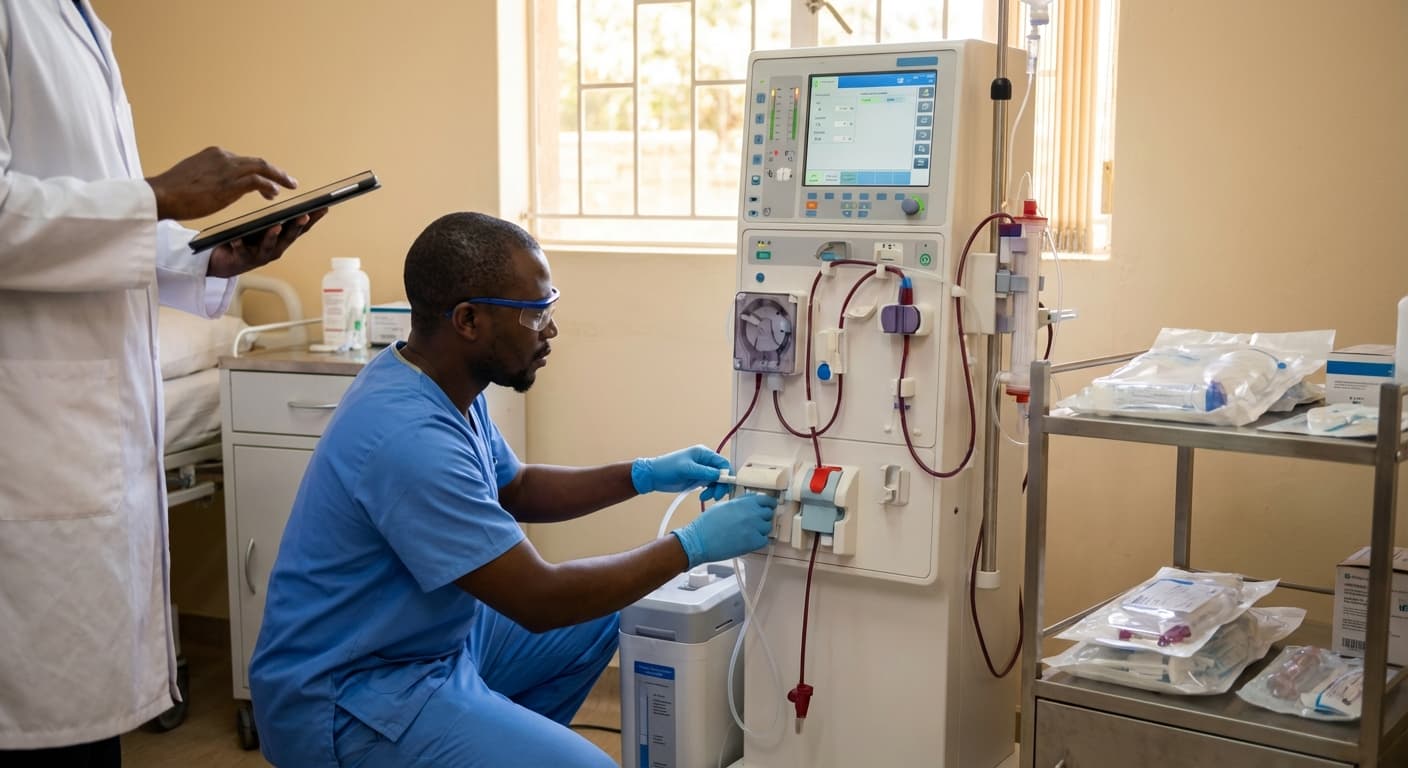
Hemodialysis Machine Installation Service in Eritrea
Engineering Excellence & Technical Support
Hemodialysis Machine Installation Service High-standard technical execution following OEM protocols and local regulatory frameworks.
Expert Installation & Commissioning
Our certified technicians provide meticulous installation and comprehensive commissioning of hemodialysis machines in Eritrea, ensuring optimal performance and immediate readiness for patient care. We adhere to international standards and manufacturer specifications for every setup.
Local Expertise, Global Standards
Leveraging deep understanding of Eritrea's healthcare infrastructure and regulatory environment, we offer specialized installation services. Our team is trained on the latest hemodialysis technology, guaranteeing reliable integration and long-term operational efficiency.
Seamless Integration & Training
We ensure seamless integration of your hemodialysis machines with existing medical facilities in Eritrea, including power, water, and waste management systems. Comprehensive on-site training for your biomedical and nursing staff is provided to guarantee safe and effective operation.
What Is Hemodialysis Machine Installation Service In Eritrea?
Hemodialysis machine installation service in Eritrea refers to the specialized process of setting up, configuring, and validating hemodialysis equipment for clinical use within healthcare facilities in the country. This service encompasses a comprehensive range of technical and logistical activities to ensure the safe and effective operation of hemodialysis machines, a critical component in the management of End-Stage Renal Disease (ESRD).
| Who Needs Hemodialysis Machine Installation Service? | Typical Use Cases | |||
|---|---|---|---|---|
| Renal Dialysis Centers: Dedicated facilities focused on providing hemodialysis treatment to patients with kidney failure. | Hospitals (General and Specialized): Requiring in-house hemodialysis capabilities for inpatient and outpatient management of ESRD, as well as for acute kidney injury (AKI). | Public Health Initiatives: Government or non-governmental organizations establishing new dialysis units or expanding existing ones to meet public health needs. | Private Healthcare Providers: New or expanding private clinics and hospitals offering specialized renal care. | |
| Establishment of New Dialysis Units: Setting up brand new hemodialysis facilities requiring the installation of multiple machines. | Replacement of Aging Equipment: Installing new machines to replace older, less efficient, or malfunctioning units. | Expansion of Existing Services: Adding more hemodialysis machines to increase treatment capacity in response to growing patient demand. | Upgrades to Advanced Technology: Migrating to newer models of hemodialysis machines with enhanced features and functionalities. | Emergency Preparedness: Installing backup or additional machines to ensure continuity of care during unforeseen circumstances or increased demand. |
Key Components of Hemodialysis Machine Installation Service
- Site Preparation and Assessment: Evaluating the designated installation area for power, water (including potential pre-treatment systems), drainage, and ventilation requirements according to manufacturer specifications and local regulations.
- Equipment Unpacking and Inspection: Careful unpacking of the hemodialysis machine and associated accessories, followed by a thorough visual inspection for any damage incurred during transit.
- Physical Placement and Anchoring: Positioning the machine in its final location, ensuring stability and compliance with ergonomic and safety standards. This may involve securing the unit to prevent accidental tipping.
- Electrical Connections and Grounding: Connecting the machine to a stable and appropriately rated electrical power source, with meticulous attention to grounding to prevent electrical hazards and equipment damage.
- Water Supply and Drainage Integration: Connecting the machine to the facility's purified water system (if applicable) and the appropriate drainage outlet. This often involves specialized plumbing and filtration.
- System Configuration and Calibration: Programming the machine's operational parameters, including dialysate composition, blood flow rates, and pressure limits, based on clinical protocols and manufacturer guidelines. Calibration ensures accurate sensor readings and functional performance.
- Testing and Performance Verification: Conducting a series of diagnostic tests, including priming the dialyzer, simulating treatment conditions, and verifying all safety features and alarms.
- User Training: Providing comprehensive training to biomedical engineers, nephrology nurses, and technicians on the operation, routine maintenance, troubleshooting, and safety protocols for the newly installed machine.
- Documentation and Handover: Completing all necessary installation records, maintenance logs, and warranty information, and formally handing over the operational equipment to the healthcare facility's designated personnel.
- Post-Installation Support and Commissioning: Offering initial support to ensure smooth operation and addressing any emergent issues during the initial period of use.
Who Needs Hemodialysis Machine Installation Service In Eritrea?
Establishing and maintaining robust dialysis services is crucial for managing the growing burden of kidney disease. This requires specialized equipment and expertise for proper setup and ongoing functionality. Identifying the specific needs for hemodialysis machine installation services in Eritrea involves understanding the healthcare landscape and the institutions responsible for providing advanced renal care.
| Target Customer Type | Key Departments Involved | Primary Need |
|---|---|---|
| Government Hospitals | Nephrology Department, Biomedical Engineering Department, Procurement Department, Facility Management | Installation of new hemodialysis machines, upgrades to existing units, maintenance support. |
| Ministry of Health (MoH) | Planning and Policy Department, Public Health Infrastructure Division, Procurement Unit | Strategic planning for dialysis capacity, funding and overseeing large-scale installations, ensuring standardization. |
| Private Hospitals and Clinics | Administration, Medical Director's Office, Biomedical Services, Department of Nephrology (if applicable) | Setting up new dialysis units, acquiring modern equipment, ensuring efficient operation. |
| Regional Health Bureaus/Directorates | Hospital Administration, Health Services Management, Technical Support Teams | Establishing or expanding dialysis services in regional healthcare facilities, ensuring local accessibility. |
| NGOs and International Aid Organizations | Project Management, Technical Advisors, Procurement Specialists | Facilitating and funding the acquisition and installation of hemodialysis equipment as part of health development projects. |
| Medical Training and Research Institutions | Nephrology Department, Biomedical Sciences Department, Research and Development Unit | Providing functional equipment for practical training, clinical research, and advanced diagnostics. |
Target Customers & Departments for Hemodialysis Machine Installation Services in Eritrea
- {"title":"Government Hospitals","description":"Public healthcare institutions are the primary providers of essential medical services, including dialysis, for the general population. These hospitals often have the largest patient volumes and require reliable, high-capacity dialysis units."}
- {"title":"Ministry of Health (MoH)","description":"As the governing body for healthcare, the MoH plays a central role in allocating resources and overseeing the establishment of new healthcare facilities or the upgrade of existing ones. They would be key stakeholders in major installation projects."}
- {"title":"Private Hospitals and Clinics","description":"While less common than government facilities, private healthcare providers may emerge or expand their services to cater to patients seeking specialized or elective dialysis. They would require efficient and state-of-the-art equipment."}
- {"title":"Regional Health Bureaus/Directorates","description":"Local health authorities are responsible for managing healthcare services within specific regions. They may oversee the installation of dialysis units in district or regional hospitals, ensuring access to care outside of the capital."}
- {"title":"Non-Governmental Organizations (NGOs) and International Aid Organizations","description":"Organizations focused on improving healthcare access in developing nations may fund and support the establishment of dialysis centers. They would be direct clients or partners in installation projects."}
- {"title":"Medical Training and Research Institutions","description":"Institutions involved in training medical professionals or conducting research related to nephrology and dialysis would require functional hemodialysis machines for both educational and scientific purposes. This may include specialized units."}
Hemodialysis Machine Installation Service Process In Eritrea
This document outlines the comprehensive workflow for the Hemodialysis Machine Installation Service Process in Eritrea, from the initial customer inquiry to the final execution and handover. The process is designed to ensure a smooth, efficient, and compliant installation, providing reliable access to life-saving dialysis treatment for patients.
| Phase | Key Activities | Responsible Party (Typical) | Deliverables |
|---|---|---|---|
| Pre-Installation | Inquiry, Site Survey, Needs Assessment, Proposal, Contract Signing | Client & Supplier | Needs assessment report, Site survey report, Approved proposal & quotation, Signed contract |
| Logistics & Preparation | Order Placement, Machine Shipment, Customs Clearance, Site Preparation | Supplier & Client | Confirmation of shipment, Cleared customs, Prepared facility |
| Execution | On-site Installation, Commissioning, Testing, Operator Training | Supplier (Installation Team) | Installed & functional machines, Commissioning report, Trained staff |
| Post-Execution | Client Acceptance, Handover, Ongoing Support & Maintenance | Supplier & Client | Signed acceptance form, Handover documentation, Service agreements |
Hemodialysis Machine Installation Service Process Workflow in Eritrea
- {"step":1,"title":"Initial Inquiry & Needs Assessment","description":"Prospective clients (hospitals, clinics, government health bodies) initiate contact to inquire about hemodialysis machine installation. This stage involves understanding the client's specific needs, including the number of machines required, facility readiness, existing infrastructure, and budget. Initial consultations may be held remotely or in person."}
- {"step":2,"title":"Site Survey & Technical Feasibility Study","description":"A team of qualified technicians and engineers visits the client's facility to conduct a thorough site survey. This includes assessing the availability and suitability of essential utilities like reliable electricity (with backup generators), clean water supply (potential need for water treatment systems), adequate ventilation, space for machines, and waste disposal facilities. Technical feasibility and any necessary modifications are documented."}
- {"step":3,"title":"Proposal & Quotation Preparation","description":"Based on the needs assessment and site survey, a detailed proposal is prepared. This includes the proposed machine models, quantities, specifications, all associated equipment (e.g., water treatment systems, consumables), installation services, training, warranty information, and a comprehensive quotation. This is presented to the client for review and approval."}
- {"step":4,"title":"Contract Agreement & Order Placement","description":"Upon client approval of the proposal and quotation, a formal contract is drawn up and signed by both parties. This outlines the scope of work, timelines, payment schedules, responsibilities, and terms and conditions. The client then places an official order for the machines and services."}
- {"step":5,"title":"Logistics & Shipment Arrangement","description":"The supplier arranges for the procurement and shipment of the hemodialysis machines and related equipment to Eritrea. This involves managing customs clearance, transportation within the country, and ensuring safe delivery to the client's designated site."}
- {"step":6,"title":"Pre-Installation Preparation","description":"Prior to the arrival of the installation team, the client is responsible for ensuring the site is fully prepared according to the specifications outlined in the proposal and contract. This includes completing any required civil works, utility upgrades, and ensuring access for the installation crew and equipment. The supplier may provide detailed checklists for this preparation."}
- {"step":7,"title":"On-Site Installation & Commissioning","description":"A specialized installation team arrives at the site. They meticulously unpack, assemble, and connect the hemodialysis machines and any accompanying systems (e.g., water treatment units). Rigorous testing and calibration are performed to ensure all machines are functioning optimally and meet all performance standards. This stage includes functional checks and safety protocols."}
- {"step":8,"title":"Operator Training","description":"Comprehensive training is provided to the client's medical and technical staff who will operate and maintain the hemodialysis machines. Training covers machine operation, routine maintenance, troubleshooting, emergency procedures, and infection control practices. Hands-on sessions are a key component."}
- {"step":9,"title":"Client Acceptance & Handover","description":"Once the installation and training are complete and the client is satisfied with the performance of the machines and the quality of the service, a formal acceptance document is signed. The machines and all associated documentation (manuals, warranty certificates) are officially handed over to the client."}
- {"step":10,"title":"Post-Installation Support & Maintenance","description":"The service does not end with the handover. Ongoing support is crucial. This includes providing scheduled preventative maintenance, responding to service calls for repairs, supplying spare parts, and offering advanced training or refresher courses as needed. This ensures long-term operational efficiency and patient safety."}
Hemodialysis Machine Installation Service Cost In Eritrea
The cost of installing a hemodialysis machine in Eritrea can vary significantly based on several factors. These factors influence the overall price, making it essential for healthcare facilities to obtain detailed quotes from service providers. The installation process involves not just the physical setup of the machine but also the integration with existing infrastructure, necessary modifications, and the provision of training. Understanding these elements will help in budgeting for this crucial medical equipment.
| Cost Component | Estimated Range (Eritrean Nakfa - ERN) | Notes |
|---|---|---|
| Basic Machine Setup & Connection | 10,000 - 30,000 ERN | Covers physical placement, basic electrical and plumbing hook-up. |
| Water Treatment System (RO Unit) Installation | 15,000 - 40,000 ERN | Includes installation and initial calibration of the RO system. |
| Extensive Plumbing & Electrical Work | 20,000 - 50,000+ ERN | Dependent on existing infrastructure and required modifications. |
| Ancillary Equipment Setup | 5,000 - 15,000 ERN | Installation of chairs, trolleys, etc. |
| Comprehensive Staff Training | 10,000 - 25,000 ERN | Per training session or for the entire team. |
| Logistics & Transportation (if applicable) | 5,000 - 15,000+ ERN | Varies based on distance and accessibility. |
| Full Installation Service Package (Estimated Total) | 60,000 - 175,000+ ERN | This is a broad estimate and can vary significantly. It's crucial to get detailed quotes. |
Key Pricing Factors for Hemodialysis Machine Installation in Eritrea:
- Type and Model of Hemodialysis Machine: Different machines have varying complexities in their installation requirements. Newer, more advanced models might require specialized connections or software integration that can increase costs.
- Site Preparation and Infrastructure: This is often the most significant cost driver. It includes the need for dedicated electrical circuits, appropriate water treatment systems (RO units), waste disposal systems, and potentially structural modifications to the treatment room to meet space and ventilation requirements.
- Plumbing and Water Supply: The quality and accessibility of the existing water supply are critical. If extensive plumbing work is needed to ensure purified and sufficient water, costs will rise. This includes the installation of reverse osmosis (RO) systems, which are essential for dialysis.
- Electrical Work: Hemodialysis machines require stable and dedicated power. The cost will depend on the existing electrical infrastructure, the need for new circuits, surge protectors, and reliable grounding.
- Ancillary Equipment: The installation cost might also cover the setup of related equipment like dialysis chairs, trolleys, monitoring systems, and emergency call buttons.
- Logistics and Transportation: The cost of safely transporting the hemodialysis machine to the installation site within Eritrea can be a factor, especially if it involves remote locations or difficult terrain.
- Service Provider's Expertise and Reputation: Experienced and reputable installation companies may command higher fees due to their proven track record, specialized knowledge, and comprehensive service packages.
- Warranty and Maintenance Packages: Some installation services include initial warranty periods or bundled maintenance agreements, which can add to the upfront cost but provide long-term value.
- Training for Staff: Comprehensive training for nephrologists, nurses, and technicians on the operation, maintenance, and troubleshooting of the hemodialysis machine is often part of the installation service. The duration and depth of training will influence the cost.
- Geographic Location within Eritrea: Installation in major urban centers like Asmara might be more straightforward and potentially less expensive in terms of travel for technicians compared to more remote or rural areas.
Affordable Hemodialysis Machine Installation Service Options
Installing a hemodialysis machine is a critical step for healthcare facilities and home dialysis patients. Ensuring proper installation by qualified professionals guarantees machine efficiency, patient safety, and regulatory compliance. This service involves site assessment, plumbing, electrical work, water treatment system integration, and machine calibration. We offer a range of installation service options designed to be affordable while maintaining the highest standards of quality and reliability. Understanding value bundles and implementing cost-saving strategies can significantly reduce the overall expense of your hemodialysis machine installation.
| Value Bundle | Inclusions | Typical Cost Range (USD) | Ideal For |
|---|---|---|---|
| Basic Installation | Site assessment, plumbing hookup, electrical connection, basic water line setup, machine placement and initial power-on. | $800 - $1,500 | Home dialysis patients with existing suitable infrastructure, smaller clinics with pre-existing water treatment. |
| Standard Installation | Includes Basic Installation plus integration with a new or existing water treatment system, initial machine calibration, and basic user orientation. | $1,200 - $2,200 | New clinic setups, home dialysis patients requiring a new water treatment system, facilities needing comprehensive initial setup. |
| Premium Installation | Includes Standard Installation plus advanced water quality testing, comprehensive machine diagnostics, in-depth user training for multiple staff members, and a customized maintenance plan consultation. | $1,800 - $3,500+ | Larger clinics, hospitals, facilities with complex water requirements, organizations prioritizing in-depth training and ongoing support. |
| Custom Package | Tailored to specific facility needs, can include specialized plumbing, advanced water purification upgrades, integration with existing building management systems, etc. | Variable (Quote-based) | Facilities with unique or complex installation requirements. |
Key Components of Hemodialysis Machine Installation Service
- Site Assessment and Planning
- Plumbing and Water Line Installation/Modification
- Electrical Wiring and Power Outlet Installation
- Water Treatment System Integration (RO/DI systems)
- Ventilation and Environmental Controls
- Machine Placement and Securing
- Machine Calibration and Testing
- User Training and Education
- Post-Installation Support and Maintenance Planning
- Regulatory Compliance Checks
Verified Providers In Eritrea
Navigating healthcare access in Eritrea requires confidence in the providers you choose. When seeking reliable and high-quality medical services, understanding the credentials and benefits of verified providers is paramount. Franance Health stands out as a leading example, offering a robust framework of verification and a commitment to patient well-being that makes them the optimal choice for healthcare needs in Eritrea.
| Provider Characteristic | Franance Health Verification Standard | Benefit to Patient |
|---|---|---|
| Medical License | Mandatory and verified with issuing authority | Ensures legal practice and basic competency |
| Educational Background | Verified degrees and certifications from recognized institutions | Confirms foundational medical knowledge |
| Specialized Training | Documented completion of relevant postgraduate programs and fellowships | Guarantees expertise in specific medical areas |
| Professional Experience | Assessed through references and practice history | Indicates practical application of skills and knowledge |
| Adherence to Ethical Standards | Background checks and review of professional conduct | Protects patient rights and promotes trust |
| Patient Care Quality | Evaluated through patient feedback mechanisms and outcome analysis | Ensures a positive and effective healthcare experience |
Why Franance Health is the Best Choice for Verified Providers in Eritrea:
- Rigorous Credentialing Process: Franance Health implements a multi-stage verification protocol for all affiliated healthcare professionals. This includes scrutinizing medical licenses, educational qualifications, specialized training, and professional experience. This ensures that only competent and ethically sound practitioners are part of their network.
- Commitment to Quality Care: Beyond basic credentials, Franance Health assesses providers on their adherence to international standards of medical practice and their dedication to patient-centered care. This includes evaluation of patient feedback and ongoing professional development.
- Access to Diverse Specialties: Their network encompasses a wide range of medical specialties, from general practitioners and pediatricians to surgeons and specialists in complex fields. This breadth of expertise ensures that patients can find the precise care they need, all through a trusted and verified channel.
- Enhanced Patient Trust and Safety: The Franance Health verification badge provides an immediate visual indicator of a provider's legitimacy and quality. This significantly reduces the risk of encountering unqualified practitioners, thereby fostering greater patient trust and ensuring a safer healthcare journey.
- Streamlined Healthcare Navigation: By consolidating verified providers, Franance Health simplifies the process of finding and accessing quality healthcare. Patients can rely on their platform to connect with reputable doctors and facilities without extensive independent research.
- Focus on Continuous Improvement: Franance Health actively monitors the performance of its affiliated providers and encourages continuous professional development. This commitment to ongoing quality assurance benefits patients by ensuring they receive the most up-to-date and effective medical treatments.
- Local Understanding, Global Standards: While operating within the Eritrean context, Franance Health upholds international benchmarks for healthcare quality and provider verification. This blend of local relevance and global excellence is a key differentiator.
Scope Of Work For Hemodialysis Machine Installation Service
This Scope of Work (SOW) outlines the services required for the professional installation of hemodialysis machines. The objective is to ensure the machines are installed correctly, safely, and in accordance with manufacturer specifications and all relevant regulatory standards, preparing them for immediate and reliable operation. This SOW details the technical deliverables, standard specifications, and responsibilities of the service provider.
| Item | Description | Standard Specification / Requirement |
|---|---|---|
| Machine Placement | Positioning of hemodialysis machines | Adherence to manufacturer's recommended clearances for ventilation and access; compliance with patient workflow and safety regulations. |
| Electrical Connection | Power supply connection | Dedicated, properly rated, and grounded electrical circuit; voltage and frequency compliant with machine specifications; surge protection as recommended. |
| Water System Connection (if applicable) | Connection to RO or DI water system | Use of hospital-grade, NSF-certified tubing; compliance with water quality standards (e.g., AAMI, ISO); pressure and flow rate within machine specifications. |
| Drainage Connection | Waste water disposal | Secure, leak-proof connection to an approved sanitary sewer or appropriate waste collection system; compliant with local plumbing codes. |
| Medical Gas Connection (if applicable) | Connection to O2, Air, Vacuum lines | Use of hospital-grade gas outlets and tubing; appropriate pressure regulators; compliance with medical gas system standards. |
| Functional Testing | Pre-dialysis checks, dialysis run, post-dialysis checks | All machine alarms and safety features tested; flow rates, pressures, temperatures verified; successful completion of at least one simulated dialysis session. |
| Calibration | Setting of machine parameters | Performed according to manufacturer's service manual; records maintained for audit purposes. |
| Environmental Conditions | Temperature, humidity, ambient light | Installation within manufacturer's specified operating environment; adequate lighting for operation and maintenance. |
| Safety Compliance | Electrical safety, infection control | Adherence to all relevant electrical safety codes (e.g., NFPA 99, IEC 60601); implementation of infection control protocols during installation. |
| Documentation | Installation reports, test logs, certificates | Detailed records of all activities, including dates, technician names, serial numbers, test results, and calibration data; digital or hard copy as agreed. |
| Training | Operator and basic maintenance training | Content and duration as per agreement; hands-on demonstration and Q&A session; training materials provided. |
Technical Deliverables
- Installation of each hemodialysis machine in its designated location.
- Connection of the hemodialysis machine to the appropriate water treatment system (if applicable and specified).
- Connection of the hemodialysis machine to the approved electrical supply, ensuring proper grounding.
- Connection of the hemodialysis machine to the medical gas supply lines (e.g., oxygen, compressed air, vacuum) as required by the specific model.
- Verification of all plumbing and drainage connections for leaks and proper functionality.
- Functional testing of the hemodialysis machine, including all operational modes and safety features.
- Calibration of the hemodialysis machine according to manufacturer guidelines.
- User interface configuration and initial setup.
- Comprehensive documentation of the installation process, including test results and calibration records.
- Post-installation system check and handover to authorized facility personnel.
- On-site training for facility staff on basic operation, routine maintenance, and troubleshooting of the installed machines.
- Provision of a signed completion certificate upon successful installation and acceptance.
Service Level Agreement For Hemodialysis Machine Installation Service
This Service Level Agreement (SLA) outlines the terms and conditions for the Hemodialysis Machine Installation Service provided by [Your Company Name] (hereinafter referred to as 'Provider') to [Client Name] (hereinafter referred to as 'Client'). This SLA defines the expected response times and uptime guarantees associated with the installation and initial setup of hemodialysis machines.
| Service Component | Service Level Objective (SLO) | Measurement | Client Responsibility |
|---|---|---|---|
| Installation Service Response Time | Acknowledgement and initial assessment within 4 business hours of a valid Service Request. | Time from submission of Service Request to Provider's acknowledgement. | Provide complete and accurate Service Request information, including machine model, serial number, location, and specific issue (if any). |
| On-site Technician Dispatch | Dispatch of a qualified technician within 12 business hours for critical issues preventing installation/testing. | Time from acknowledgement of Service Request to technician's departure for Client site. | Ensure site access is available and all necessary preconditions for installation are met (e.g., power, water, drainage). |
| Installation Completion | Completion of standard installation and initial testing within 24-48 business hours of technician's arrival, depending on machine complexity. | Time from technician's arrival to confirmation of successful installation and basic functionality. | Provide a suitable and safe working environment for the technician. |
| Post-Installation Uptime Guarantee (Initial 30 Days) | 98% uptime for the installed hemodialysis machine, excluding scheduled maintenance. | Calculated as (Total Hours - Downtime Hours) / Total Hours * 100%. Downtime is defined as the period the machine is unavailable for use due to installation-related defects. | Adhere to manufacturer's operating and maintenance guidelines. Report any suspected issues promptly. |
| Escalation Procedure | For unresolved critical issues impacting installation, escalation to Senior Support within 4 business hours. | Time from initial response to escalation trigger. | Clearly communicate the impact and urgency of the unresolved issue. |
Key Definitions
- Installation Service: The process of physically installing, connecting, and performing initial setup and testing of hemodialysis machines at the Client's designated facility.
- Service Request: A formal request submitted by the Client to the Provider for installation services, communicated via [Specify Communication Channel, e.g., email, dedicated portal].
- Response Time: The maximum time allowed for the Provider to acknowledge a Service Request and commence troubleshooting or dispatching a technician.
- Resolution Time: The maximum time allowed for the Provider to resolve an issue that prevents the proper functioning of the installed hemodialysis machine, as defined by the manufacturer's specifications.
- Uptime Guarantee: The percentage of time the installed hemodialysis machine is expected to be fully operational and available for use, excluding scheduled maintenance and planned downtime.
- Scheduled Maintenance: Routine maintenance activities performed on the hemodialysis machines as recommended by the manufacturer, which will be communicated to the Client in advance.
- Planned Downtime: Temporary cessation of service for reasons such as system upgrades, significant repairs, or Client-requested modifications, which will be communicated and agreed upon with the Client in advance.
Frequently Asked Questions

Ready when you are
Let's scope your Hemodialysis Machine Installation Service in Eritrea project in Eritrea.

Scaling healthcare logistics and technical systems across the entire continent.