
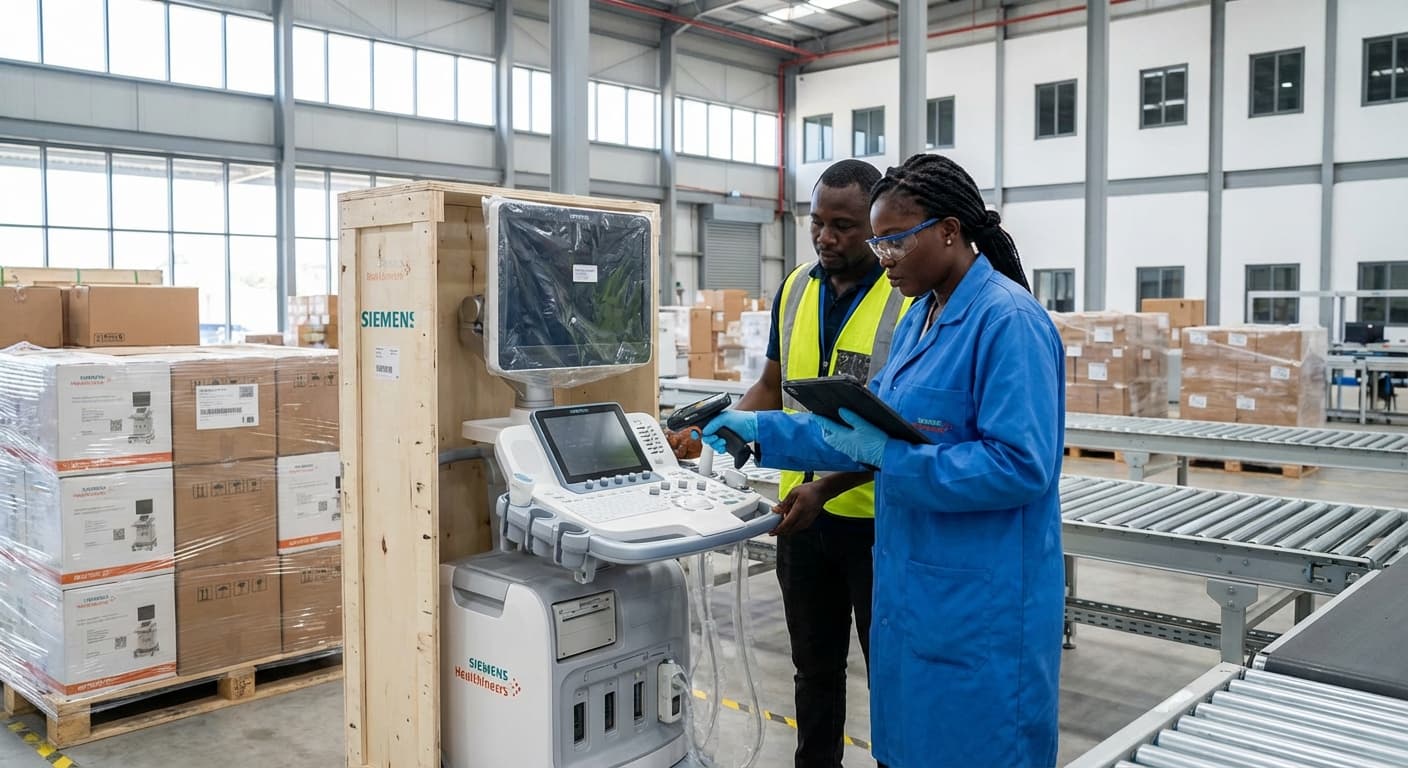
Warehouse Receiving Inspection Service (Medical Equipment) in Eritrea
Engineering Excellence & Technical Support
Warehouse Receiving Inspection Service (Medical Equipment) High-standard technical execution following OEM protocols and local regulatory frameworks.
Ensured Chain of Custody Integrity
Implemented rigorous protocols for tracking and verifying the chain of custody for all incoming medical equipment shipments. This included detailed documentation of transfer points, handling procedures, and personnel involved, minimizing risk of diversion or tampering from port of entry to the warehouse.
Pre-Deployment Equipment Verification
Conducted comprehensive pre-deployment inspections of medical equipment upon arrival, verifying serial numbers against manifest, checking for visible damage, and confirming essential accessories and documentation (e.g., user manuals, calibration certificates) are present and accurate, ensuring readiness for immediate use.
Quality Assurance & Compliance Audits
Performed detailed quality assurance checks against established standards and Eritrean regulatory requirements. This involved visual inspections, functional testing (where applicable and safe), and documentation review to ensure all medical equipment meets the highest safety and efficacy benchmarks before being released into the supply chain.
What Is Warehouse Receiving Inspection Service (Medical Equipment) In Eritrea?
Warehouse Receiving Inspection Service (Medical Equipment) in Eritrea refers to the systematic evaluation and verification of medical equipment upon its arrival at a designated warehouse facility within Eritrea. This service ensures that incoming medical supplies and devices meet predefined quality, safety, and regulatory standards before being accepted into inventory and subsequently distributed for use. It is a critical component of the supply chain management for healthcare facilities, governmental health organizations, and international aid agencies operating in the region. The primary objective is to mitigate the risks associated with receiving substandard, damaged, or incorrect medical equipment, thereby safeguarding patient health and optimizing resource allocation.
| Who Needs Warehouse Receiving Inspection Service (Medical Equipment) in Eritrea? | Typical Use Cases |
|---|---|
| Ministry of Health (Eritrea): For national procurement of medical supplies and equipment, ensuring public health facilities receive compliant items. | Procurement and supply of essential medicines and diagnostic tools for national health programs. |
| Hospitals and Clinics (Public and Private): For direct procurement or receipt of donated medical equipment. | Installation of new imaging equipment (e.g., X-ray machines, ultrasound devices). |
| International Non-Governmental Organizations (INGOs) and Aid Agencies: For the import and distribution of medical relief and development aid. | Deployment of emergency medical kits and surgical supplies to remote areas. |
| United Nations Agencies (e.g., WHO, UNICEF): For managing and distributing medical supplies for humanitarian and public health initiatives. | Receipt and verification of vaccines and cold chain equipment. |
| Medical Equipment Suppliers and Distributors: As part of their quality assurance and contractual obligations. | Incoming inventory management of specialized laboratory equipment. |
Components of Warehouse Receiving Inspection Service (Medical Equipment) in Eritrea:
- Documentation Verification: Cross-referencing shipping manifests, invoices, purchase orders, certificates of origin, and quality control documentation with the received physical goods.
- Physical Inspection: Assessing the condition of packaging for integrity, damage, or tampering. Examining the equipment itself for visible defects, manufacturing flaws, or signs of mishandling.
- Quantity Verification: Accurately counting and confirming that the delivered quantity of each item matches the documented order and manifest.
- Identification and Labeling Check: Verifying that serial numbers, batch numbers, expiry dates (where applicable), and product identifiers are present, legible, and consistent with accompanying documentation.
- Functional Testing (if applicable): For certain types of equipment, performing basic operational checks to confirm immediate functionality and absence of gross malfunctions.
- Compliance Assessment: Ensuring that the equipment adheres to relevant Eritrean regulatory requirements, such as registration with the Ministry of Health, and international standards (e.g., WHO guidelines, ISO certifications).
- Temperature and Environmental Monitoring (for sensitive equipment): Verifying that temperature-sensitive or fragile items have been transported and stored under appropriate environmental conditions.
- Record Keeping and Reporting: Meticulously documenting all inspection findings, discrepancies, and actions taken, and generating comprehensive inspection reports for stakeholder review and archival.
Who Needs Warehouse Receiving Inspection Service (Medical Equipment) In Eritrea?
A robust warehouse receiving inspection service for medical equipment in Eritrea is crucial for ensuring the quality, safety, and efficacy of vital healthcare supplies. This service acts as a critical gatekeeper, preventing sub-standard or damaged equipment from entering the supply chain and ultimately reaching healthcare facilities and patients. It plays a significant role in safeguarding public health and optimizing resource allocation within the Eritrean healthcare system.
| Target Customer/Department | Key Needs and Responsibilities | Impact of Inspection Service |
|---|---|---|
| Ministry of Health (MoH) | Procurement of medical equipment, national health policy enforcement, ensuring quality and safety of equipment for public health facilities, managing national medical stockpiles. | Prevents the influx of faulty or counterfeit equipment, ensures compliance with national standards, protects public health, reduces waste of public funds. |
| Regional Health Bureaus | Supervising healthcare services within specific regions, managing equipment needs for local health centers and clinics, ensuring proper functioning of medical devices. | Guarantees that regional facilities receive usable and appropriate equipment, supports localized healthcare delivery, minimizes downtime due to equipment failure. |
| Hospitals (e.g., National Referral Hospital, Provincial Hospitals) | Directly receiving and utilizing medical equipment for patient care, ensuring operational readiness of medical services, managing equipment inventory and maintenance. | Ensures that critical patient care equipment is functional and safe, reduces the risk of medical errors due to faulty devices, improves patient outcomes, minimizes costly repairs and replacements. |
| Primary Health Centers (PHCs) and Health Posts | Receiving essential medical equipment for basic healthcare services, often with limited technical support for troubleshooting. | Ensures access to reliable basic medical equipment, supports disease prevention and primary care initiatives, improves community health services. |
| Non-Governmental Organizations (NGOs) & International Aid Organizations | Procuring and distributing medical equipment for specific health programs (e.g., maternal and child health, infectious disease control), often operating in remote or underserved areas. | Ensures that donated or procured equipment is of the expected quality and meets project objectives, maximizes the impact of aid, builds trust with beneficiaries and donors. |
| Medical Equipment Suppliers/Distributors | Importing and distributing medical equipment to healthcare facilities, adhering to quality standards and regulatory requirements. | Confirms that their supplied equipment meets quality benchmarks, reduces the risk of returns and customer complaints, maintains a reputation for reliability. |
| Warehousing and Logistics Providers | Storing and handling medical equipment before distribution, responsible for maintaining optimal storage conditions and preventing damage. | Verifies that equipment arrives in good condition and is stored appropriately, mitigates transit or storage-related damage, ensures accountability for the equipment. |
| National Drug and Food Administration (NDFA) or equivalent regulatory body | Overseeing the quality, safety, and efficacy of medical products, including equipment, enforcing regulations and standards. | Provides independent verification of equipment quality, supports regulatory compliance, ensures public safety through adherence to standards. |
Who Needs Warehouse Receiving Inspection Service (Medical Equipment) in Eritrea?
- Government Ministries and Agencies responsible for healthcare procurement and distribution.
- Hospitals and Healthcare Facilities (public and private) receiving medical equipment.
- Non-Governmental Organizations (NGOs) involved in healthcare delivery and aid.
- International Aid Organizations and Donors supplying medical equipment.
- Medical Equipment Suppliers and Distributors operating within Eritrea.
- Logistics and Warehousing Companies handling medical equipment.
- Regulatory Bodies overseeing medical device quality and safety.
Warehouse Receiving Inspection Service (Medical Equipment) Process In Eritrea
This document outlines the Warehouse Receiving Inspection Service (Medical Equipment) process in Eritrea, detailing the workflow from initial inquiry to the final execution of the inspection. The service ensures that all incoming medical equipment adheres to specified quality, safety, and regulatory standards before being accepted into a warehouse facility.
| Stage | Description | Key Activities | Responsible Party | Deliverables/Outcomes |
|---|---|---|---|---|
| Inquiry & Service Request | The client (importer, manufacturer, or warehouse operator) expresses interest in the receiving inspection service for medical equipment. | Contacting the service provider, submitting an initial request, providing basic details about the equipment and expected shipment. | Client | Initial contact, understanding of client's needs. |
| Quotation & Agreement | The service provider assesses the request and provides a detailed quotation and service agreement. | Reviewing shipment details, scope of work definition, cost estimation, negotiation, contract signing. | Service Provider, Client | Formal quotation, signed service agreement. |
| Pre-Inspection Preparation | Preparation by both the client and the service provider before the actual inspection. | Client: Arranging for equipment to be accessible, providing necessary documentation (e.g., packing lists, manufacturer's specifications, quality certificates). Service Provider: Assembling inspection team, gathering relevant standards and checklists, scheduling the inspection. | Client, Service Provider | Ready inspection site, availability of documentation, scheduled inspection. |
| On-Site Inspection Execution | The actual physical inspection of the medical equipment at the receiving warehouse. | Visual inspection (packaging, labeling, physical condition), verification of quantity and model numbers against documentation, functional testing (if applicable and agreed upon), checking for damages, assessing compliance with relevant Eritrean regulations and international standards. | Service Provider (Inspection Team) | Completed inspection checklists, preliminary findings. |
| Reporting & Documentation | Compiling and submitting a comprehensive report of the inspection findings. | Analyzing data, documenting all observations (conformities and non-conformities), generating an inspection report with recommendations, issuing certificates of conformity or non-conformity. | Service Provider | Formal Inspection Report, Certificate of Conformity/Non-Conformity. |
| Follow-up & Closure | Addressing any identified issues and formally closing the service engagement. | Client: Taking corrective actions for non-conformities. Service Provider: Verifying corrective actions (if required), invoicing, archiving records, obtaining client feedback. | Client, Service Provider | Resolution of non-conformities, final payment, closed service file. |
Workflow Stages
- Inquiry & Service Request
- Quotation & Agreement
- Pre-Inspection Preparation
- On-Site Inspection Execution
- Reporting & Documentation
- Follow-up & Closure
Warehouse Receiving Inspection Service (Medical Equipment) Cost In Eritrea
The cost of Warehouse Receiving Inspection Services for medical equipment in Eritrea can vary significantly due to several pricing factors. These services are crucial to ensure that medical equipment meets quality, safety, and regulatory standards before being accepted into a warehouse. The absence of standardized pricing and a developing market can lead to a wider range of costs. Factors influencing these costs include the complexity and type of medical equipment, the volume of equipment being inspected, the experience and reputation of the inspection service provider, and the location of the warehouse within Eritrea. Specialized equipment requiring specific technical expertise or calibration will naturally command higher inspection fees. Similarly, larger shipments may benefit from volume discounts, while smaller, ad-hoc inspections might have a higher per-unit cost. The duration of the inspection, the need for specialized testing equipment, and the extent of documentation required also play a role. It's important for organizations to obtain detailed quotes from multiple qualified providers to ensure competitive pricing.
| Inspection Service Component | Estimated Cost Range (Eritrean Nakfa - ERN) | Notes |
|---|---|---|
| Basic Visual & Documentation Check (per item) | 500 - 1,500 ERN | Covers initial verification against order/shipping documents and outward appearance. |
| Basic Functional Testing (per item) | 800 - 2,500 ERN | Assesses core operational functions. Complexity of equipment impacts cost. |
| Detailed Technical Inspection (per item) | 1,500 - 5,000+ ERN | Involves in-depth checks, may require specialized knowledge and tools. |
| Calibration Verification (per item, if applicable) | 1,000 - 4,000 ERN | For equipment requiring precise measurements. Depends on the type of calibration. |
| Sampling and Testing (per sample/test) | 500 - 2,000 ERN | For batches of consumables or where representative testing is needed. |
| Report Generation Fee (per report) | 200 - 1,000 ERN | Standard reporting is usually included, but detailed or custom reports may incur extra fees. |
| Travel & Logistics (variable) | Variable | If the inspection site is remote or requires significant travel for the inspector. |
| Day Rate for Highly Specialized Inspections | 5,000 - 15,000+ ERN per day | For complex projects or when highly specialized technical personnel are required for extended periods. |
| Project-Based/Volume Discounted Rates | Negotiable | Typically for large, ongoing contracts or significant one-time shipments. |
Key Pricing Factors for Medical Equipment Warehouse Receiving Inspection Services in Eritrea
- Complexity and Type of Medical Equipment (e.g., diagnostic imaging, laboratory equipment, surgical instruments, consumables)
- Volume of Equipment to be Inspected (per shipment, per container, per item)
- Experience and Reputation of the Inspection Service Provider (local vs. international, specialized expertise)
- Location of the Warehouse (accessibility, transportation costs)
- Scope of Inspection (visual inspection, functional testing, calibration, documentation review, sample testing)
- Required Documentation and Reporting (standard reports vs. detailed technical reports)
- Need for Specialized Testing Equipment or Expertise
- Urgency of the Inspection Service
- Contractual Agreements (long-term contracts may offer discounts)
Affordable Warehouse Receiving Inspection Service (Medical Equipment) Options
For medical equipment manufacturers and distributors, ensuring the quality and accuracy of incoming shipments is paramount. Our affordable warehouse receiving inspection service provides a critical quality control step without breaking the bank. We understand the unique demands of the medical device industry, including strict regulatory compliance and the need for precise handling. Our service helps mitigate risks, prevent costly errors, and maintain the integrity of your supply chain. We offer flexible solutions tailored to your volume and complexity, ensuring you receive the best value for your investment.
| Value Bundle Option | Description | Typical Use Case | Cost-Saving Strategies Incorporated |
|---|---|---|---|
| Basic Inspection & Verification | Visual inspection for damage, verification against purchase order/packing list, basic documentation check. | Low-volume, standard medical supplies, recurring shipments of known items. | Standardized checklists, trained inspectors, efficient reporting. Focus on core verification to minimize time and effort. |
| Comprehensive Inspection & Documentation | Includes Basic Inspection plus detailed product verification (serial numbers, lot numbers), functional checks (if applicable and safe), documentation review (certificates of conformity, calibration certificates), and photographic evidence. | Moderate volume, high-value medical equipment, new product introductions, shipments requiring detailed traceability. | Batch processing of similar items, tiered inspection levels based on product criticality, digital record-keeping for easy retrieval. |
| Customized Quality Assurance Package | Tailored inspection protocols developed in collaboration with the client, including specific testing, compliance audits, and specialized handling requirements. | High-risk medical devices, specialized equipment, stringent regulatory environments, specific client demands. | Flexible staffing based on demand, optimized inspection workflows, data analytics for continuous improvement, leveraging client's existing SOPs where applicable. |
Key Benefits of Our Affordable Warehouse Receiving Inspection Service
- Reduced risk of receiving incorrect or damaged medical equipment.
- Ensured compliance with regulatory requirements (e.g., FDA, ISO).
- Prevention of costly returns, rework, and stockouts.
- Improved inventory accuracy and management.
- Enhanced customer satisfaction through reliable product delivery.
- Streamlined receiving process and faster put-away.
- Expertise in handling sensitive and high-value medical devices.
Verified Providers In Eritrea
In Eritrea's evolving healthcare landscape, identifying verified and reputable healthcare providers is paramount for ensuring quality care and patient safety. Franance Health stands out as a leading entity, distinguished by its rigorous credentialing process and commitment to excellence. This document outlines what makes Franance Health credentials a mark of the highest caliber and why they represent the best choice for individuals seeking reliable healthcare services in Eritrea.
| Provider Type | Franance Health Credentialing Focus | Benefits for Patients |
|---|---|---|
| Hospitals & Clinics | Facility infrastructure, equipment, hygiene standards, medical staff qualifications, emergency response protocols. | Access to well-equipped facilities, assurance of sterile environments, highly qualified medical teams, reliable emergency care. |
| Specialist Physicians | Medical board certifications, sub-specialty training, years of practice in specific fields, peer reviews, case study analysis. | Expert diagnosis and treatment from physicians with proven expertise, confidence in specialized care. |
| General Practitioners | Primary care training, diagnostic skills, patient management protocols, ongoing education in common health issues. | Reliable first point of contact for health concerns, comprehensive primary care, proactive health management. |
| Diagnostic Laboratories | Accreditation by relevant bodies, quality control measures, equipment calibration, technologist qualifications, turnaround times. | Accurate and timely diagnostic results, trust in laboratory testing for informed medical decisions. |
| Pharmacies | Pharmacist licensure, drug sourcing and storage protocols, dispensing accuracy, patient counseling standards. | Safe and authentic medications, reliable pharmaceutical advice, proper drug information. |
What Makes Franance Health Credentials Superior?
- Comprehensive Vetting Process: Franance Health employs an exhaustive vetting system that scrutinizes every aspect of a healthcare provider's qualifications, including education, training, licensure, and experience.
- Adherence to International Standards: Credentials from Franance Health signify compliance with globally recognized benchmarks in healthcare delivery, ensuring that providers meet a high standard of practice.
- Continuous Professional Development Verification: Franance Health requires ongoing proof of professional development and skill enhancement, ensuring providers remain at the forefront of medical advancements.
- Patient-Centric Evaluation: Beyond technical skills, Franance Health also considers patient feedback and ethical conduct as part of its credentialing, prioritizing a compassionate and trustworthy healthcare experience.
- Transparency and Accountability: The credentialing process is transparent, and Franance Health maintains a system of accountability, ensuring that providers uphold their commitment to quality care.
Scope Of Work For Warehouse Receiving Inspection Service (Medical Equipment)
This Scope of Work (SOW) outlines the requirements for the Warehouse Receiving Inspection Service of medical equipment. The objective is to ensure that all incoming medical equipment meets the defined technical specifications and quality standards prior to being accepted into inventory. This service is critical for maintaining the integrity of the medical supply chain, ensuring patient safety, and compliance with regulatory requirements.
| Technical Deliverable | Description | Standard Specification/Reference |
|---|---|---|
| Receiving Inspection Report (RIR) | A comprehensive document detailing the results of the inspection for each received item. Includes item identification, quantity, condition, any damages, and a clear pass/fail status. | ASTM E2368 - Standard Practice for Receiving Inspection of Materials; Manufacturer's specifications; Internal Quality Management System (QMS) procedures. |
| Non-Conformance Report (NCR) | A formal document generated when received equipment fails to meet any specified criteria. Details the nature of the non-conformance, affected items, and recommended disposition (e.g., return to vendor, quarantine, rework). | ISO 9001:2015 - Clause 8.7 (Control of Nonconforming Outputs); Customer-specific requirements. |
| Visual Inspection Checklist | A standardized checklist used by inspectors to systematically evaluate the physical condition of the medical equipment, packaging, and labeling. | Manufacturer's visual inspection guidelines; Industry best practices for handling sensitive medical devices. |
| Basic Functional Test Protocol | A defined set of simple tests to confirm essential operational capabilities of the medical equipment. Scope of testing will be item-specific. | Manufacturer's operating manual; FDA Guidance for Industry on Quality System Regulation (21 CFR Part 820). |
| Documentation Verification Record | Confirmation that all required accompanying documentation (e.g., Certificates of Analysis (CoA), Sterilization Certificates, user manuals, warranty cards) are present and accurate. | Manufacturer's packing list; Regulatory requirements (e.g., FDA, CE Mark); Customer purchase order specifications. |
| Photographic Evidence | Photographs documenting any observed damages, defects, or discrepancies. For critical items, photographic evidence of the approved condition may also be included. | Internal QMS for record-keeping; Best practices for evidence capture. |
Key Activities
- Verification of shipping documentation against received goods.
- Visual inspection for physical damage, defects, and completeness.
- Confirmation of equipment serial numbers, model numbers, and lot numbers.
- Functional testing of basic operations as per manufacturer specifications.
- Verification of included accessories, manuals, and warranty information.
- Documentation of inspection findings, including any discrepancies or non-conformities.
- Reporting of inspection results to designated stakeholders.
Service Level Agreement For Warehouse Receiving Inspection Service (Medical Equipment)
This Service Level Agreement (SLA) outlines the terms and conditions for the Warehouse Receiving Inspection Service of Medical Equipment. It defines the expected response times for critical issues and the guaranteed uptime for the inspection systems and personnel.
| Service Component | Uptime Guarantee | Response Time (Critical Issue) | Response Time (Major Issue) | Resolution Time (Critical Issue - Target) |
|---|---|---|---|---|
| Availability of Dedicated Inspection Personnel | 99.5% during scheduled operational hours | 2 Business Hours | 4 Business Hours | 8 Business Hours |
| Availability of Inspection Equipment (e.g., scanners, measurement tools) | 99.0% during scheduled operational hours | 4 Business Hours | 8 Business Hours | 16 Business Hours |
| Access to Inspection Documentation & Systems (e.g., WMS, ERP integration) | 99.8% during scheduled operational hours | 1 Business Hour | 2 Business Hours | 6 Business Hours |
Key Definitions
- SLA: Service Level Agreement.
- Medical Equipment: Any device, instrument, machine, or other article intended for use in the diagnosis, cure, mitigation, treatment, or prevention of disease, or intended to affect the structure or any function of the body.
- Receiving Inspection: The process of verifying incoming medical equipment against purchase orders, specifications, and quality standards, including visual inspection, documentation review, and basic functional checks.
- Critical Issue: A problem that prevents the receiving inspection process from being performed for a significant portion of incoming medical equipment, impacting the ability to release goods for further processing or storage.
- Major Issue: A problem that partially degrades the receiving inspection service, affecting a specific type of equipment or a subset of inspection tasks.
- Minor Issue: A problem that has minimal impact on the receiving inspection service and can be worked around without significant delay.
Frequently Asked Questions

Ready when you are
Let's scope your Warehouse Receiving Inspection Service (Medical Equipment) in Eritrea project in Eritrea.

Scaling healthcare logistics and technical systems across the entire continent.