
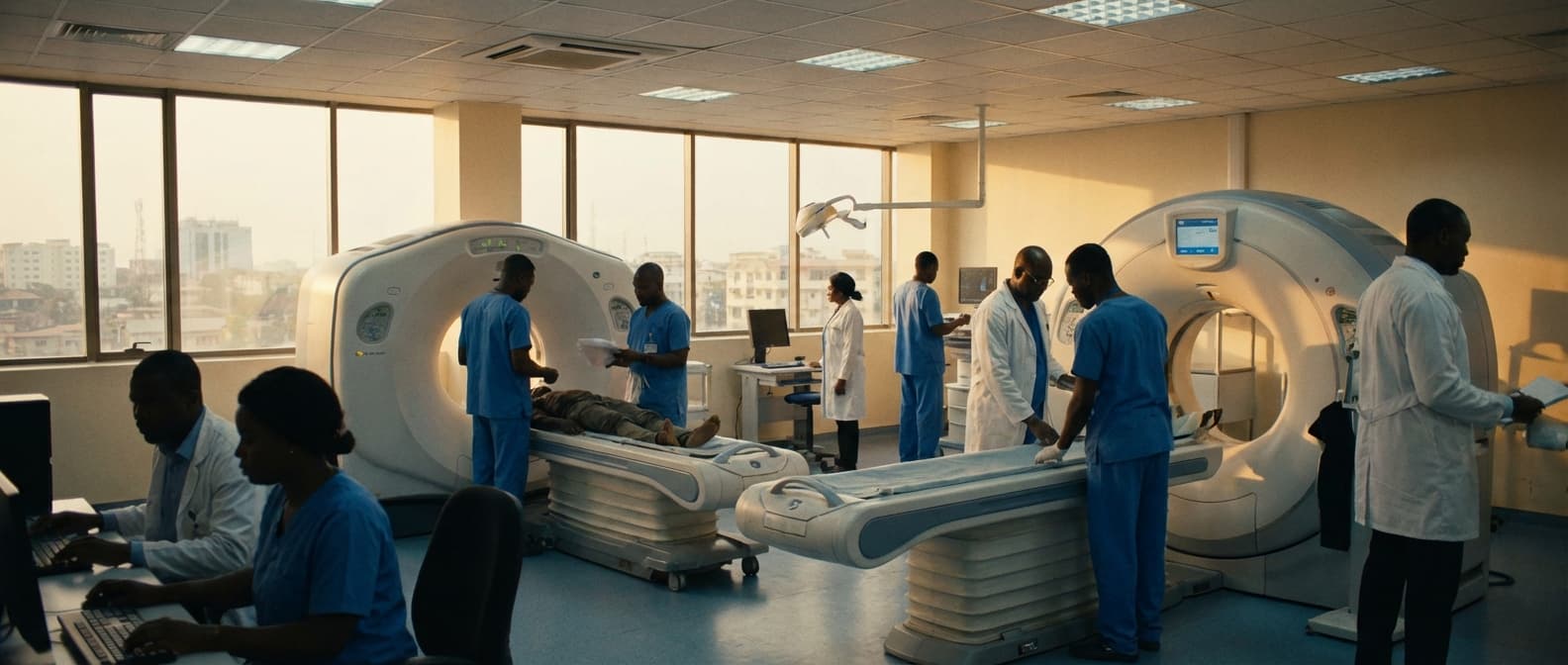
Radiology Room Design & Shielding Calculation in Eritrea
Engineering Excellence & Technical Support
Turnkey room planning, shielding drawings and approvals for imaging suites. High-standard technical execution following OEM protocols and local regulatory frameworks.
Optimized Radiation Shielding Design
Calculated and implemented precise lead shielding specifications for radiology rooms in Eritrea, ensuring compliance with international safety standards and minimizing radiation exposure to staff and patients. This included detailed analysis of X-ray and CT scanner radiation output, room geometry, and occupancy factors to determine optimal shielding thickness for walls, doors, and viewing windows.
Integrated Radiology Room Layout & Workflow Efficiency
Designed ergonomic and efficient radiology room layouts in Eritrea, considering optimal equipment placement, patient throughput, and staff movement. This involved creating 3D models to visualize workflow, identify potential bottlenecks, and ensure adequate space for diagnostic procedures, control areas, and patient waiting zones, all while respecting structural constraints.
Advanced Shielding Calculation Tools & Local Regulations
Leveraged advanced Monte Carlo simulation software for accurate radiation shielding calculations tailored to Eritrea's specific environmental conditions and available building materials. Ensured all designs met or exceeded local regulatory requirements for radiation safety in medical facilities, contributing to a safer healthcare environment.
What Is Radiology Room Design & Shielding Calculation In Eritrea?
Radiology room design and shielding calculation in Eritrea refers to the specialized engineering and architectural planning required for the construction or renovation of medical imaging facilities. This service encompasses the creation of appropriate room layouts to optimize workflow and patient safety, alongside precise calculations to determine the necessary radiation shielding for walls, doors, windows, and other structural elements. The objective is to ensure that radiation exposure levels for staff, patients (beyond the intended imaging procedure), and the general public remain below established regulatory limits, thereby guaranteeing radiation protection and compliance with national and international safety standards. This process involves understanding the types of imaging equipment to be installed (e.g., X-ray, CT, MRI, mammography, fluoroscopy, nuclear medicine), their respective radiation output, beam angulation, and operational parameters.
| Component | Description | Relevance to Shielding Calculation |
|---|---|---|
| Imaging Modality | Type of diagnostic equipment (e.g., general X-ray, CT scanner, MRI) | Determines the type, energy, and intensity of radiation produced, directly impacting shielding requirements. |
| kVp, mA, exposure time, duty cycle | Operational parameters of X-ray and CT equipment | Quantify the radiation output and dose, crucial for calculating shielding thickness. |
| Beam Angulation and Field Size | Direction and extent of the primary radiation beam | Defines the areas requiring the highest levels of shielding due to direct beam exposure. |
| Distance from Source | Distance between the radiation source and the shielded surface | Radiation intensity decreases with the square of the distance, influencing shielding design. |
| Occupancy Factor | Fraction of time a controlled area is occupied by personnel | Accounts for the expected radiation exposure to individuals in adjacent areas. |
| Workload | Estimated weekly radiation output of the equipment | Represents the total radiation produced, a key factor in shielding calculations. |
| Shielding Material | Lead, concrete, baryte plaster, etc. | Each material has specific attenuation properties that determine the required thickness for a given radiation level. |
Key Aspects of Radiology Room Design & Shielding Calculation
- Room Layout and Workflow Optimization: Designing the physical space to facilitate efficient patient throughput, staff movement, and equipment accessibility while minimizing cross-contamination and enhancing patient privacy.
- Radiation Shielding Design: Calculating and specifying the required thickness and type of shielding materials (e.g., lead, concrete, baryte plaster) for structural components to attenuate ionizing radiation.
- Equipment Integration: Incorporating the specific spatial, power, ventilation, and safety requirements of various diagnostic imaging modalities.
- Regulatory Compliance: Adhering to national radiation protection regulations and guidelines as set forth by the relevant authorities in Eritrea (e.g., the Ministry of Health and other relevant bodies that may oversee radiation safety).
- Safety Features: Integrating safety interlocks, warning lights, and emergency stops for radiation-producing equipment.
- Quality Assurance (QA) and Quality Control (QC) Considerations: Planning for space and access for future QA/QC testing of imaging equipment and the facility itself.
Who Needs Radiology Room Design & Shielding Calculation In Eritrea?
Radiology room design and shielding calculations are critical for ensuring the safety of patients and staff from radiation exposure, as well as for optimizing imaging equipment performance and patient throughput. In Eritrea, as healthcare infrastructure develops and advanced diagnostic imaging services become more prevalent, the need for specialized expertise in this area grows. This expertise is essential for any facility undertaking the installation or renovation of radiology departments, particularly those offering X-ray, CT, MRI, and potentially future nuclear medicine services.
| Department/Facility Type | Key Imaging Modalities Served | Specific Needs Addressed |
|---|---|---|
| General Hospitals (Government & Private) | X-ray, Fluoroscopy, CT Scans, potentially Ultrasound | Radiation shielding for X-ray rooms and CT suites, optimal layout for patient flow and equipment placement, compliance with national safety standards. |
| Specialized Diagnostic Centers | CT Scans, potentially MRI (requires specialized non-ionizing radiation considerations for room design, but shielding principles are still relevant for ancillary equipment and stray magnetic fields) | Shielding calculations for CT scanners, magnetic shielding considerations for MRI environments, room acoustics, and temperature control for sensitive equipment. |
| Oncology Centers (if available or planned) | CT Scans (for treatment planning and monitoring), potentially PET/CT (requires specialized nuclear medicine shielding and ventilation) | Advanced shielding for high-energy radiation sources, compliance with strict radiation safety protocols, ventilation requirements for radioactive materials. |
| Orthopedic Clinics | X-ray, Fluoroscopy | Shielding for standard X-ray rooms, efficient room layout for patient positioning and image acquisition. |
| Ministry of Health / Public Health Infrastructure Projects | All modalities, often at district or regional hospitals | Standardization of radiology room design and safety protocols across public health facilities, ensuring cost-effective and compliant installations. |
Target Customers & Departments in Eritrea Needing Radiology Room Design & Shielding Calculations:
- Government Hospitals: The Ministry of Health's flagship hospitals, which are likely to house the most advanced imaging equipment and serve a broad patient population, are primary targets. They often undertake large-scale renovations and new constructions.
- Private Hospitals & Diagnostic Centers: As the private healthcare sector expands in Eritrea, private facilities investing in modern radiology suites will require these specialized services to ensure compliance and quality.
- Specialized Medical Clinics: Clinics focusing on orthopedics, oncology, or other specialties that rely heavily on diagnostic imaging will need to design or upgrade their imaging rooms.
- Referral Centers: Facilities that serve as referral points for other healthcare providers will need to ensure their radiology departments are up-to-date and safe.
- Educational & Research Institutions (if applicable): Universities or medical training centers with diagnostic imaging programs would benefit from compliant and well-designed rooms for teaching and potential research.
- Radiology Departments within Larger Facilities: Even within larger hospitals or complexes, the specific radiology department is the direct beneficiary of these design and calculation services.
- Construction & Architectural Firms: While not end-users of the service themselves, these firms will act as intermediaries, contracting for these calculations and designs on behalf of their healthcare clients. Partnering with such firms can be a key market entry strategy.
Radiology Room Design & Shielding Calculation Process In Eritrea
This document outlines the comprehensive workflow for radiology room design and shielding calculations in Eritrea, from the initial inquiry to the final execution. It details the key stages, responsibilities, and considerations involved in ensuring safe and compliant radiology facilities.
| Stage | Description | Key Stakeholders | Deliverables/Outputs | Key Considerations |
|---|---|---|---|---|
| Receive and review the request for designing and shielding a radiology room. Understand the client's needs, proposed modality, and budget. | Client (Hospital/Clinic), Project Manager, Consultant/Designer | Project brief, preliminary scope of work, initial timeline | Clarity of requirements, existing infrastructure limitations, regulatory framework understanding. |
| Conduct an on-site visit to assess the proposed location. Gather information on room dimensions, structural integrity, existing utilities, and adjacent areas. | Consultant/Designer, Client (Facilities Manager), Architect | Site survey report, architectural drawings, utility availability assessment | Room dimensions, wall construction, floor loading, potential for radiation leakage to occupied areas, access for construction. |
| Finalize the specific radiology equipment to be installed (e.g., X-ray, CT, mammography). Obtain detailed technical specifications, including workload, kVp, mA, filtration, and beam geometry. | Client (Radiology Department Head), Medical Physicist, Equipment Vendor | Equipment technical data sheets, workload estimates, prime factors (kVp, mA, filtration) | Modality type, expected patient throughput, energy spectrum of radiation, primary and secondary beam characteristics. |
| Utilize established standards (e.g., NCRP, ICRP) and software to calculate the required shielding thickness for walls, doors, windows, and floors based on workload, distance, and occupancy. | Medical Physicist, Radiation Protection Specialist, Consultant/Designer | Shielding calculation report, recommended material thicknesses (lead, concrete, etc.) | Workload, distance from source to receptor, occupancy factor, quality factor, shielding material properties, dose limits. |
| Develop detailed architectural plans for the radiology room, including equipment placement, patient positioning, control console location, viewing areas, and access points. Incorporate shielding requirements into the design. | Architect, Consultant/Designer, Medical Physicist, Client | Detailed architectural drawings, 3D models (optional), equipment placement diagrams, door and window specifications | Workflow efficiency, patient comfort, radiation safety (e.g., minimizing scatter), accessibility, aesthetics, integration of shielding materials. |
| Submit the design and shielding calculations to the relevant Eritrean regulatory authorities (e.g., Ministry of Health, Radiation Protection Authority) for review and approval. | Client, Consultant/Designer, Medical Physicist, Regulatory Authority | Approved architectural and shielding plans, permits | Compliance with national radiation safety regulations, adherence to international standards, completeness of documentation. |
| Procure all necessary construction materials, including lead shielding, specialized doors, viewing windows, and other components, ensuring they meet the specified requirements. | Client (Procurement Department), Contractor, Consultant/Designer | Procurement orders, material specifications, delivery schedules | Quality of materials, availability, lead times, cost-effectiveness, compliance with specifications. |
| Execute the construction and installation of the radiology room according to the approved plans. This includes building the walls, installing doors, windows, and integrating shielding materials. | Contractor, Site Supervisor, Consultant/Designer, Client | Constructed radiology room, installed components, progress reports | Quality of workmanship, adherence to design specifications, on-time completion, site safety protocols, proper integration of shielding. |
| After construction, conduct radiation surveys and measurements to verify the effectiveness of the installed shielding. This ensures that radiation levels are within permissible limits. | Medical Physicist, Radiation Protection Specialist | Radiation survey report, shielding verification certificate | Accurate measurement techniques, use of calibrated equipment, assessment of all potential leakage points, comparison with regulatory limits. |
| Conduct a final inspection of the completed radiology room with all stakeholders. Address any outstanding issues and formally hand over the room to the client. | Client, Consultant/Designer, Contractor, Regulatory Authority (optional) | Final inspection report, certificate of completion, operational and maintenance manuals | Client satisfaction, resolution of punch list items, comprehensive documentation, training (if applicable). |
Radiology Room Design & Shielding Calculation Workflow in Eritrea
- Inquiry & Initial Consultation
- Site Assessment & Data Gathering
- Equipment Selection & Technical Specifications
- Shielding Calculation Process
- Room Layout & Design
- Regulatory Review & Approval
- Procurement & Material Sourcing
- Construction & Installation
- Shielding Verification & Testing
- Final Inspection & Handover
Radiology Room Design & Shielding Calculation Cost In Eritrea
Designing and calculating shielding for radiology rooms in Eritrea involves several key factors that influence the overall cost. These include the type and size of the radiology equipment, the room's dimensions and layout, the required lead shielding thickness, architectural considerations, and the expertise of the professionals involved. Due to the specific economic conditions and market in Eritrea, obtaining precise, universally applicable pricing is challenging. Costs are typically negotiated on a project-by-project basis and can vary significantly. Local availability of materials and skilled labor also plays a crucial role.
Pricing Factors:
- Equipment Type and Power: The more powerful the X-ray, CT, or other imaging equipment, the thicker the shielding required, directly impacting material and labor costs.
- Room Size and Configuration: Larger rooms necessitate more shielding materials. Complex layouts or the need for specialized ventilation can also add to the design and construction expense.
- Shielding Material Thickness: This is determined by international radiation safety standards and the specific equipment's output. Higher lead content or thicker materials will increase costs.
- Architectural Integration: The ease with which shielding can be integrated into the existing or planned building structure affects labor and material waste.
- Professional Fees: Costs for radiologists, radiation physicists, architects, and specialized contractors will vary based on their experience and reputation.
- Material Sourcing and Transportation: The cost and availability of lead sheeting and other shielding materials within Eritrea or imported costs will be a significant factor.
- Labor Costs: The availability and skill level of local construction and installation labor will influence the overall project expense.
- Regulatory Compliance and Inspections: Costs associated with obtaining necessary permits and undergoing radiation safety inspections are often overlooked but are a component of the total.
Cost Ranges (Estimates in Eritrean Nakfa - ERN):
It's crucial to understand that these are very rough estimates. Actual costs can deviate significantly based on the specific project details and negotiation. It's highly recommended to obtain detailed quotes from local service providers.
For a standard diagnostic X-ray room (e.g., 3m x 3m), a preliminary estimate for design and basic shielding calculations might range from 50,000 to 150,000 ERN. This would typically cover the initial consultation, radiation physics calculations, and basic architectural drawings for shielding.
For more complex installations like a CT scanner room, the costs for design and shielding calculations could escalate to 100,000 to 300,000+ ERN. This increase is due to higher shielding requirements, more intricate design considerations, and potentially specialized equipment integration.
Important Considerations for Eritrea:
- Importation Costs: Eritrea may have limited local manufacturing for specialized shielding materials. Import duties, shipping, and customs clearance will add substantially to material costs.
- Availability of Specialists: The number of qualified radiation physicists and specialized contractors in Eritrea might be limited, potentially leading to higher fees or longer project timelines.
- Currency Volatility: While the ERN is the official currency, understanding its stability and any potential parallel market rates is important for budget planning if international suppliers are involved.
Disclaimer: These figures are purely indicative. For accurate budgeting, direct consultation with Eritrean-based architectural firms, radiation safety consultants, and construction companies specializing in medical facilities is essential.
| Service Type | Estimated Cost Range (ERN) |
|---|---|
| Design & Basic Shielding Calculations (Standard X-ray Room) | 50,000 - 150,000 |
| Design & Shielding Calculations (CT Scanner Room) | 100,000 - 300,000+ |
| Material Costs (per sq meter, highly variable) | Highly Dependent on Thickness and Sourcing |
| Professional Consultation (Radiation Physicist/Architect) | Variable per hour/project |
Key Factors Influencing Radiology Room Design & Shielding Calculation Costs in Eritrea
- Equipment Type and Power Output
- Room Dimensions and Layout
- Required Shielding Material Thickness (Lead, etc.)
- Integration with Building Architecture
- Fees for Radiologists and Radiation Physicists
- Costs of Shielding Materials (Local vs. Imported)
- Labor Rates for Installation and Construction
- Permitting and Regulatory Compliance Fees
- Transportation and Logistics of Materials
Affordable Radiology Room Design & Shielding Calculation Options
Designing and equipping a radiology room while adhering to stringent radiation safety standards can be a significant investment. This guide explores affordable design options, effective shielding calculations, and cost-saving strategies. We'll break down the components of a successful radiology room project, offering insights into value bundles and practical tips to manage expenses without compromising safety or functionality.
| Value Bundle Components | Description | Cost-Saving Strategies |
|---|---|---|
| Basic Shielding Package | Includes essential lead lining for walls and doors, and basic shielding calculations based on standard protocols for common diagnostic X-ray rooms. | Opt for standard-sized lead panels. Utilize readily available concrete or block walls for some shielding. Focus on essential areas only. Use DIY calculation tools with professional review. |
| Standard Imaging Suite Package | Comprehensive shielding calculations, including door frames, viewing windows (if applicable), and protective barriers. May include a basic design consultation for layout. | Integrate shielding with structural elements where possible. Source lead from reputable, competitive suppliers. Consider pre-fabricated shielding components for faster installation. Negotiate bulk material discounts. |
| Advanced Modality Bundle (e.g., CT, Fluoroscopy) | Detailed shielding analysis for higher radiation output modalities, incorporating specific equipment attenuation data, interlocked doors, and potentially specialized materials. Includes preliminary workflow design. | Explore alternative shielding materials like baryte plaster for specific areas. Optimize window sizes and locations. Work with equipment vendors for shielding recommendations that integrate with their systems. Phased implementation of advanced features. |
| Turnkey Radiology Room Solution | A complete package encompassing design, shielding calculations, material procurement, installation, and potentially even equipment integration. Often offers the most streamlined approach. | Seek packages with transparent pricing and clear scope of work. Leverage vendor relationships for bundled discounts on materials and installation. Insist on detailed cost breakdowns to identify potential savings areas. |
| Consultation & Calculation Only | Professional services for accurate shielding calculations and design advice without material or installation procurement. Ideal for those managing their own construction. | Engage a consultant experienced in cost-effective design. Obtain multiple quotes from independent consultants. Clearly define the scope of work to avoid unnecessary charges. |
Key Considerations for Affordable Radiology Room Design & Shielding
- Understanding Your Imaging Modality: Different modalities (X-ray, CT, MRI, Fluoroscopy) have vastly different radiation output and shielding requirements. Tailoring the design to the specific equipment is crucial for cost efficiency.
- Regulatory Compliance: Adhering to local, state, and national radiation safety regulations (e.g., NCRP, IAEA guidelines) is non-negotiable. Understanding these requirements upfront prevents costly rework.
- Space Planning & Workflow: Efficient layout minimizes wasted space and optimizes staff and patient flow. This can reduce the overall footprint and associated construction costs.
- Shielding Material Selection: Lead is traditional, but alternatives like concrete, baryte plaster, or specialized composites can be cost-effective depending on the required attenuation.
- Shielding Calculation Accuracy: Precise calculations prevent over-shielding (unnecessary material cost) and under-shielding (safety hazard and regulatory violation).
- Equipment Integration: Planning for the physical and electrical requirements of the imaging equipment early on avoids costly modifications later.
- Ventilation and HVAC: Adequate airflow is essential for equipment longevity and patient comfort. Designing for this efficiently can save energy costs.
- Acoustic Considerations: Particularly for MRI, managing noise levels impacts patient comfort and staff well-being, and can be addressed cost-effectively during the design phase.
Verified Providers In Eritrea
In Eritrea's evolving healthcare landscape, identifying reliable and accredited medical professionals is paramount for patient well-being. Franance Health stands out as a leading organization dedicated to verifying and promoting high-quality healthcare providers. Their rigorous credentialing process ensures that the doctors, specialists, and facilities they endorse meet stringent international standards for competence, ethics, and patient care. Choosing a Franance Health verified provider means entrusting your health to professionals who have undergone thorough background checks, education verification, and ongoing performance evaluations. This commitment to transparency and excellence makes Franance Health credentials a strong indicator of superior medical services in Eritrea.
| Provider Type | Franance Health Verification Criteria | Why it Matters for Patients |
|---|---|---|
| Doctors (General Practitioners) | Verified medical degree from accredited institutions, valid licensure, good standing with medical boards. | Ensures foundational medical knowledge and ethical practice for primary care needs. |
| Specialists (e.g., Surgeons, Cardiologists) | In-depth verification of postgraduate training, specialized certifications, peer reviews, and relevant experience. | Guarantees expertise in specific medical fields, leading to more accurate diagnoses and effective treatments. |
| Hospitals and Clinics | Assessment of facility infrastructure, equipment standards, infection control protocols, and qualified staffing levels. | Indicates a safe and well-equipped environment for medical procedures and patient recovery. |
| Diagnostic Laboratories | Verification of technology, quality control measures, accreditation by relevant bodies, and skilled technicians. | Ensures accurate and reliable diagnostic results crucial for treatment planning. |
| Therapeutic Services (e.g., Physiotherapy) | Certification of practitioners, adherence to therapeutic protocols, and evidence-based practice. | Confirms that treatments are administered by qualified professionals using effective methods. |
Key Benefits of Choosing Franance Health Verified Providers:
- Assurance of professional competence and up-to-date medical knowledge.
- Confirmation of ethical practice and adherence to patient care standards.
- Access to specialists with verified qualifications and experience.
- Reduced risk of encountering unqualified or fraudulent practitioners.
- Peace of mind knowing your healthcare provider meets international benchmarks.
Scope Of Work For Radiology Room Design & Shielding Calculation
This Scope of Work (SOW) outlines the requirements for the design and shielding calculations for a radiology room. The project encompasses detailed architectural and structural design, radiation shielding calculations to ensure compliance with regulatory standards, and the preparation of technical deliverables. The objective is to create a safe, functional, and compliant radiology suite.
| Technical Deliverable | Description | Standard Specification / Reference |
|---|---|---|
| Radiology Room Layout Drawings | Detailed floor plans, elevations, and sections showing room dimensions, equipment placement, patient and staff pathways, and service access points. | Architectural Graphic Standards, Local Building Codes, Radiology Department Workflow Guidelines |
| Structural Design Drawings | Drawings indicating wall, floor, and ceiling construction, load-bearing requirements, and integration of shielding materials. | ACI 318 (Building Code Requirements for Structural Concrete), AISC (Steel Construction Manual), Local Building Codes |
| Radiation Shielding Calculation Report | Comprehensive report detailing the calculations for shielding thickness of walls, doors, windows, and other openings based on radiation type, workload, occupancy factors, and regulatory dose limits. | NCRP Report No. 147 (Structural Shielding Design and Evaluation for Medical Use of X Rays and Gamma Rays), NCRP Report No. 102 (Medical X-Ray, Electron Beam and Gamma-Ray Protection for Energies Up To 50 MeV (Equiv. of a 50 MeV proton)), Local Radiation Safety Regulations (e.g., FDA, State Health Department) |
| Shielding Material Specifications | Detailed specifications for all shielding materials, including lead, concrete densities, and specialized shielding composites, ensuring compliance with calculated requirements. | ASTM Standards for Lead Sheet (e.g., ASTM B749), Concrete Mix Design Standards, Manufacturer Specifications |
| Door and Window Design Details | Drawings and specifications for lead-lined doors, frames, and observation windows, including hardware and interlock systems. | Manufacturer Data Sheets, Local Building Codes, Radiation Protection Standards |
| HVAC Design Integration | Details on air changes per hour (ACH) required for infection control and comfort, with integration into the overall building HVAC system. | ASHRAE 170 (Ventilation of Health Care Facilities), Local Health Department Regulations |
| Electrical System Design Integration | Details on power requirements for imaging equipment, lighting, emergency power, and communication systems. | NFPA 70 (National Electrical Code), Local Electrical Codes, Equipment Manufacturer Specifications |
| Final Design Report | A consolidated report summarizing all design aspects, calculations, specifications, and compliance with relevant codes and standards. | Project-Specific Requirements, Regulatory Compliance Documentation |
Key Activities
- Architectural and Structural Design of Radiology Room
- Radiation Shielding Calculations
- HVAC and Electrical System Design Integration
- Door and Window Design and Shielding
- Preparation of Technical Deliverables
- Compliance with Regulatory Standards
Service Level Agreement For Radiology Room Design & Shielding Calculation
This Service Level Agreement (SLA) outlines the terms and conditions for the design and shielding calculation services for radiology rooms. It defines the expected response times for initial consultations, design deliverables, and shielding calculation reports, as well as the uptime guarantees for related online tools and communication channels.
| Service Component | Target Response Time | SLA Guarantee (Uptime) |
|---|---|---|
| Initial Consultation Request | 2 business days | N/A (Initial interaction) |
| Preliminary Radiology Room Design Concepts | 5 business days (after receipt of all required site information) | N/A (Deliverable) |
| Detailed Radiology Room Design Package (including floor plans, equipment placement, etc.) | 10 business days (after approval of preliminary concepts) | N/A (Deliverable) |
| Initial Shielding Calculation Report | 7 business days (after receipt of approved detailed design and relevant beam data) | N/A (Deliverable) |
| Revised Shielding Calculation Report (based on minor design changes) | 3 business days (after receipt of specific change requests) | N/A (Deliverable) |
| Online Collaboration Portal/Project Management Tool Access | N/A | 99.5% monthly uptime |
| Email/Phone Support for Urgent Queries | 4 business hours | N/A (Support channel) |
Key Service Metrics
- Response times are crucial for project initiation and progress.
- Uptime guarantees ensure consistent access to necessary resources.
- Clear definitions of service deliverables prevent misunderstandings.
Frequently Asked Questions

Ready when you are
Let's scope your Radiology Room Design & Shielding Calculation in Eritrea project in Eritrea.

Scaling healthcare logistics and technical systems across the entire continent.