
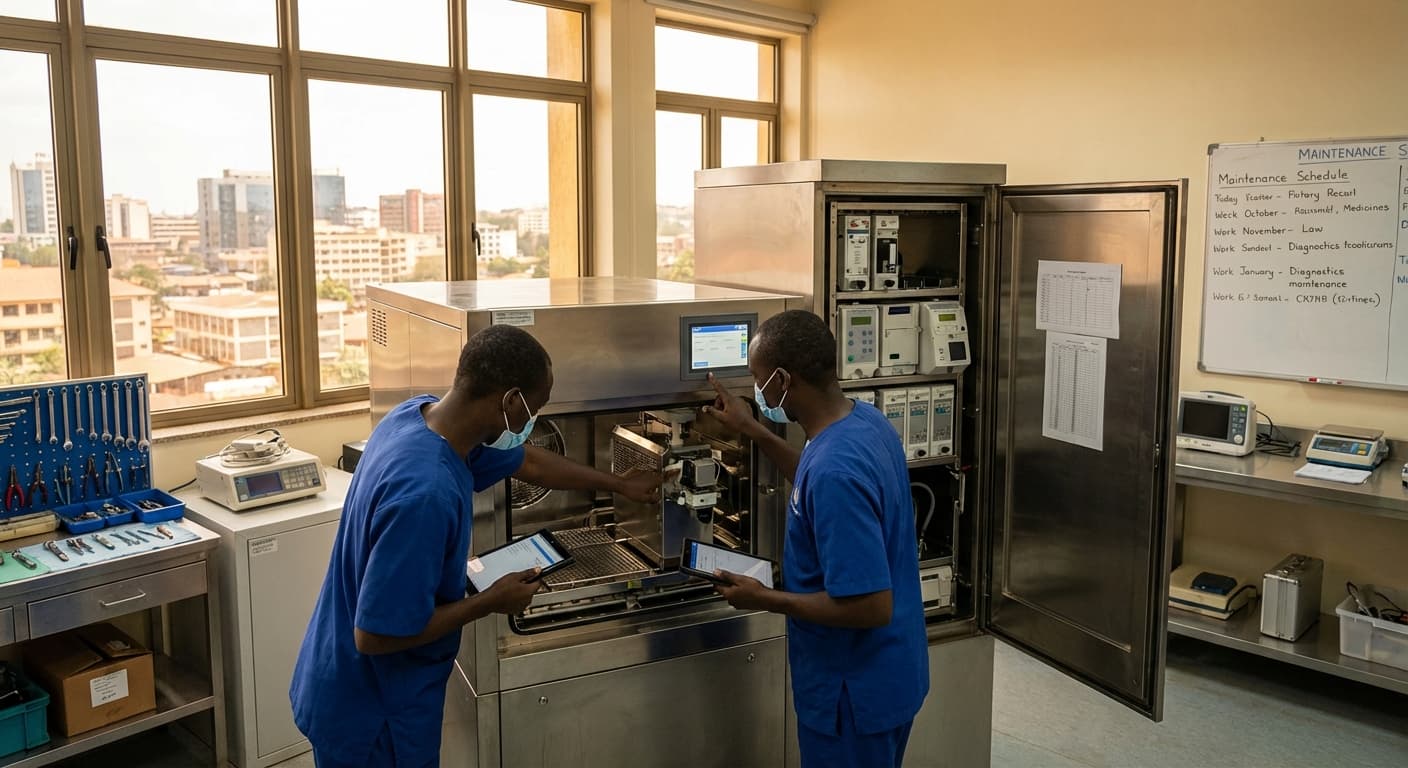
Total Cost of Ownership (TCO) & Lifecycle Budgeting Service in Eritrea
Engineering Excellence & Technical Support
Total Cost of Ownership (TCO) & Lifecycle Budgeting Service High-standard technical execution following OEM protocols and local regulatory frameworks.
Predictive TCO Modeling for Eritrea's Infrastructure
Our service leverages advanced analytics and Eritrea-specific data (e.g., energy costs, import duties, maintenance schedules, local labor rates) to build accurate predictive Total Cost of Ownership models. This empowers Eritrean businesses and government agencies to foresee long-term expenditures for critical assets like energy generation, transportation fleets, and agricultural machinery, enabling informed procurement and investment decisions.
Lifecycle Budgeting for Sustainable Asset Management in Eritrea
We provide comprehensive lifecycle budgeting services tailored to the Eritrean context, integrating initial capital outlay, operational expenses, maintenance, repair, and eventual decommissioning or disposal costs. This ensures that all phases of an asset's life are financially accounted for, promoting sustainable resource allocation and preventing unforeseen budget deficits for Eritrean organizations.
Risk Mitigation through TCO Analysis for Eritrean Industries
Our TCO and Lifecycle Budgeting service identifies potential financial risks inherent in asset acquisition and management within Eritrea. By performing thorough analyses, we highlight areas prone to cost overruns due to environmental factors, regulatory changes, or supply chain volatility, providing Eritrean enterprises with the foresight to implement robust risk mitigation strategies and safeguard their financial stability.
What Is Total Cost Of Ownership (Tco) & Lifecycle Budgeting Service In Eritrea?
Total Cost of Ownership (TCO) and Lifecycle Budgeting Service in Eritrea refers to a comprehensive financial management methodology designed to identify, quantify, and forecast all direct and indirect costs associated with an asset or system throughout its entire lifespan. This encompasses initial acquisition, operation, maintenance, upgrades, and eventual disposal. The service aims to provide stakeholders with a holistic financial perspective, moving beyond simple purchase price to inform strategic decision-making, optimize resource allocation, and mitigate long-term financial risks. It involves detailed cost analysis, projection modeling, and the development of multi-year budget frameworks. This service is crucial for entities seeking to make informed investment decisions, enhance asset performance, and achieve greater financial predictability and control within the Eritrean economic context.
| Who Needs It? | Typical Use Cases | ||
|---|---|---|---|
| Government Ministries and Agencies (for infrastructure projects, public services, fleet management) | Acquisition of major public infrastructure (e.g., roads, power plants, water treatment facilities) | Procurement of large vehicle fleets (e.g., public transportation, utility vehicles) | Implementation of new IT systems and software solutions |
| State-Owned Enterprises (SOEs) (for operational assets, capital investments, efficiency improvements) | Assessment of long-term operational costs for industrial equipment (e.g., mining machinery, manufacturing lines) | Planning for the replacement or upgrade of critical operational assets | Developing budgets for energy consumption and associated maintenance of facilities |
| Large Private Sector Corporations (for capital expenditures, operational efficiency, competitive advantage) | Evaluating the financial viability of new business ventures or expansions | Optimizing maintenance and repair schedules for specialized equipment | Managing the lifecycle costs of commercial building portfolios |
| International Development Organizations and NGOs (for project sustainability, financial accountability) | Assessing the long-term financial implications of development projects (e.g., educational facilities, healthcare centers) | Ensuring the sustainability of infrastructure investments post-project completion | Managing the lifecycle costs of donated or funded equipment |
| Financial Institutions (for lending and investment decisions, risk assessment) | Evaluating the total financial commitment of assets financed through loans or leases | Assessing the operational and maintenance risks associated with financed assets |
Key Components of TCO & Lifecycle Budgeting Service:
- Cost Identification and Categorization (e.g., acquisition, installation, operational, maintenance, repair, replacement, disposal)
- Data Collection and Analysis (historical spending, market research, expert consultation)
- Forecasting and Projection Modeling (utilizing statistical methods and scenario planning)
- Risk Assessment and Mitigation Strategies (identifying potential cost overruns and contingency planning)
- Benchmarking and Best Practice Integration (comparing against industry standards and optimizing for efficiency)
- Development of Lifecycle Budget Frameworks (multi-year financial plans)
- Reporting and Performance Monitoring (tracking actual costs against projections and identifying variances)
Who Needs Total Cost Of Ownership (Tco) & Lifecycle Budgeting Service In Eritrea?
In Eritrea, businesses and organizations across various sectors can significantly benefit from Total Cost of Ownership (TCO) and Lifecycle Budgeting services. These services are crucial for making informed financial decisions, optimizing resource allocation, and ensuring long-term sustainability of assets and projects. By understanding the full financial implications from acquisition to disposal, entities can avoid hidden costs, improve profitability, and achieve greater operational efficiency.
| Target Customer/Organization Type | Relevant Departments | Key Benefits of TCO & Lifecycle Budgeting |
|---|---|---|
| Government Ministries and Agencies | Public Works, Finance, Procurement, Planning, Transportation, Infrastructure | Long-term budget planning for public assets (roads, buildings, utilities), optimized public spending, strategic investment decisions, efficient resource allocation for national projects. |
| Large Industrial Enterprises | Operations, Finance, Procurement, Engineering, Maintenance, Asset Management | Cost optimization for machinery and equipment, improved profitability through reduced operational expenses, informed capital expenditure decisions, risk mitigation related to asset performance. |
| Infrastructure Development Companies | Project Management, Finance, Engineering, Procurement, Operations | Accurate project budgeting, identification of long-term maintenance and operational costs for infrastructure projects, enhanced return on investment (ROI) calculations, effective planning for asset lifespan. |
| Manufacturing and Production Facilities | Production, Finance, Procurement, Maintenance, Quality Control | Minimizing production costs through efficient equipment management, optimizing spare parts inventory, improving machine uptime, making informed decisions on equipment upgrades or replacements. |
| Telecommunications Providers | Network Operations, Finance, Procurement, Engineering, Asset Management | Strategic planning for network infrastructure investments, optimizing the lifecycle costs of equipment (towers, base stations, fiber optics), ensuring service reliability through proactive maintenance budgeting, managing technology obsolescence. |
| Energy and Mining Sectors | Operations, Finance, Procurement, Engineering, Maintenance, Exploration | High-cost asset management (heavy machinery, exploration equipment, power generation facilities), optimizing operational expenses, planning for decommissioning and environmental remediation costs, ensuring long-term project viability. |
| Agricultural Cooperatives and Large Farms | Operations, Finance, Procurement, Farm Management | Optimizing costs of agricultural machinery and equipment, efficient management of consumables and maintenance, planning for asset replacement, improving overall farm profitability. |
| Logistics and Transportation Companies | Fleet Management, Operations, Finance, Procurement, Maintenance | Managing the total cost of vehicle fleets (purchase, fuel, maintenance, insurance, resale value), optimizing route planning based on vehicle efficiency, ensuring timely fleet replacement, reducing operational downtime. |
| Educational Institutions (Universities, Large Schools) | Administration, Finance, Facilities Management, IT Department | Budgeting for building maintenance and upgrades, strategic IT hardware and software procurement, optimizing costs of laboratory equipment and other specialized assets, ensuring long-term operational efficiency of facilities. |
| Healthcare Providers (Hospitals, Clinics) | Administration, Finance, Biomedical Engineering, Procurement | Managing the lifecycle costs of medical equipment (imaging machines, surgical tools, diagnostic equipment), planning for replacements and upgrades, optimizing maintenance budgets, ensuring patient safety and service continuity. |
| Non-Governmental Organizations (NGOs) with significant asset bases | Finance, Operations, Program Management, Procurement | Ensuring efficient use of donor funds, maximizing the lifespan of program-related assets (vehicles, equipment, facilities), transparent financial reporting, strategic planning for long-term sustainability of operations. |
| Financial Institutions (Banks, Insurance Companies) with asset investments | Finance, Investment Management, Procurement, Facilities Management | Managing the lifecycle costs of IT infrastructure, branch facilities, and investment assets, optimizing operational expenditure, making informed decisions on asset divestment or acquisition, enhancing portfolio performance. |
Who Needs TCO & Lifecycle Budgeting Services in Eritrea? (Target Customers & Departments)
- Government Ministries and Agencies
- Large Industrial Enterprises
- Infrastructure Development Companies
- Manufacturing and Production Facilities
- Telecommunications Providers
- Energy and Mining Sectors
- Agricultural Cooperatives and Large Farms
- Logistics and Transportation Companies
- Educational Institutions (Universities, Large Schools)
- Healthcare Providers (Hospitals, Clinics)
- Non-Governmental Organizations (NGOs) with significant asset bases
- Financial Institutions (Banks, Insurance Companies) with asset investments
Total Cost Of Ownership (Tco) & Lifecycle Budgeting Service Process In Eritrea
This document outlines the Total Cost of Ownership (TCO) and Lifecycle Budgeting service process in Eritrea, detailing the workflow from initial inquiry to final execution. This structured approach ensures comprehensive cost analysis and financial planning for assets and projects throughout their entire lifespan within the Eritrean context.
| Stage | Description | Key Activities | Deliverables | Responsible Parties (Eritrea Context) |
|---|---|---|---|---|
| The client expresses interest in TCO and Lifecycle Budgeting services. | Initial contact, understanding client's general needs, explaining service offerings, discussing potential benefits for Eritrean businesses/projects. | Initial meeting notes, preliminary understanding of client needs, service proposal outline. | Client (Eritrean Organization/Government Body), Service Provider (Consultant/Financial Analyst). |
| Precisely defining the asset(s) or project(s) to be analyzed and the specific objectives of the TCO/budgeting exercise. | Detailed discussions to identify specific assets/projects, defining the lifecycle stages (acquisition, operation, maintenance, disposal), identifying key cost drivers, understanding reporting requirements, considering Eritrean regulatory and economic factors. | Detailed Scope of Work (SOW), agreed-upon lifecycle stages, identified cost categories, finalized objectives. | Client, Service Provider. |
| Gathering all relevant cost data for each lifecycle stage. | Collecting historical cost data (purchase price, operational expenses, maintenance records, energy consumption, labor costs, etc.), gathering market data and projections (inflation rates, currency fluctuations relevant to Eritrea), identifying hidden costs and potential risks. This stage may involve site visits and interviews with relevant Eritrean personnel. | Cleaned and organized cost database, identified cost drivers and their impact, risk assessment report. | Service Provider, Client (for providing access and data). May involve collaboration with Eritrean ministries or relevant authorities for macro-economic data. |
| Building a comprehensive model to project all costs over the defined lifecycle. | Utilizing specialized software or spreadsheets, inputting collected data, applying discount rates (considering Eritrean economic conditions), forecasting future costs, incorporating potential scenarios (e.g., price changes, technological advancements), calculating TCO and generating lifecycle budgets. | TCO calculation report, detailed lifecycle budget projections, scenario analysis outputs. | Service Provider. |
| Communicating the findings and recommendations to the client. | Developing a clear and concise report summarizing the TCO and lifecycle budget, highlighting key cost drivers, risks, and opportunities. Presenting findings to client stakeholders, explaining methodologies, and answering questions. Visual aids and charts to illustrate data. | Comprehensive TCO and Lifecycle Budgeting Report, Presentation slides, Executive Summary. | Service Provider, Client. |
| Client reviews the report and provides feedback for adjustments. | Client stakeholders review the report, provide feedback, request clarifications or modifications. Service provider revises the model and report based on feedback. Final approval of the TCO and lifecycle budget. | Revised report and model, formal client approval sign-off. | Client, Service Provider. |
| Putting the approved lifecycle budget into practice and tracking actual costs against projections. | Integrating the lifecycle budget into the client's financial planning and operational processes. Establishing mechanisms for ongoing cost tracking and performance monitoring. Regular reporting on expenditure against budget. | Integrated financial plans, ongoing cost tracking reports, performance dashboards. | Client (Finance & Operations departments), Service Provider (for initial setup and guidance). |
| Continuously managing assets and projects based on the TCO and lifecycle budget to achieve optimal financial performance. | Regularly reviewing TCO and lifecycle budget assumptions, identifying areas for cost reduction or efficiency improvements, recommending proactive maintenance strategies, evaluating asset performance, making informed decisions about upgrades or replacements based on lifecycle cost considerations. This stage is crucial for long-term sustainability and resource allocation within Eritrea. | Periodic TCO/budget reviews, optimization recommendations, updated lifecycle plans. | Client, Service Provider (for ongoing advisory services). |
Total Cost of Ownership (TCO) & Lifecycle Budgeting Service Process in Eritrea
- Inquiry & Initial Consultation
- Scope Definition & Requirement Gathering
- Data Collection & Analysis
- TCO & Lifecycle Budgeting Model Development
- Report Generation & Presentation
- Review, Refinement & Approval
- Implementation & Monitoring
- Lifecycle Management & Optimization
Total Cost Of Ownership (Tco) & Lifecycle Budgeting Service Cost In Eritrea
Estimating the Total Cost of Ownership (TCO) and lifecycle budgeting for services in Eritrea involves a complex interplay of local economic conditions, regulatory frameworks, and the specific nature of the service being procured. TCO extends beyond the initial purchase price to encompass all costs incurred over the entire lifespan of a service or asset, including acquisition, implementation, operation, maintenance, and eventual disposal. Lifecycle budgeting integrates these TCO considerations into a comprehensive financial plan. In Eritrea, pricing factors are heavily influenced by the country's economic environment, which is characterized by a fixed exchange rate for the Nakfa (ERN) against the US Dollar, import restrictions, and a developing infrastructure. This often leads to higher prices for imported goods and services, as well as a premium for local availability and expertise.
| Service Type Example | Estimated TCO Component Range (ERN per year) | Notes on Pricing |
|---|---|---|
| IT Hardware (Servers, Workstations) | 15% - 30% of initial acquisition cost | Includes depreciation, maintenance, power, potential replacements, software licensing. Higher end reflects frequent hardware upgrades or unreliable power. |
| Software Licenses (SaaS/On-Premise) | 10% - 25% of initial license cost (annual subscription/maintenance) | Depends on vendor, support level, and if local hosting/support is required. |
| Telecommunications (Internet, Voice) | 200 - 2,000+ ERN per month | Highly variable based on bandwidth, service provider, and location. Premium for dedicated lines or higher speeds. |
| Fleet Vehicles (Company Cars) | 20% - 40% of vehicle acquisition cost (annual) | Includes fuel, maintenance, insurance, driver salaries, potential import duties on parts, and depreciation. |
| Specialized Industrial Equipment | 10% - 35% of acquisition cost (annual) | Significant impact from import duties, specialized maintenance contracts, spare parts availability, and potential expatriate technician costs. |
| Consulting & Project Management | 500 - 5,000+ ERN per day (local) | Expatriate consultants will be significantly higher. Rate depends on expertise and duration. |
| Building Maintenance & Utilities | 10% - 20% of rental/ownership cost (annual) | Includes electricity, water, cleaning, general repairs. Higher end for older buildings or areas with unreliable utility supply. |
Key Pricing Factors for TCO & Lifecycle Budgeting Services in Eritrea
- {"title":"Import Duties and Taxes","description":"Taxes levied on imported goods and services significantly inflate the initial acquisition cost and ongoing operational costs if components or specialized support need to be imported."}
- {"title":"Exchange Rate Fluctuations (and Fixed Rate Impact)","description":"While the official exchange rate is fixed, the availability of foreign currency can be a bottleneck. This can lead to informal market rates or delays in procurement, impacting project timelines and overall cost."}
- {"title":"Local Labor and Expertise","description":"The availability and cost of skilled local labor for installation, operation, maintenance, and support are crucial. Scarcity of specialized skills can drive up labor costs or necessitate expensive expatriate involvement."}
- {"title":"Infrastructure Reliability","description":"The reliability of local infrastructure (e.g., power, internet connectivity) can impact operational costs. Investments in backup power, redundant internet connections, or localized solutions may be necessary, adding to TCO."}
- {"title":"Vendor Margins and Local Representation","description":"Local distributors and service providers will factor in their operational costs, risk, and profit margins, which can vary significantly."}
- {"title":"Warranty and Support Agreements","description":"The terms and cost of warranties and ongoing support agreements are vital for lifecycle budgeting. Extended warranties or comprehensive support packages will increase upfront or annual costs."}
- {"title":"Training and Capacity Building","description":"The need for training local staff to operate and maintain the service can be a significant cost component, especially if specialized training programs are required."}
- {"title":"Regulatory Compliance and Licensing","description":"Any licensing fees, permits, or compliance requirements specific to Eritrea will add to the overall cost."}
- {"title":"Logistics and Transportation","description":"The cost of transporting goods and personnel within Eritrea can be substantial due to the country's geography and infrastructure."}
- {"title":"Inflationary Pressures","description":"While official inflation figures can be managed, the underlying cost of goods and services can still be subject to internal price adjustments."}
Affordable Total Cost Of Ownership (Tco) & Lifecycle Budgeting Service Options
Our Affordable Total Cost of Ownership (TCO) & Lifecycle Budgeting services are designed to provide businesses with comprehensive financial clarity and strategic cost optimization throughout the entire lifespan of their assets, projects, or services. We empower organizations to make informed decisions by accurately forecasting, tracking, and managing all direct and indirect costs associated with acquisition, operation, maintenance, and disposal. Our approach focuses on identifying hidden costs, maximizing asset utilization, and minimizing long-term expenditures. We offer flexible value bundles and proven cost-saving strategies to fit diverse business needs and budgets.
| Value Bundle | Description | Key Features | Ideal For | Pricing Tier |
|---|---|---|---|---|
| Foundational TCO Assessment | A core service focused on identifying and quantifying the primary costs associated with a specific asset or project over its typical lifecycle. | Initial cost analysis, operational cost estimation, maintenance cost forecasting, basic disposal cost projection. | Small to medium-sized businesses, new project evaluations, single asset analysis. | Bronze |
| Strategic Lifecycle Budgeting Package | Expands on the foundational assessment by incorporating more detailed budgeting and forecasting across multiple lifecycle stages and potential scenarios. | Comprehensive TCO analysis, detailed operational & maintenance budgeting, scenario planning (e.g., upgrade vs. replacement), depreciation modeling, basic risk assessment. | Growing businesses, departments with multiple assets, organizations seeking more robust financial planning. | Silver |
| Enterprise-Wide TCO Optimization Suite | A holistic and in-depth service designed for large organizations to embed TCO principles across their entire portfolio, driving significant long-term cost savings and strategic advantage. | Full lifecycle cost modeling, predictive maintenance integration, total asset management strategy, ongoing performance monitoring & optimization, detailed risk analysis and mitigation, custom reporting dashboards, integration with existing ERP/financial systems. | Large enterprises, organizations with complex asset portfolios, companies focused on continuous improvement and strategic financial management. | Gold |
| Custom TCO Solutions | Tailored services designed to address unique business requirements, specific industry challenges, or specialized asset management needs. | Bespoke TCO methodologies, industry-specific cost drivers, unique asset types, integration with specialized software, dedicated consultant support. | Businesses with unique operational models, highly specialized industries, organizations with specific data or reporting needs. | Platinum |
Key Benefits of TCO & Lifecycle Budgeting Services
- Enhanced Financial Predictability: Gain accurate insights into future expenditures, enabling better financial planning and resource allocation.
- Optimized Investment Decisions: Make data-driven choices regarding asset acquisition, technology upgrades, and project investments by understanding their true long-term cost.
- Reduced Operational Expenses: Identify inefficiencies and implement strategies to lower operating, maintenance, and support costs.
- Maximized Asset Lifespan & Value: Extend the useful life of assets and ensure they deliver maximum return on investment.
- Improved Risk Management: Proactively identify and mitigate financial risks associated with asset failure, obsolescence, or unexpected maintenance needs.
- Streamlined Budgeting Processes: Simplify and automate budget creation and management for all lifecycle phases.
- Increased Profitability: By reducing overall costs, businesses can improve their profit margins and competitive positioning.
- Sustainable Financial Practices: Align financial strategies with environmental and social responsibility goals through informed lifecycle assessments.
Verified Providers In Eritrea
In the evolving landscape of healthcare in Eritrea, identifying truly verified and credible providers is paramount for ensuring quality and safety. This document aims to highlight the significance of verified health credentials, focusing on Franance Health as a prime example of a provider that exemplifies excellence and trustworthiness. Understanding what constitutes a verified provider and why entities like Franance Health stand out is crucial for individuals and organizations seeking reliable healthcare solutions.
| Aspect of Verification | Franance Health's Approach | Significance for Patients |
|---|---|---|
| Licensing and Certification | All medical professionals possess valid Eritrean licenses and recognized international certifications. Regular checks are conducted. | Guarantees that practitioners are legally authorized and possess the necessary skills and knowledge for safe and effective treatment. |
| Professional Experience | A thorough review of past performance, references, and areas of specialization is undertaken for all staff. | Ensures patients are treated by individuals with proven expertise in their respective fields. |
| Ethical Conduct and Professionalism | Franance Health adheres to a strict code of ethics and has robust mechanisms for addressing any professional misconduct. | Provides peace of mind that patients will receive respectful, honest, and unbiased care. |
| Facility and Equipment Standards | Facilities are maintained to high standards of hygiene and safety, with investments in modern, well-calibrated medical equipment. | Ensures a safe and effective treatment environment, with access to appropriate diagnostic and therapeutic tools. |
| Regulatory Compliance | Proactive engagement with Eritrean Ministry of Health guidelines and any relevant international health organization standards. | Confirms that the provider operates within the legal framework, prioritizing public health and safety. |
Why Franance Health Represents the Best Choice for Verified Healthcare in Eritrea
- Unwavering Commitment to Regulatory Compliance: Franance Health prioritizes adherence to all Eritrean health regulations and international best practices, ensuring their operations meet the highest standards of quality and safety.
- Rigorous Professional Credentialing: All healthcare professionals at Franance Health undergo a stringent verification process for their licenses, certifications, and qualifications. This ensures that patients are treated by competent and experienced individuals.
- Transparent and Accessible Information: Franance Health believes in empowering patients with knowledge. They provide clear and accessible information about their services, practitioners, and any relevant accreditations.
- Focus on Patient-Centric Care: Beyond credentials, Franance Health is dedicated to a patient-first approach, emphasizing compassionate care, ethical practices, and personalized treatment plans.
- Investment in Modern Healthcare Infrastructure: The organization invests in up-to-date medical equipment and facilities, further reinforcing their commitment to delivering advanced and effective healthcare services.
- Strong Community Trust and Reputation: Franance Health has cultivated a reputation for reliability and excellence within the Eritrean community, built on a consistent track record of positive patient outcomes and ethical conduct.
Scope Of Work For Total Cost Of Ownership (Tco) & Lifecycle Budgeting Service
This Scope of Work (SOW) outlines the services to be provided for conducting a comprehensive Total Cost of Ownership (TCO) and Lifecycle Budgeting analysis for [Client Name/Project Name]. The objective is to establish a clear understanding of all direct and indirect costs associated with an asset, system, or project over its entire lifespan, enabling informed decision-making, strategic planning, and optimized resource allocation. The service includes data collection, analysis, modeling, reporting, and the development of a robust lifecycle budgeting framework.
| Technical Deliverable | Description | Standard Specifications / Format | Owner |
|---|---|---|---|
| Project Kick-off Meeting Minutes | Summary of initial meeting, outlining project objectives, scope, stakeholders, communication plan, and key assumptions. | Digital document (e.g., PDF, DOCX). | Service Provider |
| Data Collection Plan | Detailed plan for identifying, gathering, and validating all relevant cost data from various sources. | Digital document (e.g., PDF, DOCX) outlining data points, sources, responsible parties, and timelines. | Service Provider |
| Validated Cost Data Repository | Centralized repository of all collected and validated cost data, categorized by lifecycle phase and cost type. | Digital format (e.g., Excel spreadsheet, CSV, database extract). | Service Provider |
| TCO Model | A dynamic model that quantifies all costs over the asset/system/project lifecycle. | Digital spreadsheet or specialized TCO software model. Must include assumptions, calculations, and sensitivity analysis capabilities. | Service Provider |
| TCO Analysis Report | Comprehensive report detailing the TCO findings, including breakdown by cost categories, lifecycle phases, and key drivers. Includes identification of cost-saving opportunities. | Digital document (e.g., PDF). Must include executive summary, methodology, detailed findings, recommendations, and appendices with supporting data. | Service Provider |
| Lifecycle Budgeting Framework | A structured approach and template for developing and managing budgets aligned with the asset/system/project lifecycle. | Digital document (e.g., PDF, Excel template). Includes guidelines, templates for annual/periodic budgeting, and integration with TCO findings. | Service Provider |
| Lifecycle Budget Report | Report outlining the proposed lifecycle budget, including funding requirements, phasing, and potential risks. Also includes reconciliation with TCO findings. | Digital document (e.g., PDF). | Service Provider |
| Executive Presentation | A high-level presentation summarizing the TCO findings, lifecycle budget, and key recommendations for stakeholders. | Digital presentation slides (e.g., PowerPoint, Google Slides). | Service Provider |
| Knowledge Transfer Session/Training Materials | Documentation and/or training sessions to enable the client to understand and maintain the TCO model and lifecycle budgeting framework. | Digital documents (e.g., user manuals, training guides) and/or presentation materials. | Service Provider |
Key Activities and Phases
- Phase 1: Project Initiation and Planning
- Phase 2: Data Collection and Validation
- Phase 3: TCO Modeling and Analysis
- Phase 4: Lifecycle Budgeting Development
- Phase 5: Reporting and Presentation
- Phase 6: Knowledge Transfer and Training
Service Level Agreement For Total Cost Of Ownership (Tco) & Lifecycle Budgeting Service
This Service Level Agreement (SLA) outlines the response times and uptime guarantees for the Total Cost of Ownership (TCO) and Lifecycle Budgeting Service (hereinafter referred to as 'the Service'). This SLA is an addendum to the Master Services Agreement between [Your Company Name] (hereinafter referred to as 'Provider') and [Client Company Name] (hereinafter referred to as 'Client').
| Service Component | Response Time Objective | Uptime Guarantee | Monitoring Method |
|---|---|---|---|
| Platform Availability | N/A (Continuous Monitoring) | 99.9% (Monthly Average) | Automated Infrastructure Monitoring (e.g., Pingdom, CloudWatch) |
| Technical Support (Bug Fixes & Issues) | Critical: 2 Business Hours; High: 4 Business Hours; Medium: 8 Business Hours; Low: 24 Business Hours | N/A | Ticketing System (e.g., Zendesk, Jira Service Management) & Internal Support Logs |
| Feature Request & Enhancement Submissions | Acknowledgement: 1 Business Day; Initial Review: 3 Business Days | N/A | Ticketing System |
| Reporting & Data Extraction | Standard Reports: Within 1 Business Hour of Request; Custom Reports: As per agreed project timelines | N/A | Service Platform & User Confirmation |
| Data Upload & Processing | Real-time (for automated feeds); Batch Processing: Within 4 Business Hours of file submission | N/A | Service Platform Logs & User Confirmation |
Service Overview
- The Service encompasses the provision of tools, methodologies, and expert support to accurately calculate, manage, and forecast the Total Cost of Ownership (TCO) and lifecycle budgets for assets and projects.
- This includes but is not limited to: data aggregation, cost modeling, scenario analysis, financial reporting, and strategic budget planning assistance.
- The Service is delivered via a cloud-based platform, accessible through a secure web portal.
Frequently Asked Questions

Ready when you are
Let's scope your Total Cost of Ownership (TCO) & Lifecycle Budgeting Service in Eritrea project in Eritrea.

Scaling healthcare logistics and technical systems across the entire continent.