
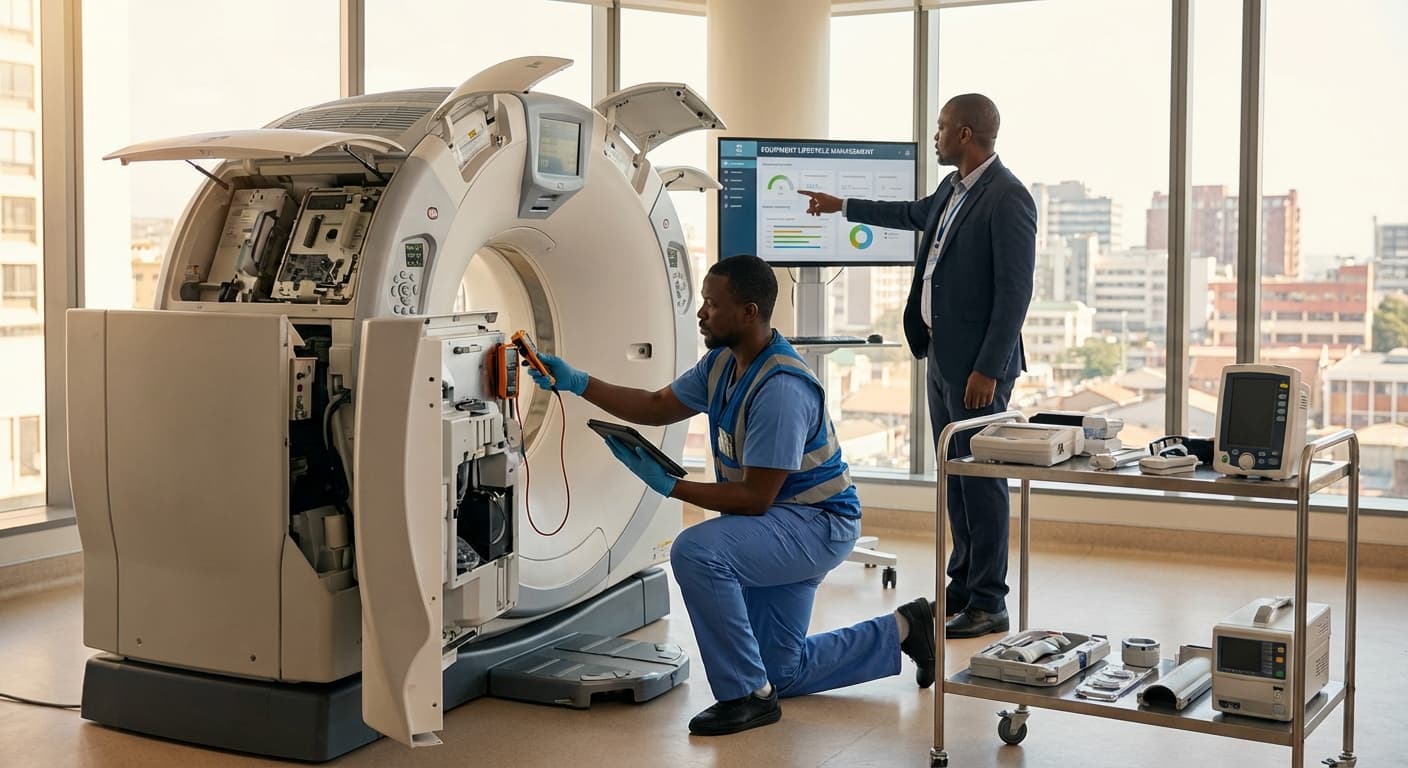
Equipment Replacement Planning & Obsolescence Strategy Service in Eritrea
Engineering Excellence & Technical Support
Equipment Replacement Planning & Obsolescence Strategy Service High-standard technical execution following OEM protocols and local regulatory frameworks.
Proactive Obsolescence Mitigation
Leverage advanced risk assessment tools and predictive analytics to identify critical equipment at high risk of obsolescence. Our service provides timely recommendations for strategic sourcing of replacement parts or phased equipment upgrades, minimizing operational disruptions and costly emergency procurements in Eritrea's evolving industrial landscape.
Lifecycle Cost Optimization
Implement data-driven lifecycle cost analysis to determine the optimal replacement timing for your assets. We assess total cost of ownership, factoring in maintenance, energy efficiency, and projected performance degradation, ensuring that capital expenditure decisions for equipment in Eritrean facilities align with long-term financial sustainability and operational efficiency.
Resilient Supply Chain Integration
Develop robust replacement planning strategies that account for Eritrea's unique logistical challenges and global supply chain vulnerabilities. Our service helps establish diversified supplier relationships and contingency plans, ensuring a secure and reliable flow of essential replacement parts and new equipment to maintain operational continuity and national infrastructure resilience.
What Is Equipment Replacement Planning & Obsolescence Strategy Service In Eritrea?
Equipment Replacement Planning & Obsolescence Strategy Service in Eritrea pertains to the systematic management of an organization's physical assets, specifically focusing on determining optimal times for equipment renewal and mitigating risks associated with outdated technology. This service is critical for maintaining operational efficiency, ensuring regulatory compliance, controlling capital expenditures, and preserving competitive advantage within the Eritrean industrial and commercial landscape. It involves a comprehensive assessment of an organization's current equipment inventory, its operational criticality, remaining useful life, maintenance costs, and the availability of suitable replacements, factoring in Eritrean economic conditions, import regulations, and local technical support capabilities.
| Who Needs This Service? | Typical Use Cases | |||||||||||||||||||
|---|---|---|---|---|---|---|---|---|---|---|---|---|---|---|---|---|---|---|---|---|
| Manufacturing and Industrial Enterprises: Businesses involved in production, processing, or mining operations where machinery reliability and efficiency are paramount. | Planned upgrades of critical production machinery to enhance throughput and reduce downtime in sectors like food processing, textiles, or light manufacturing. | Replacement of aging mining equipment to meet production targets and improve safety standards. | Agricultural Cooperatives and Large Farms: Organizations utilizing substantial agricultural machinery and processing equipment. | Scheduled replacement of tractors, harvesters, or irrigation systems to align with seasonal demands and technological advancements. | Energy and Utilities Sector: Companies responsible for power generation, distribution, or water treatment. | Upgrading outdated power generation units to meet increased demand and regulatory emission standards. | Replacement of aging water purification or distribution infrastructure to ensure service continuity and quality. | Transportation and Logistics Companies: Businesses operating fleets of vehicles or specialized transport equipment. | Fleet modernization to incorporate fuel-efficient and technologically advanced vehicles. | Replacement of specialized cargo handling equipment at ports or logistics hubs. | Healthcare and Medical Institutions: Hospitals and clinics relying on specialized medical equipment. | Strategic replacement of diagnostic imaging systems or surgical equipment to maintain patient care quality and avoid obsolescence. | Government Agencies and Public Infrastructure: Entities managing public assets such as roads, bridges, or public works machinery. | Planned renewal of road construction and maintenance equipment. | Upgrading public utility infrastructure (e.g., water pumps, waste management machinery). | Telecommunications Providers: Companies managing communication infrastructure. | Phased replacement of legacy network equipment with modern, higher-capacity systems. | Construction and Mining Companies: Businesses heavily reliant on heavy machinery and specialized tools. | Developing a long-term plan for acquiring next-generation excavators, loaders, and drilling rigs. | Assessing the obsolescence risk of existing exploration and extraction machinery. |
Key Components of Equipment Replacement Planning & Obsolescence Strategy Service:
- Asset Inventory and Assessment: Cataloging all relevant equipment, including specifications, acquisition dates, condition, and maintenance history.
- Performance and Reliability Analysis: Evaluating current operational performance, failure rates, and the impact of equipment degradation on productivity and safety.
- Cost-Benefit Analysis: Quantifying the total cost of ownership for existing equipment versus the projected costs and benefits of replacement, including acquisition, installation, training, and disposal.
- Risk Assessment for Obsolescence: Identifying equipment susceptible to technological obsolescence, material shortages, or lack of vendor support, and assessing the potential impact on operations.
- Development of Replacement Scenarios: Creating short-term, medium-term, and long-term replacement plans, including phased approaches and potential upgrade paths.
- Technology Scouting and Future-Proofing: Researching emerging technologies and industry trends relevant to the Eritrean context to inform future investment decisions.
- Vendor and Supplier Evaluation: Assessing the reliability, support capabilities, and pricing of potential equipment suppliers and service providers operating in or accessible to Eritrea.
- Budgeting and Financial Planning: Developing realistic budgets for capital expenditure related to equipment replacement and maintenance.
- Disposal and Decommissioning Strategy: Planning for the safe, environmentally sound, and compliant disposal or resale of retired assets.
- Change Management and Training: Facilitating the transition to new equipment, including staff training and operational process adjustments.
Who Needs Equipment Replacement Planning & Obsolescence Strategy Service In Eritrea?
In Eritrea, a proactive approach to equipment replacement planning and obsolescence strategy is crucial for organizations seeking to maintain operational efficiency, minimize downtime, and ensure long-term sustainability. This service is particularly vital for entities that rely heavily on specialized or critical equipment, where sudden failures or the unavailability of parts can have significant consequences.
| Target Customer/Sector | Key Departments Involved | Why Equipment Replacement Planning & Obsolescence Strategy is Crucial |
|---|---|---|
| Manufacturing Sector (e.g., textile, food processing, metal fabrication) | Production, Maintenance, Engineering, Procurement, Finance | Ensuring continuous production, avoiding costly downtime, managing spare parts inventory, optimizing capital expenditure for new machinery, complying with safety standards. |
| Mining and Quarrying Operations | Mine Operations, Maintenance, Engineering, Procurement, Health & Safety | Maintaining high productivity, preventing safety hazards from aging equipment, managing the long lead times for specialized mining machinery, optimizing resource extraction. |
| Construction Companies | Project Management, Fleet Management, Maintenance, Procurement, Finance | Ensuring project timelines are met, reducing repair costs, optimizing the utilization of heavy machinery, managing the depreciation and eventual replacement of construction equipment. |
| Energy Sector (Oil & Gas, Power Generation) | Operations & Maintenance, Engineering, Technical Services, Procurement, Risk Management | Ensuring reliable energy supply, preventing catastrophic failures, managing the lifecycle of complex and high-value power generation and exploration equipment, adhering to stringent industry regulations. |
| Telecommunications Companies | Network Operations, Engineering, IT Infrastructure, Procurement, Asset Management | Maintaining network stability and service quality, managing the rapid technological advancements and obsolescence of network infrastructure, ensuring data security, planning for upgrades and replacements of core network equipment. |
| Ministry of Agriculture/Large Agri-businesses | Farm Operations, Maintenance Workshops, Procurement, Technical Extension Services | Ensuring efficient crop production, timely harvesting and processing, maintaining the reliability of agricultural machinery, managing the lifecycle of specialized farming equipment, adapting to new agricultural technologies. |
| Ministry of Health/Hospitals | Biomedical Engineering, Facilities Management, Procurement, Clinical Departments | Ensuring the operational readiness of critical medical equipment, patient safety, managing the obsolescence of diagnostic and treatment devices, planning for timely replacements to maintain high standards of healthcare. |
| Ministry of Transport/Logistics Companies | Fleet Management, Maintenance, Operations, Procurement | Ensuring the safety and reliability of transportation fleets (vehicles, potentially maritime/air assets), minimizing operational disruptions, optimizing maintenance schedules, planning for vehicle replacement to meet environmental and performance standards. |
Target Customers and Departments in Eritrea
- Industries: Sectors with significant capital investment in machinery and infrastructure will benefit most. This includes manufacturing, mining, construction, energy (oil & gas, power generation), telecommunications, and agriculture.
- Public Sector & Government Agencies: Ministries and agencies responsible for critical infrastructure, public services, and national assets (e.g., transportation, healthcare, defense, utilities) need to ensure the reliability and longevity of their equipment.
- Large-Scale Operations: Any organization managing a substantial fleet of equipment, regardless of industry, will find value in a structured approach to managing its asset lifecycle.
- Organizations with Imported/Specialized Equipment: Businesses relying on imported machinery or highly specialized equipment will face unique obsolescence challenges due to limited local support, spare parts availability, and potential technology shifts.
Equipment Replacement Planning & Obsolescence Strategy Service Process In Eritrea
This document outlines the typical workflow for an Equipment Replacement Planning & Obsolescence Strategy Service offered in Eritrea. The process is designed to guide clients through identifying, assessing, and strategizing the replacement of aging or obsolete equipment, ensuring operational continuity and cost-effectiveness.
| Stage | Key Activities | Deliverables/Outcomes | Typical Duration (Indicative) |
|---|---|---|---|
| Inquiry & Initial Consultation | Client contact, understanding of needs, preliminary scope definition. | Initial understanding of client requirements, commitment to proceed. | 1-2 days |
| Needs Assessment & Data Gathering | Site visits, interviews with relevant personnel, inventory data collection (age, maintenance, criticality). | Comprehensive equipment inventory, operational data compilation. | 1-3 weeks (depending on inventory size) |
| Obsolescence Risk Analysis | Analysis of manufacturer support, component availability, technological trends, regulatory compliance. | Obsolescence risk assessment report, identification of high-risk equipment. | 1-2 weeks |
| Replacement Needs Identification | Identification of equipment requiring replacement or upgrade based on risk analysis and operational needs. | List of equipment recommended for replacement/upgrade. | Concurrent with Risk Analysis |
| Strategy Development | Defining replacement options (direct, phased, upgrade), obsolescence mitigation plans. | Draft replacement and obsolescence strategies. | 1-2 weeks |
| Cost-Benefit Analysis & ROI Projection | Gathering vendor quotes, market research, financial modeling. | Cost-benefit analysis reports, ROI projections for each option. | 1-2 weeks |
| Recommendation & Reporting | Compilation of findings, strategy presentation, discussion with stakeholders. | Finalized recommendation report, approved strategy. | 1 week |
| Approval & Procurement Planning | Client sign-off, development of procurement specifications, vendor identification. | Approved procurement plan, tender documents (if applicable). | 1-2 weeks |
| Implementation & Project Management | Procurement, installation, commissioning, decommissioning. | New equipment operational, old equipment managed. | Variable (weeks to months, depending on complexity and quantity) |
| Post-Implementation Review & Monitoring | Performance evaluation, lessons learned, ongoing obsolescence monitoring. | Post-implementation review report, continuous improvement plan. | Ongoing (periodic reviews) |
Equipment Replacement Planning & Obsolescence Strategy Service Workflow
- Inquiry & Initial Consultation: The process begins with an interested client contacting the service provider. This initial stage involves understanding the client's general needs, the type of equipment in question, and the scope of their concerns regarding replacement and obsolescence.
- Needs Assessment & Data Gathering: A more detailed assessment is conducted. This involves the service provider working with the client to gather crucial information about their existing equipment inventory. Key data points include equipment age, performance history, maintenance records, operational criticality, current market value (if applicable), and any known obsolescence risks (e.g., end-of-life support, lack of spare parts, regulatory changes).
- Obsolescence Risk Analysis: Based on the gathered data, a comprehensive analysis of the obsolescence risk for each piece of equipment is performed. This involves evaluating factors such as manufacturer support status, availability of critical components, technological advancements, and potential impact on operational efficiency and safety. A risk matrix or scoring system might be employed.
- Replacement Needs Identification: The analysis identifies specific equipment that requires replacement due to age, performance degradation, or obsolescence. This may also include identifying equipment that is still functional but would benefit from an upgrade or replacement for improved efficiency or to meet future demands.
- Strategy Development (Replacement & Obsolescence): For each identified need, a tailored strategy is developed. This can include: * Direct Replacement: Identifying suitable new equipment, considering performance requirements, compatibility, and total cost of ownership. * Refurbishment/Upgrade: Assessing if existing equipment can be refurbished or upgraded to extend its life or improve its capabilities. * Phased Replacement: Developing a timeline for replacing multiple pieces of equipment over a period to manage budget and minimize disruption. * Obsolescence Mitigation: Strategies to manage equipment that is approaching obsolescence but not yet due for immediate replacement, such as securing last-time buys for spare parts or developing contingency plans.
- Cost-Benefit Analysis & ROI Projection: A thorough cost-benefit analysis is conducted for proposed replacement or upgrade options. This includes estimating the initial investment, ongoing operational costs (maintenance, energy), potential cost savings (reduced downtime, improved efficiency), and projecting the return on investment (ROI) for each option. Vendor quotes and market research are vital here.
- Recommendation & Reporting: A detailed report is presented to the client. This report summarizes the findings of the assessment, outlines the identified obsolescence risks, presents the recommended replacement and obsolescence strategies, includes the cost-benefit analysis and ROI projections, and provides a clear roadmap for implementation. This often involves presentations and discussions with key stakeholders.
- Approval & Procurement Planning: Upon client approval of the recommended strategies, detailed procurement plans are developed. This involves defining specifications for new equipment, identifying potential vendors, and outlining the procurement process, including tendering or direct purchasing procedures compliant with Eritrean regulations.
- Implementation & Project Management: The execution phase begins. This involves managing the procurement of new equipment, coordinating installation, and overseeing the decommissioning or disposal of old equipment. Project management principles are applied to ensure timely completion, adherence to budget, and minimal disruption to operations.
- Post-Implementation Review & Monitoring: After implementation, a review is conducted to assess the success of the replacement strategy against the initial objectives and ROI projections. Ongoing monitoring of the new equipment's performance and proactive obsolescence management for the remaining inventory is also a crucial part of the service.
Equipment Replacement Planning & Obsolescence Strategy Service Cost In Eritrea
Determining the precise cost for an Equipment Replacement Planning & Obsolescence Strategy service in Eritrea is complex due to a confluence of factors, including the specific scope of the project, the expertise of the consultants, and the prevailing economic conditions. Eritrea's unique business environment presents specific considerations. These services are crucial for organizations to proactively manage their asset lifecycles, mitigate risks associated with aging or outdated equipment, and optimize capital expenditure. Key pricing drivers include the size and complexity of the organization's asset base, the industry sector, the level of detail required in the strategy, the duration of the engagement, and the consultant's reputation and experience. Given that Eritrea operates with a controlled economy and foreign exchange management, local currency pricing can be influenced by import costs for certain analytical tools or specialized software, and the general cost of doing business. Detailed asset inventories, risk assessments, total cost of ownership (TCO) analyses, and detailed implementation roadmaps all contribute to the overall service cost.
| Service Component/Complexity | Estimated Range (Eritrean Nakfa - ERN) | Notes |
|---|---|---|
| Initial Consultation & Scoping (Small Business/Limited Assets) | 15,000 - 30,000 ERN | Covers initial assessment of needs and defining project boundaries. |
| Comprehensive Asset Inventory & Categorization (Medium Enterprise) | 40,000 - 80,000 ERN | Includes data collection, validation, and initial asset tagging/categorization. |
| Obsolescence Risk Assessment & Prioritization (Complex Industrial Assets) | 70,000 - 150,000 ERN | Detailed analysis of equipment lifespan, technology trends, and potential failure points. |
| Development of Replacement Strategy & TCO Analysis (Large Organization) | 100,000 - 250,000+ ERN | Includes financial modeling, payback period analysis, and budget forecasting for replacements. |
| Implementation Roadmap & Ongoing Advisory | 50,000 - 150,000+ ERN (per annum) | Covers the phased rollout of the strategy and continuous monitoring. |
| Specialized Software/Tool Integration (If applicable) | Variable, potentially significant | Highly dependent on the specific software and its accessibility/licensing in Eritrea. |
Key Pricing Factors for Equipment Replacement Planning & Obsolescence Strategy Services in Eritrea
- Scope of Asset Inventory: The number and types of equipment to be assessed significantly impact the effort required.
- Complexity of Operations: Industries with highly specialized or critical equipment will incur higher assessment costs.
- Level of Detail in Strategy: A high-level overview will be less expensive than a comprehensive, granular strategy with detailed implementation plans.
- Consultant Expertise & Reputation: Experienced and specialized consultants command higher fees.
- Duration of Engagement: Longer-term projects or ongoing advisory services will have a higher cumulative cost.
- Data Availability & Quality: Poorly documented or inaccessible asset data will require more time for collection and validation.
- Risk Assessment Requirements: The depth and rigor of the obsolescence and failure risk analysis are cost drivers.
- Technology & Software Used: While often limited locally, specialized software for asset management or simulation might influence costs if sourced externally.
- Economic Conditions & Inflation: The general economic climate and inflation rates in Eritrea will affect local currency pricing.
- Foreign Exchange Controls: Any reliance on imported expertise or tools can be impacted by currency regulations and availability.
Affordable Equipment Replacement Planning & Obsolescence Strategy Service Options
Our Affordable Equipment Replacement Planning & Obsolescence Strategy Service is designed to help businesses proactively manage their asset lifecycle, minimize unexpected costs, and ensure operational continuity. We offer tailored solutions to identify end-of-life equipment, forecast replacement needs, and implement strategies to mitigate obsolescence risks. This service is crucial for optimizing capital expenditure, avoiding costly downtime, and maintaining a competitive edge.
| Strategy Component | Cost-Saving Strategy | Benefit | Value Bundle(s) Included |
|---|---|---|---|
| Proactive Replacement Scheduling | Leveraging lifecycle data to schedule replacements before critical failure, avoiding emergency purchases at premium prices. | Reduced downtime, predictable budgeting, potential for bulk purchase discounts. | Standard Strategy, Premium Solution |
| Obsolescence Mitigation | Identifying components and equipment at risk of obsolescence and sourcing alternatives or securing extended support contracts. | Prevents production halts due to unavailable parts, avoids expensive last-minute redesigns. | Standard Strategy, Premium Solution |
| Strategic Sourcing & Vendor Negotiation | Consolidating replacement needs across departments or the organization to negotiate better pricing and terms with suppliers. | Lower acquisition costs, improved vendor relationships, streamlined procurement. | Standard Strategy, Premium Solution |
| Extended Asset Utilization | Developing strategies for extending the useful life of equipment through planned maintenance and upgrades where cost-effective. | Deferred capital expenditure, maximized ROI on existing assets. | Premium Solution |
| Risk Assessment & Contingency Planning | Identifying critical single points of failure and developing backup plans or alternative solutions. | Minimizes business disruption and financial losses from unforeseen events. | Premium Solution |
| Optimized Inventory Management | Aligning spare parts inventory with replacement and obsolescence plans to reduce holding costs and prevent stockouts. | Reduced warehousing costs, improved cash flow, ensured availability of critical spares. | Premium Solution |
Value Bundles:
- Basic Planning: Includes initial assessment of key equipment, basic lifecycle tracking, and initial obsolescence risk identification. Ideal for businesses with a clear understanding of their asset base.
- Standard Strategy: Builds upon Basic Planning with detailed lifecycle forecasting, identification of critical obsolescence risks, and development of preliminary replacement timelines. Includes basic vendor engagement for future sourcing.
- Premium Solution: Comprehensive asset lifecycle management, advanced obsolescence forecasting (including supply chain analysis), custom replacement strategy development, multi-vendor sourcing optimization, and risk mitigation planning. Includes regular review and update meetings.
- Customizable Add-ons: Site-specific risk assessments, integration with existing ERP/CMMS systems, training workshops for internal teams, and post-implementation review services.
Verified Providers In Eritrea
In Eritrea, ensuring access to reliable and effective healthcare is paramount. When seeking medical services, identifying verified providers is crucial for patient safety and quality of care. Franance Health stands out as a premier choice due to its rigorous credentialing process and unwavering commitment to excellence. This commitment translates into a network of healthcare professionals and facilities that meet the highest international standards, offering Eritrean citizens and residents peace of mind and access to superior medical expertise.
| Provider Type | Key Verification Criteria | Benefits for Patients |
|---|---|---|
| Hospitals & Clinics | Facility accreditation, adherence to safety protocols, availability of specialized equipment, experienced medical staff, positive patient feedback. | Access to comprehensive medical services, advanced diagnostic and treatment capabilities, safe and sterile environments. |
| Specialist Physicians | Board certification, extensive clinical experience in their specialty, continuing medical education, professional references, successful patient outcomes. | Expert diagnosis and treatment for complex conditions, access to cutting-edge medical knowledge and procedures. |
| General Practitioners | Medical license, proven track record in primary care, patient communication skills, commitment to preventive medicine. | Reliable primary healthcare services, early detection and management of common illnesses, trusted health guidance. |
| Diagnostic Laboratories | Accreditation by relevant bodies, quality control measures, use of calibrated equipment, skilled technicians, timely and accurate results. | Trustworthy diagnostic testing, reliable information for medical decision-making, efficient identification of health issues. |
Why Franance Health Credentials Matter:
- Rigorous Vetting: Franance Health employs a multi-faceted credentialing process that meticulously verifies the qualifications, experience, and licensing of all its partner providers.
- Commitment to Quality: Beyond basic licensing, Franance Health assesses providers on their adherence to best practices, patient outcomes, and ethical standards.
- International Recognition: Many Franance Health-affiliated institutions and professionals hold accreditations and certifications recognized globally, ensuring alignment with advanced medical knowledge and techniques.
- Patient-Centric Approach: The credentialing process prioritizes providers who demonstrate a strong focus on patient well-being, communication, and personalized care.
- Continuous Monitoring: Franance Health doesn't stop at initial verification. They maintain a system of ongoing quality assurance and performance monitoring to ensure sustained high standards.
Scope Of Work For Equipment Replacement Planning & Obsolescence Strategy Service
This Scope of Work outlines the services to be provided for Equipment Replacement Planning & Obsolescence Strategy. The objective is to develop a comprehensive strategy that ensures the continued operational efficiency, reliability, and safety of critical equipment by proactively managing its lifecycle and mitigating risks associated with obsolescence. The service will encompass an in-depth assessment of the current equipment inventory, analysis of operational requirements, identification of obsolescence risks, and the development of a prioritized, actionable replacement and upgrade plan. Key to this effort will be the integration of best practices in asset management and lifecycle costing.
| Deliverable Name | Description | Format | Standard Specification/Details |
|---|---|---|---|
| Equipment Inventory & Criticality Assessment Report | A comprehensive report detailing the current equipment inventory, its operational status, maintenance history, criticality assessment, and identified risks. | PDF Document, Interactive Database (Optional) | Includes equipment ID, manufacturer, model, serial number, installation date, condition assessment, criticality rating, risk score, and primary function. |
| Obsolescence Risk Analysis Report | A detailed analysis of identified obsolescence risks for each equipment item, including root causes and potential impact. | PDF Document | Categorizes obsolescence risks (e.g., manufacturer support, spare parts availability, technology, regulatory compliance). Quantifies risk levels where possible. |
| Equipment Replacement & Upgrade Roadmap | A prioritized, multi-year plan for equipment replacement and upgrades, including timelines, estimated costs, and recommended actions. | PDF Document, Gantt Chart (Optional) | Phased approach (e.g., short-term, medium-term, long-term). Includes budget estimates, ROI calculations (where applicable), and dependencies between replacements. |
| Obsolescence Mitigation Strategy Framework | Guidelines and recommended actions for mitigating identified obsolescence risks. | PDF Document | Includes options for extended service agreements, alternative sourcing of parts, redesign considerations, or early retirement and replacement. |
| Lifecycle Costing Model (Template) | A template or framework for calculating and analyzing the Total Cost of Ownership (TCO) for equipment. | Spreadsheet (e.g., Excel), PDF Document | Includes categories for acquisition cost, installation, operation, maintenance, repair, downtime, and disposal. Provides guidance on data input and analysis. |
| Final Project Report & Presentation | A consolidated report summarizing all findings, recommendations, and the developed strategy, along with a presentation to key stakeholders. | PDF Document, Presentation Slides (e.g., PowerPoint) | Executive summary, detailed findings, recommendations, implementation plan overview, and Q&A session. |
Service Objectives and Deliverables
- Develop a robust equipment inventory database, including key specifications, installation dates, maintenance history, and current operational status.
- Analyze equipment performance data, failure rates, and maintenance costs to identify trends and areas of concern.
- Assess the current and future criticality of each equipment item to business operations.
- Identify equipment at risk of obsolescence due to manufacturer discontinuance, lack of spare parts, declining support, or emerging technological advancements.
- Evaluate the total cost of ownership (TCO) for existing equipment, including operational, maintenance, and potential downtime costs.
- Develop a prioritized equipment replacement and upgrade roadmap, aligning with operational needs, budget constraints, and strategic goals.
- Define criteria for obsolescence identification and risk assessment.
- Recommend appropriate mitigation strategies for identified obsolescence risks, such as extended support contracts, redesign, or early replacement.
- Provide recommendations for lifecycle management and proactive maintenance strategies to extend useful life where feasible.
- Develop a framework for ongoing monitoring and updating of the obsolescence strategy.
Service Level Agreement For Equipment Replacement Planning & Obsolescence Strategy Service
This Service Level Agreement (SLA) defines the response times and uptime guarantees for the Equipment Replacement Planning & Obsolescence Strategy Service. This service aims to proactively identify, plan for, and mitigate risks associated with equipment end-of-life and obsolescence, ensuring continuity of operations and optimized resource allocation.
| Service Component/Request Type | Response Time Target | Resolution Time Target (for Critical/High Priority) | Uptime Guarantee |
|---|---|---|---|
| Core Platform Availability (Planning & Strategy Tools) | N/A | N/A | 99.8% |
| Critical Issue (e.g., inability to access planning data, major system outage impacting risk assessment) | 1 Hour | 4 Business Hours | N/A |
| High Priority Issue (e.g., failure to generate replacement reports, significant data inaccuracy impacting planning) | 2 Business Hours | 8 Business Hours | N/A |
| Medium Priority Issue (e.g., minor system bug, request for standard report modification) | 4 Business Hours | 2 Business Days | N/A |
| Low Priority Issue (e.g., informational request, minor feature suggestion) | 8 Business Hours | 5 Business Days | N/A |
| Proactive Obsolescence Notification & Risk Assessment Report Generation | N/A | As per agreed project schedule/SOW | N/A |
| Scheduled Maintenance & Updates | Advance notification (minimum 48 hours) | N/A | Scheduled downtime excluded from uptime calculation |
Service Scope and Definitions
- Equipment Replacement Planning: Proactive analysis and scheduling of equipment upgrades or replacements based on age, performance, predicted failure rates, and business requirements.
- Obsolescence Strategy: Development and implementation of strategies to manage end-of-life (EOL) and end-of-service (EOS) dates for hardware and software components, including risk assessment and mitigation.
- Response Time: The maximum time allowed for the Service Provider to acknowledge and begin working on a reported issue or request.
- Resolution Time: The maximum time allowed for the Service Provider to resolve a reported issue or complete a requested task to the agreed-upon standard.
- Uptime Guarantee: The percentage of time the core functionalities of the Equipment Replacement Planning & Obsolescence Strategy Service are available and operational.
- Critical Issue: An event that significantly disrupts or halts a critical business process directly related to equipment availability or planning, requiring immediate attention.
- High Priority Issue: An event that negatively impacts a significant business process but does not completely halt operations.
- Medium Priority Issue: An issue that has a minor impact on a business process or is a non-critical feature request.
- Low Priority Issue: A general inquiry or a request for information that does not impact current operations.
Frequently Asked Questions

Ready when you are
Let's scope your Equipment Replacement Planning & Obsolescence Strategy Service in Eritrea project in Eritrea.

Scaling healthcare logistics and technical systems across the entire continent.