
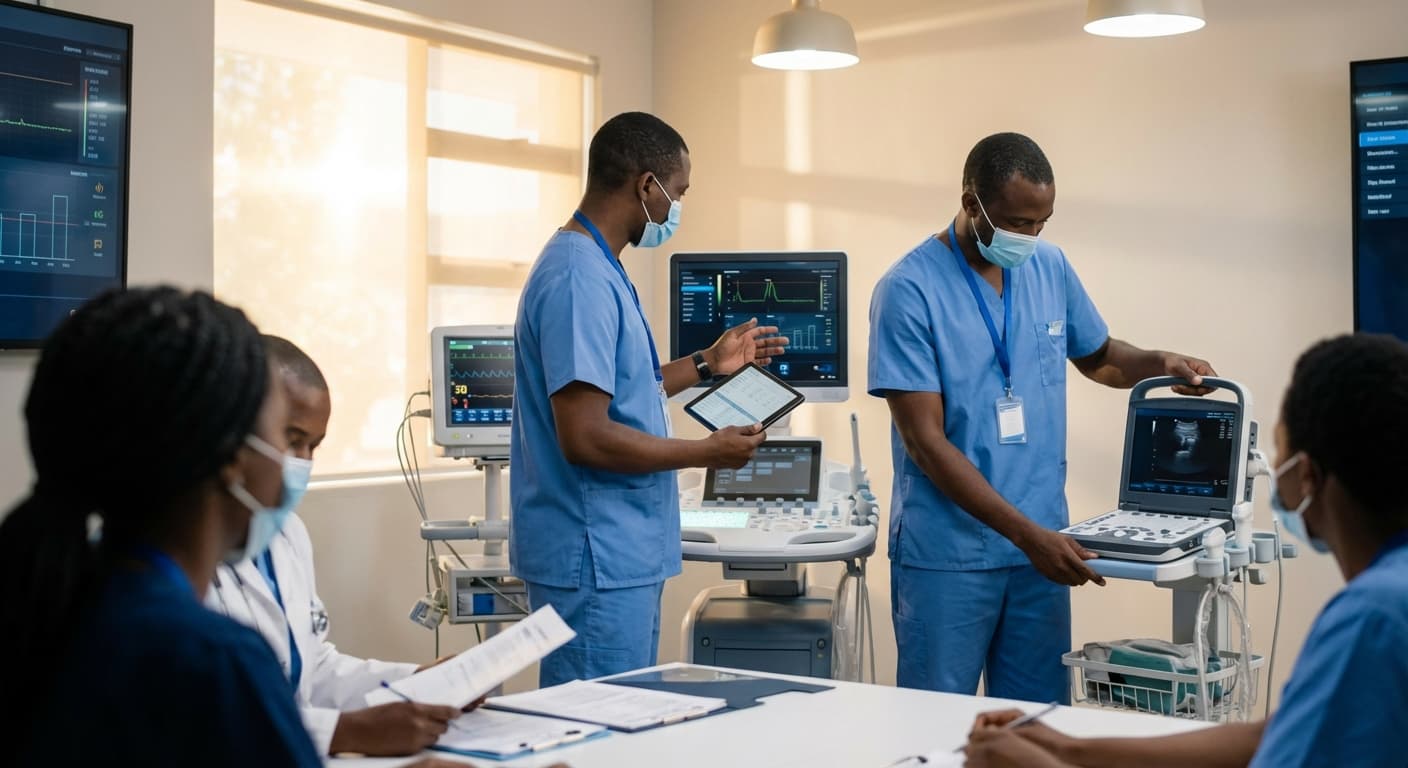
Clinical Needs Assessment for Medical Equipment in Eritrea
Engineering Excellence & Technical Support
Clinical Needs Assessment for Medical Equipment High-standard technical execution following OEM protocols and local regulatory frameworks.
Comprehensive Medical Equipment Inventory & Audit
Establishing a detailed, up-to-date inventory of all existing medical equipment across Eritrean healthcare facilities, including condition assessment, maintenance history, and utilization data. This forms the foundational layer for accurate needs identification.
Diagnostic & Treatment Capability Gap Analysis
Analyzing current diagnostic and treatment capabilities against internationally recognized standards and prevalent disease burdens in Eritrea. This identifies critical equipment shortages or outdated technologies hindering effective patient care.
Integrated Sustainability & Training Framework
Developing a framework that assesses the long-term sustainability of proposed medical equipment, considering local infrastructure, availability of consumables, and robust training programs for local biomedical personnel for operation, maintenance, and repair.
What Is Clinical Needs Assessment For Medical Equipment In Eritrea?
A Clinical Needs Assessment for Medical Equipment in Eritrea is a systematic, data-driven process designed to identify, evaluate, and prioritize the medical equipment requirements of healthcare facilities and public health programs within the country. This service ensures that available resources are allocated effectively to acquire, maintain, and utilize medical technologies that directly address the prevailing disease burdens, service delivery gaps, and national health strategic objectives. It moves beyond ad-hoc procurement to a more rational, evidence-based approach to medical device management, considering factors such as current infrastructure, trained personnel availability, maintenance capacity, and the socio-economic context of Eritrea.
| Who Needs It? | Typical Use Cases | ||||
|---|---|---|---|---|---|
| Ministry of Health (Eritrea): For strategic planning, resource allocation, and national health policy development. | Public Hospitals and Regional Health Centers: To upgrade diagnostic and therapeutic capabilities, replace obsolete equipment, and expand service offerings. | Primary Health Care Facilities: To ensure availability of essential equipment for basic diagnostic and treatment services. | Specialized Medical Institutions (e.g., National Referral Hospital): For procurement of advanced medical technologies and equipment for sub-specialty care. | Non-Governmental Organizations (NGOs) and International Partners: To align their medical equipment support with national priorities and ensure effective and sustainable impact. | Healthcare Training Institutions: To equip teaching facilities with relevant and modern medical devices for student training and skill development. |
| Development of National Medical Equipment Procurement Plans: Informing the acquisition of new equipment based on evidence of need. | Replacement and Upgrade of Obsolete/Malfunctioning Equipment: Identifying specific items for replacement to maintain service continuity and quality. | Introduction of New Medical Technologies: Assessing the feasibility and impact of introducing advanced diagnostic or therapeutic modalities. | Resource Allocation for Rehabilitation and Maintenance Programs: Identifying equipment requiring repair or upgrade to optimize existing assets. | Disaster Preparedness and Emergency Response Planning: Ensuring availability of essential equipment for rapid deployment in crisis situations. | Capacity Building for Healthcare Workers: Informing the development of training programs tailored to the operation and maintenance of specific equipment. |
Key Components of a Clinical Needs Assessment for Medical Equipment in Eritrea
- Data Collection and Analysis: Gathering information on existing equipment inventory, utilization rates, maintenance status, patient demographics, disease prevalence, service utilization patterns, and healthcare worker feedback.
- Gap Identification: Determining discrepancies between current equipment availability/suitability and the identified needs for diagnosis, treatment, and patient monitoring.
- Prioritization Framework Development: Establishing objective criteria for prioritizing equipment based on public health impact, cost-effectiveness, technical feasibility, sustainability, and alignment with national health priorities.
- Technical Specification Definition: Detailing the functional, performance, and safety specifications for required equipment, considering local environmental conditions and maintenance capabilities.
- Cost-Benefit Analysis: Evaluating the economic implications of procuring and maintaining specific equipment, including capital expenditure, operational costs, and potential return on investment in terms of improved health outcomes.
- Training and Human Resource Assessment: Identifying the need for training healthcare professionals on the operation, maintenance, and repair of new or existing equipment.
- Infrastructure and Logistics Evaluation: Assessing the adequacy of existing facility infrastructure (power, water, space) and supply chain logistics for the deployment and support of the identified equipment.
Who Needs Clinical Needs Assessment For Medical Equipment In Eritrea?
Clinical needs assessments are crucial for ensuring that medical equipment procured and utilized in Eritrea aligns with the actual healthcare demands and priorities of the nation. This process helps to avoid the acquisition of redundant, obsolete, or inappropriate technology, thereby optimizing resource allocation and improving patient care outcomes. The target customers for such assessments are multifaceted, encompassing various levels of the Eritrean healthcare system and its supporting entities.
| Department/Facility | Key Focus Areas for Needs Assessment | Examples of Equipment Needs |
|---|---|---|
| Emergency Departments | Resuscitation, trauma care, stabilization | Defibrillators, ventilators, advanced life support equipment, trauma kits |
| Surgical Wards/Operating Theaters | Surgical procedures, anesthesia, post-operative care | Surgical instruments, anesthesia machines, operating tables, sterilization equipment, patient monitors |
| Maternal and Child Health (MCH) | Prenatal, delivery, postnatal care, neonatal care | Ultrasound machines, delivery beds, incubators, phototherapy units, infant warmers |
| Diagnostic Imaging | Radiology, ultrasound, CT scans (where available) | X-ray machines, ultrasound transducers, contrast media, PACS systems |
| Laboratory Services | Diagnostic testing, blood analysis, microbiology | Microscopes, centrifuges, automated analyzers (hematology, chemistry), incubators, autoclaves |
| Primary Healthcare Centers | General consultations, basic diagnostics, preventative care | Stethoscopes, blood pressure monitors, thermometers, basic diagnostic kits, weighing scales |
| Rehabilitation Services | Physiotherapy, occupational therapy | Exercise equipment, therapy aids, diagnostic tools for functional assessment |
| Pharmacy Departments | Medication storage, dispensing, compounding | Refrigerators, compounding equipment, dispensing scales |
| Infectious Disease Control Units | Diagnosis, monitoring, treatment of communicable diseases | PCR machines, isolation equipment, specialized diagnostic kits |
Target Customers and Departments for Clinical Needs Assessment in Eritrea
- Ministry of Health (MoH): The primary governing body responsible for healthcare policy, planning, and resource allocation in Eritrea. They would be the main beneficiary and driver of these assessments.
- Regional Health Bureaus: Responsible for overseeing healthcare delivery within specific administrative regions of Eritrea. They require assessments to tailor equipment to local disease burdens and facility capabilities.
- Public Hospitals: Major healthcare facilities at national and regional levels, providing a wide range of services. Needs assessments are vital for their specialized departments and general patient care.
- Health Centers and Clinics: Primary healthcare facilities serving local communities. Assessments here focus on essential equipment for common ailments and preventative care.
- Specialized Medical Institutions: Any centers focusing on specific areas like maternal and child health, infectious diseases, or rehabilitation. Their unique needs require targeted assessments.
- Medical Training Institutions: Universities and colleges that train healthcare professionals. Ensuring they have access to relevant, modern equipment is key for effective education.
- Non-Governmental Organizations (NGOs) and International Donors: Organizations that contribute to healthcare infrastructure and equipment in Eritrea. Needs assessments provide evidence-based justification for their investments.
- Procurement Departments: Both within the MoH and individual facilities, these departments need clear, needs-based specifications to ensure efficient and effective purchasing.
Clinical Needs Assessment For Medical Equipment Process In Eritrea
This document outlines the clinical needs assessment process for medical equipment in Eritrea, detailing the workflow from initial inquiry to the final execution of procurement and implementation. The process is designed to ensure that acquired medical equipment directly addresses identified clinical needs, optimizes resource allocation, and aligns with national health priorities. It emphasizes a systematic and collaborative approach involving various stakeholders.
| Phase | Key Activities | Responsible Parties | Deliverables | Timeline (Indicative) |
|---|---|---|---|---|
| Phase 1: Inquiry and Needs Identification | Initial request or identification of a need for specific medical equipment based on observed gaps in patient care, new service offerings, or equipment obsolescence. This can originate from healthcare facilities, regional health bureaus, or national health programs. | Healthcare Facility Staff, Regional Health Bureaus, National Health Programs, Ministry of Health (MoH) - Planning Department | Initial Request/Needs Statement | Ongoing |
| Phase 2: Data Collection and Analysis | Gathering detailed information about the identified need, including patient demographics, disease prevalence, current equipment inventory, existing service capacity, and potential impact of new equipment. This involves site visits, surveys, interviews, and review of health data. | MoH - Needs Assessment Team, Biomedical Engineering Department, Healthcare Facility Representatives, Data Analysts | Needs Assessment Report, Data Analysis Summary | 2-4 Weeks |
| Phase 3: Prioritization and Justification | Evaluating the collected data against national health priorities, cost-effectiveness, and feasibility. Ranking identified needs and justifying the procurement of specific equipment based on its potential to improve health outcomes, reduce mortality/morbidity, and optimize resource utilization. | MoH - Technical Working Groups (Clinical, Biomedical), National Health Planning Committee, MoH Senior Management | Prioritized Equipment List, Justification Document, Equipment Specifications | 2-3 Weeks |
| Phase 4: Procurement Planning | Developing a detailed procurement plan including budget allocation, tender documentation preparation (technical specifications, terms of reference), identification of potential suppliers, and adherence to national procurement regulations and international standards. | MoH - Procurement Department, Biomedical Engineering Department, Finance Department, Legal Department | Procurement Plan, Tender Documents, Budget Approval | 3-5 Weeks |
| Phase 5: Procurement and Logistics | Executing the procurement process (tendering, evaluation, contract award) and managing the logistics of equipment delivery, including customs clearance, transportation, and warehousing. Quality assurance checks during manufacturing and upon delivery. | MoH - Procurement Department, Ministry of Finance, Customs Authorities, Logistics Partners, Suppliers | Procured Equipment, Delivery Confirmation, Customs Clearance Documents | 12-24 Weeks (depending on equipment and supplier) |
| Phase 6: Installation and Training | Installing the medical equipment at the designated healthcare facility, ensuring proper calibration, and conducting comprehensive training for healthcare professionals and technicians on its operation, maintenance, and troubleshooting. This ensures effective utilization. | Biomedical Engineering Department, Equipment Suppliers/Manufacturers, Healthcare Facility Staff, MoH Training Department | Installed and Functional Equipment, Training Manuals, Trained Personnel, Installation Report | 2-4 Weeks per facility |
| Phase 7: Monitoring and Evaluation | Establishing a system for ongoing monitoring of equipment performance, utilization rates, maintenance schedules, and impact on patient care. Regular evaluations to assess the long-term effectiveness and identify any further needs or challenges. | MoH - Monitoring & Evaluation Department, Biomedical Engineering Department, Healthcare Facility Management, Regional Health Bureaus | Performance Reports, Utilization Data, Maintenance Records, Impact Assessment Reports | Ongoing |
Clinical Needs Assessment Workflow for Medical Equipment in Eritrea
- Phase 1: Inquiry and Needs Identification
- Phase 2: Data Collection and Analysis
- Phase 3: Prioritization and Justification
- Phase 4: Procurement Planning
- Phase 5: Procurement and Logistics
- Phase 6: Installation and Training
- Phase 7: Monitoring and Evaluation
Clinical Needs Assessment For Medical Equipment Cost In Eritrea
This document outlines a clinical needs assessment for medical equipment costs in Eritrea. Understanding the local pricing landscape is crucial for effective healthcare planning, resource allocation, and ensuring the availability of essential medical technologies. Several factors significantly influence the cost of medical equipment within Eritrea, ranging from international market dynamics to localized logistical and economic conditions. These include import duties and taxes, shipping and transportation costs, currency exchange rates (primarily the Eritrean Nakfa - ERN), the reputation and warranty provided by the supplier, the complexity and technological sophistication of the equipment, and the volume of purchase. Local maintenance and service availability also play a role, as less readily available support can increase the long-term cost of ownership.
The following sections detail common medical equipment categories, estimated pricing ranges in Eritrean Nakfa (ERN), and the primary factors contributing to these costs. It's important to note that these figures are estimates and can fluctuate considerably due to the aforementioned factors. For precise quotations, direct engagement with suppliers and local distributors is recommended.
| Medical Equipment Category | Estimated Price Range (ERN) | Notes on Cost Drivers |
|---|---|---|
| Basic Diagnostic Tools (e.g., Stethoscopes, Thermometers, Blood Pressure Monitors) | 500 - 5,000 | Low complexity, widely available, influenced by import costs and brand. |
| Diagnostic Imaging (e.g., Portable X-ray, Ultrasound - Basic) | 100,000 - 500,000 | Higher import duties, specialized transport, installation and training costs. |
| Laboratory Equipment (e.g., Basic Chemistry Analyzer, Microscope) | 30,000 - 150,000 | Reagent costs, calibration requirements, specialized personnel for operation. |
| Surgical Instruments (Basic Sets) | 2,000 - 15,000 per set | Material quality, sterilization requirements, ongoing need for replacement. |
| Patient Monitoring Systems (Basic) | 20,000 - 80,000 | Sensor costs, software integration, power dependency. |
| Anesthesia Machines (Basic) | 70,000 - 250,000 | Safety features, gas supply integration, training for operators. |
| Sterilization Equipment (Autoclaves - Medium Size) | 50,000 - 200,000 | Power consumption, maintenance, validation protocols. |
| Dental Chairs and Equipment (Basic) | 50,000 - 300,000 | Plumbing and electrical requirements, specialized training. |
| Wheelchairs and Mobility Aids | 1,000 - 10,000 | Durability, material cost, import logistics. |
| Hospital Beds (Manual/Basic Electric) | 10,000 - 50,000 | Material strength, ease of adjustment, volume purchases. |
Key Pricing Factors for Medical Equipment in Eritrea
- Import Duties and Taxes: Eritrea levies taxes on imported goods, significantly impacting the final price.
- Shipping and Transportation Costs: The cost of transporting equipment from international ports to inland Eritrean facilities is a major determinant.
- Currency Exchange Rate (ERN): Fluctuations in the Eritrean Nakfa against major international currencies (USD, EUR) directly affect import costs.
- Supplier Reputation and Warranty: Established suppliers with robust warranty and after-sales service may command higher prices.
- Equipment Complexity and Technology: Advanced diagnostic and therapeutic equipment is inherently more expensive than basic medical supplies.
- Purchase Volume: Larger orders may benefit from bulk discounts.
- Local Service and Maintenance: The availability and cost of local technicians and spare parts can influence long-term affordability.
- Infrastructure Limitations: The capacity of local infrastructure (power supply, connectivity) can necessitate specific equipment adaptations, potentially increasing cost.
Affordable Clinical Needs Assessment For Medical Equipment Options
An affordable clinical needs assessment for medical equipment is crucial for healthcare providers to make informed purchasing decisions. It ensures that investments align with patient care requirements, operational efficiency, and budgetary constraints. This process involves a systematic evaluation of existing equipment, patient demographics, projected service needs, and clinical workflows. Key to affordability are understanding and leveraging "value bundles" and implementing proactive "cost-saving strategies."
Value Bundles are comprehensive packages offered by manufacturers or distributors that combine equipment, training, maintenance, and sometimes software or consumables into a single, often discounted, price. These bundles can simplify procurement, reduce negotiation complexity, and offer predictable long-term costs. They are particularly beneficial for departments acquiring multiple related devices or for organizations seeking to standardize their equipment. The value lies not just in the upfront price reduction but also in the integrated support and potentially streamlined operations.
Cost-Saving Strategies go beyond initial purchase price and encompass the entire lifecycle of medical equipment. This includes
- Leasing vs. Purchasing: Analyzing whether leasing offers better cash flow and lower obsolescence risk compared to outright purchase.
- Refurbished Equipment: Evaluating the quality and warranty of certified refurbished equipment for non-critical or less frequently used applications.
- Negotiation: Actively negotiating pricing, payment terms, and service contracts with vendors, potentially leveraging group purchasing organizations (GPOs) for better leverage.
- Preventive Maintenance: Implementing robust preventive maintenance schedules to reduce costly breakdowns and extend equipment lifespan.
- Training and Utilization: Ensuring adequate staff training to maximize equipment utilization and minimize errors, thereby reducing repair needs and improving patient outcomes.
- Consumable Management: Optimizing the ordering and use of associated consumables to prevent waste and secure bulk discounts.
- Technology Refresh Cycles: Planning for technology upgrades strategically, considering total cost of ownership rather than just the initial acquisition.
- Third-Party Service: Exploring the cost-effectiveness of third-party maintenance contracts after manufacturer warranties expire.
| Cost-Saving Strategy | Description | Potential Benefit |
|---|---|---|
| Value Bundles | Integrated packages of equipment, training, and service. | Reduced upfront costs, simplified procurement, predictable expenses. |
| Leasing Options | Acquiring equipment use for a fixed period without ownership. | Improved cash flow, access to newer technology, avoidance of obsolescence. |
| Certified Refurbished Equipment | Pre-owned equipment that has been inspected, repaired, and certified. | Significant cost reduction compared to new equipment, often with warranties. |
| Preventive Maintenance | Regular scheduled maintenance to prevent breakdowns. | Reduced repair costs, extended equipment lifespan, minimized downtime. |
| Group Purchasing Organizations (GPOs) | Organizations that negotiate bulk discounts for their members. | Lower acquisition prices through increased purchasing power. |
| Optimized Consumable Management | Efficient ordering, inventory, and usage of supplies. | Reduced waste, bulk purchase discounts, lower operational costs. |
Key Components of an Affordable Clinical Needs Assessment
- Define specific clinical requirements and patient population needs.
- Inventory and assess the condition and performance of existing equipment.
- Analyze current and projected clinical workflows and demand.
- Research available medical equipment options, including new, refurbished, and leased models.
- Evaluate vendor reputation, service capabilities, and support offerings.
- Consider integration with existing IT infrastructure and electronic health records (EHRs).
- Develop a detailed budget, factoring in acquisition, installation, training, maintenance, and consumables.
- Explore value bundles and negotiate pricing and contract terms.
Verified Providers In Eritrea
In the realm of healthcare services in Eritrea, identifying verified providers is paramount for ensuring quality and reliable care. Franance Health stands out as a leading entity, distinguished by its rigorous credentialing process and commitment to excellence. This dedication translates into a network of healthcare professionals and facilities that consistently meet the highest standards, offering Eritrean citizens and expatriates alike access to top-tier medical services. Choosing Franance Health-affiliated providers means opting for a level of trust, expertise, and patient-centered care that is unmatched.
| Provider Type | Key Benefits of Franance Health Affiliation |
|---|---|
| Hospitals & Clinics | Equipped with modern facilities, staffed by highly trained professionals, and committed to evidence-based medical practices. |
| Specialist Physicians | Board-certified experts in their respective fields, offering advanced diagnostic and treatment options. |
| General Practitioners | Provide comprehensive primary care, preventive services, and act as a crucial first point of contact for all health concerns. |
| Diagnostic Laboratories | Utilize state-of-the-art equipment and adhere to strict quality control measures for accurate and timely results. |
| Pharmacy Services | Offer a wide range of medications, with pharmacists committed to patient counseling and ensuring safe medication use. |
Why Franance Health Providers Represent the Best Choice:
- Rigorous Credentialing: Franance Health employs a multi-faceted vetting process for all its network partners, ensuring they possess the necessary qualifications, experience, and ethical standing.
- Commitment to Quality: Our providers are continuously assessed on patient outcomes, adherence to best practices, and overall service quality, guaranteeing a high standard of care.
- Access to Specialized Expertise: The Franance Health network includes a diverse range of medical specialists, providing access to a wide spectrum of healthcare needs, from general practice to complex medical interventions.
- Patient-Centric Approach: We prioritize patient satisfaction and well-being. Franance Health providers are known for their compassionate care, clear communication, and focus on individual patient needs.
- Adherence to International Standards: Our network strives to align with global healthcare benchmarks, offering a level of service that meets international expectations.
- Trust and Reliability: By choosing a Franance Health verified provider, you are assured of a partner dedicated to ethical practices and delivering dependable healthcare solutions.
- Streamlined Access to Care: Franance Health facilitates smoother access to a pre-vetted network, simplifying the process of finding trusted medical professionals and facilities.
Scope Of Work For Clinical Needs Assessment For Medical Equipment
This Scope of Work (SOW) outlines the objectives, activities, and deliverables for a comprehensive clinical needs assessment for medical equipment. The purpose of this assessment is to identify the current and future medical equipment requirements of [Healthcare Facility Name] based on its clinical services, patient demographics, technological advancements, and strategic goals. The assessment will inform procurement decisions, optimize equipment utilization, and ensure alignment with best clinical practices and regulatory standards.
| Phase | Activities | Technical Deliverables | Standard Specifications Focus |
|---|---|---|---|
| Phase 1: Project Initiation & Planning | Define project scope, objectives, and methodology. Establish project team and governance structure. Develop detailed project plan, timeline, and communication strategy. Identify key stakeholders and conduct initial consultations. | Project Charter. Detailed Project Plan. Stakeholder Register. Communication Plan. | N/A |
| Phase 2: Data Collection & Analysis | Conduct interviews with clinical staff (physicians, nurses, technicians) across all departments. Review existing medical equipment inventory and utilization data. Analyze patient demographics, disease prevalence, and service utilization trends. Research current and emerging medical technologies relevant to the facility's services. Review national and international guidelines and best practices for medical equipment provision. | Interview Summaries. Equipment Inventory Report (with utilization analysis). Demographic and Service Utilization Report. Technology Trend Analysis Report. Regulatory and Best Practice Review. | General performance criteria (e.g., accuracy, reliability, safety). Initial identification of key functional requirements. |
| Phase 3: Needs Identification & Prioritization | Synthesize collected data to identify current equipment gaps and inefficiencies. Forecast future equipment needs based on strategic plans and service projections. Assess the suitability of existing equipment for current and future use. Prioritize identified needs based on predefined criteria (e.g., patient safety, clinical outcomes, operational efficiency, cost). | Gap Analysis Report. Future Needs Projection Report. Prioritized List of Equipment Needs. | Detailed functional requirements based on clinical use cases. Performance requirements (e.g., throughput, resolution, speed). Interoperability requirements. |
| Phase 3.1: Standard Specification Development | For each prioritized equipment need, develop detailed technical specifications. Consult with clinical users and biomedical engineers to refine specifications. Ensure specifications incorporate safety features, user-friendliness, and maintainability. Include requirements for compatibility with existing IT infrastructure and other medical devices. Define essential accessories, consumables, and training requirements. | Detailed Standardized Technical Specifications for each required equipment type (including model-agnostic requirements where possible). Essential Accessories and Consumables List. Training Requirements Document. | Electrical safety standards (e.g., IEC 60601 series). Electromagnetic compatibility (EMC) standards. Usability and ergonomics guidelines. Data security and privacy requirements (e.g., HIPAA, GDPR). Connectivity standards (e.g., HL7, DICOM). Performance metrics (e.g., accuracy, precision, sensitivity, specificity). Durability and lifecycle considerations. |
| Phase 4: Reporting & Recommendations | Compile all findings into a comprehensive report. Present prioritized needs and standardized specifications to management. Provide recommendations for equipment procurement strategies, budgeting, and implementation plans. Outline a framework for ongoing equipment lifecycle management and needs assessment. | Final Clinical Needs Assessment Report. Presentation of Findings and Recommendations. Equipment Acquisition and Lifecycle Management Framework. | Cross-cutting specifications for maintenance, service, and calibration. Requirements for vendor support and warranty. |
Key Objectives
- Identify current gaps in medical equipment provision and functionality.
- Assess the clinical utility and effectiveness of existing equipment.
- Determine future equipment needs based on projected service expansion, new clinical programs, and technological innovation.
- Evaluate equipment maintenance, service, and training requirements.
- Prioritize equipment needs based on clinical impact, safety, cost-effectiveness, and strategic alignment.
- Develop standardized specifications for required medical equipment to ensure interoperability, safety, and quality.
- Provide recommendations for equipment acquisition, replacement, and disposal strategies.
- Ensure compliance with relevant national and international medical equipment standards and regulations.
Service Level Agreement For Clinical Needs Assessment For Medical Equipment
This Service Level Agreement (SLA) outlines the commitment for providing timely and reliable services for Clinical Needs Assessment for Medical Equipment. It defines response times for critical events and specifies uptime guarantees for the assessment platform/tools. This SLA is designed to ensure that healthcare providers can efficiently and effectively determine their medical equipment needs.
| Service Element | Service Level Objective (SLO) | Measurement Method | Remedy for Non-Compliance |
|---|---|---|---|
| Initial Response to Assessment Request | Acknowledge and initiate assessment planning within 4 business hours. | Timestamp of request receipt vs. timestamp of acknowledgement and planning initiation. | Service credit of 5% of monthly service fee. |
| Critical Issue Response (Platform/Tool Unavailable) | Acknowledge and begin troubleshooting within 1 hour of reported issue. | Timestamp of issue report vs. timestamp of acknowledgement and troubleshooting initiation. | Service credit of 10% of monthly service fee for every 4 hours of unscheduled downtime. |
| Platform/Tool Uptime Guarantee | 99.5% uptime during standard business hours (9 AM - 5 PM, Monday - Friday, excluding public holidays). | Monthly uptime calculation based on recorded system availability. | For every 1% of downtime below 99.5%, a service credit of 2% of monthly service fee is applied, capped at 15%. |
| Assessment Report Delivery | Deliver a draft assessment report within 5 business days of the final data collection. | Timestamp of final data collection completion vs. timestamp of draft report delivery. | Service credit of 5% of monthly service fee. |
Key Service Areas Covered
- Initial response to a request for clinical needs assessment.
- Escalation and resolution of technical issues impacting the assessment process.
- Availability of the clinical needs assessment platform and associated tools.
- Timeliness of report generation and delivery upon completion of the assessment.
Frequently Asked Questions

Ready when you are
Let's scope your Clinical Needs Assessment for Medical Equipment in Eritrea project in Eritrea.

Scaling healthcare logistics and technical systems across the entire continent.