
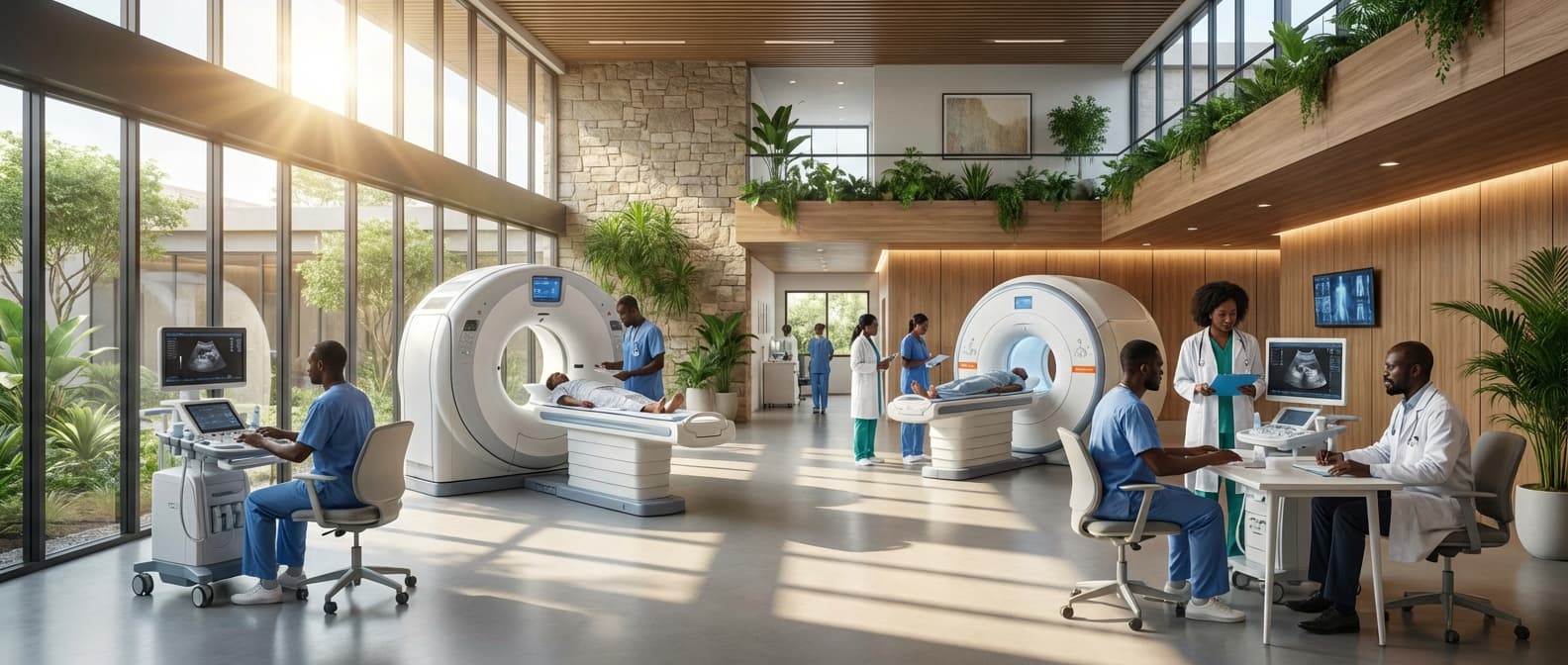
Endoscopy Solutions in Eritrea
Engineering Excellence & Technical Support
Advanced endoscopic equipment delivering superior visualization and diagnostic precision for minimally invasive procedures. High-standard technical execution following OEM protocols and local regulatory frameworks.
Advanced Diagnostic Endoscopy
Introducing high-definition endoscopy systems for early and accurate diagnosis of gastrointestinal conditions, enabling timely interventions and improved patient outcomes in Eritrea.
Minimally Invasive Therapeutic Procedures
Equipping Eritrean healthcare facilities with state-of-the-art endoscopic tools for a range of minimally invasive therapeutic interventions, reducing recovery times and patient discomfort.
Sterilization & Infection Control Solutions
Providing robust and reliable endoscope reprocessing and sterilization equipment to ensure patient safety and adherence to international infection control standards in Eritrean medical centers.
What Is Endoscopy Solutions In Eritrea?
Endoscopy Solutions in Eritrea refer to the provision and utilization of endoscopic procedures and associated technologies for diagnostic and therapeutic interventions within the nation's healthcare system. These solutions encompass a range of minimally invasive techniques that employ an endoscope, a flexible or rigid tube with a light and camera, to visualize internal organs and cavities. The primary objective is to enable accurate diagnosis, precise treatment, and continuous monitoring of various gastrointestinal, pulmonary, and other internal conditions without the need for extensive surgical procedures. The availability and application of these solutions are critical for enhancing diagnostic capabilities and improving patient outcomes in Eritrea.
| Who Needs Endoscopy Solutions? | Typical Use Cases |
|---|---|
| Individuals experiencing persistent upper gastrointestinal symptoms (e.g., heartburn, nausea, vomiting, difficulty swallowing, abdominal pain). | Diagnosis of peptic ulcers, gastritis, esophagitis, and Helicobacter pylori infection (gastroscopy/esophagoscopy). |
| Individuals with changes in bowel habits (e.g., chronic diarrhea, constipation), rectal bleeding, or unexplained weight loss. | Screening for colorectal cancer, diagnosis of inflammatory bowel disease (Crohn's disease, ulcerative colitis), and identification of polyps (colonoscopy). |
| Patients with chronic cough, hemoptysis (coughing up blood), or recurrent respiratory infections. | Investigation of lung masses, airway abnormalities, and obtaining tissue samples for diagnosis (bronchoscopy). |
| Patients with suspected or confirmed upper gastrointestinal bleeding. | Identification and management of bleeding sources, including endoscopic clipping or cauterization (gastroscopy). |
| Individuals with dysphagia (difficulty swallowing) or suspected esophageal strictures. | Dilation of esophageal strictures or placement of stents to improve passage of food (gastroscopy). |
| Patients requiring follow-up for previously diagnosed gastrointestinal conditions or polyps. | Surveillance endoscopy to monitor for recurrence or progression of disease. |
| Patients undergoing management of gallstone disease or biliary tract issues. | ERCP (Endoscopic Retrograde Cholangiopancreatography) for diagnosis and treatment of biliary and pancreatic duct disorders. |
Key Aspects of Endoscopy Solutions in Eritrea
- Diagnostic Endoscopy: Visual inspection of internal organs to identify abnormalities such as inflammation, ulcers, polyps, tumors, and bleeding. Biopsies can be obtained during this process for histopathological analysis.
- Therapeutic Endoscopy: Interventions performed using endoscopic instruments to treat conditions. This can include polypectomy (removal of polyps), hemostasis (stopping bleeding), stricture dilation (widening narrowed passages), and stent placement.
- Equipment and Technology: Involves the procurement, maintenance, and utilization of various endoscopes (e.g., gastroscopes, colonoscopes, bronchoscopes), imaging systems, light sources, insufflators, and associated accessories.
- Trained Personnel: Requires healthcare professionals, including gastroenterologists, pulmonologists, surgeons, and endoscopy technicians, who are skilled in performing and assisting with endoscopic procedures.
- Infection Control and Sterilization: Strict adherence to protocols for cleaning, disinfecting, and sterilizing endoscopic equipment to prevent cross-contamination and healthcare-associated infections.
- Accessibility and Infrastructure: The development of adequate facilities and infrastructure within healthcare institutions to support the safe and effective delivery of endoscopy services, considering geographical and resource limitations.
- Training and Capacity Building: Ongoing initiatives to train local healthcare providers in advanced endoscopic techniques and interpretation of findings, fostering self-sufficiency in specialized medical care.
Who Needs Endoscopy Solutions In Eritrea?
Endoscopy solutions are vital for diagnosing and treating a wide range of gastrointestinal and respiratory conditions. In Eritrea, these advanced medical tools can significantly improve patient care by enabling less invasive procedures and more accurate diagnoses, leading to better patient outcomes and potentially reducing the need for more complex surgeries. The demand for endoscopy services is driven by the increasing prevalence of conditions such as peptic ulcers, gastroesophageal reflux disease (GERD), inflammatory bowel disease (IBD), and various cancers affecting the digestive tract and lungs.
| Department | Primary Endoscopic Procedures | Conditions Addressed | Types of Endoscopy Solutions Needed |
|---|---|---|---|
| Gastroenterology | Gastroscopy, Colonoscopy, Sigmoidoscopy, ERCP | Peptic ulcers, GERD, IBD, polyps, GI bleeding, GI cancers, gallstones, pancreatitis | Flexible gastro/colonoscopes, therapeutic endoscopes, ERCP scopes, endoscopes with advanced imaging (e.g., NBI, magnification), accessories (biopsy forceps, snares, dilators) |
| Pulmonology | Bronchoscopy | Pneumonia, lung tumors, bronchitis, hemoptysis, foreign body aspiration, COPD exacerbations | Flexible bronchoscopes, rigid bronchoscopes, bronchoscopes with navigation capabilities, accessories (biopsy brushes, forceps, suction catheters) |
| General Surgery | Laparoscopy (diagnostic and therapeutic), ERCP | Appendicitis, cholecystitis, hernias, diverticulitis, biliary tract obstructions | Laparoscopic instruments, ERCP scopes and accessories |
| Thoracic Surgery | Thoracoscopy, Bronchoscopy | Pleural effusions, pneumothorax, lung biopsies, mediastinal masses | Thoracoscopes, flexible bronchoscopes |
| Oncology | Gastroscopy, Colonoscopy, Bronchoscopy, ERCP | Esophageal, gastric, colorectal, lung cancers, pancreatic cancer, bile duct cancers | Endoscopes with advanced imaging (NBI, autofluorescence), therapeutic capabilities (EMR, ESD), biopsy equipment |
Target Customers and Departments in Eritrea Requiring Endoscopy Solutions:
- {"item":"Public Hospitals:","description":"These are the primary beneficiaries, as they serve the majority of the Eritrean population. Key departments within public hospitals that would require endoscopy solutions include:"}
- {"item":"Gastroenterology Departments:","description":"These departments are at the forefront of using endoscopy for diagnosing and managing digestive system disorders. Procedures like gastroscopy and colonoscopy are essential for identifying conditions such as ulcers, polyps, inflammation, and cancers."}
- {"item":"Pulmonology Departments:","description":"Bronchoscopy is crucial for diagnosing and treating lung conditions, including infections, tumors, and airway obstructions. This department would benefit from flexible bronchoscopes and related equipment."}
- {"item":"Surgical Departments (General Surgery, Thoracic Surgery):","description":"Surgeons often utilize endoscopy for pre-operative assessment, intra-operative guidance, and minimally invasive therapeutic interventions. This includes procedures like endoscopic retrograde cholangiopancreatography (ERCP) for biliary and pancreatic issues."}
- {"item":"Oncology Departments:","description":"Endoscopy plays a significant role in the diagnosis, staging, and sometimes even treatment of gastrointestinal and lung cancers. Biopsies taken during endoscopic procedures are critical for accurate diagnosis and treatment planning."}
- {"item":"Private Clinics and Medical Centers:","description":"As healthcare infrastructure develops in Eritrea, private entities are emerging. These centers, often catering to patients with higher purchasing power or seeking specialized care, would also be potential customers for advanced endoscopy equipment and services."}
- {"item":"Medical Training and Research Institutions:","description":"Universities and medical schools with training programs for doctors and endoscopists would require endoscopy solutions for educational purposes. This includes simulators and up-to-date equipment for hands-on training."}
- {"item":"Government Health Ministries and Public Health Agencies:","description":"These bodies are responsible for overall healthcare planning and resource allocation. They would be key stakeholders in decisions regarding the procurement and distribution of essential medical equipment like endoscopy solutions to public health facilities."}
Endoscopy Solutions Process In Eritrea
This document outlines the typical workflow for obtaining and executing endoscopy solutions in Eritrea, from the initial inquiry to the completion of the procedure and follow-up. The process often involves several stages to ensure patient safety, regulatory compliance, and effective treatment.
| Stage | Description | Key Activities | Responsible Parties | Potential Challenges |
|---|---|---|---|---|
| The patient or their representative initiates contact regarding the need for an endoscopy. This involves understanding the symptoms and medical history. | Contacting healthcare facility, explaining symptoms, preliminary discussion with a doctor or nurse, information gathering about the service. | Patient/Representative, Healthcare Facility Administration, Receptionist | Communication barriers (language), limited initial information, understanding of the procedure. |
| A qualified medical professional assesses the patient's condition to determine the necessity and type of endoscopy required. | Physical examination, review of medical history, ordering of initial diagnostic tests (if any), specialist referral (if needed), physician's recommendation for endoscopy. | General Practitioner, Specialist Physician, Nurse | Availability of specialists, access to diagnostic facilities, accurate diagnosis of underlying condition. |
| Once recommended, the endoscopy is scheduled, and the patient is given specific instructions to prepare for the procedure. | Booking appointment, providing patient with pre-procedure instructions (dietary restrictions, bowel preparation, medication adjustments), obtaining informed consent, scheduling necessary staff and equipment. | Scheduling Department, Nursing Staff, Physician, Patient | Availability of equipment and trained personnel, patient compliance with instructions, potential for last-minute cancellations. |
| The endoscopy procedure is performed by a trained endoscopist in a sterile environment. | Patient preparation in the procedure room, administration of sedation/anesthesia, insertion of the endoscope, examination of the relevant organ, biopsies or therapeutic interventions (if required), removal of the endoscope. | Endoscopist (Gastroenterologist/Surgeon), Anesthesiologist (if applicable), Endoscopy Nurse, Technician | Equipment malfunction, unexpected findings, patient discomfort or complications, availability of consumables. |
| The patient is monitored as they recover from the anesthesia and the effects of the procedure. | Monitoring vital signs, managing immediate side effects (nausea, grogginess), recovery room observation, provision of post-procedure instructions (diet, activity, medication). | Recovery Room Nurse, Physician | Delayed recovery, unforeseen complications, inadequate patient understanding of post-procedure care. |
| The findings of the endoscopy are documented, and the patient is advised on the next steps. | Analysis of biopsy results (if taken), generation of a detailed endoscopy report, discussion of findings with the patient, scheduling follow-up appointments, referral for further treatment or management. | Endoscopist, Pathologist (if biopsies taken), Physician, Patient | Delays in pathology reports, interpretation of complex findings, accessibility of follow-up care, patient adherence to treatment plans. |
Endoscopy Solutions Process in Eritrea: Workflow Overview
- Initial Inquiry and Consultation
- Medical Assessment and Referral
- Scheduling and Pre-Procedure Preparations
- Endoscopy Procedure Execution
- Post-Procedure Care and Recovery
- Report Generation and Follow-Up
Endoscopy Solutions Cost In Eritrea
Endoscopy, a vital diagnostic and minimally invasive surgical procedure, involves the use of an endoscope to examine the interior of the body. The cost of endoscopy solutions in Eritrea is influenced by several factors. The complexity of the procedure, the specific type of endoscopy performed (e.g., gastroscopy, colonoscopy, bronchoscopy), the duration of the procedure, the need for sedation or anesthesia, and the hospitalization period all contribute to the overall expense. The availability and cost of specialized equipment, sterile supplies, and trained medical personnel also play a significant role. Furthermore, the pricing can vary between public and private healthcare facilities, with private institutions generally incurring higher costs. The availability of advanced diagnostic tools and post-procedure care can also impact the final bill. As of recent estimations, the cost of common endoscopic procedures in Eritrea, when converted to Eritrean Nakfa (ERN), can range considerably. For basic diagnostic gastroscopies or colonoscopies, one might expect costs to fall within a range of approximately 1,500 ERN to 4,000 ERN. More complex procedures, or those requiring longer hospital stays, could potentially reach up to 7,000 ERN or more. It's important to note that these figures are estimates and can fluctuate based on the specific hospital, the physician's fees, and the prevailing economic conditions within Eritrea. For precise and up-to-date pricing, direct consultation with healthcare providers in Eritrea is highly recommended.
| Procedure Type (Estimated) | Estimated Cost Range (Eritrean Nakfa - ERN) |
|---|---|
| Basic Diagnostic Gastroscopy/Colonoscopy | 1,500 - 4,000 ERN |
| More Complex Endoscopic Procedures | 3,000 - 7,000+ ERN |
Factors Influencing Endoscopy Costs in Eritrea
- Complexity of the procedure
- Type of endoscopy (e.g., gastroscopy, colonoscopy, bronchoscopy)
- Duration of the procedure
- Need for sedation or anesthesia
- Hospitalization period
- Availability and cost of specialized equipment
- Cost of sterile supplies
- Availability of trained medical personnel
- Type of healthcare facility (public vs. private)
- Requirement for advanced diagnostic tools
- Post-procedure care
Affordable Endoscopy Solutions Options
Navigating the costs associated with medical procedures like endoscopies can be a significant concern for patients. Fortunately, there are several affordable endoscopy solutions available, often facilitated by understanding value bundles and implementing smart cost-saving strategies. Value bundles combine multiple services, such as the procedure itself, pre-operative consultations, anesthesia, and post-procedure follow-up, into a single, often discounted price. This transparency helps patients budget more effectively and can lead to substantial savings compared to paying for each service individually. Cost-saving strategies range from proactive research and negotiation to leveraging insurance benefits and exploring alternative care settings. By combining these approaches, patients can access high-quality endoscopic care without incurring prohibitive expenses.
| Value Bundle Component | Description | Potential Cost-Saving Benefit |
|---|---|---|
| Procedure Fee | Covers the physician's professional fee for performing the endoscopy. | Bundling can offer a discounted rate compared to individual billing. |
| Facility Fee | Covers the use of the operating room, equipment, and pre/post-operative care staff. | Predictable cost; potentially lower than hospital rates for ASCs. |
| Anesthesia Services | Covers the anesthesiologist's fee and the cost of anesthetic agents. | Often included at a negotiated rate within the bundle. |
| Pathology Services | Covers the cost of sending any biopsied tissue to a lab for examination. | Pre-negotiated lab rates can be more favorable in a bundle. |
| Pre- & Post-Procedure Consultations | Includes consultations with the physician before and after the procedure. | Ensures continuity of care and avoids separate consultation fees. |
| Medications (During/Immediately Post-Procedure) | Covers any medications administered during or immediately after the procedure. | May be included at a bulk rate. |
Cost-Saving Strategies for Affordable Endoscopy
- Understand Your Insurance Benefits: Thoroughly review your health insurance policy to understand coverage for endoscopy, including deductibles, co-pays, and co-insurance. Verify if the facility and physicians are in-network.
- Compare Facility Costs: Prices for endoscopy can vary significantly between different hospitals, ambulatory surgery centers (ASCs), and independent endoscopy clinics. Obtain price estimates from multiple providers.
- Inquire About All-Inclusive Packages/Bundles: Ask providers if they offer bundled pricing that includes the procedure, anesthesia, pathology (if applicable), and follow-up care. This can simplify billing and often reduce overall cost.
- Negotiate Prices (Especially for Self-Pay): If you are paying out-of-pocket, don't hesitate to negotiate the price with the facility or physician. Explain your situation, and they may be willing to offer a discount.
- Utilize Health Savings Accounts (HSAs) or Flexible Spending Accounts (FSAs): If you have an HSA or FSA, use these pre-tax dollars to pay for eligible endoscopy expenses.
- Consider Ambulatory Surgery Centers (ASCs): ASCs are often less expensive than hospital-based facilities for outpatient procedures like endoscopy.
- Ask About Payment Plans: If you need to pay out-of-pocket, inquire about interest-free or low-interest payment plans offered by the provider or third-party financing companies.
- Seek Second Opinions: While not always about cost, a second opinion can sometimes reveal less expensive or equally effective alternative approaches.
- Generic vs. Brand-Name Medications: If any medications are prescribed before or after the procedure, ask your doctor if generic options are available.
- Explore Hospital Financial Assistance Programs: Many hospitals have financial assistance or charity care programs for patients who meet certain income criteria.
Verified Providers In Eritrea
In Eritrea, ensuring access to reliable and high-quality healthcare is paramount. When seeking medical services, identifying verified providers is crucial for patient safety and effective treatment. Franance Health stands out as a premier organization that meticulously vets and endorses healthcare providers, ensuring they meet stringent standards of competence, ethics, and patient care. Their comprehensive credentialing process is designed to give individuals peace of mind, knowing that the providers they choose are not only qualified but also committed to delivering exceptional healthcare experiences. This commitment to verification makes Franance Health-credentialed providers the best choice for your health and well-being in Eritrea.
| Credentialing Aspect | Franance Health's Approach |
|---|---|
| Medical Licensure & Certifications | Thorough verification of all active and valid licenses and board certifications. |
| Professional Experience | Evaluation of past performance, surgical outcomes (where applicable), and patient feedback. |
| Ethical Conduct | Review of professional history for any disciplinary actions or ethical breaches. |
| Continuing Education | Ensuring providers are up-to-date with the latest medical advancements and best practices. |
| Facility Standards (where applicable) | Assessment of clinic or hospital infrastructure for safety and hygiene. |
Why Franance Health Credentials Matter:
- Rigorous Vetting Process: Franance Health employs a thorough evaluation of medical professionals' qualifications, experience, and adherence to ethical guidelines.
- Commitment to Quality Care: Only providers who demonstrate a dedication to superior patient outcomes and satisfaction are credentialed.
- Enhanced Patient Trust: A Franance Health credential signifies a provider has met the highest standards, fostering greater confidence in their services.
- Access to Excellence: By choosing a Franance Health-verified provider, you are accessing a network of Eritrea's most reputable healthcare professionals.
- Patient Safety Assurance: The credentialing process prioritizes patient safety through stringent checks and ongoing monitoring.
Scope Of Work For Endoscopy Solutions
This document outlines the Scope of Work (SOW) for the provision and implementation of Endoscopy Solutions. It details the technical deliverables expected from the vendor and the standard specifications that these solutions must adhere to. The objective is to ensure a seamless integration of advanced endoscopy technologies into our healthcare facility, improving diagnostic capabilities and patient care.
| Specification Category | Key Specification | Required Standard/Performance Metric | Verification Method |
|---|---|---|---|
| Endoscope Design | Image Resolution | Minimum 1920x1080 (Full HD) | Vendor Datasheet Review, On-site Demonstration |
| Endoscope Design | Field of View (FOV) | Minimum 130 degrees (Forward Viewing) | Vendor Datasheet Review, On-site Demonstration |
| Endoscope Design | Working Channel Diameter | Minimum 2.8mm (for therapeutic procedures) | Vendor Datasheet Review, On-site Demonstration |
| Endoscope Design | Instrument Channel Compatibility | Compatible with standard biopsy forceps, snares, injection needles | On-site Demonstration with sample instruments |
| Light Source | Illumination Type | LED (Light Emitting Diode) | Vendor Datasheet Review |
| Light Source | Illumination Output | Minimum 150W equivalent (or comparable brightness) | Vendor Datasheet Review, On-site Demonstration |
| Video Processor | Frame Rate | Minimum 60 fps for smooth motion | Vendor Datasheet Review, On-site Demonstration |
| Video Processor | Output Ports | HDMI, DVI, SDI (at minimum) | Vendor Datasheet Review |
| Monitor | Screen Size | Minimum 24 inches | Vendor Datasheet Review |
| Monitor | Resolution | Minimum 1920x1080 (Full HD) | Vendor Datasheet Review |
| System Integration | PACS Compatibility | DICOM 3.0 compliant for image storage and retrieval | On-site testing with existing PACS |
| System Integration | EMR Compatibility | HL7 messaging for patient data transfer (if applicable) | On-site testing with existing EMR |
| Training | Scope | Basic operation, troubleshooting, maintenance, advanced features | Training session evaluation forms |
| Training | Duration | Minimum 3 days on-site comprehensive training | Training schedule adherence |
| Maintenance | Response Time (Critical Failure) | Within 4 business hours | Service Level Agreement (SLA) monitoring |
| Maintenance | Preventive Maintenance Frequency | Annual (minimum) | Service log review |
Technical Deliverables
- Endoscopic System (including endoscope, light source, video processor, monitor)
- Associated imaging and recording devices
- Integration with existing hospital IT infrastructure (PACS, EMR)
- Installation and configuration of all hardware and software
- Comprehensive training program for medical and technical staff
- Maintenance and support services (including preventive and corrective maintenance)
- Software updates and upgrades
- User manuals and technical documentation
- Demonstration and validation of system performance
- Disposal of old equipment (if applicable)
Service Level Agreement For Endoscopy Solutions
This Service Level Agreement (SLA) outlines the guaranteed response times and uptime for Endoscopy Solutions, hereinafter referred to as "the Service." This SLA is an integral part of the overall service agreement between the Customer and the Service Provider. This document defines the metrics for service availability and the remedies available to the Customer in the event of failure to meet these metrics.
| Service Metric | Target | Customer Remedy (Monthly) |
|---|---|---|
| Guaranteed Uptime | 99.9% | If uptime falls below 99.9% but is above 99.0%, a service credit of 5% of the monthly service fee will be issued. If uptime falls below 99.0%, a service credit of 10% of the monthly service fee will be issued. |
| Critical Issue Response Time | 1 hour (within business hours) | Not applicable directly, but failure to meet response time may be considered in overall performance assessment. |
| Major Issue Response Time | 2 business hours (within business hours) | Not applicable directly, but failure to meet response time may be considered in overall performance assessment. |
| Minor Issue Response Time | 4 business hours (within business hours) | Not applicable directly, but failure to meet response time may be considered in overall performance assessment. |
| Scheduled Downtime Notification | Minimum 48 hours prior notice | Failure to provide adequate notice for Scheduled Downtime may result in a 5% service credit on the affected month's fee. |
Key Definitions
- Uptime: The percentage of time the Service is available and functioning as intended, excluding Scheduled Downtime.
- Downtime: The period during which the Service is not available or not functioning as intended.
- Scheduled Downtime: Planned maintenance or upgrades that are communicated to the Customer in advance. This is excluded from Uptime calculations.
- Response Time: The maximum time allowed for the Service Provider to acknowledge a critical issue reported by the Customer and commence troubleshooting.
- Resolution Time: The maximum time allowed for the Service Provider to resolve a reported issue, depending on its severity.
- Critical Issue: A problem that renders the Service completely inoperable, preventing the Customer from performing core functions.
- Major Issue: A problem that significantly degrades the Service's performance or functionality, but does not render it completely inoperable.
- Minor Issue: A problem that has a minimal impact on the Service's functionality or performance, or a cosmetic issue.
Frequently Asked Questions

Ready when you are
Let's scope your Endoscopy Solutions in Eritrea project in Eritrea.

Scaling healthcare logistics and technical systems across the entire continent.