
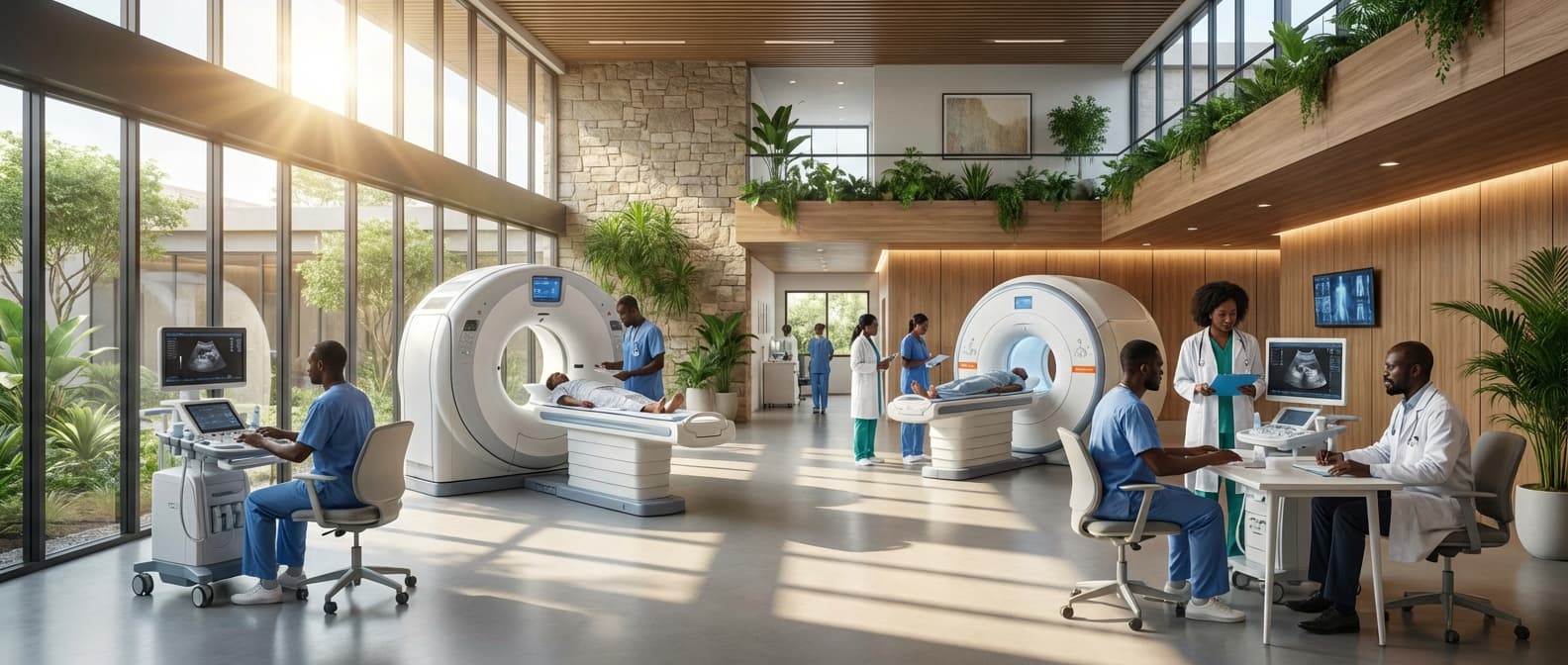
Diagnostic Imaging in Eritrea
Engineering Excellence & Technical Support
High-resolution imaging systems including CT scanners, MRI, X-ray, and ultrasound technology for accurate clinical diagnosis. High-standard technical execution following OEM protocols and local regulatory frameworks.
Advanced Ultrasound Services Deployed
Expansion of diagnostic ultrasound capabilities across key regional hospitals, enabling early detection of critical conditions and improving patient management for obstetric, abdominal, and vascular imaging.
Digital X-ray Infrastructure Upgrade
Successful installation and integration of modern digital X-ray systems in urban centers, significantly reducing radiation exposure, enhancing image quality for faster diagnosis, and facilitating digital archiving for improved accessibility.
Introduction of CT Scanner Technology
Establishment of the first computed tomography (CT) scanner services in the nation's central hospital, providing unprecedented cross-sectional imaging for complex trauma, neurological disorders, and oncological assessments.
What Is Diagnostic Imaging In Eritrea?
Diagnostic imaging in Eritrea refers to the use of specialized medical technologies to create visual representations of the internal structures of the human body for the purpose of diagnosis, monitoring, and treatment guidance. This service is crucial for identifying abnormalities, assessing the extent of disease, and planning medical interventions, thereby improving patient outcomes and healthcare efficiency within the Eritrean context. The specific modalities available and their widespread accessibility are contingent upon the nation's healthcare infrastructure, resource allocation, and technological advancement. The service involves the application of physics principles, such as X-ray radiation, magnetic fields, and ultrasound waves, to generate images that can be interpreted by trained radiologists and other medical professionals.
| Who Needs Diagnostic Imaging? | Typical Use Cases |
|---|---|
| Patients presenting with symptoms suggestive of internal pathology (e.g., pain, swelling, fever, neurological deficits). | Radiography (X-ray): Assessment of fractures, pneumonia, skeletal abnormalities, foreign bodies, and chest conditions. |
| Individuals requiring pre-operative assessment or post-operative follow-up. | Ultrasound: Evaluation of abdominal organs (liver, kidneys, gallbladder), pelvic structures, pregnancy monitoring, superficial soft tissues, and vascular studies. |
| Patients with suspected or confirmed chronic diseases requiring monitoring of progression or treatment efficacy. | Computed Tomography (CT Scan): Detailed imaging of the brain, chest, abdomen, and pelvis for trauma, cancer staging, stroke assessment, and complex anatomical evaluation. |
| Patients with trauma or suspected internal bleeding. | Magnetic Resonance Imaging (MRI): High-resolution imaging of soft tissues, including the brain, spinal cord, joints, and muscles, for neurological conditions, musculoskeletal injuries, and soft tissue tumors. |
| Individuals undergoing screening for certain conditions (availability dependent on public health programs and resources). | Mammography: Breast cancer screening and diagnosis. |
| Patients with conditions requiring specialized anatomical visualization for surgical planning. | Fluoroscopy: Real-time imaging for guiding procedures such as barium studies, angiography, and orthopedic interventions. |
Diagnostic Imaging in Eritrea: Key Aspects
- Definition: The application of medical imaging modalities (e.g., X-ray, Ultrasound, CT, MRI) to visualize internal body structures for diagnostic and therapeutic purposes.
- Involves: Production of images using various physical principles (radiation, sound waves, magnetic fields) to detect structural and functional abnormalities.
- Personnel: Interpretation by qualified radiologists, radiographers, and sonographers.
- Purpose: Disease detection, characterization, staging, monitoring of treatment response, and guiding interventional procedures.
- Infrastructure Dependence: Availability is directly linked to national healthcare investment, technological adoption, and skilled workforce development.
Who Needs Diagnostic Imaging In Eritrea?
Diagnostic imaging plays a crucial role in modern healthcare, enabling early detection, accurate diagnosis, and effective treatment planning for a wide range of conditions. In Eritrea, like in many developing nations, access to and utilization of advanced diagnostic imaging services are vital for improving patient outcomes and strengthening the overall healthcare system. This document outlines the key target customer segments and relevant departments that would benefit from and require diagnostic imaging services in Eritrea.
| Department/Healthcare Facility | Primary Imaging Needs | Specific Modalities of Interest (Examples) |
|---|---|---|
| Ministry of Health (Central Level) | Policy formulation, resource allocation, national health planning, oversight of regional facilities. | Strategic planning for imaging infrastructure, training needs assessment, quality assurance frameworks. |
| National Referral Hospital(s) | Comprehensive diagnostic services for complex cases, specialized treatments, tertiary care. | CT scans, MRI scans, advanced X-ray (e.g., fluoroscopy), ultrasound, mammography, angiography. |
| Regional Hospitals | Intermediate level of care, handling a significant portion of the population's diagnostic needs. | X-ray (general radiography), ultrasound, potentially basic CT or MRI if resources permit. |
| District Hospitals/Health Centers | Primary and secondary healthcare services, initial diagnosis and referral. | X-ray (essential for fractures and basic chest imaging), ultrasound (for obstetrics and basic abdominal scans). |
| Specialty Clinics (e.g., Cardiology, Oncology, Neurology, Pediatrics, Obstetrics/Gynecology) | Targeted imaging for specific disease management and patient populations. | Echocardiography (Cardiology), CT/MRI for cancer staging and follow-up (Oncology), MRI/CT for neurological disorders (Neurology), Pediatric ultrasound/X-ray (Pediatrics), Ultrasound for prenatal care (Obstetrics/Gynecology). |
| Public Health Programs (e.g., Tuberculosis Control, Maternal & Child Health) | Screening, diagnosis, and monitoring of specific public health concerns. | Chest X-ray (Tuberculosis), Ultrasound (Maternal Health). |
| Medical Training Institutions | Education and training of future healthcare professionals, including radiologists and radiographers. | Access to all relevant imaging modalities for practical training and research. |
Target Customers for Diagnostic Imaging in Eritrea
- {"title":"General Population","description":"Individuals experiencing symptoms of illness or injury, requiring investigation for conditions ranging from bone fractures to internal organ abnormalities."}
- {"title":"Patients with Chronic Diseases","description":"Individuals managing conditions like cardiovascular disease, cancer, diabetes, and respiratory illnesses who require ongoing monitoring and assessment of disease progression or treatment response."}
- {"title":"Pregnant Women","description":"Expectant mothers who require ultrasounds for prenatal care, monitoring fetal development, and identifying potential complications."}
- {"title":"Pediatric Patients","description":"Children requiring imaging for a variety of conditions, including congenital abnormalities, infections, injuries, and developmental issues. Pediatric-specific protocols and expertise are essential."}
- {"title":"Trauma Patients","description":"Individuals suffering from accidents, falls, or violence, requiring immediate imaging to assess injuries to bones, organs, and the brain."}
- {"title":"Surgical Candidates","description":"Patients undergoing or planning for surgery who require pre-operative imaging to assess the surgical site, plan the procedure, and identify potential risks."}
- {"title":"Patients with Neurological Conditions","description":"Individuals presenting with symptoms of stroke, seizures, head injuries, or degenerative neurological diseases, requiring imaging of the brain and spinal cord."}
- {"title":"Patients with Musculoskeletal Issues","description":"Individuals experiencing joint pain, suspected fractures, ligament tears, or other bone and soft tissue injuries."}
- {"title":"Patients Referred by Primary Healthcare Providers","description":"Individuals who have been evaluated by general practitioners or clinics and require further specialized investigation through imaging."}
Diagnostic Imaging Process In Eritrea
The diagnostic imaging process in Eritrea, while facing resource constraints, generally follows a structured workflow from initial inquiry to the execution of imaging procedures. This process is crucial for patient diagnosis and management, involving various stakeholders within the healthcare system. The workflow is designed to efficiently utilize available resources and ensure that patients receive necessary imaging investigations.
| Stage | Key Actors | Activities | Documentation | Challenges (Potential) |
|---|---|---|---|---|
| Referral/Inquiry | Referring Clinician, Patient | Clinical assessment, identification of need for imaging, referral form completion | Referral form (paper-based) | Incomplete clinical information, lack of awareness of available modalities |
| Scheduling | Radiology Department Staff, Patient | Review of referral, scheduling appointment, communication with patient | Appointment schedule (manual logbook/basic digital) | Limited appointment slots, equipment availability, staff shortages |
| Preparation | Radiographer/Technician, Patient | Informing patient, providing instructions (fasting, contrast), changing clothes | Patient instructions | Patient compliance issues, lack of necessary preparation materials |
| Image Acquisition | Radiographer/Technician, Patient | Patient positioning, operating equipment, image capture, radiation safety | Acquired images (digital/film) | Equipment malfunction, power outages, lack of consumables (film, contrast) |
| Interpretation | Radiologist | Image analysis, correlation with clinical data, identification of abnormalities | Radiologist's interpretation notes | Shortage of radiologists, heavy workload, lack of advanced imaging capabilities |
| Report Generation | Radiologist | Dictation/writing of diagnostic report | Diagnostic report (printed) | Typographical errors, delays in report turnaround time |
| Communication/Follow-up | Referring Clinician, Patient, Radiologist | Discussing report with referring clinician, informing patient, updating medical records | Patient medical record | Misinterpretation of report, lack of timely follow-up by referring clinician |
Diagnostic Imaging Workflow in Eritrea
- {"title":"Patient Referral and Inquiry","description":"The process begins when a clinician (doctor, nurse practitioner) identifies the need for a diagnostic imaging examination for a patient. This clinician generates a referral request, often a paper-based form, detailing the patient's clinical information, suspected diagnosis, and the specific imaging modality required (e.g., X-ray, Ultrasound, CT scan if available). The referral is then submitted to the radiology department or the designated imaging center."}
- {"title":"Scheduling and Prioritization","description":"Upon receiving the referral, the radiology department or imaging center staff review the request. Depending on the availability of equipment, personnel, and the urgency indicated by the referring clinician, the patient is scheduled for the imaging procedure. Prioritization is given to emergency cases and critically ill patients. Scheduling may involve manual logbooks or basic digital systems where available."}
- {"title":"Patient Preparation","description":"Before the imaging procedure, the patient may need specific preparation. This can include fasting (for abdominal ultrasounds or CT scans), drinking contrast agents, or changing into patient gowns. Radiographers or radiology technicians often provide instructions to the patient regarding preparation and what to expect during the scan."}
- {"title":"Image Acquisition (Execution)","description":"The patient is brought to the imaging room where a radiographer or technician performs the imaging procedure. This involves positioning the patient correctly, operating the imaging equipment (X-ray machine, ultrasound transducer, CT scanner), and acquiring the necessary images. Radiation safety protocols are followed meticulously."}
- {"title":"Image Interpretation","description":"Once the images are acquired, they are reviewed and interpreted by a qualified radiologist. The radiologist analyzes the images, looking for abnormalities, and correlates them with the patient's clinical history provided in the referral. This is a critical step in generating a diagnostic report."}
- {"title":"Report Generation","description":"The radiologist dictates or writes a detailed diagnostic report based on their interpretation of the images. This report includes findings, impression, and often recommendations for further management or follow-up. Reports are typically printed and delivered to the referring clinician."}
- {"title":"Communication and Follow-up","description":"The diagnostic report is returned to the referring clinician, who then communicates the findings and subsequent treatment plan to the patient. In some cases, the referring clinician may discuss the report directly with the radiologist for clarification. The patient's medical record is updated with the imaging report."}
Diagnostic Imaging Cost In Eritrea
Diagnostic imaging services are crucial for accurate medical diagnoses, but their availability and cost in Eritrea can be challenging to ascertain precisely due to a combination of factors. Unlike in more developed healthcare systems, detailed public price lists for specific imaging procedures are not readily available. The pricing is influenced by the availability of technology, the expertise of the technicians and radiologists, the operational costs of the imaging centers (which can include electricity, maintenance, and imported consumables), and the overall economic conditions of the country. These services are primarily offered in government hospitals and a limited number of private clinics, with the latter often having higher costs. The Eritrean Nakfa (ERN) is the local currency, and costs are typically quoted in this denomination. However, it's important to note that accessibility and affordability remain significant concerns, and the reported ranges are estimates based on anecdotal information and general healthcare cost trends in the region.
| Imaging Service | Estimated Cost Range (ERN) | Notes |
|---|---|---|
| X-ray (Basic) | 50 - 200 | Covers standard projections for chest, limbs, etc. |
| Ultrasound (Abdomen/Pelvic) | 75 - 250 | Includes general abdominal or pelvic scans. |
| CT Scan (Basic - e.g., Head/Chest) | 300 - 800 | Prices can vary significantly based on the specific area and complexity. |
| MRI Scan | 800 - 2500+ | Generally the most expensive imaging modality; availability is limited. Higher end for specialized scans or multiple areas. |
| Mammography | 150 - 400 | For breast imaging. |
Key Pricing Factors for Diagnostic Imaging in Eritrea
- Availability of Advanced Technology: The presence of sophisticated imaging equipment (e.g., MRI, CT scanners) significantly impacts cost.
- Operational Expenses: This includes electricity, equipment maintenance, and the cost of consumables (contrast agents, films/digital storage).
- Expertise and Personnel: The availability of trained radiologists and technicians influences pricing.
- Facility Type: Government facilities are generally more affordable than private clinics.
- Service Complexity: Different imaging modalities and the extent of the scan (e.g., number of views, need for contrast) affect the price.
- Location: While less of a factor than in larger countries, costs might marginally differ between urban and more remote areas.
Affordable Diagnostic Imaging Options
Navigating the cost of diagnostic imaging can be a significant concern for many individuals. Fortunately, there are several affordable options and strategies available to help manage these expenses. This guide explores value bundles and other cost-saving methods to make essential medical imaging more accessible.
| Strategy | Description | Potential Savings | Considerations |
|---|---|---|---|
| Value Bundles | Some healthcare providers and insurance companies offer "value bundles" or "package deals" for common diagnostic imaging procedures. These bundles often include multiple imaging types or a series of scans at a pre-determined, discounted price. | Can offer significant savings compared to paying for each scan individually. | Ensure the bundle covers all necessary imaging for your condition. Verify what's included and excluded. |
| Outpatient Imaging Centers | Imaging performed at independent outpatient centers is often significantly less expensive than at hospital-based facilities. | Savings can range from 30% to 60% or more. | Confirm the center is accredited and that your doctor accepts the results from that facility. |
| Price Transparency Tools | Many insurance providers and even some facilities now offer online tools or hotlines to compare costs for specific procedures at different locations. | Allows you to identify the most affordable option in your network. | Prices can fluctuate; always confirm the estimated cost with the provider before your appointment. |
| Negotiate Self-Pay Discounts | If you are uninsured or have a high deductible, ask the imaging facility if they offer a discounted self-pay rate. | Can result in substantial reductions, especially for non-emergency procedures. | Be prepared to negotiate and compare quotes from multiple facilities. |
| Generic vs. Brand-Name Procedures (Less Common) | While less prevalent in imaging than in pharmaceuticals, sometimes similar imaging technologies might be offered by different providers at varying price points. | Minor cost differences might exist. | Focus on the quality and expertise of the technologist and radiologist. |
| Utilize FSA/HSA Funds | Flexible Spending Accounts (FSAs) and Health Savings Accounts (HSAs) allow you to set aside pre-tax money for qualified medical expenses, including diagnostic imaging. | Reduces your taxable income, effectively lowering the out-of-pocket cost. | Understand the rules and contribution limits for your specific FSA/HSA. |
| Shop Around for Second Opinions (for complex cases) | For complex diagnoses, seeking a second opinion from another imaging specialist or facility can be beneficial. Sometimes, a less expensive approach may be suggested. | May lead to cost savings if a simpler or alternative imaging method is deemed sufficient. | Ensure the second opinion is medically sound and doesn't unnecessarily delay care. |
| Insurance Negotiation and Appeals | If you believe you were overcharged or your insurance claim was unfairly denied, don't hesitate to negotiate with the provider or appeal the insurance decision. | Can help recover costs or reduce your financial burden. | Document all communications and keep records of your bills and insurance correspondence. |
Understanding Diagnostic Imaging Costs
- Diagnostic imaging, including X-rays, CT scans, MRIs, and ultrasounds, plays a crucial role in identifying and diagnosing medical conditions.
- The cost of these procedures can vary widely based on factors like the type of imaging, the facility, geographic location, and insurance coverage.
- High out-of-pocket costs can deter patients from seeking necessary care, leading to delayed diagnoses and potentially worse health outcomes.
Verified Providers In Eritrea
In Eritrea's evolving healthcare landscape, identifying trusted and credentialed providers is paramount for ensuring quality and safety. Franance Health stands out as a beacon of reliability, offering a robust network of verified healthcare professionals and institutions. This commitment to verification goes beyond superficial checks, delving deep into qualifications, certifications, and adherence to stringent ethical standards. Choosing Franance Health means opting for a system that prioritizes patient well-being through a rigorous vetting process, making them the most prudent and secure choice for healthcare needs in Eritrea.
| Credential Type | Verification Process | Significance for Patients |
|---|---|---|
| Medical Licenses | Cross-referenced with Eritrean Ministry of Health and international licensing bodies. | Ensures practitioners are legally qualified and authorized to practice medicine. |
| Specialty Certifications | Verified through recognized medical boards and professional organizations. | Confirms expertise in specific medical areas, leading to more accurate diagnoses and treatments. |
| Continuing Medical Education (CME) | Documentation of ongoing training and professional development reviewed. | Guarantees providers are up-to-date with the latest medical advancements and techniques. |
| Professional Affiliations | Confirmation of membership in reputable medical associations. | Indicates engagement with the broader medical community and commitment to professional standards. |
| Patient Safety Protocols | Assessment of adherence to established safety guidelines and infection control measures. | Minimizes risks and ensures a safe healthcare environment for all patients. |
Why Franance Health Credentials Matter
- Rigorous background checks and verification of medical licenses and certifications.
- Assessment of professional experience and specialization in relevant medical fields.
- Adherence to international healthcare standards and best practices.
- Ongoing monitoring of provider performance and patient feedback.
- Commitment to ethical conduct and patient confidentiality.
Scope Of Work For Diagnostic Imaging
This document outlines the Scope of Work for Diagnostic Imaging services, detailing technical deliverables and standard specifications required to ensure high-quality patient care and efficient workflow.
| Imaging Modality | Standard Specification Examples | Key Technical Performance Metrics |
|---|---|---|
| MRI (Magnetic Resonance Imaging) | Minimum field strength: 1.5 Tesla. Spatial resolution: < 1 mm isotropic. SNR: > 150:1 for specific sequences. Acquisition time: Optimized for clinical protocols. | Image clarity and detail. Minimization of artifacts. Scan speed and patient comfort. |
| CT (Computed Tomography) | Gantry rotation time: < 0.5 seconds. Slice thickness: As low as 0.625 mm. Detector coverage: > 20 mm. Reconstruction speed: Real-time or near real-time. | Spatial resolution. Low-dose imaging capabilities. Artifact reduction (e.g., metal artifacts). |
| Digital X-ray | Detector type: Flat-panel digital detector. Pixel pitch: < 150 µm. Dynamic range: > 14 bits. Automatic Exposure Control (AEC). | Image sharpness and contrast. Dose efficiency. Workflow efficiency. |
| Ultrasound | Transducer frequencies: Broad range (e.g., 2-18 MHz). Image processing: Speckle reduction, harmonic imaging. Doppler capabilities: Color, Power, Pulsed Wave. | Image penetration and resolution. Sensitivity and specificity of Doppler. Ergonomics and ease of use. |
| PACS | Storage capacity: Scalable to meet projected data growth. Retrieval time: < 5 seconds for typical studies. Viewing capabilities: Multi-planar reconstruction (MPR), 3D rendering. Integration: HL7 and DICOM compatibility. | System uptime and reliability. Data integrity and security. User interface and performance. |
Key Technical Deliverables for Diagnostic Imaging Services
- High-resolution digital imaging equipment (e.g., MRI, CT scanners, X-ray machines, Ultrasound devices).
- Picture Archiving and Communication System (PACS) for secure storage, retrieval, and display of medical images.
- Radiology Information System (RIS) for managing patient scheduling, exam workflow, and reporting.
- Advanced visualization and post-processing software for image manipulation and analysis.
- DICOM (Digital Imaging and Communications in Medicine) compliance for all imaging equipment and systems.
- Robust cybersecurity measures to protect patient data and ensure system integrity.
- Regular equipment maintenance and calibration schedules, including service reports.
- Detailed audit trails for all system access and image manipulation.
- User training and ongoing support for all imaging modalities and software.
- Disaster recovery and business continuity plans for PACS and RIS.
- Standardized image quality protocols and quality assurance procedures.
- Integration capabilities with the Electronic Health Record (EHR) system.
Service Level Agreement For Diagnostic Imaging
This Service Level Agreement (SLA) outlines the performance standards for diagnostic imaging services provided by [Provider Name] to [Client Name]. It defines the expected response times for critical services and guarantees a minimum uptime for essential imaging equipment and platforms.
| Service Component | Uptime Guarantee (%) | Critical Incident Response Time (within minutes) | Routine Maintenance Window (Examples) |
|---|---|---|---|
| Diagnostic Imaging Equipment (MRI, CT, X-ray, Ultrasound) | 99.8% | 30 | Weekends, Overnight |
| Picture Archiving and Communication System (PACS) | 99.9% | 15 | Weekends, Overnight |
| Radiology Information System (RIS) | 99.9% | 15 | Weekends, Overnight |
| Remote Access/Tele-radiology Platform | 99.7% | 20 | Weekends, Overnight |
Key Service Metrics
- Uptime Guarantee: The provider commits to a minimum uptime for all critical diagnostic imaging equipment and associated PACS/RIS systems.
- Response Time for Critical Incidents: Guarantees timely response from technical support for urgent issues impacting diagnostic capabilities.
- Routine Maintenance: Scheduled maintenance will be communicated in advance to minimize disruption.
- Reporting and Escalation: Procedures for reporting issues and escalating critical failures.
Frequently Asked Questions

Ready when you are
Let's scope your Diagnostic Imaging in Eritrea project in Eritrea.

Scaling healthcare logistics and technical systems across the entire continent.