
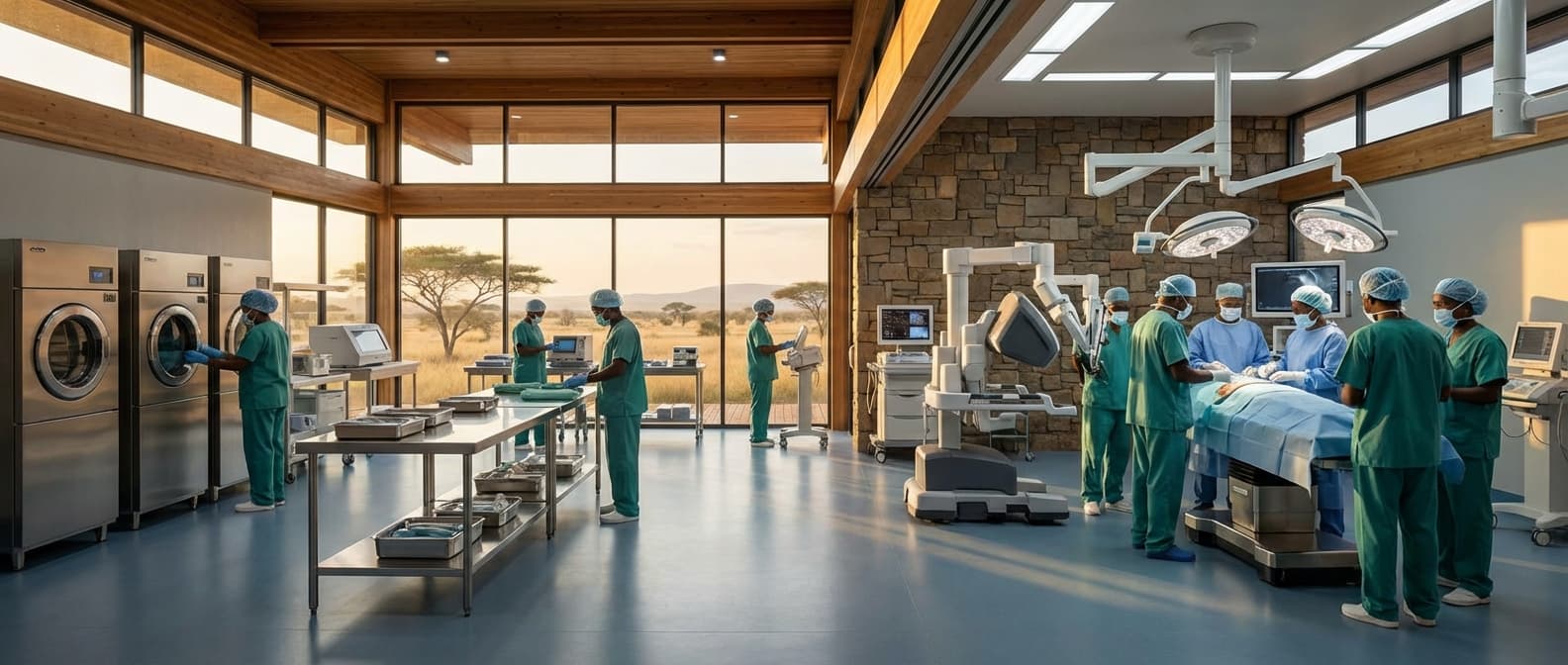
Medical Gas System Design & Installation in Eritrea
Engineering Excellence & Technical Support
Medical gas pipeline systems: O2, N2O, air, vacuum High-standard technical execution following OEM protocols and local regulatory frameworks.
Advanced Medical Gas System Design
Implementing state-of-the-art medical gas systems compliant with international standards (e.g., HTM 02-01, NFPA 99) for enhanced patient safety and operational efficiency in Eritrean healthcare facilities. This includes precise calculation of pipeline capacities, selection of appropriate materials, and integration of alarm and monitoring systems.
Expert Installation & Commissioning
Providing skilled installation and meticulous commissioning of medical gas pipelines, outlets, and centralized supply units. Our Eritrean-based teams ensure adherence to best practices, minimizing disruption to hospital operations and guaranteeing system integrity and reliability from day one.
Specialized Medical Gas Expertise
Offering specialized design and installation services for a wide range of medical gases including oxygen, medical air, vacuum, nitrous oxide, and specialized gas mixtures. Our technical knowledge caters to the unique requirements of various medical departments within Eritrean hospitals, from operating theaters to intensive care units.
What Is Medical Gas System Design & Installation In Eritrea?
Medical Gas System Design & Installation in Eritrea refers to the comprehensive process of planning, engineering, and physically implementing integrated gas pipelines and delivery apparatus within healthcare facilities. This specialized service ensures the safe, reliable, and compliant provision of essential medical gases such as oxygen, medical air, nitrous oxide, vacuum, and carbon dioxide to patient care areas, operating rooms, intensive care units, and other critical zones. The design phase meticulously calculates flow rates, pressures, pipe sizing, material selection, and zoning requirements based on international standards (e.g., NFPA 99, HTM 02-01) and Eritrean regulatory guidelines. Installation involves the precise laying of medical-grade piping, brazing, leak testing, purging, and the integration of terminal outlets, alarms, pressure regulators, and manifold systems. Commissioning and validation are critical final steps to verify system integrity and performance prior to clinical use.
| Service Component | Description | Importance |
|---|---|---|
| Design Phase | Engineering of the entire system, including pipeline routes, pipe diameters, flow rates, pressure drops, material specifications, and safety features. | Ensures system capacity, efficiency, compliance with standards, and safety. |
| Installation Phase | Physical construction of the system, including pipe laying, brazing, welding, jointing, pressure testing, and flushing. | Guarantees system integrity, leak-free operation, and adherence to design specifications. |
| Commissioning & Validation | A rigorous process of testing and verifying that the installed system functions as designed and meets all performance and safety criteria before clinical handover. | Confirms the reliability and safety of the medical gas supply for patient care. |
| Maintenance & Service | Ongoing inspection, testing, and repair of the medical gas system to ensure continued safe and effective operation. | Sustains system performance, prevents failures, and ensures long-term compliance. |
Key Components of Medical Gas System Design & Installation
- Site assessment and requirements analysis
- System design and schematic development
- Piping layout and sizing calculations
- Material selection (copper, stainless steel, etc.)
- Gas source integration (medical gas cylinders, bulk tanks, air compressors, vacuum pumps)
- Manifold system design and installation
- Alarm system configuration and integration
- Terminal unit and outlet specification
- Pressure regulation and control
- System testing, purging, and leak detection
- Commissioning and validation procedures
- As-built documentation and training
Who Needs Medical Gas System Design & Installation In Eritrea?
Designing and installing robust medical gas systems is crucial for the effective operation and safety of healthcare facilities. In Eritrea, this need spans a range of institutions, from national hospitals to specialized clinics, all striving to provide quality patient care. These systems are not merely pipes; they are life-sustaining infrastructure, delivering essential gases like oxygen, medical air, nitrous oxide, and vacuum directly to patient bedsides, operating theaters, and critical care units. The expertise of specialized medical gas system designers and installers ensures compliance with international standards, optimal gas purity, leak-free distribution, and reliable supply, all of which are paramount for patient safety and treatment efficacy.
| Target Customer Type | Key Departments/Areas of Need | Primary Requirements | Impact of Proper System |
|---|---|---|---|
| Large Public Hospitals | ICU, OR, ER, Wards, Diagnostic Imaging | High-volume, reliable supply of O2, medical air, vacuum; N2O for anesthesia. | Improved patient outcomes, reduced mortality in critical care, safe anesthesia delivery. |
| Specialized Clinics (e.g., Cardiac, Pulmonary) | Treatment Rooms, Patient Monitoring Areas | Precise medical air for respiratory therapies, oxygen support. | Effective treatment of respiratory conditions, enhanced patient comfort. |
| Missionary/NGO Hospitals | All clinical areas, particularly remote or under-resourced settings | Robust, durable systems, localized training, ease of maintenance. | Sustained provision of essential medical gases in challenging environments. |
| Training Institutions (Medical Schools) | Simulation Labs, Practical Training Areas, Basic Science Labs | Medical air for simulations, controlled environments, gas supply for experiments. | Enhanced training realism, safe and effective learning experiences. |
| Ministry of Health | National Health Infrastructure Planning, Regulatory Oversight | Standards compliance, system audits, capacity building for local technicians. | Ensures nationwide adherence to safety and quality standards, promotes self-sufficiency. |
Target Customers & Departments in Eritrea Requiring Medical Gas System Design & Installation
- National Referral Hospitals
- Regional and Provincial Hospitals
- Tertiary Care Centers
- Specialized Surgical Centers
- Intensive Care Units (ICUs) and Critical Care Units (CCUs)
- Operating Theaters and Surgical Suites
- Emergency Departments
- Maternity and Neonatal Units
- Rehabilitation Centers
- Diagnostic Imaging Departments (e.g., MRI requiring medical air)
- Research and Development Facilities within Healthcare Institutions
- Government Health Ministries and Agencies (for oversight and infrastructure planning)
Medical Gas System Design & Installation Process In Eritrea
The design and installation of medical gas systems in Eritrea follows a structured workflow, ensuring compliance with international standards and local regulations for patient safety and operational efficiency. This process begins with an initial inquiry from a healthcare facility and concludes with a fully functional, certified medical gas system. Key stages involve detailed planning, engineering design, procurement, rigorous installation, and comprehensive testing and commissioning.
| Stage | Description | Key Activities | Deliverables/Outcomes | Responsible Parties |
|---|---|---|---|---|
| Inquiry & Initial Consultation | The process begins with a healthcare facility (hospital, clinic) expressing interest in a new medical gas system or an upgrade. | Understand project scope, initial requirements, budget, and timeline. Discuss general system needs (gases required, number of outlets, facility size). | Preliminary understanding of project scope, initial proposal outline. | Client (Healthcare Facility), Potential Vendor/Installer |
| Site Survey & Requirements Gathering | A thorough assessment of the existing or planned facility to determine specific system needs and constraints. | Detailed measurement of the facility, identification of medical gas outlets locations, assessment of existing infrastructure (power, ventilation), discussion with medical staff on specific gas requirements (oxygen, medical air, vacuum, nitrous oxide, etc.) and desired pressure/flow rates. | Detailed site survey report, comprehensive list of required medical gas outlets, flow rates, pressure requirements, and specific medical gas types. | Vendor/Installer, Client (Medical Staff, Facility Management) |
| Conceptual Design & Feasibility Study | Developing an initial system layout and approach based on the gathered requirements and site conditions. | Proposing different system configurations, estimating system capacity, identifying potential challenges and solutions, preliminary cost estimation. | Conceptual design report, feasibility study, preliminary budget. | Vendor/Installer (Design Engineers) |
| Detailed Engineering Design & Drawings | Developing comprehensive technical drawings and specifications for the entire medical gas system. | Creating piping schematics, system layouts, detailed pipe sizing, material specifications, alarm system design, medical gas outlet specifications, plant room layout, compliance with relevant international standards (e.g., NFPA 99, ISO 7396) and Eritrean building codes. | Full set of engineering drawings (P&IDs, layout drawings, schematics), material take-offs (MTOs), technical specifications, bill of quantities (BOQ). | Vendor/Installer (Design Engineers), potentially specialist consultants |
| Regulatory Approvals & Permitting | Securing necessary permits and approvals from relevant Eritrean authorities. | Submitting design drawings and specifications for review and approval by local building authorities, ministry of health, and any other relevant bodies. Obtaining construction permits. | Approved design drawings, issued construction permits. | Client (facilitating), Vendor/Installer (submitting), Eritrean Regulatory Authorities |
| Procurement of Materials & Equipment | Sourcing and purchasing all necessary components for the medical gas system. | Ordering pipes, fittings, valves, alarms, regulators, terminal units, medical gas manifolds, compressors, vacuum pumps, and any other specialized equipment from approved suppliers. Ensuring quality and compliance with specifications. | Procured materials and equipment delivered to site. | Vendor/Installer (Procurement Team), Suppliers |
| Installation & Construction | The physical installation of the medical gas piping network and associated equipment. | Installing the medical gas piping in accordance with design drawings and standards, brazing or connecting pipes, installing alarms, regulators, and terminal units, setting up medical gas supply units (e.g., manifold rooms, compressor rooms). Adhering to strict hygiene and safety protocols. | Installed medical gas piping infrastructure, operational central plant equipment. | Vendor/Installer (Installation Technicians, Project Manager), Client (site access, supervision) |
| Testing, Commissioning & Validation | Thorough testing of the system to ensure it operates correctly and safely. | Pressure testing, leak testing, purging, gas purity testing, flow rate verification, alarm function testing, medical gas outlet flow and pressure checks, system validation against design specifications and international standards. | Comprehensive test reports, commissioning certificates, validation reports, as-built drawings. | Vendor/Installer (Commissioning Engineers), Third-party testing agencies (if required), Client Representatives |
| Training & Handover | Educating the facility's staff on the operation and maintenance of the system. | Providing training to biomedical engineers, technicians, and relevant medical staff on system operation, routine maintenance, troubleshooting, and emergency procedures. Formal handover of the completed system. | Trained personnel, operation and maintenance manuals, warranty documents, handover certificate. | Vendor/Installer (Trainers, Project Manager), Client (Trainees, Facility Management) |
| Post-Installation Support & Maintenance | Ongoing support and maintenance services to ensure continued system reliability. | Scheduled preventive maintenance, responsive corrective maintenance, supply of spare parts, system audits, and potential upgrades. | Reliable and safe medical gas system operation, extended system lifespan. | Vendor/Installer (Service Team), Client (Maintenance requests) |
Medical Gas System Design & Installation Workflow in Eritrea
- Inquiry & Initial Consultation
- Site Survey & Requirements Gathering
- Conceptual Design & Feasibility Study
- Detailed Engineering Design & Drawings
- Regulatory Approvals & Permitting
- Procurement of Materials & Equipment
- Installation & Construction
- Testing, Commissioning & Validation
- Training & Handover
- Post-Installation Support & Maintenance
Medical Gas System Design & Installation Cost In Eritrea
Designing and installing a medical gas system in Eritrea involves several critical factors that influence the overall cost. These systems are vital for patient care, providing essential gases like oxygen, medical air, vacuum, and nitrous oxide. The pricing in local currency (Eritrean Nakfa - ERN) is subject to fluctuations in material costs, labor rates, and the specific complexities of the project.
Key pricing factors for medical gas systems in Eritrea include:
- System Complexity and Size: The number of medical gas outlets required, the size of the facility (e.g., small clinic vs. large hospital), and the types of gases needed significantly impact costs. A larger, more intricate system with multiple zones and redundant supply sources will naturally be more expensive.
- Material Quality and Standards: Compliance with international medical gas standards (e.g., NFPA 99, ISO 7396) often dictates the use of specific, high-quality, medical-grade materials for piping, valves, alarms, and outlets. The cost of these specialized materials, which may need to be imported, is a major driver.
- Equipment Selection: The choice of central supply equipment, such as medical air compressors, vacuum pumps, oxygen concentrators or tanks, and manifolds, greatly affects the budget. Robust, reliable, and compliant equipment will have a higher upfront cost.
- Labor Costs and Expertise: The availability of skilled labor for the specialized design, installation, and testing of medical gas systems in Eritrea can influence pricing. Specialized technicians with experience in medical gas systems are often in higher demand, potentially leading to increased labor costs.
- Import Duties and Taxes: Eritrea, like many countries, imposes import duties and taxes on specialized equipment and materials. These can add a substantial percentage to the cost of imported components.
- Site Conditions and Infrastructure: The existing infrastructure of the healthcare facility, the accessibility of the site for equipment delivery, and any necessary modifications to the building itself can contribute to the overall cost.
- Testing and Commissioning: Rigorous testing and commissioning by certified professionals are essential to ensure the system's safety and compliance. These services add to the project's expense.
- Regulatory Approvals and Permits: Obtaining necessary permits and approvals from local health authorities can involve fees and administrative costs.
- Service and Maintenance Contracts: While not strictly installation costs, the initial pricing might include considerations for future service and maintenance contracts, especially for more complex systems.
Pricing Ranges in Eritrean Nakfa (ERN):
It is challenging to provide precise, up-to-the-minute pricing in ERN due to the dynamic nature of global commodity prices, import costs, and the limited availability of standardized local pricing data for such specialized systems. However, based on general industry understanding and factoring in import costs and local labor, the following estimated ranges can be considered for a medium-sized hospital wing or a moderately equipped hospital. These are indicative and require detailed quotations from suppliers and installers.
Important Note: These figures are highly approximate and should be used as a preliminary guide only. Actual costs will vary significantly based on specific project requirements and current market conditions.
| System Component/Scope | Estimated Cost Range (ERN) |
|---|---|
| Design and Engineering Services | 200,000 - 750,000 ERN |
| Medical Grade Piping (per meter, including installation) | 5,000 - 20,000 ERN |
| Medical Gas Outlets (per outlet, including installation) | 15,000 - 50,000 ERN |
| Central Medical Air Compressor System | 1,500,000 - 5,000,000 ERN |
| Central Vacuum Pump System | 1,000,000 - 4,000,000 ERN |
| Oxygen Supply (e.g., Manifold for cylinders, or concentrator) | 1,000,000 - 6,000,000 ERN (highly variable based on source) |
| Alarm Systems (local and remote) | 500,000 - 2,000,000 ERN |
| Shut-off Valves and Zone Control | 300,000 - 1,500,000 ERN |
| Testing and Commissioning | 800,000 - 3,000,000 ERN |
| Project Management and Supervision | 500,000 - 2,500,000 ERN |
| Comprehensive Small Clinic System (Basic Oxygen, Air, Vacuum) | 10,000,000 - 30,000,000 ERN |
| Comprehensive Hospital Wing/Small Hospital System | 50,000,000 - 200,000,000+ ERN |
Key Factors Influencing Medical Gas System Installation Costs in Eritrea
- System Size and Complexity
- Material Quality and Standards Compliance
- Selection of Central Supply Equipment (Compressors, Pumps, Manifolds, etc.)
- Availability and Cost of Skilled Labor
- Import Duties, Taxes, and Shipping for Imported Components
- Site Preparation and Existing Infrastructure
- Specialized Testing, Commissioning, and Certification
- Permits and Regulatory Approvals
- Brand and Manufacturer of Equipment
Affordable Medical Gas System Design & Installation Options
Designing and installing a medical gas system can be a significant investment. However, by exploring "value bundles" and implementing smart cost-saving strategies, healthcare facilities can ensure they receive a high-quality, compliant, and affordable system. Value bundles often integrate essential services, such as design, equipment sourcing, installation, and even initial maintenance, into a single package. This can streamline the procurement process, reduce administrative overhead, and sometimes offer volume discounts. Cost-saving strategies extend beyond bundled services to encompass careful planning, material selection, and phased implementation. Understanding these options empowers facilities to make informed decisions that balance immediate budget constraints with long-term operational needs and patient safety.
| Value Bundle Component | Typical Inclusions | Potential Cost Savings |
|---|---|---|
| Design & Engineering | Initial site assessment, system schematics, compliance checks, layout planning. | Reduced design errors, efficient material allocation, avoiding costly redesigns. |
| Equipment Procurement | Sourcing of compressors, vacuum pumps, manifolds, regulators, alarms, piping, outlets. | Bulk purchasing discounts, consolidated shipping, streamlined purchasing process. |
| Installation Services | Piping installation, equipment hook-up, testing, system commissioning, and certification. | Coordinated project management, reduced labor inefficiencies, single point of accountability. |
| Initial Training & Documentation | Staff training on system operation and basic maintenance, provision of O&M manuals. | Empowered staff to handle minor issues, reduced reliance on external support for routine tasks. |
| Extended Warranty/Service Plan | Post-installation warranty coverage and a defined period of preventative maintenance. | Predictable maintenance costs, reduced risk of unexpected repair expenses, extended equipment lifespan. |
| Turnkey Solution | Combines all above elements into a single, comprehensive package. | Significant administrative savings, streamlined project execution, often best overall pricing due to bundled volume. |
Key Cost-Saving Strategies for Medical Gas Systems
- Modular or Scalable Design: Opt for systems that can be expanded or upgraded incrementally as facility needs grow, rather than over-engineering for future, uncertain demands.
- Phased Installation: Break down large installation projects into smaller, manageable phases, aligning with budget cycles and construction timelines.
- Standardized Component Selection: Utilize commonly available, high-quality medical gas components to leverage economies of scale and reduce specialized order costs.
- Energy-Efficient Equipment: Invest in energy-efficient gas generators and compressors to lower long-term operational utility costs.
- Preventative Maintenance Planning: Incorporate a robust preventative maintenance plan from the outset. This reduces the likelihood of costly emergency repairs and system downtime.
- Strategic Sourcing & Negotiation: Explore multiple vendor quotes and negotiate pricing for equipment and installation services. Consider long-term contracts for consumables.
- In-House Expertise vs. Outsourcing: Evaluate the cost-effectiveness of training in-house staff for certain maintenance tasks versus relying entirely on external service providers.
- Compliance Review & Value Engineering: Engage with compliance experts early to ensure the design meets all regulatory requirements, avoiding costly rework or penalties later. Value engineering can identify opportunities to achieve the same functionality with less expensive materials or methods.
- Leasing vs. Purchasing: For certain components like compressors or generators, explore leasing options which can shift capital expenditure to operational expenditure, potentially improving cash flow.
- Remote Monitoring & Diagnostics: Implement systems that allow for remote monitoring of gas pressures and equipment status, enabling proactive issue detection and reducing the need for frequent on-site visits for routine checks.
Verified Providers In Eritrea
In Eritrea's evolving healthcare landscape, identifying trustworthy and qualified medical providers is paramount for ensuring access to quality care. Franance Health stands out as a premier network, distinguished by its rigorous credentialing process and commitment to excellence. This commitment translates into a superior patient experience, offering peace of mind and access to highly competent medical professionals.
| Provider Type | Franance Health Verification Criteria | Benefits for Patients |
|---|---|---|
| General Practitioners | Valid medical license, minimum 3 years of practice experience, background check, peer review. | Reliable primary care, early diagnosis, referrals to specialists. |
| Specialist Physicians (e.g., Cardiologists, Pediatricians, Surgeons) | Board certification or equivalent in their specialty, proven track record of successful treatments, continuous medical education. | Access to expert care for complex conditions, advanced diagnostic and treatment options. |
| Dentists | Licensed dental practitioner, adherence to sterile protocols, patient feedback review. | Comprehensive oral health services, preventive care, restorative treatments. |
| Nurses | Registered nurse status, specialized training (if applicable), positive performance evaluations. | Skilled and compassionate nursing care, patient support, post-operative assistance. |
| Pharmacists | Licensed pharmacist, up-to-date knowledge of medications and interactions, adherence to dispensing regulations. | Accurate dispensing of prescriptions, medication counseling, drug interaction checks. |
Why Franance Health is the Best Choice for Verified Providers in Eritrea:
- Rigorous Vetting: Franance Health employs a multi-stage credentialing process that scrutinizes the qualifications, experience, and ethical standing of every provider within its network. This ensures that only the most competent and trustworthy professionals are included.
- Specialized Expertise: The network comprises a diverse range of specialists, guaranteeing that patients can find the right expert for their specific medical needs, from primary care to complex surgical procedures.
- Commitment to Quality Standards: Franance Health partners with providers who adhere to international best practices and quality benchmarks, promoting a higher standard of healthcare delivery in Eritrea.
- Patient-Centric Approach: Beyond technical skills, Franance Health prioritizes providers who demonstrate empathy, clear communication, and a dedication to patient well-being, fostering trust and comfort.
- Accessibility and Convenience: The network aims to streamline access to care, connecting patients with verified providers efficiently, reducing the stress often associated with seeking medical attention.
Scope Of Work For Medical Gas System Design & Installation
This Scope of Work (SOW) outlines the requirements for the design and installation of a new Medical Gas System. It covers all technical deliverables, standard specifications, and project phases from conceptual design through commissioning and handover. The objective is to provide a safe, reliable, and compliant medical gas system that meets all relevant industry codes and standards.
| Technical Deliverables | Description | Standard Specifications/Codes |
|---|---|---|
| Conceptual Design Report | Preliminary layout, system overview, initial equipment selection, and adherence to preliminary budget requirements. | NFPA 99, ASHRAE 170, Local Building Codes |
| Detailed Design Drawings (CAD) | Comprehensive drawings including piping layouts, riser diagrams, equipment specifications, alarm locations, and shut-off valve locations for all medical gases. | NFPA 99, ASHRAE 170, MSS SP-7, MSS SP-42, MSS SP-95, ASME B31.3, Local Building Codes |
| Bill of Materials (BOM) | Detailed list of all materials, equipment, and components required for the system, including quantities and specifications. | Manufacturer's specifications, project drawings |
| Specifications Document | Detailed technical specifications for all system components, installation procedures, welding, testing, and quality control measures. | NFPA 99, NFPA 70 (NEC), CGA G-4.1, CGA G-7.1, CGA G-4.3, CGA G-9.1, CGA G-10.1, ASSE Series 6000, Local Building Codes |
| Pressure & Leakage Test Reports | Documentation of all pressure and leakage tests performed on the medical gas piping system. | NFPA 99, CGA G-4.1, project specifications |
| Piping System Purge and Cleanliness Reports | Certification that the medical gas piping system has been properly purged and cleaned according to industry standards. | NFPA 99, CGA G-4.1, project specifications |
| Alarm System Testing Reports | Verification of the functionality and calibration of all medical gas alarm systems. | NFPA 99, ASSE 6040, project specifications |
| System Performance Verification Reports | Confirmation that the installed system meets the specified flow rates, pressures, and purity requirements for each medical gas. | NFPA 99, project specifications |
| As-Built Drawings | Updated drawings reflecting the final installed system, including any deviations from the original design. | Project drawings, field verification |
| Operation and Maintenance (O&M) Manuals | Comprehensive manuals detailing system operation, maintenance procedures, troubleshooting guides, and warranty information. | Manufacturer's documentation, project specifications |
| Training Materials | Documentation and presentations for training facility staff on the operation and maintenance of the medical gas system. | Project specifications |
Project Phases and Key Activities
- Phase 1: Design and Engineering
- Phase 2: Procurement
- Phase 3: Installation
- Phase 4: Testing and Commissioning
- Phase 5: Training and Handover
Service Level Agreement For Medical Gas System Design & Installation
This Service Level Agreement (SLA) outlines the guaranteed response times and uptime for the design and installation of medical gas systems. It serves as a commitment from [Provider Name] to [Client Name] regarding the provision of high-quality services and system reliability.
| Service Component | Target Response Time | Uptime Guarantee | Notes/Conditions |
|---|---|---|---|
| Initial Consultation & Design Provision | 5 Business Days | N/A (Design phase) | Subject to client providing necessary site information promptly. |
| Design Finalization & Approval | 10 Business Days (post-consultation) | N/A (Design phase) | Dependent on timely feedback and approvals from client/regulatory bodies. |
| Installation Commencement | 15 Business Days (post-design approval) | N/A (Installation phase) | Subject to material availability and site readiness. |
| System Installation Completion | Variable (per project scope) | N/A (Installation phase) | Detailed in the project-specific installation schedule. |
| System Testing & Commissioning | 5 Business Days (post-installation completion) | N/A (Testing phase) | Ensures system meets design specifications and regulatory standards. |
| Routine Service/Maintenance Request | 2 Business Days (acknowledgement), 7 Business Days (scheduled visit) | 98% (during operational hours, post-commissioning) | Excludes scheduled maintenance and force majeure events. |
| Emergency Service Request (Critical Failure) | 4 Business Hours (acknowledgement & dispatch) | 99% (during operational hours, post-commissioning) | Defined as a complete system outage affecting patient care. Priority is given to emergency responses. |
Key Performance Indicators (KPIs)
- Response Time: The maximum time allowed for [Provider Name] to acknowledge and initiate work on a reported issue or service request.
- Uptime Guarantee: The percentage of time the medical gas system is expected to be fully operational and available for use, excluding scheduled maintenance.
- Initial Consultation & Design: Timeframe for initial client consultation, site assessment, and provision of preliminary design concepts.
- Design Finalization: Timeframe for delivering the final, approved design documentation.
- Installation Commencement: Maximum time from design approval to the start of physical installation.
- Installation Completion: Target timeframe for completing the medical gas system installation, contingent on site readiness and material availability.
- System Testing & Commissioning: Timeframe for comprehensive testing and commissioning of the installed system.
- Emergency Response: Defined protocols and timeframes for addressing critical system failures.
- Scheduled Maintenance: Agreed-upon intervals and durations for preventative maintenance to ensure optimal system performance.
Frequently Asked Questions

Ready when you are
Let's scope your Medical Gas System Design & Installation in Eritrea project in Eritrea.

Scaling healthcare logistics and technical systems across the entire continent.