
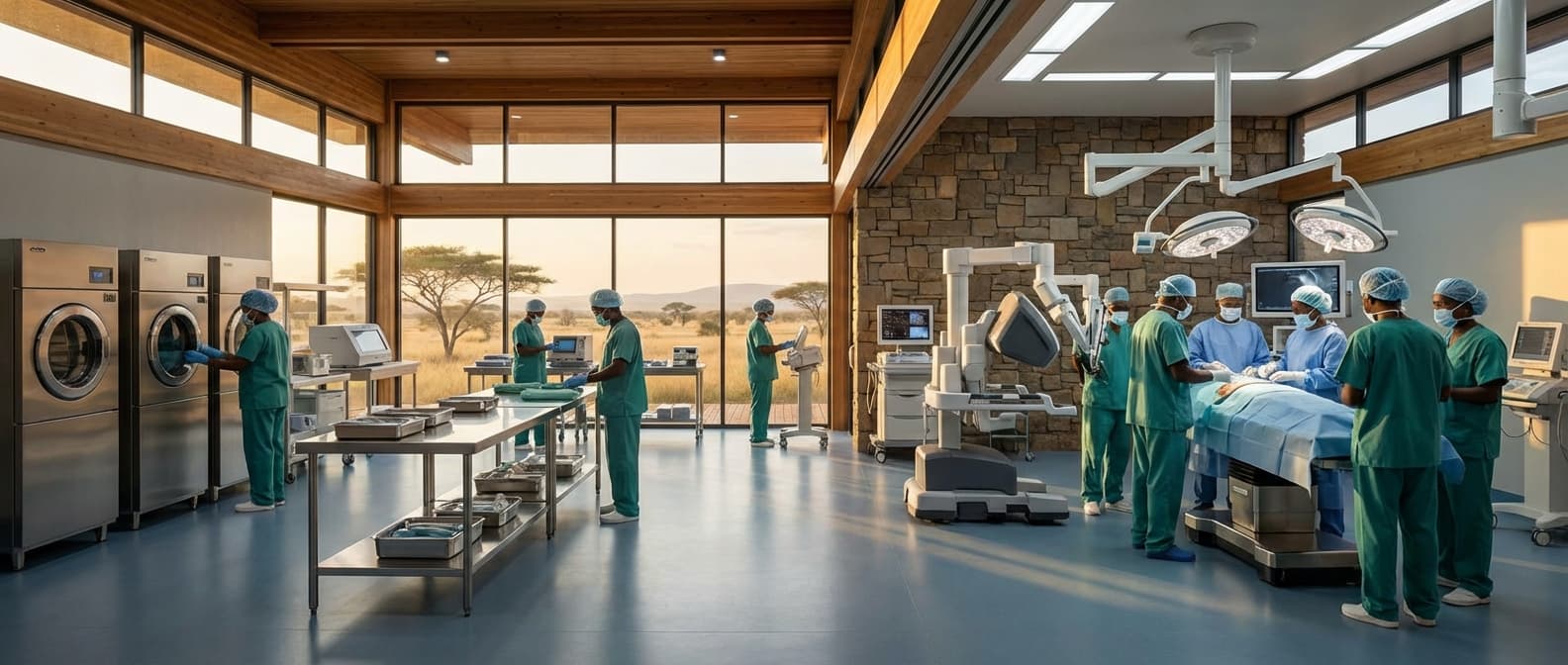
Endoscopy Reprocessing Validation in Eritrea
Engineering Excellence & Technical Support
AER validation, SOP development and compliance High-standard technical execution following OEM protocols and local regulatory frameworks.
Rigorous Multi-Stage Cleaning Validation
Implementing and validating a multi-stage cleaning process for flexible endoscopes, including pre-cleaning, manual cleaning, and automated washer-disinfector cycles, ensuring the removal of all visible soil and bioburden to meet international standards.
High-Level Disinfection (HLD) Efficacy Assurance
Validating the efficacy of high-level disinfection (HLD) agents through a combination of chemical indicator testing, biological indicator challenges, and documented process parameter monitoring (e.g., concentration, temperature, contact time) to confirm inactivation of critical microorganisms.
Comprehensive Documentation and Training Protocol
Establishing a robust documentation system for all reprocessing steps, including maintenance logs, validation reports, and personnel competency assessments. This includes developing and delivering comprehensive training modules for reprocessing technicians on best practices and regulatory compliance.
What Is Endoscopy Reprocessing Validation In Eritrea?
Endoscopy reprocessing validation in Eritrea refers to the systematic verification and documentation process ensuring that flexible and rigid endoscopes are cleaned, disinfected, or sterilized according to established protocols and regulatory standards. This service is critical for patient safety, preventing the transmission of infectious agents, and maintaining the integrity and functionality of expensive endoscopic equipment.
| Who Needs Endoscopy Reprocessing Validation? | Typical Use Cases | ||||
|---|---|---|---|---|---|
| Hospitals and Clinics: All healthcare facilities in Eritrea performing endoscopic procedures (e.g., gastroenterology, pulmonology, urology, gynecology, surgery) that utilize reusable endoscopes. | Endoscopy Departments: Specific units dedicated to diagnostic and therapeutic endoscopic interventions. | Central Sterile Supply Departments (CSSDs): Facilities responsible for reprocessing medical devices, including endoscopes, for multiple clinical departments. | Regulatory Bodies and Accrediting Agencies: To ensure adherence to national and international patient safety standards. | Healthcare Administrators and Risk Managers: To mitigate risks associated with healthcare-associated infections (HAIs) and maintain operational efficiency. | |
| Routine Reprocessing of Flexible Endoscopes: Validation of cleaning, high-level disinfection (HLD), or sterilization protocols for gastroscopes, colonoscopes, bronchoscopes, etc. | Reprocessing of Rigid Endoscopes: Validation of cleaning and sterilization processes for instruments used in laparoscopic, arthroscopic, and cystoscopic procedures. | Introduction of New Reprocessing Equipment or Chemicals: Validating the performance of automated endoscope reprocessors (AERs), new disinfectants, or sterilants. | Changes in Reprocessing Protocols or Staffing: Re-validation after significant alterations to the established workflow or personnel changes impacting expertise. | Post-Maintenance or Repair Validation: Ensuring that reprocessing efficacy is maintained after endoscope or reprocessor servicing. | Troubleshooting and Root Cause Analysis: Investigating and resolving issues related to reprocessing failures or suspected HAIs linked to endoscopes. |
Key Components of Endoscopy Reprocessing Validation
- Initial Validation: Establishing the efficacy of the entire reprocessing workflow (cleaning, disinfection/sterilization) under the specific conditions present in Eritrean healthcare facilities, considering local water quality, detergent efficacy, and available equipment.
- Process Verification: Regularly confirming that each step of the reprocessing cycle is being performed correctly and consistently by trained personnel.
- Microbiological Testing: Performing periodic testing of processed endoscopes to detect residual microorganisms, thereby validating the effectiveness of the disinfection or sterilization process.
- Chemical Indicator Testing: Utilizing chemical indicators designed to verify that specific parameters (e.g., temperature, contact time, concentration of disinfectant) have been met during the reprocessing cycle.
- Mechanical Testing: Assessing the functionality and performance of automated reprocessors and other equipment used in the reprocessing workflow.
- Documentation and Record-Keeping: Maintaining comprehensive records of all validation activities, including test results, personnel training, maintenance logs, and deviations, to demonstrate compliance and facilitate audits.
Who Needs Endoscopy Reprocessing Validation In Eritrea?
Endoscopy reprocessing validation is crucial for any healthcare facility performing endoscopic procedures to ensure patient safety and prevent the transmission of infections. In Eritrea, given the healthcare infrastructure and the potential for resource limitations, rigorous validation processes for endoscope reprocessing are particularly vital. The primary goal is to guarantee that reusable endoscopes are cleaned and disinfected to a standard that eliminates all potentially harmful microorganisms. This involves a multi-faceted approach, including validation of the cleaning process, disinfection or sterilization efficacy, and the integrity of the reprocessing equipment and consumables.
| Customer Segment | Key Departments Involved | Rationale for Validation |
|---|---|---|
| Public Hospitals | Gastroenterology, Pulmonology, Urology, Infection Prevention & Control, Central Sterile Services Department (CSSD) | High patient throughput, ensuring public health and preventing outbreaks; adherence to national healthcare standards. |
| Private Clinics & Diagnostic Centers | Gastroenterology, Endoscopy Suite, Quality Assurance, Infection Control Officer | Maintaining patient confidence and trust; meeting evolving regulatory requirements; providing high-quality private healthcare. |
| Medical Training Institutions | Gastroenterology, Surgical Departments, Clinical Skills Labs, Simulation Centers, Infection Prevention | Ensuring future healthcare professionals are trained in best practices; establishing a culture of safety from the ground up. |
| Ministry of Health & Regulatory Bodies | Health Services Directorate, Disease Control & Prevention Unit, Standards & Quality Assurance | Establishing and enforcing national guidelines; monitoring compliance across all healthcare facilities; safeguarding the nation's health. |
Target Customers and Departments for Endoscopy Reprocessing Validation in Eritrea
- Public Hospitals: These are likely to be the primary users of endoscopy services across the country. Ensuring validated reprocessing here is paramount due to high patient volumes and potential for broader community impact.
- Private Clinics and Diagnostic Centers: Any private facility offering endoscopic procedures must also adhere to strict reprocessing standards to maintain patient trust and regulatory compliance.
- Teaching Hospitals and Medical Training Institutions: Where medical professionals are trained in endoscopy, validation ensures that trainees learn and practice safe reprocessing techniques from the outset.
- Infection Prevention and Control (IPC) Departments: These departments are central to overseeing and implementing reprocessing validation protocols.
- Sterilization and Disinfection Units: The specific units responsible for the physical act of reprocessing endoscopes.
- Gastroenterology Departments: The primary clinical departments that utilize endoscopes for diagnostic and therapeutic procedures.
- Pulmonology Departments: Where bronchoscopes are frequently used and require stringent reprocessing.
- Urology Departments: For cystoscopy and other urological endoscopic procedures.
- Operating Theatres: For laparoscopic and other minimally invasive surgical procedures utilizing endoscopes.
- Procurement and Biomedical Engineering Departments: These departments are involved in the selection, installation, and maintenance of reprocessing equipment, and their collaboration is essential for validation.
- Ministry of Health and Regulatory Bodies: For setting standards, overseeing compliance, and potentially conducting audits.
Endoscopy Reprocessing Validation Process In Eritrea
This document outlines the typical workflow for the Endoscopy Reprocessing Validation Process in Eritrea, from initial inquiry to the successful execution of validation. This process is crucial to ensure that all endoscopes are reprocessed effectively and safely, minimizing the risk of healthcare-associated infections. The workflow is designed to be comprehensive, covering all essential steps and documentation required.
| Stage | Description | Key Activities | Responsible Parties | Documentation |
|---|---|---|---|---|
| Inquiry & Initial Assessment | The process begins when a healthcare facility or a specific department (e.g., Gastroenterology) expresses a need for validating their endoscopy reprocessing procedures. | Contacting the relevant regulatory body or designated validation authority, understanding the scope of validation, identifying the types of endoscopes to be validated, assessing current reprocessing practices. | Healthcare Facility Management, Endoscopy Unit Staff, Potential Validation Team/Authority. | Initial request letter/email, Needs assessment report. |
| Protocol Development | A detailed protocol is established outlining the validation methodology, acceptance criteria, and specific tests to be performed. | Defining the validation objectives, specifying the reprocessing steps to be evaluated, selecting appropriate microbiological and chemical testing methods, setting performance indicators and acceptance limits, outlining sampling strategies, determining test frequencies. | Validation Team/Authority, Endoscopy Unit Supervisor, Infection Control Practitioner. | Validation Protocol Document (including Scope, Objectives, Methodology, Acceptance Criteria, Test Schedule). |
| Equipment & Reagent Procurement | Ensuring that all necessary equipment, cleaning agents, disinfectants, and testing materials are available and meet required standards. | Identifying required equipment (e.g., automated endoscope reprocessors, leak testing devices), sourcing and procuring validated cleaning agents and high-level disinfectants, acquiring necessary microbiological culture media, reagents for chemical testing (e.g., protein detection kits), calibration of equipment. | Procurement Department, Endoscopy Unit Staff, Validation Team. | Equipment specifications, Purchase orders, Certificates of analysis for reagents, Calibration records. |
| Staff Training | All personnel involved in the endoscopy reprocessing cycle receive adequate training on the validated protocol and best practices. | Training on the developed validation protocol, hands-on training on specific reprocessing steps (cleaning, disinfection, leak testing), training on the use of new equipment or reagents, training on documentation and record-keeping, competency assessment. | Validation Team, Endoscopy Unit Supervisor, Training Department. | Training materials, Attendance records, Competency assessment forms. |
| Validation Study Execution | The actual implementation of the validation protocol, involving a series of tests to evaluate each stage of the reprocessing cycle. | Performing cleaning efficacy tests (e.g., protein, hemoglobin detection on simulated or actual contaminated endoscopes), high-level disinfection efficacy tests (e.g., microbial challenge tests on endoscope surfaces and lumens), leak testing, rinse water quality testing (if applicable), environmental monitoring (e.g., air quality in reprocessing area). | Endoscopy Unit Staff (under supervision), Validation Team (for testing and oversight). | Test results logs, Data collection forms, Photographs of test setups/results, Environmental monitoring reports. |
| Data Analysis & Reporting | Thorough analysis of all collected data to determine if the reprocessing procedures meet the predefined acceptance criteria. | Compilation and statistical analysis of test results, comparison of results against acceptance criteria, identification of any deviations or failures, root cause analysis for any non-compliance, preparation of a comprehensive validation report. | Validation Team, Biostatistician (if required). | Raw data, Statistical analysis outputs, Validation Report (including findings, conclusions, and recommendations). |
| Validation Certificate Issuance | Upon successful completion of the validation study and review of the report, a formal certificate is issued. | Review and approval of the validation report by the designated authority, issuance of a formal validation certificate stating that the reprocessing procedures are validated for a specified period. | Designated Regulatory Body/Authority, Validation Team Lead. | Validation Certificate. |
| Ongoing Monitoring & Revalidation | Establishing a system for continuous monitoring of reprocessing performance and planning for periodic revalidation. | Implementing routine quality control checks, ongoing staff competency assessments, periodic internal audits, scheduling and executing revalidation studies as per the defined frequency (e.g., annually or after significant equipment/procedure changes). | Endoscopy Unit Staff, Infection Control Practitioner, Quality Assurance Department. | Routine QC records, Audit reports, Revalidation protocols and reports, Updated Validation Certificates. |
Endoscopy Reprocessing Validation Process: Workflow Stages
- Inquiry & Initial Assessment
- Protocol Development
- Equipment & Reagent Procurement
- Staff Training
- Validation Study Execution
- Data Analysis & Reporting
- Validation Certificate Issuance
- Ongoing Monitoring & Revalidation
Endoscopy Reprocessing Validation Cost In Eritrea
Endoscopy reprocessing validation is a crucial step in ensuring patient safety and preventing the transmission of infections. In Eritrea, the cost of this validation process is influenced by several factors, leading to a range of potential expenses. These factors include the type and complexity of the endoscope, the specific validation methods employed, the consumables required, and the laboratory or service provider's pricing structure. Due to the specific economic conditions and the limited availability of specialized services within Eritrea, pricing can be less standardized and potentially higher compared to more developed nations. Local currency, the Eritrean Nakfa (ERN), is used for all transactions. Detailed pricing information is often obtained through direct consultation with healthcare facilities and accredited laboratories, as publicly available price lists are rare.
| Cost Component/Service | Estimated Range (ERN) |
|---|---|
| Microbial Load Testing (per endoscope) | 300 - 800 |
| Protein Residue Detection (per endoscope) | 250 - 700 |
| ATP Bioluminescence Assay (per endoscope) | 400 - 1000 |
| Full Validation Package (Initial or Periodic) | 1500 - 4000+ |
| Consumables & Reagents (estimate per procedure) | 100 - 300 |
| Labor/Technician Time (estimated) | 200 - 600 |
Factors Influencing Endoscopy Reprocessing Validation Costs in Eritrea:
- Type and complexity of the endoscope (e.g., flexible vs. rigid, number of channels)
- Scope of validation required (e.g., initial validation, periodic revalidation, troubleshooting)
- Specific validation assays and kits used (e.g., microbial testing, protein residue detection)
- Consumable costs (e.g., culture media, reagents, sterile water)
- Labor costs for trained personnel to perform the validation
- Overhead costs of the laboratory or service provider
- Geographic location within Eritrea and associated logistical challenges
- Availability of local expertise and equipment
- Demand for the service
Affordable Endoscopy Reprocessing Validation Options
Ensuring the thorough reprocessing of endoscopic instruments is critical for patient safety and regulatory compliance. While validated reprocessing protocols are essential, the cost associated with this validation can be a barrier for some healthcare facilities. This document explores affordable endoscopy reprocessing validation options, emphasizing the value of 'value bundles' and outlining various cost-saving strategies to achieve robust and compliant reprocessing.
| Cost-Saving Strategy | Description | Potential Benefit |
|---|---|---|
| Leverage Manufacturer Partnerships/Value Bundles | Actively seek out and negotiate value bundles from endoscopy or reprocessing solution manufacturers. These often integrate consumables, validation testing, and training. | Reduced overall cost through aggregated purchasing, simplified vendor management, and bundled discounts. |
| Collaborative Validation Testing | Explore opportunities to partner with other facilities in your region to share the costs of third-party validation testing. This could involve pooling resources for bulk testing. | Lower per-test cost due to increased volume and shared laboratory fees. |
| In-House Validation Capabilities (Limited) | For certain aspects of validation, consider if basic in-house testing for chemical indicators or visual inspections can be performed, supplementing external validation. Ensure this aligns with regulatory requirements. | Reduced reliance on external services for routine checks, though comprehensive validation still requires external expertise. |
| Optimized Consumable Purchasing | Negotiate bulk purchasing agreements for detergents, disinfectants, and other consumables. Ensure these products are validated for your specific reprocessing equipment and endoscopes. | Lower per-unit cost of essential supplies. |
| Focus on Process Improvement and Training | Invest in comprehensive staff training on proper cleaning techniques. Well-trained staff can reduce the likelihood of reprocessing errors that might necessitate re-validation or additional testing. | Reduced risk of failed reprocessing, leading to fewer repeat tests and potential instrument downtime. |
| Utilize Cost-Effective Validation Kits | Compare pricing and efficacy of different validation kits (e.g., biological indicators, chemical indicators). Choose reputable brands that offer competitive pricing. | Lower cost per validation test. |
| Negotiate Service Contracts for Reprocessing Equipment | Seek cost-effective preventative maintenance and repair contracts for automated reprocessors and dryers. Regular maintenance can prevent costly breakdowns. | Minimized downtime and expensive emergency repairs, contributing to a more predictable operational budget. |
| Consider Reprocessing Audit Support | Some companies offer audit preparation and support services, which can help identify and address potential compliance gaps before costly external audits. This can save on rework and potential fines. | Proactive identification of issues, reducing the likelihood of expensive corrective actions or regulatory penalties. |
What are Value Bundles in Endoscopy Reprocessing Validation?
- Definition: Value bundles, in the context of endoscopy reprocessing validation, refer to a coordinated set of services, products, and support designed to deliver a comprehensive solution at a potentially reduced overall cost compared to procuring each component individually.
- Components: These bundles can include a combination of:
- Consumables: High-quality detergents, disinfectants, brushes, and cleaning accessories specifically validated for use with certain endoscopes.
- Validation Services: Access to a third-party validation laboratory, pre-paid testing kits, or on-site support for process verification.
- Training and Education: Online modules, in-person workshops, or access to educational resources on best practices for reprocessing.
- Equipment Support: Preventative maintenance plans or discounted repair services for automated reprocessors and drying cabinets.
- Data Management Tools: Software solutions for tracking reprocessing cycles, recording test results, and generating compliance reports.
- Benefits: Value bundles aim to simplify the procurement process, streamline operations, and provide predictable costs. They often leverage economies of scale to offer discounts on individual components when purchased as part of a package.
- Example: A manufacturer might offer a bundle that includes a year's supply of their validated cleaning agents, a set number of biological and chemical indicator tests, and access to their online training portal for the sterile processing department.
Verified Providers In Eritrea
In the landscape of healthcare access in Eritrea, identifying verified providers is paramount for ensuring quality and trustworthy medical services. Franance Health stands out as a premier choice due to its rigorous credentialing process, commitment to ethical practices, and focus on patient well-being. This section will delve into what makes Franance Health credentials a mark of excellence and why they are the best choice for your healthcare needs in Eritrea.
| Credential Type | Verification Depth | Significance for Patients |
|---|---|---|
| Medical License | Confirmed with Eritrean Ministry of Health and relevant licensing bodies. | Guarantees legal authorization to practice medicine. |
| Educational Qualifications | Verified diplomas and degrees from accredited institutions. | Ensures foundational medical knowledge and training. |
| Board Certifications | Confirmed by recognized medical boards in their respective specialties. | Indicates advanced expertise and specialization. |
| Professional Experience | Thorough review of past roles, responsibilities, and durations. | Demonstrates practical application of knowledge and skills. |
| Ethical Compliance | Background checks and review of professional conduct records. | Upholds patient rights and fosters trust. |
Why Franance Health Credentials Mean the Best Choice:
- Stringent Verification Process: Franance Health employs a multi-layered verification system for all its affiliated providers. This includes checking medical licenses, educational qualifications, board certifications, and professional experience.
- Commitment to Ethical Standards: Beyond technical qualifications, Franance Health assesses providers' adherence to ethical codes of conduct and a patient-centered approach to care. This ensures a compassionate and respectful healthcare experience.
- Continuous Professional Development: Affiliated providers are encouraged and often required to engage in ongoing training and education, ensuring they are up-to-date with the latest medical advancements and best practices.
- Patient Feedback Integration: Franance Health actively collects and analyzes patient feedback, using it to further vet and improve the services offered by its network. This creates a responsive and accountable healthcare ecosystem.
- Access to Specialized Care: The credentialing process ensures that Franance Health can connect patients with a diverse range of specialists, offering comprehensive care across various medical disciplines.
- Peace of Mind: Choosing a Franance Health-verified provider offers the assurance that you are receiving care from a qualified, ethical, and competent medical professional.
Scope Of Work For Endoscopy Reprocessing Validation
This Scope of Work (SOW) outlines the requirements for validating the automated reprocessing of flexible endoscopes. The objective is to ensure that the validated process effectively cleans and disinfects endoscopes to a standard that meets regulatory requirements and minimizes the risk of patient-to-patient transmission of pathogens. This SOW details the technical deliverables and standard specifications required for successful validation.
| Phase | Description | Key Activities | Standard Specifications/Criteria |
|---|---|---|---|
| Phase 1: Planning & Protocol Development | Define the scope, objectives, and methodology for the validation study. | Identify endoscope models, reprocessing equipment, and cleaning/disinfection chemistries. Develop a comprehensive Validation Protocol. Conduct a risk assessment. | Protocol adheres to relevant standards (e.g., ISO 13485, AAMI ST58, FDA guidelines). Risk assessment identifies critical control points. |
| Phase 2: Installation & Operational Qualification (IQ/OQ) | Verify that the reprocessing equipment is installed correctly and operates within specified parameters. | Install and test all components of the reprocessing system. Perform functional tests and calibration. Document all installation and operational parameters. | IQ demonstrates proper installation according to manufacturer specifications. OQ confirms consistent performance across operational ranges. |
| Phase 3: Performance Qualification (PQ) | Demonstrate the effectiveness of the automated reprocessing process in removing organic soil and inactivating microorganisms. | Conduct simulated use studies with contaminated endoscopes and biological indicators. Analyze cleaning efficacy using validated methods (e.g., protein assays). Test disinfection efficacy with relevant microorganisms. | Cleaning efficacy meets pre-defined thresholds for residual protein. Disinfection efficacy demonstrates a specific log reduction of target microorganisms (e.g., > 6-log reduction for high-level disinfection). |
| Phase 4: Validation Report & Documentation | Compile all validation data and results into a comprehensive report. | Analyze all IQ, OQ, and PQ data. Summarize findings and conclusions. Recommend a revalidation schedule. Prepare final validation documentation. | Report is clear, concise, and provides objective evidence of process validation. All documentation is complete and auditable. |
Key Deliverables
- Validation Protocol
- Validation Report
- Standard Operating Procedures (SOPs) for Reprocessing
- Performance Qualification (PQ) Data
- Installation Qualification (IQ) Documentation
- Operational Qualification (OQ) Documentation
- Risk Assessment Documentation
- Training Materials for Reprocessing Staff
- Validation Certificate
Service Level Agreement For Endoscopy Reprocessing Validation
This Service Level Agreement (SLA) outlines the response times and uptime guarantees for the Endoscopy Reprocessing Validation service. This service ensures the proper functioning and validation of automated endoscopy reprocessing equipment, crucial for patient safety and regulatory compliance.
| Service Component | Response Time Guarantee | Uptime Guarantee | Notes |
|---|---|---|---|
| Critical System Alerts (e.g., Disinfection Failure) | 2 hours (from alert initiation) | 99.5% | This uptime applies to the validation service itself, not the endoscopy reprocessing equipment. |
| Non-Critical System Alerts (e.g., Performance Degradation) | 8 business hours (from alert initiation) | 99.0% | Downtime is measured as the time the validation service is unavailable or unable to perform its core functions. |
| Scheduled Validation Cycle Completion | Within 24 hours of scheduled time | N/A | Assumes timely access to the reprocessing equipment. |
| Remote Diagnostic Support | 4 business hours (from support request) | N/A | Support is available during standard business hours (e.g., Monday-Friday, 8 AM - 5 PM). |
Key Service Components
- Proactive Monitoring: Continuous monitoring of reprocessing equipment for performance and error detection.
- Automated Validation Cycles: Scheduled execution of validation cycles to confirm cleaning and disinfection efficacy.
- Real-time Alerting: Immediate notification of any deviations from expected performance or validation failures.
- Remote Diagnostic Capabilities: Ability to diagnose and troubleshoot issues remotely to minimize downtime.
Frequently Asked Questions

Ready when you are
Let's scope your Endoscopy Reprocessing Validation in Eritrea project in Eritrea.

Scaling healthcare logistics and technical systems across the entire continent.