
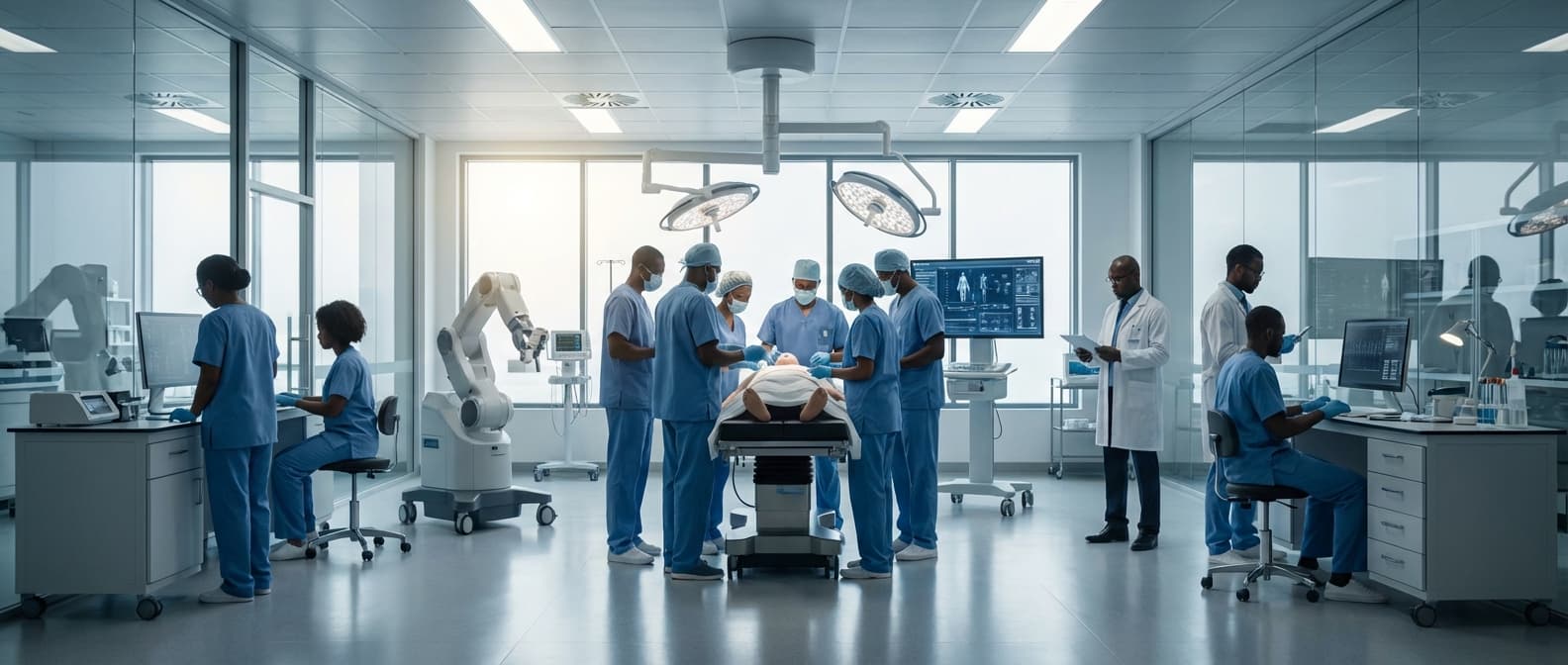
Biomedical Engineering Consulting in Eritrea
Engineering Excellence & Technical Support
Equipment selection, procurement and implementation consulting High-standard technical execution following OEM protocols and local regulatory frameworks.
Optimizing Medical Device Integration & Maintenance
Leveraging advanced diagnostic and data analytics to streamline the integration of critical medical equipment into existing Eritrean healthcare infrastructure, ensuring optimal performance, minimizing downtime, and extending the lifespan of vital technologies through proactive maintenance strategies.
Biomaterial & Tissue Engineering Solutions
Applying cutting-edge biomaterials science and tissue engineering principles to develop cost-effective, locally sourced solutions for wound healing, prosthetics, and regenerative medicine, addressing specific Eritrean health challenges with sustainable and accessible innovations.
Healthcare Technology Needs Assessment & Strategic Planning
Conducting comprehensive assessments of current healthcare technology landscapes in Eritrea, identifying critical gaps, and developing tailored, actionable strategies for the procurement, implementation, and effective utilization of advanced biomedical engineering solutions to improve patient care outcomes and healthcare system efficiency.
What Is Biomedical Engineering Consulting In Eritrea?
Biomedical Engineering Consulting in Eritrea encompasses the provision of specialized expertise and advisory services related to the design, implementation, maintenance, and management of medical devices, healthcare technologies, and biomedical systems within the Eritrean context. This discipline integrates engineering principles with medical and biological sciences to improve healthcare delivery, patient outcomes, and operational efficiency in healthcare facilities. Consultants leverage their technical knowledge to address challenges specific to Eritrea's healthcare infrastructure, resource availability, and regulatory landscape. The service aims to bridge the gap between advanced technological capabilities and the practical needs of healthcare providers, fostering sustainable and effective healthcare solutions.
| Who Needs Biomedical Engineering Consulting? | Typical Use Cases |
|---|---|
| Government Health Ministries/Agencies: Seeking to develop national healthcare technology strategies, establish standards, and procure essential medical equipment. | Developing national procurement guidelines for medical devices; advising on the establishment of central repair and maintenance depots; assessing the feasibility of implementing national health information systems. |
| Hospitals and Clinics (Public & Private): Requiring assistance with equipment selection, installation, maintenance programs, and overall biomedical department management. | Developing preventative maintenance schedules for critical medical equipment; advising on the selection and installation of new diagnostic imaging equipment; conducting safety audits of existing medical devices. |
| Non-Governmental Organizations (NGOs) & International Aid Agencies: Involved in healthcare development projects, requiring technical expertise for equipment donation, installation, and capacity building. | Providing technical specifications for donated medical equipment; overseeing the installation and initial training for new medical technology in remote areas; developing training modules for local biomedical technicians. |
| Educational and Research Institutions: Needing support for setting up or upgrading biomedical engineering laboratories and research facilities. | Advising on the acquisition of laboratory equipment for medical research; designing laboratory layouts to optimize workflow and safety; developing curricula for biomedical technology training programs. |
| Medical Device Manufacturers & Distributors (Local/International): Seeking to understand and navigate the Eritrean market, ensuring compliance with local regulations, and establishing service networks. | Providing market entry strategies for new medical devices; advising on local regulatory approval processes; establishing and managing local service and repair partnerships. |
Key Aspects of Biomedical Engineering Consulting in Eritrea
- Technology Assessment and Procurement Advisory
- Medical Device Maintenance and Repair Strategies
- Healthcare Facility Design and Planning (Biomedical Infrastructure)
- Regulatory Compliance and Standardization Support
- Training and Capacity Building for Healthcare Technicians
- Equipment Lifecycle Management
- Quality Assurance and Performance Verification
- Telemedicine and Digital Health Integration
- Risk Management for Medical Devices
Who Needs Biomedical Engineering Consulting In Eritrea?
Biomedical engineering consulting in Eritrea can be a vital resource for numerous entities seeking to enhance their healthcare infrastructure, improve patient care, and ensure the safe and effective use of medical technologies. The need spans across various sectors, from public health initiatives to private healthcare providers and educational institutions. These consultants offer specialized expertise that might not be readily available internally, bridging gaps in knowledge, skills, and regulatory understanding. They can assist in everything from equipment selection and maintenance to regulatory compliance and the development of new healthcare services. The overarching goal is to elevate the standard of healthcare delivery through sound engineering principles and practices tailored to Eritrea's specific context and challenges.
| Target Customer | Key Departments/Areas of Need | Specific Services Offered |
|---|---|---|
| Ministry of Health (MoH) | Planning & Development, Procurement, Technical Services, Public Health Programs | Healthcare infrastructure assessment, medical equipment needs assessment and planning, development of national medical device policies, training program development for healthcare technicians, quality assurance for medical devices, epidemiological surveillance system design and support. |
| National Medical Services Corporation (if applicable) | Procurement, Logistics, Technical Maintenance, Inventory Management | Developing tender documents for medical equipment, establishing robust maintenance and repair protocols, optimizing medical equipment inventory, ensuring compliance with import regulations, implementing spare parts management systems. |
| Public Hospitals (e.g., National Referral Hospital, Regional Hospitals) | Clinical Engineering Department, Biomedical Workshop, Procurement, Nursing Departments, Surgical Departments, Radiology, Laboratory Services | Medical equipment selection and procurement advisory, installation and commissioning support, preventive maintenance program development, corrective maintenance and repair services, staff training on equipment usage and safety, safety audits of medical devices, development of standard operating procedures (SOPs) for equipment management. |
| District Health Centers and Smaller Clinics | Administration, Local Health Staff | Basic equipment assessment and recommendations, training on simple maintenance and troubleshooting, guidance on essential medical equipment for primary care, establishing referral pathways for equipment repair. |
| Private Hospitals and Clinics | Administration, Medical Director, Procurement, Clinical Staff | Similar to public hospitals, but often focused on specialized equipment procurement, service contract negotiation, ensuring compliance with private sector standards, and optimizing patient flow through technology integration. |
| Universities and Colleges (with Medical/Health Science Programs, e.g., University of Asmara) | Medical Faculty, Biomedical Sciences Department, Engineering Department, Training Facilities | Developing curriculum for biomedical engineering or healthcare technology management, setting up and maintaining teaching laboratories, advising on the procurement of training equipment, providing guest lectures or workshops for students and faculty. |
| NGOs and International Aid Organizations | Program Management, Logistics, Health Technical Teams | Assessing the medical equipment needs of specific projects, providing technical support for the deployment of donated medical equipment, developing maintenance strategies for resource-limited settings, training local staff on equipment operation and maintenance, ensuring sustainability of medical technology initiatives. |
| Local Medical Device Suppliers and Distributors | Sales and Marketing, Technical Support, Service Department | Providing technical training to their sales and service teams, assisting with the installation and commissioning of complex medical equipment, developing service contracts, advising on regulatory compliance for imported medical devices, market analysis for new medical technologies. |
Target Customers and Departments for Biomedical Engineering Consulting in Eritrea
- Government Ministries and Agencies
- Public Hospitals and Clinics
- Private Healthcare Facilities
- Medical Training and Educational Institutions
- Non-Governmental Organizations (NGOs) and International Aid Organizations
- Medical Device Suppliers and Distributors
Biomedical Engineering Consulting Process In Eritrea
This document outlines the typical workflow for a biomedical engineering consulting project in Eritrea, covering the process from initial client inquiry to the final execution and project closure. The Eritrean context, while evolving, emphasizes collaborative approaches and adherence to national regulatory frameworks where applicable. The process is designed to be transparent, efficient, and tailored to the specific needs of healthcare facilities and organizations within the country.
| Phase | Key Activities | Deliverables/Outcomes |
|---|---|---|
| Receive inquiry, preliminary needs assessment, initial consultation, proposal development | Project understanding, detailed proposal |
| Proposal submission, clarification, negotiation, contract signing | Signed contract, clear project scope and terms |
| Detailed project planning, team mobilization, resource allocation, kick-off meeting | Project plan, mobilized team, organized resources |
| On-site assessments, data collection, technical analysis, recommendations, progress reporting | Collected data, analyzed findings, draft recommendations, progress reports |
| Draft report, client review, final report, presentation | Final report, agreed-upon deliverables, presentation of findings |
| Implementation support, knowledge transfer, project evaluation, closure | Implemented solutions (potentially), trained staff, project closure report |
Biomedical Engineering Consulting Process in Eritrea
- {"items":["1.1 Client Inquiry: A healthcare facility, government agency, or private organization expresses interest in biomedical engineering consulting services. This can be through direct contact (email, phone) or a formal request for proposal (RFP).","1.2 Preliminary Needs Assessment: The consulting firm gathers initial information about the client's challenges, objectives, and the scope of services required (e.g., equipment procurement, maintenance strategy, training, infrastructure assessment).","1.3 Initial Consultation Meeting: A meeting is scheduled to discuss the project in detail, understand specific requirements, and identify potential solutions. This may involve site visits to observe existing conditions and infrastructure.","1.4 Proposal Development: Based on the initial assessment, a detailed proposal is drafted. This includes the proposed scope of work, methodology, deliverables, timeline, required resources, and estimated costs."],"title":"Phase 1: Inquiry and Initial Consultation"}
- {"items":["2.1 Proposal Submission: The comprehensive proposal is formally submitted to the client for review.","2.2 Proposal Clarification and Q&A: The client may have questions or require clarification on specific aspects of the proposal. The consulting firm provides prompt responses.","2.3 Negotiation and Finalization: Terms, conditions, pricing, and scope are negotiated to reach a mutual agreement.","2.4 Contract Signing: A formal contract is signed, legally binding both parties to the agreed-upon terms and project scope."],"title":"Phase 2: Proposal Review and Contract Negotiation"}
- {"items":["3.1 Detailed Project Planning: A comprehensive project plan is developed, outlining specific tasks, milestones, responsible parties, communication protocols, and risk management strategies.","3.2 Team Mobilization: The consulting team is assembled, ensuring they possess the necessary expertise and qualifications. This may involve local Eritrean professionals.","3.3 Resource Allocation: Necessary equipment, software, and logistical arrangements are made for the project execution.","3.4 Kick-off Meeting: A formal kick-off meeting is held with the client and the consulting team to reiterate project goals, confirm roles and responsibilities, and set expectations for the execution phase."],"title":"Phase 3: Project Planning and Mobilization"}
- {"items":["4.1 On-site Assessments and Data Collection: The consulting team conducts thorough on-site assessments, which may include:"," * Inventory of existing biomedical equipment."," * Assessment of maintenance infrastructure and spare parts availability."," * Evaluation of staff training needs and technical capabilities."," * Review of hospital policies and procedures related to medical devices."," * Analysis of electrical safety and environmental conditions.","4.2 Technical Analysis and Research: Collected data is analyzed. This may involve comparing equipment performance, researching best practices, and identifying optimal solutions based on local availability and sustainability.","4.3 Development of Recommendations and Solutions: Based on the analysis, specific recommendations and technical solutions are developed. This could include procurement plans, maintenance protocols, training programs, or facility upgrades.","4.4 Regular Progress Reporting: Periodic progress reports are submitted to the client, detailing activities undertaken, challenges encountered, and progress made against the project plan."],"title":"Phase 4: Project Execution and Data Collection"}
- {"items":["5.1 Draft Report Preparation: A draft of the final report, including all findings, analyses, and recommendations, is prepared.","5.2 Client Review and Feedback: The draft report is submitted to the client for their review and feedback. Discussions are held to address any concerns or suggestions.","5.3 Final Report and Deliverable Submission: The final report, incorporating client feedback, is prepared and submitted along with any other agreed-upon deliverables (e.g., training materials, procurement lists, maintenance plans).","5.4 Presentation of Findings: A formal presentation of the project findings and recommendations is delivered to the client and relevant stakeholders."],"title":"Phase 5: Reporting and Deliverables"}
- {"items":["6.1 Implementation Support (Optional/As Agreed): The consulting firm may provide support during the implementation phase of recommendations, such as assisting with equipment selection, tender processes, or initial training delivery.","6.2 Knowledge Transfer and Training: Ensuring the client's team has the necessary knowledge and skills to sustain the implemented solutions.","6.3 Project Evaluation and Feedback: A post-project review is conducted to evaluate the project's success and gather feedback from the client.","6.4 Project Closure and Final Payment: All contractual obligations are met, and the project is formally closed. Final payments are processed.","6.5 Follow-up and Long-term Relationship Building: Maintaining communication for potential future support and fostering a long-term professional relationship."],"title":"Phase 6: Implementation Support and Project Closure"}
Biomedical Engineering Consulting Cost In Eritrea
Biomedical Engineering consulting costs in Eritrea can vary significantly based on several factors. These include the complexity and scope of the project, the experience and specialization of the consultant, the duration of the engagement, and the specific needs of the client (e.g., a hospital, a research institution, a government agency). Given the developing nature of the healthcare infrastructure in Eritrea, the demand for specialized biomedical engineering services is growing, but the availability of local experts might be limited, potentially influencing pricing due to reliance on international consultants or the need for extensive training and knowledge transfer. Pricing is typically discussed and negotiated in the local currency, the Eritrean Nakfa (ERN).
| Service Type | Estimated Range (ERN per hour/day) | Notes |
|---|---|---|
| Feasibility Studies & Needs Assessment | 1,500 - 4,000 ERN (per day) | Basic assessment of equipment needs, infrastructure gaps. |
| Equipment Specification & Procurement Support | 2,000 - 5,000 ERN (per day) | Developing technical specifications, assisting with tender evaluations. |
| Medical Equipment Installation & Commissioning Oversight | 2,500 - 6,000 ERN (per day) | Ensuring proper installation and initial functionality checks. |
| Training & Capacity Building (Staff) | 3,000 - 7,000 ERN (per day) | Training healthcare professionals on equipment operation and basic maintenance. |
| Preventive Maintenance Program Development | 2,000 - 5,000 ERN (per day) | Establishing schedules and protocols for equipment upkeep. |
| Biomedical Engineering Department Setup/Restructuring | 3,000 - 8,000 ERN (per day) | Designing organizational structure, workflow, and resource allocation. |
| Complex Project Management (e.g., new hospital wing, specialized lab) | 4,000 - 10,000+ ERN (per day) | Requires extensive experience and coordination across multiple disciplines. |
| Regulatory Compliance & Quality Assurance Consulting | 2,500 - 6,000 ERN (per day) | Assisting with adherence to local and international medical device regulations. |
Key Pricing Factors for Biomedical Engineering Consulting in Eritrea
- Project Scope and Complexity: Larger, more intricate projects requiring extensive analysis, design, or implementation will command higher fees.
- Consultant Expertise and Specialization: Highly specialized consultants (e.g., in medical imaging, radiotherapy, or medical device regulation) with a proven track record will charge more.
- Duration of Engagement: The longer the consultant is engaged, the higher the overall cost, although hourly or daily rates might decrease for extended projects.
- Travel and Accommodation: If the consultant is not local, costs associated with travel, visas, accommodation, and per diem will be added.
- Deliverables: The nature and extent of the expected deliverables (reports, designs, training materials, etc.) will influence the pricing.
- Client Type and Budget: The financial capacity and organizational structure of the client can play a role in negotiations.
- Urgency of the Project: Expedited timelines may incur premium charges.
- Local vs. International Consultants: International consultants generally have higher rates due to global market standards and associated travel/relocation costs.
Affordable Biomedical Engineering Consulting Options
Biomedical engineering consulting can be a significant investment, but for startups and smaller organizations, affordable options are crucial. This guide explores value bundles and cost-saving strategies to make expert biomedical engineering advice accessible. We'll break down how to get the most out of your consulting budget without compromising on quality.
| Cost-Saving Strategy | Description | Best For |
|---|---|---|
| Leverage Freelance Consultants | Engaging independent consultants can offer significant cost savings compared to large firms. They often have lower overhead and more flexible pricing. | Startups, small businesses, and specific, short-term project needs. |
| Utilize Consulting Networks/Platforms | Online platforms and networks connect clients with a wide range of biomedical engineering experts, often allowing for competitive bidding and discovery of specialized, cost-effective talent. | Finding niche expertise or exploring multiple options efficiently. |
| Phased Project Approach | Break down larger projects into smaller, manageable phases. This allows for incremental investment and the ability to re-evaluate needs and budget at each stage. | Complex projects with evolving requirements or limited initial funding. |
| Focus on Core Needs | Clearly define your most critical consulting needs. Avoid scope creep and prioritize services that directly address your primary challenges. | All organizations, especially those with tight budgets. |
| In-house Training/Knowledge Transfer | Choose consultants who are willing to train your internal team during the engagement. This builds internal capacity and reduces reliance on external help for future needs. | Long-term growth and knowledge development within an organization. |
| Seek Consultants with Shared Industry Experience | Consultants familiar with your specific industry or product type may require less ramp-up time and offer more targeted, efficient solutions. | Reducing learning curve and accelerating problem-solving. |
| Negotiate Payment Terms | Discuss payment schedules, milestone-based payments, or early payment discounts to manage cash flow effectively. | Organizations with cash flow management as a priority. |
| Consider Academic Partnerships | Collaborating with university research groups or professors can provide access to expertise and resources at a lower cost, especially for early-stage research and development. | Early-stage R&D, proof-of-concept studies, and academic collaborations. |
| Utilize Remote Consulting | Geographic location doesn't have to dictate cost. Remote consulting can open up access to a wider pool of talent at potentially lower rates. | When in-person presence is not strictly necessary. |
Understanding Value Bundles
- Project-Based Bundles: Pre-defined packages for common projects like feasibility studies, regulatory pathway assessment, or design reviews. These offer a fixed scope and predictable cost.
- Retainer Packages: Ongoing access to consulting services for a set number of hours per month or a recurring fee. Ideal for businesses needing continuous guidance or ad-hoc support.
- Specialized Service Bundles: Focused offerings on specific areas such as biocompatibility testing strategy, intellectual property assessment, or human factors engineering.
- Tiered Service Levels: Offering different levels of service (e.g., basic, standard, premium) within a bundle, allowing clients to choose based on their budget and needs.
- Hybrid Models: Combining elements of project-based and retainer models, providing flexibility and tailored solutions.
Verified Providers In Eritrea
In the challenging healthcare landscape of Eritrea, identifying genuinely qualified and ethical medical practitioners is paramount. Franance Health has emerged as a trusted name, rigorously vetting and credentialing healthcare providers to ensure the highest standards of care. This commitment to verification offers Eritreans unparalleled confidence in the services they receive. This document outlines the rigorous credentialing process of Franance Health and explains why their verified providers represent the best choice for your health needs.
| Provider Type | Franance Health Verification Status | Key Benefits for Patients |
|---|---|---|
| General Practitioners | Verified and Certified | Reliable primary care, accurate diagnoses, appropriate referrals. |
| Specialist Physicians (e.g., Cardiologists, Pediatricians) | Verified and Certified | Expertise in specific medical fields, advanced treatment options. |
| Surgeons | Verified and Certified | Proven surgical skill, adherence to safety protocols, successful outcomes. |
| Nurses and Midwives | Verified and Certified | Compassionate care, skilled patient support, safe delivery of care. |
| Diagnostic Technicians (e.g., Radiologists, Lab Technicians) | Verified and Certified | Accurate and timely diagnostic results, reliable interpretation. |
Franance Health Credentialing Process Highlights
- Comprehensive Background Checks: Examining educational qualifications, licensing, and professional history.
- Skills Verification: Assessing clinical competency through practical evaluations and peer reviews.
- Ethical Conduct Assessment: Scrutinizing past performance and adherence to medical ethics and regulations.
- Continuing Education Mandates: Ensuring providers remain up-to-date with the latest medical advancements.
- Patient Feedback Integration: Incorporating patient satisfaction and outcomes into the ongoing assessment.
- Legal and Regulatory Compliance: Confirming adherence to all national and international healthcare laws.
Scope Of Work For Biomedical Engineering Consulting
This Scope of Work (SOW) outlines the consulting services to be provided by [Consulting Firm Name] (hereinafter referred to as "Consultant") to [Client Name] (hereinafter referred to as "Client") concerning a biomedical engineering project. The project aims to [briefly describe project goal, e.g., develop a novel diagnostic device, improve an existing medical equipment's performance, conduct a feasibility study for a new medical technology]. This SOW details the technical deliverables, standard specifications, and project phases.
| Phase | Key Activities | Technical Deliverables | Standard Specifications / Compliance |
|---|---|---|---|
| Phase 1: Discovery and Feasibility Study | Market research and competitive analysis, Needs assessment and user requirements definition, Technical feasibility assessment, Risk analysis and mitigation strategies, Preliminary intellectual property review. | Feasibility Report, User Requirements Document (URD), Initial Risk Management Plan, Market Analysis Report. | ISO 13485 (Quality Management Systems for Medical Devices), ISO 14971 (Medical devices – Application of risk management to medical devices), Relevant industry standards for diagnostic devices (e.g., AAMI standards). |
| Phase 2: Design and Development | Conceptual design and alternative exploration, Detailed system design (hardware, software, firmware), Component selection and sourcing, Design for Manufacturability (DFM) and Design for Assembly (DFA) considerations, Electrical and mechanical design documentation. | System Architecture Document, Detailed Design Specifications (Schematics, CAD Models), Bill of Materials (BOM), Preliminary Software/Firmware Design Document. | IEC 60601 (Medical electrical equipment – Basic safety and essential performance), IPC standards for PCB design and assembly, Material specifications and biocompatibility standards (e.g., ISO 10993). |
| Phase 3: Prototyping and Testing | Prototype development (functional, alpha, beta), Verification and validation testing (bench testing, performance testing), Usability testing, Pre-clinical testing planning and execution. | Functional Prototype(s), Verification and Validation (V&V) Test Reports, Usability Study Report, Pre-clinical Test Protocol and Preliminary Results. | IEC 62304 (Medical device software – Software life cycle processes), Good Laboratory Practice (GLP) for pre-clinical studies (if applicable), Internal testing protocols aligned with project requirements. |
| Phase 4: Documentation and Regulatory Support | Finalization of design history file (DHF), Development of manufacturing documentation (e.g., manufacturing instructions, quality control procedures), Assistance with regulatory submissions (e.g., FDA, CE Mark), Training material development for users and support staff. | Complete Design History File (DHF), Manufacturing Documentation Package, Draft Regulatory Submission Documents, User Manual and Training Materials. | FDA 21 CFR Part 820 (Quality System Regulation), EU Medical Device Regulation (MDR) or IVDR (as applicable), Relevant national and international regulatory requirements. |
Project Phases and Activities
- Phase 1: Discovery and Feasibility Study
- Phase 2: Design and Development
- Phase 3: Prototyping and Testing
- Phase 4: Documentation and Regulatory Support
Service Level Agreement For Biomedical Engineering Consulting
This Service Level Agreement (SLA) outlines the response times and uptime guarantees for Biomedical Engineering consulting services provided by [Your Company Name] (hereinafter referred to as "Provider") to [Client Name] (hereinafter referred to as "Client"). This SLA is an integral part of the overall consulting agreement between the Provider and the Client.
| Service Component | Priority Level | Response Time Guarantee | Resolution Time Target | Uptime Guarantee |
|---|---|---|---|---|
| Critical System Failure (e.g., immediate safety risk, complete operational shutdown of a critical medical device/system) | High | Within 1 business hour | Within 4 business hours (initial assessment and mitigation plan) | N/A (focus on rapid incident response) |
| Major Equipment Malfunction (e.g., significant performance degradation affecting patient care or research) | Medium | Within 4 business hours | Within 1 business day (diagnosis and proposed solution) | N/A (focus on efficient troubleshooting) |
| Consulting Request (e.g., new project inquiry, data analysis request, design review) | Low | Within 1 business day | Within 3 business days (initial acknowledgement and scope clarification) | N/A (dependent on project complexity) |
| General Technical Inquiry (e.g., clarification on existing documentation, procedural questions) | Low | Within 2 business days | Within 5 business days (provision of requested information) | N/A (focus on knowledge sharing) |
| On-site Support Availability (if applicable) | N/A | As per project schedule and agreed-upon deployment | N/A | Scheduled availability as per project contract |
Key Service Metrics
- This document defines the performance standards for critical support and operational aspects of the consulting engagement.
- Adherence to these metrics is crucial for ensuring the effective and efficient utilization of biomedical engineering expertise by the Client.
- Any deviations from these agreed-upon metrics will be addressed as outlined in the dispute resolution section of the main consulting agreement.
Frequently Asked Questions

Ready when you are
Let's scope your Biomedical Engineering Consulting in Eritrea project in Eritrea.

Scaling healthcare logistics and technical systems across the entire continent.