
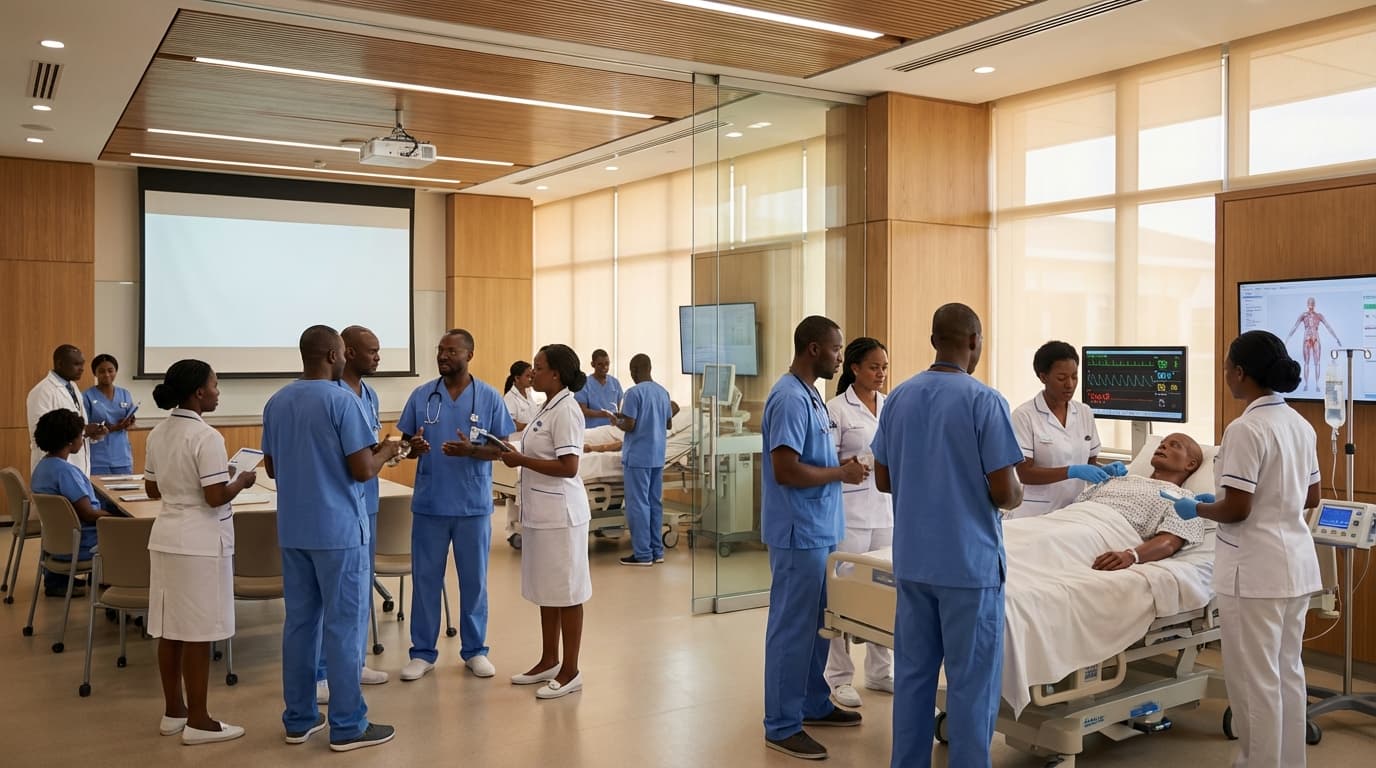
Equipment Training & Education in Equatorial Guinea
Engineering Excellence & Technical Support
Comprehensive equipment training and certification programs High-standard technical execution following OEM protocols and local regulatory frameworks.
Remote & On-Demand Equipment Training
Leveraging cloud-based platforms and interactive simulations, our training modules offer flexible, on-demand access to critical equipment operation and maintenance knowledge. This ensures continuous skill development for technicians in remote Equatorial Guinean locations, minimizing travel costs and downtime.
Augmented Reality (AR) Maintenance Support
Our advanced AR solutions provide real-time, visual guidance for complex equipment troubleshooting and repair. Technicians can overlay digital instructions and schematics onto physical machinery, accelerating problem resolution and enhancing safety in challenging operational environments.
Data-Driven Performance Analytics & Upskilling
Through integrated learning management systems (LMS) and equipment performance data, we identify skill gaps and tailor training programs. This ensures that education is directly aligned with operational needs, leading to improved equipment efficiency, reduced failure rates, and optimized workforce productivity in Equatorial Guinea.
What Is Equipment Training & Education In Equatorial Guinea?
Equipment training and education in Equatorial Guinea refers to the systematic process of imparting knowledge, skills, and understanding necessary for the safe, efficient, and effective operation, maintenance, and troubleshooting of various types of equipment. This service is critical across numerous industrial sectors within the nation, aiming to enhance human capital proficiency and optimize asset utilization. It encompasses theoretical instruction, practical demonstrations, hands-on exercises, and ongoing competency assessments. The objective is to ensure personnel can perform their designated tasks with a high degree of proficiency, adhering to relevant safety protocols and operational standards, thereby mitigating risks of equipment failure, accidents, and production downtime.
| Who Needs Equipment Training & Education? | Typical Use Cases |
|---|---|
| Oil and Gas Sector Personnel: Engineers, technicians, operators, and maintenance staff involved with exploration, production, refining, and transportation equipment (e.g., drilling rigs, pumps, turbines, pipelines). | Training on drilling equipment operation and safety. Maintenance of offshore platform machinery. Safe handling of hazardous materials processing equipment. Operation of refinery distillation units. Pipeline inspection and repair techniques. |
| Mining and Mineral Processing Staff: Machine operators, geologists, maintenance crews, and supervisors working with heavy machinery, processing plants, and laboratory equipment (e.g., excavators, crushers, conveyor systems, analytical instruments). | Operation of large-scale excavators and loaders. Maintenance of crushing and grinding circuits. Safety procedures for underground mining equipment. Calibration of mineral analysis equipment. Operation of beneficiation plant machinery. |
| Power Generation and Distribution Technicians: Engineers and electricians responsible for operating and maintaining power plants (thermal, hydro, renewable) and electrical grid infrastructure (e.g., generators, transformers, switchgear, control systems). | Operation and maintenance of gas turbines in power plants. Installation and testing of high-voltage transformers. Troubleshooting of electrical distribution networks. Safety training for working with live electrical equipment. Operation of renewable energy generation systems (solar, wind). |
| Industrial Manufacturing and Processing Workers: Operators and maintenance personnel in factories and processing facilities (e.g., food processing, chemical production, light manufacturing) utilizing specialized machinery. | Operation of automated production lines. Maintenance of packaging machinery. Safe operation of chemical reactors. Calibration of process control sensors. Hygiene and operation of food processing equipment. |
| Healthcare Professionals and Technicians: Medical staff requiring proficiency with diagnostic imaging equipment, laboratory instruments, and medical devices. | Operation of MRI and CT scanners. Maintenance of laboratory centrifuges and analyzers. Safe usage of patient monitoring systems. Sterilization equipment operation and validation. |
| Construction and Infrastructure Project Teams: Operators of heavy construction equipment, survey instruments, and specialized tools. | Operation of cranes and earthmoving equipment. Usage of GPS surveying equipment. Safety training for working with concrete vibrators and cutting tools. |
| Logistics and Transportation Personnel: Operators of port equipment, forklifts, and specialized cargo handling machinery. | Operation of container cranes and reach stackers. Forklift operation and safety. Maintenance of conveyor belt systems in logistics hubs. |
| Government and Public Sector Employees: Personnel managing public infrastructure, utilities, and specialized government equipment. | Operation of water treatment plant machinery. Maintenance of municipal waste management equipment. Usage of specialized surveillance or communication equipment. |
Key Components of Equipment Training & Education
- Operational Proficiency: Training focused on correct startup, shutdown, operation modes, parameter adjustment, and normal workflow execution for specific equipment.
- Maintenance and Troubleshooting: Instruction on preventive maintenance schedules, diagnostic procedures, identification of common faults, and basic repair techniques.
- Safety Protocols and Procedures: Comprehensive coverage of equipment-specific safety guidelines, hazard identification, risk mitigation strategies, and emergency response protocols.
- Technical Documentation Interpretation: Training on reading and understanding operation manuals, technical schematics, maintenance logs, and safety data sheets.
- Regulatory Compliance: Education on national and international standards, certifications, and legal requirements pertaining to equipment operation and safety.
- Specialized Skills Development: Advanced modules for complex equipment or specific roles, such as calibration, programming, or advanced diagnostic techniques.
- Refresher and Recertification Programs: Periodic training to update skills, introduce new technologies, and ensure continued adherence to standards.
- Competency Assessment and Validation: Methods to evaluate and document an individual's acquired knowledge and skills.
Who Needs Equipment Training & Education In Equatorial Guinea?
In Equatorial Guinea, robust equipment training and education are essential for a wide range of industries and personnel. As the nation continues to develop its key sectors, investing in skilled operators and maintenance staff is paramount for safety, efficiency, and long-term sustainability. This training ensures that personnel can operate machinery safely and effectively, minimizing accidents, reducing downtime, and maximizing productivity. Furthermore, it contributes to the longevity of expensive equipment and fosters a culture of professional competence.
| Target Customer/Industry | Key Departments Requiring Training | Types of Equipment/Skills |
|---|---|---|
| Oil and Gas Sector | Operations, Maintenance, Drilling, Processing, Safety, Logistics, Engineering | Drilling rigs, pumps, valves, pipelines, heavy lifting equipment (cranes, forklifts), offshore platforms, safety equipment, diagnostic tools, process control systems. |
| Mining and Extractive Industries | Exploration, Extraction, Processing, Maintenance, Safety, Logistics | Excavators, bulldozers, haul trucks, crushing and screening machinery, conveyor belts, drilling equipment, safety gear, geological survey equipment. |
| Construction and Infrastructure Development | Site Management, Heavy Equipment Operation, Civil Engineering, Project Management, Safety, Maintenance | Cranes (tower, mobile), excavators, bulldozers, loaders, concrete mixers, asphalt pavers, scaffolding, safety harnesses, power tools, surveying equipment. |
| Agriculture and Agribusiness | Farm Operations, Maintenance, Processing, Logistics | Tractors, harvesters, irrigation systems, processing machinery, generators, handling equipment. |
| Logistics and Transportation | Warehouse Operations, Fleet Management, Maintenance, Cargo Handling | Forklifts, reach trucks, cranes (port), conveyor systems, trucks, trailers, diagnostic tools. |
| Healthcare Facilities | Medical Equipment Technicians, Biomedical Engineering, Nursing Staff (for specific devices) | MRI machines, CT scanners, X-ray machines, laboratory analysers, patient monitoring systems, sterilization equipment, diagnostic tools. |
| Government and Public Services | Public Works, Utilities Maintenance, Emergency Services, Transportation Authorities | Road maintenance equipment, water treatment machinery, waste management vehicles, fire fighting apparatus, traffic management equipment. |
| Manufacturing and Industrial Production | Production Line Operators, Maintenance Technicians, Quality Control, Logistics | Assembly line machinery, CNC machines, welding equipment, packaging machinery, forklifts, quality inspection tools. |
| Energy and Utilities | Power Generation, Transmission, Distribution, Maintenance, Safety | Turbines, generators, transformers, switchgear, control systems, specialized diagnostic tools, safety equipment. |
Target Customers and Departments for Equipment Training & Education in Equatorial Guinea
- Oil and Gas Sector
- Mining and Extractive Industries
- Construction and Infrastructure Development
- Agriculture and Agribusiness
- Logistics and Transportation
- Healthcare Facilities
- Government and Public Services
- Manufacturing and Industrial Production
- Energy and Utilities
Equipment Training & Education Process In Equatorial Guinea
This document outlines the standard workflow for equipment training and education processes in Equatorial Guinea, from initial inquiry to successful execution. The process is designed to ensure that clients receive comprehensive and effective training tailored to their specific equipment and operational needs. It emphasizes clear communication, structured learning, and post-training support to maximize knowledge retention and application.
| Phase | Key Activities | Responsible Party | Deliverables/Outcomes | Notes/Considerations |
|---|---|---|---|---|
| Client initiates contact regarding training needs. Understanding of equipment type, model, number of participants, skill level, desired learning outcomes, and preferred training format (on-site, remote, blended). | Client, Training Provider Sales/Consultant | Clear understanding of training requirements, initial scope definition. | Early engagement is crucial for accurate needs assessment. Encourage detailed information sharing from the client. |
| Based on the needs assessment, the training provider develops a detailed proposal outlining the training program, scope, duration, methodology, curriculum outline, trainer qualifications, and associated costs. A formal quotation is provided. | Training Provider | Formal training proposal, detailed quotation. | Proposal should be transparent about all costs, including travel, accommodation (if applicable), and materials. Allow time for client review and negotiation. |
| Upon acceptance of the proposal, a comprehensive training plan is developed. This includes a detailed curriculum, learning objectives, training modules, practical exercises, assessment methods, and schedule. Client review and approval of the training plan are required. | Training Provider (with potential client input) | Approved training plan, detailed curriculum, learning materials outline. | Collaboration is key to ensure the plan aligns with client operations and expectations. Incorporate specific examples relevant to the client's industry and equipment usage. |
| Finalize training dates, times, and location (client site, training center, or virtual platform). Coordinate travel and accommodation arrangements for trainers if on-site training is required. Ensure all necessary equipment, facilities, and resources are available. | Training Provider, Client | Confirmed training schedule, logistical arrangements (travel, accommodation, venue), confirmed participant list. | Early confirmation of logistics minimizes disruptions. Account for potential local holidays or special events in Equatorial Guinea that might affect scheduling. |
| Assign qualified and experienced trainers to the program. Trainers prepare customized training materials, presentations, and practical exercises based on the approved training plan and client-specific context. | Training Provider | Assigned qualified trainer(s), prepared training materials (manuals, presentations, practical exercises). | Trainers should have a good understanding of the specific equipment and, if possible, the operational environment in Equatorial Guinea. |
| Deliver the training as per the agreed plan. This involves theoretical instruction, practical demonstrations, hands-on exercises, Q&A sessions, and troubleshooting. Adapt the delivery to the participants' learning pace and engagement. | Trainer(s) | Delivered training sessions, participant engagement, practical skill development. | Maintain a dynamic and interactive learning environment. Encourage active participation and address all participant queries thoroughly. |
| Evaluate participant learning through quizzes, practical assessments, or observed performance. Collect feedback from participants and the client on the training content, delivery, trainer effectiveness, and overall experience. This can be done through surveys or informal discussions. | Trainer(s), Training Provider, Client | Assessment results, participant feedback, client feedback, training evaluation report. | Constructive feedback is vital for continuous improvement. Use feedback to identify areas for enhancement in future training programs. |
| Provide post-training support, which may include access to training materials, a helpdesk for questions, refresher training options, or performance monitoring. A follow-up report summarizing the training outcomes and recommendations may be provided. | Training Provider, Client | Post-training support documentation, follow-up communication, potential for future training engagement. | Building long-term relationships through effective post-training support is beneficial for client satisfaction and future business opportunities. |
Equipment Training & Education Process Workflow
- Inquiry & Needs Assessment
- Proposal & Quotation
- Training Plan Development
- Scheduling & Logistics
- Trainer Assignment & Preparation
- On-site/Remote Training Execution
- Assessment & Feedback
- Post-Training Support & Follow-up
Equipment Training & Education Cost In Equatorial Guinea
Equatorial Guinea, while rich in natural resources, presents a unique landscape for equipment training and education costs. Several factors influence these expenses, making it crucial for businesses to understand the local context to budget effectively. The price of equipment training and education in Equatorial Guinea is not standardized and can vary significantly. Key determinants include the complexity and type of equipment being trained on, the duration and intensity of the training program, the qualifications and experience of the instructors, and the location within Equatorial Guinea where the training is conducted. For specialized or highly technical equipment (e.g., oil and gas machinery, advanced medical devices, heavy construction equipment), training costs will naturally be higher due to the need for expert instructors and potentially custom-built training modules or simulations. Shorter, introductory sessions for common equipment will be more affordable. The mode of training also plays a role; on-site training at a company's facilities might incur additional travel and accommodation costs for instructors, while training at a dedicated facility might have facility rental fees. Furthermore, the demand for specific skills can impact pricing. When there is high demand for training on a particular type of equipment, providers may charge a premium. It's also important to consider whether the training is being offered by a local Equatorial Guinean provider or an international entity. International providers, while potentially offering specialized expertise, may have higher overheads and thus higher fees. Local training providers, if available and qualified, can sometimes offer more cost-effective solutions tailored to the local environment and language (Spanish and French being official languages, with Pidgin English also widely spoken). Given the fluctuating economic conditions and the specific nature of this market, providing precise price ranges in local currency (Central African CFA franc - XAF) is challenging without specific training details. However, for general guidance, basic equipment operation training for less complex machinery might range from XAF 150,000 to XAF 500,000 per person, per day. More specialized or technical training, especially for industries like oil and gas or construction, could range from XAF 750,000 to XAF 2,500,000 or even higher per person, per week, depending on the factors mentioned above. These are indicative figures and thorough research and direct quotes from training providers are essential for accurate budgeting.
| Training Category (Indicative) | Estimated Cost Range (XAF per person, per day/week) |
|---|---|
| Basic Equipment Operation (e.g., forklifts, general machinery) | XAF 150,000 - XAF 500,000 (per day) |
| Intermediate Equipment Operation/Maintenance | XAF 400,000 - XAF 1,000,000 (per day) |
| Specialized/Technical Equipment (e.g., oil & gas, heavy construction, medical) | XAF 750,000 - XAF 2,500,000+ (per week) |
| Advanced/Certification Training | Variable, often project-based or custom quoted (potentially XAF 1,000,000+ per week) |
Factors Influencing Equipment Training & Education Costs in Equatorial Guinea
- Complexity and Type of Equipment
- Duration and Intensity of Training
- Instructor Qualifications and Experience
- Location of Training
- Mode of Training (On-site vs. Dedicated Facility)
- Demand for Specific Skills
- Provider Type (Local vs. International)
- Language Requirements
Affordable Equipment Training & Education Options
Investing in proper equipment training and education is crucial for safety, efficiency, and maximizing the lifespan of your machinery. Fortunately, numerous affordable options exist, catering to various learning styles and budgets. Understanding value bundles and employing smart cost-saving strategies can significantly reduce the financial burden while ensuring your team gains essential skills.
| Strategy/Concept | Description | Cost-Saving Benefit |
|---|---|---|
| Value Bundles | Combining multiple training modules, certifications, or even related equipment accessories into a single package at a discounted price. | Offers a lower per-unit cost compared to purchasing individual training components. Encourages comprehensive skill development. |
| Tiered Training Packages | Offering different levels of training (e.g., basic operation, advanced maintenance, troubleshooting) with varying price points, allowing organizations to choose what best fits their needs and budget. | Avoids paying for unnecessary advanced training. Provides flexibility for different skill levels within a team. |
| Group Discounts | Reduced pricing for organizations sending multiple employees to a single training session or course. | Lowers the per-person cost for training a team simultaneously. |
| Early Bird Registration | Discounts offered for signing up for courses or workshops well in advance of the start date. | Incentivizes proactive planning and reduces overall training expenditure. |
| Bulk Purchase of Training Credits | Acquiring a block of training credits or licenses that can be used for various courses over time, often at a discounted rate. | Provides flexibility and cost savings for ongoing training needs. |
| Leveraging Free Resources | Utilizing free online tutorials, manufacturer documentation, and open-source training materials as supplementary learning tools. | Reduces reliance on paid courses for foundational knowledge and specific topics. |
| Train-the-Trainer Programs | Investing in training a few key personnel to become internal trainers, who can then train the rest of the staff. | Significantly reduces long-term training costs and builds internal expertise. |
| Government Grants & Subsidies | Exploring available government funding programs designed to support workforce development and skills training. | Can offset a substantial portion of training costs, making it virtually free in some cases. |
| Partnerships with Educational Institutions | Collaborating with local colleges or vocational schools for customized training programs or discounted access to their facilities and instructors. | Accesses expert instruction and potentially specialized equipment at a lower cost than private training providers. |
| Online vs. In-Person Comparison | Choosing the most cost-effective delivery method. Online training often has lower overhead and can be more flexible, while in-person training offers hands-on experience. | Allows selection of the most budget-friendly format that still meets learning objectives. Travel and accommodation costs are eliminated with online options. |
Key Affordable Equipment Training & Education Options
- Online Courses & E-Learning Platforms
- Manufacturer-Provided Training (often included with purchase or at reduced rates)
- Community College & Vocational School Programs
- Industry Association Workshops & Webinars
- In-House Training (leveraging experienced staff)
- Apprenticeship Programs
- On-the-Job Mentoring & Shadowing
Verified Providers In Equatorial Guinea
Finding verified healthcare providers in Equatorial Guinea can be a challenge. Franance Health stands out as a premier organization, offering a curated network of reputable medical professionals and facilities. Their rigorous credentialing process ensures that all listed providers meet high standards of expertise, ethical practice, and patient safety. This dedication to quality makes Franance Health the optimal choice for individuals seeking reliable and trustworthy healthcare services in the region.
| Credential Type | Franance Health Verification Standard | Significance for Patients |
|---|---|---|
| Medical Licenses and Certifications | Verified active and valid licenses from relevant medical boards and official bodies. | Ensures providers are legally authorized and meet minimum competency requirements. |
| Professional Experience and Specialization | Thorough review of training, residency, fellowship, and years of practice in specific fields. | Guarantees access to specialists with proven expertise in your required medical area. |
| Reputation and Peer Review | Consideration of professional references and, where available, peer review outcomes. | Indicates a provider's standing within the medical community and commitment to excellence. |
| Adherence to Ethical Standards | Confirmation of commitment to a code of professional ethics and patient rights. | Builds trust and ensures a patient-centered approach to care. |
| Facility Accreditation (for hospitals/clinics) | Verification of relevant accreditations and compliance with health and safety regulations. | Ensures that medical facilities meet established standards for equipment, hygiene, and operational safety. |
Why Franance Health is the Best Choice for Verified Providers in Equatorial Guinea:
- Rigorous Vetting and Credentialing Process: Franance Health meticulously verifies the qualifications, licenses, and experience of every healthcare provider in their network.
- Commitment to Patient Safety and Quality: Their standards are designed to ensure patients receive the highest level of care and attention.
- Access to Reputable Specialists and Facilities: Franance Health connects you with trusted doctors, surgeons, and medical centers across Equatorial Guinea.
- Streamlined Healthcare Navigation: They simplify the process of finding the right healthcare provider, saving you time and reducing stress.
- Focus on Ethical Practice: All Franance Health-affiliated providers adhere to strict ethical guidelines and professional conduct.
Scope Of Work For Equipment Training & Education
This Scope of Work (SOW) outlines the requirements for providing comprehensive training and educational services for the specified equipment. The objective is to ensure that all designated personnel gain the necessary knowledge, skills, and understanding to operate, maintain, and troubleshoot the equipment effectively and safely, adhering to all relevant technical specifications and operational standards.
| Deliverable | Description | Technical Specifications / Standards |
|---|---|---|
| Training Curriculum Development | Creation of a structured and comprehensive training program, including theoretical modules and practical exercises, tailored to the specific equipment and target audience. | Alignment with industry best practices for technical training; incorporation of manufacturer's manuals and specifications; adherence to any relevant ISO, ANSI, or regulatory standards for equipment operation and safety. |
| Training Materials | Development and provision of all necessary training materials, including user manuals, quick reference guides, presentations, visual aids, and assessment tools. | Content accuracy verified against equipment specifications; clarity and readability; availability in specified formats (e.g., digital, printed). |
| Instructor-Led Training Sessions | Delivery of theoretical and practical training sessions by qualified instructors. | Minimum instructor qualifications (e.g., certifications, experience); defined training duration and frequency; adherence to agreed-upon training schedule; provision of instructor feedback forms. |
| Hands-On Practical Training | Supervised practical sessions allowing trainees to interact directly with the equipment. | Adequate supervised time per trainee; safe operational environment; availability of all necessary tools and consumables; realistic simulation of operational scenarios. |
| Competency Assessment & Evaluation | Development and implementation of methods to assess trainee comprehension and skill acquisition. | Written and/or practical examinations; performance checklists; post-training evaluation surveys; defined passing criteria. |
| Post-Training Support | Provision of limited post-training support to address follow-up questions and provide clarification. | Defined duration and scope of support (e.g., email, phone); response time SLAs; access to subject matter experts. |
| Training Report | A comprehensive report detailing the training conducted, including attendee lists, assessment results, and feedback summary. | Standard reporting template; inclusion of key performance indicators (KPIs) related to training effectiveness; timely submission as per agreed schedule. |
Key Objectives of the Training Program
- To equip trainees with a thorough understanding of the equipment's design, functionality, and operational principles.
- To ensure proficiency in safe and correct operation of the equipment, including startup, shutdown, and emergency procedures.
- To develop competence in routine maintenance, preventive maintenance, and basic troubleshooting of common issues.
- To familiarize trainees with the equipment's technical specifications, performance parameters, and regulatory compliance requirements.
- To provide hands-on experience and practical application of learned concepts.
- To foster a culture of continuous learning and improvement regarding equipment management and utilization.
Service Level Agreement For Equipment Training & Education
This Service Level Agreement (SLA) outlines the guaranteed response times and uptime for the Equipment Training & Education services provided by [Your Company Name] (hereinafter referred to as 'Provider') to [Client Company Name] (hereinafter referred to as 'Client'). This SLA aims to ensure the effective and timely delivery of training resources and support to facilitate the optimal use of the Client's equipment.
| Service Component | Response Time Guarantee | Uptime Guarantee |
|---|---|---|
| Online Training Module Access | 99.9% of requests acknowledged within 1 business hour. | 99.5% uptime for the training portal, excluding scheduled maintenance. |
| Technical Support for Training Materials | Resolution of issues impacting access within 4 business hours. | N/A (Support is reactive to issues). |
| Scheduled Live Virtual Training Sessions | Confirmation of booking within 2 business days. | 100% availability of scheduled sessions, barring unforeseen critical system failures. |
| Content Updates | New content or updates to existing modules made available within 5 business days of notification from the Client or equipment manufacturer. | N/A (Content delivery is a scheduled process). |
Scope of Services
- On-demand access to online training modules and resources.
- Scheduled live virtual training sessions.
- Technical support for accessing and navigating training materials.
- Provision of updated training content as equipment specifications evolve.
Frequently Asked Questions

Ready when you are
Let's scope your Equipment Training & Education in Equatorial Guinea project in Equatorial Guinea.

Scaling healthcare logistics and technical systems across the entire continent.