
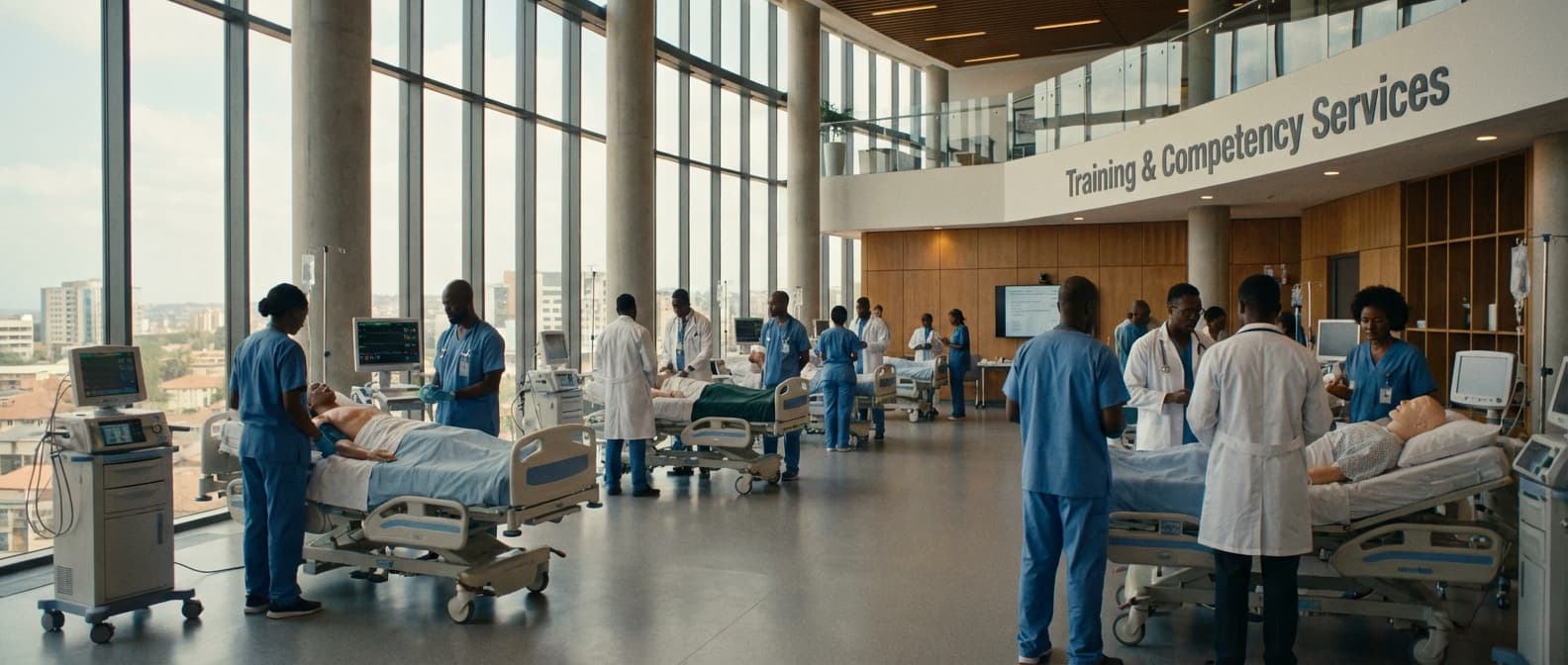
Ventilator User Training Service (Nurses) in Equatorial Guinea
Engineering Excellence & Technical Support
Ventilator User Training Service (Nurses) High-standard technical execution following OEM protocols and local regulatory frameworks.
Alarms: Recognizing and Responding Swiftly
Master critical ventilator alarms (e.g., high pressure, low tidal volume, apnea) and understand the immediate actions required to ensure patient safety and optimal ventilation. This module emphasizes prompt identification, assessment, and intervention to prevent adverse events.
Ventilator Modes & Settings: Tailoring to Patient Needs
Gain proficiency in setting up and adjusting common ventilation modes (e.g., AC, SIMV, Pressure Support) and key parameters (e.g., PEEP, FiO2, respiratory rate) based on patient condition, diagnosis, and clinical goals. Learn to interpret patient response to different settings.
Troubleshooting Common Issues: Proactive Problem Solving
Develop practical skills in identifying and resolving frequent ventilator malfunctions and patient-ventilator dyssynchrony. This includes understanding basic equipment checks, troubleshooting communication failures, and addressing common circuit or interface problems.
What Is Ventilator User Training Service (Nurses) In Equatorial Guinea?
Ventilator User Training Service (Nurses) in Equatorial Guinea refers to the specialized educational programs designed to equip registered nurses with the theoretical knowledge and practical skills necessary for the safe and effective operation of mechanical ventilators. This service is critical in settings where advanced respiratory support is required, ensuring patient safety and optimal clinical outcomes. The training focuses on understanding ventilator mechanics, patient-ventilator synchrony, alarm management, ventilation modes, weaning protocols, and troubleshooting common issues. It is a vital component of healthcare infrastructure development and maintenance, particularly in critical care units, emergency departments, and during public health emergencies.
| Target Audience | Need for Training | Typical Use Cases |
|---|---|---|
| Registered Nurses (RNs) working in critical care units (ICUs, CCUs) | To manage patients requiring mechanical ventilation for respiratory failure, sepsis, post-operative care, or acute exacerbations of chronic respiratory diseases. | Management of severe pneumonia, Acute Respiratory Distress Syndrome (ARDS), exacerbations of COPD or asthma, neuromuscular disorders affecting breathing, and post-surgical patients requiring respiratory support. |
| Registered Nurses (RNs) in Emergency Departments (EDs) | To stabilize patients requiring immediate ventilatory support upon arrival, prior to transfer to a critical care setting. | Management of acute respiratory distress in trauma patients, drug overdoses, anaphylaxis, and other life-threatening conditions. |
| Registered Nurses (RNs) in specialized units (e.g., post-anesthesia care units, neonatal intensive care units - with specific training) | To provide temporary or short-term mechanical ventilation as required by the patient's condition. | Post-operative pain management requiring sedation and ventilation, and management of premature infants with respiratory distress syndrome. |
| Healthcare professionals involved in disaster response or public health emergencies | To rapidly scale up the capacity to provide mechanical ventilation during pandemics or mass casualty events. | Deployment in temporary treatment centers or field hospitals during outbreaks of respiratory illnesses (e.g., influenza pandemics, COVID-19). |
| New or recently qualified Registered Nurses | To ensure foundational competency and safe practice before independent management of ventilated patients. | Orientation programs within hospitals and healthcare facilities as part of their onboarding process. |
Key Components of Ventilator User Training Service (Nurses):
- Ventilator Principles and Operation: Understanding the physics and engineering behind mechanical ventilation, including pressure, volume, and flow delivery.
- Ventilator Modes and Settings: Comprehensive instruction on various ventilation modes (e.g., AC, SIMV, PSV, CPAP) and their appropriate application, including initial setup and adjustments.
- Patient-Ventilator Interface: Proper selection and management of endotracheal tubes, tracheostomy tubes, and masks, along with leak detection and management.
- Monitoring and Assessment: Techniques for continuous monitoring of respiratory parameters, vital signs, and patient response to ventilation.
- Alarm Management and Troubleshooting: Identification, interpretation, and resolution of common ventilator alarms, along with strategies for managing patient-ventilator asynchrony.
- Weaning and Extubation: Protocols and procedures for the systematic withdrawal of ventilatory support.
- Infection Control and Hygiene: Maintaining sterile techniques during ventilator setup, circuit changes, and patient care.
- Documentation and Record Keeping: Accurate charting of ventilator settings, patient parameters, and interventions.
- Emergency Procedures: Response protocols for ventilator malfunction or critical patient deterioration while on mechanical ventilation.
Who Needs Ventilator User Training Service (Nurses) In Equatorial Guinea?
This service targets nurses in Equatorial Guinea who are involved in the care of patients requiring mechanical ventilation. Comprehensive training is crucial to ensure patient safety, optimal device function, and effective management of ventilated patients. The training will cover essential aspects of ventilator operation, patient monitoring, troubleshooting, and emergency procedures.
| Customer Segment | Department/Ward | Reason for Training |
|---|---|---|
| Registered Nurses | Intensive Care Unit (ICU) | Primary caregivers for critically ill patients, requiring in-depth knowledge of ventilator settings, modes, and weaning protocols. |
| Registered Nurses | Emergency Department (ED) | Initial management of respiratory distress and stabilization of patients requiring emergent ventilation. |
| Registered Nurses | Post-Anesthesia Care Unit (PACU) | Monitoring and managing patients recovering from anesthesia who may require ventilatory support. |
| Licensed Practical Nurses / Auxiliary Nurses | ICU, ED, General Wards | Assisting in the care of ventilated patients, monitoring vital signs, and reporting changes to senior nurses. |
| Specialty Nurses (e.g., Critical Care Nurses) | ICU | Advanced understanding of complex ventilation strategies and troubleshooting. |
Target Customers and Departments
- Nurses in Intensive Care Units (ICUs)
- Nurses in Emergency Departments
- Nurses in Respiratory Therapy Departments (if applicable)
- Nurses in Post-Anesthesia Care Units (PACUs)
- Nurses in any unit admitting critically ill patients requiring mechanical ventilation
Ventilator User Training Service (Nurses) Process In Equatorial Guinea
This document outlines the workflow for the Ventilator User Training Service specifically for nurses in Equatorial Guinea. The process begins with an inquiry from a healthcare facility or relevant authority and culminates in the successful execution and completion of the training program.
| Phase | Description | Key Activities | Responsible Parties | Deliverables/Outcomes |
|---|---|---|---|---|
| Initial contact and understanding of the training requirements. | Facility/Authority expresses interest. Clarification of specific ventilator models, number of nurses to be trained, existing skill levels, and desired training outcomes. Site visit may be required. | Healthcare Facility/Ministry of Health, Training Service Provider (TSP) | Clear understanding of training needs, target audience, and objectives. |
| Formalizing the training service offer and securing commitment. | TSP submits a detailed training proposal (curriculum, duration, cost, resources). Negotiation of terms. Signing of a formal Service Agreement. | Training Service Provider (TSP), Healthcare Facility/Ministry of Health | Signed Service Agreement, finalized training plan and budget. |
| Preparing or adapting training resources. | Development of comprehensive training modules (theoretical and practical) tailored to the specific ventilator models and the nurses' roles. Translation of materials into relevant local languages if necessary. | Training Service Provider (TSP) | Approved training curriculum, presentations, practical guides, assessment tools. |
| Organizing the practical aspects of the training. | Identifying suitable training venues (classroom and practical simulation areas). Arranging for ventilator simulators or actual units for hands-on practice. Scheduling training dates and times, considering the facility's operational needs. | Healthcare Facility, Training Service Provider (TSP) | Confirmed training schedule, secured training facilities and equipment. |
| Assigning and preparing qualified trainers. | Selection of experienced and certified trainers with expertise in the specific ventilator models. Briefing trainers on the curriculum, local context, and cultural considerations. Arranging travel and accommodation for trainers. | Training Service Provider (TSP) | Qualified trainers assigned and ready for deployment. |
| Conducting the training program. | Delivery of theoretical lectures on ventilator principles, modes, settings, and patient management. Hands-on practical sessions focusing on equipment setup, operation, troubleshooting, and emergency procedures. Interactive Q&A sessions and case study discussions. | Certified Trainers, Nurses (Trainees) | Nurses actively participating and demonstrating understanding of ventilator operation and management. |
| Ensuring knowledge retention and identifying areas for improvement. | Conducting assessments (written and practical) to evaluate learning outcomes. Providing immediate feedback to trainees. Offering follow-up support (e.g., Q&A sessions, remote assistance). Gathering feedback from trainees and facility management on the training effectiveness. | Certified Trainers, Training Service Provider (TSP), Healthcare Facility Staff | Assessment results, feedback forms, identification of knowledge gaps. |
| Formalizing completion and documenting the training. | Issuing certificates of completion to successful trainees. Providing a comprehensive training report to the healthcare facility and/or Ministry of Health, including attendance records, assessment results, and recommendations. Finalizing invoices and payment. | Training Service Provider (TSP), Healthcare Facility/Ministry of Health | Certificates of completion, final training report, financial closure. |
Ventilator User Training Service (Nurses) Process in Equatorial Guinea
- Inquiry & Needs Assessment
- Proposal & Agreement
- Training Material Development/Customization
- Logistics & Scheduling
- Trainer Deployment
- Training Execution
- Post-Training Support & Evaluation
- Certification & Reporting
Ventilator User Training Service (Nurses) Cost In Equatorial Guinea
Training nurses in ventilator usage is a critical service for ensuring patient safety and optimal care in Equatorial Guinea. The cost of such training is influenced by several factors, making it difficult to provide a single definitive price. These factors include the duration and depth of the training program, the qualifications and experience of the trainers, the location and facilities where the training is conducted, and whether the training is provided by a local institution, an international organization, or a private training provider.
Pricing Factors:
- Training Duration and Content: A comprehensive program covering basic to advanced ventilation modes, troubleshooting, and maintenance will naturally cost more than a shorter, introductory course. The inclusion of practical, hands-on simulations and case studies also adds to the cost.
- Trainer Expertise: Highly specialized intensivists or respiratory therapists with extensive experience in critical care and ventilator management will command higher fees. The number of trainers involved also impacts the overall cost.
- Logistics and Venue: Training conducted at a hospital or clinic might incur facility usage fees. If the training requires travel for trainers or trainees, accommodation and per diem expenses will be additional. The provision of training materials, such as manuals and access to online resources, also contributes to the price.
- Provider Type: Local healthcare institutions may offer training at a lower cost, potentially subsidized by the government or other grants. International organizations or specialized private training companies might charge more due to their established methodologies, proprietary training materials, and potentially higher overheads.
- Group Size and Customization: Training delivered to a larger group can sometimes lead to a lower per-person cost. Customized training tailored to the specific equipment and protocols of a particular hospital will also have a different pricing structure compared to a standard curriculum.
- Certification and Accreditation: If the training leads to a recognized certification or accreditation, this often involves additional administrative costs and fees, thus increasing the overall price.
Cost Ranges in Local Currency (CFA Francs BCEAO - XAF):
Given the variability of the factors mentioned above, providing exact figures is challenging. However, based on general market understanding and assuming a standard training duration (e.g., 2-5 days) for a group of 10-20 nurses, the estimated cost per nurse for ventilator user training in Equatorial Guinea could range from approximately 150,000 XAF to 500,000 XAF. This range accounts for basic to moderately comprehensive training. For highly specialized or extended programs, or those involving significant international expertise, costs could exceed this range.
It is strongly recommended to obtain specific quotes from multiple training providers in Equatorial Guinea, detailing the exact scope of the training, the credentials of the instructors, and all associated expenses to make an informed decision.
| Cost Factor | Estimated Impact on Price (XAF) | Notes |
|---|---|---|
| Basic/Introductory Training (2-3 days) | 150,000 - 250,000 per nurse | Covers fundamental operation and common modes. |
| Intermediate/Comprehensive Training (3-5 days) | 250,000 - 400,000 per nurse | Includes advanced modes, troubleshooting, and basic maintenance. |
| Advanced/Specialized Training (5+ days or custom) | 400,000 - 700,000+ per nurse | Tailored to specific equipment, complex scenarios, or extensive hands-on practice. |
| Experienced International Trainers | Increases cost significantly | Travel, accommodation, and higher hourly rates. |
| Local Institutional Training | Potentially lower cost | May have fewer overheads and local relevance. |
| Private Training Company | Variable, often mid-to-high range | Depends on reputation, curriculum, and included services. |
Key Factors Influencing Ventilator User Training Costs for Nurses in Equatorial Guinea
- Training Program Duration and Depth
- Trainer Qualifications and Experience
- Venue and Logistical Considerations
- Type of Training Provider (Local Institution, International Organization, Private Company)
- Group Size and Customization Requirements
- Inclusion of Practical Simulations and Case Studies
- Provision of Training Materials and Resources
- Certification or Accreditation Fees
Affordable Ventilator User Training Service (Nurses) Options
This document outlines affordable ventilator user training service options specifically designed for nurses. We aim to provide high-quality, practical education that enhances patient care and reduces institutional costs. Our approach emphasizes value bundles and strategic cost-saving measures.
| Training Bundle | Key Features | Value Proposition | Estimated Cost Range (Per Nurse) | Cost-Saving Strategies Integrated | |
|---|---|---|---|---|---|
| Basic Operator Training | Core ventilator functions, initial setup, basic modes, alarm interpretation. | Essential competency for all nursing staff working with ventilated patients. Foundational knowledge for safe operation. | $150 - $300 | Group discounts, online pre-learning modules, train-the-trainer options for internal staff. | Leverages existing training infrastructure, reduces travel costs for trainers. |
| Advanced Critical Care Training | In-depth understanding of advanced modes, weaning protocols, complex patient scenarios, troubleshooting advanced issues. | Empowers nurses to manage critically ill patients with confidence. Improves patient outcomes and reduces reliance on physician intervention for routine adjustments. | $300 - $500 | Blended learning (online theory + in-person practical), simulator-based training, case study analysis. | Maximizes instructor time, reduces equipment wear and tear through simulations, facilitates knowledge retention through practical application. |
| Specialized Ventilator Focus (e.g., Pediatrics, Neonates) | Ventilator management tailored to specific patient populations, unique physiological considerations, specialized equipment integration. | Ensures safe and effective care for vulnerable patient groups. Reduces the risk of adverse events and improves patient-specific outcomes. | $400 - $600 | On-site training at the facility, small group workshops, integration with hospital's existing critical care pathways. | Minimizes disruption to hospital operations, allows for direct application to the facility's patient population and equipment, fosters team collaboration. |
| Annual Refresher & Competency Assurance | Review of core principles, updates on new ventilator technology/protocols, practical skills assessment. | Maintains and enhances current competency, ensures adherence to evolving best practices. Fulfills regulatory and accreditation requirements. | $100 - $200 | Online modules with knowledge checks, scheduled on-site assessment sessions, virtual simulation refreshers. | Cost-effective way to maintain high standards, allows for flexible scheduling to minimize impact on patient care coverage. |
Key Training Service Components
- Comprehensive curriculum covering ventilator operation, patient monitoring, alarm management, and troubleshooting.
- Hands-on simulation training using state-of-the-art ventilators.
- Scenario-based learning to address common clinical challenges.
- Post-training support and refresher courses.
- Customizable training modules to meet specific hospital needs.
Verified Providers In Equatorial Guinea
In Equatorial Guinea, ensuring access to quality healthcare is paramount. When seeking medical services, it's crucial to partner with verified providers who adhere to stringent standards. Franance Health stands out as a leading entity in this regard, offering a comprehensive network of accredited and reliable healthcare facilities and professionals. Their rigorous credentialing process ensures that all affiliated providers meet high benchmarks for expertise, ethical practice, and patient care. This commitment to quality translates into a superior healthcare experience for individuals and organizations alike.
| Provider Type | Franance Health Verification | Key Benefits |
|---|---|---|
| Hospitals | Accredited facilities with state-of-the-art equipment and highly qualified staff. | Comprehensive medical services, advanced diagnostics, surgical procedures, and emergency care. |
| Clinics | Certified clinics offering specialized outpatient care and diagnostic services. | Routine check-ups, specialist consultations, minor procedures, and preventative medicine. |
| Medical Professionals | Individually verified doctors, nurses, and allied health practitioners with proven track records. | Expert medical advice, personalized treatment plans, and specialized care in various fields. |
| Diagnostic Centers | Laboratories and imaging centers meeting strict quality control protocols. | Accurate and reliable diagnostic testing, radiology, and pathology services. |
Why Franance Health Credentials Matter:
- Rigorous Accreditation: Franance Health vets all providers through a meticulous accreditation process, ensuring they meet international quality standards.
- Expertise and Specialization: Affiliated healthcare professionals possess a broad range of expertise and specialized skills to address diverse medical needs.
- Patient-Centric Approach: Providers are committed to delivering compassionate, personalized care focused on patient well-being and satisfaction.
- Ethical Practice and Transparency: Franance Health mandates adherence to the highest ethical standards and promotes transparency in all medical dealings.
- Network Accessibility: Access a wide network of verified hospitals, clinics, and medical practitioners across Equatorial Guinea.
Scope Of Work For Ventilator User Training Service (Nurses)
This Scope of Work (SOW) outlines the requirements for providing comprehensive ventilator user training services specifically for registered nurses. The objective is to ensure nurses possess the necessary knowledge and practical skills to safely and effectively operate and manage ventilators in a clinical setting, leading to improved patient outcomes and reduced risk of adverse events. This SOW details the technical deliverables, standard specifications for training content, and assessment methods.
| Section | Description | Standard Specifications / Deliverables |
|---|---|---|
| Development of a comprehensive training curriculum tailored to the needs of registered nurses, covering theoretical and practical aspects of ventilator use. | Detailed curriculum outline including learning objectives, key topics, and duration for each module. The curriculum must be evidence-based and aligned with current clinical guidelines. Deliverable: Training Curriculum Document. |
| Creation of engaging and informative training materials for various learning modalities. | Materials to include: PowerPoint presentations, lecture notes, case studies, simulation scenarios, practical skill checklists, and quick reference guides. Content must be updated to reflect current ventilator technology and clinical practices. Deliverable: Complete Training Material Package (Digital format). |
| Delivery of lectures and presentations covering the fundamental principles of mechanical ventilation, including patient assessment, ventilator mechanics, common modes of ventilation, and physiological effects. | Sessions to be interactive, allowing for Q&A. Emphasis on understanding the 'why' behind ventilator settings. Duration: [Specify number] hours per module. Deliverable: Completed theoretical training sessions, attendance records. |
| Hands-on training using simulation equipment (manikins) or actual ventilator units (under supervision) to practice ventilator setup, parameter adjustment, and patient connection. | Training to cover pre-use checks, patient interface selection, initial setup, waveform interpretation, alarm management, and disconnection/weaning procedures. Focus on realistic clinical scenarios. Deliverable: Completed practical training sessions, documented skill competency assessments. |
| Dedicated sessions focused on recognizing, interpreting, and responding to common ventilator alarms, as well as basic troubleshooting of equipment issues. | Training to cover the hierarchy of alarms, common causes, and appropriate interventions for each alarm category. Includes basic troubleshooting steps for common equipment malfunctions. Deliverable: Completed alarm management and troubleshooting sessions, documented problem-solving exercises. |
| Development and administration of comprehensive assessments to evaluate nurses' understanding and practical skills. | Assessments to include: written examinations (multiple choice, short answer), practical skills demonstrations, and case study analyses. Minimum passing score to be defined. Deliverable: Assessment tools, administered assessments, and individual competency reports. |
| Provision of all necessary training equipment, including functional ventilators (simulators or actual units), manikins, and appropriate accessories. | Equipment must be well-maintained and calibrated. A sufficient number of units to facilitate effective hands-on training for the participant group. Deliverable: Availability of all required training equipment and resources during the training period. |
| All trainers must possess demonstrable expertise in mechanical ventilation and adult education. | Trainers to have relevant clinical experience in critical care or respiratory therapy, and proven experience in delivering user training. Resumes or CVs of proposed trainers to be submitted for approval. Deliverable: Qualified and experienced trainers. |
| Development and execution of a training schedule that minimizes disruption to clinical operations. | Flexible scheduling options to accommodate different shifts and unit needs. Provision of training location(s) with adequate space and audiovisual capabilities. Deliverable: Agreed-upon training schedule and logistical arrangements. |
| Provision of limited post-training support and collection of feedback on the training program. | Mechanisms for nurses to ask follow-up questions. Development and administration of a training evaluation questionnaire for participants. Deliverable: Post-training support plan, training evaluation reports. |
Key Objectives of Ventilator User Training
- To equip nurses with a theoretical understanding of mechanical ventilation principles and modes.
- To enable nurses to confidently set up, initiate, and manage mechanical ventilation on various patient populations.
- To train nurses in monitoring patient response to ventilation and identifying potential complications.
- To provide nurses with the skills to troubleshoot common ventilator alarms and equipment malfunctions.
- To ensure adherence to best practices and institutional protocols for ventilator management.
- To enhance patient safety through competent and skilled ventilator operation.
Service Level Agreement For Ventilator User Training Service (Nurses)
This Service Level Agreement (SLA) outlines the guaranteed response times and uptime for the Ventilator User Training Service specifically designed for nurses. This SLA aims to ensure timely and reliable access to training resources, supporting the efficient and safe use of ventilators by nursing staff.
| Service Component | Response Time Guarantee | Uptime Guarantee | Notes |
|---|---|---|---|
| Online Training Portal Access | 99.5% Uptime | 24/7 | Scheduled maintenance will be communicated 48 hours in advance. |
| On-Demand Video Modules | 99.5% Uptime | 24/7 | Content availability is dependent on portal uptime. |
| Live Webinar Sessions | 15-minute notification for any cancellation/rescheduling. | Sessions are scheduled and occur at specific times. Attendance is not guaranteed due to user availability. | |
| Technical Support for Training Platform | Email Support: Within 4 business hours. | Phone Support: Within 1 business hour (during business hours). | Business hours are Monday-Friday, 9 AM - 5 PM [Specify Time Zone]. |
| Expert Q&A Sessions (Scheduled) | 1-hour notification for any cancellation/rescheduling. | Sessions are scheduled and occur at specific times. Access to the session is not guaranteed due to user availability. |
Key Service Components
- Online Training Portal Access
- On-Demand Video Modules
- Live Webinar Sessions
- Technical Support for Training Platform
- Expert Q&A Sessions (Scheduled)
Frequently Asked Questions

Ready when you are
Let's scope your Ventilator User Training Service (Nurses) in Equatorial Guinea project in Equatorial Guinea.

Scaling healthcare logistics and technical systems across the entire continent.