
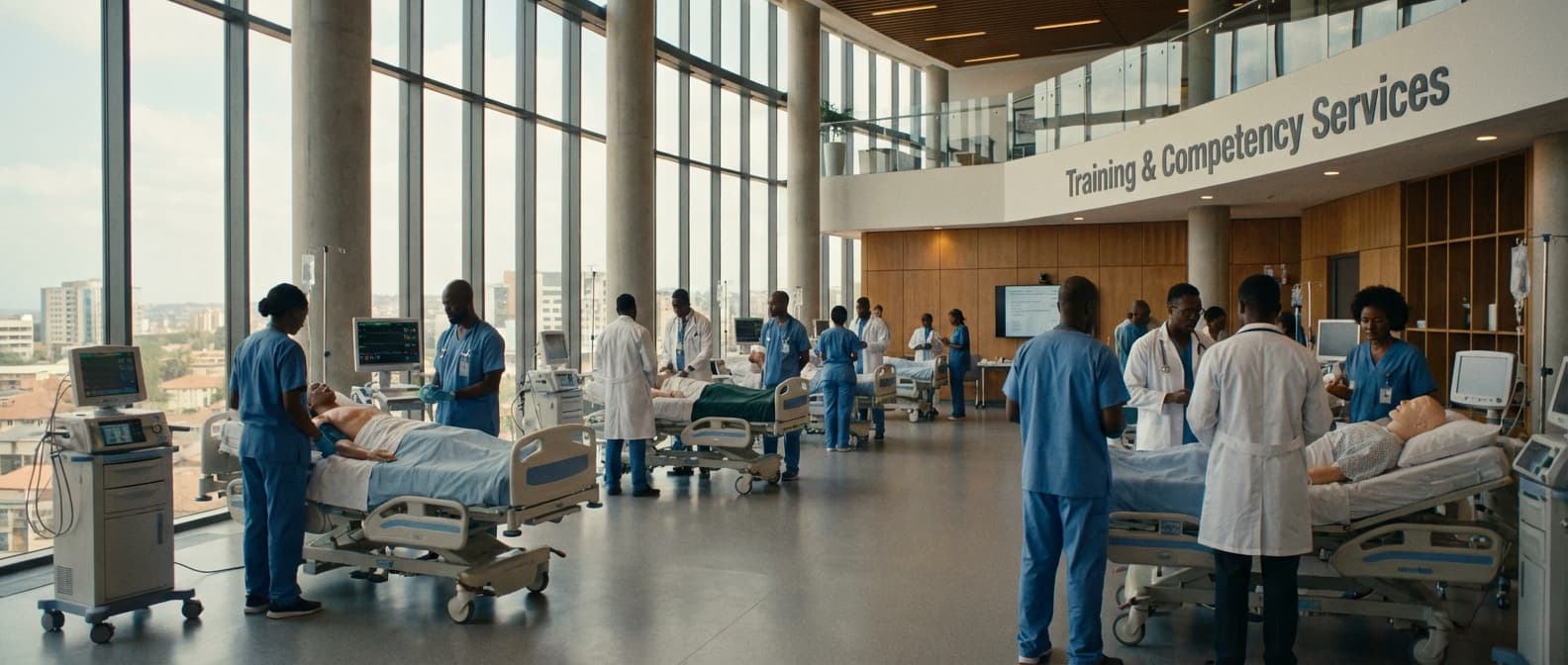
Ultrasound Application Training Service (Protocol-Based) in Equatorial Guinea
Engineering Excellence & Technical Support
Ultrasound Application Training Service (Protocol-Based) High-standard technical execution following OEM protocols and local regulatory frameworks.
Accelerated Protocol Mastery
Our intensive, protocol-driven ultrasound training in Equatorial Guinea empowers technicians to achieve expert-level proficiency in key diagnostic protocols rapidly, ensuring consistent and accurate image acquisition from day one.
Localized Expertise, Global Standards
We deliver world-class ultrasound application training tailored to the specific needs and common pathologies encountered in Equatorial Guinea, bridging the gap between global best practices and local healthcare realities.
Hands-On, Workflow-Focused Training
Experience practical, scenario-based training focused on optimizing ultrasound workflow and protocol adherence, equipping your team with the confidence and skills to perform high-quality diagnostic scans efficiently in a clinical setting.
What Is Ultrasound Application Training Service (Protocol-based) In Equatorial Guinea?
Ultrasound Application Training Service (Protocol-Based) in Equatorial Guinea refers to a specialized educational program designed to equip medical professionals with the knowledge and practical skills necessary to perform diagnostic ultrasound examinations according to standardized protocols. This service is crucial for ensuring consistent, accurate, and reproducible imaging results within the healthcare system. The 'protocol-based' aspect signifies that the training adheres to established guidelines and sequences of image acquisition and interpretation for specific anatomical regions or clinical conditions. This systematic approach is vital for maximizing diagnostic yield and minimizing inter-observer variability.
| Who Needs It | Typical Use Cases |
|---|---|
| Radiologists and Radiology Residents: To enhance their diagnostic capabilities and adherence to quality standards in ultrasound imaging. | Obstetricians and Gynecologists: For routine prenatal screening, fetal anomaly detection, gynecological assessment (e.g., ovarian cysts, fibroids), and pelvic pain evaluation. |
| General Practitioners and Family Physicians: To provide point-of-care ultrasound (POCUS) for initial diagnostic assessments and triage in primary care settings. | Emergency Medicine Physicians: For rapid assessment of trauma (FAST scan), detection of fluid collections, and evaluation of acute abdominal conditions. |
| Sonographers and Ultrasound Technicians: To standardize their practice, improve image quality, and expand their repertoire of examinations. | Cardiologists: For transthoracic echocardiography to assess cardiac structure and function, and diagnose valvular heart disease. |
| Surgeons (e.g., General Surgery, Urology): To aid in pre-operative planning, intra-operative guidance, and post-operative monitoring. | Internal Medicine Specialists (e.g., Gastroenterologists, Nephrologists): For abdominal imaging (liver, gallbladder, kidneys), and evaluation of conditions like ascites and renal masses. |
| Healthcare Institutions and Hospitals: To ensure a standardized and high-quality ultrasound service across departments and to meet accreditation requirements. | Public Health Initiatives: For targeted screening programs (e.g., maternal health, pediatric assessment) where consistent diagnostic accuracy is paramount. |
Key Components of Ultrasound Application Training Service (Protocol-Based):
- Theoretical Instruction: Comprehensive lectures covering ultrasound physics, instrumentation, safety, and the specific anatomical and pathological considerations relevant to each application.
- Protocol Review and Standardization: In-depth analysis of established ultrasound protocols for various clinical scenarios (e.g., obstetric, gynecological, abdominal, vascular, musculoskeletal). Emphasis on understanding the rationale behind each step and parameter.
- Hands-on Practical Sessions: Supervised simulation and real-patient scanning opportunities, focusing on proper transducer manipulation, image optimization, and systematic image acquisition following the defined protocols.
- Image Interpretation and Reporting: Training in the recognition of normal and abnormal sonographic findings, lesion characterization, and the generation of standardized diagnostic reports.
- Case-Based Learning: Review and discussion of representative clinical cases to solidify understanding and problem-solving skills.
- Competency Assessment: Evaluation of learned skills through practical examinations, image review, and written assessments to ensure proficiency.
Who Needs Ultrasound Application Training Service (Protocol-based) In Equatorial Guinea?
Ultrasound Application Training Service (Protocol-Based) in Equatorial Guinea is crucial for ensuring that healthcare professionals can effectively utilize ultrasound technology for accurate diagnosis and patient care. This training focuses on standardized protocols, enabling consistent and reliable ultrasound examinations across different practitioners and institutions.
| Department/Specialty | Key Applications of Protocol-Based Ultrasound Training | Specific Training Needs |
|---|---|---|
| Radiology | General diagnostic imaging, abdominal, pelvic, superficial structures, vascular studies | Standardized scan protocols for various organs, quality assurance, artifact identification, reporting standards. |
| Obstetrics and Gynecology (OB/GYN) | Antenatal screening, fetal growth monitoring, anomaly detection, gynecological assessments, basic infertility assessment | Fetal biometry protocols, detailed anomaly scan protocols, pelvic ultrasound protocols, Doppler studies in pregnancy. |
| Cardiology | Echocardiography (adult and pediatric) for structural and functional assessment | Standardized echocardiographic views and measurements, Doppler assessments for valvular function and hemodynamics, pediatric congenital heart disease protocols. |
| Emergency Medicine | FAST (Focused Assessment with Sonography for Trauma) exams, identification of fluid collections, procedural guidance | Rapid ultrasound protocols for trauma and critical care, basic procedural guidance (e.g., paracentesis, thoracentesis). |
| Pediatrics | Neonatal head ultrasound, abdominal ultrasound in children, musculoskeletal assessments | Specific protocols for neonatal brain development, pediatric abdominal organ assessment, musculoskeletal imaging protocols for pediatric conditions. |
| Urology | Renal and bladder assessment, prostate imaging, scrotal imaging | Standardized protocols for evaluating kidney and bladder pathology, transabdominal and transrectal prostate ultrasound protocols, scrotal ultrasound protocols. |
| Anesthesiology | Nerve blocks, vascular access, procedural guidance | Sonographic guidance protocols for common nerve blocks, central and peripheral venous access, other interventional procedures. |
| General Surgery | Pre-operative assessment, post-operative monitoring, identification of complications | Ultrasound protocols for specific surgical conditions (e.g., appendicitis, cholecystitis), monitoring of surgical outcomes, identification of fluid collections or abscesses. |
Target Customers and Departments in Equatorial Guinea for Ultrasound Application Training Service (Protocol-Based)
- {"title":"Hospitals and Clinics","description":"All healthcare facilities utilizing ultrasound equipment, from major public hospitals to private clinics, will benefit from standardized training to ensure best practices and patient safety."}
- {"title":"Diagnostic Imaging Centers","description":"Specialized centers focusing on diagnostic imaging will require protocol-based training to maintain high standards of service and interpretation."}
- {"title":"Maternal and Child Health Centers","description":"Facilities dedicated to prenatal care, obstetrics, and pediatrics will find protocol-based ultrasound training essential for fetal monitoring, neonatal assessments, and other critical services."}
- {"title":"Non-Governmental Organizations (NGOs) and International Aid Organizations","description":"Organizations involved in healthcare provision and capacity building in Equatorial Guinea will benefit from training their local partners and staff to improve healthcare delivery in underserved areas."}
- {"title":"Medical Training Institutions","description":"Universities and vocational schools training future medical professionals will incorporate protocol-based ultrasound training into their curricula to equip students with essential skills."}
Ultrasound Application Training Service (Protocol-based) Process In Equatorial Guinea
This document outlines the workflow for the Ultrasound Application Training Service (Protocol-Based) in Equatorial Guinea, detailing the process from initial inquiry to the successful execution of the training program. This service focuses on providing specialized training in ultrasound applications adhering to established medical protocols, ensuring practitioners gain proficiency in diagnostic procedures.
| Stage | Key Activities | Responsible Party | Deliverables/Outcomes | Timeline (Indicative) |
|---|---|---|---|---|
| Initial contact from client (healthcare facility/individual practitioner). Discussion of specific ultrasound applications required (e.g., OB/GYN, Cardiology, Abdominal). Assessment of existing skill levels and equipment available. Identification of training objectives and desired outcomes. | Client, Training Provider (TP) | Clear understanding of training needs and scope. Documented training requirements. | 1-3 business days |
| TP prepares a detailed training proposal outlining:
| Training Provider (TP), Client | Comprehensive training proposal. Signed service agreement/contract. | 3-7 business days |
| Scheduling of training dates and venue confirmation. Arrangement of trainer travel and accommodation (if applicable). Procurement or confirmation of necessary ultrasound equipment and phantoms. Preparation of training materials (presentations, protocols, handouts). Pre-training communication with participants (invitations, pre-reading). Visa and work permit arrangements (if required for trainers). | Training Provider (TP), Client | Confirmed training schedule and venue. All logistical arrangements in place. Training materials ready. | 1-3 weeks (depending on complexity and international travel) |
| On-site or remote delivery of the protocol-based ultrasound training. Theoretical sessions covering anatomy, physiology, and scanning protocols. Practical sessions with hands-on scanning on phantoms and/or consenting patients (under supervision). Case study reviews and problem-solving. Trainer provides real-time feedback and correction. | Training Provider (TP) | Delivered training sessions. Demonstrated improvement in participant scanning skills. Adherence to established protocols. | As per agreed duration (e.g., 3-5 days per module) |
| Assessment of participant learning through practical evaluation or knowledge test. Provision of training certificates upon successful completion. Follow-up support (e.g., remote Q&A, troubleshooting). Collection of feedback from participants and the client on the training effectiveness. Final report documenting training outcomes and recommendations. | Training Provider (TP), Client | Participant assessments and certificates. Post-training support provided. Training evaluation report. | 1-2 weeks post-training |
Workflow Stages
- Inquiry & Needs Assessment
- Proposal & Agreement
- Logistics & Planning
- Training Execution
- Post-Training Support & Evaluation
Ultrasound Application Training Service (Protocol-based) Cost In Equatorial Guinea
Providing ultrasound application training services in Equatorial Guinea, particularly those that are protocol-based, involves several cost considerations. These factors can significantly influence the final price, making it crucial for service providers and clients to understand them. The training typically encompasses theoretical instruction, hands-on practical sessions, and often includes assessment and certification. The specific ultrasound applications being trained (e.g., obstetrics, general radiology, vascular, emergency medicine) will also dictate the complexity and duration of the program, thus affecting the overall cost. Furthermore, the qualifications and experience of the trainers, the use of specialized equipment and phantom models, and the logistical arrangements (venue, travel, accommodation if applicable) all contribute to the pricing structure. The economic landscape of Equatorial Guinea, including inflation rates and the general cost of doing business, will also play a role in establishing competitive pricing for these specialized training services.
| Pricing Factor | Description | Typical Cost Range (XAF - Central African CFA Franc) |
|---|---|---|
| Per-Participant Training Fee (Basic) | Covers standard protocol-based training for one individual on a common application. | 150,000 - 300,000 XAF |
| Per-Participant Training Fee (Advanced/Specialized) | For complex applications or advanced protocols, requiring more specialized knowledge. | 300,000 - 750,000 XAF |
| On-Site Training (Group - Daily Rate) | Cost for bringing trainers and equipment to a client's facility, for a group of trainees. | 500,000 - 1,500,000 XAF |
| Trainer's Travel & Accommodation (if applicable) | Expenses incurred for trainers traveling from outside the immediate city or country. | Variable (Estimate: 200,000 - 1,000,000 XAF per trip, depending on distance) |
| Equipment Rental/Usage Fee | If specialized ultrasound machines or high-fidelity phantoms are not provided by the client. | 50,000 - 200,000 XAF per day |
| Certification Fee | Cost associated with formal assessment and issuance of a training certificate. | 30,000 - 100,000 XAF per participant |
| Customized Protocol Development/Adaptation | For tailoring training to specific institutional protocols or unique workflows. | Variable (Estimate: 250,000 - 1,000,000+ XAF, depending on complexity) |
Key Pricing Factors for Ultrasound Application Training in Equatorial Guinea
- Complexity and Scope of Ultrasound Applications
- Duration and Intensity of Training
- Trainer Qualifications and Experience
- Use of Training Equipment and Simulation Models
- Logistical Costs (Venue, Travel, Accommodation)
- Assessment and Certification Processes
- Market Demand and Competition
- Provider's Overhead and Profit Margin
- Economic Conditions in Equatorial Guinea
Affordable Ultrasound Application Training Service (Protocol-based) Options
Our Affordable Ultrasound Application Training Service (Protocol-Based) is designed to equip sonographers and medical professionals with essential practical skills using standardized protocols. This approach ensures consistency, efficiency, and accuracy in diagnostic imaging. We offer flexible training options to suit various learning needs and budgets, focusing on delivering high-value education that directly translates to improved patient care and operational efficiency. Our service emphasizes hands-on practice guided by expert instructors, utilizing realistic scenarios and comprehensive study materials.
| Value Bundle Name | Included Modules | Key Benefits | Standard Price (per participant) | Bundle Discount |
|---|---|---|---|---|
| Foundation Series | Abdominal (Basic), Pelvic (Transabdominal), Obstetrical (Dating Scan) | Builds core skills in fundamental applications, ideal for entry-level sonographers. | $800 | N/A |
| Advanced Core | Abdominal (Comprehensive), Pelvic (Transvaginal), Obstetrical (First Trimester) | Expands on foundational knowledge with more in-depth protocols, suitable for developing practitioners. | $1200 | 10% |
| Specialty Focus: OB/GYN | Obstetrical (Second/Third Trimester Anatomy), Gynecological (Uterus & Ovaries), Pelvic Floor | Deep dive into comprehensive OB/GYN protocols, catering to specialized roles. | $1500 | 15% |
| Comprehensive Ultrasound Specialist | Abdominal, Pelvic, Obstetrical (Full Term), Small Parts (Thyroid/Breast) | Covers a broad range of essential ultrasound applications for general sonographers. | $2500 | 20% |
Key Features of Our Training Service
- Protocol-Driven Learning: Standardized protocols for key ultrasound applications ensure a structured and reproducible learning experience.
- Expert Instructors: Experienced sonographers with extensive clinical and teaching backgrounds.
- Hands-on Practice: Ample opportunities to practice on phantoms and simulated patient cases.
- Comprehensive Study Materials: Access to detailed notes, reference guides, and protocol checklists.
- Flexible Scheduling: Options to accommodate individual and group training needs.
- Certificate of Completion: Recognition of acquired skills and knowledge.
- Focus on Core Applications: Training covers fundamental and commonly performed ultrasound examinations.
Verified Providers In Equatorial Guinea
Equatorial Guinea's healthcare landscape is evolving, with an increasing demand for reliable and accredited medical services. In this context, identifying verified providers is crucial for individuals seeking quality care. Franance Health has emerged as a prominent entity, distinguished by its adherence to stringent credentialing standards and its commitment to patient well-being. This document outlines why Franance Health's credentials position them as a leading choice for healthcare in Equatorial Guinea.
| Credential Type | Significance for Patients | Franance Health's Approach |
|---|---|---|
| National Health Ministry Approval | Ensures legal operation and compliance with local healthcare laws. | Franance Health maintains all necessary licenses and approvals from the Ministry of Health of Equatorial Guinea. |
| International Healthcare Accreditation (e.g., Joint Commission International - if applicable) | Demonstrates adherence to global standards of quality and patient safety. | Actively pursues and maintains accreditations that align with international best practices. |
| Professional Licenses of Medical Staff | Confirms that doctors and nurses are qualified and authorized to practice. | Rigorous verification of all medical professionals' licenses and certifications. |
| Certifications in Specialized Medical Fields | Indicates expertise in specific areas of medicine, leading to better treatment outcomes. | Encourages and supports staff in obtaining advanced certifications relevant to their specialties. |
| Quality Management Systems (e.g., ISO certifications) | Ensures consistent quality in service delivery and operational efficiency. | Implements robust quality management systems to maintain high standards across all operations. |
Key Aspects of Franance Health's Credentials
- Accreditation and Certification: Franance Health prioritizes and actively pursues accreditation from recognized national and international healthcare bodies. This ensures their facilities, protocols, and staff meet established benchmarks for safety, quality, and efficacy.
- Medical Staff Expertise: The organization is dedicated to employing highly qualified and licensed medical professionals. This includes rigorous vetting processes for physicians, nurses, and specialists, ensuring they possess the necessary experience, qualifications, and ethical standing.
- Compliance with Regulatory Standards: Franance Health operates in strict adherence to Equatorial Guinea's healthcare regulations and international best practices. This commitment to compliance guarantees that all services are delivered legally and ethically, prioritizing patient safety and data privacy.
- Advanced Technology and Infrastructure: Their investment in modern medical equipment and well-maintained facilities underscores their commitment to providing contemporary diagnostic and therapeutic services. This technological prowess is often a component of accreditation and reflects a dedication to optimal patient outcomes.
- Patient-Centric Approach: Beyond technical qualifications, Franance Health emphasizes a patient-centered philosophy. This is often reflected in their training programs, service delivery models, and feedback mechanisms, ensuring a positive and supportive patient experience.
- Partnerships and Collaborations: Strategic partnerships with reputable international healthcare institutions and organizations further validate Franance Health's commitment to excellence. These collaborations can facilitate knowledge exchange, advanced training, and access to specialized medical expertise.
Scope Of Work For Ultrasound Application Training Service (Protocol-based)
This Scope of Work (SOW) outlines the requirements for providing protocol-based ultrasound application training services. The training will focus on standard ultrasound protocols to ensure consistent and accurate image acquisition and interpretation. This document details the technical deliverables and standard specifications expected from the training provider.
| Section | Description | Technical Deliverables | Standard Specifications |
|---|---|---|---|
| Development of a comprehensive training curriculum tailored to specific ultrasound applications (e.g., Abdomen, Pelvis, OB/GYN, Vascular, Echocardiography). The curriculum will be based on widely accepted professional society guidelines and best practices. | Detailed Training Curriculum Document, including learning objectives, module breakdown, and assessment methods. | Curriculum aligns with ARDMS, ARRT, or equivalent professional body certification requirements. Modules cover theory, hands-on scanning, and case studies. |
| Instruction on ultrasound physics, instrumentation, image optimization, artifact recognition, and relevant anatomy and physiology for each application. | Interactive lectures, presentations, and Q&A sessions. Access to supplementary educational materials (e.g., online modules, textbooks). | Lectures delivered by certified and experienced sonographers/physicians. Materials are current and evidence-based. Session duration as per agreed schedule. |
| Supervised practical training sessions focusing on protocol-driven scanning techniques using ultrasound phantoms and/or volunteer models. | One-on-one or small group practical scanning sessions. Real-time feedback and guidance on probe manipulation, machine controls, and image acquisition. | Trainee-to-instructor ratio not exceeding [Specify Ratio, e.g., 4:1]. Training conducted on modern ultrasound equipment. All scanning will adhere to specified protocols. |
| Establishment and implementation of standardized ultrasound protocols for each application. This includes view acquisition, labeling, and measurement guidelines. | Documented Standardized Ultrasound Protocols for each application. Training on adherence to these protocols. | Protocols are clearly defined, illustrated with representative images, and include specific measurement requirements. Consistency in protocol execution is a primary focus. |
| Methods to assess trainee competency in theoretical knowledge and practical scanning skills. | Written/online examinations, practical scanning assessments (observed or recorded), and case study reviews. Performance feedback reports. | Assessment criteria are objective and measurable. Trainees must achieve a minimum pass rate of [Specify Percentage, e.g., 80%] on both theoretical and practical assessments to complete the training. |
| Provision of all necessary ultrasound equipment, phantoms, and training materials required for the program. | Access to functional ultrasound machines with appropriate transducers for each application. High-fidelity phantoms for various anatomical simulations. Printed or digital training manuals. | Equipment is well-maintained and calibrated. Phantoms accurately simulate anatomical structures and pathologies. Training materials are up-to-date and comprehensive. |
| Limited post-training support to address any initial challenges encountered by trainees in their clinical practice. | Follow-up Q&A sessions or email support for a defined period (e.g., 30 days) post-completion. | Support is provided by qualified personnel. Response time for queries is within [Specify Time, e.g., 48] business hours. |
| Regular reporting on training progress, attendance, and assessment results. | Monthly progress reports submitted to [Specify Client Contact/Department]. Final training completion report detailing individual trainee performance. | Reports are clear, concise, and provide actionable insights. All reporting adheres to agreed-upon formats and submission deadlines. |
Key Objectives of the Ultrasound Application Training Service
- To equip trainees with the knowledge and skills to perform ultrasound examinations according to established protocols.
- To ensure trainees can acquire high-quality diagnostic ultrasound images.
- To enhance the understanding of ultrasound physics and instrumentation relevant to clinical applications.
- To promote best practices in patient safety and sonographer ergonomics.
- To enable trainees to identify common anatomical structures and pathological findings relevant to specific protocols.
Service Level Agreement For Ultrasound Application Training Service (Protocol-based)
This Service Level Agreement (SLA) outlines the performance standards and commitments for the Ultrasound Application Training Service (Protocol-Based). It defines the response times for technical support and the guaranteed uptime for accessing the training platform.
| Service Component | Response Time Target | Uptime Guarantee |
|---|---|---|
| Technical Support (Critical Issues: e.g., inability to access training module, platform crash) | Within 2 business hours | 99.5% of the time (measured monthly) |
| Technical Support (Non-Critical Issues: e.g., minor interface bug, feature clarification) | Within 8 business hours | 99.5% of the time (measured monthly) |
| Platform Availability (Access to training materials, video playback, interactive elements) | N/A (Uptime Guarantee applies) | 99.5% of the time (measured monthly) |
| Scheduled Maintenance | Advance notification of at least 48 hours | Excluded from Uptime Guarantee |
Key Service Objectives
- To ensure timely resolution of technical issues encountered during training.
- To provide a reliable and consistently available training platform for all users.
- To clearly define Service Provider and Client responsibilities regarding service delivery and utilization.
Frequently Asked Questions

Ready when you are
Let's scope your Ultrasound Application Training Service (Protocol-Based) in Equatorial Guinea project in Equatorial Guinea.

Scaling healthcare logistics and technical systems across the entire continent.