
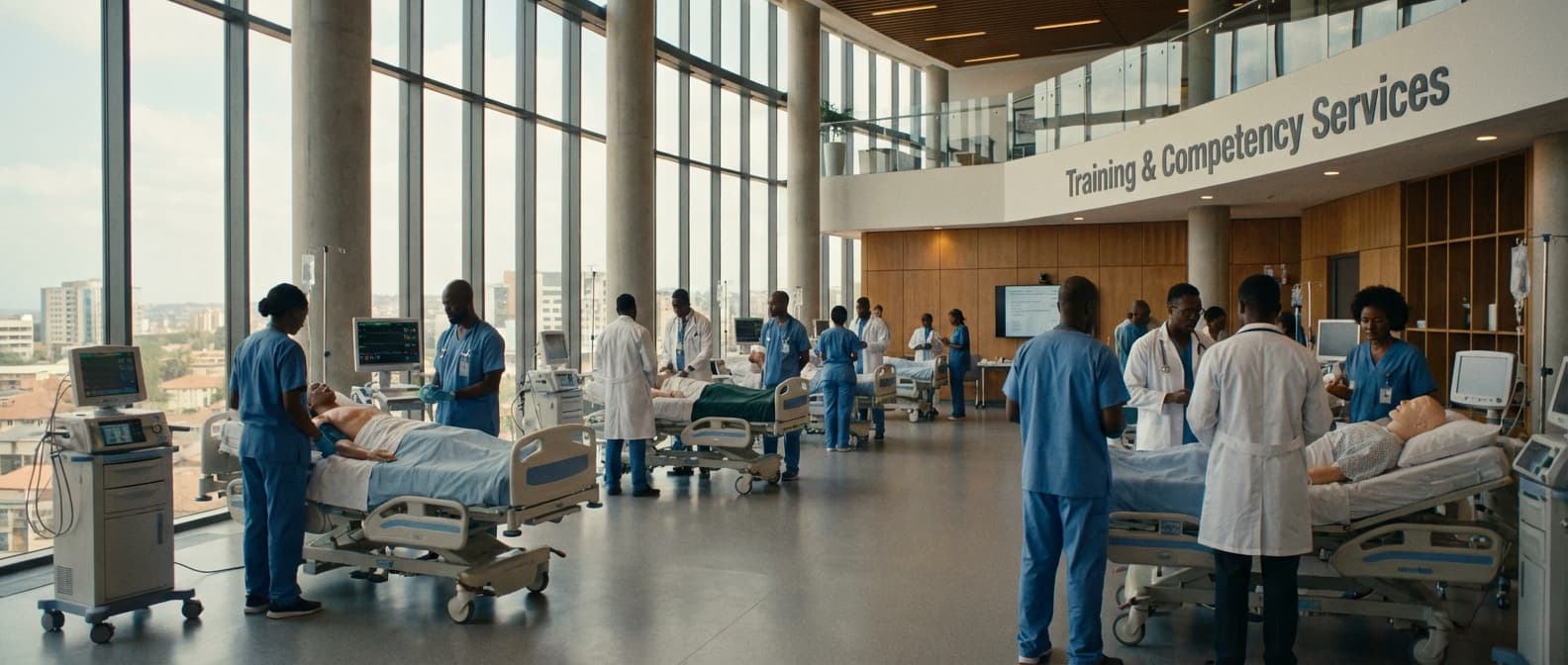
CT Operator Training Service (Radiographers) in Equatorial Guinea
Engineering Excellence & Technical Support
CT Operator Training Service (Radiographers) High-standard technical execution following OEM protocols and local regulatory frameworks.
Advanced CT Imaging Protocols
Master cutting-edge CT imaging protocols tailored for Equatorial Guinea's specific diagnostic needs, ensuring optimal image quality and diagnostic accuracy for diverse patient conditions.
Radiation Safety & Optimization
Gain expertise in advanced radiation safety practices and dose optimization techniques, guaranteeing patient and staff well-being while adhering to international standards for CT examinations.
Contrast Media Administration Excellence
Develop proficiency in the safe and effective administration of contrast media, including latest protocols and management of potential reactions, crucial for enhancing CT scan diagnostic value.
What Is Ct Operator Training Service (Radiographers) In Equatorial Guinea?
CT Operator Training Service (Radiographers) in Equatorial Guinea refers to specialized educational programs designed to equip radiographers with the necessary knowledge and practical skills to safely and effectively operate Computed Tomography (CT) scanners. This service is critical for ensuring diagnostic image quality, patient safety, and adherence to radiation protection protocols within the healthcare sector of Equatorial Guinea. The training typically encompasses theoretical instruction on CT physics, anatomy, pathology, imaging protocols, and image processing, as well as hands-on practical sessions utilizing CT equipment.
| Who Needs This Service? | Typical Use Cases | ||||||
|---|---|---|---|---|---|---|---|
| Certified Radiographers seeking to specialize in CT imaging. | New CT scanner installations in hospitals and diagnostic imaging centers. | Radiographers requiring refresher training or updates on new CT technologies. | Healthcare facilities aiming to improve diagnostic accuracy and patient outcomes. | Radiographers working in remote or underserved areas who need to operate CT scanners for essential diagnostics. | Radiographers involved in research protocols requiring specific CT imaging techniques. | Healthcare institutions facing challenges with image quality or radiation dose optimization. | Government health agencies and regulatory bodies responsible for setting standards and ensuring quality in medical imaging. |
| Diagnosis and staging of oncological conditions (e.g., lung, abdominal, pelvic cancers). | Trauma assessment, including head injuries, abdominal injuries, and skeletal fractures. | Evaluation of cardiovascular diseases, such as coronary artery disease and aortic aneurysms. | Detection and characterization of neurological disorders (e.g., stroke, tumors, hemorrhages). | Assessment of gastrointestinal and genitourinary pathologies (e.g., appendicitis, kidney stones, bowel obstructions). | Pre-operative planning for surgical procedures. | Monitoring treatment response in patients undergoing chemotherapy or radiation therapy. | Screening for specific conditions (e.g., low-dose CT for lung cancer screening in high-risk individuals). |
Key Components of CT Operator Training Service:
- CT Physics and Principles: Understanding X-ray generation, beam attenuation, detectors, image reconstruction algorithms (e.g., filtered back-projection, iterative reconstruction), and artifact reduction techniques.
- Anatomy and Physiology: Comprehensive review of relevant anatomical structures and physiological processes to facilitate accurate scan planning and interpretation.
- Pathology Recognition: Introduction to common pathological conditions visualized by CT, enabling radiographers to adjust protocols for optimal diagnostic yield.
- CT Scanner Operation and Maintenance: Hands-on proficiency in operating various CT scanner models, including gantry angulation, table movement, console operation, and basic troubleshooting and preventative maintenance procedures.
- Image Acquisition Protocols: Development and application of standardized protocols for different anatomical regions and clinical indications, considering patient factors (age, weight, contrast administration).
- Radiation Safety and Protection: In-depth knowledge of radiation physics, dose management principles (ALARA - As Low As Reasonably Achievable), patient shielding, quality assurance (QA) for CT equipment, and compliance with national and international radiation safety regulations.
- Contrast Media Administration: Training on the safe and effective administration of intravenous contrast agents, including indications, contraindications, potential adverse reactions, and emergency management.
- Image Quality Assessment and Optimization: Techniques for evaluating image quality, identifying and correcting artifacts, and optimizing parameters to achieve diagnostic clarity.
- Data Management and Archiving: Understanding Picture Archiving and Communication Systems (PACS) and hospital information systems (HIS) for image storage, retrieval, and reporting.
- Legal and Ethical Considerations: Awareness of professional responsibilities, patient consent, and data privacy regulations.
Who Needs Ct Operator Training Service (Radiographers) In Equatorial Guinea?
CT Operator Training Service for Radiographers in Equatorial Guinea is crucial for a variety of healthcare facilities and professionals aiming to enhance their diagnostic imaging capabilities. As the country continues to develop its healthcare infrastructure, the need for skilled personnel to operate advanced imaging equipment like CT scanners becomes increasingly vital. This training ensures that radiographers can perform scans safely, efficiently, and produce high-quality diagnostic images, ultimately leading to improved patient care and diagnosis.
| Target Customer/Department | Specific Needs Addressed | Key Benefits of Training |
|---|---|---|
| Public Hospitals (e.g., Hospital General de Malabo, Hospital Regional de Bata) | Upgrading existing CT skills, training new staff on newly acquired equipment, ensuring standardized scanning protocols, improving image quality for diagnosis. | Enhanced diagnostic accuracy, reduced scan times, improved patient throughput, compliance with international standards, better utilization of expensive equipment. |
| Private Hospitals and Diagnostic Centers (e.g., Clinica La Paz) | Training on advanced CT techniques, specialization in specific CT applications (e.g., cardiac CT, interventional CT), maintaining competitive service offerings, staff retention through professional development. | Higher patient satisfaction, ability to offer specialized diagnostic services, attracting more complex cases, increased revenue generation. |
| Regional Health Centers | Providing basic CT operation skills for remote areas, essential imaging for common pathologies, supporting referral systems. | Improved access to essential diagnostic imaging in underserved regions, earlier detection of diseases, reduced need for long-distance patient transfers for basic CT scans. |
| Mobile Diagnostic Units | Training radiographers to operate CT scanners in mobile settings, adapting to diverse environments, ensuring patient safety and equipment maintenance on the go. | Extended reach of diagnostic services, catering to emergency situations or remote populations, flexibility in service delivery. |
| Radiographers (Individual Professionals) | Acquiring new skills, gaining proficiency in specific CT protocols, obtaining certifications, career progression within the radiology field. | Increased employability, higher earning potential, confidence in operating advanced equipment, contribution to the professional development of radiology in Equatorial Guinea. |
| Ministry of Health and Public Health Agencies | Ensuring a skilled workforce for national healthcare initiatives, standardizing imaging practices across the country, improving overall healthcare outcomes. | A more robust and capable national diagnostic imaging network, efficient allocation of resources, stronger public health infrastructure. |
Target Customers for CT Operator Training Service (Radiographers) in Equatorial Guinea
- Public Hospitals and Clinics with CT Scanners
- Private Hospitals and Diagnostic Centers
- Regional Health Centers
- Mobile Diagnostic Units
- Newly Established Medical Facilities
- Radiographers seeking career advancement
- In-house training departments of larger medical institutions
Ct Operator Training Service (Radiographers) Process In Equatorial Guinea
This document outlines the CT Operator Training Service (Radiographers) process in Equatorial Guinea, detailing the workflow from initial inquiry to the successful execution of the training program.
| Stage | Description | Key Activities | Responsible Parties | Deliverables/Outcomes |
|---|---|---|---|---|
| Inquiry & Needs Assessment | The potential client (hospital, clinic, or government health body) expresses interest in CT operator training for their radiographers. This stage involves understanding their specific needs and objectives. | Initial contact (email, phone, in-person) Discussion of training requirements (number of trainees, experience levels, specific CT equipment, desired learning outcomes) Site visit (optional, for assessment of existing facilities and equipment) Clarification of regulatory requirements in Equatorial Guinea. | Prospective Client (e.g., Hospital Administration, Radiology Department Head) Training Service Provider (Sales/Business Development Team). | Understanding of client needs Identification of training gaps Preliminary scope of training. |
| Proposal Development & Negotiation | Based on the needs assessment, the training provider develops a comprehensive proposal outlining the training program, curriculum, duration, methodology, costs, and trainers. | Customized curriculum design Selection of qualified trainers Development of training materials (presentations, manuals, practical exercises) Cost estimation and pricing strategy Presentation of proposal to the client Negotiation of terms, scope, and pricing. | Training Service Provider (Training Department, Technical Experts, Sales Team) Prospective Client (Procurement, Radiology Department, Management). | Formal Training Proposal Agreed-upon scope of work Tentative training schedule. |
| Contracting & Agreement | Once the proposal is accepted, a formal contract is drafted and signed, legally binding both parties to the terms and conditions of the training service. | Drafting of Service Agreement/Contract Legal review of contract Signing of contract by authorized representatives of both parties Payment of initial deposit (if applicable). | Training Service Provider (Legal Department, Management) Prospective Client (Legal Department, Management). | Signed Service Agreement Formal commitment to the training program. |
| Pre-Training Preparations | This phase involves all logistical and administrative arrangements to ensure the training program runs smoothly. | Confirmation of training dates and venue Arrangement of trainer travel and accommodation Procurement/preparation of training equipment and consumables Communication of pre-training requirements to trainees (e.g., prerequisite knowledge, required documents) Logistics for trainees (transport, accommodation if needed, per diems). | Training Service Provider (Logistics, Administration, Training Coordinators) Client (HR, Radiology Department for trainee coordination). | Confirmed training schedule Prepared training environment Ready training materials and equipment. |
| Training Execution | The core phase where the training is delivered to the radiographers. | Theoretical lectures and presentations Practical demonstrations on CT scanners Hands-on practice sessions for trainees Case study analysis Interactive Q&A sessions Skills assessment during training. | Qualified Trainers Trainees (Radiographers) Client-provided CT scanner and facility. | Delivered training modules Demonstrated practical skills Acquired knowledge and understanding. |
| Post-Training Evaluation & Certification | Assessing the effectiveness of the training and providing formal recognition of completed competencies. | Written/oral examinations to assess theoretical knowledge Practical competency assessments Feedback collection from trainees and client Issuance of training certificates to successful trainees Post-training report to the client. | Training Service Provider (Trainers, Assessment Team) Trainees. | Assessment results Training certificates Client satisfaction feedback Final training report. |
| Follow-up & Ongoing Support | Providing continued support to the client and trainees to ensure the long-term application of learned skills and to address any emerging issues. | Post-training debriefing with client On-site or remote follow-up support (e.g., troubleshooting, refresher sessions) Access to a knowledge base or online resources Opportunities for advanced training. | Training Service Provider (Support Team, Account Managers) Client. | Sustained competency of radiographers Client satisfaction Long-term partnership. |
Key Stages of the CT Operator Training Service Workflow
- Inquiry & Needs Assessment
- Proposal Development & Negotiation
- Contracting & Agreement
- Pre-Training Preparations
- Training Execution
- Post-Training Evaluation & Certification
- Follow-up & Ongoing Support
Ct Operator Training Service (Radiographers) Cost In Equatorial Guinea
The cost of CT Operator Training (Radiographers) in Equatorial Guinea can vary significantly based on several factors. These include the reputation and accreditation of the training institution, the duration and intensity of the course, the level of theoretical versus practical instruction, the specific modules covered (e.g., basic CT, advanced techniques, specialized CT), and the inclusion of any certifications or examinations. Furthermore, the trainer's qualifications and experience, as well as the availability of specialized equipment for hands-on practice, will influence pricing. Given the nascent nature of specialized medical training in some regions of Equatorial Guinea, external trainers or institutions might also incur additional travel and accommodation costs, which are often passed on to the trainee or sponsoring organization. While precise figures are difficult to ascertain without direct quotes from providers, a general range can be estimated.
| Training Category | Estimated Cost Range (XAF) | Notes |
|---|---|---|
| Basic CT Operator Course (Short-term, e.g., 1-2 weeks) | 500,000 - 1,200,000 | Primarily theoretical with limited practical exposure, introductory level. |
| Intermediate CT Operator Course (Medium-term, e.g., 2-4 weeks) | 1,000,000 - 2,500,000 | Balanced theory and practical, covers core CT procedures and protocols. |
| Advanced/Specialized CT Training (Longer-term, e.g., 4+ weeks or modular) | 2,000,000 - 5,000,000+ | Includes advanced techniques, specific organ systems, or international certification preparation. May involve simulation or extensive clinical rotations. |
| On-site Training (Group Rates) | Varies significantly based on group size and course duration | Institutions may offer package deals for multiple trainees, potentially reducing per-person cost but with a higher overall upfront investment. |
| International Certifications (if integrated) | Additional 200,000 - 1,000,000+ | Costs associated with examination fees, application processing, and potentially accreditation body fees. |
Key Pricing Factors for CT Operator Training (Radiographers) in Equatorial Guinea
- Training Institution Reputation and Accreditation
- Course Duration and Intensity
- Theoretical vs. Practical Instruction Balance
- Specialized CT Modules Offered
- Trainer Qualifications and Experience
- Availability of Hands-on Equipment
- Certification and Examination Fees
- Travel and Accommodation Costs (for external trainers)
Affordable Ct Operator Training Service (Radiographers) Options
Acquiring skilled CT operators is crucial for diagnostic imaging facilities. This service focuses on providing accessible and cost-effective training solutions specifically tailored for radiographers seeking to expand their expertise into Computed Tomography. We understand the budgetary constraints faced by many healthcare institutions, and therefore offer flexible training packages designed to maximize value and minimize expenditure. Our training emphasizes hands-on experience, theoretical knowledge, and adherence to safety protocols, ensuring graduates are proficient and confident in operating CT scanners. We believe in a transparent approach to pricing, outlining clear value propositions for each training option.
| Bundle Name | Included Features | Ideal For | Estimated Cost Range (USD) |
|---|---|---|---|
| Essentials Bundle | Online modules, simulation, review quiz | Beginner CT radiographers | $300 - $750 per trainee |
| Advanced Protocols Bundle | Online modules, case studies, webinars | Experienced CT radiographers, skill enhancement | $500 - $1200 per trainee |
| Comprehensive Certification Bundle | All Essentials & Advanced features, practical sessions, mock exams | Radiographers seeking certification, departments needing certified staff | $1000 - $2500 per trainee |
| On-Site Training Bundle | Customizable curriculum, on-location instruction | Groups of 5+ trainees, facilities with dedicated training needs | Varies (quote-based, dependent on duration and customization) |
Key Value Bundles for CT Operator Training
- {"title":"Essentials Bundle","description":"This foundational package is ideal for radiographers new to CT. It covers fundamental principles of CT imaging, scanner operation, patient positioning, basic protocols, and image acquisition techniques. Includes online modules, simulated scanning sessions, and a comprehensive review quiz."}
- {"title":"Advanced Protocols Bundle","description":"For those with foundational CT knowledge seeking to broaden their skill set. This bundle delves into advanced scanning techniques, contrast administration, specialized CT applications (e.g., CT angiography, cardiac CT), and troubleshooting common artifacts. Includes interactive case studies and expert-led webinars."}
- {"title":"Comprehensive Certification Bundle","description":"Our most complete offering, designed to prepare radiographers for professional certification. This bundle integrates both the Essentials and Advanced Protocols content, with added benefits such as in-person practical training sessions (if applicable), mock certification exams, and personalized feedback from certified instructors. Ideal for institutions requiring highly qualified CT personnel."}
- {"title":"On-Site Training Bundle","description":"Tailored for larger groups or facilities with specific equipment. We bring our expert instructors and curriculum directly to your location, minimizing disruption and travel costs for your staff. This bundle can be customized to include your specific CT scanner models."}
Verified Providers In Equatorial Guinea
Navigating healthcare in Equatorial Guinea requires confidence in the providers you choose. Franance Health stands out as a beacon of trust and excellence, offering a network of verified healthcare professionals committed to delivering high-quality medical services. Our rigorous credentialing process ensures that every practitioner associated with Franance Health meets the highest standards of expertise, experience, and ethical practice. This dedication to verification provides patients with the peace of mind that comes from knowing they are in capable and trustworthy hands.
| Credential Type | Franance Health Verification Standard | Benefit to Patients |
|---|---|---|
| Medical Licenses & Certifications | Verified with relevant national and international bodies. | Ensures legal and professional qualification to practice. |
| Educational Background | Confirmed through official transcripts and institutional verification. | Guarantees a strong foundation of medical knowledge. |
| Specialized Training & Fellowships | Documented and validated for specific medical disciplines. | Confirms expertise in particular areas of medicine. |
| Professional Experience | References checked and practice history reviewed. | Indicates practical application of skills and patient management experience. |
| Continuing Medical Education (CME) | Proof of participation in ongoing professional development. | Ensures providers are up-to-date with the latest medical advancements. |
| Reputation & Peer Review | Where applicable, performance and ethical conduct are considered. | Adds an extra layer of assurance regarding quality of care. |
Why Franance Health Credentials Matter
- Rigorous Vetting Process: We go beyond basic licensing to meticulously verify educational background, specialized training, professional experience, and any disciplinary history of our providers.
- Commitment to Quality: Our credentialing is a continuous process, ensuring that providers maintain up-to-date knowledge and adhere to best practices in medical care.
- Patient Safety First: Verification is paramount to ensuring patient safety and delivering effective, reliable healthcare outcomes.
- Access to Excellence: Franance Health connects you with a curated network of the most skilled and dedicated medical professionals in Equatorial Guinea.
- Trust and Transparency: Our transparent credentialing process builds trust and empowers patients to make informed decisions about their healthcare.
Scope Of Work For Ct Operator Training Service (Radiographers)
This Scope of Work (SOW) outlines the requirements for a comprehensive CT Operator Training Service specifically designed for Radiographers. The service aims to equip radiographers with the necessary theoretical knowledge and practical skills to safely and effectively operate Computed Tomography (CT) scanners, ensuring high-quality image acquisition and patient care. The training will adhere to industry best practices and regulatory standards. This document details the technical deliverables and standard specifications expected from the training provider.
| Deliverable | Description | Standard Specifications |
|---|---|---|
| Training Curriculum Document | Detailed outline of all training modules, learning objectives, and assessment methods. | Comprehensive, up-to-date, and aligned with current radiologic technology standards and guidelines (e.g., ARRT, ICRP). Includes theoretical content, practical exercises, and case studies. |
| Training Manuals (Digital/Print) | Comprehensive reference materials for each training module, covering theoretical concepts and practical procedures. | Clear, concise language, high-quality diagrams and illustrations, organized logically by module. Accessible in searchable digital format and/or durable print. |
| Practical Simulation Sessions | Hands-on experience using CT simulators or actual CT scanners under supervision. | Minimum of X hours of supervised practical time per trainee. Covers all key operational aspects, including protocol selection, patient positioning, scan acquisition, and artifact management. Real-time feedback and performance evaluation. |
| Case Study Library | A collection of diverse clinical cases illustrating common and complex CT imaging scenarios. | Includes original (anonymized) images, diagnostic reports, and discussion points focusing on image quality, protocol selection, and interpretation challenges. Minimum of Y diverse cases per anatomical region. |
| Competency Assessment Tools | Methods for evaluating trainee understanding and practical skills. | Includes written examinations (multiple-choice, short answer), practical skill assessments (checklist-based), and case-based scenario evaluations. A passing score of Z% is required for each assessment. |
| Post-Training Support (Optional) | Ongoing support for trainees after the formal training period. | Includes access to online forums, Q&A sessions with instructors, or refresher modules. Defined duration and scope of support (e.g., 3 months). |
| Trainer Qualifications and Experience | Credentials and experience of the training personnel. | Trainers must be certified radiographers with a minimum of [Specify Years] years of experience in CT imaging, proven teaching experience, and familiarity with current CT technology and best practices. |
| Training Schedule and Logistics | Detailed plan for the delivery of training. | Clearly defined training dates, times, location(s), and duration. Includes provisions for breaks, meals, and necessary training equipment/facilities. |
| Feedback Mechanism | System for collecting trainee feedback on the training program. | Anonymous evaluation forms distributed at the end of each module and at the conclusion of the training. Summarized feedback report provided to the client. |
| Certificate of Completion | Official document awarded to trainees who successfully complete the training program. | Includes trainee's name, course title, dates of training, and signature of authorized representative. May include Continuing Education (CE) credits where applicable. |
Key Training Modules
- Principles of CT Imaging: X-ray physics, beam generation, attenuation, reconstruction algorithms (filtered back projection, iterative reconstruction).
- CT Scanner Components and Operation: Gantry, X-ray tube, detectors, console operation, patient table mechanics, safety features.
- Image Quality Optimization: kVp, mAs, pitch, slice thickness, reconstruction kernel selection, artifact recognition and reduction techniques (motion, beam hardening, metallic artifacts).
- Contrast Media Administration and Safety: Types of contrast, administration routes, contraindications, adverse reactions, management of extravasation and allergic reactions, patient preparation and post-procedure care.
- Radiation Safety in CT: Principles of radiation protection, dose monitoring and reporting, ALARA principle application in CT, patient shielding, personnel monitoring.
- CT Protocols and Applications: Understanding and executing standard CT protocols for various anatomical regions (head, chest, abdomen, pelvis), introduction to advanced applications (CT angiography, cardiac CT, spectral CT).
- Image Acquisition Techniques: Patient positioning, centering, scan planning, use of accessories (e.g., immobilization devices).
- Image Post-Processing and Archiving: Windowing, leveling, multiplanar reconstruction (MPR), 3D rendering, Picture Archiving and Communication System (PACS) integration, Digital Imaging and Communications in Medicine (DICOM) standards.
- Emergency Procedures and Patient Care: Recognizing and responding to medical emergencies during CT scans, patient communication and reassurance, management of claustrophobia and anxiety.
- Quality Assurance and Quality Control (QA/QC): Daily, weekly, and monthly QA/QC procedures for CT scanners, troubleshooting common issues.
- Ethical and Legal Considerations: Patient confidentiality, informed consent, medico-legal aspects of CT imaging.
Service Level Agreement For Ct Operator Training Service (Radiographers)
This Service Level Agreement (SLA) outlines the response times and uptime guarantees for the CT Operator Training Service provided to Radiographers. This SLA is an addendum to the Master Services Agreement (MSA) between [Your Company Name] (hereinafter referred to as "Provider") and [Client Company Name] (hereinafter referred to as "Client").
| Severity Level | Description | Response Time Target | Resolution Time Target | Uptime Guarantee |
|---|---|---|---|---|
Key Definitions
- {"term":"CT Operator Training Service","definition":"The online platform and associated resources designed to train and certify radiographers in the safe and effective operation of CT scanners."}
- {"term":"Service Hours","definition":"The hours during which the CT Operator Training Service is actively monitored and supported by the Provider. This is defined as 24 hours a day, 7 days a week, 365 days a year, including all public holidays."}
- {"term":"System Downtime","definition":"Any period during Service Hours when the CT Operator Training Service is unavailable to the Client's users due to a failure in the Provider's infrastructure, software, or managed services, excluding Scheduled Maintenance."}
- {"term":"Scheduled Maintenance","definition":"Planned maintenance activities conducted by the Provider to ensure the optimal performance and security of the CT Operator Training Service. Notification of Scheduled Maintenance will be provided to the Client at least [Number, e.g., 48] hours in advance."}
- {"term":"Incident","definition":"Any event that causes or may cause an interruption to, or a reduction in the quality of, the CT Operator Training Service."}
- {"term":"Response Time","definition":"The maximum time allowed for the Provider to acknowledge and begin actively working on an Incident after it has been reported by the Client."}
- {"term":"Resolution Time","definition":"The maximum time allowed for the Provider to resolve an Incident and restore the CT Operator Training Service to its normal operational state."}
Frequently Asked Questions

Ready when you are
Let's scope your CT Operator Training Service (Radiographers) in Equatorial Guinea project in Equatorial Guinea.

Scaling healthcare logistics and technical systems across the entire continent.