
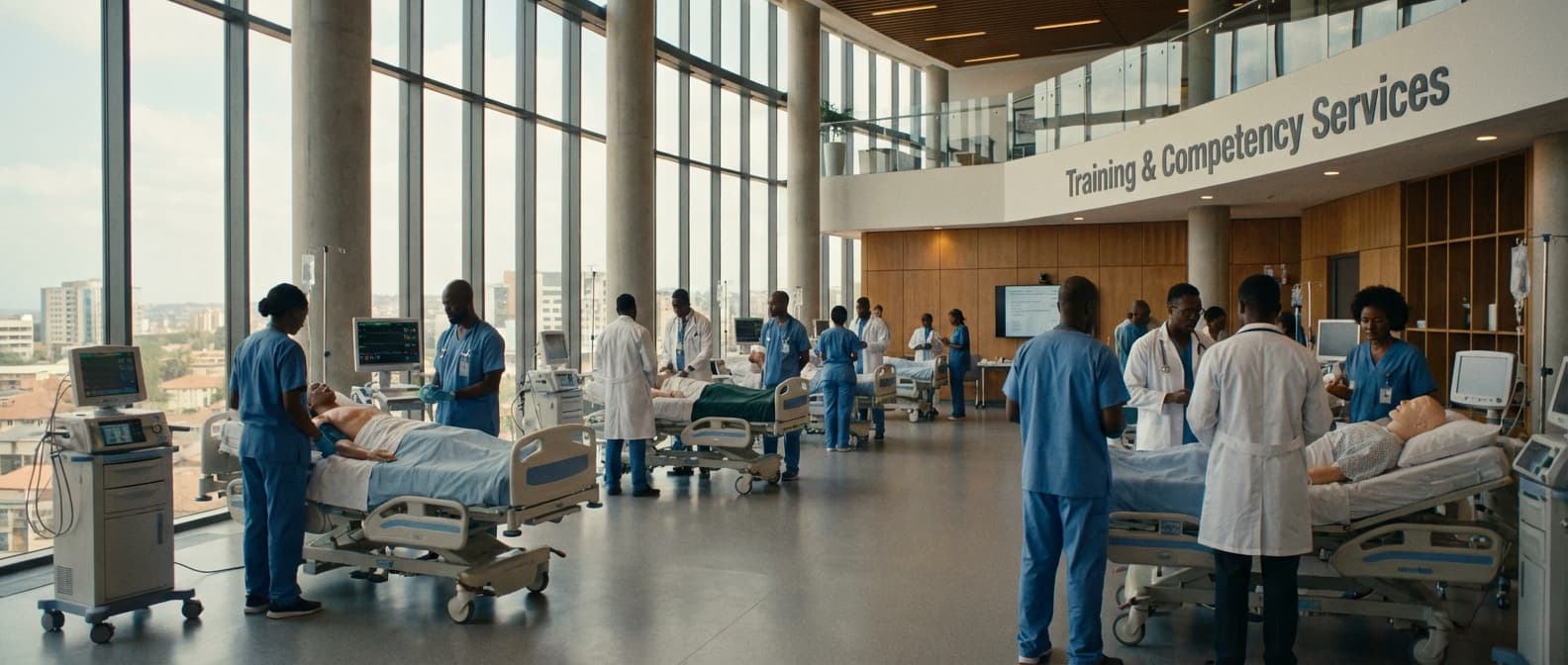
Biomedical Engineering First-Line Support Training Service in Equatorial Guinea
Engineering Excellence & Technical Support
Biomedical Engineering First-Line Support Training Service High-standard technical execution following OEM protocols and local regulatory frameworks.
Advanced Biomedical Equipment Diagnostics
Master the troubleshooting and repair of critical medical devices, including imaging systems (MRI, CT), laboratory analyzers, and patient monitoring equipment, ensuring minimal downtime for healthcare providers in Equatorial Guinea.
Ensuring Patient Safety Through Proactive Maintenance
Learn to implement and manage preventative maintenance schedules for all biomedical equipment, adhering to international safety standards and local regulations, thereby safeguarding patient well-being and reducing risk of adverse events.
Integrated Medical Device Network Support
Gain expertise in supporting and troubleshooting interconnected medical device networks, ensuring seamless data flow between diagnostic tools, EMR systems, and hospital infrastructure, crucial for efficient patient care in Equatorial Guinea's evolving healthcare landscape.
What Is Biomedical Engineering First-line Support Training Service In Equatorial Guinea?
Biomedical Engineering First-Line Support Training Service in Equatorial Guinea refers to a specialized training program designed to equip frontline healthcare professionals and technical personnel with the foundational knowledge and practical skills necessary to perform basic maintenance, troubleshooting, and operational support for biomedical equipment. This service aims to enhance the reliability and availability of medical devices within healthcare facilities, thereby improving patient care outcomes and operational efficiency in the unique context of Equatorial Guinea's healthcare infrastructure. The training focuses on identifying common equipment malfunctions, performing routine preventive maintenance, ensuring safe operation, and escalating complex issues to higher-tier support or specialized biomedical engineers.
| Stakeholder Group | Training Needs | Typical Use Cases |
|---|---|---|
| Nurses and Clinical Staff | Understanding device functionality, basic operation, user-level maintenance (e.g., cleaning, charging), recognizing error messages, initiating safety shutdown procedures. | Ensuring defibrillators are ready for immediate use, performing routine checks on vital signs monitors, operating basic laboratory equipment, reporting equipment malfunctions promptly. |
| Hospital Technicians and Maintenance Personnel | Performing routine preventive maintenance schedules, basic troubleshooting of common issues (e.g., power supply problems, sensor connectivity), understanding user manuals, documenting maintenance activities. | Replacing consumable parts, performing battery checks on portable equipment, re-calibrating simple diagnostic tools, conducting scheduled maintenance on sterilization units. |
| Healthcare Facility Administrators and Managers | Understanding the importance of proper equipment maintenance, resource allocation for training and spare parts, developing internal protocols for equipment management. | Budgeting for training programs, ensuring compliance with equipment maintenance policies, optimizing equipment utilization. |
| Entry-Level Biomedical Technicians (Pre-Specialization) | Building a solid foundation in electrical safety, fundamental diagnostic principles, component identification, and initial troubleshooting before progressing to advanced specialized training. | Assisting senior engineers with equipment installations, performing initial diagnostics on returned equipment, participating in supervised maintenance tasks. |
Key Components of the Training Service:
- Equipment Identification and Categorization
- Basic Principles of Biomedical Device Operation
- Routine Preventive Maintenance Procedures
- Common Troubleshooting Techniques and Error Diagnosis
- Safe Operation and Handling of Medical Equipment
- User-Level Maintenance and Calibration (where applicable)
- Documentation and Reporting of Incidents
- Escalation Protocols to Specialized Support
- Understanding of Relevant Medical Device Regulations and Standards
Who Needs Biomedical Engineering First-line Support Training Service In Equatorial Guinea?
Biomedical Engineering First-Line Support Training Service in Equatorial Guinea is crucial for ensuring the efficient and safe operation of medical equipment. This training equips local personnel with the fundamental skills to diagnose, troubleshoot, and perform basic maintenance on a wide range of biomedical devices. This reduces reliance on external technicians, minimizes equipment downtime, and ultimately improves healthcare delivery within the country.
| Customer Type | Primary Departments/Roles Benefiting from Training |
|---|---|
| Public Hospitals | Biomedical Engineering Department, Clinical Engineering Department, IT Department (for networked devices), General Maintenance Staff |
| Private Clinics and Hospitals | In-house Technical Staff, Biomedical Technicians, Facility Management Teams |
| Regional Health Centers | On-site Technicians, General Service Staff, Nursing Supervisors (for basic troubleshooting) |
| Ministry of Health and Public Hygiene | Central Biomedical Engineering Unit, Regional Technical Supervisors, Training & Development Units |
| National Health Institutes | Technical Support Staff, Research Equipment Technicians |
| Medical Equipment Suppliers/Distributors | Field Service Technicians, Technical Support Teams, Customer Service Representatives |
| NGO Healthcare Programs | Program Technicians, Local Healthcare Facility Staff (supported by NGO) |
| Vocational Training Centers/Technical Schools | Instructors teaching biomedical technology, Students pursuing biomedical engineering careers |
Target Customers and Departments for Biomedical Engineering First-Line Support Training in Equatorial Guinea
- Healthcare Facilities (Public and Private)
- Government Health Ministries and Agencies
- Medical Equipment Suppliers and Distributors
- Non-Governmental Organizations (NGOs) involved in healthcare
Biomedical Engineering First-line Support Training Service Process In Equatorial Guinea
This document outlines the service process for Biomedical Engineering First-Line Support Training in Equatorial Guinea, detailing the workflow from initial inquiry to the successful execution of the training program. The process is designed to be efficient, transparent, and tailored to the specific needs of healthcare facilities and personnel in the region.
| Stage | Description | Key Activities | Responsible Party | Deliverables |
|---|---|---|---|---|
| The initial contact from a client (hospital, clinic, Ministry of Health) requesting first-line biomedical engineering support training. | Receive inquiry, schedule initial consultation, conduct site visit (if necessary), identify specific training needs (types of equipment, skill levels, number of trainees). | Client, Training Provider | Needs assessment report, preliminary understanding of training scope. |
| Based on the needs assessment, a formal proposal is developed outlining the training program, costs, and terms. | Develop detailed training proposal (modules, duration, objectives, trainer profiles), present proposal to client, negotiate terms, finalize contract/agreement. | Training Provider, Client | Formal training proposal, signed contract/agreement. |
| Detailed planning and tailoring of the training content and methodology to meet the identified needs. | Curriculum design/adaptation, development of training materials (manuals, presentations, practical exercises), scheduling of training dates and times, trainer assignment. | Training Provider | Detailed training curriculum, finalized training materials, confirmed training schedule. |
| Ensuring all necessary resources and logistical arrangements are in place for the training. | Arrange training venue (on-site or off-site), procure/prepare training equipment and consumables, coordinate travel and accommodation for trainers (if applicable), confirm trainee attendance. | Training Provider, Client | Secured training venue, ready training equipment, confirmed logistics. |
| The actual delivery of the first-line biomedical engineering support training. | Conduct theoretical sessions, facilitate practical hands-on training, engage trainees with Q&A and problem-solving exercises, monitor trainee progress. | Training Provider (Trainers) | Trained personnel, completed training sessions. |
| Assessing the effectiveness of the training and providing ongoing support. | Administer post-training assessments (knowledge and practical skills), gather feedback from trainees and supervisors, provide immediate post-training support, schedule follow-up visits (if agreed). | Training Provider, Client | Post-training assessment results, feedback reports, initial support provided. |
| Formalizing the completion of the training and providing documentation. | Issue training certificates to successful trainees, prepare a comprehensive training report for the client (detailing attendance, performance, recommendations), archive training records. | Training Provider | Training certificates, final training report. |
Biomedical Engineering First-Line Support Training Service Process
- Inquiry & Needs Assessment
- Proposal Development & Agreement
- Training Planning & Customization
- Logistics & Resource Preparation
- Training Execution
- Post-Training Follow-up & Evaluation
- Certification & Reporting
Biomedical Engineering First-line Support Training Service Cost In Equatorial Guinea
The cost of first-line support training services for Biomedical Engineering in Equatorial Guinea is influenced by several key factors. These include the complexity and scope of the training program, the duration of the course, the qualifications and experience of the instructors, the provider's reputation and overhead, and the specific equipment or technologies covered. Demand for specialized skills in the growing healthcare sector also plays a role. Due to the developing nature of the biomedical engineering field in Equatorial Guinea, training options may be less standardized than in more established markets, leading to a potential premium for high-quality, locally relevant programs. Furthermore, the cost of travel and accommodation for instructors, if sourced internationally, will be a significant component. The local currency is the Central African CFA franc (XAF).
| Training Service Component | Estimated Cost Range (XAF) | Notes |
|---|---|---|
| Basic First-Line Support (e.g., routine maintenance, troubleshooting common issues) | 150,000 - 300,000 | Covers foundational knowledge. May be group training. |
| Intermediate First-Line Support (e.g., calibration, specific device troubleshooting) | 300,000 - 750,000 | Requires more specialized instructors and potentially hands-on practice. |
| Advanced First-Line Support / Specialized Equipment Training | 750,000 - 2,000,000+ | Highly dependent on the complexity of the medical equipment. Can involve international trainers. |
| Instructor Fees (Daily Rate) | 50,000 - 150,000 | Varies significantly based on expertise and international vs. local sourcing. |
| Training Materials and Manuals | 10,000 - 50,000 | Per participant or per course, depending on provider. |
| On-site Training Surcharge (if applicable) | 25,000 - 100,000 | Covers logistical costs for the provider to come to the client's location. |
Key Pricing Factors for Biomedical Engineering First-Line Support Training in Equatorial Guinea
- Training Program Scope and Complexity
- Course Duration and Intensity
- Instructor Qualifications and Experience
- Provider's Reputation and Overhead Costs
- Specific Equipment and Technology Covered
- Demand for Specialized Skills
- Instructor Travel and Accommodation Expenses (if applicable)
- Customization and On-site vs. Off-site Delivery
Affordable Biomedical Engineering First-line Support Training Service Options
Acquiring skilled first-line biomedical engineering support is crucial for healthcare facilities to ensure the safe and efficient operation of medical devices. This training aims to equip individuals with fundamental troubleshooting, maintenance, and safety protocols, acting as the initial point of contact for device-related issues. Investing in comprehensive first-line support training translates to reduced downtime, improved patient safety, and optimized resource allocation by minimizing the need for immediate escalation to specialized technicians. This document outlines affordable training service options, focusing on value bundles and cost-saving strategies.
| Training Service Option | Description | Value Bundle Highlights | Estimated Cost Range (per participant/group) | Cost-Saving Strategies |
|---|---|---|---|---|
| Online Self-Paced Modules | Flexible learning at the individual's pace through pre-recorded lectures, videos, and interactive quizzes. | Access to a library of modules covering core competencies. Regular content updates. | $150 - $500 | Scalable for large teams. Eliminates travel and accommodation costs. Leverage existing IT infrastructure. |
| Blended Learning Programs | Combines online modules with live virtual or in-person workshops for practical application and Q&A. | Includes online access, scheduled live sessions, and digital resource materials. Certification upon completion. | $400 - $1200 | More cost-effective than fully in-person training. Reduces instructor travel costs for virtual components. Group discounts available. |
| On-Site Group Training | Tailored training delivered at the healthcare facility by certified instructors. | Customizable curriculum based on facility needs and specific device inventories. Hands-on practical sessions. | $2,000 - $7,000 (per session, up to 15 participants) | Eliminates travel for trainees. Can be scheduled during off-peak hours to minimize disruption. Negotiate package deals for multiple training sessions. |
| Train-the-Trainer Programs | Empowers internal staff to become trainers for future onboarding and continuous education. | Comprehensive curriculum for trainers, including teaching methodologies and assessment techniques. Ongoing support for trainers. | $1,500 - $5,000 (per trainer) | Long-term cost reduction by building internal capacity. Reduces reliance on external training providers for recurring needs. |
| Industry Association Partnerships | Leveraging training programs offered by professional organizations with potentially discounted rates for members. | Access to accredited courses and industry best practices. Networking opportunities with peers. | Varies by association and program. Membership fees may apply. | Utilize member discounts. Shared training initiatives with other member organizations. |
Key Components of First-Line Biomedical Engineering Support Training
- Basic Electrical Safety Principles
- Introduction to Common Medical Device Types (e.g., infusion pumps, patient monitors)
- Routine Preventative Maintenance Procedures
- Basic Troubleshooting Techniques and Documentation
- Regulatory Compliance Awareness (e.g., FDA, HIPAA)
- Proper Use of Test Equipment
- Decontamination and Sterilization Fundamentals
- Communication Skills for interacting with clinical staff
Verified Providers In Equatorial Guinea
Ensuring access to quality healthcare is paramount, especially in regions where identifying trusted and verified providers can be challenging. In Equatorial Guinea, Franance Health stands out as a leading force in delivering reliable and professional medical services. Their commitment to excellence, coupled with rigorous credentialing processes, positions them as the premier choice for individuals and organizations seeking dependable healthcare solutions.
| Credentialing Aspect | Franance Health's Commitment | Benefit to Patients |
|---|---|---|
| Medical Licensing and Registration | Strict verification of all medical practitioners' active and valid licenses from recognized regulatory bodies. | Guarantees that healthcare providers are legally authorized and meet minimum professional standards. |
| Professional Qualifications and Education | Thorough review of academic degrees, specialized training, and board certifications. | Ensures practitioners have the appropriate knowledge and expertise for their respective fields. |
| Experience and Track Record | Assessment of previous work history, references, and professional performance. | Confirms practical skills and a history of effective patient care. |
| Ethical Conduct and Professionalism | Background checks and adherence to a strict code of ethics. | Promotes a safe, trustworthy, and respectful healthcare environment. |
| Continuing Medical Education (CME) | Encouragement and, where applicable, verification of ongoing professional development. | Ensures providers stay updated with the latest medical advancements and techniques. |
Why Franance Health is the Top Choice in Equatorial Guinea:
- Unwavering Commitment to Quality: Franance Health prioritizes patient well-being through adherence to international best practices and the continuous pursuit of service improvement.
- Rigorous Credentialing Process: All medical professionals associated with Franance Health undergo a thorough vetting process, ensuring they possess the necessary qualifications, licenses, and experience.
- Comprehensive Service Offering: From routine check-ups to specialized treatments, Franance Health provides a wide spectrum of medical services to meet diverse healthcare needs.
- Patient-Centric Approach: The organization places a strong emphasis on patient comfort, clear communication, and personalized care plans.
- Cultural Competence and Local Understanding: Franance Health's team often includes local professionals, ensuring a nuanced understanding of the cultural context and healthcare landscape in Equatorial Guinea.
Scope Of Work For Biomedical Engineering First-line Support Training Service
This Scope of Work (SOW) outlines the requirements for providing comprehensive first-line support training services for biomedical engineering personnel. The training will focus on equipping technicians with the essential skills and knowledge to effectively diagnose, troubleshoot, and resolve common issues with biomedical equipment, ensuring patient safety and operational efficiency. The training will include both theoretical and practical components, covering a range of equipment types and support scenarios. Technical deliverables will be provided in a standardized format, adhering to best practices in biomedical engineering support.
| Module Title | Key Topics Covered | Learning Activities | Assessment Methods | Duration (Hours) |
|---|---|---|---|---|
| Introduction to Biomedical Engineering Support | Role of first-line support, patient safety principles, ethical considerations, introduction to common equipment categories (e.g., monitoring, therapeutic, diagnostic) | Lectures, case studies, group discussions | Quizzes, participation evaluation | 4 |
| Basic Electrical and Mechanical Principles | Ohm's Law, basic circuit analysis, power sources, common mechanical components, material properties relevant to medical devices | Lectures, practical demonstrations, simple circuit building exercises | Practical exercises, written test | 6 |
| Diagnostic and Troubleshooting Methodologies | Systematic troubleshooting steps, root cause analysis, use of diagnostic tools (e.g., multimeters, oscilloscopes - basic usage) | Interactive lectures, simulated problem-solving scenarios, hands-on practice with diagnostic tools | Scenario-based troubleshooting tests, practical assessment | 12 |
| Common Equipment Categories: Monitoring Devices | ECG monitors, NIBP monitors, pulse oximeters: common issues, basic troubleshooting, preventive maintenance | Lectures, hands-on equipment practice, guided troubleshooting of simulated faults | Practical equipment troubleshooting, written exam on specific devices | 10 |
| Common Equipment Categories: Therapeutic Devices | Infusion pumps, ventilators (basic functions): common issues, basic troubleshooting, safety checks | Lectures, demonstration of common malfunctions, hands-on practice with basic adjustments and checks | Practical equipment checks, scenario-based troubleshooting | 10 |
| Common Equipment Categories: Diagnostic Devices (Basic) | Basic imaging displays, specimen analyzers (user interface issues): common issues, user-level troubleshooting | Lectures, demonstrations of typical user errors and their resolution | Quizzes on common issues, scenario-based problem solving | 6 |
| Preventive Maintenance and Calibration Fundamentals | Importance of PM, basic PM checklists, identifying calibration needs, documentation requirements | Lectures, demonstration of PM tasks on sample equipment, review of PM logs | Review of sample PM documentation, practical demonstration of a simple PM task | 4 |
| Safety, Infection Control, and Regulatory Compliance | Electrical safety, biohazards, cleaning procedures, introduction to relevant standards (e.g., IEC 60601 series - basic understanding), documentation protocols | Lectures, videos on safety protocols, review of infection control guidelines | Safety quiz, review of documentation examples | 4 |
| Communication and Documentation | Effective communication with clinical staff, reporting procedures, use of service management software (if applicable) | Role-playing exercises, practice writing service reports | Evaluation of communication skills, review of written reports | 4 |
| Final Practical Assessment and Review | Integrated troubleshooting scenarios covering multiple equipment types, review of key concepts | Comprehensive practical simulation, Q&A session | Final practical exam | 6 |
Training Objectives
- To develop proficiency in identifying and categorizing common biomedical equipment malfunctions.
- To enhance troubleshooting skills using systematic diagnostic approaches.
- To ensure understanding of basic preventive maintenance procedures.
- To train personnel on safe handling and operation of medical devices.
- To improve documentation and reporting of support activities.
- To introduce participants to relevant regulatory guidelines and standards.
- To foster effective communication and collaboration with clinical staff.
Service Level Agreement For Biomedical Engineering First-line Support Training Service
This Service Level Agreement (SLA) outlines the response times and uptime guarantees for the Biomedical Engineering First-Line Support Training Service. This SLA is effective from [Start Date] and will remain in effect until [End Date], unless terminated earlier in accordance with the terms of the Master Services Agreement.
| Service Component | Response Time (Business Hours) | Resolution Target (Business Hours) | Uptime Guarantee |
|---|---|---|---|
| Critical Incidents (Equipment malfunction impacting patient care, safety, or critical diagnostic/therapeutic functions) | 15 minutes to acknowledge and begin investigation | 4 business hours for initial diagnosis and remediation plan. Full resolution dependent on complexity. | 99.5% availability during scheduled operational hours. |
| High Priority Incidents (Equipment malfunction impacting a significant number of users or a non-critical but important function) | 30 minutes to acknowledge and begin investigation | 8 business hours for initial diagnosis and remediation plan. Full resolution dependent on complexity. | 99.5% availability during scheduled operational hours. |
| Medium Priority Incidents (Minor equipment issues, user error, or training-related queries impacting productivity) | 2 business hours to acknowledge and begin investigation | 24 business hours for resolution or workaround. | 99.5% availability during scheduled operational hours. |
| Low Priority Incidents (General inquiries, feature requests, or non-urgent training needs) | 1 business day to acknowledge and assign | 3 business days for a substantive response or to schedule follow-up. | 99.5% availability during scheduled operational hours. |
| Scheduled Maintenance/Upgrades | N/A | N/A | Scheduled maintenance will be communicated with at least [Number] business days' notice. During scheduled maintenance, the service may be unavailable. |
Key Service Objectives
- To provide timely and effective first-line technical support and training for biomedical engineering equipment users.
- To ensure the availability of the support and training platform during agreed-upon operational hours.
- To facilitate prompt resolution of reported issues and inquiries.
- To maintain a high level of user satisfaction with the support and training provided.
Frequently Asked Questions

Ready when you are
Let's scope your Biomedical Engineering First-Line Support Training Service in Equatorial Guinea project in Equatorial Guinea.

Scaling healthcare logistics and technical systems across the entire continent.