
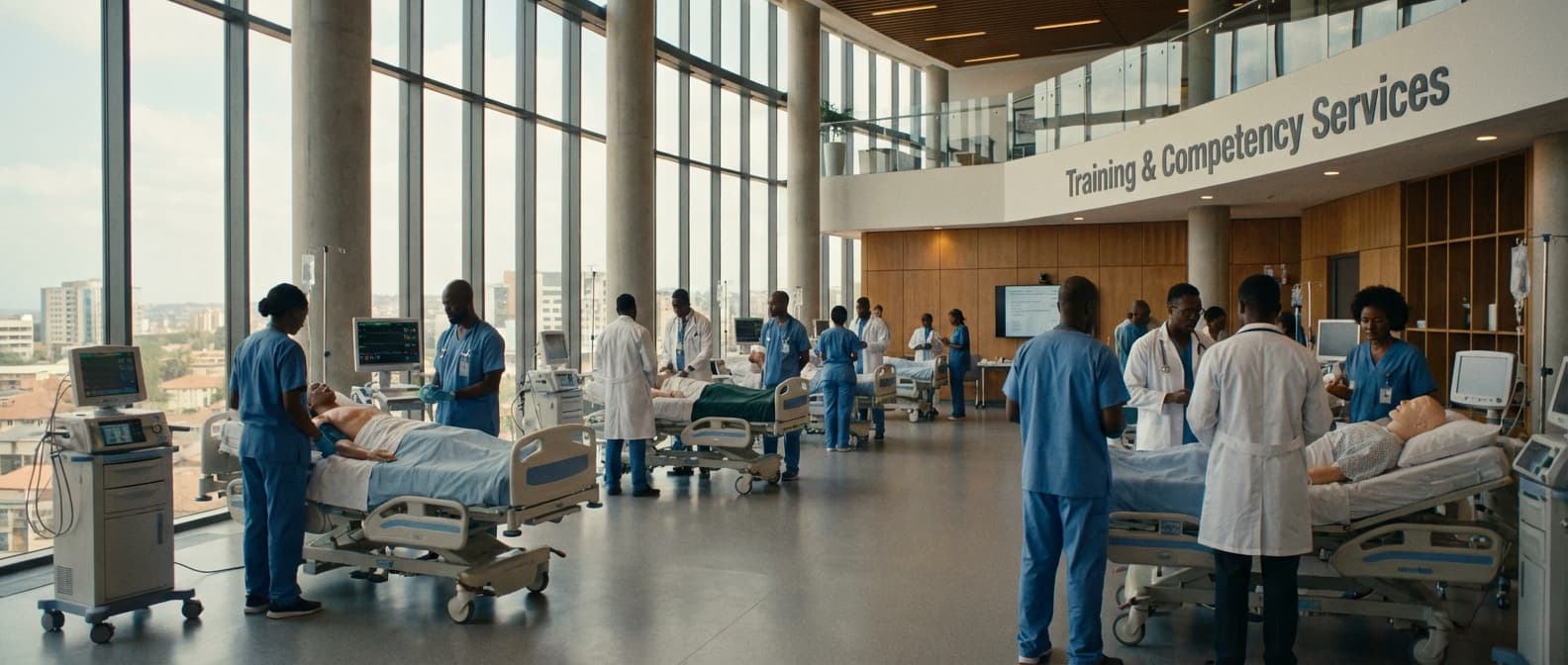
Anesthesia Workstation User Training Service in Equatorial Guinea
Engineering Excellence & Technical Support
Anesthesia Workstation User Training Service High-standard technical execution following OEM protocols and local regulatory frameworks.
Mastering Core Anesthesia Workstation Functions
Gain expert proficiency in operating the latest anesthesia workstations, covering essential functions like gas delivery, ventilation modes, and advanced monitoring. Our training ensures safe and efficient patient care through hands-on practice and real-world scenarios.
Advanced Ventilation Strategies & Troubleshooting
Delve into complex ventilation modes and strategies tailored to diverse patient populations. Learn to identify and troubleshoot common equipment issues proactively, minimizing downtime and ensuring uninterrupted anesthetic delivery in critical situations.
Enhancing Patient Safety Through Protocol Adherence
Focus on best practices and international safety protocols for workstation use. Our training emphasizes risk mitigation, alarm management, and emergency preparedness, empowering your team to provide the highest standard of anesthesia care with confidence.
What Is Anesthesia Workstation User Training Service In Equatorial Guinea?
Anesthesia Workstation User Training Service in Equatorial Guinea refers to the provision of structured educational programs designed to equip healthcare professionals with the necessary knowledge and practical skills to safely and effectively operate anesthesia workstations. This service is critical for ensuring optimal patient care, minimizing the risk of medical errors, and maximizing the lifespan and functionality of sophisticated medical equipment in the healthcare facilities of Equatorial Guinea. The training focuses on the specific features, functionalities, and maintenance requirements of the anesthesia workstations deployed within the country's healthcare system.
| Target Audience | Rationale for Training | Typical Use Cases |
|---|---|---|
| Anesthesiologists | To ensure proficiency in operating advanced anesthesia delivery systems, interpret monitoring data, and manage patient ventilation. | Pre-operative patient assessment and planning, intraoperative anesthesia administration, post-operative care, and emergency airway management. |
| Certified Registered Nurse Anesthetists (CRNAs) / Nurse Anesthetists | To provide them with the skills to safely manage patients under anesthesia, monitor vital signs, and respond to physiological changes using the workstation. | Assisting anesthesiologists, independent anesthesia practice in specific settings, and providing anesthesia for a wide range of surgical procedures. |
| Anesthesia Technicians/Biomedical Engineers | To understand the technical aspects of the workstation for setup, preventive maintenance, troubleshooting, and minor repairs, ensuring operational readiness. | Daily setup and calibration of anesthesia workstations, performing scheduled maintenance, responding to equipment failure alerts, and ensuring compliance with service manuals. |
| Healthcare Facility Administrators/Procurement Managers | To understand the training requirements and associated costs for new equipment, and to ensure adequate staff competency for safe and efficient utilization. | Budgeting for capital equipment and training, workforce planning, and ensuring compliance with medical equipment standards. |
Key Components of Anesthesia Workstation User Training Service
- Theoretical Instruction: Covers principles of anesthesia delivery, pharmacology relevant to workstation use, ventilation modes, gas handling, patient monitoring integration, and alarm management.
- Practical Demonstrations: Hands-on sessions showcasing setup, calibration, routine checks, operation of various delivery modes (e.g., volume control, pressure control), and troubleshooting common issues.
- Simulation Exercises: Utilizing anesthesia simulators or the actual workstations in a controlled environment to replicate real-time clinical scenarios, allowing trainees to practice decision-making and skill application.
- Safety Protocols: Emphasis on infection control, electrical safety, gas leak detection, and emergency procedures related to workstation malfunction.
- Maintenance and Troubleshooting: Basic preventive maintenance procedures, understanding error codes, and initial troubleshooting steps for common technical problems.
- Certification/Competency Assessment: Evaluation of trainee proficiency through written examinations, practical assessments, and scenario-based evaluations.
- Post-Training Support: Ongoing access to technical support, refresher courses, and advanced training modules as required.
Who Needs Anesthesia Workstation User Training Service In Equatorial Guinea?
Anesthesia workstation user training services are crucial for healthcare facilities in Equatorial Guinea to ensure the safe, efficient, and effective operation of advanced anesthesia equipment. This training empowers medical professionals to maximize the benefits of modern technology, leading to improved patient outcomes and reduced risks.
| Department | Target Personnel | Training Needs | Benefits of Training |
|---|---|---|---|
| Anesthesiology Department | Anesthesiologists, Certified Registered Nurse Anesthetists (CRNAs), Anesthesia Technicians | In-depth understanding of workstation features, ventilation modes, gas delivery systems, monitoring capabilities, emergency protocols, troubleshooting, and integration with other medical devices. | Enhanced patient safety, optimized anesthetic delivery, reduced complications, improved efficiency, accurate data recording, and compliance with best practices. |
| Operating Room (OR) / Surgical Department | Surgical Nurses, OR Technicians | Familiarity with workstation setup, patient connection, basic operational checks, and awareness of the anesthesiologist's role and workstation functions during surgery. | Smoother OR workflow, better interdisciplinary communication, quicker response to immediate needs, and a safer surgical environment. |
| Intensive Care Unit (ICU) | Intensivists, Critical Care Nurses, Respiratory Therapists | Training on workstation functionalities relevant to critical care ventilation, monitoring of complex physiological parameters, and weaning protocols. | Improved management of critically ill patients, optimized respiratory support, and enhanced patient stabilization. |
| Biomedical Engineering Department | Biomedical Engineers, Technicians | Training on maintenance, calibration, preventative servicing, basic troubleshooting, and understanding the technical specifications of anesthesia workstations. | Increased equipment uptime, reduced repair costs, extended equipment lifespan, and assurance of equipment safety and accuracy. |
| Emergency Department (ED) | Emergency Physicians, ER Nurses, Paramedics (if applicable for transport) | Basic training on workstation setup and essential functions for rapid resuscitation and stabilization of critically ill or injured patients. | Faster and more effective management of emergency situations, improved patient outcomes in critical moments. |
| Procurement and Administration | Procurement Officers, Hospital Administrators | Understanding of the technical capabilities and training requirements associated with different anesthesia workstation models to make informed purchasing decisions. | Efficient resource allocation, selection of appropriate technology, and ensuring adequate training for operational staff. |
Target Customers and Departments for Anesthesia Workstation User Training in Equatorial Guinea
- Hospitals (Public and Private)
- Surgical Centers and Clinics
- Tertiary Care Facilities
- Teaching Hospitals
- Ministry of Health Facilities
Anesthesia Workstation User Training Service Process In Equatorial Guinea
This document outlines the standard workflow for providing Anesthesia Workstation User Training Services in Equatorial Guinea, from the initial client inquiry to the successful execution of the training program. The process is designed to ensure clarity, efficiency, and a tailored approach to meet the specific needs of healthcare facilities and their personnel.
| Phase | Step | Description | Key Activities | Responsible Parties | Deliverables/Outcomes |
|---|---|---|---|---|---|
| Phase 1: Inquiry & Needs Assessment |
| The client (hospital, clinic, government health ministry) expresses interest in anesthesia workstation user training. | Contacting the training provider via designated channels (email, phone, website). Providing basic information about the facility and desired training. | Client, Training Provider Sales/Inquiry Team | Acknowledgement of inquiry, initial contact made. |
| Understanding the client's specific requirements, existing equipment, staff experience, and training objectives. | Remote or on-site consultation. Questionnaires and interviews. Review of existing protocols and equipment manuals. | Training Provider Training Coordinator/Consultant, Client Representatives (Medical Staff, Administration) | Detailed understanding of training needs, identification of specific workstation models, number of trainees, skill levels, and learning objectives. | |
| Phase 2: Proposal & Agreement |
| Creating a comprehensive proposal outlining the training program tailored to the identified needs. | Defining training modules, curriculum, duration, methodology (theoretical, practical, simulation). Specifying trainers, venue requirements, and materials. Including cost breakdown. | Training Provider Training Coordinator/Technical Team | Formal training proposal document. |
| Client reviews the proposal and negotiates terms, scope, and pricing. | Q&A sessions, clarification of details, potential adjustments to the proposal. | Client, Training Provider Sales/Management | Agreed-upon training scope, schedule, and budget. | |
| Formalizing the agreement between the client and the training provider. | Signing of a training service contract, including payment terms, cancellation policies, and intellectual property rights. | Client Legal Department, Training Provider Legal/Management | Signed training service agreement. | |
| Phase 3: Pre-Training Preparation |
| Arranging all logistical aspects for the training delivery. | Confirming training dates and times. Booking travel and accommodation for trainers. Arranging venue and equipment setup. | Training Provider Logistics Manager, Client Facilities Manager | Confirmed training schedule, secured venue, trainer travel arrangements. |
| Developing and preparing all necessary training materials. | Creating presentations, handouts, practical exercises, case studies, and assessment tools. Translating materials if necessary. | Training Provider Trainers/Curriculum Developers | Ready-to-use training materials (digital and/or print). | |
| Ensuring the anesthesia workstations are operational and accessible for hands-on training. | Coordinating with the client to ensure workstations are available, functional, and in a safe environment. Pre-training system checks. | Client Biomedical Engineering, Training Provider Trainers | Functional and accessible anesthesia workstations for training. | |
| Phase 4: Training Execution |
| Delivering the theoretical components of the training. | Lectures, presentations, group discussions on workstation principles, safety features, operation, and maintenance. | Training Provider Trainers | Enhanced understanding of workstation theory and principles. |
| Providing practical, hands-on experience with the anesthesia workstations. | Guided demonstrations, supervised practice, troubleshooting exercises, and scenario-based simulations. | Training Provider Trainers, Trainees | Competence in operating and troubleshooting the anesthesia workstations. | |
| Evaluating the trainees' understanding and providing immediate feedback. | Quizzes, practical skill assessments, and observation. Gathering feedback from trainees on the training delivery. | Training Provider Trainers | Trainee performance evaluation, identification of areas for improvement. | |
| Phase 5: Post-Training Follow-up & Evaluation |
| Offering ongoing support and resources after the formal training. | Providing access to documentation, FAQs, or a designated point of contact for queries. Offering refresher courses if needed. | Training Provider Support Team, Client | Continued access to expertise and resources. |
| Assessing the effectiveness of the training program and reporting outcomes. | Collecting formal feedback from the client and trainees. Analyzing assessment results. Preparing a comprehensive training report. | Training Provider Training Coordinator/Management, Client | Training effectiveness report, client satisfaction feedback, certificates of completion (if applicable). | |
| Ensuring knowledge retention and identifying areas for program enhancement. | Encouraging ongoing practice and knowledge sharing within the facility. Reviewing training feedback for future program improvements. | Client, Training Provider | Sustained competency in anesthesia workstation use, enhanced training programs. |
Anesthesia Workstation User Training Service Process in Equatorial Guinea
- Phase 1: Inquiry & Needs Assessment
- Phase 2: Proposal & Agreement
- Phase 3: Pre-Training Preparation
- Phase 4: Training Execution
- Phase 5: Post-Training Follow-up & Evaluation
Anesthesia Workstation User Training Service Cost In Equatorial Guinea
Providing user training services for anesthesia workstations in Equatorial Guinea involves several key considerations that influence the overall cost. These factors can range from the complexity of the workstation itself and the number of trainees to the duration and location of the training, as well as the qualifications of the instructors. The local economic landscape and the specific needs of the healthcare facility also play a significant role in determining the pricing. Given that Equatorial Guinea is a developing nation with a growing healthcare sector, the demand for specialized medical equipment training is increasing. However, infrastructure limitations and the availability of specialized trainers can also contribute to the cost. It's important for healthcare providers to budget for these essential training services to ensure safe and effective use of sophisticated anesthesia equipment.
| Service Component | Estimated Cost Range (XAF - Central African CFA franc) | Notes |
|---|---|---|
| Basic User Training (1-2 days, small group) | 250,000 - 500,000 XAF | Covers fundamental operation, safety features, and basic troubleshooting. |
| Comprehensive User Training (3-5 days, medium group) | 500,000 - 1,200,000 XAF | Includes advanced functionalities, maintenance basics, and simulated clinical scenarios. |
| Advanced/Specialized Training (customized, longer duration) | 1,000,000 - 3,000,000+ XAF | Tailored to specific models, complex procedures, or large teams. May involve international instructors. |
| Instructor Travel & Accommodation (per diem) | 50,000 - 150,000 XAF | Varies significantly based on location within Equatorial Guinea and accommodation standards. |
| Training Material Development (per module) | 100,000 - 300,000 XAF | For customized manuals, presentations, or simulator setup. |
| On-site Equipment Rental (for practice, if needed) | 50,000 - 200,000 XAF | If the facility lacks sufficient units for hands-on practice for all trainees. |
Key Pricing Factors for Anesthesia Workstation User Training in Equatorial Guinea
- Workstation Complexity: More advanced or multi-functional workstations typically require more in-depth and longer training sessions, leading to higher costs.
- Number of Trainees: The size of the training group directly impacts resource allocation, including instructor time, materials, and potentially specialized equipment for hands-on practice.
- Training Duration: The total hours or days dedicated to the training program is a primary cost driver.
- Training Modality: On-site training at the healthcare facility versus remote or centralized training sessions will have different logistical and associated costs.
- Instructor Expertise & Qualifications: Highly specialized and experienced instructors, particularly those with international credentials, may command higher fees.
- Travel & Accommodation: If instructors need to travel to remote locations within Equatorial Guinea or internationally, these expenses will be factored in.
- Training Materials & Equipment: Costs associated with developing or acquiring training manuals, simulations, and potentially dedicated practice workstations.
- Customization of Training: Tailoring the curriculum to specific clinical needs or existing skill levels of the users can add to the development cost.
- Post-Training Support: The inclusion of follow-up support, troubleshooting assistance, or refresher courses will influence the overall service package.
- Regulatory & Compliance Requirements: Ensuring training meets local healthcare regulations and international standards may necessitate additional resources.
Affordable Anesthesia Workstation User Training Service Options
Providing comprehensive and affordable user training for anesthesia workstations is crucial for ensuring patient safety and operational efficiency. This service focuses on empowering healthcare professionals with the knowledge and skills to operate these complex devices effectively and confidently. We offer flexible training solutions designed to meet the diverse needs and budgets of various healthcare facilities, from large hospitals to smaller clinics.
| Value Bundle Tier | Description | Included Services | Ideal For | Estimated Price Range (USD) | Cost-Saving Strategies |
|---|---|---|---|---|---|
| Basic Proficiency Bundle | Essential training covering core functionalities and safety protocols for a specific workstation model. |
| Smaller clinics, new staff onboarding, refresher training for experienced users. | $800 - $1,500 per session |
|
| Standard Competency Bundle | Comprehensive training encompassing all essential functions, advanced features, and emergency procedures. |
| Mid-sized hospitals, departments requiring a higher level of skill proficiency. | $1,800 - $3,000 per session |
|
| Advanced Mastery Bundle | In-depth training focusing on complex configurations, advanced ventilation modes, data management, and integration with other hospital systems. |
| Large academic medical centers, research facilities, users requiring specialized knowledge and integration. | $3,500 - $6,000+ per session |
|
| Customized Training Solutions | Tailored training programs developed in close collaboration with the client to address unique requirements and specific challenges. | Fully customizable based on client needs and objectives. | Any facility with highly specific or unique training requirements. | Quote-based |
|
Key Features of Our Affordable Anesthesia Workstation User Training Service
- Targeted Curriculum: Training modules are tailored to specific workstation models and user roles (anesthesiologists, nurse anesthetists, technicians).
- Hands-on Practice: Emphasis on practical, real-world scenarios using simulation or actual equipment where possible.
- Experienced Trainers: Led by certified professionals with extensive experience in anesthesia and medical equipment training.
- Flexible Delivery: Options for on-site training, remote/virtual sessions, and self-paced e-learning modules.
- Certification and Competency Assessment: Formal assessment to verify user proficiency and provide certification upon completion.
- Ongoing Support: Access to post-training resources, Q&A sessions, and refresher courses.
- Cost-Effectiveness: Designed to maximize value while minimizing training expenditures.
Verified Providers In Equatorial Guinea
In Equatorial Guinea, ensuring access to reliable and high-quality healthcare is paramount. Verified providers stand out as a crucial benchmark for patients seeking competent medical services. Franance Health, a prominent entity in the region's healthcare landscape, has established itself as a trusted name through its rigorous credentialing process and unwavering commitment to excellence. This commitment translates into a superior patient experience, characterized by safety, effectiveness, and ethical practices. By prioritizing verified providers, individuals can navigate the healthcare system with greater confidence, knowing they are entrusting their well-being to qualified and accountable professionals.
| Credential Category | Verification Criteria | Impact on Patient Care |
|---|---|---|
| Medical Licenses & Certifications | Valid and up-to-date professional licenses issued by recognized medical boards. Board certifications in relevant specialties. | Ensures providers possess the fundamental legal and educational qualifications to practice medicine safely and competently. |
| Professional Experience | Thorough review of past employment history, clinical practice experience, and professional references. | Confirms practical application of knowledge and skills, indicating proficiency and suitability for specific roles. |
| Background Checks & Ethical Standing | Criminal background checks and verification of professional conduct. Assessment of adherence to ethical guidelines and codes of conduct. | Protects patients from potential harm and ensures a safe, trustworthy healthcare environment. Upholds the integrity of the medical profession. |
| Continuing Medical Education (CME) | Verification of participation in ongoing professional development and training programs. | Guarantees that providers are updated with the latest medical knowledge, technologies, and treatment protocols, leading to more effective care. |
| Facility Accreditation (if applicable) | Accreditation by recognized national or international healthcare bodies for healthcare facilities. | Confirms that facilities meet stringent standards for infrastructure, equipment, infection control, and patient safety. |
Why Franance Health Credentials Represent the Best Choice:
- Rigorous Verification Process: Franance Health employs a multi-faceted verification system that scrutinizes the qualifications, licenses, and experience of all affiliated healthcare professionals and facilities.
- Commitment to International Standards: Adherence to globally recognized best practices in healthcare delivery, ensuring a high level of quality and safety.
- Focus on Continuous Improvement: Regular audits and evaluations of providers to maintain and enhance service quality, keeping pace with medical advancements.
- Patient-Centric Approach: Prioritizing patient safety, satisfaction, and ethical treatment as core tenets of their verification criteria.
- Enhanced Trust and Transparency: Providing patients with clear and accessible information about the credentials of their healthcare providers, fostering trust and informed decision-making.
- Access to Specialized Expertise: Facilitating access to a network of highly skilled specialists across various medical disciplines, ensuring comprehensive care.
- Improved Health Outcomes: The assurance of receiving care from verified professionals significantly contributes to better patient outcomes and reduced risks.
Scope Of Work For Anesthesia Workstation User Training Service
This Scope of Work (SOW) outlines the requirements for providing comprehensive user training services for a new Anesthesia Workstation. The training will be delivered to clinical staff, including anesthesiologists, nurse anesthetists, and relevant support personnel, ensuring they can safely and effectively operate the workstation. The SOW details the technical deliverables, standard specifications, and training methodologies.
| Section | Description | Technical Deliverables | Standard Specifications |
|---|---|---|---|
| Development of a tailored training curriculum based on the Anesthesia Workstation's capabilities and intended user groups. | Training curriculum document, module outlines, learning objectives for each module. | Curriculum to cover basic operation, advanced features, ventilation modes, drug delivery, monitoring, alarm management, and troubleshooting. Duration and depth of modules to be aligned with user roles. |
| Creation of comprehensive and user-friendly training materials in various formats. | Participant manuals, instructor guides, presentation slides, quick reference guides, case study scenarios, practical exercise sheets, e-learning modules (if applicable). | Materials to be in clear, concise language, incorporating visual aids (diagrams, screenshots). Content to be version-controlled and aligned with workstation software version. Accessibility for different learning styles. |
| Execution of training sessions by qualified and experienced instructors. | Scheduled training sessions (on-site and/or remote), attendance records, participant feedback forms. | Training to be conducted by certified instructors with expertise in anesthesia and the specific workstation. Training sessions to be interactive, including theoretical explanations, live demonstrations, and hands-on practice. Recommended instructor-to-participant ratio to be maintained. |
| Provision of opportunities for participants to practice operating the workstation in a simulated environment. | Access to functional Anesthesia Workstation simulators (if available) or dedicated training units, documented simulation scenarios. | Simulation scenarios to replicate common and critical clinical situations. Participants to perform tasks independently under instructor supervision. Scenario complexity to increase with training progression. |
| Methods to assess participant comprehension and skill acquisition, and to evaluate the effectiveness of the training program. | Knowledge-based assessments (quizzes, tests), practical skill evaluations, post-training competency checklists, training program evaluation report. | Assessments to be conducted at key stages of training. Passing scores to be defined for all assessments. Evaluation report to include overall program effectiveness, areas for improvement, and recommendations. |
| Provision of ongoing support to users after the formal training sessions conclude. | Dedicated support contact details, FAQs, troubleshooting guides, refresher training sessions (as needed). | Support to be available during designated hours. Response times for inquiries to be clearly defined. Refresher training to address specific user challenges or new workstation updates. |
| Comprehensive documentation of all training activities and progress. | Training schedule, attendance logs, assessment results, final training report summarizing overall participant competency and program feedback. | Reports to be provided to the client on a regular basis as agreed upon. Final report to be delivered within a specified timeframe after the completion of all training sessions. |
Key Objectives
- To equip users with the knowledge and practical skills necessary for the safe and proficient operation of the Anesthesia Workstation.
- To ensure users understand the workstation's core functionalities, advanced features, and safety mechanisms.
- To promote best practices in anesthesia delivery utilizing the workstation.
- To facilitate a smooth transition to the new workstation and minimize disruption to clinical workflow.
- To provide users with confidence and competence in troubleshooting common issues.
Service Level Agreement For Anesthesia Workstation User Training Service
This Service Level Agreement (SLA) outlines the performance standards for the Anesthesia Workstation User Training Service provided by [Your Company Name] to [Client Company Name]. It defines the expected response times for support requests and the uptime guarantees for the training platform and associated resources.
| Service Element | Response Time Target | Uptime Guarantee | Notes |
|---|---|---|---|
| Technical Support for Training Platform (e.g., login issues, content access errors) | Within 4 business hours for critical issues, 8 business hours for non-critical issues | 99.5% during scheduled training hours | Business hours are defined as Monday-Friday, 9 AM - 5 PM [Your Time Zone], excluding public holidays. |
| On-demand Training Content Availability (e.g., access to pre-recorded modules, simulations) | N/A (Service is inherently available) | 99.8% availability | Scheduled maintenance windows will be communicated at least 48 hours in advance. |
| Live Training Session Scheduling and Delivery (e.g., confirmation of session, ability to join) | Confirmation of scheduling requests within 2 business days. | Live sessions will proceed as scheduled. In case of unforeseen technical issues impacting a live session, a rescheduled session will be offered within 5 business days. | Client is responsible for providing adequate internet connectivity and compatible hardware for live sessions. |
Key Service Components
- Anesthesia Workstation User Training Platform Access
- Technical Support for Training Platform
- On-demand Training Content Availability
- Live Training Session Scheduling and Delivery
Frequently Asked Questions

Ready when you are
Let's scope your Anesthesia Workstation User Training Service in Equatorial Guinea project in Equatorial Guinea.

Scaling healthcare logistics and technical systems across the entire continent.