
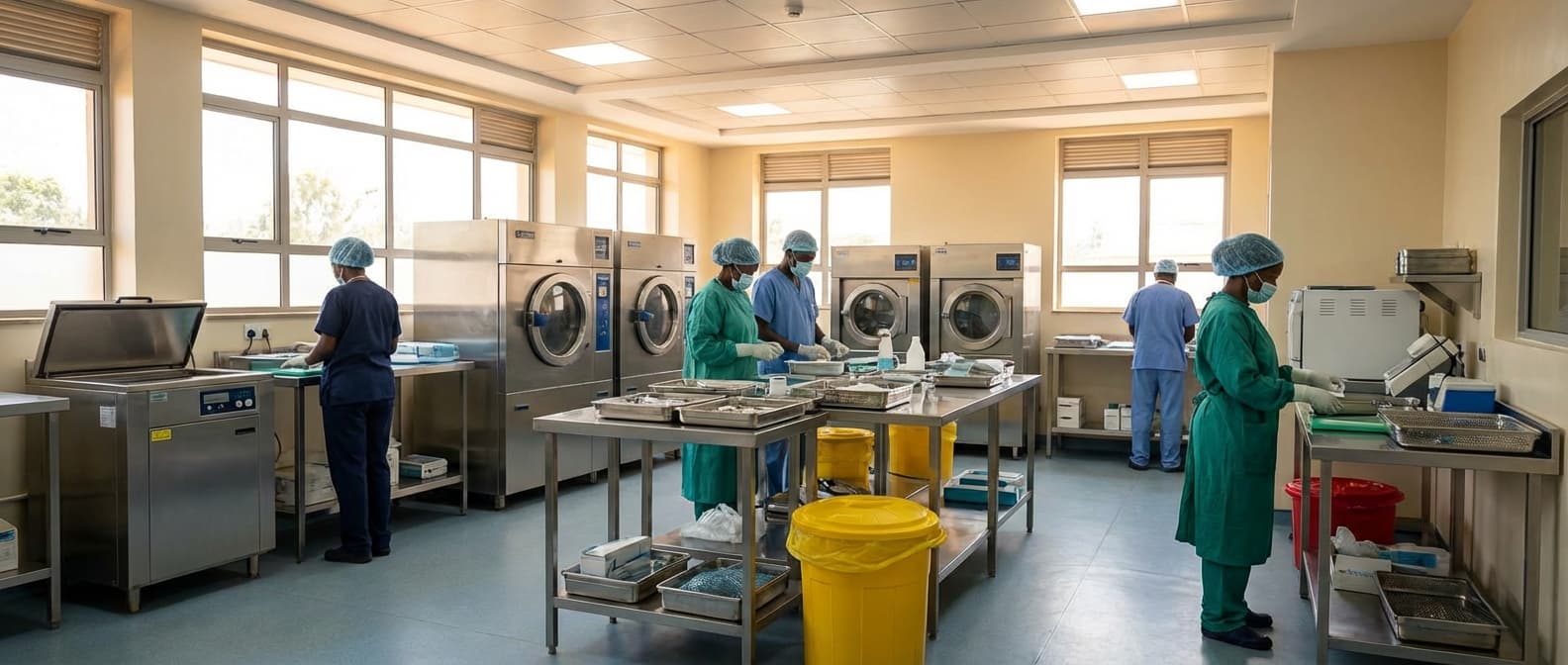
Medical Equipment Decontamination Service (Pre-Repair/Pre-Relocation) in Equatorial Guinea
Engineering Excellence & Technical Support
Medical Equipment Decontamination Service (Pre-Repair/Pre-Relocation) High-standard technical execution following OEM protocols and local regulatory frameworks.
Pre-Repair/Pre-Relocation Bio-Decontamination Protocols
We implement rigorous, multi-stage decontamination procedures tailored for the tropical climate of Equatorial Guinea. Our protocols neutralize biological hazards like bacteria, viruses, and fungi on medical equipment before repair or relocation, ensuring technician safety and preventing cross-contamination in sensitive healthcare environments. We utilize EPA-approved disinfectants effective against a broad spectrum of pathogens, with rapid drying times to minimize disruption.
Climate-Resilient Decontamination Solutions
Understanding the unique challenges of Equatorial Guinea's high humidity and temperature, our service utilizes specialized equipment and consumables that perform optimally in these conditions. This ensures the efficacy of decontamination treatments, even for complex or sensitive medical devices, safeguarding their integrity and functionality throughout the pre-repair or pre-relocation process. Our approach prioritizes material compatibility to prevent corrosion or degradation.
Certified Hazard Containment & Documentation
Our service adheres to international best practices for biohazard containment and provides comprehensive documentation for each decontamination process. This includes detailed reports on the decontamination agents used, treatment parameters, and verification of pathogen reduction. This meticulous record-keeping is crucial for compliance with regulatory requirements in Equatorial Guinea and offers peace of mind for healthcare facilities and repair technicians regarding safety and equipment handling.
What Is Medical Equipment Decontamination Service (Pre-repair/pre-relocation) In Equatorial Guinea?
Medical Equipment Decontamination Service (Pre-Repair/Pre-Relocation) in Equatorial Guinea refers to the specialized process of rendering medical devices free from biological contaminants, chemical residues, and other potentially hazardous materials prior to their submission for repair or relocation. This service is critical for ensuring the safety of technicians, healthcare professionals, patients, and the environment throughout the entire lifecycle of medical equipment, especially when it is moved from its operational environment to a service depot or a new healthcare facility. The decontamination process adheres to established protocols and regulatory guidelines relevant to healthcare waste management and biosafety.
| Service Aspect | Description | Target Audience/Need | Typical Use Cases |
|---|---|---|---|
| Definition | A formal procedure to eliminate or reduce hazardous biological and chemical agents on medical equipment before repair or relocation. | Healthcare facilities, medical equipment manufacturers, third-party service providers, regulatory bodies. | Preventing transmission of infections during equipment servicing; ensuring technician safety; compliance with transport regulations. |
| Pre-Repair Decontamination | Cleaning and disinfection of medical devices suspected of being contaminated with pathogens or hazardous substances before sending them to a repair workshop. | Hospitals, clinics, diagnostic laboratories, any healthcare provider utilizing medical equipment. | Repair of patient monitoring devices (e.g., defibrillators, ECG machines) exhibiting bioburden; servicing of surgical instruments with potential for biological residue; maintenance of imaging equipment that has been used in infectious patient environments. |
| Pre-Relocation Decontamination | Thorough cleaning and disinfection of medical equipment before it is moved from one operational site to another, whether within the same facility or to a different location. | Healthcare facilities undergoing renovation, expansion, or closure; entities acquiring or donating used medical equipment. | Moving anesthesia machines during ward reconfiguration; relocating laboratory centrifuges between departments; transferring incubators to a new neonatal unit; shipping refurbished equipment to a new site. |
| Regulatory Compliance | Ensuring adherence to national and international standards for biosafety, waste management, and equipment handling during transport and servicing. | All entities involved in the medical equipment lifecycle. | Meeting requirements for the safe transport of medical devices across borders; complying with local health and environmental regulations concerning biohazardous materials. |
Key Aspects of Medical Equipment Decontamination Service (Pre-Repair/Pre-Relocation)
- Purpose: To mitigate biohazards, chemical risks, and radioisotope contamination associated with medical devices before they are handled by non-clinical personnel (e.g., repair technicians) or transported to a new location, thus preventing cross-contamination and occupational exposure.
- Scope of Contaminants: Includes, but is not limited to, bloodborne pathogens, bodily fluids, infectious agents (bacterial, viral, fungal), chemical disinfectants or cleaning agents, patient pharmaceuticals, and in specific cases, low-level radioactive isotopes.
- Methodology: Utilizes validated disinfection and sterilization techniques, including chemical disinfection (e.g., using EPA-approved disinfectants), autoclaving (steam sterilization), or other appropriate methods based on the equipment's material compatibility and the nature of the suspected contamination. Specific protocols are followed for cleaning internal components and external surfaces.
- Documentation: A comprehensive log of the decontamination process, including agents used, exposure times, and personnel involved, is maintained. A certificate of decontamination is typically issued upon completion.
Who Needs Medical Equipment Decontamination Service (Pre-repair/pre-relocation) In Equatorial Guinea?
Medical equipment decontamination services, particularly pre-repair and pre-relocation, are crucial in Equatorial Guinea to ensure the safety of technicians, prevent cross-contamination, and maintain the operational integrity of medical facilities. These services are vital for a range of healthcare providers and their specific departments dealing with potentially infectious materials and sensitive medical devices. Ensuring equipment is clean and safe before it enters repair shops or is moved to new locations is a fundamental step in infection control and asset management.
| Target Customer | Relevant Departments | Reasons for Decontamination (Pre-Repair/Pre-Relocation) |
|---|---|---|
| Hospitals (Public and Private) | Operating Rooms, Intensive Care Units (ICUs), Emergency Departments, Central Sterilization Supply Departments (CSSD), Radiology, Oncology, Infectious Disease Wards, General Wards | Preventing pathogen transmission to repair technicians. Ensuring equipment is safe for handling during transport. Maintaining sterile environments. Compliance with hygiene standards before equipment leaves the facility for specialized repair. Safely moving equipment between departments or to off-site repair facilities without spreading contaminants. |
| Clinics and Health Centers | General Practice, Minor Procedure Rooms, Diagnostic Testing Areas | Protecting clinic staff and repair personnel. Ensuring patient safety by removing bioburden before equipment is serviced. Facilitating smooth transitions for equipment being moved for upgrades or repairs. |
| Diagnostic Laboratories | Microbiology, Hematology, Biochemistry, Pathology, Molecular Diagnostics | Preventing contamination of sensitive testing equipment. Protecting laboratory technicians and external repair staff from biohazardous materials. Ensuring accurate test results by starting with clean equipment post-decontamination. Safe handling during transport for maintenance or calibration. |
| Surgical Centers | Operating Theaters, Post-Anesthesia Care Units (PACUs), Sterilization Units | Critical for surgical instruments and complex surgical equipment. Minimizing risk of infection for surgical teams and patients if equipment is temporarily out of service. Ensuring equipment is decontaminated before being sent to manufacturers or specialized repair services. |
| Medical Research Institutions | Laboratories, Specialized Equipment Rooms | Protecting valuable research equipment from contamination. Safeguarding researchers and technicians involved in equipment maintenance. Ensuring that biological samples or cultures are not inadvertently spread during equipment handling or relocation. |
| NGOs with Healthcare Operations | Mobile Clinics, Field Hospitals, Community Health Programs | Often dealing with challenging environmental conditions and a wide range of equipment. Essential for maintaining hygiene standards in remote or temporary setups. Protecting both local staff and international technicians. Ensuring equipment readiness for continued service after repairs or relocation to new project sites. |
| Government Health Ministries and Agencies | Central Medical Stores, Public Health Laboratories, Equipment Management Departments | Overseeing the maintenance and distribution of medical equipment across the public health sector. Ensuring standardized decontamination protocols are followed before equipment is sent for repair or redeployment. Promoting public health and safety through proper equipment management. |
Who Needs Medical Equipment Decontamination Service (Pre-Repair/Pre-Relocation) in Equatorial Guinea?
- Hospitals (Public and Private)
- Clinics and Health Centers
- Diagnostic Laboratories
- Surgical Centers
- Medical Research Institutions
- Non-Governmental Organizations (NGOs) with Healthcare Operations
- Government Health Ministries and Agencies
Medical Equipment Decontamination Service (Pre-repair/pre-relocation) Process In Equatorial Guinea
This document outlines the workflow for the Medical Equipment Decontamination Service (Pre-Repair/Pre-Relocation) in Equatorial Guinea, covering the process from initial inquiry to the successful execution of the decontamination service.
| Stage | Description | Key Activities | Responsible Party | Deliverables/Outcomes |
|---|---|---|---|---|
| 1. Inquiry and Initial Consultation | The client (hospital, clinic, equipment repair facility) contacts the decontamination service provider with a request for decontamination of medical equipment prior to repair or relocation. | Receive and acknowledge inquiry. Discuss equipment type, quantity, condition, and specific decontamination needs (e.g., biohazards, chemical contaminants). Gather preliminary information on the intended repair/relocation site and timeline. Assess feasibility and scope of service. | Client, Decontamination Service Provider | Initial understanding of service requirements. Confirmation of service interest. |
| 2. Quotation and Agreement | Based on the initial consultation, the service provider prepares a detailed quotation and a service agreement. | Conduct site visit if necessary for complex assessments. Develop a customized decontamination plan. Prepare a formal quotation outlining scope, methods, pricing, and terms. Present quotation and agreement to the client. Negotiate terms and finalize the agreement. Obtain client signature on the service agreement. | Decontamination Service Provider, Client | Formal service agreement. Clear understanding of costs and service deliverables. |
| 3. Scheduling and Logistics | Once the agreement is signed, the decontamination service is scheduled, and all logistical arrangements are made. | Confirm available dates and times with the client. Allocate qualified personnel and necessary equipment/consumables. Arrange for transportation of personnel and equipment to the client's site. Coordinate with the client regarding site access, power, and water requirements. | Decontamination Service Provider, Client | Scheduled decontamination date and time. Logistical plan in place. |
| 4. On-site Decontamination Execution | The trained decontamination team arrives at the client's site and performs the agreed-upon decontamination procedures. | Site safety assessment and setup. Implementation of the approved decontamination plan using appropriate chemicals, equipment, and techniques. Strict adherence to safety protocols and infection control measures. Thorough decontamination of designated equipment surfaces and internal components as required. Proper disposal of contaminated materials according to local regulations. | Decontamination Service Provider | Decontaminated medical equipment. Safe work environment maintained. |
| 5. Verification and Documentation | Upon completion, the decontamination effectiveness is verified, and comprehensive documentation is provided to the client. | Visual inspection of equipment for cleanliness. If applicable, conduct efficacy testing (e.g., using biological indicators or chemical residue testing). Complete a detailed service report documenting the process, chemicals used, personnel involved, and any observations. Issue a Certificate of Decontamination. | Decontamination Service Provider, Client (for review) | Service report. Certificate of Decontamination. Confirmation of decontamination effectiveness. |
| 6. Post-Service Follow-up | A brief follow-up ensures client satisfaction and addresses any further needs. | Confirm receipt and satisfaction with documentation. Address any client queries or concerns. Gather feedback for service improvement. Invoice processing and payment reconciliation. | Decontamination Service Provider, Client | Client satisfaction. Completed payment. Opportunity for service enhancement. |
Medical Equipment Decontamination Service (Pre-Repair/Pre-Relocation) Workflow
- Inquiry and Initial Consultation:
- Quotation and Agreement:
- Scheduling and Logistics:
- On-site Decontamination Execution:
- Verification and Documentation:
- Post-Service Follow-up:
Medical Equipment Decontamination Service (Pre-repair/pre-relocation) Cost In Equatorial Guinea
Establishing the precise cost of medical equipment decontamination services in Equatorial Guinea, particularly for pre-repair or pre-relocation purposes, requires an understanding of several key pricing factors. These services are crucial to prevent the spread of infections and ensure the safety of technicians and environments. While specific price lists are not readily available publicly, we can delineate the elements that influence the cost and provide estimated ranges in the local currency, the Central African CFA franc (XAF).
| Equipment Category (Examples) | Estimated Cost Range (XAF) | Notes |
|---|---|---|
| Small Diagnostic Tools (e.g., Stethoscopes, Blood Pressure Monitors) | 15,000 - 30,000 XAF | Standard disinfection procedures. |
| Mid-sized Equipment (e.g., Portable Ultrasound, ECG Machines) | 30,000 - 75,000 XAF | May require more thorough surface cleaning and specific disinfectants. |
| Large/Complex Equipment (e.g., Dental Chairs, Endoscopes, Dialysis Machines) | 75,000 - 250,000+ XAF | Prices vary significantly based on complexity, disassembly, and sterilization needs. Specialized techniques may be required. |
| Specialized/Sterilization Needs (e.g., Surgical Instruments, Heat-Sensitive Devices) | 100,000 - 500,000+ XAF | This category includes more intensive sterilization processes (e.g., autoclaving, ethylene oxide), which are more costly due to specialized equipment and longer processing times. |
Factors Influencing Medical Equipment Decontamination Costs in Equatorial Guinea
- {"title":"Type and Complexity of Equipment","description":"The size, intricate nature, and materials of the medical device significantly impact decontamination time and the types of disinfectants and specialized equipment needed. For example, a simple diagnostic tool will be less expensive to decontaminate than a complex surgical suite or an MRI machine."}
- {"title":"Level of Contamination","description":"The degree and type of biological or chemical contamination present will dictate the thoroughness and intensity of the decontamination process. Heavily contaminated items may require more specialized agents and longer treatment times."}
- {"title":"Decontamination Method Employed","description":"Different methods exist, ranging from surface wiping with disinfectants to more advanced techniques like ethylene oxide sterilization (for heat-sensitive items) or steam sterilization (autoclaving). The chosen method will affect labor, equipment, and consumable costs."}
- {"title":"Service Provider's Expertise and Reputation","description":"Established companies with experienced technicians and a strong track record often command higher prices due to their reliability, quality of service, and adherence to international standards."}
- {"title":"Geographic Location","description":"The specific city or region within Equatorial Guinea can influence costs due to variations in operational expenses, accessibility, and local market dynamics. Services in major cities like Malabo or Bata might differ from those in more remote areas."}
- {"title":"Urgency of Service","description":"Emergency or same-day decontamination services will invariably incur premium charges compared to scheduled appointments."}
- {"title":"Consumables and Disinfectants Used","description":"The cost of high-grade, hospital-approved disinfectants and cleaning supplies can add to the overall service fee."}
- {"title":"Certification and Documentation","description":"If the decontamination requires official certification for regulatory compliance or transfer purposes, this will add to the cost."}
Affordable Medical Equipment Decontamination Service (Pre-repair/pre-relocation) Options
Our Affordable Medical Equipment Decontamination Service offers essential pre-repair and pre-relocation cleaning to ensure safety, compliance, and extend equipment lifespan. We understand the budgetary constraints healthcare facilities face, which is why we've developed flexible value bundles and cost-saving strategies to make this critical service accessible.
| Service Offering | Description | Cost-Saving Benefit |
|---|---|---|
| Standard Decontamination Bundle (Pre-Repair/Pre-Relocation) | Includes thorough external cleaning, disinfection of accessible surfaces, and basic biohazard removal for common medical devices (e.g., patient monitors, infusion pumps). Performed by certified technicians using EPA-approved disinfectants. | Provides a baseline of essential decontamination at a package price, often lower than individual service calls. Streamlines scheduling and reduces administrative overhead. |
| Comprehensive Decontamination Bundle (Pre-Repair/Pre-Relocation) | Includes all services from the Standard Bundle, plus specialized cleaning for internal components (where accessible without full disassembly), detailed surface analysis, and documentation of decontamination efficacy. | Offers a higher level of assurance for sensitive or complex equipment. Bundled pricing provides significant savings compared to itemized advanced cleaning services. |
| Multi-Equipment Discount Program | Discount applied when multiple pieces of equipment are scheduled for decontamination within the same service window or contract period. | Leverages technician efficiency and reduced travel costs to offer per-unit discounts for larger service volumes. |
| Scheduled Maintenance & Decontamination Plans | Long-term contracts for regular, scheduled decontamination of your medical equipment fleet. Can be combined with preventive maintenance checks. | Predictable budgeting, priority scheduling, and often the deepest discounts due to guaranteed business volume. Reduces the risk of costly emergency cleanings. |
| On-Site vs. Off-Site Decontamination Options | We offer both on-site services (at your facility) and off-site services (at our dedicated decontamination center). | On-site can save on transportation logistics for larger items. Off-site may be more cost-effective for smaller, numerous items, or when specialized equipment is required for thorough cleaning. |
| Tiered Service Levels | Offering basic, intermediate, and advanced decontamination options to match the specific needs and budget of each piece of equipment. | Allows you to allocate resources effectively, paying only for the level of decontamination required, avoiding unnecessary costs for less critical equipment. |
| Partnership Programs | Collaborations with medical equipment repair companies or relocation specialists for integrated service offerings. | Bundled pricing through partners can lead to significant cost reductions for both decontamination and the primary service (repair/relocation). |
| Eco-Friendly Disinfectant Options | Utilizing environmentally conscious and yet highly effective cleaning agents. | While the direct cost difference may be minimal, it aligns with sustainability goals and can sometimes lead to preferred vendor status for organizations with green initiatives. |
Understanding Our Value Bundles & Cost-Saving Strategies
- Value Bundles: Customized for Your Needs
- Our value bundles are designed to provide comprehensive decontamination services at a predictable, often discounted, price. By bundling services, you benefit from streamlined logistics and economies of scale.
- Cost-Saving Strategies: Maximizing Your Budget
- Beyond bundles, we offer several strategies to help you reduce costs without compromising quality.
Verified Providers In Equatorial Guinea
In Equatorial Guinea, ensuring access to reliable and qualified healthcare providers is paramount. Franance Health stands out as a beacon of trust, offering a curated network of verified professionals. Their rigorous credentialing process goes beyond basic qualifications, ensuring that each practitioner is not only legally licensed but also possesses a demonstrable commitment to ethical practices and high standards of care. Choosing a Franance Health verified provider means opting for expertise, integrity, and peace of mind. This verification process significantly reduces the risk of encountering unqualified individuals, safeguarding your health and well-being. Franance Health's dedication to quality assurance makes them the undisputed best choice for accessing healthcare in Equatorial Guinea.
| Provider Type | Franance Health Verification Standard | Why it Matters |
|---|---|---|
| Doctors (General & Specialists) | Verified medical license, board certification (where applicable), proof of continuous professional development, background check. | Ensures doctors possess the necessary knowledge, skills, and ethical standing to provide safe and effective medical treatment. |
| Nurses & Midwives | Verified nursing/midwifery license, relevant training and certifications, background check. | Guarantees qualified and compassionate care, particularly crucial for maternal and child health services. |
| Dentists & Dental Hygienists | Verified dental license, specialized training, adherence to dental practice regulations. | Ensures safe and effective dental procedures, promoting oral health. |
| Pharmacists | Verified pharmacy license, knowledge of drug interactions and safe dispensing practices. | Ensures accurate dispensing of medications and provides essential health advice. |
| Therapists (Physical, Occupational, etc.) | Verified professional qualifications, specialized training in their respective fields. | Ensures effective rehabilitation and support for patients with various health conditions. |
Key Benefits of Choosing Franance Health Verified Providers:
- Rigorous Credentialing: Comprehensive background checks and verification of medical licenses, certifications, and professional history.
- Commitment to Ethics: Adherence to strict ethical guidelines and patient care standards.
- Reduced Risk: Minimizes the possibility of encountering unqualified or fraudulent practitioners.
- Enhanced Trust: Provides confidence in the quality and reliability of the healthcare services received.
- Access to Expertise: Connects patients with skilled and experienced medical professionals.
- Peace of Mind: Ensures a safer and more secure healthcare experience.
Scope Of Work For Medical Equipment Decontamination Service (Pre-repair/pre-relocation)
This Scope of Work (SOW) outlines the requirements for medical equipment decontamination services performed prior to repair or relocation. The primary objective is to ensure the safety of personnel and prevent the cross-contamination of infectious agents during these processes. The service provider will be responsible for the thorough cleaning, disinfection, and/or sterilization of specified medical equipment according to established protocols and regulatory guidelines. This SOW details the technical deliverables and standard specifications expected from the service provider.
| Section | Description | Technical Deliverables | Standard Specifications |
|---|---|---|---|
| Equipment Identification & Assessment | Identifying the specific medical equipment requiring decontamination and assessing its condition to determine the appropriate decontamination method. | Detailed list of equipment processed, including manufacturer, model, serial number, and asset tag. | Visual inspection of equipment for gross contamination and identification of areas requiring special attention. |
| Cleaning & Disinfection Protocols | Application of approved cleaning and disinfection agents and procedures to remove organic matter and reduce microbial load. | Application of EPA-registered, hospital-grade disinfectants effective against a broad spectrum of pathogens (e.g., bacteria, viruses, fungi). | Follow manufacturer's instructions for cleaning and disinfection of the specific equipment. Use of appropriate contact times and concentrations of disinfectants. |
| Sterilization Procedures (if applicable) | For critical or semi-critical devices, performing sterilization as required to eliminate all forms of microbial life. | Validated sterilization methods (e.g., autoclaving, ethylene oxide, hydrogen peroxide plasma) appropriate for the equipment's material and design. | Adherence to established sterilization parameters (temperature, pressure, time, gas concentration) and biological/chemical indicator monitoring. |
| Rinsing & Drying | Thorough rinsing and drying of equipment after cleaning and disinfection/sterilization to remove residual agents and prevent microbial growth. | Use of sterile water or appropriate rinsing solutions as per protocols. | Ensuring all surfaces are completely dry before reassembly or relocation. |
| Packaging & Containment | Proper packaging of decontaminated equipment to maintain sterility/disinfection during transport and storage. | Use of appropriate sterile packaging materials (e.g., sterilization wraps, pouches, containers) if sterilization is performed. | Secure containment of equipment to prevent recontamination during handling and transport. |
| Documentation & Certification | Providing comprehensive documentation of all decontamination processes and certifying the equipment's readiness for repair/relocation. | Decontamination log detailing date, time, technician, equipment, methods used, agents, and results. | Certificate of Decontamination signed by authorized personnel, confirming adherence to the SOW and relevant standards. |
| Safety Procedures | Implementing strict safety protocols for personnel handling potentially biohazardous equipment and materials. | Use of appropriate Personal Protective Equipment (PPE) including gloves, gowns, eye protection, and masks. | Adherence to universal precautions and biohazard handling guidelines. |
| Waste Disposal | Proper disposal of contaminated materials and cleaning agents in accordance with environmental and health regulations. | Segregation and disposal of biohazardous waste as per institutional and regulatory requirements. | Compliance with all local, state, and federal waste disposal regulations. |
Key Objectives
- Ensure the safety of biomedical technicians, facility staff, and patients by eliminating or reducing bioburden on equipment.
- Prevent the transmission of infectious agents during repair, maintenance, or relocation activities.
- Comply with all relevant regulatory standards and guidelines (e.g., OSHA, CDC, local health department regulations).
- Minimize the risk of damage to the equipment due to improper cleaning or disinfection agents.
- Provide clear documentation of all decontamination activities performed.
Service Level Agreement For Medical Equipment Decontamination Service (Pre-repair/pre-relocation)
This Service Level Agreement (SLA) outlines the guaranteed response times and uptime for the Medical Equipment Decontamination Service (Pre-Repair/Pre-Relocation) provided by [Your Company Name] to [Client Name]. This SLA applies to decontamination services performed prior to scheduled equipment repair or relocation.
| Service Level Metric | Definition | Target | Measurement & Reporting |
|---|---|---|---|
| Initial Response Time (On-site) | Time from notification of decontamination request (pre-repair/pre-relocation) to the arrival of a certified decontamination technician on-site. | 4 business hours | Clock starts upon confirmed receipt of request (email or designated portal). Clock stops when technician arrives at the client's facility. Reported via daily service logs. |
| Decontamination Completion Time | Time from technician arrival on-site to the successful completion of decontamination for the designated equipment. | 8 business hours per equipment unit (standard size, subject to equipment type and complexity) | Clock starts upon technician arrival. Clock stops upon confirmation of successful decontamination. Reported via daily service logs and decontamination certificates. |
| Uptime Guarantee (Post-Decontamination) | While this is a pre-repair/pre-relocation service and not directly impacting operational uptime, the guarantee refers to the assurance that the decontamination process will not cause any damage or hinder the subsequent repair/relocation process. | 100% of decontaminated equipment available for scheduled repair/relocation | Measured by the absence of reported issues or delays directly attributable to the decontamination process during the subsequent repair/relocation phase. Any such issues will be investigated and addressed as per the 'Exclusions' clause. |
Scope of Service
- On-site decontamination of designated medical equipment.
- Pre-verification of decontamination effectiveness.
- Issuance of decontamination certificates.
- Adherence to all relevant health and safety regulations and manufacturer guidelines.
Frequently Asked Questions

Ready when you are
Let's scope your Medical Equipment Decontamination Service (Pre-Repair/Pre-Relocation) in Equatorial Guinea project in Equatorial Guinea.

Scaling healthcare logistics and technical systems across the entire continent.