
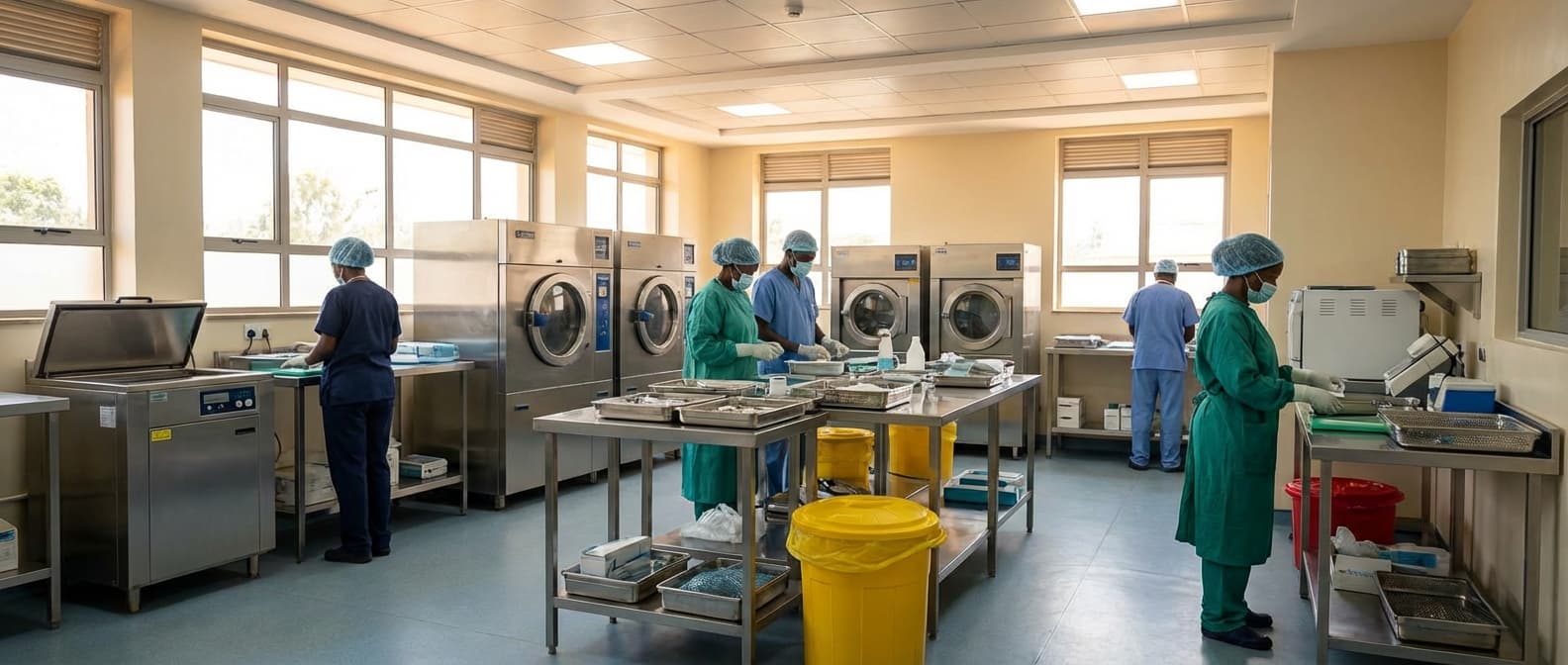
Infection-Control Readiness Support Service for Reusable Equipment in Equatorial Guinea
Engineering Excellence & Technical Support
Infection-Control Readiness Support Service for Reusable Equipment High-standard technical execution following OEM protocols and local regulatory frameworks.
Advanced Decontamination Protocols
Implementing state-of-the-art, validated decontamination protocols for all reusable medical equipment, ensuring the highest level of pathogen inactivation and compliance with international standards.
Robust Supply Chain Management
Establishing a resilient and traceable supply chain for essential infection control consumables and spare parts, guaranteeing uninterrupted availability and preventing stockouts for critical reprocessing activities.
Expert Training & Capacity Building
Delivering comprehensive, hands-on training programs for local healthcare personnel on best practices in equipment reprocessing, sterilization monitoring, and infection prevention, fostering sustainable local expertise.
What Is Infection-control Readiness Support Service For Reusable Equipment In Equatorial Guinea?
Infection-Control Readiness Support Service (ICRSS) for Reusable Equipment in Equatorial Guinea is a specialized technical offering designed to ensure that healthcare facilities in the region are adequately prepared to manage the infection risks associated with the reprocessing and reuse of medical devices. This service focuses on establishing and maintaining robust protocols, infrastructure, and human resource capabilities to prevent healthcare-associated infections (HAIs) stemming from contaminated or improperly sterilized reusable medical equipment. The core objective is to bolster the safety and efficacy of patient care by mitigating the transmission of pathogens through equipment used across multiple patient encounters.
| Target Audience | Needs Addressed | Typical Use Cases |
|---|---|---|
| Public and Private Healthcare Facilities (Hospitals, Clinics, Health Centers) | Inadequate sterile processing infrastructure; Lack of trained personnel; Non-compliance with infection control standards; High incidence of HAIs; Introduction of new reusable medical devices. | Establishing a new Central Sterile Supply Department (CSSD); Upgrading existing sterilization equipment; Training new sterilization technicians; Responding to an outbreak linked to contaminated surgical instruments; Implementing new reprocessing protocols for complex devices (e.g., endoscopes). |
| Government Health Ministries and Regulatory Bodies | Need for standardized infection control guidelines; Lack of oversight mechanisms for reusable equipment reprocessing; Limited capacity for training and certification. | Developing national guidelines for sterilization and disinfection; Establishing accreditation programs for CSSDs; Implementing nationwide training initiatives for healthcare workers; Conducting facility inspections and audits. |
| Non-Governmental Organizations (NGOs) and International Aid Agencies | Supporting the establishment or improvement of healthcare infrastructure in resource-limited settings; Implementing infection prevention and control programs in their supported facilities. | Providing technical assistance for setting up sterile processing units in new clinics; Donating and commissioning sterilization equipment; Training local staff in partner facilities; Conducting pre-assessment for infrastructure development projects. |
Key Components of Infection-Control Readiness Support Service
- Assessment and Gap Analysis: Comprehensive evaluation of existing reprocessing workflows, infrastructure (sterilization facilities, water systems), and personnel competency against international standards (e.g., WHO guidelines, ISO standards). Identification of deficiencies and areas requiring immediate attention.
- Protocol Development and Implementation: Creation or refinement of Standard Operating Procedures (SOPs) for the entire lifecycle of reusable equipment, including cleaning, disinfection, sterilization, packaging, storage, and transportation. Emphasis on evidence-based practices and regulatory compliance.
- Infrastructure Enhancement and Validation: Guidance on the selection, installation, validation, and maintenance of sterilization and disinfection equipment (e.g., autoclaves, washer-disinfectors, low-temperature sterilizers). Support for ensuring adequate water quality and electrical infrastructure.
- Training and Capacity Building: Design and delivery of targeted training programs for healthcare personnel involved in sterile processing, including technicians, nurses, and infection control practitioners. Focus areas include principles of asepsis, proper handling techniques, equipment operation, and quality control procedures.
- Quality Assurance and Monitoring: Establishment of systems for routine monitoring of sterilization processes (e.g., biological and chemical indicators), environmental monitoring, and documentation. Implementation of surveillance mechanisms for HAIs related to equipment reprocessing.
- Regulatory Compliance Advisory: Support in navigating national and international regulations pertaining to medical device reprocessing, ensuring that facilities meet all legal and ethical requirements.
- Emergency Preparedness and Response: Development of contingency plans for equipment failure, natural disasters, or outbreaks that could compromise the sterile processing capabilities of a facility.
Who Needs Infection-control Readiness Support Service For Reusable Equipment In Equatorial Guinea?
This document outlines the critical need for Infection-Control Readiness Support Services specifically for reusable medical equipment in Equatorial Guinea. These services are essential to ensure that all reusable equipment is properly cleaned, disinfected, and sterilized, thereby preventing healthcare-associated infections (HAIs) and safeguarding patient and staff safety. The support service will focus on building capacity, providing training, and implementing best practices in infection prevention and control related to reusable medical devices.
| Target Customer Category | Specific Departments/Units | Key Needs/Challenges | Benefit of Support Service |
|---|---|---|---|
| Public Hospitals | Sterilization and Central Supply Department (CSSD), Operating Theatres, Intensive Care Units (ICUs), Emergency Departments, Outpatient Clinics, Maternity Wards | Limited access to appropriate cleaning/disinfection agents, inadequate equipment for sterilization, insufficient trained personnel, poor infrastructure for decontamination, lack of standardized protocols | Improved patient safety, reduced HAI rates, enhanced staff confidence, compliance with national/international guidelines, extended lifespan of reusable equipment |
| Private Clinics and Hospitals | Similar to public hospitals, potentially with greater reliance on specific equipment, but may face budget constraints for advanced solutions | Variable levels of expertise, potential for outdated practices, reliance on manual processes, inconsistent quality control | Professionalization of infection control practices, assurance of quality care for paying patients, risk mitigation |
| Community Health Centers and Rural Clinics | Basic sterilization units (if available), examination rooms, maternal and child health units | Severely limited resources, lack of electricity for sterilization equipment, minimal access to consumables, absence of trained personnel, basic infrastructure | Introduction of appropriate low-cost solutions, essential training for basic decontamination, improved access to safe healthcare services |
| Ministry of Health and Public Hygiene | Department of Public Health, Department of Disease Prevention and Control, Hospital Management Unit | Need for standardized guidelines, capacity building for surveillance of HAIs, development of training curricula, procurement strategies for infection control equipment | Establishment of robust national infection control policies, improved data collection on HAIs, better resource allocation for infection prevention |
| Medical and Nursing Schools | Departments of Nursing, Medicine, Biomedical Engineering, Public Health | Lack of practical training facilities, outdated curriculum content on infection control for reusable equipment, insufficient skilled instructors | Integration of comprehensive and up-to-date infection control modules, hands-on training opportunities, development of future infection control champions |
Target Customers and Departments for Infection-Control Readiness Support Service for Reusable Equipment in Equatorial Guinea
- Healthcare Facilities: All hospitals, clinics, and health centers operating in Equatorial Guinea that utilize reusable medical equipment.
- Ministry of Health and Public Hygiene: As the overarching regulatory body, the Ministry will benefit from improved national infection control standards and reduced HAI rates.
- Medical and Nursing Schools: Institutions responsible for training future healthcare professionals, ensuring they are equipped with knowledge and skills in reusable equipment infection control.
- Non-Governmental Organizations (NGOs) involved in healthcare delivery: Organizations operating healthcare programs will require support to maintain infection control standards.
Infection-control Readiness Support Service For Reusable Equipment Process In Equatorial Guinea
This service provides comprehensive support for infection-control readiness related to reusable medical equipment processing in Equatorial Guinea. It aims to ensure that healthcare facilities have the necessary protocols, infrastructure, training, and resources to safely and effectively reprocess reusable medical devices, thereby preventing healthcare-associated infections (HAIs). The workflow begins with an initial inquiry and progresses through assessment, planning, implementation, training, and ongoing monitoring.
| Stage | Description | Key Activities | Deliverables | Responsible Parties |
|---|---|---|---|---|
| Inquiry and Needs Assessment | Initial contact from a healthcare facility or Ministry of Health regarding infection control for reusable equipment. | Discussing current challenges, existing protocols, and perceived needs. Initial understanding of the facility's context. | Needs assessment report (preliminary), proposal outline. | Client (Facility/MoH), Service Provider |
| Site Assessment and Gap Analysis | Detailed on-site evaluation of the current reusable equipment reprocessing process. | Reviewing sterilization and disinfection procedures, equipment condition, water quality, waste management, staff knowledge, and infrastructure (e.g., dedicated reprocessing area, ventilation). Identifying deficiencies against national and international guidelines. | Comprehensive site assessment report, gap analysis document outlining specific areas for improvement. | Service Provider (Infection Control Specialists, Engineers), Client (Facility Management, Biomedical Department) |
| Development of Customized Action Plan | Creating a tailored strategy based on the gap analysis to achieve infection control readiness. | Defining specific, measurable, achievable, relevant, and time-bound (SMART) objectives. Developing detailed protocols and Standard Operating Procedures (SOPs) for cleaning, disinfection, sterilization, and storage. Recommending equipment upgrades or new acquisitions. Planning for infrastructure modifications. | Customized Infection Control Readiness Action Plan, revised SOPs, equipment specifications, infrastructure blueprints (if needed). | Service Provider (Infection Control Specialists, Project Managers), Client (Facility Leadership, relevant department heads) |
| Procurement and Infrastructure Support | Assisting with the acquisition of necessary equipment, consumables, and facilitating infrastructure improvements. | Providing technical specifications for procurement. Connecting clients with reliable suppliers. Overseeing or advising on the construction or renovation of reprocessing areas. Ensuring availability of quality-assured disinfectants and sterilants. | Procurement lists, supplier recommendations, construction/renovation supervision reports, confirmation of consumable availability. | Service Provider (Procurement Specialists, Engineers), Client (Procurement Department, Facility Management) |
| Training and Capacity Building | Equipping healthcare staff with the knowledge and skills for safe reprocessing. | Developing and delivering training modules on all aspects of reusable equipment reprocessing, including proper handling, cleaning, disinfection, sterilization techniques, maintenance of equipment, and infection prevention principles. On-the-job training and competency assessments. | Training curriculum, training materials, training attendance records, competency assessment reports, certified staff. | Service Provider (Trainers, Infection Control Specialists), Client (All relevant healthcare staff) |
| Implementation and Go-Live Support | Overseeing the initial implementation of new or revised protocols and procedures. | Providing on-site support during the transition phase. Troubleshooting any immediate issues that arise. Ensuring smooth integration of new equipment and workflows. Verifying the effectiveness of implemented changes. | Implementation progress reports, troubleshooting logs, initial performance data. | Service Provider (Project Managers, Technical Staff), Client (Facility Staff) |
| Monitoring, Evaluation, and Continuous Improvement | Ensuring the sustained effectiveness of infection control practices and identifying areas for further enhancement. | Regular monitoring of reprocessing processes, including biological and chemical indicators for sterilization. Periodic audits of SOP adherence. Data collection on HAIs related to reusable equipment. Providing ongoing mentorship and refresher training. Updating protocols based on new evidence or emerging challenges. | Monitoring reports, audit findings, performance metrics, updated SOPs, continuous improvement plans. | Service Provider (Infection Control Specialists), Client (Facility Management, Infection Control Committee) |
Workflow Stages
- Inquiry and Needs Assessment
- Site Assessment and Gap Analysis
- Development of Customized Action Plan
- Procurement and Infrastructure Support
- Training and Capacity Building
- Implementation and Go-Live Support
- Monitoring, Evaluation, and Continuous Improvement
Infection-control Readiness Support Service For Reusable Equipment Cost In Equatorial Guinea
Providing infection-control readiness support services for reusable medical equipment in Equatorial Guinea involves a complex pricing structure influenced by various factors. These factors range from the specific services required to the operational costs within the country. Understanding these elements is crucial for accurate budgeting and resource allocation. The pricing typically involves a combination of direct service fees, operational overhead, and potential risk premiums. Local currency pricing in Equatorial Guinea, often denominated in the Central African CFA franc (XAF), will reflect these underlying cost drivers. Demand for specialized infection control expertise, the availability of trained personnel, and the logistical challenges of reaching healthcare facilities are significant determinants of cost. Furthermore, the complexity and volume of reusable equipment, as well as the required frequency of support, will directly impact the overall service price.
| Service Component | Estimated Price Range (XAF) |
|---|---|
| Initial Site Assessment & Gap Analysis (per facility) | 500,000 - 1,500,000 |
| Development of Infection Control Protocols (per facility) | 750,000 - 2,000,000 |
| Staff Training Session (per participant, per day) | 75,000 - 200,000 |
| Sterilization Validation (per equipment type) | 300,000 - 800,000 |
| Preventive Maintenance for Sterilization Equipment (per unit, quarterly) | 400,000 - 1,000,000 |
| On-site Support (per specialist, per day) | 250,000 - 600,000 |
| Supply Chain Assessment for Infection Control Consumables (per facility) | 600,000 - 1,800,000 |
| Monthly Monitoring & Reporting | 300,000 - 900,000 |
| Emergency Troubleshooting & Repair (hourly rate) | 100,000 - 250,000 |
| Comprehensive Readiness Program (e.g., 6-month package, per facility) | 5,000,000 - 15,000,000+ |
Key Pricing Factors for Infection-Control Readiness Support Service for Reusable Equipment in Equatorial Guinea
- Scope of Services: This includes sterilization validation, equipment maintenance and repair, training of healthcare staff, development of protocols, and ongoing monitoring.
- Type and Volume of Reusable Equipment: The number, complexity, and specific types of instruments and devices requiring infection control (e.g., surgical instruments, endoscopes, respiratory equipment) will influence costs.
- Frequency and Duration of Support: Whether the service is a one-time assessment, periodic checks, or continuous on-site support will affect pricing.
- Geographic Location and Accessibility: Reaching remote or hard-to-access healthcare facilities within Equatorial Guinea will incur higher logistical and transportation costs.
- Personnel Costs: The wages for skilled infection control specialists, technicians, and trainers, considering local labor market conditions and international expertise if required.
- Equipment and Consumables: Costs associated with specialized infection control equipment (e.g., autoclaves, chemical indicators, testing devices) and consumables (e.g., disinfectants, sterile packaging).
- Training and Capacity Building: The extent of training provided to local healthcare staff on infection control best practices.
- Regulatory Compliance: Ensuring adherence to national and international infection control standards and guidelines.
- Administrative and Overhead Costs: Including project management, reporting, communication, and local operational expenses.
- Risk and Contingency: Factors such as political stability, security concerns, and potential unforeseen challenges in the operating environment.
Affordable Infection-control Readiness Support Service For Reusable Equipment Options
Our Affordable Infection-Control Readiness Support Service for Reusable Equipment Options is designed to empower healthcare facilities and other organizations that rely on reusable medical devices and equipment to maintain robust infection control without breaking the budget. We understand the critical need for sterile, safe reusable equipment and the associated costs. This service provides comprehensive support, from initial assessment and protocol development to ongoing training and quality assurance, all tailored to your specific needs and financial constraints.
| Cost-Saving Strategy | Description | Impact on Value Bundles |
|---|---|---|
| Streamlined Protocol Development | Leveraging pre-existing, evidence-based templates and our expert knowledge to create efficient and compliant protocols quickly. | Reduces consulting hours, directly lowering costs in all bundles. Essential and Comprehensive bundles benefit from faster implementation. |
| On-Demand Digital Training Modules | Providing accessible, online training for staff that can be completed at their own pace, reducing the need for costly in-person sessions. | Significantly lowers training costs. Integrated into all bundles, with advanced customization options in the Premium bundle. |
| Optimized Equipment Cleaning & Sterilization Workflow Analysis | Identifying inefficiencies in your current processes to reduce processing times, material waste, and potential equipment downtime. | Leads to operational cost savings. Included as an assessment component in all bundles, with deeper analysis in Comprehensive and Premium. |
| Bulk Purchasing & Vendor Negotiation Assistance | Advising on and facilitating group purchasing for cleaning supplies, disinfectants, and sterilization consumables to secure better pricing. | Directly reduces consumable expenditure. Offered as an optional add-on or integral part of Comprehensive and Premium bundles. |
| Preventative Maintenance & Equipment Longevity Planning | Implementing strategies to extend the lifespan of your reusable equipment, reducing the frequency of costly replacements. | Long-term capital expenditure savings. Addressed in the Premium bundle and can be included in customized plans. |
| Risk-Based Approach to Testing & Validation | Focusing testing and validation efforts on high-risk equipment and processes, avoiding unnecessary expenditures on low-risk items. | Optimizes testing budgets. Integrated into the assessment and protocol development of all bundles, with a stronger emphasis in Premium. |
| Scalable Service Model | Allowing you to scale your support up or down based on your changing needs and budget, ensuring you only pay for what you require. | Provides financial flexibility. A core principle across all bundles and the customizable option. |
Key Value Bundles for Infection-Control Readiness
- {"title":"Essential Readiness Bundle","description":"Ideal for smaller practices or those just starting to formalize reusable equipment protocols. Focuses on core infection control principles and immediate needs."}
- {"title":"Comprehensive Compliance Bundle","description":"Designed for mid-sized facilities requiring a more robust approach to infection control, including detailed protocol development and advanced training."}
- {"title":"Premium Prevention Bundle","description":"For larger institutions or those with high-risk equipment. Offers proactive risk assessment, customized training programs, and continuous improvement support."}
- {"title":"Customizable Solutions","description":"We offer the flexibility to tailor any bundle or create a bespoke package to precisely match your unique requirements, equipment inventory, and budget."}
Verified Providers In Equatorial Guinea
In Equatorial Guinea, ensuring access to reliable and high-quality healthcare is paramount. When seeking medical services, it is crucial to identify 'Verified Providers' – those who have met stringent credentialing and quality assurance standards. Franance Health stands out as a leader in this regard, offering a network of rigorously vetted healthcare professionals and facilities. Their commitment to excellence and adherence to international best practices make them a trusted name for individuals and organizations requiring medical care in the region. This verification process not only guarantees the competence of practitioners but also assures patients of safe and effective treatment.
| Category | Franance Health Verification Criteria | Benefit to Patient |
|---|---|---|
| Medical Licensure & Certification | Confirmation of valid and current medical licenses and specialty board certifications. | Ensures practitioners are legally qualified and possess demonstrated expertise in their field. |
| Clinical Experience | Verification of years of practical experience and a history of positive patient outcomes. | Increases confidence in the practitioner's ability to diagnose and treat effectively. |
| Facility Standards | Assessment of infrastructure, equipment, hygiene, and safety protocols in healthcare facilities. | Guarantees a safe and well-equipped environment for medical procedures and recovery. |
| Ethical Conduct & Professionalism | Review of professional conduct, adherence to ethical guidelines, and patient feedback. | Promotes trust and respectful patient-provider interactions. |
| Continuing Medical Education (CME) | Evidence of ongoing participation in educational programs to stay current with medical knowledge. | Ensures patients receive care based on the latest medical advancements and techniques. |
Why Franance Health Credentials Represent the Best Choice:
- Rigorous Vetting Process: Franance Health employs a comprehensive evaluation of medical professionals and facilities, ensuring they meet high standards of expertise, ethical conduct, and operational efficiency.
- International Quality Standards: Their verified providers adhere to globally recognized healthcare protocols and best practices, offering assurance of quality care.
- Continuous Professional Development: Franance Health often requires or encourages ongoing training and education for their network, keeping practitioners up-to-date with the latest medical advancements.
- Patient Safety Focus: A key component of their verification is a strong emphasis on patient safety measures, infection control, and risk management.
- Transparency and Accountability: Verified providers are held to a high level of accountability, with clear mechanisms for feedback and addressing any concerns.
- Access to Specialized Care: Franance Health's network often includes a diverse range of specialists, ensuring access to a wide spectrum of medical services.
- Streamlined Healthcare Navigation: Their verification simplifies the process of finding trustworthy medical help, saving patients time and reducing stress.
Scope Of Work For Infection-control Readiness Support Service For Reusable Equipment
This Scope of Work (SOW) outlines the requirements for Infection-Control Readiness Support Services for Reusable Equipment. The objective is to ensure healthcare facilities maintain optimal infection control practices for all reusable medical equipment through comprehensive assessments, guidance, and training.
| Technical Deliverable | Description | Standard Specifications / Acceptance Criteria |
|---|---|---|
| Initial Readiness Assessment Report | A comprehensive report detailing the current state of infection control practices for reusable equipment. This includes identification of equipment types, existing protocols, staff competency, and infrastructure assessment. | Report includes a detailed inventory of reusable equipment, assessment of current decontamination and sterilization processes, identification of any non-compliance with manufacturer instructions for use (IFUs) or regulatory guidelines (e.g., CDC, AAMI, local health authorities), and a summary of observed risks and potential areas for improvement. Report must be delivered within 30 days of contract initiation. |
| Gap Analysis and Risk Assessment Report | An in-depth analysis of identified gaps and risks in current infection control processes. This report will prioritize risks based on their potential impact on patient safety and operational efficiency. | Report clearly outlines each identified gap, its associated risk level (e.g., low, medium, high), potential consequences, and preliminary recommendations. Risk assessment methodology should be clearly defined. Delivered within 45 days of contract initiation. |
| Infection Control Protocol Development/Revision | Development or revision of facility-specific infection control protocols and Standard Operating Procedures (SOPs) for the decontamination, cleaning, disinfection, sterilization, and storage of all relevant reusable equipment. | Protocols must be evidence-based, align with current national and international guidelines (e.g., CDC, WHO, AAMI, ISO standards), and incorporate manufacturer's IFUs. Protocols should be clear, concise, and easily understandable by end-users. Submitted for review within 60 days of contract initiation and finalized within 90 days. |
| Staff Training Program | Development and delivery of comprehensive training programs for all relevant personnel involved in the handling, processing, and storage of reusable equipment. | Training content to cover infection control principles, specific equipment processing procedures, use of personal protective equipment (PPE), documentation, and reporting. Training materials to be delivered in a format suitable for diverse learning styles. Training sessions to be conducted with post-training competency assessments. A minimum of 80% competency rate for trainees is required. Training rollout to commence within 90 days of contract initiation. |
| Equipment Audit and Validation Plan | A plan for periodic auditing and validation of infection control processes, including the functionality and performance of decontamination and sterilization equipment. | Plan to include methodologies for equipment testing, environmental monitoring (if applicable), process validation, and regular quality control checks. Specific audit frequencies and key performance indicators (KPIs) to be defined. Plan submitted for review within 120 days of contract initiation. |
| Monthly Progress Reports | Regular reports detailing progress on service delivery, identified issues, resolutions, and upcoming activities. | Reports to include metrics on training completion, protocol adherence, audit findings, and any recommendations for continuous improvement. Delivered on a monthly basis throughout the contract period. |
| Final Project Report and Recommendations | A comprehensive report summarizing all activities undertaken, outcomes achieved, and recommendations for ongoing infection control readiness and sustainability. | Report to include a summary of all deliverables, impact assessment on patient safety and operational efficiency, and a roadmap for future infection control improvements. Delivered at the conclusion of the service period. |
Key Objectives of the Service
- Assess current infection control practices for reusable equipment.
- Identify gaps and risks in existing protocols and infrastructure.
- Develop and implement evidence-based infection control strategies.
- Provide training and education to relevant staff.
- Ensure compliance with regulatory standards and best practices.
- Improve the safety of patient care by minimizing the risk of healthcare-associated infections (HAIs).
Service Level Agreement For Infection-control Readiness Support Service For Reusable Equipment
This Service Level Agreement (SLA) outlines the response times and uptime guarantees for the Infection-Control Readiness Support Service for Reusable Equipment. This service is designed to ensure that all critical reusable equipment is maintained at the highest standards of cleanliness and is readily available for use, minimizing the risk of healthcare-associated infections (HAIs).
| Service Component | Response Time Guarantee (for initial acknowledgement) | Resolution Time Target | Uptime Guarantee |
|---|---|---|---|
| Routine Monitoring & Preventative Maintenance Checks | N/A (Scheduled) | N/A (Scheduled) | 98% availability of equipment for scheduled use |
| Urgent Issue Reporting (e.g., confirmed contamination, critical equipment failure) | 15 minutes | 4 hours | 99% availability of critical reusable equipment |
| Non-Urgent Issue Reporting (e.g., minor functionality issues, documentation requests) | 1 business hour | 8 business hours | 95% availability of non-critical reusable equipment |
| Emergency Outbreak Support (as declared by facility management) | Immediate (within 10 minutes) | As required and agreed upon for the specific emergency | 100% dedicated support until outbreak resolution |
Key Service Objectives
- Maintain a proactive and reactive support system for all designated reusable medical equipment.
- Minimize downtime of critical reusable equipment due to infection control related issues.
- Ensure rapid response to reported issues affecting equipment readiness.
- Provide consistent and reliable access to fully functional and infection-controlled reusable equipment.
Frequently Asked Questions

Ready when you are
Let's scope your Infection-Control Readiness Support Service for Reusable Equipment in Equatorial Guinea project in Equatorial Guinea.

Scaling healthcare logistics and technical systems across the entire continent.