
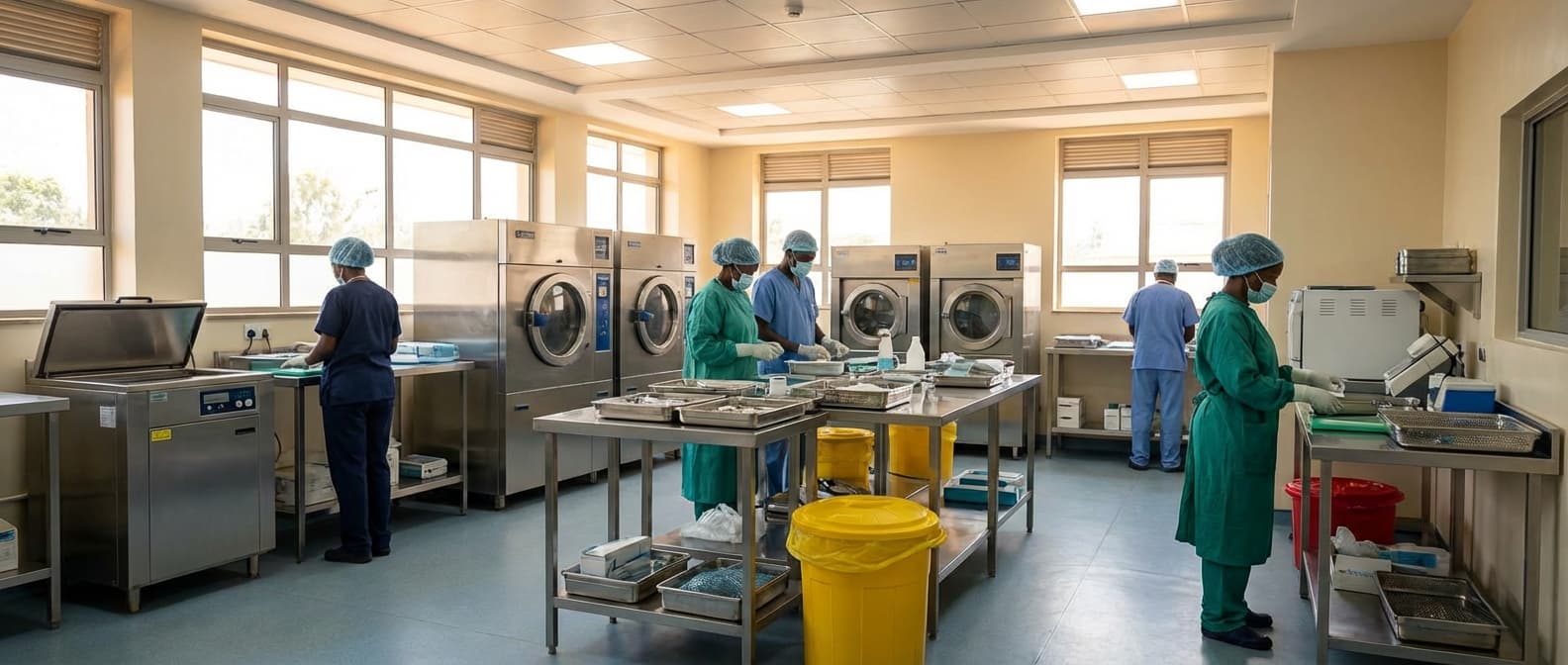
Endoscope Reprocessing Equipment Support Service in Equatorial Guinea
Engineering Excellence & Technical Support
Endoscope Reprocessing Equipment Support Service High-standard technical execution following OEM protocols and local regulatory frameworks.
Proactive Diagnostic & Predictive Maintenance
Leveraging advanced remote diagnostics and predictive analytics, our service in Equatorial Guinea minimizes downtime for your endoscope reprocessing equipment. We identify potential issues before they impact operations, ensuring continuous workflow and patient safety.
Rapid On-Site Technical Support & Parts Availability
We guarantee swift on-site technical support across Equatorial Guinea, with a focus on rapid problem resolution. Our localized inventory of genuine spare parts ensures minimal disruption, getting your critical reprocessing equipment back online efficiently.
Compliance Assurance & Specialized Training
Our service ensures your endoscope reprocessing equipment consistently meets international and local compliance standards in Equatorial Guinea. We offer specialized training for your technical staff on optimal equipment operation, maintenance, and regulatory adherence.
What Is Endoscope Reprocessing Equipment Support Service In Equatorial Guinea?
Endoscope reprocessing equipment support service in Equatorial Guinea refers to the specialized maintenance, repair, calibration, and validation services provided for automated and semi-automated equipment used in the cleaning, disinfection, and sterilization of flexible and rigid endoscopes. This service ensures that the equipment functions optimally, adheres to strict regulatory standards for infection control, and maintains the integrity and longevity of expensive endoscopic instruments. The scope of support typically encompasses preventive maintenance, emergency repairs, performance verification, safety inspections, and documentation necessary for compliance with healthcare accreditation and regulatory bodies.
| Who Needs the Service | Typical Use Cases | Benefits |
|---|---|---|
| Hospitals and Medical Centers: Particularly those with significant endoscopy volumes (surgical, gastrointestinal, pulmonology, urology departments). | Routine servicing of automated endoscope reprocessors (AERs) to ensure efficacy of high-level disinfection (HLD) or sterilization cycles. | Minimizes downtime of critical reprocessing equipment, preventing bottlenecks in surgical schedules. |
| Surgical Centers and Clinics: Facilities performing endoscopic procedures. | Repair and recalibration of washer-disinfectors used for rigid scopes or accessories. | Ensures patient safety by preventing healthcare-associated infections (HAIs) through effective endoscope reprocessing. |
| Specialized Diagnostic and Treatment Facilities: Gastroenterology clinics, pulmonology centers. | Validation of new or upgraded reprocessing equipment to meet regulatory standards before clinical use. | Extends the lifespan of expensive endoscopic instruments by ensuring they are processed correctly and not damaged by faulty equipment. |
| Healthcare Institutions in Remote or Under-resourced Areas: Where local technical expertise might be limited. | Emergency repair services for critical equipment failures to restore operational capacity rapidly. | Maintains compliance with national and international infection control guidelines and accreditation requirements. |
| Equipment Manufacturers' Representatives or Local Distributors: Seeking to offer comprehensive after-sales support. | Preventive maintenance schedules to uphold manufacturer warranties and service level agreements (SLAs). | Provides peace of mind to healthcare providers, knowing their reprocessing infrastructure is reliable and compliant. |
Key Components of Endoscope Reprocessing Equipment Support Service
- Preventive Maintenance (PM): Scheduled inspections, cleaning, lubrication, and replacement of wear-and-tear components to avert equipment failure and ensure consistent performance.
- Corrective Maintenance (CM): Diagnosis and repair of malfunctions and breakdowns, including parts replacement and troubleshooting.
- Calibration and Performance Verification: Ensuring that equipment parameters (e.g., temperature, pressure, flow rates, cycle times) meet manufacturer specifications and regulatory requirements for effective reprocessing.
- Validation Services: Documented evidence that reprocessing equipment consistently performs as intended, adhering to established protocols and standards (e.g., HTM 01-01, AAMI ST79). This often includes Installation Qualification (IQ), Operational Qualification (OQ), and Performance Qualification (PQ).
- Technical Support and Training: Providing expert advice, troubleshooting assistance, and operator training on the proper use, maintenance, and care of reprocessing equipment.
- Spare Parts Management: Ensuring availability of genuine or equivalent spare parts for repairs and maintenance.
- Documentation and Compliance Reporting: Maintaining detailed service records, calibration certificates, and validation reports to demonstrate adherence to infection control policies and regulatory mandates.
Who Needs Endoscope Reprocessing Equipment Support Service In Equatorial Guinea?
Endoscope reprocessing equipment is crucial for maintaining the highest standards of patient safety and preventing the spread of infections in healthcare settings. Regular maintenance, calibration, and timely repairs are essential to ensure the optimal functioning and longevity of these complex devices. In Equatorial Guinea, where healthcare infrastructure is developing, the availability of reliable support services for endoscope reprocessing equipment is vital for ensuring that medical facilities can continue to provide safe and effective endoscopic procedures.
| Customer Type | Typical Departments Involved | Key Needs Addressed by Support Service |
|---|---|---|
| Public Hospitals and Healthcare Centers | Gastroenterology, Pulmonology, Urology, CSSD, Infection Control | Ensuring equipment uptime for patient care, preventing infection outbreaks, extending equipment lifespan, compliance with safety standards. |
| Private Hospitals and Clinics | Gastroenterology, Surgery, CSSD, Biomedical Engineering | Maintaining a high standard of care for paying patients, minimizing service disruptions, ensuring efficient turnaround times for procedures. |
| Specialized Endoscopy Centers | Endoscopy Unit, CSSD, Infection Prevention | Maximizing the utilization of advanced endoscopic equipment, ensuring precision and reliability, meeting high patient throughput demands. |
| Diagnostic Laboratories | Endoscopy Lab, Quality Assurance | Verifying the accuracy and safety of diagnostic procedures, maintaining equipment calibration for reliable results. |
| Government Health Agencies | Procurement, Public Health, Hospital Management | Ensuring national healthcare standards are met, managing public health resources effectively, planning for equipment replacement and upgrades. |
| International NGOs/Humanitarian Organizations | Medical Missions, Field Hospitals, Program Management | Providing essential medical services in challenging environments, ensuring patient safety with limited local resources, rapid deployment and maintenance of equipment. |
Target Customers and Departments Requiring Endoscope Reprocessing Equipment Support Service in Equatorial Guinea:
- {"items":["Public Hospitals and Healthcare Centers","Private Hospitals and Clinics","Specialized Endoscopy Centers","Diagnostic Laboratories with Endoscopic Capabilities","Government Health Agencies and Ministries","International NGOs and Humanitarian Organizations operating in the healthcare sector"],"title":"Target Customers"}
- {"items":["Gastroenterology Department","Pulmonology Department","Urology Department","Otolaryngology (ENT) Department","Gynecology Department","Surgical Departments (General Surgery, etc. that utilize endoscopes)","Central Sterile Supply Department (CSSD)","Infection Prevention and Control Department","Biomedical Engineering Department (if available)","Equipment Maintenance and Facilities Management"],"title":"Departments Requiring Support"}
Endoscope Reprocessing Equipment Support Service Process In Equatorial Guinea
This document outlines the workflow for the Endoscope Reprocessing Equipment Support Service Process in Equatorial Guinea, from the initial customer inquiry to the final execution of the service. This process ensures efficient and effective support for maintaining the functionality and safety of critical endoscope reprocessing equipment.
| Stage | Key Activities | Responsible Party | Key Deliverables |
|---|---|---|---|
| Inquiry & Initial Contact | Client contacts support. Initial problem description provided. | Client, Support Service Provider | Initial Service Inquiry |
| Assessment & Qualification | Support team analyzes inquiry, gathers details, assesses urgency. | Support Service Provider | Qualified Service Need |
| Logging & Prioritization | Service request created in system, prioritized based on SLAs. | Support Service Provider | Service Request Logged & Prioritized |
| Quotation & Agreement | Quote provided for chargeable services, agreement finalized. | Support Service Provider, Client | Approved Quotation/Work Order |
| Dispatch & Logistics | Technician assigned, travel, parts, and tools arranged. | Support Service Provider | Dispatched Technician & Prepared Equipment |
| On-site Execution | Technician performs service (maintenance, repair, installation). | Field Service Technician | Service Performed on Equipment |
| Troubleshooting | Diagnosing and resolving any unforeseen technical issues. | Field Service Technician, Technical Support | Resolved Issues |
| Completion & Verification | Equipment tested, client verifies functionality. | Field Service Technician, Client | Functional Equipment, Client Sign-off |
| Documentation | Service report generated with details of work performed. | Field Service Technician | Completed Service Report |
| Invoicing & Payment | Client invoiced, payment processed. | Support Service Provider, Client | Payment Received |
| Follow-up | Client satisfaction checked, feedback collected. | Support Service Provider | Customer Satisfaction Confirmation |
| Knowledge Base Update | Service history logged for future reference. | Support Service Provider | Updated Service Records |
Endoscope Reprocessing Equipment Support Service Process Workflow
- {"title":"1. Inquiry & Initial Contact","description":"The process begins when a client in Equatorial Guinea contacts the support service provider with a need related to endoscope reprocessing equipment. This can be for routine maintenance, repair, technical consultation, or equipment installation/commissioning."}
- {"title":"2. Inquiry Assessment & Qualification","description":"Upon receiving an inquiry, the support team assesses the nature of the request, the specific equipment involved, and the client's location. This stage involves gathering initial details to understand the urgency and complexity of the service required."}
- {"title":"3. Service Request Logging & Prioritization","description":"A formal service request is created in the support system. The request is then prioritized based on factors such as equipment criticality, patient safety impact, and contractual service level agreements (SLAs)."}
- {"title":"4. Quotation & Agreement","description":"For chargeable services, a detailed quotation outlining the scope of work, estimated costs, timeline, and any necessary parts is provided to the client. Upon client approval, a service agreement or work order is finalized."}
- {"title":"5. Technician Dispatch & Logistics Planning","description":"Once the service is approved, a qualified and trained technician is assigned. Logistics are planned, including travel arrangements (flights, local transport), accommodation, and the procurement/packaging of any required tools and spare parts. This is particularly crucial for service delivery in Equatorial Guinea, considering potential logistical challenges."}
- {"title":"6. On-site Service Execution","description":"The technician travels to the client's facility in Equatorial Guinea. Upon arrival, they conduct a thorough assessment of the equipment and perform the agreed-upon service (e.g., maintenance, repair, installation, calibration). This phase emphasizes adherence to manufacturer guidelines and local safety regulations."}
- {"title":"7. Troubleshooting & Resolution","description":"If unexpected issues arise during execution, the technician will engage in troubleshooting. This may involve consulting with senior engineers, accessing technical documentation, or coordinating with the client for further information or access."}
- {"title":"8. Service Completion & Verification","description":"After the service is performed, the technician verifies that the equipment is functioning correctly and meets all specified performance parameters. This may involve testing procedures and user acceptance with the client's representative."}
- {"title":"9. Documentation & Reporting","description":"The technician completes detailed service reports, including actions taken, parts used, test results, and recommendations. This documentation is crucial for record-keeping, future reference, and client transparency."}
- {"title":"10. Invoicing & Payment","description":"The client is invoiced according to the agreed-upon quotation and service agreement. Payment processing is initiated."}
- {"title":"11. Follow-up & Customer Satisfaction","description":"A follow-up is conducted to ensure the client's satisfaction with the service provided and to address any outstanding queries. This step helps in building long-term relationships and gathering feedback for service improvement."}
- {"title":"12. Service History & Knowledge Base Update","description":"All service records are updated in the central database. This contributes to the knowledge base, aiding in faster resolution of future issues and proactive maintenance planning."}
Endoscope Reprocessing Equipment Support Service Cost In Equatorial Guinea
Providing support services for endoscope reprocessing equipment in Equatorial Guinea involves a complex interplay of factors that influence pricing. These services are crucial for maintaining the functionality, safety, and longevity of vital medical equipment, especially in regions where specialized technicians and original parts might be less readily available. The cost of such services can vary significantly based on several key determinants, including the type and complexity of the endoscope reprocessing equipment, the nature of the support required (preventive maintenance, emergency repairs, calibration, software updates), the location within Equatorial Guinea, and the expertise of the service provider.
Pricing Factors:
- Equipment Type and Complexity: High-definition endoscopes, robotic-assisted reprocessing systems, and advanced washer-disinfectors typically command higher service fees due to the intricate technology and specialized knowledge required for their maintenance and repair. Older or simpler models may have more straightforward and thus less expensive service contracts.
- Scope of Service: Comprehensive service agreements that include regular preventive maintenance, on-demand emergency calls, parts replacement, and software upgrades will naturally be priced higher than basic, ad-hoc repair services. Preventive maintenance is often offered in tiered packages.
- Geographic Location and Accessibility: Equatorial Guinea's infrastructure can present challenges. Service calls to remote or less accessible areas may incur additional travel and logistics costs (transportation, accommodation for technicians), which are factored into the overall price.
- Availability of Spare Parts: The cost and lead time for acquiring genuine or compatible spare parts for specialized endoscope reprocessing equipment can be a significant cost driver. If parts need to be imported, customs duties, shipping fees, and potential delays all contribute to the final service price.
- Technician Expertise and Certification: Highly trained and certified technicians with specific experience on particular brands and models of reprocessing equipment are essential. Their specialized skills and ongoing training represent a significant investment for service providers, which is reflected in their pricing.
- Service Provider Reputation and Experience: Established and reputable service providers, particularly those with a proven track record and strong relationships with equipment manufacturers, may command premium pricing due to their reliability and quality of service.
- Downtime and Urgency: Emergency service calls that require immediate attention and potentially out-of-hours work will typically be more expensive than scheduled maintenance. Hospitals often have service level agreements (SLAs) that define response times and associated costs.
- Warranty Status: Service costs can differ significantly if the equipment is still under the manufacturer's warranty, where certain repairs or maintenance might be covered. Post-warranty services are typically paid for separately.
- Exchange Rates and Import Costs: As Equatorial Guinea uses the West African CFA franc (XAF), fluctuations in exchange rates and the costs associated with importing any necessary equipment or parts can impact the local currency pricing of services, especially if pricing is benchmarked against international standards or foreign currency costs.
Price Ranges (Indicative in West African CFA Franc - XAF):
It is challenging to provide precise, universally applicable price ranges without specific details on the equipment and service scope. However, based on general industry trends and the economic context of Equatorial Guinea, indicative ranges can be estimated. These are estimates and actual quotes can vary widely.
- Annual Preventive Maintenance Contract (per unit): This can range from 800,000 XAF to 3,500,000 XAF or more, depending on the complexity of the equipment and the level of service included (e.g., number of visits, scope of checks). For basic washer-disinfectors, it might be at the lower end, while for advanced automated systems, it will be at the higher end.
- On-Demand Emergency Repair Call (labor + basic parts): A single emergency call could range from 250,000 XAF to 1,000,000 XAF, excluding the cost of major replacement parts. This includes the technician's call-out fee, travel, and a few hours of labor.
- Major Component Replacement (e.g., pump, heating element, control board): The cost of major parts can vary drastically, from 500,000 XAF to over 5,000,000 XAF for very specialized components. The labor for replacement would be additional.
- Calibration and Validation Services: These specialized services, often required for regulatory compliance, could range from 300,000 XAF to 1,500,000 XAF per session, depending on the equipment and the extent of validation required.
- Full Service Contract (covering preventive, on-demand, and some parts): For comprehensive coverage, annual costs could range from 2,000,000 XAF to 10,000,000 XAF or more, depending on the value and number of reprocessing units covered.
Important Considerations:
- Local vs. International Providers: Prices from international service providers might be higher due to import costs and premium expertise, but they might offer a wider range of specialized services. Local, less specialized technicians might offer lower prices but potentially with a risk to the quality of service for highly complex equipment.
- Negotiation: Healthcare facilities should always seek multiple quotes and be prepared to negotiate service contracts, especially for long-term agreements.
- Impact of Infrastructure: The improving but still developing infrastructure in Equatorial Guinea can add a premium to services requiring significant travel and logistics.
- Service Level Agreements (SLAs): Clear SLAs are paramount to define response times, resolution targets, and cost structures for different service events.
| Service Type | Indicative Price Range (XAF) | Notes |
|---|---|---|
| Annual Preventive Maintenance Contract (per unit) | 800,000 - 3,500,000+ | Varies by equipment complexity and service level |
| On-Demand Emergency Repair Call (labor + basic parts) | 250,000 - 1,000,000+ | Excludes cost of major replacement parts |
| Major Component Replacement (e.g., pump, control board) | 500,000 - 5,000,000+ | Cost of part + additional labor |
| Calibration and Validation Services | 300,000 - 1,500,000 | Per session, depends on equipment and validation scope |
| Full Service Contract (Comprehensive Coverage) | 2,000,000 - 10,000,000+ | Annual cost for multiple units and wider coverage |
Factors Influencing Endoscope Reprocessing Equipment Support Service Costs in Equatorial Guinea
- Equipment Type and Complexity (e.g., HD endoscopes, robotic systems)
- Scope of Service (preventive maintenance vs. emergency repair)
- Geographic Location and Accessibility within Equatorial Guinea
- Availability and Cost of Spare Parts (import duties, shipping)
- Technician Expertise, Training, and Certification
- Service Provider Reputation and Experience
- Downtime Urgency and Response Time Requirements
- Equipment Warranty Status
- Exchange Rates and Import Cost Fluctuations
- Infrastructure and Logistics Challenges
Affordable Endoscope Reprocessing Equipment Support Service Options
Maintaining the functionality and compliance of endoscope reprocessing equipment is crucial for patient safety and operational efficiency. Endoscope reprocessing equipment support services are vital for ensuring that flexible endoscopes are cleaned and sterilized according to stringent guidelines. This document outlines affordable support service options, emphasizing the value of bundled services and cost-saving strategies for healthcare facilities.
| Value Bundle Option | Included Services | Primary Benefit | Estimated Cost Savings Potential |
|---|---|---|---|
| Essential Care Package | Annual Preventive Maintenance (2 visits), Priority Repair Response (within 48 hours), Basic Technical Support | Ensures baseline equipment reliability and reduces unexpected downtime. | 10-15% on repair costs and minor downtime, 5-10% on PM. |
| Comprehensive Maintenance Plan | Bi-annual Preventive Maintenance (4 visits), On-site Corrective Maintenance (labor included, parts extra), Annual Validation, Remote Technical Support | Maximizes uptime, proactive issue resolution, and regulatory compliance. | 15-25% on repair costs, reduced downtime costs, and potential penalties avoidance. |
| Full-Service Partnership | Unlimited Preventive Maintenance, On-site Corrective Maintenance (labor and common parts included), Annual Validation & Calibration, Dedicated Technical Account Manager, Training Sessions, Parts Discount | Ultimate peace of mind, predictable budgeting, optimized equipment lifespan, and staff competency. | 20-35% on overall service and repair costs, significant reduction in catastrophic failures and associated business disruption. |
Key Components of Endoscope Reprocessing Equipment Support Services:
- Preventive Maintenance (PM): Scheduled inspections and servicing to identify and address potential issues before they lead to breakdowns.
- Corrective Maintenance/Repair: On-demand service calls to diagnose and fix equipment malfunctions.
- Validation and Calibration: Ensuring equipment performance meets regulatory standards and manufacturer specifications.
- Parts and Consumables: Availability of genuine or high-quality replacement parts and necessary consumables.
- Training and Education: Empowering in-house staff with the knowledge to operate and perform basic maintenance on equipment.
- Technical Support and Troubleshooting: Remote or on-site assistance for immediate problem resolution.
- Compliance Documentation: Support in maintaining records for regulatory audits.
Verified Providers In Equatorial Guinea
In Equatorial Guinea, identifying reliable healthcare providers is paramount for ensuring quality medical care. Franance Health stands out as a leading organization committed to upholding the highest standards in healthcare. Their stringent credentialing process ensures that all affiliated providers are not only licensed and experienced but also dedicated to patient-centric care. This rigorous vetting system is what makes Franance Health's network the most trusted choice for individuals seeking healthcare services in the region.
| Provider Type | Verification Criteria | Franance Health Advantage |
|---|---|---|
| Physicians | Medical License, Board Certification, Clinical Experience, Background Checks | Verified by Franance Health for adherence to international standards and local regulations, ensuring up-to-date medical knowledge and ethical practice. |
| Specialists | Sub-specialty Certifications, Fellowship Training, Peer Reviews | Franance Health ensures specialists have demonstrably high levels of expertise in their respective fields, validated through a thorough review of their academic and practical achievements. |
| Nurses | Nursing License, Professional Certifications, Clinical Competency Assessments | Franance Health verifies that all affiliated nurses possess the necessary qualifications and demonstrate proficiency in patient care, vital for comprehensive healthcare delivery. |
| Hospitals & Clinics | Accreditation, Facility Standards, Equipment Availability, Staff Qualifications | Franance Health partners with facilities that meet stringent operational and safety standards, ensuring a high-quality environment for patient treatment and recovery. |
Why Franance Health Providers are the Best Choice:
- Rigorous Vetting Process: Franance Health employs a multi-faceted evaluation to verify the qualifications, experience, and ethical standing of every healthcare professional.
- Commitment to Excellence: All Franance Health providers adhere to strict quality of care protocols and continuous professional development.
- Patient-Centric Approach: Providers are selected for their dedication to patient well-being, clear communication, and compassionate care.
- Comprehensive Network: Access to a wide range of medical specialties and services ensures that most healthcare needs can be met within the Franance Health network.
- Transparency and Trust: The credentialing process fosters transparency, building trust between patients and healthcare providers.
Scope Of Work For Endoscope Reprocessing Equipment Support Service
This Scope of Work (SOW) outlines the requirements for Endoscope Reprocessing Equipment Support Service. The service encompasses preventative maintenance, corrective maintenance, technical support, and provision of spare parts for a defined range of endoscope reprocessing equipment. The objective is to ensure the optimal performance, reliability, and compliance of the equipment with relevant industry standards and regulations, thereby supporting safe and effective patient care.
| Category | Technical Deliverable | Standard Specifications / Requirements |
|---|---|---|
| Preventative Maintenance (PM) | Scheduled PM visits for each piece of equipment. | PMs conducted according to manufacturer's recommended schedule (e.g., quarterly, semi-annually, annually). Includes visual inspection, cleaning, lubrication, calibration, functional testing, and replacement of wear parts. Documentation of all PM activities, including date, technician, tasks performed, and any findings. |
| Preventative Maintenance (PM) | Development and adherence to a PM schedule. | PM schedule agreed upon with the client and maintained in a digital or physical format. Notification to the client a minimum of [X] days in advance of scheduled PM appointments. |
| Corrective Maintenance (CM) | Emergency repair response. | Guaranteed response time for critical equipment failures, defined as [Y] hours from the time of service request. For non-critical failures, response time not to exceed [Z] business hours. |
| Corrective Maintenance (CM) | On-site technical support and repair. | Qualified and certified technicians dispatched to perform diagnosis and repair. Use of manufacturer-approved diagnostic tools and procedures. Resolution of equipment malfunctions within agreed-upon timeframes, aiming for first-time fix rate of at least [A]%. |
| Corrective Maintenance (CM) | Repair documentation. | Detailed record of all CM activities, including date and time of request, technician assigned, description of fault, diagnostic steps, parts used, repair performed, and resolution confirmation. Reports provided to the client within [B] business days of repair completion. |
| Technical Support | Remote technical assistance. | Availability of remote troubleshooting support during specified business hours [e.g., 08:00 - 17:00 local time, Monday-Friday]. Response to remote support requests within [C] hours. |
| Technical Support | On-site technical consultation. | Availability of on-site consultation for complex issues, training needs, or equipment optimization. Scheduling of consultations based on mutual agreement. |
| Technical Support | Training on equipment operation and basic troubleshooting. | Provision of initial operator training for new staff and refresher training as needed. Training content to cover safe operation, basic maintenance, and first-line troubleshooting. |
| Spare Parts Management | Provision of genuine spare parts. | Use of original equipment manufacturer (OEM) or equivalent high-quality parts for all repairs and PMs. Spare parts must meet or exceed OEM specifications and be accompanied by certificates of authenticity where applicable. |
| Spare Parts Management | Spare parts inventory and availability. | Maintain an adequate stock of critical spare parts to support timely repairs. Provide a list of commonly stocked critical spare parts to the client. Lead time for non-stocked parts not to exceed [D] business days for standard shipping. |
| Spare Parts Management | Warranty on replaced parts. | All replaced parts will be covered by a warranty of [E] months from the date of installation. |
| Documentation and Reporting | Service reports. | Comprehensive service reports for each PM and CM visit, including equipment details, service performed, parts used, test results, and recommendations. Reports submitted electronically or in hard copy within [F] business days of service completion. |
| Documentation and Reporting | Equipment history log. | Maintenance of a complete service history log for each piece of equipment, accessible to the client upon request. This log should include all PMs, CMs, and significant events. |
| Documentation and Reporting | Compliance documentation. | Assistance in providing documentation required for regulatory inspections and accreditations, specific to the service provided. |
| Service Personnel | Technician qualifications. | All service personnel must be trained and certified by the equipment manufacturer(s) on the specific equipment they service. Technicians must possess appropriate electrical and mechanical certifications. Technicians shall demonstrate professionalism and adhere to all facility safety and infection control protocols. |
Key Objectives of the Service
- Maintain equipment in optimal working condition to minimize downtime.
- Ensure adherence to all relevant regulatory and accreditation standards (e.g., infection control guidelines, manufacturer specifications).
- Provide prompt and effective technical support to address equipment malfunctions.
- Optimize the longevity and performance of endoscope reprocessing equipment.
- Minimize the risk of equipment failure impacting patient safety and procedural continuity.
Service Level Agreement For Endoscope Reprocessing Equipment Support Service
This Service Level Agreement (SLA) outlines the guaranteed response times and uptime for the Endoscope Reprocessing Equipment Support Service. It defines the agreed-upon levels of service to ensure the reliable operation of critical reprocessing equipment, minimizing downtime and supporting patient safety and operational efficiency.
| Incident Priority | Definition | Response Time Guarantee | Uptime Guarantee |
|---|---|---|---|
| P1 (Critical) | Equipment failure preventing all endoscope reprocessing. Immediate patient safety risk or significant operational disruption. | Within 2 Business Hours | 99.5% |
| P2 (High) | Equipment failure impacting a significant portion of endoscope reprocessing or a partial loss of functionality. Potential for delay in reprocessing. | Within 4 Business Hours | 99.0% |
| P3 (Standard) | Minor equipment malfunction, performance degradation, or a request for routine maintenance/assistance that does not immediately halt reprocessing. | Within 8 Business Hours | 98.5% |
Key Service Level Objectives
- This SLA applies to all endoscope reprocessing equipment currently under a valid support contract with [Provider Name].
- Service requests are categorized into P1 (Critical), P2 (High), and P3 (Standard) based on the impact on reprocessing operations.
- Response times are measured from the official logging of a service request until the commencement of support activities.
- Uptime guarantees are calculated on a monthly basis, excluding scheduled maintenance.
- Penalties for failing to meet agreed-upon service levels are detailed in Section [X].
Frequently Asked Questions

Ready when you are
Let's scope your Endoscope Reprocessing Equipment Support Service in Equatorial Guinea project in Equatorial Guinea.

Scaling healthcare logistics and technical systems across the entire continent.