
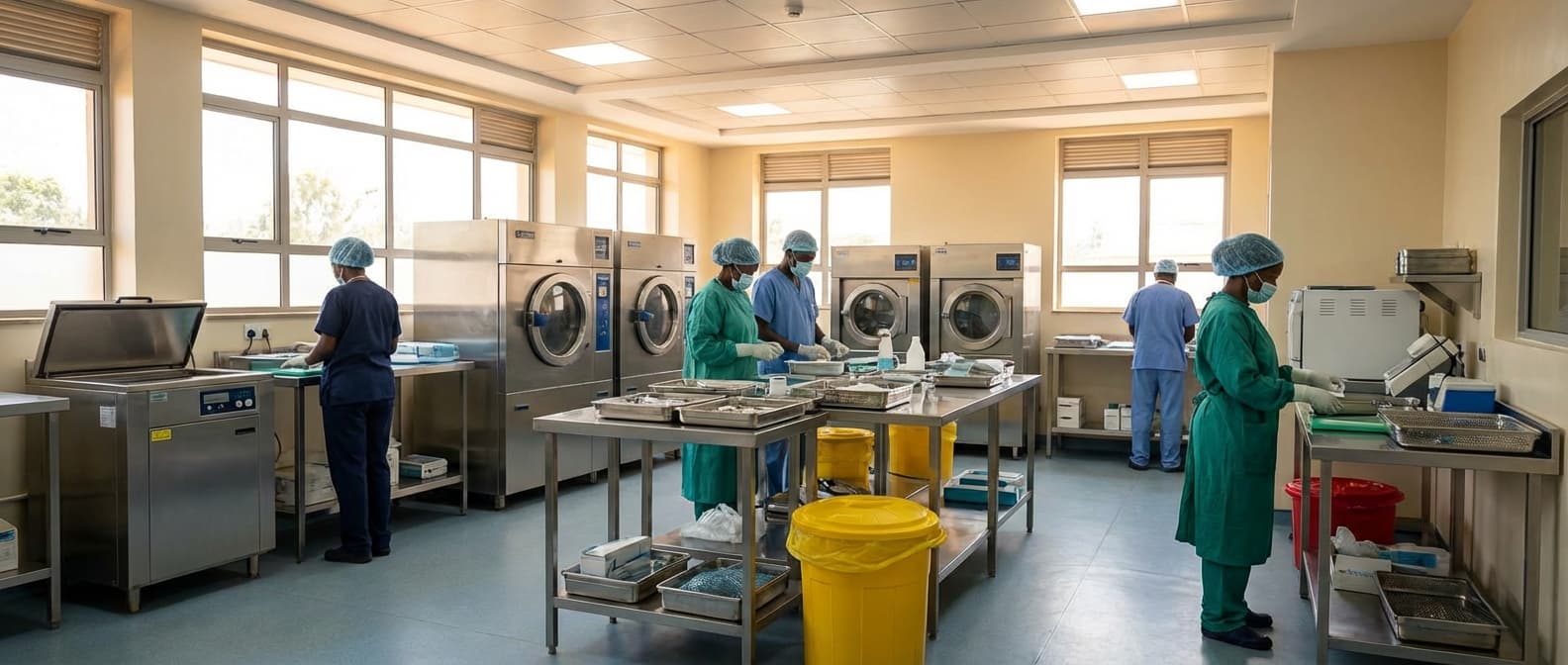
Autoclave Validation Support Service in Equatorial Guinea
Engineering Excellence & Technical Support
Autoclave Validation Support Service High-standard technical execution following OEM protocols and local regulatory frameworks.
Rigorous Temperature Mapping & Calibration
We provide comprehensive autoclave temperature mapping studies adhering to international standards (e.g., ISO 17665) to ensure uniform sterilization cycles. Our services include precise calibration of temperature sensors for unparalleled accuracy and documented verification.
Biological Indicator Performance Verification
Guaranteeing effective microbial inactivation is paramount. Our support includes the deployment and analysis of biological indicators, confirming the autoclave's ability to eliminate target microorganisms and providing auditable proof of sterilization efficacy.
Process Parameter Optimization & Cycle Development
Leveraging our expertise, we assist in optimizing critical autoclave parameters (time, temperature, pressure, steam quality) for specific loads and applications. This ensures efficient, validated sterilization cycles tailored to your unique operational needs in Equatorial Guinea.
What Is Autoclave Validation Support Service In Equatorial Guinea?
Autoclave validation support services in Equatorial Guinea are specialized offerings designed to ensure that steam sterilization equipment (autoclaves) consistently and effectively eliminate microbial contamination. This involves a rigorous, documented process that provides objective evidence that an autoclave performs according to pre-defined specifications and is suitable for its intended purpose, primarily the sterilization of medical devices, pharmaceutical products, and laboratory equipment. The service encompasses the design, execution, and reporting of validation protocols, adherence to international standards and local regulatory requirements, and the calibration and maintenance of associated monitoring equipment.
| Who Needs Autoclave Validation Support Service? | Typical Use Cases | ||
|---|---|---|---|
| Healthcare Facilities (Hospitals, Clinics, Dental Practices): For sterilization of surgical instruments, medical devices, and other reusable equipment to prevent healthcare-associated infections (HAIs). | Sterilization of reusable surgical instruments (scalpels, forceps, retractors, etc.). | Sterilization of diagnostic equipment and consumables. | Sterilization of dental instruments and tools. |
| Pharmaceutical Manufacturers: For sterilization of raw materials, packaging components, and finished products, as well as laboratory equipment used in quality control. | Sterilization of bulk pharmaceutical ingredients (APIs). | Sterilization of primary and secondary packaging materials. | Sterilization of laboratory glassware, media, and equipment used in sterile manufacturing environments. |
| Biotechnology Companies: For sterilization of laboratory equipment, media, and consumables used in research and production. | Sterilization of cell culture media and reagents. | Sterilization of laboratory glassware and plasticware. | Sterilization of bioreactor components and accessories. |
| Research and Development Laboratories (Academic and Industrial): For ensuring the sterility of equipment and materials used in experiments and analyses. | Sterilization of scientific equipment and glassware. | Sterilization of microbiological media and samples. | |
| Veterinary Clinics and Animal Research Facilities: For sterilization of surgical instruments and equipment. | Sterilization of veterinary surgical instruments. | Sterilization of animal husbandry equipment. | |
| Regulatory Bodies and Auditing Firms: To verify compliance with sterilization standards and ensure patient/product safety. | Auditing sterilization processes for regulatory compliance. |
Key Components of Autoclave Validation Support Service
- Installation Qualification (IQ): Verifying that the autoclave is installed correctly according to manufacturer specifications and relevant codes and standards.
- Operational Qualification (OQ): Testing the autoclave's operational parameters within the defined limits to ensure it functions as intended under various conditions.
- Performance Qualification (PQ): Conducting a series of sterilization cycles using biological and chemical indicators to demonstrate consistent efficacy in eliminating viable microorganisms under normal operating conditions.
- Validation Protocol Development: Creating detailed, study-specific protocols outlining the validation approach, test methods, acceptance criteria, and documentation requirements.
- IQ/OQ/PQ Execution: Performing the documented tests and data collection according to the approved protocols.
- Data Analysis and Reporting: Analyzing all collected data, generating comprehensive validation reports with clear conclusions, and providing recommendations for any deviations or improvements.
- Calibration and Maintenance Support: Ensuring that all measurement and monitoring devices used during validation are calibrated and that the autoclave itself is maintained to optimal performance levels.
- Revalidation Support: Providing services for periodic revalidation or revalidation after significant repairs or modifications to the autoclave.
Who Needs Autoclave Validation Support Service In Equatorial Guinea?
Autoclave validation is a critical process for ensuring the sterility of medical equipment, crucial for patient safety and compliance with international healthcare standards. In Equatorial Guinea, the need for robust autoclave validation support services is significant, particularly within the healthcare sector. This service ensures that autoclaves are functioning correctly and consistently achieving the required sterilization parameters, thus preventing the spread of infections and supporting the delivery of quality medical care. Without proper validation, facilities risk using inadequately sterilized instruments, leading to potentially catastrophic patient outcomes and significant reputational damage.
| Customer Type | Key Departments Requiring Support | Specific Needs & Challenges | |||
|---|---|---|---|---|---|
| Hospitals (Public and Private) | Sterilization Department/CSSD (Central Sterile Supply Department) | Surgical Wards | Infection Control Department | Maintenance Department | Ensuring consistent sterility for surgical instruments, compliance with national and international standards, routine validation, breakdown support, training for staff, procurement of new validated equipment. |
| Clinics and Medical Centers | Treatment Rooms | Sterilization Area (often integrated) | Administrative Department | Ensuring instrument safety for minor procedures, cost-effective validation solutions, basic training, compliance with local health regulations. | |
| Dental Practices | Sterilization Area | Dental Hygienists/Assistants | Practice Manager | Validating autoclaves for dental instruments (handpieces, mirrors, etc.), ensuring patient safety, regular maintenance checks, budget-friendly services. | |
| Laboratories (Medical and Research) | Microbiology Lab | Molecular Biology Lab | Research & Development Department | Ensuring sterility of media, glassware, and instruments used in diagnostic and research procedures, preventing contamination, compliance with GLP (Good Laboratory Practice) if applicable. | |
| Pharmaceutical Manufacturing Facilities | Quality Control Department | Production Department | Validation & Compliance Team | Sterilizing equipment and consumables used in drug manufacturing, ensuring product integrity and patient safety, strict adherence to GMP (Good Manufacturing Practice). | |
| Veterinary Clinics and Hospitals | Surgical Suite | Sterilization Area | Veterinary Technicians/Nurses | Ensuring sterile instruments for animal surgeries and procedures, maintaining animal health and welfare standards. | |
| NGO Healthcare Providers | Mobile Clinics | Established Clinics | Program Managers | Providing sterilization validation in resource-limited settings, training local staff, ensuring basic safety standards are met, often requiring tailored and cost-sensitive solutions. |
Target Customers and Departments for Autoclave Validation Support Services in Equatorial Guinea
- Hospitals (Public and Private)
- Clinics and Medical Centers
- Dental Practices
- Laboratories (Medical and Research)
- Pharmaceutical Manufacturing Facilities
- Veterinary Clinics and Hospitals
- Non-Governmental Organization (NGO) Healthcare Providers
Autoclave Validation Support Service Process In Equatorial Guinea
This document outlines the Autoclave Validation Support Service Process in Equatorial Guinea, detailing the workflow from initial client inquiry to the final execution of validation services. The process is designed to ensure that autoclaves meet stringent regulatory and operational standards for sterilization effectiveness. It involves a series of defined steps, from understanding client needs to performing tests and delivering comprehensive reports.
| Stage | Description | Key Activities | Deliverables/Outcomes |
|---|---|---|---|
| The client contacts the service provider with a requirement for autoclave validation. | Discuss scope of work, type of autoclave, regulatory requirements (e.g., WHO, local health authorities), client's specific concerns, and desired timeline. Gather preliminary information about the autoclave's make, model, capacity, and usage. Site visit may be scheduled for initial assessment. | Clear understanding of client's validation needs and objectives. Initial assessment of the autoclave's suitability for validation. |
| Based on the needs assessment, a detailed proposal is prepared and submitted to the client. | Develop a comprehensive proposal outlining the scope of validation (IQ, OQ, PQ), methodologies, testing procedures, timelines, required resources, and cost. Negotiate terms and conditions. Formalize the agreement through a contract or service order. | Client acceptance of the proposal. Signed contract/service order. Project kickoff. |
| Detailed planning and preparation for the on-site validation execution. | Develop a detailed validation protocol (including specific test points, parameters, and acceptance criteria). Schedule the validation activities with the client, ensuring minimal disruption to operations. Prepare all necessary equipment, consumables (biological indicators, chemical indicators, data loggers), and personnel. Confirm site access and any necessary permits. | Approved validation protocol. Confirmed schedule. Ready-to-use validation equipment and materials. |
| The core validation activities are performed at the client's facility. | Perform Installation Qualification (IQ) to verify correct installation. Conduct Operational Qualification (OQ) to verify the autoclave operates within its specified parameters. Execute Performance Qualification (PQ) to demonstrate the autoclave consistently sterilizes loads under normal operating conditions. This involves multiple test cycles with various challenging loads. | Raw data from all qualification tests (temperature, pressure, time, biological indicator results, chemical indicator results). Documented observations and deviations. |
| Collected data is analyzed to determine the autoclave's compliance with validation criteria. | Analyze all gathered data against the pre-defined acceptance criteria in the validation protocol. Evaluate the effectiveness of sterilization cycles. Prepare a comprehensive validation report that includes an executive summary, detailed test results, analysis, conclusions, and recommendations. Address any deviations or non-conformances. | Validation Report (IQ, OQ, PQ). Certificate of Validation (if applicable). Recommendations for improvement or re-validation. |
| Concluding the validation process and providing ongoing support. | Present the validation report to the client for review and acceptance. Discuss the findings and recommendations. Offer advice on re-validation schedules and maintenance. Provide ongoing technical support as needed. | Client acceptance of the validation report. Established re-validation schedule. Satisfied client relationship. |
Key Stages of the Autoclave Validation Support Service Process
- Initial Inquiry and Needs Assessment
- Proposal and Agreement
- Pre-Validation Planning and Preparation
- On-site Execution of Validation Tests
- Data Analysis and Reporting
- Post-Validation Support and Review
Autoclave Validation Support Service Cost In Equatorial Guinea
Providing autoclave validation support services in Equatorial Guinea involves a range of costs influenced by several key factors. These services are crucial for ensuring that sterilization equipment, particularly autoclaves, operates effectively and meets regulatory standards for healthcare, laboratory, and manufacturing facilities. The pricing is not a fixed rate but rather a dynamic calculation based on the specific needs and complexities of the validation process.
| Service Component | Estimated Cost Range (XAF - Central African CFA franc) | Notes |
|---|---|---|
| Initial Autoclave Validation (IQ/OQ/PQ for one standard autoclave) | 350,000 - 800,000 XAF | Covers basic validation for a typical laboratory or small healthcare facility autoclave. Price varies based on specific autoclave type and complexity of cycles. |
| Re-validation (e.g., Annual OQ/PQ for one standard autoclave) | 250,000 - 600,000 XAF | Typically less comprehensive than initial validation, focusing on performance verification. |
| Additional Autoclave Validation (per unit) | 200,000 - 450,000 XAF | Discounted rate when validating multiple autoclaves in a single project. |
| Complex Autoclave Validation (e.g., large industrial, specialized cycles) | 600,000 - 1,500,000+ XAF | For larger units, industrial autoclaves, or those with highly specialized sterilization protocols. |
| Travel and Logistics (depending on location) | 50,000 - 200,000+ XAF | Applicable for services outside major urban centers like Malabo and Bata. Can be significantly higher for remote areas. |
| Calibration of Validation Probes/Sensors | 75,000 - 150,000 XAF | Often an add-on service or included in comprehensive packages. |
| Detailed Report Generation and Documentation | Included in base service, but enhanced requirements may incur additional fees | Standard reports are expected, but extensive customization or specific compliance documentation will add cost. |
Key Pricing Factors for Autoclave Validation Support Services in Equatorial Guinea
- Scope of Validation: The extent of the validation plays a significant role. This includes the number of autoclaves to be validated, the size and type of each autoclave (e.g., gravity displacement, pre-vacuum), and the intended use (e.g., general laboratory, surgical instruments, pharmaceutical products). A single autoclave validation will naturally cost less than validating an entire suite of equipment.
- Type of Validation: Different stages of validation have varying costs. This can include Installation Qualification (IQ), Operational Qualification (OQ), and Performance Qualification (PQ). IQ verifies the correct installation, OQ confirms the equipment operates according to specifications, and PQ demonstrates consistent performance under typical operating conditions. A comprehensive validation encompassing all three stages will be more expensive.
- Frequency of Validation: Autoclaves typically require re-validation at predetermined intervals (e.g., annually, semi-annually) or after significant maintenance. The cost for routine re-validation might be structured differently than an initial validation.
- Geographic Location within Equatorial Guinea: While Equatorial Guinea is a relatively small country, accessibility to remote or challenging locations might incur additional travel and logistical costs for the validation team. Major cities like Malabo and Bata will generally have more standardized pricing.
- Service Provider's Expertise and Reputation: Established service providers with a strong track record, certified technicians, and sophisticated validation equipment may command higher fees. However, this often translates to higher quality and reliability of the service.
- Complexity of Sterilization Cycles: The complexity of the sterilization cycles being validated can impact cost. For instance, validating cycles for sensitive materials or for achieving specific sterility assurance levels might require more intricate testing and data analysis.
- Reporting and Documentation Requirements: The level of detail and formality required in the validation reports can influence costs. Detailed, auditable documentation that meets specific regulatory or client requirements will add to the service fee.
- Additional Services: Some providers may offer bundled services, such as preventative maintenance, calibration of probes and sensors, or training for in-house personnel, which would increase the overall cost but offer added value.
- Urgency of Service: If the validation is required on short notice or outside of regular working hours, premium charges may apply.
- Regulatory Compliance: If the validation needs to meet specific international or national regulatory standards (e.g., for pharmaceuticals or medical devices), the service provider must be equipped to perform and document these requirements, potentially leading to higher costs.
Affordable Autoclave Validation Support Service Options
Ensuring the efficacy of your autoclave through regular validation is a critical aspect of maintaining sterilization standards and regulatory compliance. Our affordable Autoclave Validation Support Service offers flexible options designed to fit various budgets and operational needs. We understand that cost-effectiveness is paramount, and we've developed value bundles and employ strategic cost-saving measures to provide high-quality validation without breaking your budget. This ensures you receive reliable, compliant validation while optimizing your spending.
| Value Bundle Name | Key Inclusions | Ideal For | Estimated Cost Savings (vs. à la carte) |
|---|---|---|---|
| Basic Validation Package | Essential Cycle Tests (e.g., temperature, pressure, time), Basic Report Generation | Small Clinics, Dental Offices, Veterinary Practices | 10-15% |
| Standard Validation Package | All Basic Inclusions + Biological Indicator Testing, Enhanced Data Analysis, Certificate of Validation | Medium-Sized Clinics, Hospitals, Laboratories | 15-20% |
| Premium Validation Package | All Standard Inclusions + Chemical Indicator Testing, Redundant Cycle Verification, Trend Analysis, Extended Warranty Support | High-Volume Sterilization Centers, Specialized Medical Facilities | 20-25% |
| Multi-Unit Discount Bundle | Package-based validation for 2+ autoclaves, with tiered discounts based on the number of units | Facilities with multiple sterilization units | Varies based on unit count (up to 30% on additional units) |
Our Affordable Autoclave Validation Support Service Options
- Basic Validation Package: Ideal for smaller practices or those with simpler sterilization needs. Includes essential validation parameters and reporting.
- Standard Validation Package: A comprehensive option for most clinics and facilities, covering a wider range of validation cycles and detailed analysis.
- Premium Validation Package: Designed for high-volume or complex sterilization environments, offering advanced testing, extended reporting, and priority scheduling.
- Custom Validation Solutions: We can tailor a validation plan specifically to your unique equipment, sterilization processes, and regulatory requirements.
- Multi-Unit Discounts: Significant savings when validating multiple autoclaves within the same facility.
- Annual Contract Benefits: Lock in preferred rates and ensure timely validation by scheduling your services a year in advance.
Verified Providers In Equatorial Guinea
Navigating healthcare in Equatorial Guinea requires a focus on verified providers, and Franance Health stands out as a leading choice due to its rigorous credentialing process, commitment to quality care, and comprehensive service offerings. In a region where reliable medical services are paramount, Franance Health's dedication to ensuring the competence and ethical practice of its healthcare professionals offers unparalleled peace of mind to individuals and organizations.
| Franance Health Advantage | Benefit for Patients in Equatorial Guinea | Verification Component |
|---|---|---|
| Uncompromising Quality Standards | Access to the highest caliber of medical professionals, ensuring effective and safe treatments. | Verification of medical licenses, board certifications, and ongoing professional development. |
| Reduced Risk and Enhanced Trust | Peace of mind knowing that providers are thoroughly vetted, minimizing the risk of unqualified practitioners. | Comprehensive background checks, including criminal records and malpractice history. |
| Holistic Healthcare Solutions | Ability to address a wide range of medical needs with confidence, from general health to specialized care. | Credentialing across various medical disciplines and specialties. |
| Culturally Competent Care | Improved communication and understanding with healthcare providers, leading to better health outcomes. | Assessment of cultural competency and language proficiency where applicable. |
| Efficient and Reliable Medical Access | Simplified and secure access to verified medical services, especially critical in remote or underserved areas. | Established partnerships with reputable clinics and hospitals, pre-vetted for compliance. |
Why Franance Health is the Superior Choice for Verified Healthcare in Equatorial Guinea:
- Rigorous Vetting and Credentialing: Franance Health implements a stringent verification process for all its healthcare providers. This includes thorough background checks, verification of medical licenses and certifications with relevant authorities, and assessment of practical experience and specialized skills. This meticulous approach ensures that only highly qualified and legitimate professionals are part of their network.
- Commitment to Quality and Patient Safety: Patient well-being is at the core of Franance Health's operations. They adhere to international standards of care and prioritize patient safety in all aspects of their service delivery. This commitment translates to a higher standard of medical treatment and a reduced risk of medical errors.
- Comprehensive Service Network: Franance Health offers a wide spectrum of medical services, covering primary care, specialized treatments, diagnostics, and emergency medical assistance. This broad network allows them to cater to diverse healthcare needs, from routine check-ups to complex medical situations, all through verified professionals.
- Cultural Sensitivity and Local Expertise: Understanding the local context and cultural nuances is crucial in healthcare. Franance Health's network includes providers with deep knowledge of Equatorial Guinea's healthcare landscape and cultural sensitivities, ensuring effective communication and patient-centered care.
- Proactive Health Management and Preventative Care: Beyond reactive treatment, Franance Health emphasizes proactive health management and preventative care. This forward-thinking approach aims to improve overall community health and reduce the burden of chronic diseases by connecting individuals with providers who can offer expert guidance and early intervention strategies.
- Streamlined Access and Support: Franance Health simplifies access to quality healthcare. They provide dedicated support to guide patients through the process of finding and engaging with the right healthcare professionals, making the experience efficient and less stressful.
Scope Of Work For Autoclave Validation Support Service
This Scope of Work (SOW) outlines the services to be provided by the Service Provider for Autoclave Validation Support. The objective is to ensure that the autoclave systems operate effectively, reliably, and consistently meet predefined performance criteria, thereby guaranteeing product sterility and compliance with regulatory requirements.
| Deliverable | Description | Standard Specification/Reference |
|---|---|---|
| IQ Protocol/Report | Confirms that the autoclave and its ancillary systems are installed according to design specifications and manufacturer's recommendations. | ISO 13485, FDA 21 CFR Part 820, Manufacturer's Installation Manual, Site Specific Installation Drawings. |
| OQ Protocol/Report | Verifies that the autoclave operates within its defined operating parameters and meets specified performance criteria across its operating range. | ISO 13485, FDA 21 CFR Part 820, Manufacturer's Operating Manual, relevant industry standards (e.g., AAMI ST46). |
| PQ Protocol/Report | Demonstrates that the autoclave consistently performs its intended function under normal operating conditions and with the actual materials to be sterilized. | ISO 13485, FDA 21 CFR Part 820, Relevant Sterilization Standards (e.g., EN 285, ISO 17665), Product Specific Validation Data, Process Challenge Devices (PCDs). |
| Validation Master Plan (VMP) | A high-level document outlining the overall validation strategy for all equipment, including autoclaves. | GAMP 5 (Good Automated Manufacturing Practice), FDA 21 CFR Part 11, Company's Validation Policy. |
| Calibration Certificates | Documentation verifying that critical measurement instruments (temperature sensors, pressure transducers, timers) are accurate and within tolerance. | Traceable to National/International Standards (e.g., NIST, NPL), Manufacturer's Calibration Specifications. |
| SOPs | Written instructions detailing the safe and effective operation, cleaning, and preventative maintenance of the autoclave. | Manufacturer's Operating Manual, Internal Quality Management System requirements. |
Technical Deliverables
- Validation Master Plan (VMP) or equivalent validation strategy document.
- IQ (Installation Qualification) Protocol and Report.
- OQ (Operational Qualification) Protocol and Report.
- PQ (Performance Qualification) Protocol and Report.
- Validation Summary Report.
- Requalification Protocols and Reports (as applicable).
- Calibration Certificates for critical instrumentation.
- Trend Analysis Reports for autoclave performance over time.
- Change Control Documentation (if changes necessitate revalidation).
- Standard Operating Procedures (SOPs) for autoclave operation and maintenance (as reviewed/updated).
- Training materials and records for end-users and maintenance personnel.
Service Level Agreement For Autoclave Validation Support Service
This Service Level Agreement (SLA) outlines the guaranteed response times and uptime for the Autoclave Validation Support Service provided by [Your Company Name] to [Client Name]. This SLA is an integral part of the Master Services Agreement (MSA) between the parties.
| Severity Level | Description | Response Time Target | Resolution Time Target (Best Effort) | Uptime Guarantee |
|---|---|---|---|---|
| Critical (P1) | Complete service outage affecting all autoclave validation processes. No workarounds available. | 1 hour | 4 business hours | 99.9% (calculated monthly) |
| High (P2) | Significant degradation of service impacting multiple autoclave validation processes. Potential workaround exists but is inefficient. | 2 business hours | 8 business hours | 99.9% (calculated monthly) |
| Medium (P3) | Partial service degradation affecting specific autoclave validation processes. A functional workaround is available. | 4 business hours | 3 business days | 99.9% (calculated monthly) |
| Low (P4) | Minor issues or requests for information that do not impact core autoclave validation functionality. Cosmetic issues or questions. | 8 business hours | 5 business days | 99.9% (calculated monthly) |
Key Performance Indicators (KPIs)
- Response Time: The maximum time allowed for [Your Company Name] to acknowledge and begin working on a reported issue.
- Resolution Time: The maximum time allowed for [Your Company Name] to resolve a reported issue, dependent on its severity.
- Uptime Guarantee: The percentage of time the Autoclave Validation Support Service is available and operational.
Frequently Asked Questions

Ready when you are
Let's scope your Autoclave Validation Support Service in Equatorial Guinea project in Equatorial Guinea.

Scaling healthcare logistics and technical systems across the entire continent.