
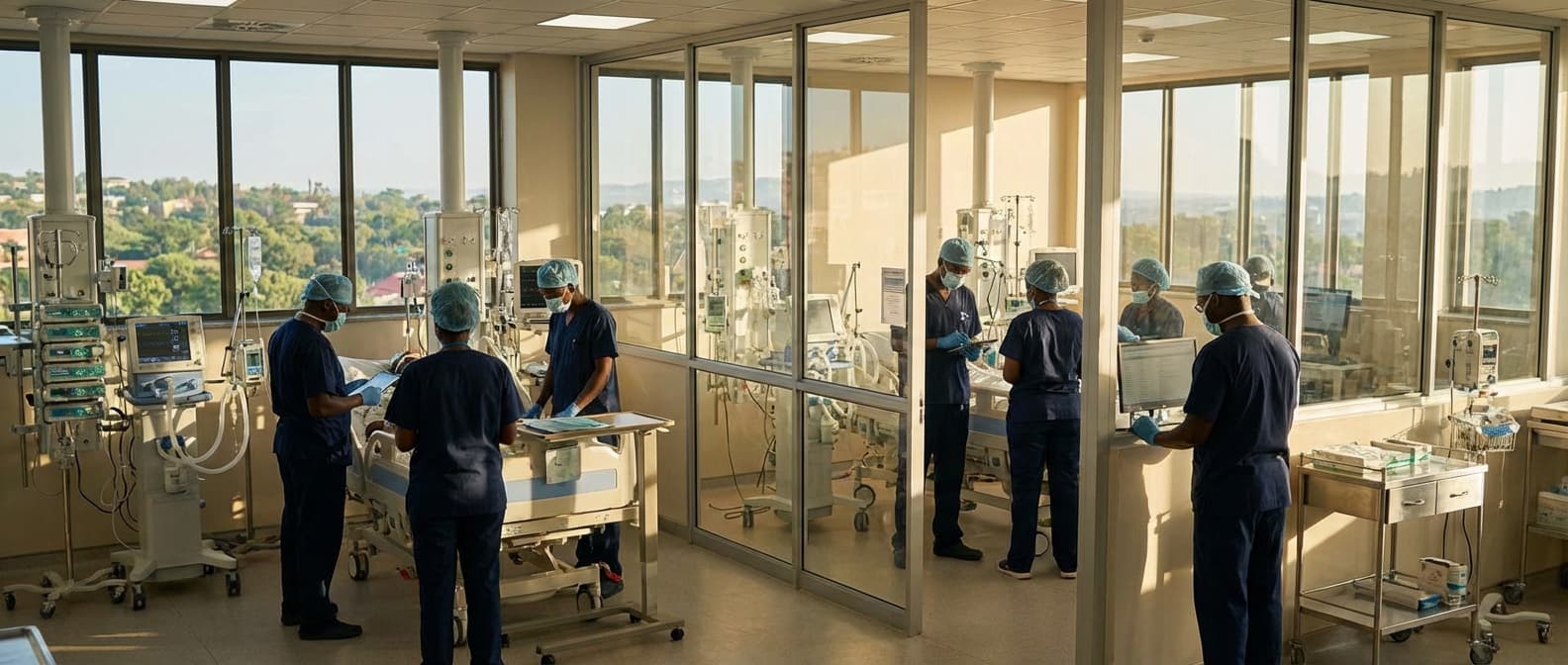
Ventilator Fleet Management & PM in Equatorial Guinea
Engineering Excellence & Technical Support
Preventive maintenance and fleet management for ICU ventilators High-standard technical execution following OEM protocols and local regulatory frameworks.
Predictive Maintenance for Uninterrupted Ventilation
Leveraging advanced analytics on real-time ventilator telemetry and historical performance data to predict potential component failures and schedule proactive maintenance. This minimizes unplanned downtime, ensuring continuous critical respiratory support for patients across Equatorial Guinea, especially in remote or challenging logistical areas.
Centralized Fleet Monitoring & Optimization
Implementing a robust cloud-based platform for real-time tracking and management of the entire ventilator fleet. This allows for immediate identification of operational status, location, and performance metrics, enabling efficient resource allocation, rapid response to emergent needs, and optimized utilization across all healthcare facilities in Equatorial Guinea.
Streamlined Preventive Maintenance Schedules & Compliance
Automating the generation and tracking of preventive maintenance schedules based on manufacturer recommendations and usage patterns. This ensures all ventilators adhere to critical service intervals, enhancing reliability, extending equipment lifespan, and guaranteeing regulatory compliance throughout Equatorial Guinea's healthcare network.
What Is Ventilator Fleet Management & Pm In Equatorial Guinea?
Ventilator Fleet Management & Preventive Maintenance (PM) in Equatorial Guinea refers to the comprehensive system of planning, organizing, executing, and monitoring the operational readiness and lifecycle of mechanical ventilation devices within healthcare facilities. This service encompasses a range of activities designed to ensure that ventilators are consistently available, functioning within specified parameters, and are maintained to maximize their lifespan and reliability. Key objectives include optimizing asset utilization, minimizing downtime, ensuring patient safety, and complying with regulatory and operational standards. The service is crucial for healthcare institutions that rely on mechanical ventilation for patient care, particularly in critical care settings, operating rooms, and emergency response scenarios.
| Stakeholder/Entity | Need for Ventilator Fleet Management & PM | Typical Use Cases |
|---|---|---|
| Hospitals and Clinics (Public & Private) | Essential for ensuring patient safety, maintaining operational continuity in critical care, managing capital expenditures, and complying with healthcare regulations. | Managing a diverse fleet of ventilators across ICUs, emergency departments, operating rooms, and post-anesthesia care units (PACUs). Planning for seasonal surges in respiratory illnesses. Ensuring readiness for public health emergencies. |
| Government Health Ministries & Agencies | Crucial for national health preparedness, resource allocation, setting standards for medical equipment, and overseeing public health infrastructure. | Developing national ventilator reserve strategies. Facilitating procurement and distribution of ventilators to underserved regions. Establishing national maintenance and training frameworks. Monitoring equipment standards. |
| Biomedical Engineering Departments | Direct responsibility for the technical upkeep, repair, and lifecycle management of medical equipment, including ventilators. Ensuring compliance with technical specifications and safety standards. | Performing scheduled PM on all inventoried ventilators. Responding to urgent repair calls. Managing spare parts inventory. Conducting performance verification tests. Training clinical staff on basic operational checks. |
| Clinical Staff (Physicians, Nurses, Respiratory Therapists) | Reliance on ventilators for patient treatment necessitates their assured functionality. Understanding basic operational checks and reporting malfunctions promptly. | Daily functional checks of ventilators before patient connection. Identifying and reporting any alarms or abnormal ventilator behavior. Understanding basic operational modes and settings for patient management. |
| Medical Equipment Manufacturers & Service Providers | Providing technical expertise, spare parts, and specialized maintenance services. Ensuring continued support for their product lines. | Performing manufacturer-recommended PM and specialized repairs. Providing technical training on specific ventilator models. Supplying genuine spare parts. Offering extended service contracts. |
Key Components of Ventilator Fleet Management & PM
- Inventory Management: Establishing and maintaining an accurate, up-to-date inventory of all ventilator units, including model, serial number, acquisition date, location, and current status.
- Deployment and Allocation: Strategic planning for ventilator distribution across departments and facilities based on anticipated demand, patient acuity, and surge capacity requirements.
- Calibration and Performance Verification: Regularly scheduled testing and adjustment of ventilator parameters to ensure accuracy, precision, and adherence to manufacturer specifications.
- Routine Inspections and Cleaning: Periodic visual inspections for damage, wear, and tear, along with thorough cleaning and disinfection protocols to prevent cross-contamination and maintain hygiene.
- Corrective Maintenance and Repair: Prompt identification, diagnosis, and repair of malfunctions or failures to restore ventilator functionality.
- Software Updates and Upgrades: Management and implementation of firmware and software updates to enhance performance, introduce new features, and address security vulnerabilities.
- Spare Parts Management: Strategic procurement, stocking, and inventory control of essential spare parts to minimize repair lead times.
- Training and Competency Assessment: Ensuring that biomedical engineering personnel and clinical staff responsible for operating and maintaining ventilators possess the necessary knowledge and skills through ongoing training and competency assessments.
- Documentation and Record Keeping: Meticulous documentation of all maintenance activities, repairs, inspections, calibrations, and user training for compliance, historical analysis, and audit purposes.
- End-of-Life Planning and Disposal: Developing strategies for the decommissioning, refurbishment, or responsible disposal of aging or obsolete ventilator units.
- Risk Management and Safety Protocols: Implementing procedures to mitigate risks associated with ventilator use and failure, ensuring patient and operator safety.
- Budgeting and Cost Control: Financial planning for the acquisition, maintenance, repair, and eventual replacement of ventilator assets.
Who Needs Ventilator Fleet Management & Pm In Equatorial Guinea?
Ventilator fleet management and preventative maintenance (PM) are critical for ensuring the reliable operation of life-saving respiratory support equipment. In Equatorial Guinea, as in any nation, robust systems for managing these fleets are essential, particularly within the healthcare sector. This involves not just tracking the location and status of ventilators, but also implementing rigorous PM schedules to prevent breakdowns and extend the lifespan of these complex medical devices. The need is amplified by the potential for challenges in accessing spare parts, specialized technical expertise, and consistent power supply, all of which can impact the effectiveness of ventilator deployment and maintenance.
| Customer/Department | Key Needs & Responsibilities Related to Ventilator Fleet Management & PM | Impact of Inadequate Management |
|---|---|---|
| Hospitals (ICUs, ERs, ORs) | Ensuring ventilators are operational for immediate patient needs, scheduling regular PM, tracking usage and repair history, managing spare parts. | Delayed patient care, increased morbidity/mortality, higher repair costs due to unaddressed minor issues, potential for equipment failure during critical moments. |
| Ministry of Health | National inventory of ventilators, strategic allocation of resources, setting maintenance standards, overseeing procurement and disposal, ensuring equitable access. | Inefficient distribution of life-saving equipment, potential for widespread equipment obsolescence or breakdown, inability to respond effectively to public health crises. |
| Regional Health Authorities | Local resource management, ensuring adherence to PM schedules at regional facilities, supporting local technical staff, reporting on equipment status. | Disparities in healthcare quality between regions, underutilization of available ventilators, increased burden on central authorities for localized issues. |
| Emergency Medical Services (EMS) | Maintenance of portable ventilators for transport, ensuring battery life and operational readiness, timely repairs to minimize downtime. | Compromised pre-hospital care, inability to provide respiratory support during critical patient transfers, potential for equipment failure en route to a hospital. |
| Disaster Management Agencies | Rapid deployment of functional ventilators during emergencies, maintaining a surge capacity of ready-to-use equipment, coordinating logistics for maintenance and repair under pressure. | Inability to cope with increased demand during crises, leading to severe shortages and overwhelming healthcare facilities. |
| NGOs/International Aid Organizations | Managing fleets donated or deployed for specific projects, ensuring sustainable maintenance practices, training local personnel, reporting on equipment impact. | Short lifespan of donated equipment, unmet project goals due to malfunctioning devices, lack of long-term sustainability for healthcare initiatives. |
| Medical Equipment Suppliers/Service Providers | Proactive PM scheduling, efficient diagnostic and repair services, managing spare parts inventory, providing technical training to hospital staff. | Increased emergency repair calls, higher operational costs, potential damage to reputation, difficulty in meeting service level agreements. |
Target Customers & Departments in Equatorial Guinea Requiring Ventilator Fleet Management & PM
- Hospitals (Public and Private): The primary beneficiaries, encompassing all facilities that utilize ventilators for patient care, from intensive care units (ICUs) to emergency departments and operating rooms.
- Ministry of Health: Responsible for national healthcare policy, resource allocation, and ensuring the availability and functionality of medical equipment across the country.
- Regional Health Authorities: Overseeing healthcare delivery within specific provinces or regions, ensuring that local health facilities have the necessary equipment and maintenance support.
- Emergency Medical Services (EMS): Including ambulance services and rapid response teams that rely on portable ventilators for pre-hospital care and patient transport.
- Disaster Management Agencies: Organizations involved in preparedness and response to public health emergencies, natural disasters, or humanitarian crises where an immediate surge in ventilator capacity may be required.
- Non-Governmental Organizations (NGOs) and International Aid Organizations: Those operating healthcare programs or providing medical equipment and support in Equatorial Guinea.
- Medical Equipment Suppliers and Service Providers: Companies that sell, install, and maintain medical equipment, including ventilators. Effective fleet management can streamline their service delivery and parts inventory.
Ventilator Fleet Management & Pm Process In Equatorial Guinea
This document outlines the workflow for Ventilator Fleet Management and Preventive Maintenance (PM) processes in Equatorial Guinea. It details the steps involved from the initial inquiry or need identification through to the successful execution of maintenance tasks, ensuring the optimal operational status of the ventilator fleet.
| Step | Description | Key Activities | Responsible Parties | Key Deliverables/Outcomes |
|---|---|---|---|---|
| The process begins with a request or identification of a need for ventilator maintenance, either scheduled PM or an unscheduled repair due to malfunction. | Receiving maintenance requests, identifying units requiring PM based on schedules, reporting critical equipment failures. | Healthcare Facilities (Hospitals, Clinics), Ministry of Health, Biomedical Engineering Department, Field Service Technicians. | Formalized maintenance request, identified equipment requiring attention. |
| Upon receiving an inquiry, a thorough assessment is conducted to determine the scope of work, required resources, and to develop a maintenance plan. | Reviewing maintenance history, diagnosing issues (if repair), identifying required parts and tools, scheduling maintenance windows, assessing site access and safety. | Biomedical Engineering Department, Senior Technicians, Service Coordinators. | Maintenance plan, list of required parts and tools, scheduled date/time for service. |
| Ensuring all necessary parts, consumables, and tools are available and transported to the designated location. | Ordering and sourcing genuine spare parts and consumables, coordinating transportation of equipment and personnel to site, customs clearance (if applicable). | Procurement Department, Logistics Team, Service Coordinators. | Availability of all required materials, successful transportation to site. |
| Preparing the healthcare facility environment for safe and efficient maintenance activities. | Ensuring safe access to the equipment, clearing the work area, establishing power supply (if needed), coordinating with facility staff. | Facility Management, Healthcare Staff, Field Service Technicians. | Safe and accessible work environment, cooperation from facility staff. |
| Performing the scheduled maintenance tasks on the ventilators according to manufacturer specifications and best practices. | Cleaning, inspecting, lubricating, replacing worn parts, performing functional checks, software updates (if applicable). | Field Service Technicians, Biomedical Engineers. | Completed PM tasks, properly maintained ventilators. |
| Verifying that the ventilators are functioning within acceptable parameters and are accurately calibrated. | Performing diagnostic tests, running simulations, calibrating sensors and alarms, ensuring all safety features are operational. | Field Service Technicians, Biomedical Engineers. | Calibrated and tested ventilators, performance verification reports. |
| Meticulously recording all maintenance activities, findings, and outcomes. | Updating equipment maintenance logs, completing service reports, documenting parts used and labor hours, generating certificates of service. | Field Service Technicians, Service Coordinators, Biomedical Engineering Department. | Comprehensive service reports, updated maintenance records, compliance documentation. |
| Ensuring the long-term effectiveness of the maintenance performed and identifying areas for improvement in the process. | Monitoring equipment performance post-maintenance, analyzing maintenance data for trends, providing feedback on parts availability and technician performance, updating PM schedules based on findings. | Biomedical Engineering Department, Service Managers, Ministry of Health. | Improved equipment reliability, optimized PM strategies, enhanced fleet management. |
Ventilator Fleet Management & PM Process Workflow
- Inquiry/Need Identification
- Assessment & Planning
- Procurement & Logistics
- Site Preparation & Access
- Preventive Maintenance Execution
- Testing & Calibration
- Documentation & Reporting
- Follow-up & Review
Ventilator Fleet Management & Pm Cost In Equatorial Guinea
Managing a ventilator fleet and ensuring effective preventative maintenance (PM) in Equatorial Guinea presents a unique set of economic considerations. The cost of these services is influenced by a combination of global pricing trends for medical equipment and specific local factors within Equatorial Guinea. These local factors include the cost of labor, the availability of specialized technicians and spare parts, import duties and taxes, transportation logistics, and the overall economic stability and purchasing power within the country. Understanding these elements is crucial for accurate budgeting and for negotiating fair pricing for ventilator fleet management and PM services. The price ranges provided below are indicative and subject to significant fluctuation based on the specific services required, the types and number of ventilators in the fleet, and the vendor providing the services. It's essential to obtain detailed quotes from multiple reputable providers operating in or serving Equatorial Guinea.
| Service Component | Estimated Monthly/Annual Cost (XAF) | Notes/Assumptions |
|---|---|---|
| Basic Preventative Maintenance (Per Ventilator, Annual) | 150,000 - 400,000 | Covers routine checks, calibration, filter replacement. Assumes standard adult ventilators. May be higher for critical care or neonatal models. |
| Comprehensive Fleet Management (Monthly Service Fee) | 200,000 - 750,000+ | Includes basic PM, inventory management, scheduling, reporting, and basic troubleshooting. Price varies significantly with fleet size and complexity. |
| Emergency Repair Call-out Fee (Per Incident) | 50,000 - 200,000 (plus parts) | Covers technician travel and initial assessment. Does not include cost of replacement parts. |
| Major Component Replacement (Per Incident) | 300,000 - 2,000,000+ | Cost of parts and labor for significant repairs (e.g., compressor, sensor replacement). Highly dependent on the part and ventilator model. |
| On-site Technician Training (Per Session) | 250,000 - 800,000 | For hospital staff to perform basic checks and troubleshooting. Duration and trainer expertise will influence cost. |
| Spare Parts Inventory Management (Annual Contract) | 100,000 - 500,000+ | Fee for managing and stocking essential spare parts. May be a percentage of inventory value. |
| Logistics & Transportation (Variable) | 50,000 - 300,000+ (per trip/delivery) | Highly dependent on distance, terrain, and urgency. Can be a significant factor in remote areas. |
| Import Duties & Taxes (Variable) | 5% - 30% (of imported goods value) | Applicable to imported spare parts and new equipment. Can fluctuate based on government policy. |
Key Pricing Factors for Ventilator Fleet Management & PM in Equatorial Guinea:
- Type and Age of Ventilators: More complex, newer, or specialized ventilators often have higher PM costs and require more specialized management.
- Fleet Size: Larger fleets may benefit from economies of scale, potentially reducing per-unit costs for management and PM.
- Service Level Agreements (SLAs): The comprehensiveness of the SLA (e.g., response time, scope of services, included parts) directly impacts pricing.
- Preventative Maintenance Schedule: Frequency of PM (e.g., quarterly, semi-annually, annually) affects the total cost.
- Availability of Local Technicians: The presence of skilled, trained technicians locally can reduce travel costs and delays.
- Import Duties and Taxes: Taxes on imported spare parts and equipment can significantly increase costs.
- Logistics and Transportation: The cost of transporting technicians, spare parts, and even the ventilators themselves, especially in remote areas, is a factor.
- Currency Exchange Rates: Fluctuations in the exchange rate of the local currency (CFA Franc) against major international currencies can impact costs for imported parts and services.
- Vendor's Overhead and Profit Margin: Local and international vendors will have different operational costs and profit expectations.
- Geographic Location within Equatorial Guinea: Accessibility to major cities or healthcare hubs can influence transportation costs.
- Cost of Spare Parts: The global price of original equipment manufacturer (OEM) parts, plus any import markups, is a significant component.
- Training and Certification: Costs associated with ensuring technicians are properly trained and certified on specific ventilator models.
Affordable Ventilator Fleet Management & Pm Options
Managing a ventilator fleet effectively is crucial for ensuring patient care and optimizing operational costs. Affordable fleet management and preventative maintenance (PM) options can significantly reduce expenses while maximizing equipment uptime. This involves a strategic approach to maintenance scheduling, repair management, and equipment lifecycle planning. Value bundles are designed to offer comprehensive services at a bundled price, providing predictability and often better overall value compared to ad-hoc service contracts. Cost-saving strategies focus on proactive maintenance, efficient repair processes, and leveraging technology to monitor equipment performance.
| Value Bundle Type | Key Inclusions | Primary Cost-Saving Benefit | Ideal For |
|---|---|---|---|
| Basic PM & Calibration Bundle | Scheduled preventative maintenance, functional testing, calibration, and minor part replacements. | Reduced unexpected breakdowns, extended equipment lifespan, improved accuracy. | Organizations with a stable fleet and predictable maintenance needs. |
| Comprehensive Service & Repair Bundle | Includes Basic PM plus on-demand repair services, access to loaner equipment, and priority technical support. | Minimizes equipment downtime, predictable repair costs, faster resolution of issues. | Hospitals facing higher equipment usage and a greater need for rapid response. |
| Full-Service Fleet Management Bundle | Encompasses all aspects including PM, repair, parts management, asset tracking, data analytics, and strategic replacement planning. | Significant reduction in total cost of ownership, optimized fleet utilization, proactive obsolescence management. | Large healthcare systems or organizations with complex and diverse ventilator fleets. |
| Customizable Service Plans | Tailored service agreements based on specific fleet size, equipment types, usage patterns, and budget constraints. | Maximized ROI by aligning services precisely with needs, avoiding unnecessary expenses. | Organizations with unique requirements or seeking highly specific cost-optimization. |
Key Components of Affordable Ventilator Fleet Management & PM
- Proactive Preventative Maintenance (PM) Scheduling
- Optimized Repair & Refurbishment Processes
- Equipment Lifecycle Management & Replacement Planning
- Remote Monitoring & Performance Analytics
- Staff Training & Equipment Handling Education
- Strategic Sourcing of Parts & Service Providers
- Bundled Service Agreements & Value Packages
Verified Providers In Equatorial Guinea
In Equatorial Guinea, the landscape of healthcare providers is diverse, and ensuring access to qualified and trustworthy medical professionals is paramount. Franance Health has established itself as a leading entity in this sector, offering a range of services underpinned by rigorous credentialing and a commitment to patient well-being. Their focus on verified providers ensures that patients receive care from individuals who meet established standards of competence, ethical conduct, and professional development. This dedication to verification not only builds trust but also contributes to a higher quality of healthcare outcomes across the nation.
| Provider Type | Franance Health Verification Process | Benefits for Patients |
|---|---|---|
| General Practitioners | Verification of medical license, educational degrees, and at least 2 years of clinical experience. | Access to reliable primary care, accurate diagnoses, and timely referrals. |
| Specialist Physicians (e.g., Cardiologists, Neurologists) | Includes all GP verification plus confirmation of specialized training, board certifications, and a minimum of 5 years of practice in their specialty. | Expertise in complex conditions, advanced treatment options, and specialized diagnostic procedures. |
| Surgeons | Rigorous verification of surgical training, residency completion, professional affiliations, and a demonstrated record of successful procedures. | Safe and effective surgical interventions, with a focus on patient recovery and minimized risk. |
| Nurses (RNs, LPNs) | Verification of nursing licenses, educational qualifications, and relevant clinical experience, with a focus on patient care standards. | High-quality bedside care, medication administration, and patient monitoring. |
| Allied Health Professionals (e.g., Pharmacists, Radiologists) | Verification of professional licenses, specific training, and adherence to regulatory standards in their respective fields. | Accurate dispensing of medications, precise diagnostic imaging, and supportive healthcare services. |
Key Credentials and Attributes of Franance Health Verified Providers:
- Medical Licenses and Certifications: All providers undergo a thorough verification of their official medical licenses and certifications from recognized national and international bodies.
- Educational Background Verification: Franance Health confirms the authenticity of degrees and diplomas from accredited medical institutions.
- Professional Experience Validation: Prior work history and experience are meticulously checked to ensure a proven track record of effective patient care.
- Continuous Professional Development (CPD): Providers are required to demonstrate ongoing engagement in training and education to stay abreast of the latest medical advancements and practices.
- Ethical Conduct and Background Checks: Comprehensive background checks are conducted to ensure a commitment to ethical medical practice and patient safety.
- Specialty Expertise: Verification extends to specific areas of medical expertise, ensuring patients are matched with specialists best suited to their needs.
- Language Proficiency: For effective communication and understanding, the language proficiency of healthcare providers is also assessed.
Scope Of Work For Ventilator Fleet Management & Pm
This Scope of Work (SOW) outlines the requirements for comprehensive Ventilator Fleet Management and Preventive Maintenance (PM) services. The objective is to ensure the optimal performance, safety, and longevity of the hospital's entire ventilator fleet through proactive maintenance, timely repairs, and efficient asset tracking. This SOW details the technical deliverables, standard specifications, and performance expectations for the selected vendor.
| Category | Description | Standard Specification / Deliverable | Metrics / Acceptance Criteria |
|---|---|---|---|
| Fleet Inventory Management | Establish and maintain a complete, accurate, and real-time inventory of all ventilators. | Digital inventory database including: Asset Tag ID, Manufacturer, Model, Serial Number, Purchase Date, Location, Current Status (In Use, PM Due, Under Repair, Decommissioned), Service History. Includes unique identifier for each device. | 99% accuracy of inventory data within 24 hours of any change. Quarterly inventory audits by the vendor. Digital access for authorized hospital personnel. |
| Preventive Maintenance (PM) | Execute scheduled PM on all ventilators according to manufacturer recommendations and established schedules. | PM checklist based on manufacturer guidelines, including functional tests, calibration, cleaning, and replacement of wear parts. Documentation of all PM activities, including date, technician, tasks performed, and parts used. PM schedule will be developed collaboratively with the hospital. | 100% completion of scheduled PMs within the defined window (+/- 7 days). PM success rate of 98% (successful completion without immediate subsequent failure). PM documentation available digitally within 48 hours of completion. |
| Corrective Maintenance & Repair | Respond to and resolve reported equipment malfunctions and failures in a timely manner. | On-site response time for critical failures: 2 hours. On-site response time for non-critical failures: 4 hours. Resolution of repairs within 24 hours for most common issues, with a defined escalation path for complex repairs. Use of OEM-approved parts. Detailed repair reports including diagnosis, parts replaced, labor hours, and total cost. | Mean Time to Repair (MTTR) for critical failures: < 4 hours. Mean Time Between Failures (MTBF) for specific models to be tracked and reported. First-time fix rate: > 90%. Customer satisfaction score for repair services: > 90%. |
| Calibration & Performance Verification | Ensure all ventilators are calibrated and perform within manufacturer specifications. | Regular calibration of essential parameters (e.g., flow, pressure, volume, oxygen concentration) using traceable calibration equipment. Documentation of all calibration events, including pre- and post-calibration readings. | 100% of ventilators calibrated annually or as per manufacturer recommendation. Calibration accuracy within manufacturer specified tolerances. Calibration certificates readily available. |
| Service & Support | Provide ongoing technical support and training. | 24/7 phone support for emergency issues. Access to technical documentation and service manuals. Training for hospital biomedical engineering staff on basic troubleshooting and PM procedures for specific ventilator models. Regular service review meetings with hospital stakeholders. | Availability of support staff within 30 minutes during business hours for non-emergency inquiries. Provision of training sessions as agreed upon. Monthly or quarterly service review meetings. |
| Reporting & Analytics | Provide comprehensive reports on fleet performance and maintenance activities. | Monthly reports including: fleet status summary, PM completion rates, repair history, MTTR, MTBF, parts usage, and cost analysis. Annual fleet performance report and recommendations for optimization or replacement. Customizable reporting as needed. | Reports delivered by the 5th business day of the following month. Reports are accurate, clear, and actionable. Vendor to present findings and recommendations during service review meetings. |
| Regulatory Compliance | Ensure all maintenance activities comply with relevant regulations and standards. | Adherence to FDA, Joint Commission, CMS, and other applicable regulatory body requirements. Maintenance procedures documented to meet these standards. | No regulatory findings related to ventilator maintenance during audits or inspections. Vendor to provide documentation of their quality management system. |
| Parts Management | Procure and manage necessary replacement parts. | Maintain an adequate inventory of critical and commonly used OEM-approved spare parts. Efficient ordering and delivery system for non-stocked parts. Detailed tracking of parts used for each service event. | Availability of 95% of common spare parts within 24 hours. Parts costs to be transparent and competitive. Inventory of critical parts to be managed to minimize downtime. |
Key Objectives
- Ensure all ventilators are in optimal working condition and meet manufacturer specifications.
- Minimize equipment downtime and associated patient care disruptions.
- Maximize the lifespan of the ventilator fleet.
- Maintain a comprehensive and accurate inventory of all ventilators.
- Adhere to all relevant regulatory and accreditation standards.
- Provide detailed reporting on fleet status, maintenance activities, and costs.
Service Level Agreement For Ventilator Fleet Management & Pm
This Service Level Agreement (SLA) outlines the terms and conditions for the management and preventive maintenance (PM) of the Ventilator Fleet, ensuring optimal performance and availability. The SLA defines response times for critical events and establishes uptime guarantees for the fleet.
| Service/Event Type | Response Time Guarantee (for Critical Events) | Uptime Guarantee (Fleet-wide Average) |
|---|---|---|
| Critical Event - Ventilator Malfunction | Within 2 hours (on-site presence or remote diagnostic initiation) | 98% |
| Preventive Maintenance (PM) Scheduling | Within 48 hours of notification for scheduling | N/A (PM scheduling is proactive) |
| Routine Technical Support (Non-Critical) | Within 8 business hours (remote or phone support) | N/A |
| Emergency Parts Replacement (for Critical Events) | Guaranteed availability of critical spare parts within 24 hours of diagnosis | N/A |
Key Definitions
- Ventilator Fleet: All ventilators owned or leased by [Client Name] that are subject to this SLA.
- Preventive Maintenance (PM): Scheduled maintenance activities performed on ventilators to prevent failures and ensure optimal operational status.
- Critical Event: Any unscheduled downtime or malfunction of a ventilator that directly impacts patient care or poses an immediate risk.
- Response Time: The time from notification of a Critical Event by the Client to the initiation of troubleshooting or repair actions by the Service Provider.
- Uptime Guarantee: The percentage of time a ventilator is expected to be operational and available for use.
- Service Provider: [Service Provider Name], responsible for ventilator fleet management and PM.
- Client: [Client Name], the owner/operator of the ventilator fleet.
Frequently Asked Questions

Ready when you are
Let's scope your Ventilator Fleet Management & PM in Equatorial Guinea project in Equatorial Guinea.

Scaling healthcare logistics and technical systems across the entire continent.