
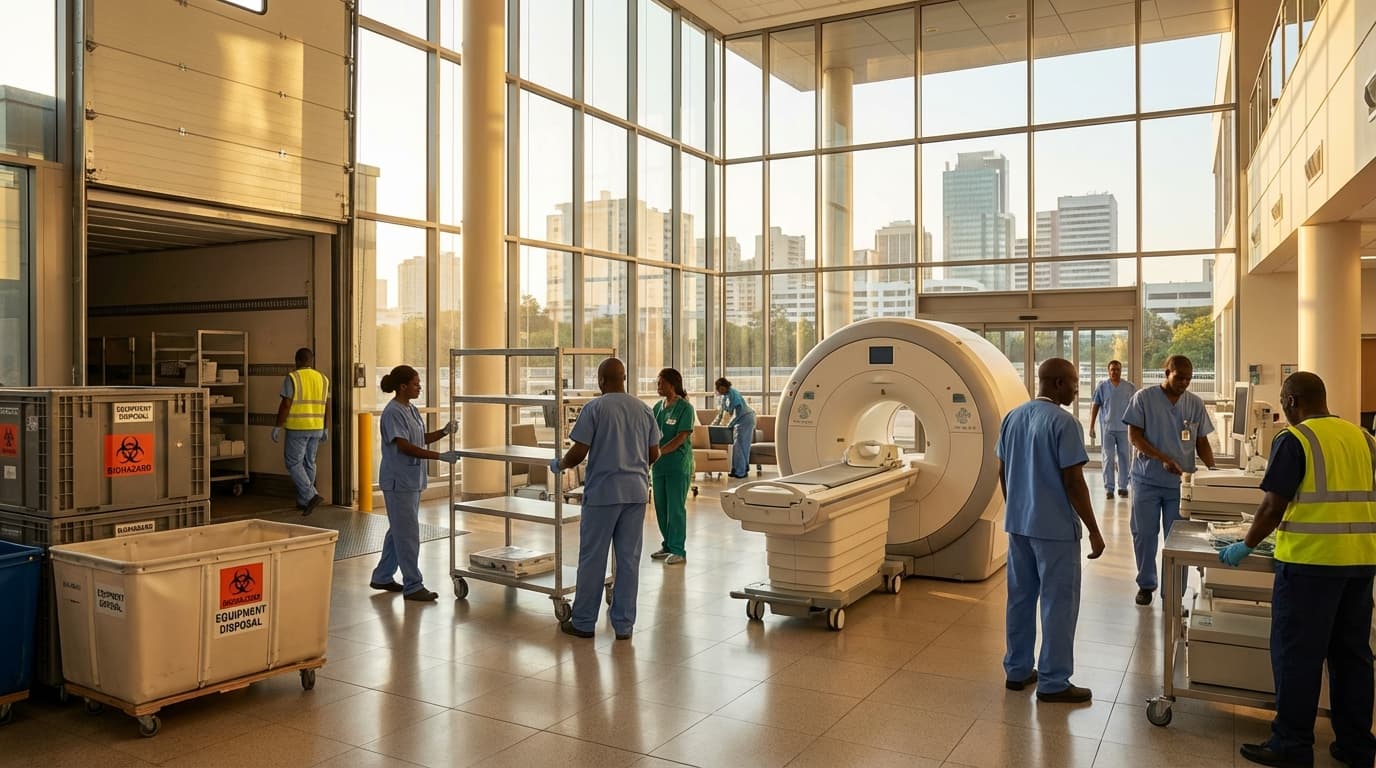
Medical E-Waste Handling & Recycling Coordination Service in Equatorial Guinea
Engineering Excellence & Technical Support
Medical E-Waste Handling & Recycling Coordination Service High-standard technical execution following OEM protocols and local regulatory frameworks.
Specialized Medical Waste Logistics
Our service ensures the safe and compliant collection, transportation, and tracking of all medical waste streams, adhering to stringent international and national regulations for hazardous materials. We utilize temperature-controlled and secure vehicles designed for biohazardous and sharp waste, guaranteeing containment and preventing environmental contamination from point of generation to the recycling facility.
Advanced Recycling & Treatment Technologies
We employ cutting-edge recycling and treatment technologies to process medical e-waste, prioritizing resource recovery and safe disposal. This includes secure data destruction for electronic components, separation of valuable materials like precious metals, and environmentally sound treatment methods to neutralize hazardous substances before final disposal or repurposing.
Comprehensive Compliance & Reporting
Our service provides end-to-end documentation and certified reporting for all handled medical e-waste. We offer transparent chain-of-custody tracking, Certificates of Destruction, and detailed environmental impact reports, ensuring full regulatory compliance for healthcare facilities in Equatorial Guinea and facilitating their adherence to global sustainability standards.
What Is Medical E-waste Handling & Recycling Coordination Service In Equatorial Guinea?
Medical e-waste handling and recycling coordination services in Equatorial Guinea encompass the strategic management, collection, transportation, treatment, and environmentally sound disposal or recycling of discarded electrical and electronic equipment originating from healthcare facilities. This service is crucial for mitigating the significant environmental and health risks associated with improper disposal of medical electronics, which often contain hazardous substances and can harbor infectious materials. The coordination aspect emphasizes the integration of various stakeholders, including healthcare providers, waste management companies, regulatory bodies, and recycling/disposal facilities, to ensure a streamlined and compliant process.
| Who Needs Medical E-Waste Handling & Recycling Coordination Service? | Typical Use Cases | ||||
|---|---|---|---|---|---|
| Hospitals and Healthcare Institutions: Public, private, and non-governmental hospitals, clinics, diagnostic laboratories, and other medical facilities generating significant volumes of discarded medical electronics. | Replacement of Diagnostic Equipment: Managing the disposal of old X-ray machines, MRI scanners, CT scanners, ultrasound devices, and laboratory analyzers that have reached their end-of-life. | Upgrading of Medical Devices: Coordinating the removal and proper disposal of obsolete patient monitoring systems, ventilators, defibrillators, and surgical equipment. | Routine Maintenance and Obsolescence: Handling discarded medical electronics resulting from regular upgrades, technological advancements, or equipment malfunctions. | Outbreak or Emergency Response: Managing the increased volume of e-waste generated by temporary medical facilities or the rapid deployment of medical equipment during health crises. | Ambulatory Care Centers and Specialized Clinics: Smaller facilities that may lack in-house expertise or infrastructure for specialized e-waste management. |
| Government Health Ministries and Regulatory Agencies: Departments responsible for public health, environmental protection, and hazardous waste management, requiring oversight and compliance assurance. | International Aid Organizations and NGOs: Implementing projects in Equatorial Guinea that involve the provision or use of medical equipment, necessitating responsible end-of-life management. | Medical Equipment Manufacturers and Suppliers: Companies involved in the sale and distribution of medical devices, often having extended producer responsibility obligations. | Waste Management and Recycling Companies: Businesses seeking to establish or expand specialized medical e-waste handling and recycling capabilities within Equatorial Guinea. |
Key Components of Medical E-Waste Handling & Recycling Coordination Service:
- Waste Stream Identification and Segregation: Protocols for identifying and segregating medical e-waste from general medical waste and other e-waste streams.
- Collection and Transportation Logistics: Establishing secure and compliant collection points within healthcare facilities and arranging for specialized transportation to designated processing sites, adhering to international and national hazardous waste transport regulations.
- Tracking and Documentation: Implementing robust tracking mechanisms for e-waste from point of origin to final disposition, including manifest generation and record-keeping for regulatory compliance and accountability.
- Treatment and Disposal: Oversight and coordination of processes for safe treatment (e.g., disinfection, de-manufacturing) and environmentally sound disposal (e.g., secure landfilling of non-recyclable hazardous components) or recycling of recoverable materials.
- Regulatory Compliance and Permitting: Ensuring adherence to Equatorial Guinean environmental laws, health regulations, and international conventions pertaining to hazardous waste management and e-waste.
- Stakeholder Engagement and Training: Facilitating communication and collaboration among all involved parties, and providing training on proper handling and disposal procedures for healthcare personnel.
- Risk Assessment and Management: Identifying and mitigating potential environmental and health hazards throughout the e-waste lifecycle.
- Resource Recovery and Recycling Pathways: Identifying and facilitating partnerships with certified recycling facilities capable of recovering valuable materials and safely managing hazardous components.
Who Needs Medical E-waste Handling & Recycling Coordination Service In Equatorial Guinea?
The specialized medical e-waste handling and recycling coordination service is crucial for a range of entities in Equatorial Guinea that generate, manage, or are responsible for the safe disposal of medical electronic waste. This service ensures compliance with environmental regulations, protects public health, and promotes sustainable practices within the healthcare sector and related industries.
| Customer Type | Key Departments/Roles Involved | Specific Needs Addressed |
|---|---|---|
| Hospitals & Clinics | Biomedical Engineering Department, Facilities Management, Procurement, Environmental Health & Safety Officer | Safe collection, segregation, secure transport, and compliant disposal/recycling of imaging devices, patient monitors, laboratory equipment, and IT hardware. |
| Government Health Ministries | Environmental Protection Agency, Public Health Department, Waste Management Division | Development of national e-waste policies for healthcare, oversight of disposal practices, capacity building for local entities, and adherence to international environmental standards. |
| Pharmaceutical & Medical Device Companies | Regulatory Affairs, Supply Chain Management, Corporate Social Responsibility (CSR) departments | Managing end-of-life product take-back programs, ensuring responsible disposal of demonstration or returned devices, and demonstrating environmental stewardship. |
| International Aid Organizations | Logistics Department, Project Management, Health & Safety Officers | Coordinating the disposal of donated or project-specific electronic medical equipment in a manner that doesn't create environmental hazards in the recipient country. |
| Research Institutions | Laboratory Managers, IT Department, Facilities Management | Proper handling of specialized scientific instruments with electronic components, ensuring data security during disposal, and compliance with hazardous material regulations if applicable. |
Target Customers and Departments for Medical E-Waste Handling & Recycling Coordination Service in Equatorial Guinea
- {"title":"Healthcare Facilities","description":"Hospitals, clinics, diagnostic centers, and dental practices that utilize medical equipment containing electronic components."}
- {"title":"Pharmaceutical Companies & Distributors","description":"Organizations involved in the sale and distribution of medical devices and pharmaceuticals, which often include electronic components."}
- {"title":"Government Health Ministries & Agencies","description":"Bodies responsible for public health, healthcare policy, and environmental regulation within Equatorial Guinea."}
- {"title":"Research & Development Institutions","description":"Laboratories and research centers that use advanced electronic medical and scientific equipment."}
- {"title":"International Aid Organizations & NGOs","description":"Groups operating healthcare projects or providing medical supplies that involve electronic equipment."}
- {"title":"Private Sector Companies (Supporting Healthcare)","description":"Companies that provide maintenance, repair, or leasing services for medical equipment."}
- {"title":"Educational Institutions","description":"Medical schools and training centers that utilize and dispose of electronic learning and simulation equipment."}
Medical E-waste Handling & Recycling Coordination Service Process In Equatorial Guinea
This document outlines the comprehensive workflow for the Medical E-Waste Handling & Recycling Coordination Service Process in Equatorial Guinea, guiding clients from initial inquiry to the successful execution of their e-waste management needs. The process is designed to be transparent, efficient, and compliant with all relevant regulations, ensuring the safe and environmentally sound disposal of medical electronic waste.
| Phase | Key Activities | Deliverables/Outcomes | Responsibility |
|---|---|---|---|
| Inquiry & Needs Assessment | Client contact, requirement discussion, service scope definition. | Understanding of client needs, preliminary information exchange. | Client, Service Provider |
| Proposal & Agreement | Proposal preparation, negotiation, contract signing. | Detailed proposal, signed service contract. | Service Provider, Client |
| Pre-Execution & Preparation | Scheduling, material provision, documentation, briefing. | Scheduled collection, ready materials, cleared documentation, informed staff. | Service Provider, Client |
| Execution - Collection & Transportation | Waste collection, segregation, secure loading, transport. | Collected & transported e-waste, chain-of-custody documentation, data destruction certificate (if applicable). | Service Provider |
| Execution - Processing & Recycling/Disposal | Sorting, dismantling, recycling, hazardous waste management, final disposal. | Recycled materials, safely disposed hazardous waste, environmentally sound final disposition. | Service Provider, Certified Recycling Partners, Licensed Hazardous Waste Facilities |
| Reporting & Documentation | Report generation, certificate issuance, invoicing, follow-up. | Comprehensive service report, certificates of compliance, final invoice, client satisfaction. | Service Provider |
Service Process Workflow
- {"steps":["Client initiates contact via designated channels (phone, email, website portal) to express interest in medical e-waste handling and recycling services.","Initial consultation to understand the client's specific needs, including the type, quantity, and location of medical e-waste, as well as any existing internal disposal procedures.","Discussion of service scope, including collection, transportation, data destruction (if applicable), and recycling/disposal methods.","Provision of preliminary information on service offerings, pricing structures, and regulatory requirements."],"title":"Phase 1: Inquiry & Needs Assessment"}
- {"steps":["Based on the needs assessment, a detailed proposal is prepared, outlining the proposed solution, timelines, responsibilities of both parties, and a comprehensive cost breakdown.","The proposal addresses specific handling, storage, transportation, and disposal/recycling methodologies, emphasizing environmental compliance and data security.","Client reviews the proposal and may request revisions or clarifications.","Upon agreement, a formal service contract is drafted and signed by both the client and the service provider, outlining terms and conditions, service level agreements (SLAs), and payment schedules."],"title":"Phase 2: Proposal & Agreement"}
- {"steps":["Scheduling of waste collection based on client availability and optimal logistical planning.","Provision of appropriate packaging and containment materials, if required, to ensure safe handling and transportation.","Issuance of any necessary permits or documentation for the transportation of hazardous medical e-waste.","Pre-collection briefing to client staff on safe handling procedures and waste segregation (if applicable).","Confirmation of data destruction requirements and establishment of protocols for sensitive equipment."],"title":"Phase 3: Pre-Execution & Preparation"}
- {"steps":["Specialized, trained personnel arrive at the client's premises with appropriate equipment and vehicles.","Careful collection and segregation of medical e-waste according to pre-defined categories (e.g., imaging equipment, laboratory devices, patient monitors).","Secure packaging and loading of waste onto specialized transport vehicles, adhering to all safety and hazardous material transport regulations.","If data destruction is requested, on-site or off-site secure data wiping/shredding is performed, with a certificate of destruction provided.","Transportation to the designated processing facility, with real-time tracking and chain-of-custody documentation maintained."],"title":"Phase 4: Execution - Collection & Transportation"}
- {"steps":["Upon arrival at the processing facility, waste is offloaded and documented.","Waste undergoes sorting and dismantling to separate recyclable components (metals, plastics, glass) from hazardous materials and non-recyclable components.","Recyclable materials are sent to certified downstream recycling partners for appropriate reprocessing.","Hazardous components (e.g., mercury, leaded glass) are managed and disposed of in accordance with strict environmental protocols by licensed hazardous waste management entities.","Non-recyclable waste is disposed of through approved and environmentally responsible methods, such as incineration at specialized facilities or secure landfilling, depending on the waste type and local regulations."],"title":"Phase 5: Execution - Processing & Recycling/Disposal"}
- {"steps":["A comprehensive report is generated for the client detailing the services provided, including quantities of waste collected, types of equipment processed, and the final disposition of the waste.","Certificates of Recycling, Disposal, or Destruction are issued, providing proof of compliance.","Reporting includes information on environmental impact reduction where possible.","Invoices are issued based on the agreed-upon contract and services rendered.","Post-service follow-up to ensure client satisfaction and address any further queries."],"title":"Phase 6: Reporting & Documentation"}
Medical E-waste Handling & Recycling Coordination Service Cost In Equatorial Guinea
The cost of Medical E-Waste Handling & Recycling Coordination Services in Equatorial Guinea is influenced by several key factors, making precise pricing challenging without specific project details. These services are crucial for the safe and environmentally responsible disposal of electronic medical equipment, which often contains hazardous materials. The general price range can vary significantly, but a broad estimation can be provided based on the following considerations.
| Service Component | Estimated Cost Range (XAF) | Notes |
|---|---|---|
| Consultation & Assessment | 100,000 - 500,000 | Per site visit or initial assessment |
| Coordination & Logistics Planning | 200,000 - 1,000,000+ | Dependent on volume and complexity |
| Collection & Transportation | 500,000 - 5,000,000+ | Highly variable based on volume, distance, and vehicle type |
| Hazardous Material Segregation & Initial Processing | 150,000 - 750,000 | Per batch or per ton |
| Dismantling & Component Separation | 250,000 - 1,500,000+ | Dependent on device complexity and volume |
| Recycling Fees (Domestic/International) | 1,000,000 - 10,000,000+ | Per ton or per device; significant variation based on material recovery |
| Disposal of Non-Recyclable/Hazardous Waste | 500,000 - 3,000,000+ | Per ton or per shipment; dependent on disposal method |
| Documentation & Certification | 100,000 - 300,000 | Per project or per shipment |
| Full Service Package (End-to-End) | 2,500,000 - 20,000,000+ | Comprehensive service from collection to final disposal; can be significantly higher for large-scale projects. |
Key Pricing Factors for Medical E-Waste Handling & Recycling Coordination Services in Equatorial Guinea:
- Volume and Type of Medical E-Waste: The sheer quantity of waste generated is a primary driver. Larger volumes typically lead to economies of scale. Furthermore, the type of equipment (e.g., X-ray machines, CT scanners, laboratory equipment, monitors, computers) impacts cost due to their complexity, size, and the specific hazardous materials they contain (e.g., mercury, lead, cadmium).
- Logistics and Transportation: Equatorial Guinea's infrastructure can present logistical challenges. The distance of collection from the source to the recycling facility, the accessibility of collection points, and the mode of transportation (road, potentially sea for larger items or longer distances) all contribute to the overall cost. Fuel prices and the availability of suitable transport vehicles are also significant.
- Hazardous Material Assessment and Segregation: Medical e-waste often requires specialized assessment to identify and segregate hazardous components. This process adds labor and expertise costs. The level of contamination or the presence of specific hazardous substances will dictate the handling procedures.
- Dismantling and Component Separation: Efficient recycling requires the breakdown of equipment into its constituent parts. This labor-intensive process, which needs to be done by trained personnel, is a direct cost. The complexity of the medical devices will influence the time and skill required.
- Recycling and Disposal Methods: The specific recycling processes employed and the ultimate disposal methods for non-recyclable or hazardous components are major cost drivers. Partnering with certified and environmentally compliant recycling facilities, both domestically and potentially internationally, incurs fees.
- Certification and Compliance: Adhering to national and international environmental regulations for e-waste management is mandatory. Obtaining necessary permits, licenses, and certifications for handling and transporting hazardous materials adds to the service cost.
- Labor Costs: Skilled labor is essential for the safe handling, dismantling, and coordination of medical e-waste. Wages in Equatorial Guinea, while varying, are a component of the overall service fee.
- Operational Overhead: This includes the administrative costs of the coordination service, insurance, office expenses, and any necessary specialized equipment for handling and temporary storage.
- Market Demand and Service Provider Competition: The number of specialized service providers in Equatorial Guinea can influence pricing. A higher number of providers might lead to more competitive pricing.
- Urgency of Service: Expedited services for immediate disposal may incur higher costs due to the need for rapid mobilization and resource allocation.
Affordable Medical E-waste Handling & Recycling Coordination Service Options
Navigating the complexities of medical e-waste handling and recycling can be a significant challenge for healthcare facilities. This often involves stringent regulations, specialized disposal requirements, and the need for secure data destruction. Our coordination service aims to alleviate these burdens by offering affordable, streamlined solutions. We provide a comprehensive approach that encompasses collection, transportation, certified recycling, and compliant documentation, ensuring your medical e-waste is managed responsibly and cost-effectively. Our focus is on leveraging economies of scale and optimized logistics to deliver the best value to our clients.
| Value Bundle | Description | Included Services | Cost-Saving Strategies Leveraged | Target Audience | Estimated Price Range (per facility/month) |
|---|---|---|---|---|---|
| Essential Care | Basic, reliable e-waste management for smaller clinics and practices. | Scheduled pick-ups (monthly), basic shredding/wiping for data destruction, standard recycling processing, compliance certificates. | Consolidated pick-up routes, bulk processing discounts, simplified service tiers. | Small clinics, private practices, dental offices, therapy centers. | $150 - $350 |
| Proactive Protection | Comprehensive solution for mid-sized healthcare facilities with higher volumes and moderate data security needs. | Bi-weekly pick-ups, advanced data destruction (e.g., degaussing, physical destruction), detailed asset tracking, environmental impact reports. | Optimized route planning, pre-negotiated vendor rates, waste stream segregation for higher recycling yields. | Medium-sized hospitals, imaging centers, specialized clinics. | $400 - $900 |
| Total Compliance & Sustainability | Premium service for large healthcare systems and hospitals requiring the highest level of security, reporting, and sustainability. | On-demand or frequent pick-ups, certified data destruction with full audit trails, full asset lifecycle management, customized reporting, waste-to-energy options. | Strategic vendor partnerships, bulk purchasing power for specialized services, data analytics for waste reduction opportunities, dedicated account management. | Large hospital networks, research facilities, government health agencies. | $1,000 - $2,500+ |
| Ad-Hoc & Project-Based | Flexible option for specific events or clean-outs, not tied to a recurring schedule. | Customized collection and disposal based on project scope, data destruction as required, project-specific documentation. | Efficient project management, leveraging existing consolidated routes where possible for transport, negotiating spot pricing with recycling partners. | Any facility with a one-time need (e.g., equipment upgrade, office move, data center clean-out). | Quoted per project (variable) |
Key Features of Our Medical E-Waste Handling & Recycling Coordination Service
- Regulatory Compliance Assurance
- Secure Data Destruction
- Environmentally Responsible Recycling
- Chain of Custody Tracking
- Customized Collection Schedules
- Transparent Reporting and Documentation
- Reduced Environmental Liability
- Scalable Solutions for All Facility Sizes
Verified Providers In Equatorial Guinea
Navigating healthcare in Equatorial Guinea can be complex, with many providers offering services. However, for those seeking high-quality, reliable, and ethically sound medical care, identifying verified providers is paramount. Franance Health stands out as a leading organization that rigorously vets and credentials healthcare providers across the nation. Their stringent verification process ensures that partnered clinics and hospitals adhere to international standards of patient care, safety, and medical expertise. Choosing a Franance Health credentialed provider means opting for peace of mind, knowing you are receiving care from professionals committed to excellence and patient well-being. This commitment translates into better health outcomes and a more positive healthcare experience.
| Provider Type | Franance Health Credentialed Examples (Illustrative, actual providers may vary) | Key Benefits of Choosing Franance Health Verified |
|---|---|---|
| Hospitals | Clinica La Paz (Bata), Hospital General de Malabo | Advanced diagnostic capabilities, specialized departments, emergency care, experienced surgical teams. |
| Clinics | Centro Médico Virgen de la Paz (Bata), Clinica Sanidad (Malabo) | Comprehensive outpatient services, general practitioner consultations, minor surgical procedures, preventative care. |
| Specialty Centers | Ophthalmic Clinic (Malabo), Dental Care Equatorial Guinea | Focused expertise in specific medical fields, access to specialized equipment and treatments. |
| Diagnostic Laboratories | Labo Medical Equatorial Guinea, Bio-Diagnostic Center | Accurate and timely laboratory results, advanced testing methodologies, reliable diagnostic support for physicians. |
Why Franance Health Credentials Matter:
- Rigorous Vetting Process: Franance Health employs a comprehensive evaluation of medical facilities and practitioners, including review of qualifications, experience, infrastructure, and adherence to ethical guidelines.
- Commitment to Quality: Credentialed providers are dedicated to maintaining high standards of medical practice, ensuring patient safety and effective treatments.
- International Standards: Alignment with globally recognized healthcare benchmarks ensures a level of care that meets international expectations.
- Patient Trust and Confidence: The Franance Health seal of approval provides a trustworthy indicator for patients seeking reliable medical services.
- Access to Expertise: Franance Health network comprises specialists and general practitioners equipped to handle a wide range of medical needs.
Scope Of Work For Medical E-waste Handling & Recycling Coordination Service
This Scope of Work (SOW) outlines the requirements for a Medical E-Waste Handling & Recycling Coordination Service. The service provider will be responsible for the end-to-end coordination of the collection, transportation, dismantling, and environmentally sound recycling or disposal of medical electronic waste (e-waste) generated by the client. This includes ensuring compliance with all relevant local, national, and international regulations and standards. The primary objective is to minimize environmental impact, maximize resource recovery, and ensure data security for all handled medical e-waste.
| Section | Technical Deliverables | Standard Specifications & Requirements | |||
|---|---|---|---|---|---|
| Detailed audit report of medical e-waste streams, including types, quantities, and hazard levels. | Identification of all applicable regulations (e.g., EPA, HIPAA, state-specific hazardous waste regulations, R2, e-Stewards). | Development of a customized medical e-waste management plan. | Data destruction protocols aligned with NIST 800-88 or equivalent standards. | |
| Secure and documented collection process from client facilities. | Provision of specialized, compliant transportation vehicles. | Chain of custody documentation for all waste movements. | Compliance with DOT (Department of Transportation) and other transportation regulations. | Timely and scheduled pickups based on client needs and waste generation rates. |
| Secure data wiping/destruction services for all data-bearing medical e-waste. | Certificates of Data Destruction for each batch processed. | Physical destruction options for highly sensitive data devices. | Adherence to HIPAA and other data privacy regulations. | Verification of data destruction effectiveness. |
| Controlled dismantling of medical e-waste to facilitate material recovery. | Segregation of hazardous components (e.g., mercury, leaded glass) for specialized disposal. | Segregation of valuable materials (e.g., precious metals, plastics, ferrous and non-ferrous metals). | Compliance with industry best practices for e-waste dismantling and component handling. | Minimization of landfill waste. |
| Partnerships with certified and audited downstream recycling facilities. | Demonstrated high recycling and recovery rates for various material streams. | Environmentally sound disposal of non-recyclable or hazardous components. | Compliance with R2 (Responsible Recycling) or e-Stewards certifications for all downstream processors. | Traceability of recycled materials to their final disposition. |
| Monthly and annual reports detailing waste volumes, material breakdown, recycling rates, and environmental benefits. | Certificates of Recycling/Disposal from downstream processors. | Auditable records of all processes and transactions. | Regular performance reviews and recommendations for optimization. | Compliance with reporting requirements of relevant regulatory bodies. |
| Proactive monitoring and adherence to all evolving environmental and data privacy regulations. | Facilitation of client audits and regulatory inspections. | Implementation of a robust internal compliance program. | Assurance of all permits and licenses required for handling and processing medical e-waste. | Risk assessment and mitigation strategies for environmental and legal compliance. |
| Provision of training materials and sessions for client personnel on proper medical e-waste segregation and handling. | Development of awareness campaigns to promote responsible e-waste management within the client organization. | Guidance on identifying and segregating different types of medical e-waste. | Best practices for secure storage of e-waste prior to collection. |
Key Service Objectives
- Establish and manage a compliant and efficient medical e-waste management program.
- Ensure the secure and confidential handling of all medical e-waste, including data-bearing devices.
- Facilitate the environmentally sound recycling and disposal of medical e-waste in accordance with best practices and regulations.
- Maximize the recovery of valuable materials through responsible recycling processes.
- Provide transparent reporting on waste volumes, recycling rates, and environmental impact.
- Minimize the client's liability and risk associated with medical e-waste management.
Service Level Agreement For Medical E-waste Handling & Recycling Coordination Service
This Service Level Agreement (SLA) outlines the response times and uptime guarantees for the Medical E-Waste Handling & Recycling Coordination Service (referred to as 'the Service'). This SLA is designed to ensure efficient, compliant, and reliable management of medical electronic waste.
| Service Aspect | Response Time Target | Uptime Guarantee |
|---|---|---|
| Emergency Waste Pickup Request (Critical Contamination Risk): Immediate initiation of coordination for pickup and disposal. | Within 1 hour of verified request submission during business hours. | N/A (Focus is on immediate response) |
| Routine Waste Pickup Scheduling Request: Coordination for scheduled collection of non-hazardous medical e-waste. | Within 4 business hours of verified request submission. | N/A (Focus is on scheduling efficiency) |
| Inquiry/Support Request (Technical or Procedural): Questions regarding waste handling procedures, regulations, or service status. | Within 8 business hours. | N/A (Focus is on timely communication) |
| System Availability (for tracking, reporting, and scheduling portal): The online platform used for managing the service. | N/A (Response time not applicable) | 99.5% uptime, measured monthly. |
| Scheduled Maintenance: Planned downtime for system updates and maintenance. | N/A | Scheduled maintenance windows will be communicated at least 48 hours in advance and will not exceed 4 hours per month, typically during off-peak hours. |
Key Performance Indicators (KPIs) and Guarantees
- Response Times: The Service guarantees specific response times for various critical events and requests to ensure prompt attention and action.
- Uptime Guarantees: The Service is committed to maintaining a high level of availability to ensure continuous coordination and support.
Frequently Asked Questions

Ready when you are
Let's scope your Medical E-Waste Handling & Recycling Coordination Service in Equatorial Guinea project in Equatorial Guinea.

Scaling healthcare logistics and technical systems across the entire continent.