
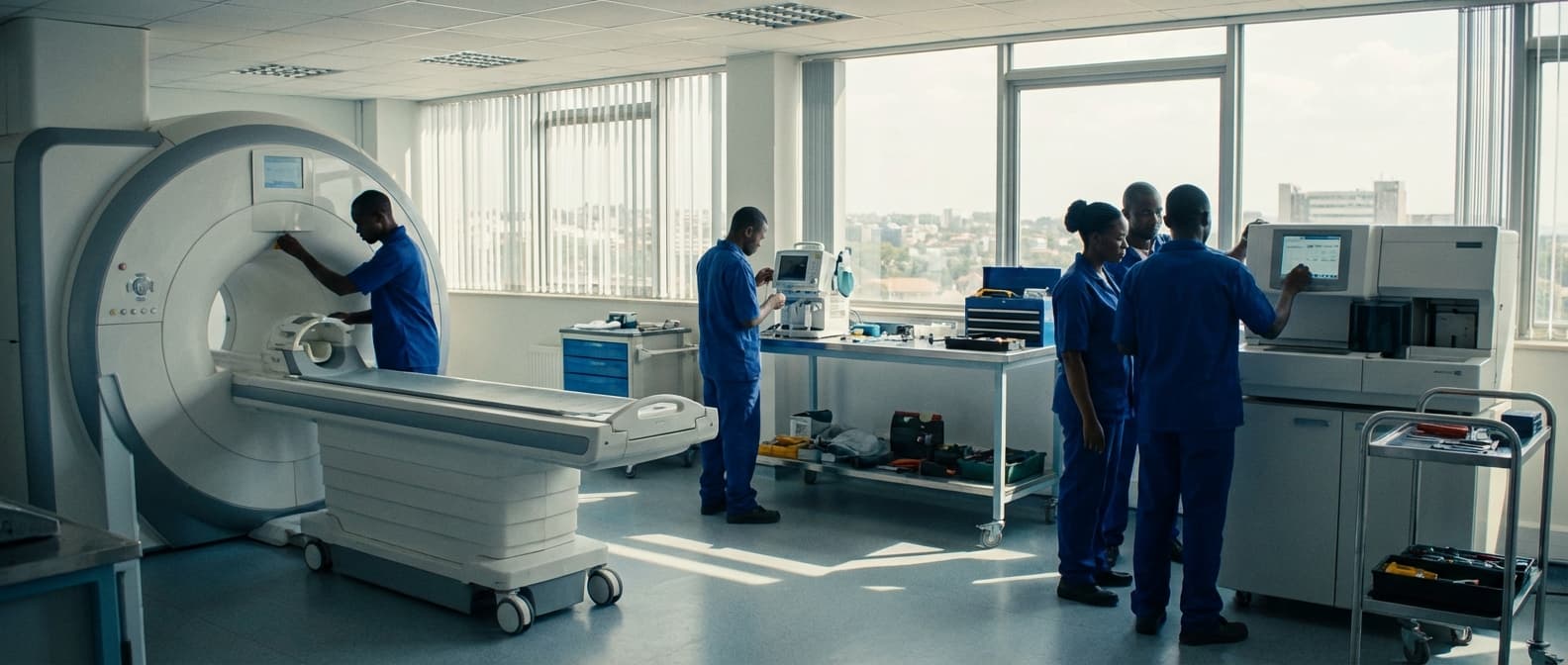
Uptime, Downtime & Root-Cause Analysis Reporting Service in Equatorial Guinea
Engineering Excellence & Technical Support
Uptime, Downtime & Root-Cause Analysis Reporting Service High-standard technical execution following OEM protocols and local regulatory frameworks.
Proactive Uptime Monitoring & Predictive Alerting
Leveraging advanced AI-driven anomaly detection, our service provides real-time, granular visibility into your IT infrastructure's health across Equatorial Guinea. We proactively identify potential performance degradations and system failures before they impact operations, delivering predictive alerts to prevent unplanned downtime and ensure continuous service availability.
Comprehensive Downtime Incident Tracking & SLA Compliance
Our platform meticulously records every downtime event, capturing critical metrics such as duration, affected systems, and impact scope. We offer detailed incident reporting aligned with your Service Level Agreements (SLAs), enabling swift resolution, transparent communication with stakeholders, and accurate performance benchmarking within the Equatorial Guinean business landscape.
Automated Root-Cause Analysis & Actionable Insights
Go beyond simple incident logging. Our service automates the complex process of Root-Cause Analysis (RCA) by correlating logs, performance metrics, and system changes. We deliver concise, actionable reports pinpointing the exact cause of outages, empowering your technical teams in Equatorial Guinea to implement effective, long-term solutions and prevent recurrence.
What Is Uptime, Downtime & Root-cause Analysis Reporting Service In Equatorial Guinea?
This document defines Uptime, Downtime, and Root-Cause Analysis (RCA) Reporting Services within the context of Equatorial Guinea. These services are crucial for ensuring the operational integrity and efficiency of IT infrastructure and critical business systems. Uptime refers to the period during which a system or service is fully functional and accessible. Downtime represents the inverse: periods when a system or service is unavailable or degraded. RCA is a systematic process of identifying the fundamental causes of incidents, rather than just the immediate symptoms, to prevent recurrence. The reporting service encapsulates the aggregation, analysis, and presentation of this data to stakeholders.
| Service Element | Description | Target Audience | Typical Use Cases | ||||
|---|---|---|---|---|---|---|---|
| Uptime Reporting | Quantifies the percentage of time a system is operational and accessible. Demonstrates adherence to SLAs. | Business Leadership, IT Management, Service Owners | SLA compliance verification, performance benchmarking, investment justification for infrastructure upgrades, service quality assessment. | ||||
| Downtime Reporting | Details all periods of service unavailability or degradation, including duration, impact, and affected services. | IT Operations, IT Management, Business Unit Managers, Compliance Officers | Incident analysis, identification of recurring issues, post-incident review, operational cost assessment (lost revenue, productivity). | Root-Cause Analysis (RCA) | Investigates the fundamental reasons behind downtime incidents to prevent recurrence. | IT Operations, System Architects, Network Engineers, Application Developers, Security Teams | Problem resolution, continuous improvement of system stability and reliability, security vulnerability identification, process optimization, knowledge base development. |
| Combined Reporting & Dashboards | Integrated presentation of uptime, downtime, and RCA findings for a holistic view of system health and performance. | Executive Management, IT Governance, Operations Teams, Project Managers | Strategic decision-making, resource allocation, risk management, performance trending, proactive issue identification. |
Key Components of Uptime, Downtime & RCA Reporting Service
- Monitoring and Data Collection: Continuous, real-time observation of system performance, availability, and key metrics across the IT infrastructure. This includes network devices, servers, applications, databases, and cloud services. Data sources may include logs, SNMP, API endpoints, synthetic transactions, and user experience monitoring.
- Downtime Incident Management: The process of detecting, logging, categorizing, prioritizing, and resolving unplanned interruptions to service availability. This involves immediate response and communication protocols.
- Uptime Reporting: Generation of metrics and dashboards illustrating the availability of systems and services over specified periods (e.g., daily, weekly, monthly, annually). This typically includes Service Level Agreement (SLA) compliance reporting.
- Downtime Reporting: Documentation and analysis of all downtime events, including duration, impact, affected services, and contributing factors. This serves as a basis for performance improvement and financial impact assessment.
- Root-Cause Analysis (RCA): A structured investigation into each significant downtime incident to identify the underlying technical, procedural, or human causes. Methodologies like the '5 Whys', Fishbone diagrams (Ishikawa), or Fault Tree Analysis are commonly employed.
- Actionable Recommendations and Preventative Measures: Development of concrete steps and strategies derived from RCA findings to mitigate future risks, improve system resilience, and optimize operational processes. This includes identifying areas for architectural changes, configuration updates, training, or process refinement.
- Reporting and Communication: Dissemination of findings, performance metrics, and recommendations to relevant stakeholders (IT management, business leadership, operations teams) through standardized reports, dashboards, and presentations.
Who Needs Uptime, Downtime & Root-cause Analysis Reporting Service In Equatorial Guinea?
In Equatorial Guinea, businesses and organizations across various sectors face critical needs for robust uptime, downtime, and root-cause analysis (RCA) reporting services. These services are essential for maintaining operational efficiency, minimizing financial losses due to outages, and ensuring the reliability of services critical to the nation's development. Understanding the specific challenges and dependencies within Equatorial Guinea's economic landscape highlights the diverse range of potential clients.
| Industry/Sector | Key Departments/Roles | Specific Needs & Benefits |
|---|---|---|
| Oil and Gas Industry | Operations Control Centers, Production Management, IT/OT Infrastructure Teams, Safety & Environmental Departments | Ensuring continuous production from offshore and onshore facilities, preventing costly downtime in exploration and extraction, rapid identification of equipment failures, safety incident analysis, regulatory compliance reporting. |
| Telecommunications Companies | Network Operations Centers (NOC), Service Assurance Teams, Engineering Departments, Customer Support | Maintaining uninterrupted mobile and internet services, minimizing subscriber churn due to outages, optimizing network performance, proactive identification of network faults, rapid restoration of services. |
| Financial Institutions (Banks and Fintech) | IT Operations, Risk Management, Compliance Departments, Business Continuity Planning Teams, Core Banking Operations | Ensuring the availability of ATMs, online banking, and mobile payment systems, preventing financial fraud through system stability, regulatory compliance for transaction processing, protecting customer data and trust. |
| Government Agencies and Public Services | IT Departments, Ministry of Interior (for public safety systems), Ministry of Communications (for infrastructure), Ministry of Finance (for economic stability), E-government service providers | Ensuring the availability of critical public services (e.g., civil registration, tax collection portals), maintaining national security communication systems, preventing disruptions to government operations and citizen access to information. |
| Healthcare Sector | Hospital IT Departments, Medical Equipment Management, Administration, E-health Service Providers | Guaranteeing the uptime of patient record systems, diagnostic equipment, and critical medical devices, preventing life-threatening situations due to equipment failure or system downtime, ensuring the continuity of telemedicine services. |
| Energy and Utilities | Power Grid Operations, Water Treatment and Distribution Management, IT Infrastructure Teams, Field Service Management | Maintaining consistent electricity and water supply to homes and businesses, preventing blackouts or water shortages, identifying the root cause of utility infrastructure failures, ensuring efficient resource allocation. |
| Transportation and Logistics | Airport Operations, Port Authorities, Logistics Management, IT Support for tracking systems | Ensuring the operational integrity of air traffic control, port operations, and cargo tracking systems, minimizing delays and disruptions in the movement of goods and people, enhancing supply chain reliability. |
| Manufacturing and Industrial Operations | Plant Management, Production Supervisors, Maintenance Teams, Quality Control Departments, Automation Engineers | Preventing production line stoppages, optimizing machinery performance, identifying recurring equipment failures to implement predictive maintenance, ensuring product quality by maintaining stable operating conditions. |
Target Customers and Departments Requiring Uptime, Downtime & Root-Cause Analysis Reporting Service in Equatorial Guinea:
- Oil and Gas Industry
- Telecommunications Companies
- Financial Institutions (Banks and Fintech)
- Government Agencies and Public Services
- Healthcare Sector
- Energy and Utilities
- Transportation and Logistics
- Manufacturing and Industrial Operations
Uptime, Downtime & Root-cause Analysis Reporting Service Process In Equatorial Guinea
This document outlines the workflow for the Uptime, Downtime & Root-Cause Analysis Reporting Service provided in Equatorial Guinea. This service aims to help organizations understand and resolve issues affecting their system availability. The process is designed to be transparent, efficient, and to deliver actionable insights.
| Stage | Description | Key Activities | Deliverables | Responsible Party | Timeframe (Indicative) |
|---|---|---|---|---|---|
| Initial contact from the client to request the service and define the scope of the analysis. | Client expresses need for Uptime/Downtime analysis and RCA. Service provider discusses client's objectives, system scope, and historical data availability. Formal proposal and service agreement are developed and approved. | Signed Service Agreement, Defined Scope of Work. | Client, Service Provider. | 1-3 Business Days. |
| Gathering all relevant data pertaining to uptime, downtime incidents, and system performance. | Collection of logs (system, application, network). Retrieval of incident tickets and maintenance records. Interviews with relevant personnel (IT, operations). Data cleansing and validation to ensure accuracy and completeness. | Validated Raw Data Set, List of identified incidents. | Service Provider, Client (for access and information). | 3-7 Business Days (depending on data volume and accessibility). |
| In-depth examination of collected data to identify patterns, causes, and impact of downtime. | Analysis of uptime/downtime metrics (availability percentages, duration of outages). Identification of root causes for each significant downtime event. Correlation of incidents with system changes, maintenance, or external factors. Quantification of the impact of downtime (e.g., financial loss, operational disruption). | Identified Root Causes, Impact Assessment Report. | Service Provider. | 5-10 Business Days (complexity dependent). |
| Compiling findings into a comprehensive and actionable report. | Structuring the report with executive summary, detailed findings, analysis, and recommendations. Visualizing data through charts and graphs for clarity. Ensuring the report is easy to understand and addresses client's objectives. | Draft Uptime, Downtime & RCA Report. | Service Provider. | 2-4 Business Days. |
| Presenting the findings to the client and facilitating a discussion for clarification and feedback. | Formal presentation of the report to client stakeholders. Answering questions and providing further explanations. Gathering feedback on the report's findings and recommendations. | Final Uptime, Downtime & RCA Report (incorporating feedback), Meeting Minutes. | Service Provider, Client. | 1-2 Business Days (post-draft submission). |
| Collaborating with the client to develop concrete steps to address identified root causes and prevent future downtime. | Brainstorming preventative measures with the client. Prioritizing recommended actions based on impact and feasibility. Defining specific, measurable, achievable, relevant, and time-bound (SMART) action items. | Agreed-upon Action Plan, Responsibility Matrix. | Client, Service Provider. | 2-3 Business Days (can be iterative). |
| Monitoring the implementation of the action plan and verifying its effectiveness. | Scheduled follow-up meetings to track progress on action items. Reviewing updated performance metrics to confirm improvements. Providing guidance or adjustments to the action plan as needed. | Progress Updates, Verified Improvement Metrics. | Client, Service Provider. | Ongoing (as per agreed follow-up schedule). |
Service Workflow: Uptime, Downtime & Root-Cause Analysis Reporting
- Inquiry & Scoping
- Data Collection & Validation
- Analysis & Investigation
- Report Generation
- Review & Presentation
- Action Plan Development
- Follow-up & Verification
Uptime, Downtime & Root-cause Analysis Reporting Service Cost In Equatorial Guinea
Providing Uptime, Downtime, and Root-Cause Analysis (RCA) reporting services in Equatorial Guinea is a specialized area that impacts business continuity and operational efficiency. The cost of such services is influenced by several factors, primarily related to the complexity of the infrastructure being monitored, the scope of reporting required, the level of detail in the RCA, and the provider's expertise. Given the economic context of Equatorial Guinea, pricing is typically denominated in the local currency, the West African CFA franc (XAF).
| Service Component | Estimated Price Range (XAF) | Notes |
|---|---|---|
| Basic Uptime & Downtime Monitoring (per device/service) | 15,000 - 50,000 XAF/month | Covers simple status checks and basic alerts for individual systems. |
| Comprehensive Infrastructure Monitoring (per server/network node) | 30,000 - 100,000 XAF/month | Includes performance metrics, resource utilization, and deeper insights. |
| Standard Uptime/Downtime Reporting (weekly/monthly) | 50,000 - 150,000 XAF/report | General overview of availability, common issues, and trends. |
| Basic Root-Cause Analysis (per incident) | 100,000 - 300,000 XAF/incident | Identifies the immediate cause of a single downtime event. |
| In-depth Root-Cause Analysis (per incident) | 300,000 - 1,000,000+ XAF/incident | Includes forensic investigation, multiple contributing factors, and detailed remediation plans. Highly variable based on complexity. |
| Managed Monitoring & Reporting Service (for SMBs, monthly retainer) | 200,000 - 750,000 XAF/month | Bundles monitoring, basic reporting, and limited RCA support for smaller businesses. |
| Enterprise-level Managed Services (for large organizations, monthly retainer) | 1,000,000 - 5,000,000+ XAF/month | Comprehensive monitoring, advanced RCA, custom reporting, and dedicated support teams for complex enterprise environments. |
Key Pricing Factors for Uptime, Downtime & RCA Reporting Services in Equatorial Guinea:
- Scope of Infrastructure Monitored: The number of servers, network devices, applications, and cloud services that require monitoring directly impacts the cost. Larger and more complex environments will command higher prices.
- Monitoring Frequency & Granularity: The frequency at which data is collected (e.g., real-time, every 5 minutes, hourly) and the level of detail captured (e.g., resource utilization, transaction performance) will affect pricing.
- Reporting Requirements: The format, frequency, and depth of reports (e.g., daily status updates, weekly performance summaries, monthly RCA deep dives) are significant cost drivers.
- Root-Cause Analysis Depth: The level of detail and technical expertise required for RCA is crucial. Simple issue identification versus in-depth forensic analysis and remediation recommendations will vary in cost.
- Service Level Agreements (SLAs): Guarantees on uptime, response times for critical issues, and report delivery times will influence the pricing.
- Provider Expertise & Reputation: Highly experienced and reputable providers with proven track records in Equatorial Guinea or similar markets may charge a premium.
- Technology Stack: The specific monitoring tools and software used by the provider, and their compatibility with the client's existing technology, can affect setup and ongoing costs.
- On-site vs. Remote Services: While most RCA and reporting can be done remotely, any requirements for on-site presence will add to the cost.
- Urgency & Response Time: Emergency RCA or immediate reporting needs may incur higher fees.
- Contract Duration: Longer-term contracts often come with discounted rates.
- Data Retention Policies: The length of time data is stored and made accessible can impact storage costs and thus service pricing.
- Customization: Bespoke reporting dashboards or specialized RCA methodologies will increase the overall cost.
Affordable Uptime, Downtime & Root-cause Analysis Reporting Service Options
This document outlines affordable options for Uptime, Downtime, and Root-Cause Analysis (RCA) reporting services. We understand the critical need for reliable performance monitoring and efficient problem resolution without breaking the budget. This guide explores value bundles and cost-saving strategies to help organizations achieve these goals.
| Service Component | Core Benefit | Typical Cost Factors | Cost-Saving Opportunities |
|---|---|---|---|
| Uptime Reporting | Demonstrates reliability, meets SLAs, builds customer trust. | Number of monitored assets, frequency of checks, reporting detail. | Automated alerts over manual checks, tiered monitoring levels, longer reporting retention periods for lower tiers. |
| Downtime Reporting | Identifies recurring issues, quantifies outage impact, supports improvement initiatives. | Downtime event tracking granularity, incident correlation, automated alert mechanisms. | Leveraging existing monitoring tools, consolidating reporting platforms, focusing on critical system downtime. |
| Root-Cause Analysis (RCA) | Prevents recurring incidents, improves system stability, reduces future downtime costs. | RCA methodology complexity, level of detail in analysis, dedicated RCA resources (internal vs. external). | Standardized RCA templates, investing in self-service RCA tools, proactive analysis based on recurring downtime patterns. |
| Value Bundles | Comprehensive monitoring and analysis, simplified procurement, potential cost savings. | Scope of included services, contract duration, vendor-specific features. | Choosing bundles aligned with essential needs, negotiating long-term contracts, exploring bundled discounts. |
Understanding Key Service Components
- Uptime Reporting: Tracks the availability and operational status of systems, applications, and services. Essential for demonstrating reliability and meeting Service Level Agreements (SLAs).
- Downtime Reporting: Records and analyzes periods when systems or services are unavailable. Crucial for identifying recurring issues and quantifying the impact of outages.
- Root-Cause Analysis (RCA): A systematic process to identify the fundamental reasons behind incidents, preventing recurrence. Involves investigation, data collection, and analysis to pinpoint the origin of problems.
- Value Bundles: Pre-packaged offerings that combine multiple services, often at a discounted price compared to purchasing them individually. These bundles are designed to provide comprehensive solutions for common IT operational needs.
- Cost-Saving Strategies: Techniques and approaches to reduce the overall expense of acquiring and utilizing IT reporting and analysis services.
Verified Providers In Equatorial Guinea
In Equatorial Guinea, ensuring access to reliable and qualified healthcare providers is paramount. Franance Health stands out as a leading organization that rigorously vets and verifies healthcare professionals, offering unparalleled peace of mind to patients seeking quality medical services. Their comprehensive credentialing process goes beyond basic licensing, encompassing a deep dive into the provider's education, experience, ethical standing, and ongoing professional development. This commitment to thorough verification means that when you engage with a Franance Health-affiliated provider, you are connecting with a professional who has met the highest standards of competence and integrity.
| Provider Type | Franance Health Verification Benefits | Why They Are the Best Choice |
|---|---|---|
| Doctors (General Practitioners & Specialists) | Confirms medical school accreditation, board certifications, residency completion, and licensure. Includes checks for disciplinary actions and malpractice history. | Access to highly skilled and ethically sound physicians who are up-to-date with medical knowledge, ensuring accurate diagnoses and effective treatment plans. |
| Nurses (RNs, LPNs, etc.) | Verifies nursing school accreditation, licensure, and relevant certifications. Assesses practical experience and any professional conduct reviews. | Ensures competent and compassionate nursing care, crucial for patient recovery and well-being, from skilled professionals dedicated to patient advocacy. |
| Dentists | Confirms dental school accreditation, licensure, and any specialized training or certifications. Includes a review of professional standing. | Provides access to dentists with proven expertise in oral health, offering a wide range of treatments from routine check-ups to complex procedures with confidence. |
| Therapists (Physical, Occupational, Mental Health) | Validates degree programs, licensure, and specific therapy certifications. Assesses experience and adherence to professional standards. | Connects patients with licensed and qualified therapists who can provide effective rehabilitation and mental health support, contributing to improved quality of life. |
| Pharmacists | Verifies pharmacy degree, licensure, and any specialized accreditations. Checks for professional record integrity. | Ensures accurate and safe medication management, with pharmacists who possess a deep understanding of drug interactions and patient counseling, vital for treatment success. |
Why Franance Health Credentials Matter:
- Rigorous Vetting Process: Franance Health employs a multi-faceted approach to credentialing, ensuring each provider is thoroughly scrutinized.
- Verification of Education and Experience: Confirming the authenticity of academic achievements and the depth of practical experience.
- Assessment of Ethical Conduct: Evaluating a provider's professional reputation and adherence to medical ethics.
- Ongoing Professional Development: Ensuring providers remain current with the latest medical advancements and best practices.
- Patient Safety and Trust: Providing a secure framework for patients to find and trust qualified healthcare professionals.
- Reduced Risk of Medical Errors: By prioritizing highly qualified individuals, the likelihood of adverse outcomes is significantly minimized.
Scope Of Work For Uptime, Downtime & Root-cause Analysis Reporting Service
This Scope of Work (SOW) outlines the requirements for a Uptime, Downtime & Root-Cause Analysis Reporting Service. The service will focus on providing comprehensive reporting, analysis, and actionable insights related to system availability, unavailability incidents, and their underlying causes. The goal is to improve system reliability, minimize downtime, and enhance the overall operational efficiency of the client's IT infrastructure.
| Deliverable | Description | Standard Specifications | Frequency/Trigger |
|---|---|---|---|
| Uptime Dashboard | A visual representation of system availability and key performance indicators (KPIs) for critical services. | Real-time data display, customizable views (by service, by region, etc.), historical data access (e.g., last 30 days, last 90 days), clear indication of current status (up/down). | Real-time, continuously updated. |
| Downtime Incident Log | A detailed record of all system unavailability events, including timestamps, duration, and affected services. | Unique incident identifier, start time, end time, duration, affected service(s), impact level (e.g., critical, high, medium, low), brief description of the outage. | Triggered by every confirmed downtime event. |
| Root-Cause Analysis (RCA) Report | In-depth analysis of the underlying causes of significant downtime incidents. | Incident summary, timeline of events leading to the incident, contributing factors (e.g., software bug, hardware failure, human error, network issue), analysis methodology used (e.g., 5 Whys, Fishbone diagram), identified root cause(s), corrective actions taken/recommended, preventative measures proposed. | For incidents exceeding a defined severity threshold (e.g., >1 hour downtime) or as specifically requested. |
| Weekly/Monthly Uptime & Downtime Summary Report | A consolidated report providing an overview of system availability and downtime trends over a specified period. | Overall uptime percentage (e.g., 99.9%), total downtime hours, number of incidents, breakdown of downtime by root cause category, major incidents highlighted, trend analysis (e.g., month-over-month comparison), comparison against Service Level Agreements (SLAs). | Weekly and/or Monthly, depending on agreement. |
| Trend Analysis & Predictive Insights Report | Analysis of historical uptime and downtime data to identify patterns, potential risks, and opportunities for improvement. | Identification of recurring issues, common root causes, service-specific availability trends, potential future vulnerabilities based on historical data, recommendations for proactive maintenance or upgrades. | Quarterly, or as requested based on data analysis. |
| Actionable Recommendations | Specific, practical recommendations to prevent future downtime and improve system reliability. | Clear, prioritized list of actions, with estimated effort/impact, ownership assignment suggestions, and expected outcomes. | Included in RCA Reports and Trend Analysis Reports, and communicated proactively. |
| Incident Notification | Timely alerts upon detection of system downtime or potential issues. | Automated alerts via pre-defined channels (e.g., email, Slack, PagerDuty), clear and concise notification message, including affected service and estimated impact. | Real-time, triggered by monitoring system. |
Key Service Components
- Real-time Uptime Monitoring & Reporting
- Downtime Incident Management & Reporting
- Root-Cause Analysis (RCA) for Incidents
- Trend Analysis & Predictive Insights
- Actionable Recommendations & Remediation Support
- Regular Reporting & Communication
Service Level Agreement For Uptime, Downtime & Root-cause Analysis Reporting Service
This Service Level Agreement (SLA) outlines the commitments regarding uptime, downtime, and root-cause analysis (RCA) reporting for the provided service. It defines the expected response times for critical issues and guarantees a minimum level of service availability.
| Service Component | Uptime Guarantee | Downtime Threshold (per month) | Response Time (Critical Incident) | RCA Report Delivery |
|---|---|---|---|---|
| Core Service Availability | 99.9% | Less than 4.38 hours | Within 1 hour | Within 2 business days of resolution |
| API Endpoints | 99.5% | Less than 8.76 hours | Within 2 hours | Within 3 business days of resolution |
| Data Sync/Replication | 99.0% | Less than 17.52 hours | Within 4 hours | Within 5 business days of resolution |
Key Definitions
- Uptime: The period during which the service is operational and accessible to users.
- Downtime: The period during which the service is unavailable or significantly degraded, preventing normal user access.
- Scheduled Maintenance: Planned interruptions to the service for upgrades, patches, or other necessary maintenance activities. Notice will be provided at least [Number] days in advance.
- Unscheduled Downtime: Downtime that is not pre-announced and occurs unexpectedly.
- Root-Cause Analysis (RCA): A process of identifying the fundamental reason for a failure or incident.
- Service Credit: A monetary credit applied to future invoices as compensation for failing to meet the SLA commitments.
Frequently Asked Questions

Ready when you are
Let's scope your Uptime, Downtime & Root-Cause Analysis Reporting Service in Equatorial Guinea project in Equatorial Guinea.

Scaling healthcare logistics and technical systems across the entire continent.