
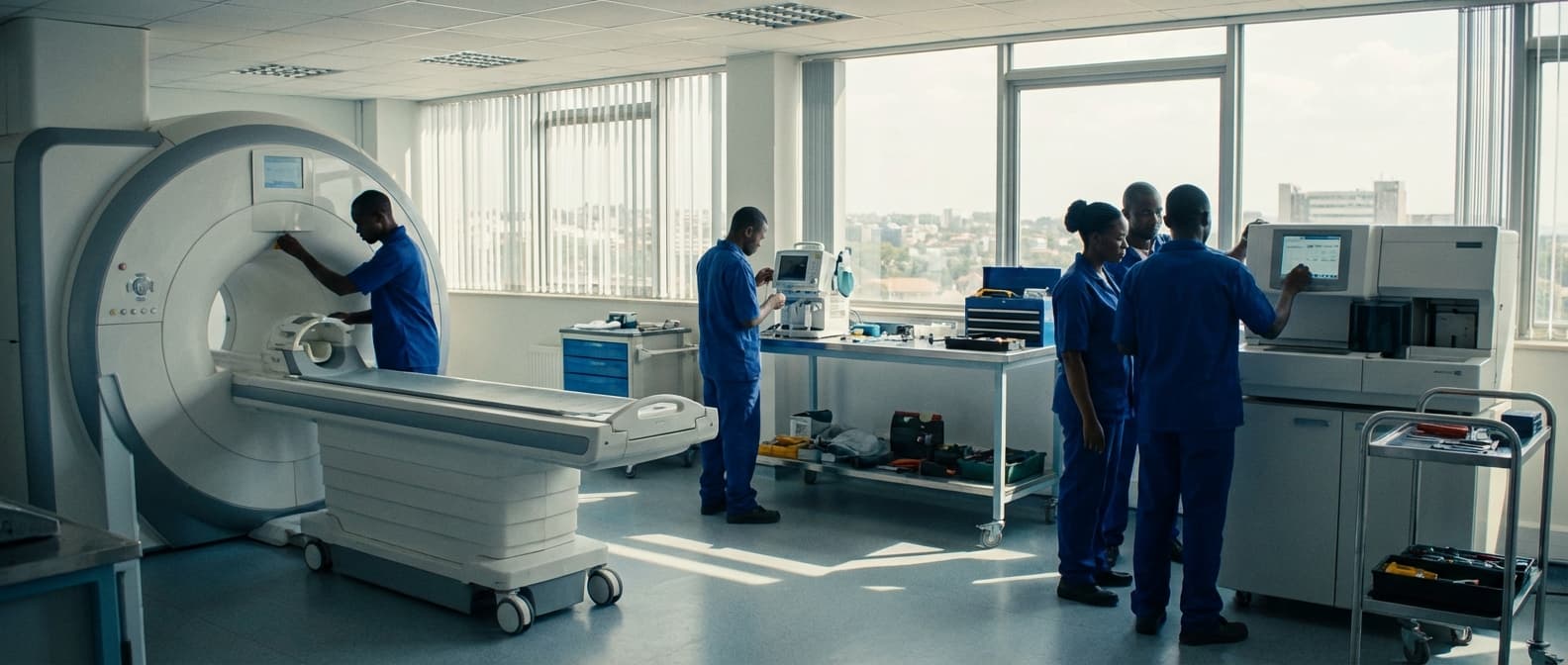
Preventive Maintenance Visit Service (On-Demand) in Equatorial Guinea
Engineering Excellence & Technical Support
Preventive Maintenance Visit Service (On-Demand) High-standard technical execution following OEM protocols and local regulatory frameworks.
Proactive System Health Checks
Leverage our on-demand preventive maintenance visits in Equatorial Guinea for comprehensive diagnostic scans and performance evaluations of critical infrastructure. Our certified technicians identify potential failures before they occur, minimizing downtime and ensuring operational continuity.
Component Longevity Optimization
Receive expert on-site services for the calibration, lubrication, and targeted replacement of wear-and-tear components. Our visits are designed to extend the operational lifespan of your machinery and equipment, reducing capital expenditure on premature replacements.
Regulatory Compliance Assurance
Ensure your assets in Equatorial Guinea meet all local safety and operational standards with our scheduled preventive maintenance visits. We provide detailed inspection reports and documentation crucial for regulatory compliance and audit readiness, mitigating risks and fines.
What Is Preventive Maintenance Visit Service (On-demand) In Equatorial Guinea?
Preventive Maintenance Visit Service (On-Demand) in Equatorial Guinea refers to a scheduled, proactive maintenance intervention for critical infrastructure and equipment, readily available upon request. This service is designed to identify and address potential issues before they escalate into costly breakdowns, ensuring operational continuity and asset longevity. Unlike scheduled preventive maintenance which follows a fixed timeline, on-demand services are initiated based on specific operational needs, pre-defined trigger points, or observed performance degradation, offering flexibility and responsiveness.
| Typical Use Cases | Description | Benefits |
|---|---|---|
| **Critical Equipment Monitoring (e.g., Generators, HVAC Systems) |
|
|
| **Pre-Emptive Component Servicing (e.g., Filtration Systems, Bearings) |
|
|
| **Post-Event or Seasonal Readiness Checks |
|
|
| **Performance Anomaly Detection & Rectification |
|
|
| **Regulatory Compliance Verification |
|
|
Service Components and Target Audience
- Core Components:
- Diagnostic Assessment: Thorough inspection and testing of designated equipment and systems to identify wear, calibration drift, potential failure points, and adherence to operating parameters.
- Proactive Adjustments & Replacements: Performing necessary calibrations, lubrication, tightening of connections, and replacing components with finite service lives before they reach their end-of-life.
- Performance Optimization: Fine-tuning equipment settings and parameters to ensure optimal efficiency, reduce energy consumption, and maintain peak operational performance.
- Safety & Compliance Checks: Verifying that all equipment and associated systems meet relevant safety standards and regulatory requirements.
- Reporting & Recommendations: Documenting all findings, actions taken, and providing detailed recommendations for future maintenance or potential upgrades.
- Who Needs It:
- Industrial Facilities: Manufacturing plants, processing facilities, mining operations, and oil & gas installations relying on continuous operation of heavy machinery and complex systems.
- Infrastructure Operators: Utilities (power generation, water treatment, telecommunications), transportation networks (airports, ports), and critical building management systems.
- Data Centers & IT Infrastructure: Organizations dependent on the uninterrupted availability of servers, cooling systems, power supply units, and network equipment.
- Commercial & Hospitality: Large hotels, hospitals, and shopping centers with intricate HVAC, electrical, and plumbing systems.
- Government & Public Sector: Agencies managing public infrastructure, defense equipment, or critical administrative systems.
Who Needs Preventive Maintenance Visit Service (On-demand) In Equatorial Guinea?
Preventive maintenance on demand is crucial for businesses and organizations operating in Equatorial Guinea, especially given the demanding climate and potential for remote or challenging logistical environments. This service ensures that critical equipment and infrastructure are regularly inspected and serviced to prevent costly breakdowns, downtime, and safety hazards. By proactively addressing potential issues, organizations can optimize operational efficiency, extend the lifespan of their assets, and avoid unexpected expenditures.
| Customer Segment | Specific Needs/Assets Requiring Preventive Maintenance | Impact of Neglecting Maintenance |
|---|---|---|
| Oil and Gas | Drilling rigs, pumps, pipelines, processing equipment, generators, safety systems, offshore platforms. | Catastrophic equipment failure leading to production halts, environmental spills, significant financial losses, and safety incidents. |
| Mining | Heavy machinery (excavators, haul trucks), crushing and screening equipment, ventilation systems, conveyor belts, power generation units. | Operational downtime, reduced ore recovery, increased repair costs, potential for accidents due to equipment malfunction. |
| Power Utilities | Generators (diesel, gas turbines), transformers, switchgear, transmission lines, substations. | Power outages, grid instability, damage to sensitive electrical equipment, economic disruption. |
| Telecommunications | Base stations, data centers, fiber optic cables, power backup systems (generators, UPS). | Network downtime, loss of service, customer dissatisfaction, revenue loss. |
| Manufacturing | Production machinery, assembly lines, refrigeration units, boilers, electrical control systems. | Production delays, product quality issues, increased scrap rates, unplanned downtime, equipment obsolescence. |
| Logistics & Shipping | Forklifts, cranes, conveyor systems, refrigeration units (for reefer containers), port equipment. | Delays in cargo handling, damage to goods, inefficient operations, increased operational costs. |
| Healthcare Facilities | Medical equipment (imaging machines, ventilators), HVAC systems, backup generators, laboratory equipment. | Compromised patient care, risk to patient safety, inability to perform critical procedures, disruption of essential services. |
| Government Agencies | Water treatment plants, waste management facilities, road maintenance equipment, public building infrastructure (HVAC, elevators). | Disruption of public services, health and safety risks, infrastructure degradation, public inconvenience and dissatisfaction. |
Target Customers and Departments for On-Demand Preventive Maintenance in Equatorial Guinea
- {"items":["Oil and Gas Companies (Exploration, Production, and Refining)","Mining Operations","Power Generation and Distribution Utilities","Telecommunications Providers","Manufacturing Plants (e.g., food processing, light manufacturing)","Logistics and Shipping Companies","Hospitals and Healthcare Facilities","Government Agencies (infrastructure, public services)","Large Hotels and Resorts","Agricultural Cooperatives and Large Farms"],"title":"Target Customers"}
- {"items":["Operations & Production","Maintenance & Engineering","Facilities Management","Asset Management","Health, Safety, and Environment (HSE)","Information Technology (IT) & Telecommunications","Procurement & Supply Chain","Quality Control"],"title":"Key Departments Benefiting from the Service"}
Preventive Maintenance Visit Service (On-demand) Process In Equatorial Guinea
This document outlines the on-demand Preventive Maintenance Visit (PMV) service process for clients in Equatorial Guinea, covering the workflow from initial inquiry to service completion. The process is designed to be efficient and transparent, ensuring timely and effective maintenance for various equipment and systems.
| Stage | Description | Key Activities | Responsible Party | Deliverables/Outcomes |
|---|---|---|---|---|
| The client identifies the need for a preventive maintenance visit and initiates contact with the service provider. | Client contacts the service provider (phone, email, web portal). Client provides details of equipment/system requiring maintenance, desired date/timeframe, and any specific concerns. Service provider acknowledges receipt of inquiry. | Client, Service Provider (Customer Service/Sales) | Acknowledged inquiry, initial understanding of client's needs. |
| The service provider evaluates the request, determines the scope of work, and provides a cost estimate. | Service provider gathers detailed information (equipment model, age, previous maintenance history, specific tasks required). Internal assessment of required resources (technicians, parts, tools). Development of a detailed quotation including labor, parts (if applicable), travel, and any applicable taxes. Quotation sent to the client for review. | Service Provider (Technical Team, Sales) | Formal quotation document, scope of work defined. |
| The client reviews and approves the quotation, and a specific service date and time are agreed upon. | Client reviews quotation. Client provides written or verbal approval. Service provider and client mutually agree on the service date and time, considering technician availability and client's operational schedule. Confirmation of appointment sent to the client. | Client, Service Provider (Sales, Operations) | Approved quotation, confirmed service date and time. |
| The service provider prepares for the visit and dispatches the qualified technician(s). | Assignment of appropriate technician(s) based on expertise. Gathering of necessary tools, equipment, and any required spare parts. Pre-visit briefing for the technician(s) on client's site, equipment, and specific maintenance tasks. Travel arrangements and logistics confirmation. | Service Provider (Operations, Field Service Management) | Dispatched technician(s) with necessary resources. |
| The qualified technician(s) perform the agreed-upon preventive maintenance tasks at the client's location. | Technician(s) arrive on-site at the scheduled time. Site safety and access protocols followed. Performance of all listed preventive maintenance procedures (inspection, cleaning, lubrication, calibration, minor adjustments, testing). Documentation of all performed tasks and any observations. | Service Provider (Field Technician(s)) | Completed preventive maintenance tasks, on-site work log/record. |
| A comprehensive report detailing the maintenance performed is generated and shared with the client. | Technician(s) complete and submit the on-site work log. Service provider compiles a formal PMV report (including performed tasks, findings, recommendations, parts used, technician signature). Report is reviewed and approved internally. Report sent to the client. | Service Provider (Field Technician(s), Service Coordinator, Quality Assurance) | Comprehensive PMV report, documented maintenance history. |
| Invoicing is generated based on the approved quotation and service rendered, followed by payment processing. | Service provider generates an invoice based on the approved quotation and the actual services performed. Invoice sent to the client. Client processes payment according to agreed terms. | Service Provider (Finance/Accounting), Client | Issued invoice, processed payment. |
| The service provider seeks feedback from the client to ensure satisfaction and identify areas for improvement. | Service provider may send a customer satisfaction survey or conduct a follow-up call. Feedback is collected and analyzed. Any client concerns or further needs are addressed. Proactive scheduling of future maintenance if applicable. | Service Provider (Customer Service, Account Management), Client | Customer satisfaction feedback, potential for repeat business, improved service delivery. |
Preventive Maintenance Visit (On-Demand) Service Workflow in Equatorial Guinea
- Client Inquiry and Service Request
- Service Assessment and Quotation
- Customer Approval and Scheduling
- Technician Dispatch and Pre-Visit Preparation
- On-Site Preventive Maintenance Execution
- Post-Visit Reporting and Documentation
- Billing and Payment
- Customer Feedback and Follow-up
Preventive Maintenance Visit Service (On-demand) Cost In Equatorial Guinea
Preventive maintenance visits for equipment in Equatorial Guinea, while often crucial for ensuring operational longevity and avoiding costly breakdowns, can vary significantly in cost. These 'on-demand' services, meaning they are scheduled as needed rather than on a strict, recurring contract, are subject to a multitude of influencing factors. Understanding these drivers is key to budgeting effectively for such services.
The primary cost determinants include the type and complexity of the equipment requiring maintenance. Simple machinery will naturally incur lower labor costs than sophisticated industrial systems or specialized medical devices. The specific maintenance tasks involved are also a major factor; a routine inspection and lubrication will be less expensive than a more in-depth service involving part replacements or diagnostic testing.
Technician expertise and availability play a crucial role. Highly specialized technicians, particularly those with experience in niche or imported equipment, will command higher rates. The location of the service within Equatorial Guinea also impacts costs, with remote areas potentially incurring additional travel and accommodation expenses for the maintenance team. Urgency is another significant factor; a call-out for an emergency repair or an urgent preventive maintenance task outside of normal working hours will almost certainly be more expensive than a pre-scheduled appointment.
Furthermore, the provider's overheads and profit margins will be factored into the final price. Larger, established companies may have higher operational costs but can sometimes offer economies of scale or more robust service guarantees. The cost of spare parts, if any are required during the visit, will be an additional expense. Finally, market demand and competition for these services in specific regions of Equatorial Guinea can influence pricing.
Due to these variables, providing a precise 'standard' cost is challenging. However, based on general industry trends and anecdotal evidence, preventive maintenance visits in Equatorial Guinea can range from approximately XAF 100,000 to XAF 750,000 or more. This range can be significantly higher for highly specialized industrial or complex electronic equipment requiring extended diagnostic time or extensive part replacements. It is always recommended to obtain detailed quotes from multiple reputable service providers based on the specific equipment and service requirements.
| Cost Factor | Description | Potential Impact on Cost |
|---|---|---|
| Equipment Complexity | Simple machinery vs. sophisticated industrial or specialized systems. | Low to High |
| Maintenance Scope | Routine inspection vs. in-depth diagnostics and part replacement. | Low to High |
| Technician Skill | General technician vs. specialized engineer for niche equipment. | Moderate to Very High |
| Location | Major urban centers vs. remote regions requiring travel. | Low to High (due to travel/accommodation) |
| Urgency | Scheduled visit vs. emergency call-out or after-hours service. | Moderate to Very High |
| Parts Required | No parts needed vs. significant replacement parts. | None to Very High |
Key Factors Influencing Preventive Maintenance Visit Costs in Equatorial Guinea
- Type and Complexity of Equipment
- Scope of Maintenance Tasks
- Technician Expertise and Availability
- Geographical Location of Service
- Urgency of the Visit
- Service Provider's Overheads and Profit Margins
- Cost of Spare Parts (if applicable)
- Market Demand and Competition
Affordable Preventive Maintenance Visit Service (On-demand) Options
Our Affordable Preventive Maintenance Visit Service (On-Demand) is designed to keep your systems running smoothly and prevent costly breakdowns. We offer flexible options to suit your needs and budget, focusing on value through proactive care and cost-saving strategies. Our on-demand model means you can schedule a visit whenever you need it, avoiding the commitment of long-term contracts while still benefiting from essential maintenance.
| Strategy | Description | Benefits | Typical Savings |
|---|---|---|---|
| On-Demand Flexibility | Schedule maintenance visits only when needed, without long-term commitments. | Control costs, pay only for services utilized, avoid unnecessary recurring fees. | Up to 15% lower annual cost compared to contract services. |
| Value Bundles | Combine multiple essential maintenance tasks into a single, discounted service package. | Cost savings per service, reduced scheduling complexity, comprehensive care. | 5-10% discount on bundled services. |
| Proactive Issue Detection | Regular inspections and diagnostics identify potential problems early. | Prevents minor issues from becoming major, expensive repairs; minimizes downtime. | Estimated 30-50% savings on repair costs by avoiding major failures. |
| Extended Equipment Lifespan | Consistent, quality maintenance ensures components function optimally. | Maximizes the return on your equipment investment, reduces the need for premature replacement. | Increases equipment lifespan by 10-20%. |
| Priority Scheduling (for repeat customers) | Customers who utilize our services regularly receive preferential booking. | Ensures you get service when you need it, especially during peak demand periods. | Reduced waiting times, faster response to urgent needs. |
Preventive Maintenance Value Bundles
- {"title":"Standard Tune-Up Bundle","description":"Ideal for routine upkeep of essential equipment. Includes basic inspection, cleaning, and lubrication. A cost-effective way to address minor issues before they escalate."}
- {"title":"Comprehensive System Check Bundle","description":"A more in-depth service covering multiple components. Includes the Standard Tune-Up plus more detailed diagnostics, component testing, and minor adjustments. Offers greater peace of mind for critical systems."}
- {"title":"Seasonal Preparedness Bundle","description":"Tailored for equipment that is particularly sensitive to seasonal changes (e.g., HVAC, outdoor machinery). Ensures optimal performance and efficiency during specific times of the year."}
- {"title":"Multi-System Discount Bundle","description":"When you schedule maintenance for multiple systems or units at the same time, you receive a discounted rate per service. Maximizes your savings and minimizes disruption."}
Verified Providers In Equatorial Guinea
Navigating healthcare in a foreign country can be challenging. In Equatorial Guinea, finding verified healthcare providers you can trust is paramount for your well-being. Franance Health stands out as a leading organization dedicated to connecting individuals with accredited and reliable medical professionals and facilities. Their rigorous credentialing process ensures that all listed providers meet stringent quality, safety, and ethical standards, offering unparalleled peace of mind.
| Provider Type | Franance Health Verification Highlights | Benefits for Patients |
|---|---|---|
| Hospitals and Clinics | Accreditation, state-of-the-art equipment, adherence to hygiene standards, qualified medical staff. | Access to comprehensive medical services, safe procedures, effective treatments, and a comfortable recovery environment. |
| Specialist Physicians | Board certification, extensive experience in their specialty, continuous professional development, positive patient feedback. | Expert diagnosis and treatment for specific medical conditions, personalized care plans, and access to cutting-edge medical knowledge. |
| General Practitioners/Family Doctors | Valid medical license, proven diagnostic skills, patient-centered approach, strong communication abilities. | Reliable primary healthcare, preventive services, management of common illnesses, and continuity of care. |
| Dental Professionals | Specialized dental training and certifications, use of modern dental technologies, commitment to oral hygiene and patient comfort. | Effective dental care, pain management, and aesthetic treatments for improved oral health and overall well-being. |
Why Franance Health Credentials Matter:
- Rigorous Vetting: Franance Health employs a comprehensive vetting process that examines the qualifications, licenses, certifications, and professional history of each provider.
- Commitment to Quality: They prioritize healthcare professionals and institutions demonstrating a commitment to high-quality patient care and adherence to international best practices.
- Patient Safety Focus: Verification by Franance Health ensures that providers meet essential safety protocols and maintain a safe clinical environment.
- Ethical Standards: Franance Health confirms that its listed providers uphold the highest ethical standards in medical practice and patient interactions.
- Transparency and Trust: By clearly displaying verified credentials, Franance Health fosters transparency, empowering patients to make informed decisions with confidence.
Scope Of Work For Preventive Maintenance Visit Service (On-demand)
This Scope of Work (SOW) outlines the requirements for an on-demand preventive maintenance (PM) visit service. The service aims to proactively identify and address potential issues, ensuring optimal performance, longevity, and reliability of specified equipment or systems. This SOW details the technical deliverables and standard specifications for such visits.
| Section | Description | Technical Deliverables | Standard Specifications |
|---|---|---|---|
| 1.0 Pre-Visit Preparation | Understanding the specific equipment/system, its history, and any known issues prior to the visit. |
|
|
| 2.0 On-Site Inspection & Diagnostics | Thorough visual and functional inspection of all specified components. Utilization of diagnostic tools to assess operational parameters. |
|
|
| 3.0 Preventive Maintenance Tasks | Execution of routine maintenance procedures as per manufacturer recommendations and industry best practices. |
|
|
| 4.0 Minor Adjustments & Troubleshooting | Performance of minor adjustments to optimize performance and basic troubleshooting of identified minor issues. |
|
|
| 5.0 Post-Visit Reporting & Documentation | Comprehensive documentation of all activities performed, findings, and recommendations. |
|
|
| 6.0 Safety & Environmental Compliance | Adherence to all relevant safety regulations and environmental protocols during the execution of the service. |
|
|
Key Objectives
- Minimize unplanned downtime and costly repairs.
- Extend the operational lifespan of equipment/systems.
- Ensure adherence to manufacturer's recommended maintenance schedules.
- Improve overall system efficiency and performance.
- Enhance safety and compliance with relevant standards.
Service Level Agreement For Preventive Maintenance Visit Service (On-demand)
This Service Level Agreement (SLA) outlines the guaranteed response times and uptime for on-demand preventive maintenance visit services. This SLA applies to all customers who have purchased the on-demand preventive maintenance package and have an active service contract.
| Service Level | Response Time Guarantee | On-Site Visit Time Guarantee | Uptime Guarantee (Service Availability) |
|---|---|---|---|
| Standard Preventive Maintenance Visit (On-Demand) | 4 Business Hours | Within 2 Business Days of Response | 99.5% |
| Critical Preventive Maintenance Visit (On-Demand - e.g., identified high-risk issue) | 2 Business Hours | Within 1 Business Day of Response | 99.8% |
Key Definitions
- On-Demand Preventive Maintenance Visit: A scheduled or unscheduled maintenance visit requested by the customer to perform preventive checks, cleaning, lubrication, and minor adjustments to ensure optimal equipment performance and prevent potential failures.
- Response Time: The maximum time allowed from the customer's official service request notification (via phone or designated online portal) to the first action taken by the service provider (e.g., acknowledgment of request, initial diagnostic steps, dispatch of technician).
- On-Site Visit Time: The time elapsed from the technician's arrival at the customer's site until the completion of the preventive maintenance tasks as defined in the service scope.
- Service Availability: The percentage of time the covered equipment is operational and accessible for its intended use, excluding scheduled maintenance and planned downtime. For the purpose of this SLA, Uptime refers to the operational status of the service provider's ability to respond and dispatch for preventive maintenance, not the uptime of the customer's equipment itself.
Frequently Asked Questions

Ready when you are
Let's scope your Preventive Maintenance Visit Service (On-Demand) in Equatorial Guinea project in Equatorial Guinea.

Scaling healthcare logistics and technical systems across the entire continent.