
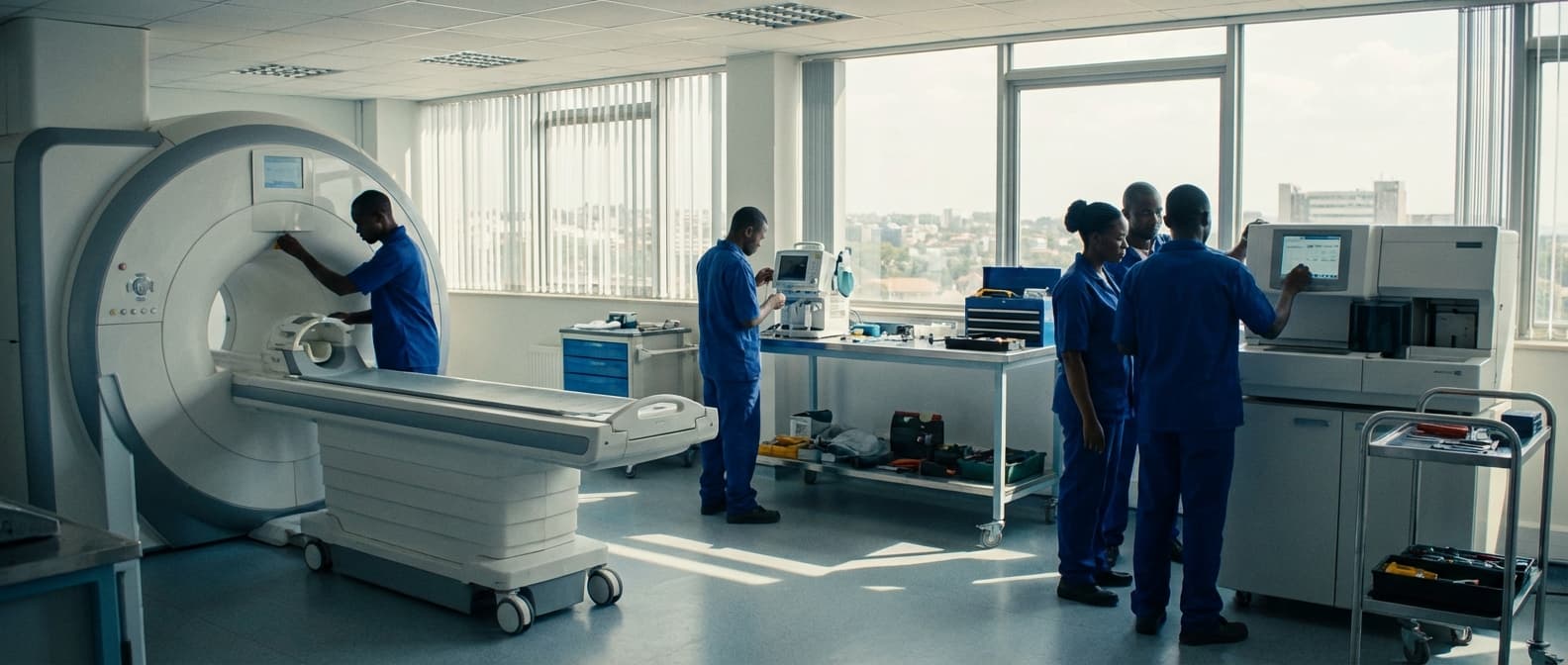
Planned Shutdown Coordination Service for Critical Equipment in Equatorial Guinea
Engineering Excellence & Technical Support
Planned Shutdown Coordination Service for Critical Equipment High-standard technical execution following OEM protocols and local regulatory frameworks.
Optimized Shutdown Scheduling for Maximum Uptime
Leveraging advanced scheduling algorithms and real-time operational data, our service meticulously plans critical equipment shutdowns in Equatorial Guinea to minimize production downtime. We analyze dependencies, resource availability, and regulatory requirements to pinpoint the optimal windows for maintenance, ensuring swift execution and rapid return to service.
Integrated Risk Assessment & Mitigation Planning
We conduct comprehensive risk assessments tailored to the unique operational environment of Equatorial Guinea. Our service identifies potential hazards, evaluates their impact, and develops robust mitigation strategies for every phase of the shutdown. This includes safety protocols, contingency plans, and communication frameworks to ensure seamless execution and minimize unforeseen disruptions.
Data-Driven Performance Monitoring & Continuous Improvement
Our service goes beyond mere scheduling. We implement rigorous performance monitoring throughout the shutdown process, collecting and analyzing key metrics. This data-driven approach allows for proactive adjustments, identification of bottlenecks, and the implementation of lessons learned to continuously optimize future shutdown coordination efforts for enhanced efficiency and reliability of critical equipment in Equatorial Guinea.
What Is Planned Shutdown Coordination Service For Critical Equipment In Equatorial Guinea?
The Planned Shutdown Coordination Service for Critical Equipment in Equatorial Guinea is a specialized, project-based service designed to meticulously plan, schedule, and execute the temporary deactivation (shutdown) of essential operational equipment. This service is crucial for ensuring the integrity, safety, and efficiency of industrial and energy infrastructure by facilitating scheduled maintenance, upgrades, or regulatory compliance activities with minimal disruption to ongoing operations. It encompasses a comprehensive approach to managing all facets of the shutdown lifecycle, from initial scope definition and risk assessment to detailed work planning, execution oversight, and post-shutdown restoration and verification. The service is typically delivered by experienced engineering and project management firms with deep expertise in the specific industrial sectors prevalent in Equatorial Guinea.
| Who Needs This Service? | Typical Use Cases | |||||
|---|---|---|---|---|---|---|
| Operators of critical infrastructure such as oil and gas facilities (upstream, midstream, downstream), power generation plants, mining operations, and petrochemical complexes in Equatorial Guinea. | Routine preventative maintenance and overhauls of turbines, compressors, pumps, and other heavy machinery. | Installation of new equipment or upgrades to existing systems. | Compliance with stringent regulatory inspections and recertification requirements. | Corrosion control programs and pipeline integrity management. | Major turnarounds requiring extensive planned downtime for multiple units or entire facilities. | Emergency preparedness and response drills involving planned shutdown scenarios. |
| Government agencies and regulatory bodies overseeing industrial safety and environmental compliance. | As a mandatory requirement for critical asset integrity management and operational safety assurance. | Ensuring adherence to international safety standards and best practices in industrial operations. | ||||
| Companies undertaking capital projects involving the integration of new facilities or the decommissioning of old ones. | Contractors and service providers involved in maintenance, repair, and overhaul (MRO) activities. |
Key Components of Planned Shutdown Coordination Service:
- Scope Definition and Planning: Detailing the exact equipment to be shut down, the reasons for the shutdown, and the desired outcomes (e.g., specific maintenance tasks, inspections, replacements, or upgrades).
- Risk Assessment and Mitigation: Identifying potential hazards associated with the shutdown and operational activities, and developing robust safety protocols and contingency plans.
- Detailed Work Packaging: Breaking down the shutdown scope into manageable work packages, including required resources (personnel, equipment, materials), detailed procedures, and time estimates.
- Scheduling and Optimization: Developing a master schedule that integrates all work packages, considering dependencies, resource availability, and minimizing overall downtime.
- Permit to Work (PTW) Management: Ensuring all necessary permits for hot work, confined space entry, electrical isolation, etc., are secured and managed throughout the shutdown.
- Resource Management: Coordinating the mobilization and demobilization of skilled labor, specialized tools, and equipment.
- Execution Oversight: Providing on-site management and supervision to ensure adherence to the plan, safety procedures, and quality standards during the shutdown period.
- Communication and Stakeholder Management: Facilitating clear and consistent communication among all stakeholders, including plant operations, maintenance teams, contractors, and regulatory bodies.
- Post-Shutdown Verification and Restoration: Overseeing the re-commissioning of equipment, conducting performance tests, and ensuring the facility is returned to operational status safely and effectively.
- Documentation and Lessons Learned: Compiling comprehensive documentation of the shutdown process and conducting a post-project review to capture lessons learned for future shutdowns.
Who Needs Planned Shutdown Coordination Service For Critical Equipment In Equatorial Guinea?
Planned shutdown coordination services are vital for industries operating critical equipment in Equatorial Guinea. These services ensure that essential maintenance, upgrades, or repairs can be performed efficiently and safely with minimal disruption to operations. This is particularly crucial in a region where energy and resource extraction are key economic drivers, and unplanned downtime can lead to significant financial losses and safety hazards.
| Customer Type | Critical Equipment Examples | Impact of Unplanned Shutdowns | Benefit of Coordinated Shutdowns |
|---|---|---|---|
| Oil & Gas Producers (Offshore/Onshore) | Drilling Rigs, FPSOs, Refineries, Pipelines, Pumping Stations | Production loss, environmental spills, safety incidents, revenue loss | Minimizes production interruption, ensures safety compliance, optimizes maintenance schedules |
| Mining Operations | Crushers, Conveyors, Haul Trucks, Processing Plants, Generators | Production stoppages, equipment damage, safety hazards, delayed shipments | Maximizes operational uptime, reduces risk of catastrophic failure, allows for efficient ore processing |
| Power Generation Plants | Turbines, Boilers, Generators, Switchgear, Cooling Systems | Blackouts, reduced power supply, damage to sensitive equipment, revenue loss | Ensures reliable power supply, prevents cascading failures, extends equipment lifespan |
| Telecommunication Providers | Cell Towers, Data Centers, Network Switching Equipment | Service disruptions, customer dissatisfaction, revenue loss, reputational damage | Maintains service continuity, allows for upgrades without widespread outages |
| Port Authorities & Logistics | Cranes, Conveyors, Loading/Unloading Systems, Power Supply | Shipping delays, increased demurrage costs, disruption to supply chains | Ensures efficient cargo movement, minimizes dwell times, maintains trade flow |
Target Customers and Departments for Planned Shutdown Coordination Services in Equatorial Guinea
- {"items":["Oil and Gas (Upstream, Midstream, and Downstream)","Mining and Extractive Industries","Power Generation and Utilities","Telecommunications","Large-Scale Manufacturing and Processing Plants","Port and Logistics Operations"],"title":"Target Industries"}
- {"items":["Operations Management","Maintenance and Reliability Engineering","Production Planning","Asset Integrity and Safety","Turnaround Planning and Execution","Project Management","Supply Chain and Logistics","Engineering and Technical Services","Risk Management"],"title":"Target Departments within Customer Organizations"}
Planned Shutdown Coordination Service For Critical Equipment Process In Equatorial Guinea
The Planned Shutdown Coordination Service for Critical Equipment Process in Equatorial Guinea ensures that essential equipment undergoes scheduled maintenance with minimal disruption to operations. This service meticulously manages every stage, from the initial customer inquiry to the successful completion of the shutdown and recommissioning. The workflow is designed for efficiency, safety, and stakeholder alignment, especially in the context of Equatorial Guinea's specific operational environment.
| Phase | Key Activities | Deliverables | Responsible Party |
|---|---|---|---|
| Inquiry & Initial Assessment | Receive inquiry, understand scope, preliminary feasibility study. | Initial scope understanding, preliminary feasibility report. | Client, Coordination Service |
| Scope Definition & Planning Meeting | Detailed scope development, resource identification, stakeholder alignment. | Approved Scope of Work, Initial Resource List. | Coordination Service, Client |
| Resource Mobilization & Procurement | Sourcing personnel, equipment, and materials. | Mobilized personnel, procured materials and equipment. | Coordination Service |
| Detailed Shutdown Schedule Development | Create comprehensive schedule, critical path analysis. | Detailed Shutdown Schedule. | Coordination Service |
| Risk Assessment & Mitigation Planning | Identify hazards, develop safety protocols and emergency plans. | Risk Register, Mitigation Plans, Emergency Response Procedures. | Coordination Service, Client Safety Team |
| Pre-Shutdown Preparations & Site Mobilization | Pre-fabrication, site staging, personnel inductions. | Site readiness, staged materials and equipment. | Coordination Service, Client Site Team |
| Shutdown Execution & Monitoring | Perform maintenance, manage daily activities, monitor progress. | Completed maintenance tasks, daily progress reports. | Coordination Service, Field Technicians |
| Quality Assurance & Inspection | Conduct QA/QC checks, issue inspection reports. | Inspection Reports, QA/QC documentation. | Coordination Service QA/QC Team |
| Pre-Commissioning & Testing | Test individual systems and components. | Pre-commissioning test results. | Coordination Service, Client Technical Team |
| Recommissioning & Handover | Bring equipment back online, formal handover. | Operational equipment, handover documentation. | Coordination Service, Client Operations Team |
| Post-Shutdown Review & Reporting | Analyze performance, identify lessons learned, submit final report. | Post-Shutdown Review Report, Lessons Learned document. | Coordination Service |
Workflow Stages
- {"title":"1. Inquiry & Initial Assessment","description":"The process begins when a client (e.g., an oil and gas operator, a power generation company) submits an inquiry for planned shutdown coordination. This inquiry typically outlines the equipment requiring maintenance, the desired timeframe, and any initial scope of work. Our team conducts a preliminary assessment to understand the complexity, scale, and criticality of the shutdown."}
- {"title":"2. Scope Definition & Planning Meeting","description":"Following the initial assessment, a detailed scope of work is collaboratively defined. This involves in-depth discussions with the client's technical and operational teams to identify specific maintenance tasks, required resources (personnel, specialized tools, spare parts), safety protocols, and environmental considerations. A formal planning meeting is scheduled to align all stakeholders."}
- {"title":"3. Resource Mobilization & Procurement","description":"Based on the approved scope, the service provider initiates resource mobilization. This includes sourcing and securing qualified personnel (engineers, technicians, safety officers), specialized equipment, and any necessary spare parts or consumables. Procurement processes are managed efficiently, considering local availability and international shipping logistics relevant to Equatorial Guinea."}
- {"title":"4. Detailed Shutdown Schedule Development","description":"A comprehensive and detailed shutdown schedule is meticulously developed. This schedule outlines daily activities, timelines for each task, dependencies between different maintenance operations, and allocated buffer times for unforeseen issues. Critical path analysis is employed to identify activities that directly impact the overall shutdown duration. Integration with the client's operational schedule is paramount."}
- {"title":"5. Risk Assessment & Mitigation Planning","description":"A thorough risk assessment is conducted for all proposed activities. Potential hazards are identified, and appropriate mitigation strategies are developed. This includes developing detailed emergency response plans, ensuring compliance with local safety regulations in Equatorial Guinea, and implementing robust permit-to-work systems. Toolbox talks and safety briefings are integral to this phase."}
- {"title":"6. Pre-Shutdown Preparations & Site Mobilization","description":"Before the shutdown commences, all necessary preparations are made. This includes pre-fabrication of components, staging of equipment and materials at the site, and conducting final site inductions for all personnel. The coordination team mobilizes to the client's facility in Equatorial Guinea to oversee the initial setup."}
- {"title":"7. Shutdown Execution & Monitoring","description":"This is the core phase where the planned maintenance activities are carried out according to the detailed schedule. The coordination service actively monitors progress, manages daily work plans, resolves any emerging issues, and ensures strict adherence to safety and quality standards. Regular progress reports are provided to the client."}
- {"title":"8. Quality Assurance & Inspection","description":"Throughout the execution phase, rigorous quality assurance and inspection checks are performed on completed maintenance tasks. This ensures that all work meets the required specifications and industry standards. Non-conformance reports are generated and addressed promptly."}
- {"title":"9. Pre-Commissioning & Testing","description":"Upon completion of the maintenance tasks, pre-commissioning activities commence. This involves testing individual components and systems to ensure they are functioning correctly before full operational load. Load testing and functional verification are critical steps."}
- {"title":"10. Recommissioning & Handover","description":"The equipment is gradually recommissioned and brought back online according to a pre-defined plan. The coordination service ensures a smooth transition back to operational status. Once satisfied, the equipment is formally handed over to the client, along with all relevant documentation."}
- {"title":"11. Post-Shutdown Review & Reporting","description":"After the shutdown is completed, a comprehensive post-shutdown review is conducted. This involves analyzing performance against the plan, identifying lessons learned, and documenting any deviations or successes. A final report is submitted to the client, summarizing the entire process and providing recommendations for future shutdowns."}
Planned Shutdown Coordination Service For Critical Equipment Cost In Equatorial Guinea
Coordinating planned shutdowns for critical equipment in Equatorial Guinea requires a comprehensive service that ensures minimal disruption and maximum efficiency. The cost of such a service is influenced by several key factors, including the complexity and duration of the shutdown, the specific type and number of critical equipment involved, the required level of technical expertise, and the logistical challenges associated with operating in Equatorial Guinea. Pricing is typically structured on a project basis, with rates reflecting the scope of work. Factors such as the need for specialized personnel (e.g., certified technicians, project managers), safety compliance, procurement of spare parts, and contingency planning all contribute to the overall cost. Service providers will also factor in their overheads, travel and accommodation expenses for personnel, and the risk associated with the operation. Given the developing infrastructure and potential remoteness of some operational sites, logistical costs can be significant. Therefore, the price ranges presented are indicative and subject to detailed project assessment.
| Service Component | Indicative Pricing Factor | Estimated Range (XAF - West African CFA Franc) |
|---|---|---|
| Initial Planning & Assessment | Man-hours for detailed analysis, site visits, and plan development | 1,500,000 - 5,000,000 XAF |
| Project Management | Seniority and experience of the project manager, duration of the project | 2,000,000 - 7,000,000 XAF (per month, depending on complexity) |
| Technical Supervision & Coordination | Number of technical disciplines, seniority of supervisors, complexity of equipment | 3,000,000 - 10,000,000 XAF (per week, depending on scope) |
| Specialized Technician Deployment | Skillset required (e.g., electrical, mechanical, instrumentation), number of technicians, duration of deployment | 500,000 - 1,500,000 XAF (per technician, per week, depending on specialization) |
| Logistics and Site Support | Travel, accommodation, local transportation, communication, permits | 1,000,000 - 4,000,000 XAF (per week, highly variable) |
| Safety & Environmental Management | Implementation of safety protocols, environmental monitoring, specialized equipment | 500,000 - 2,000,000 XAF (per week) |
| Contingency & Risk Mitigation | Percentage of total project cost, complexity of identified risks | 5% - 15% of total project cost |
| Post-Shutdown Reporting & Analysis | Depth of analysis, documentation requirements | 500,000 - 2,500,000 XAF |
Key Pricing Factors for Planned Shutdown Coordination Services in Equatorial Guinea
- Complexity and Duration of Shutdown
- Type and Number of Critical Equipment
- Required Technical Expertise and Specialization
- Scope of Services (e.g., planning, execution, post-shutdown analysis)
- Logistical Challenges (transportation, accommodation, site access)
- Safety and Environmental Compliance Requirements
- Procurement of Spare Parts and Materials
- Contingency Planning and Risk Management
- Personnel Costs (salaries, per diems, travel)
- Project Management and Reporting
- Urgency and Lead Time
Affordable Planned Shutdown Coordination Service For Critical Equipment Options
Our Affordable Planned Shutdown Coordination Service is designed to minimize downtime and maximize the efficiency of your critical equipment maintenance. We understand the financial impact of unplanned outages and the complexities of coordinating scheduled shutdowns. Our service offers a tiered approach to value bundles and employs strategic cost-saving measures to ensure you receive exceptional support without breaking the bank.
| Cost-Saving Strategy | Description | Bundle Applicability |
|---|---|---|
| Early Bird Planning Discount | Book your shutdown coordination service well in advance to secure reduced rates. | All Bundles |
| Off-Peak Scheduling Assistance | We help identify and leverage lower-demand periods for your shutdowns, potentially reducing vendor costs and resource availability challenges. | Professional Bundle, Enterprise Bundle |
| Standardized Checklist & Template Library | Utilize our pre-built, customizable checklists and templates to streamline documentation and communication, saving on custom development time. | Essentials Bundle, Professional Bundle |
| Remote Monitoring & Support Integration | Leverage existing remote monitoring capabilities to reduce the need for on-site presence during certain coordination phases. | Professional Bundle, Enterprise Bundle |
| Vendor Negotiation Support | Our experienced coordinators can assist in negotiating favorable terms with third-party service providers. | Professional Bundle, Enterprise Bundle |
| Group Discount for Multiple Shutdowns | Schedule multiple planned shutdowns with us within a defined period to benefit from volume discounts. | All Bundles |
| Post-Shutdown Review & Optimization | We conduct a thorough review to identify areas for improvement in future shutdowns, leading to long-term cost efficiencies. | Professional Bundle, Enterprise Bundle |
Value Bundles:
- {"title":"Essentials Bundle","description":"Our most cost-effective option, perfect for straightforward planned shutdowns. Includes core coordination services."}
- {"title":"Professional Bundle","description":"A comprehensive package for moderate complexity shutdowns. Offers enhanced planning, risk assessment, and communication tools."}
- {"title":"Enterprise Bundle","description":"Our premium solution for large-scale, multi-site, or highly complex shutdowns. Provides dedicated project management and advanced optimization strategies."}
Verified Providers In Equatorial Guinea
Navigating healthcare in a foreign country can be a daunting task. In Equatorial Guinea, ensuring you have access to reliable and qualified medical professionals is paramount for your well-being. Franance Health stands out as a premier provider, offering a robust network of verified medical practitioners who meet stringent international standards. Their commitment to quality, ethical practice, and patient-centered care makes them the undisputed best choice for individuals and families seeking healthcare services in the region.
| Provider Type | Franance Health Verification Benefits | Why it Matters in Equatorial Guinea |
|---|---|---|
| General Practitioners | Verified licenses, clean professional history, adherence to best practices. | Ensures accurate diagnosis and effective primary care, reducing the risk of misdiagnosis or inappropriate treatment. |
| Specialists (e.g., Surgeons, Cardiologists, Pediatricians) | Extensive experience in their field, board certifications, proven patient outcomes. | Guarantees access to highly skilled experts for complex medical conditions, crucial for specialized care. |
| Dentists | Qualified and licensed dental practitioners with a commitment to oral hygiene and advanced techniques. | Provides reliable dental care, from routine check-ups to advanced procedures, safeguarding oral health. |
| Emergency Care Providers | Trained in critical care, with readily available emergency equipment and protocols. | Offers peace of mind knowing that immediate, expert medical attention is available in case of unforeseen emergencies. |
Why Franance Health is the Top Choice for Verified Providers in Equatorial Guinea:
- Rigorous Verification Process: Franance Health employs a comprehensive vetting system that goes beyond basic credential checks. They meticulously assess medical licenses, educational backgrounds, professional experience, and adherence to ethical guidelines for all their affiliated providers.
- International Standards Compliance: All Franance Health providers are expected to meet or exceed recognized international healthcare standards, ensuring a high level of medical expertise and care delivery.
- Diverse Medical Specialties: Franance Health boasts a wide array of specialists, covering general medicine, pediatrics, surgery, dentistry, obstetrics and gynecology, and many other essential fields, catering to a broad spectrum of healthcare needs.
- Patient-Centric Approach: The focus is always on the patient. Franance Health providers are committed to clear communication, personalized treatment plans, and ensuring a comfortable and respectful patient experience.
- Accessibility and Convenience: Franance Health facilitates easy access to their verified network, streamlining the process of finding and booking appointments with trusted medical professionals.
- Commitment to Continuous Improvement: Franance Health actively engages in ongoing professional development and quality assurance measures for their providers, ensuring they remain at the forefront of medical advancements.
- Multilingual Support: Many Franance Health providers and their staff offer multilingual services, easing communication barriers for expatriates and visitors.
Scope Of Work For Planned Shutdown Coordination Service For Critical Equipment
This Scope of Work (SOW) outlines the services required for the coordination of planned shutdowns of critical equipment. The objective is to ensure minimal disruption to operations, optimize resource allocation, and maintain safety standards during scheduled maintenance and upgrade activities. This document details the technical deliverables and standard specifications expected from the service provider.
| Category | Deliverable/Specification | Description | Acceptance Criteria |
|---|---|---|---|
| Planning & Scheduling | Detailed Shutdown Plan | Comprehensive document outlining all activities, timelines, dependencies, resources, and risk mitigation strategies. | Plan approved by all relevant stakeholders; includes clear task breakdown and schedule. |
| Planning & Scheduling | Master Schedule | Gantt chart or equivalent visualization of the entire shutdown timeline, including critical path analysis. | Schedule is realistic, feasible, and incorporates all approved activities. |
| Resource Management | Resource Allocation Matrix | Document detailing required personnel (skills, numbers), equipment, and materials for each activity. | Resources are identified, procured/allocated, and confirmed available as per the plan. |
| Safety Management | Job Safety Analysis (JSA) / Risk Assessment Reports | Detailed analysis of potential hazards and proposed control measures for each shutdown task. | JSAs completed for all high-risk activities; control measures documented and implemented. |
| Safety Management | Permit to Work (PTW) System | Ensuring all necessary permits for hazardous operations (hot work, confined space, etc.) are obtained and managed. | All required PTWs are issued, managed, and closed out correctly. |
| Execution Coordination | Daily Progress Reports | Concise daily updates on task completion, deviations, issues encountered, and upcoming activities. | Reports are submitted daily by the agreed-upon time and contain accurate information. |
| Execution Coordination | Critical Path Monitoring & Management | Continuous tracking of activities on the critical path and proactive intervention to address any delays. | Identification and mitigation of critical path delays are documented. |
| Execution Coordination | Stakeholder Communication Log | Record of all key communications, decisions, and action items related to the shutdown. | Log is maintained and accessible to authorized personnel. |
| Technical & Quality Assurance | Pre-shutdown Equipment Readiness Checks | Verification that all equipment is isolated, de-energized, and safe for maintenance activities as per lockout/tagout procedures. | Checklists completed and signed off by authorized personnel. |
| Technical & Quality Assurance | Post-shutdown Equipment Commissioning & Testing Reports | Documentation of successful testing and performance verification of equipment after maintenance/upgrades. | Test results meet defined performance parameters; reports signed off. |
| Technical & Quality Assurance | As-Built Documentation Updates | Incorporation of any changes made to equipment or systems during the shutdown into relevant engineering drawings and documentation. | As-built drawings are updated and submitted as per client's document control procedures. |
| Post-Shutdown Analysis | Final Shutdown Report | Comprehensive report summarizing the entire shutdown, including actual duration, cost, lessons learned, and recommendations for future shutdowns. | Report is delivered within the agreed timeframe and addresses all key aspects of the shutdown. |
| Post-Shutdown Analysis | Root Cause Analysis (RCA) Reports (if applicable) | Detailed analysis of any incidents or unexpected issues that occurred during the shutdown. | RCAs are conducted for significant incidents and include actionable recommendations. |
Key Objectives
- Minimize operational downtime during planned shutdowns.
- Ensure comprehensive planning and scheduling of all shutdown activities.
- Optimize resource allocation (personnel, equipment, materials).
- Maintain strict adherence to safety regulations and company policies.
- Facilitate effective communication among all stakeholders.
- Provide accurate and timely reporting on shutdown progress and outcomes.
Service Level Agreement For Planned Shutdown Coordination Service For Critical Equipment
This Service Level Agreement (SLA) outlines the terms and conditions for the Planned Shutdown Coordination Service (PSCS) for critical equipment. The PSCS aims to ensure efficient and well-managed planned shutdowns, minimizing disruption and maximizing the availability of critical assets.
| Service Component | Response Time Guarantee | Uptime Guarantee (for coordination service availability) |
|---|---|---|
| Initial Shutdown Request Acknowledgement | Within 2 business hours | 99.9% |
| Draft Shutdown Schedule Submission | Within 5 business days of request approval | 99.9% |
| Facilitation of Stakeholder Meetings | Within 1 business day of request | 99.9% |
| Urgent Communication Regarding Shutdown Delays/Changes | Within 1 business hour of notification | 99.9% |
| Post-Shutdown Report Delivery | Within 3 business days of shutdown completion | 99.9% |
Scope of Service
- Coordination of all scheduled maintenance, upgrades, and planned downtime for designated critical equipment.
- Development and management of detailed shutdown schedules, including resource allocation and dependency mapping.
- Facilitation of communication between all relevant stakeholders (e.g., engineering, operations, vendors, IT).
- Risk assessment and mitigation planning for planned shutdowns.
- Post-shutdown review and documentation.
Frequently Asked Questions

Ready when you are
Let's scope your Planned Shutdown Coordination Service for Critical Equipment in Equatorial Guinea project in Equatorial Guinea.

Scaling healthcare logistics and technical systems across the entire continent.