
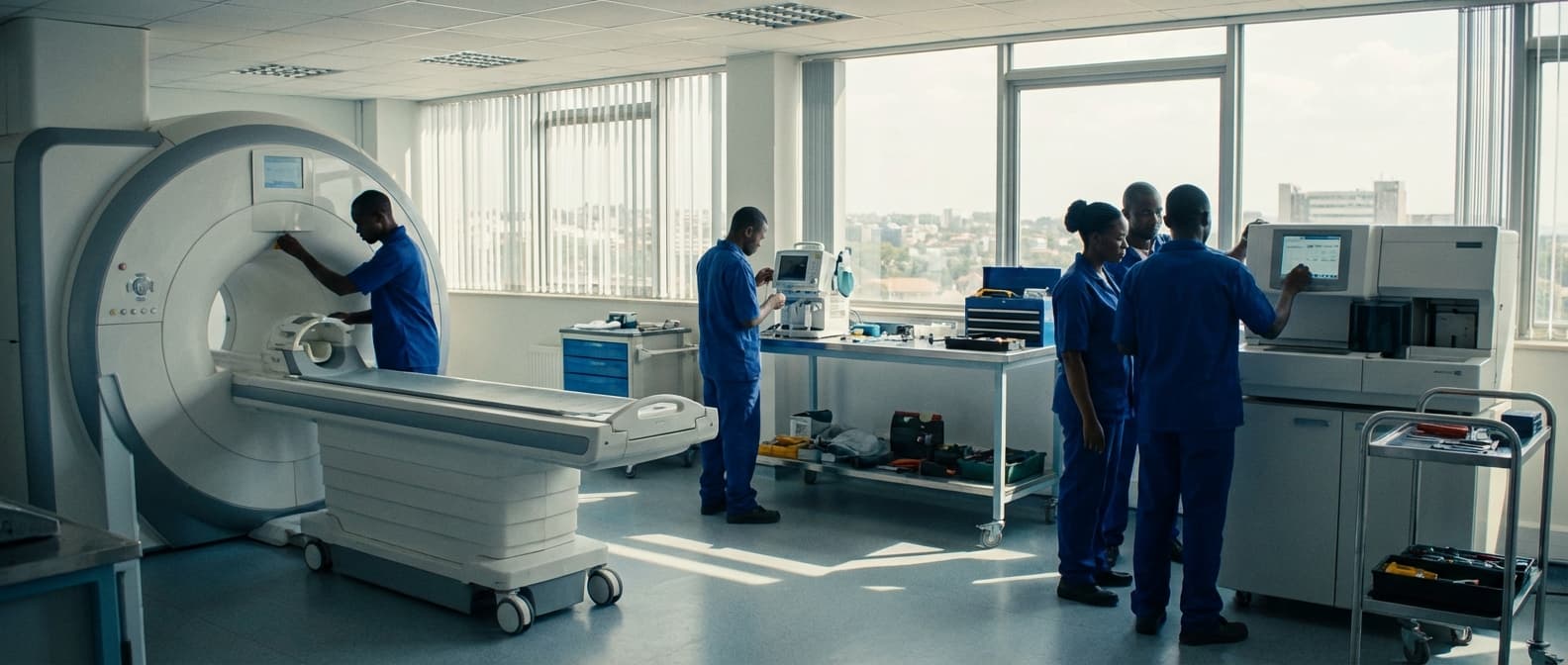
OEM Schedule Maintenance Execution Service (Filters/Cleaning/Alignment) in Equatorial Guinea
Engineering Excellence & Technical Support
OEM Schedule Maintenance Execution Service (Filters/Cleaning/Alignment) High-standard technical execution following OEM protocols and local regulatory frameworks.
Proactive Filter Replacement & Air Quality Optimization
Ensure optimal equipment performance and air purity in Equatorial Guinea's demanding climate with our scheduled filter replacement service. We utilize high-efficiency filters tailored to local environmental conditions, preventing particulate buildup and safeguarding sensitive components.
Deep Cleaning & Contamination Prevention for Harsh Environments
Mitigate the impact of dust, humidity, and potential corrosive elements prevalent in Equatorial Guinea. Our systematic deep cleaning protocols remove accumulated debris, preventing operational failures and extending the lifespan of your OEM equipment.
Precision Alignment for Peak Operational Efficiency
Maintain critical operational tolerances with our expert alignment services. By precisely calibrating moving parts, we reduce wear and tear, minimize energy consumption, and guarantee consistent, high-yield performance for your machinery in Equatorial Guinea's challenging operational settings.
What Is Oem Schedule Maintenance Execution Service (Filters/cleaning/alignment) In Equatorial Guinea?
The OEM Schedule Maintenance Execution Service (Filters/Cleaning/Alignment) in Equatorial Guinea refers to a proactive and preventative maintenance program, typically mandated by the Original Equipment Manufacturer (OEM) for critical industrial and commercial equipment. This service involves the systematic inspection, replacement, cleaning, and calibration of specific components to ensure optimal operational efficiency, longevity, and safety. The 'Filters' component addresses the replacement of particulate, oil, fuel, or air filters designed to remove contaminants from operating fluids or air streams. 'Cleaning' encompasses the removal of dust, debris, carbon deposits, or other accumulated substances from internal and external machinery parts, heat exchangers, and ventilation systems. 'Alignment' pertains to the precise adjustment of rotating components (e.g., shafts, pulleys, motors) to ensure their axes are parallel and concentric, minimizing vibration, wear, and energy loss.
| Who Needs It | Typical Use Cases | |||||
|---|---|---|---|---|---|---|
| Industrial Facilities: Power generation plants, oil and gas processing facilities, mining operations, manufacturing plants, and chemical processing units. | Energy Sector: Maintaining turbines, generators, pumps, compressors, and filtration systems in power plants and oil/gas extraction and refining operations. | Manufacturing: Ensuring the reliable operation of production lines, CNC machinery, automated assembly equipment, and HVAC systems. | Transportation & Logistics: Servicing critical components in heavy-duty vehicles, marine vessels, and airport ground support equipment. | Commercial Buildings: Maintaining HVAC systems, industrial kitchens, and large-scale water treatment facilities. | Mining and Extractive Industries: Ensuring the proper functioning of crushing, screening, conveying, and processing equipment. | Marine Operations: Regular maintenance of propulsion systems, auxiliary engines, and onboard filtration systems for vessels operating in Equatorial Guinean waters. |
| Preventing Particulate Contamination: Ensuring clean air intake for combustion engines and filtration of hydraulic or lubricating fluids in heavy machinery. | Maintaining Heat Transfer Efficiency: Cleaning of heat exchangers, radiators, and condenser coils in power generation, HVAC, and industrial cooling systems to prevent thermal runaway. | Reducing Vibration and Wear: Precise alignment of motor shafts to pumps, fans, or other driven equipment to minimize mechanical stress and premature component failure. | Ensuring System Purity: Replacement of filters in fuel lines to prevent injector damage and in air intake systems to protect sensitive internal engine components. | Optimizing Airflow: Cleaning of ventilation ducts and fan blades in large-scale HVAC systems for consistent air circulation and temperature control. | Compliance with Operational Standards: Adhering to OEM specifications for scheduled maintenance intervals to maintain equipment warranty and operational certification. | Minimizing Downtime in Critical Processes: Proactive maintenance of essential equipment in continuous operation environments, such as refineries or power plants, to avoid costly production halts. |
Key Aspects of OEM Schedule Maintenance Execution Service (Filters/Cleaning/Alignment)
- Preventative Maintenance: Designed to avert failures before they occur, reducing unscheduled downtime and associated costs.
- OEM Mandate: Often a contractual requirement for warranty validity and to adhere to manufacturer-specified operational parameters.
- Component Specificity: Focuses on critical wear items (filters) and operational integrity elements (cleaning, alignment).
- Performance Optimization: Ensures equipment operates at peak efficiency, leading to reduced energy consumption and improved output.
- Extended Equipment Lifespan: Regular maintenance significantly prolongs the operational life of machinery.
- Safety Enhancement: Prevents failures that could pose safety risks to personnel and the environment.
Who Needs Oem Schedule Maintenance Execution Service (Filters/cleaning/alignment) In Equatorial Guinea?
OEM Schedule Maintenance Execution Service (Filters/Cleaning/Alignment) is crucial for ensuring the optimal performance, longevity, and reliability of critical equipment across various industries operating in Equatorial Guinea. The humid, often dusty, and occasionally corrosive environment necessitates regular and professional maintenance to prevent premature wear and tear, unexpected breakdowns, and potential safety hazards. This service focuses on preventative measures, ensuring that components like filters are replaced, systems are thoroughly cleaned, and alignments are precisely calibrated to manufacturer specifications.
| Industry/Sector | Target Customers (Specific Roles/Companies) | Key Departments Involved |
|---|---|---|
| Oil & Gas | Upstream (Exploration & Production), Midstream (Pipelines & Processing), Downstream (Refineries & Petrochemicals); Major O&G operators, service companies, offshore platforms, onshore facilities. | Operations & Maintenance (O&M), Engineering, Production, Asset Integrity, Facilities Management. |
| Mining and Extractive | Surface and underground mining operations, mineral processing plants; Companies involved in gold, iron ore, etc. extraction. | Mine Operations, Maintenance Departments, Processing Plant Management, Heavy Equipment Management. |
| Power Generation and Utilities | Thermal power plants, hydroelectric facilities, renewable energy farms (solar, wind); National electricity providers, independent power producers (IPPs). | Plant Operations, Maintenance Engineering, Electrical Engineering, Mechanical Engineering, Grid Operations. |
| Telecommunications | Mobile network operators (MNOs), internet service providers (ISPs), data centers, telecommunication infrastructure providers. | Network Operations Center (NOC), Field Operations, Infrastructure Management, Technical Services. |
| Manufacturing and Industrial Processing | Food and beverage production, cement plants, chemical processing, textile manufacturing; Any facility with complex machinery requiring precision. | Production Management, Plant Maintenance, Quality Control, Engineering Departments. |
| Logistics and Transportation Hubs | Major ports, airports, large distribution centers; Companies managing critical handling and power backup equipment. | Port Authority Operations, Airport Facilities Management, Warehouse Operations, Fleet Maintenance. |
| Healthcare Facilities | Large hospitals and clinics with specialized medical equipment (e.g., imaging machines, laboratory equipment, HVAC systems for sensitive areas). | Biomedical Engineering, Facilities Management, Estates Department. |
| Government and Public Infrastructure | Water treatment plants, wastewater management facilities, critical government buildings, public transportation infrastructure. | Public Works Department, Utilities Management, Infrastructure Maintenance, Building Services. |
Target Customers and Departments for OEM Schedule Maintenance Execution Service in Equatorial Guinea:
- Oil & Gas Industry
- Mining and Extractive Industries
- Power Generation and Utilities
- Telecommunications
- Manufacturing and Industrial Processing
- Logistics and Transportation Hubs
- Healthcare Facilities (for specialized equipment)
- Government and Public Infrastructure
Oem Schedule Maintenance Execution Service (Filters/cleaning/alignment) Process In Equatorial Guinea
This document outlines the OEM Schedule Maintenance Execution Service (Filters/Cleaning/Alignment) process for vehicles in Equatorial Guinea. This service ensures optimal vehicle performance and longevity by adhering to manufacturer-recommended maintenance schedules. The workflow begins with a customer inquiry and concludes with the successful completion and documentation of the service.
| Stage | Description | Key Activities | Responsible Party | Documentation/Output |
|---|---|---|---|---|
| The customer contacts the OEM authorized service center to request scheduled maintenance. | Customer initiates contact (phone, email, in-person). Customer specifies vehicle details (make, model, year, VIN) and desired service (e.g., 30,000km service). | Customer, Service Advisor | Service Request Form (internal) |
| Confirm vehicle details and determine the specific maintenance tasks required based on the OEM schedule. | Verify VIN and vehicle history. Access OEM maintenance schedule for the specific vehicle. Identify required filter replacements (air, oil, fuel, cabin), cleaning procedures (engine bay, interior, undercarriage), and alignment checks. | Service Advisor, Technical Advisor | Service Order (internal), Detailed Service Scope |
| Provide the customer with a detailed quote for the service and obtain their approval. | Calculate labor and parts costs. Present the quote to the customer. Explain the scope of work and associated costs. Obtain written or verbal authorization from the customer. | Service Advisor | Quotation, Authorized Service Order |
| Arrange a convenient date and time for the vehicle to be brought in for service. | Check workshop availability. Coordinate with the customer to find a suitable slot. Confirm appointment details (date, time, estimated duration). | Service Advisor | Scheduled Appointment Record |
| Ensure all necessary OEM-specified filters, cleaning agents, and any other required parts are available. | Generate parts order based on the service scope. Source parts from OEM approved suppliers or internal inventory. Receive and inspect parts for quality and correctness. | Parts Department, Service Advisor | Parts Order, Parts Receipt, Inventory Update |
| Receive the vehicle and conduct a thorough inspection to document its current condition. | Greet customer and vehicle. Perform a walk-around inspection, noting any pre-existing damage. Document mileage. Verify customer concerns. Briefly inspect key components. | Service Advisor, Technician | Pre-Service Inspection Report, Vehicle Condition Log |
| Perform the scheduled maintenance operations as per OEM guidelines. | Replace air filter, oil filter, cabin filter, and fuel filter (as per schedule). Perform engine bay cleaning, interior cleaning, and undercarriage cleaning (as specified). Conduct wheel alignment using specialized equipment and procedures. Utilize OEM diagnostic tools. | Certified Technicians | Work Orders, Technician Notes, Diagnostic Reports, Alignment Report |
| Verify that all maintenance tasks have been completed correctly and to OEM standards. | Technician performs a self-check. Workshop supervisor or senior technician conducts a quality assurance check. Road test vehicle to confirm smooth operation and absence of issues. | Technician, Quality Control Inspector | Post-Service Quality Check Report |
| Inform the customer that the service is complete and arrange for vehicle collection. | Contact customer to confirm completion. Schedule vehicle handover. Explain the work performed and any relevant findings. Answer customer questions. | Service Advisor | Completion Notification, Service Summary |
| Generate the final invoice and process payment from the customer. | Prepare final invoice based on authorized quote and actual work performed. Process payment via accepted methods. Issue receipt. | Service Advisor, Accounts Department | Final Invoice, Payment Receipt |
| Maintain comprehensive records of the service for future reference and warranty purposes. | Update vehicle service history in the dealership's management system. File all related documentation (service orders, inspection reports, invoices). Generate periodic reports for management on service volume, revenue, and customer satisfaction. | Service Advisor, Administration | Updated Vehicle Service History, Service Records Archive, Management Reports |
OEM Schedule Maintenance Execution Service (Filters/Cleaning/Alignment) Workflow
- Inquiry and Service Request
- Vehicle Identification and Service Scope Definition
- Quotation and Authorization
- Appointment Scheduling
- Parts and Consumables Procurement
- Vehicle Reception and Pre-Service Inspection
- Execution of Maintenance Tasks (Filters, Cleaning, Alignment)
- Post-Service Inspection and Quality Control
- Customer Notification and Vehicle Handover
- Invoicing and Payment
- Record Keeping and Reporting
Oem Schedule Maintenance Execution Service (Filters/cleaning/alignment) Cost In Equatorial Guinea
This document outlines the typical cost for Original Equipment Manufacturer (OEM) scheduled maintenance execution services in Equatorial Guinea, specifically focusing on filter replacement, cleaning, and alignment procedures. Understanding these costs is crucial for businesses operating in the region to budget effectively for asset upkeep and ensure optimal operational performance.
| Service Component | Estimated Cost Range (XAF - Central African CFA Franc) | Notes |
|---|---|---|
| Filter Replacement (per set, basic) | 15,000 - 75,000 | Varies significantly by equipment type (e.g., air, fuel, oil filters for engines, HVAC systems). |
| Deep Cleaning (per equipment unit) | 25,000 - 150,000 | Depends on the size and complexity of the equipment, and the extent of cleaning required. |
| Alignment Services (per equipment unit) | 30,000 - 200,000 | Requires specialized tools and expertise, especially for rotating machinery or critical systems. Costs increase with precision requirements. |
| Labor (per technician, per hour) | 10,000 - 30,000 | Reflects the skill level, experience, and demand for qualified technicians in the region. |
| Travel & Logistics (per service visit) | 20,000 - 100,000+ | Highly dependent on the location of the equipment and the distance to travel. Includes fuel, accommodation, and transportation. |
| Basic Scheduled Maintenance Package (Filters + Cleaning) | 50,000 - 250,000 | A combined cost for a typical routine service, excluding specialized alignment. |
| Comprehensive Scheduled Maintenance (Filters + Cleaning + Alignment) | 100,000 - 500,000+ | Covers a more extensive service. Costs can escalate significantly for large or complex industrial assets. |
Factors Influencing OEM Scheduled Maintenance Costs in Equatorial Guinea
- Type and Complexity of Equipment: Maintenance for heavy industrial machinery (e.g., generators, drilling equipment) will naturally be more expensive than for smaller, less complex equipment (e.g., office automation, basic IT infrastructure). The number of filters involved, the intricacy of cleaning processes, and the precision required for alignment all contribute to cost.
- Frequency and Scope of Maintenance: Regular, routine maintenance schedules might have lower per-service costs compared to less frequent, more comprehensive service intervals. The scope can vary from a basic filter change and visual inspection to a deep clean and detailed recalibration.
- OEM vs. Third-Party Service Providers: OEM-certified technicians and genuine parts often command a premium due to guaranteed quality, adherence to manufacturer specifications, and specialized training. However, reputable third-party providers with qualified technicians can sometimes offer more competitive pricing.
- Location and Accessibility: Equatorial Guinea's geography, with its varying accessibility of certain regions, can impact logistical costs. Travel time, transportation of parts and personnel, and potential need for specialized equipment for remote sites will increase the overall service price.
- Labor Rates: Skilled technical labor rates in Equatorial Guinea are influenced by factors such as local market demand, the availability of qualified personnel, and the overall cost of living.
- Parts and Consumables: The cost of OEM-branded filters, cleaning agents, and any other required consumables will directly affect the service price. Import duties and shipping costs for these parts into Equatorial Guinea can also be significant.
- Downtime Considerations: While not a direct service cost, businesses often factor in the cost of potential downtime during maintenance. This can influence the urgency of the service and potentially lead to higher rates for expedited or off-hours scheduling.
- Service Level Agreements (SLAs): Formal SLAs can sometimes include pre-negotiated pricing for scheduled maintenance, offering cost predictability. However, these agreements can also reflect higher baseline costs due to guaranteed response times and service quality.
Affordable Oem Schedule Maintenance Execution Service (Filters/cleaning/alignment) Options
Regular schedule maintenance is crucial for extending the lifespan of your equipment, preventing costly breakdowns, and ensuring optimal performance. Our Affordable OEM Schedule Maintenance Execution Service focuses on essential tasks like filter replacement, thorough cleaning, and precision alignment. We offer flexible value bundles designed to meet your operational needs and budget, along with proven cost-saving strategies.
| Bundle Name | Included Services | Frequency | Ideal For | Cost-Saving Benefit |
|---|---|---|---|---|
| Essential Care | Filter Replacement (Standard), Basic Cleaning (External Components) | Quarterly | Light-use equipment, smaller operations | Prevents minor issues, reduces unscheduled downtime. |
| Performance Pro | Filter Replacement (Standard & Critical), Standard Cleaning (Internal & External), Basic Alignment Check | Bi-Annually | Medium-use equipment, standard operational demands | Optimizes efficiency, reduces wear, catches early signs of misalignment. |
| Uptime Maximizer | Filter Replacement (All OEM), Deep Cleaning (Comprehensive), Full Precision Alignment | Annually (or as per OEM recommendation) | Heavy-use equipment, critical operations, high-value assets | Minimizes catastrophic failures, extends asset life significantly, maximizes production uptime. |
Key Service Components
- OEM Filter Replacement: Utilizing genuine Original Equipment Manufacturer (OEM) filters to guarantee compatibility and optimal filtration performance, protecting your machinery from contaminants.
- Comprehensive Cleaning: Professional cleaning of critical components to remove dust, debris, and buildup, preventing overheating, wear, and performance degradation.
- Precision Alignment: Accurate alignment of rotating parts (e.g., shafts, pulleys) to minimize vibration, reduce stress on bearings and seals, and improve energy efficiency.
Verified Providers In Equatorial Guinea
In Equatorial Guinea's evolving healthcare landscape, identifying truly reliable and credentialed medical providers is paramount for both residents and visitors. This pursuit of quality assurance often leads to questions about which entities and individuals meet the highest standards. Franance Health has emerged as a significant player in this regard, offering a robust framework of verification that instills confidence. Their commitment to ensuring providers possess the necessary qualifications, adhere to ethical practices, and maintain a high standard of care makes them a distinguished choice.
| Credential Type | Verification Aspect | Franance Health Assurance |
|---|---|---|
| Medical Licenses & Certifications | Official recognition of practice rights and specialized training. | Franance Health confirms validity and current standing of all essential medical licenses and certifications. |
| Educational Background | Formal academic qualifications from recognized institutions. | Verification of degrees, diplomas, and specialized training from accredited medical schools and institutions. |
| Professional Experience | Practical application of medical knowledge and skills. | Thorough review of prior work history, including roles, responsibilities, and duration of practice. |
| Specialized Training & Fellowships | Advanced qualifications in specific medical fields. | Confirmation of completion and recognition of advanced training and fellowships. |
| Continuing Professional Development (CPD) | Ongoing learning and skill enhancement. | Assessment of participation in workshops, conferences, and other CPD activities to ensure providers stay current. |
| Ethical Standing & Disciplinary Records | Commitment to professional conduct and absence of malpractice. | Checks for any disciplinary actions or malpractice suits that could impact patient care. |
Why Franance Health Credentials Matter
- Rigorous vetting process: Franance Health employs a comprehensive assessment that goes beyond basic licensing, scrutinizing educational backgrounds, professional experience, and ongoing professional development.
- Adherence to international standards: Their verification protocols are often benchmarked against globally recognized healthcare quality indicators, ensuring a consistent level of excellence.
- Focus on patient safety and ethical conduct: Franance Health prioritizes providers who demonstrate a strong commitment to patient well-being, transparency, and ethical medical practices.
- Facilitating access to quality care: By clearly identifying verified providers, Franance Health simplifies the process for individuals seeking trusted medical services in Equatorial Guinea.
- Promoting continuous improvement: The verification process often encourages providers to maintain and enhance their skills and adherence to best practices.
Scope Of Work For Oem Schedule Maintenance Execution Service (Filters/cleaning/alignment)
This Scope of Work (SOW) outlines the requirements for the OEM Schedule Maintenance Execution Service, specifically focusing on filter replacement, cleaning, and alignment procedures for designated Original Equipment Manufacturer (OEM) equipment. This service is critical for ensuring optimal equipment performance, longevity, and adherence to manufacturer specifications.
| Component | Detailed Description | Standard Specifications / Deliverables | Frequency / Schedule | Key Considerations |
|---|---|---|---|---|
| Filter Replacement | Removal and disposal of existing filters and installation of new, OEM-approved filters in accordance with manufacturer guidelines. This includes all primary, secondary, and any specialized filters as specified for the equipment. |
| As per OEM maintenance schedule (e.g., monthly, quarterly, annually) or upon indicator-based alerts. | Ensure correct filter grade and micron rating. Verify filter seal. Proper handling to prevent contamination. |
| Equipment Cleaning | Thorough cleaning of accessible internal and external surfaces of the OEM equipment. This includes dust removal, degreasing, and sanitation where applicable, to prevent performance degradation and potential contamination. |
| As per OEM maintenance schedule or as needed based on environmental conditions. | Use of non-corrosive and non-conductive cleaning agents. Anti-static precautions. Avoidance of liquid ingress into sensitive components. |
| Alignment Procedures | Adjustment and calibration of mechanical and/or optical components to ensure they are within OEM specified tolerances for optimal operation. This may include optical lens alignment, sensor alignment, or mechanical part positioning. |
| As per OEM maintenance schedule or following any detected performance degradation or indication of misalignment. | Use of calibrated alignment tools. Adherence to precise OEM tolerance requirements. Proper environmental conditions (temperature, vibration) during alignment if specified. |
Service Components
- Filter Replacement
- Equipment Cleaning
- Alignment Procedures
Service Level Agreement For Oem Schedule Maintenance Execution Service (Filters/cleaning/alignment)
This Service Level Agreement (SLA) outlines the response times and uptime guarantees for the OEM Schedule Maintenance Execution Service, specifically covering Filter Replacement, Cleaning, and Alignment procedures. This SLA aims to ensure the consistent and reliable performance of your equipment through proactive and timely maintenance.
| Service Component | Response Time Target (Business Hours) | Uptime Guarantee |
|---|---|---|
| Filter Replacement | 2 Business Hours (Acknowledgement) / 8 Business Hours (Initiation of Service) | 99.5% |
| Cleaning (Routine) | 4 Business Hours (Acknowledgement) / 16 Business Hours (Initiation of Service) | 99.5% |
| Alignment (Routine) | 4 Business Hours (Acknowledgement) / 24 Business Hours (Initiation of Service) | 99.5% |
| Emergency/Unscheduled Maintenance (if applicable) | 1 Business Hour (Acknowledgement) / 4 Business Hours (Initiation of Service) | 99.0% (for equipment requiring emergency attention) |
Key Performance Indicators (KPIs)
- Response Time: The time taken by the service provider to acknowledge and initiate action following a maintenance request or notification.
- Uptime Guarantee: The percentage of time the equipment is guaranteed to be operational and available for use, excluding scheduled maintenance windows.
Frequently Asked Questions

Ready when you are
Let's scope your OEM Schedule Maintenance Execution Service (Filters/Cleaning/Alignment) in Equatorial Guinea project in Equatorial Guinea.

Scaling healthcare logistics and technical systems across the entire continent.