
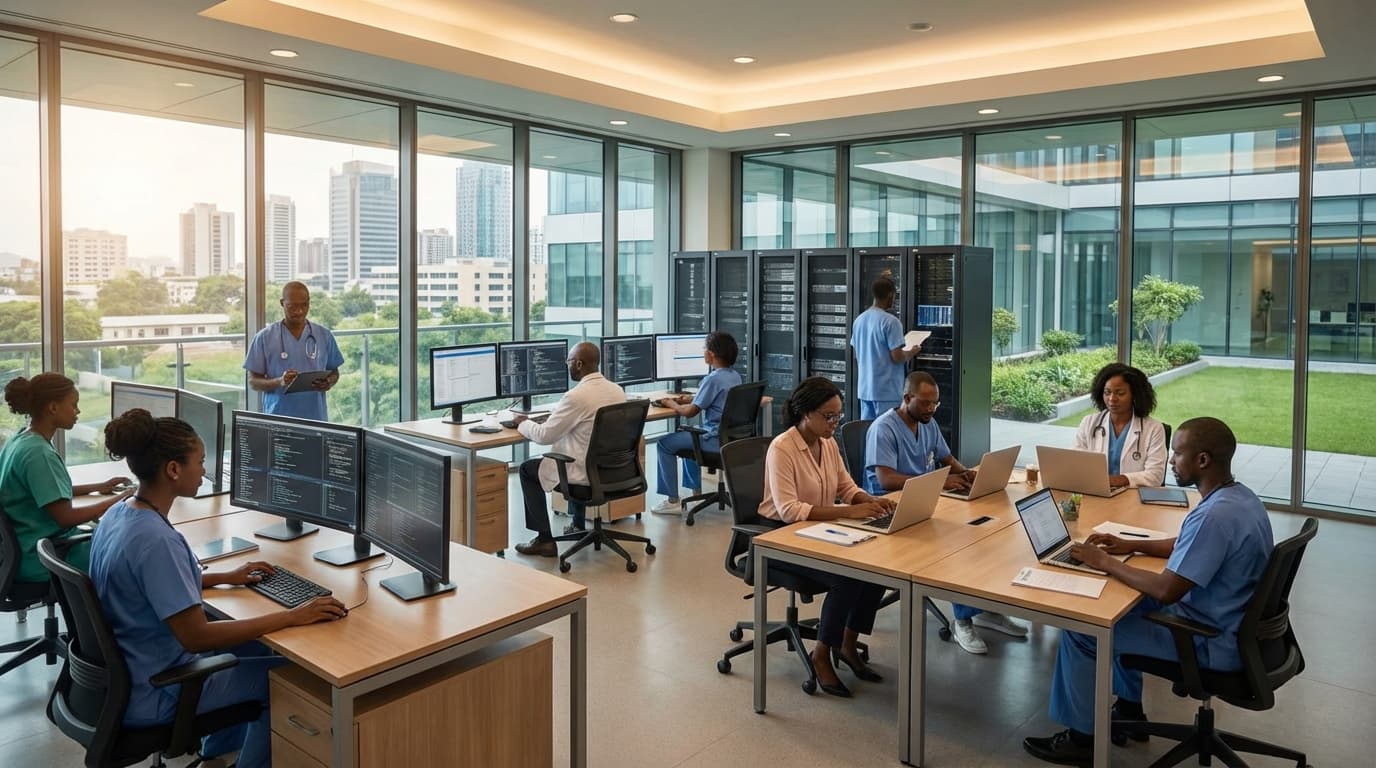
Radiology Reader & Reporting Support in Equatorial Guinea
Engineering Excellence & Technical Support
Remote radiology reading and reporting services High-standard technical execution following OEM protocols and local regulatory frameworks.
Enhanced Diagnostic Precision
Leveraging advanced AI algorithms, our platform analyzes medical images with unparalleled detail, assisting radiologists in identifying subtle anomalies and improving diagnostic accuracy for a wider range of conditions, even in remote settings.
Seamless Image Archival & Retrieval
Securely store and instantly access a comprehensive digital archive of radiological studies. Our cloud-based solution ensures vital patient data is readily available for follow-up examinations and consultations, overcoming infrastructure limitations.
Remote Collaboration & Expert Consultation
Facilitate seamless communication and case sharing between local radiologists and international specialists. Our platform enables expert second opinions and collaborative reporting, ensuring patients receive the highest standard of care regardless of geographical barriers.
What Is Radiology Reader & Reporting Support In Equatorial Guinea?
Radiology Reader & Reporting Support in Equatorial Guinea refers to the provision of specialized technical and clinical expertise to assist in the interpretation of medical imaging studies and the generation of comprehensive diagnostic reports. This service bridges geographical and resource limitations, enabling healthcare facilities to access advanced radiological interpretation capabilities, particularly when local expertise or infrastructure is constrained. It typically involves the remote analysis of imaging data (e.g., X-rays, CT scans, MRIs, ultrasounds) by qualified radiologists and the subsequent generation of detailed, actionable diagnostic reports. This service is crucial for improving diagnostic accuracy, patient management, and access to specialized medical care within Equatorial Guinea's healthcare system.
| Who Needs This Service? | Typical Use Cases | ||||||
|---|---|---|---|---|---|---|---|
| Hospitals and Clinics: Healthcare facilities in Equatorial Guinea, especially those with limited access to on-site radiologists or specialized imaging expertise. | Emergency Departments: Rapid interpretation of critical imaging studies (e.g., trauma, stroke, acute abdomen) to facilitate immediate patient management. | Rural and Remote Healthcare Centers: Providing diagnostic capabilities in areas lacking in-house radiology departments. | Specialty Clinics: Accessing subspecialty interpretations (e.g., neuro-radiology, pediatric radiology, interventional radiology) that may not be locally available. | Training and Education: Providing case material and expert feedback for local medical professionals involved in imaging. | High-Volume Imaging Centers: Managing workload and ensuring timely reporting, especially during periods of staff shortage or high demand. | ||
| Emergency Room Consultations: Expedited reads for acute conditions like suspected fractures, pulmonary embolisms, or intracranial hemorrhages. | Routine Diagnostic Imaging: Interpretation of general radiology studies for diagnosis of various medical conditions. | Post-Operative Follow-up: Monitoring of surgical outcomes via imaging. | Oncology Imaging: Staging, treatment response assessment, and follow-up for cancer patients. | Neurological Assessments: Interpretation of brain CTs and MRIs for stroke, tumors, and degenerative diseases. | Cardiovascular Imaging: Analysis of CT angiography and cardiac MRI for vascular and cardiac pathologies. | Pediatric Radiology: Specialized interpretation of imaging studies in infants and children. | Remote Diagnostics for Limited Infrastructure: Enabling advanced diagnostic capabilities in locations with underdeveloped local resources. |
Key Components of Radiology Reader & Reporting Support
- Image Acquisition & Transmission: Secure and efficient transfer of DICOM-compliant medical images from the originating facility in Equatorial Guinea to the remote reading center.
- Remote Interpretation: Qualified radiologists, often located internationally, perform a detailed review of the transmitted images.
- Diagnostic Report Generation: Creation of structured, detailed, and timely reports by the interpreting radiologist, including findings, impressions, and recommendations.
- Consultation & Communication: Facilitation of communication between the interpreting radiologist and the referring clinician in Equatorial Guinea for clarification or further discussion.
- Quality Assurance: Implementation of protocols to ensure the accuracy, consistency, and quality of interpretations and reports.
- Technology Integration: Support for Picture Archiving and Communication Systems (PACS), Vendor Neutral Archives (VNA), and secure telehealth platforms.
Who Needs Radiology Reader & Reporting Support In Equatorial Guinea?
In Equatorial Guinea, access to specialized radiology expertise for reading and reporting on medical images is a significant need. This support is crucial for accurate diagnosis, timely treatment, and improved patient outcomes. The demand spans both public and private healthcare sectors, particularly in areas where local radiologists are scarce or overwhelmed. Radiology reader and reporting support can bridge critical gaps in diagnostic capabilities, enabling healthcare professionals to make informed decisions even in resource-limited settings.
| Target Customer/Department | Specific Needs/Challenges | Key Services Required | Impact of Support |
|---|---|---|---|
| Hospitals (Public & Private) | Limited number of qualified radiologists, high patient volume, need for specialized interpretations (e.g., MRI, CT), post-operative follow-up. | On-demand image interpretation, second opinions, complex case consultations, teleradiology services for remote reading. | Faster diagnosis, reduced misdiagnosis rates, improved treatment planning, increased capacity for handling critical cases. |
| Clinics & Health Centers | Lack of in-house radiology expertise, reliance on basic imaging (X-ray), need for timely interpretation of common pathologies. | Remote interpretation of X-rays and ultrasounds, basic diagnostic reporting, support for general practitioners. | Early detection of diseases, appropriate referrals for advanced care, improved primary healthcare delivery. |
| Diagnostic Imaging Centers | Need for specialized interpretations for advanced modalities (CT, MRI, Mammography), quality assurance, peer review. | Expert interpretation of complex scans, subspecialty reporting (neurology, oncology, musculoskeletal), quality control of reports. | Enhanced accuracy of diagnoses, standardization of reporting quality, increased confidence in diagnostic reports. |
| Remote Healthcare Facilities | Geographical isolation, significant lack of trained personnel, dependence on external support for any advanced diagnostics. | Tele-radiology services, remote interpretation of all available imaging modalities, training support for local technicians. | Access to essential diagnostic services, bridging the gap in healthcare accessibility, enabling early intervention in remote areas. |
| Medical Missions & NGOs | Temporary or ad-hoc imaging needs during outreach programs, often dealing with specific health conditions, limited infrastructure. | Rapid interpretation of images acquired during missions, specialized reporting for public health initiatives, support for disaster relief efforts. | Effective screening and diagnosis during humanitarian efforts, data collection for public health analysis, improved patient care in crisis situations. |
| Internal Medicine Departments | Need for prompt and accurate interpretation of chest X-rays, abdominal ultrasounds, and other general imaging for diagnosis and management. | Routine and urgent radiology reads, consultation on imaging findings, assistance with differential diagnoses. | Quicker confirmation or exclusion of diagnoses, optimized treatment strategies, reduced patient waiting times. |
| Surgical Departments | Pre-operative planning, intra-operative guidance, post-operative assessment of complications or recovery. | Interpretation of pre- and post-surgical imaging, identification of surgical targets, assessment of surgical outcomes. | Improved surgical precision, reduced complications, faster patient recovery and rehabilitation. |
| Emergency Departments | Urgent interpretation of trauma imaging (CT head, X-rays), acute abdomen scans, and other critical conditions requiring immediate diagnosis. | 24/7 availability for emergency reads, rapid reporting of critical findings, prioritizing urgent cases. | Life-saving diagnoses, timely intervention in critical situations, reduction in mortality and morbidity. |
Target Customers & Departments for Radiology Reader & Reporting Support in Equatorial Guinea:
- Hospitals (Public & Private)
- Clinics & Health Centers
- Diagnostic Imaging Centers
- Remote Healthcare Facilities
- Medical Missions & NGOs
Radiology Reader & Reporting Support Process In Equatorial Guinea
The Radiology Reader & Reporting Support Process in Equatorial Guinea outlines the streamlined workflow for obtaining and interpreting radiological studies, particularly when local expertise or advanced equipment is limited. This process ensures patients receive timely and accurate diagnoses by leveraging external resources for interpretation and reporting. The workflow begins with an inquiry, progresses through patient preparation and image acquisition, then to external review and report generation, and finally culminates in the delivery of the report back to the referring physician.
| Step | Description | Key Stakeholders | Technology/Tools | Considerations/Notes |
|---|---|---|---|---|
| A referring physician identifies a need for a radiological examination and initiates a request for interpretation services. | Referring Physician, Clinic/Hospital Administrator | Communication channels (phone, email, secure messaging), Request forms | Ensure clear indication for the study and relevant clinical history are provided. |
| The patient is prepared according to the specific examination protocol (e.g., fasting, contrast agent administration instructions). The appointment is scheduled. | Patient, Referring Physician, Radiographer/Technologist | Scheduling system, Patient education materials | Confirm patient understanding of preparation instructions. Minimize wait times. |
| The radiological examination is performed by a trained radiographer or technologist using available equipment. | Radiographer/Technologist, Patient | Radiology equipment (X-ray, CT, Ultrasound, MRI), PACS (Picture Archiving and Communication System) if available | Ensure optimal image quality and adherence to imaging protocols. Proper patient positioning is crucial. |
| Acquired images are securely transferred from the local facility to the external radiology reading service. | Radiographer/Technologist, IT Support (if applicable), External Reading Service | Secure VPN, Encrypted cloud storage, Dedicated PACS gateway, DICOM compliant transfer protocols | Prioritize data security and patient privacy (HIPAA/GDPR compliance). Ensure consistent and reliable transfer. |
| A qualified external radiologist reviews the images, performs measurements, and identifies any abnormalities. | External Radiologist | Workstation with high-resolution monitors, PACS viewer, Tele-radiology platform | Radiologist must be licensed and credentialed. Consider turnaround time expectations. |
| The external radiologist dictates or types a comprehensive report based on their findings, including impressions and recommendations. | External Radiologist, Transcriptionist (if applicable) | Speech recognition software, Reporting templates, Word processor | Reports should be clear, concise, and use standardized terminology. |
| The generated report is reviewed for accuracy, completeness, and consistency by the external reading service (e.g., a senior radiologist or quality assurance team). | Senior Radiologist/QA Team (External), External Radiologist | Internal review protocols, Quality management software | This step ensures the highest level of diagnostic accuracy before delivery. |
| The finalized report is securely sent back to the referring physician in Equatorial Guinea and integrated into the patient's electronic health record (EHR) if available. | External Reading Service, Referring Physician, Clinic/Hospital Staff | Secure email, Secure portal, EHR integration interface | Ensure the report is delivered promptly. The referring physician is responsible for communicating findings to the patient and initiating further management. |
Radiology Reader & Reporting Support Process Workflow
- Inquiry & Request Initiation
- Patient Preparation & Scheduling
- Image Acquisition
- Secure Image Transfer
- External Radiologist Review
- Report Generation
- Report Verification & Finalization
- Report Delivery & Integration
Radiology Reader & Reporting Support Cost In Equatorial Guinea
Radiology reader and reporting support in Equatorial Guinea, like in many developing nations, is influenced by a combination of factors impacting pricing. These include the expertise and qualifications of the radiologists providing the service, the complexity and volume of imaging studies, the technology used for image acquisition and transmission, and the specific reporting turnaround times required. While definitive, publicly available pricing structures are scarce, we can infer potential cost ranges by considering these drivers and comparing them to broader trends in the healthcare sector of the region.
| Service Type | Estimated Range (XAF per study) | Notes |
|---|---|---|
| Basic X-ray Interpretation | 15,000 - 40,000 | Depends on complexity and number of views. Lower end for simple fractures, higher for more involved skeletal surveys. |
| CT Scan Interpretation (e.g., Head, Abdomen/Pelvis) | 40,000 - 120,000 | Varies with the number of sequences and complexity of findings. Contrast-enhanced studies will be at the higher end. |
| MRI Scan Interpretation (e.g., Brain, Spine, Joints) | 60,000 - 200,000 | MRI is generally more expensive due to longer scan times and complex interpretation. Subspecialty areas like neuro or musculoskeletal will be pricier. |
| Ultrasound Interpretation (e.g., Abdomen, Pelvic, Obstetric) | 25,000 - 80,000 | Includes routine obstetric scans and abdominal assessments. Specialized ultrasounds (e.g., Doppler) might be higher. |
| Teleradiology Reporting (per study, remote) | 30,000 - 150,000 | This is a broad range. Factors include modality, complexity, and TAT. Bulk contracts may offer discounts. |
| Urgent/Stat Reporting Surcharge | +25% to +100% of base cost | Applied for same-day or within-hours reporting, depending on the urgency level. |
Key Pricing Factors for Radiology Reader & Reporting Support in Equatorial Guinea
- Radiologist Expertise and Specialization: Highly experienced radiologists, particularly those with subspecialty training (e.g., neuroradiology, interventional radiology), will command higher fees. The availability of qualified local radiologists can also influence pricing due to supply and demand.
- Volume and Complexity of Studies: The number of images per study (e.g., a single X-ray vs. a full CT or MRI scan) and the complexity of the case directly affect the time and cognitive effort required from the radiologist, thus impacting cost.
- Technology and Infrastructure: The reliance on advanced imaging modalities (MRI, CT, PET) and the associated PACS (Picture Archiving and Communication System) and RIS (Radiology Information System) infrastructure can influence operational costs. The need for secure and reliable data transmission for remote reading also plays a role.
- Turnaround Time (TAT): Urgent or stat radiology reports will typically incur higher costs due to the prioritization and immediate allocation of radiologist resources.
- Remote vs. On-site Services: While remote radiology reporting is becoming more common, on-site services, if available, might have different pricing models, potentially including travel and accommodation costs.
- Provider Type: Pricing can vary between independent teleradiology providers, hospital-based radiology departments, and larger healthcare groups.
- Currency Exchange Rates: As Equatorial Guinea uses the Central African CFA franc (XAF), fluctuations in its exchange rate against major currencies can indirectly affect the cost of imported medical equipment and software, which might be factored into service pricing.
Affordable Radiology Reader & Reporting Support Options
Accessing high-quality radiology reading and reporting support doesn't have to break the bank. Several affordable options and strategic approaches can significantly reduce costs while maintaining excellent service. This includes leveraging value bundles, exploring tiered service levels, and implementing efficient workflow optimizations.
| Cost-Saving Strategy | Description | Potential Savings Impact | Considerations |
|---|---|---|---|
| Value Bundles | Pre-packaged service combinations (e.g., primary, secondary, subspecialty reads) at a discounted rate. | Significant reduction in per-study cost; predictable budgeting. | Ensure the bundle meets your specific service needs. Analyze individual component costs to confirm value. |
| Tiered Service Levels | Different pricing based on turnaround time, complexity, and subspecialty expertise. | Lower cost for non-urgent cases or general reads; pay for what you need. | Clearly define urgency levels and required expertise for each study type. |
| On-Demand/Overflow | Pay-as-you-go service for peak periods or to cover shortfalls. | Avoids overhead of full-time staff; only pay for actual reads. | Requires reliable and responsive providers to ensure timely coverage. |
| Hybrid Model | Combine in-house radiologists with outsourced services. | Optimizes resource allocation; leverages external expertise cost-effectively. | Requires strong internal management and clear communication between internal and external teams. |
| AI-Assisted Workflows | Utilize AI for triage, preliminary reads, or report generation. | Reduces radiologist time per study; improves efficiency. | Requires integration with existing PACS/RIS; ensure accuracy and validation of AI output. |
| Long-Term Contracts | Commit to longer service periods with potential discounts. | Lower per-study rates for guaranteed volume and commitment. | Requires careful assessment of future volume projections and provider reliability. |
| Subspecialty Focus | Negotiate rates for high-volume subspecialties. | Better pricing due to concentrated demand and specialized expertise. | Ensure the provider has a deep bench of qualified subspecialists. |
Affordable Radiology Reader & Reporting Support Options
- Value Bundles: These are pre-packaged service offerings that combine multiple services at a discounted rate compared to purchasing them individually. Bundles often include a combination of primary reads, secondary reads (peer review), subspecialty reads, and preliminary reports. The key benefit is predictable pricing and often a lower per-study cost.
- Tiered Service Levels: Providers offer different levels of service based on turnaround time (TAT) requirements, complexity of studies, and the level of subspecialty expertise needed. Opting for standard TATs for non-urgent cases or choosing general radiology reads when subspecialty expertise isn't critical can lead to substantial savings.
- On-Demand & Overflow Support: Instead of maintaining a full-time internal team, practices can utilize on-demand services for peak times or to cover unexpected absences. This pay-as-you-go model is highly cost-effective as you only pay for the reads you need.
- Hybrid Models: Combining in-house radiologists with outsourced reading services offers a balanced approach. You can keep core operations internal while using external providers for overflow, after-hours coverage, or specific subspecialties.
- Technology Integration: Utilizing AI-powered triage tools or preliminary read assistants can streamline workflows. These technologies can flag critical findings, pre-populate reports, and reduce the time radiologists spend on routine tasks, indirectly lowering the cost per read.
- Subspecialty-Specific Contracts: If a practice has a high volume of a particular subspecialty (e.g., neuroimaging, musculoskeletal), negotiating dedicated contracts with subspecialty groups can yield better rates.
- Geographic Flexibility: Engaging with reading services that have radiologists in different time zones can facilitate 24/7 coverage without the premium associated with late-night or overnight shifts for an internal team.
- Long-Term Commitments & Volume Discounts: Many providers offer reduced rates for longer contract durations or for practices that guarantee a certain volume of studies. This can be a significant cost-saving strategy for established practices.
- Clear Communication & Protocol Standardization: Establishing clear communication channels and standardizing reporting protocols with your external provider minimizes misunderstandings and rework, which translates to cost savings.
Verified Providers In Equatorial Guinea
Navigating the healthcare landscape in Equatorial Guinea requires trust and confidence in the providers you choose. Franance Health stands out as a premier healthcare organization, recognized for its unwavering commitment to quality, ethical practices, and patient-centered care. Their credentials are not just certifications; they represent a deep-seated dedication to upholding the highest international standards in healthcare delivery. This dedication ensures that patients receive not only effective but also safe and compassionate medical services. Choosing Franance Health means opting for a partner in your well-being, backed by a team of highly qualified professionals and a robust operational framework designed to meet the diverse healthcare needs of the population.
| Credential/Attribute | Franance Health's Commitment | Patient Benefit |
|---|---|---|
| International Quality Standards | Adherence to globally recognized healthcare benchmarks and best practices. | Ensures high-quality, safe, and effective medical care, comparable to leading healthcare systems worldwide. |
| Highly Qualified Staff | Recruitment and continuous professional development of licensed and experienced medical practitioners. | Access to expert medical advice and treatment from skilled and knowledgeable professionals. |
| Modern Facilities & Equipment | Investment in up-to-date medical technology and well-maintained healthcare infrastructure. | Improved diagnostic accuracy, access to advanced treatment options, and a comfortable healing environment. |
| Comprehensive Service Portfolio | Offering a wide array of medical specialties and general healthcare services under one roof. | Convenient and integrated healthcare solutions, minimizing the need to seek care from multiple providers. |
| Patient Rights & Confidentiality | Strict protocols for patient privacy, informed consent, and respectful treatment. | Trust and security in your personal health information and medical journey. |
| Ethical Governance | Commitment to transparent operations, fair pricing, and adherence to medical ethics. | Peace of mind knowing you are receiving honest and trustworthy healthcare services. |
Why Franance Health is the Top Choice:
- International Accreditation and Compliance: Franance Health adheres to stringent international healthcare standards, ensuring quality and safety in all its operations. This commitment is often validated through recognized accreditation bodies, providing an objective measure of their excellence.
- Experienced and Qualified Medical Professionals: The organization employs a team of highly skilled and experienced doctors, nurses, and support staff. Many of their professionals hold international qualifications and have extensive experience in their respective fields.
- Advanced Medical Technology and Infrastructure: Franance Health invests in state-of-the-art medical equipment and maintains modern facilities. This allows for accurate diagnostics, effective treatments, and a comfortable patient experience.
- Comprehensive Range of Services: From general practice to specialized care, Franance Health offers a broad spectrum of medical services, catering to a wide array of health concerns. This integrated approach ensures continuity of care and convenience for patients.
- Patient-Centric Approach: The organization places a strong emphasis on patient satisfaction and well-being. This is reflected in their personalized care plans, clear communication, and a supportive environment.
- Commitment to Ethical Practices: Franance Health operates with the highest ethical standards, prioritizing patient privacy, informed consent, and transparent billing practices. This builds trust and ensures a secure healthcare experience.
- Strong Community Engagement and Public Health Initiatives: Beyond direct patient care, Franance Health actively participates in public health programs and initiatives within Equatorial Guinea, demonstrating a broader commitment to improving the nation's health landscape.
Scope Of Work For Radiology Reader & Reporting Support
This Scope of Work (SOW) outlines the requirements for Radiology Reader & Reporting Support services. This service is designed to augment existing radiology departments by providing skilled radiologists to interpret medical images and generate comprehensive reports, thereby improving turnaround times, enhancing diagnostic accuracy, and ensuring timely patient care. The technical deliverables and standard specifications ensure consistency, quality, and seamless integration with existing Picture Archiving and Communication Systems (PACS) and Electronic Health Records (EHR) platforms.
| Technical Deliverable | Standard Specification | Description | Key Performance Indicator (KPI) |
|---|---|---|---|
| Radiology Image Interpretation Reports | ACR Standards, Local Protocols | Detailed, structured, and accurate reports generated by qualified radiologists for all interpreted studies. | Report TAT < 24 hours for routine studies; < 2 hours for STAT studies. |
| Finalized DICOM Images & Reports | HL7, FHIR Compliance | Provision of finalized DICOM images and associated reports, integrated into the client's PACS/EHR system. | Successful integration rate > 99%. |
| Subspecialty Interpretations | Fellowship Training, Board Certification | Expert interpretations in specific subspecialties (e.g., Neuroradiology, Musculoskeletal, Breast Imaging) as required. | Availability of subspecialty readers 24/7 or as per agreed schedule. |
| Quality Assurance (QA) Metrics | Internal QA Protocols, Client Feedback | Regular review of reports for accuracy, completeness, and adherence to standards. | Report error rate < 0.5%; Client satisfaction score > 4.5/5. |
| Data Security and Privacy | HIPAA, GDPR Compliance | Strict adherence to all data security and patient privacy regulations. | Zero data breaches; Successful completion of security audits. |
| System Integration and Interoperability | PACS & EHR Vendor Specifications | Seamless integration with client's PACS, RIS, and EHR systems via standard protocols (e.g., HL7, DICOM). | System uptime > 99.9%; Successful data exchange within agreed SLAs. |
| Communication and Escalation Protocol | Defined Escalation Matrix | Clear procedures for communication with referring physicians, radiologists, and administrative staff, including an escalation protocol for critical findings. | Response time to critical findings notification < 15 minutes. |
Key Objectives
- Enhance radiology workflow efficiency and reduce report turnaround times (TAT).
- Provide expert subspecialty radiology interpretations to support complex cases.
- Improve diagnostic accuracy and consistency across all imaging modalities.
- Ensure adherence to established reporting standards and best practices.
- Offer flexible and scalable support to meet fluctuating departmental demands.
- Facilitate seamless integration with existing PACS and EHR systems.
Service Level Agreement For Radiology Reader & Reporting Support
This Service Level Agreement (SLA) outlines the performance standards and support commitments for the Radiology Reader & Reporting Support service. It defines response times for issue resolution and guarantees a minimum uptime for the reporting system and associated infrastructure. This SLA is designed to ensure timely and reliable support for radiology reading and reporting workflows.
| Service Component | Response Time Target (Business Hours) | Response Time Target (24/7 - Critical) | Uptime Guarantee |
|---|---|---|---|
| Reporting System Access & Functionality | 1 Hour (Acknowledgement) | 15 Minutes (Acknowledgement) | 99.9% |
| PACS Integration Issues Affecting Report Generation | 2 Hours (Resolution/Workaround) | 30 Minutes (Resolution/Workaround) | 99.9% |
| Reader Workstation Performance Issues (Software Related) | 4 Business Hours (Acknowledgement) | N/A | N/A |
| Report Editing & Retrieval Issues | 2 Business Hours (Acknowledgement) | N/A | N/A |
| Routine System Updates & Patches | Scheduled during defined maintenance windows | N/A | N/A |
Key Service Components
- 24/7 Availability of Reporting System and PACS Integration
- Real-time Support for Critical Reporting Issues
- Scheduled Maintenance Windows with Advance Notification
- Proactive System Monitoring and Performance Optimization
Frequently Asked Questions

Ready when you are
Let's scope your Radiology Reader & Reporting Support in Equatorial Guinea project in Equatorial Guinea.

Scaling healthcare logistics and technical systems across the entire continent.