
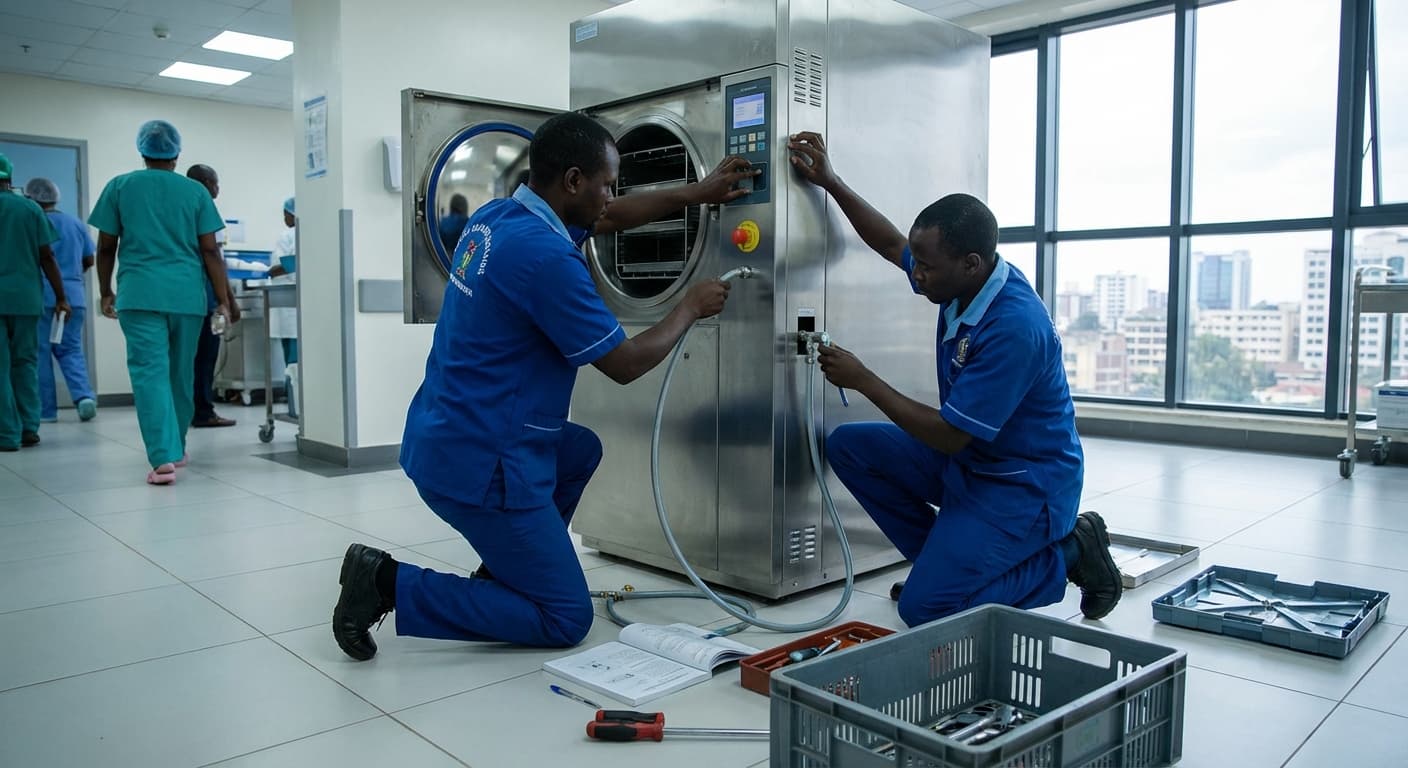
Autoclave & Sterilizer Installation Service in Equatorial Guinea
Engineering Excellence & Technical Support
Autoclave & Sterilizer Installation Service High-standard technical execution following OEM protocols and local regulatory frameworks.
Precision Sterilization Standards
Expert installation of advanced autoclaves and sterilizers, adhering to rigorous international sterilization standards (e.g., ISO 13485) to ensure optimal efficacy and patient safety in Equatorial Guinea's healthcare facilities.
Robust Infrastructure Integration
Seamless integration of autoclave and sterilizer systems with existing hospital infrastructure, including ventilation, power, and water supply, guaranteeing reliable operation and minimal disruption to healthcare services across the region.
Remote Monitoring & Support Capability
Implementation of advanced monitoring systems allowing for real-time performance tracking and rapid remote troubleshooting of installed autoclaves and sterilizers, providing continuous operational support for critical medical equipment in Equatorial Guinea.
What Is Autoclave & Sterilizer Installation Service In Equatorial Guinea?
Autoclave & Sterilizer Installation Service in Equatorial Guinea refers to the specialized process of setting up, configuring, and commissioning steam sterilizers (autoclaves) and other sterilization equipment for medical, laboratory, and industrial applications within the country. This service ensures that the installed equipment operates efficiently, safely, and in compliance with relevant standards and regulations for effective microbial inactivation and material decontamination.
| Who Needs Autoclave & Sterilizer Installation Service? | Typical Use Cases | |||||
|---|---|---|---|---|---|---|
| Healthcare Facilities: Hospitals, clinics, dental offices, veterinary practices, diagnostic laboratories (for sterilization of surgical instruments, laboratory glassware, media, and waste). | Research Laboratories: Academic institutions, pharmaceutical companies, biotechnology firms (for sterilization of media, equipment, and consumables). | Manufacturing Industries: Pharmaceutical production (sterilization of equipment, packaging materials), food and beverage processing (sterilization of containers and equipment), cosmetics manufacturing. | Public Health Agencies: Government health organizations for sterilization of medical supplies and waste management. | Educational Institutions: Biology, chemistry, and medical departments in universities and colleges for laboratory equipment sterilization. | ||
| Sterilization of Surgical Instruments: Ensuring reusable surgical tools are free from microbial contamination before patient use. | Laboratory Media and Glassware Sterilization: Preparing sterile growth media for microbiological cultures and sterilizing laboratory glassware to prevent contamination. | Sterilization of Medical Waste: Deactivating hazardous biological agents in medical waste before disposal. | Sterilization in Pharmaceutical Manufacturing: Ensuring the sterility of drug products, packaging materials, and manufacturing equipment. | Sterilization of Dental Instruments: Maintaining a high level of hygiene for reusable dental tools. | Veterinary Instrument Sterilization: Ensuring the safety of reusable instruments in animal care. | Biotechnology Applications: Sterilizing equipment and consumables for sensitive biological experiments. |
Key Components of Autoclave & Sterilizer Installation Service:
- Site Assessment and Planning: Evaluating the installation location for structural integrity, utility availability (power, water, drainage), ventilation requirements, and spatial constraints. Developing a detailed installation plan.
- Equipment Delivery and Unpacking: Safe transportation of the autoclave or sterilizer to the site, careful unpacking, and initial inspection for any shipping damage.
- Structural and Utility Connections: Performing any necessary modifications to the site to accommodate the equipment, including mounting, bolting, and connecting to electrical, steam (if applicable), water, and drainage systems. This includes ensuring proper grounding and surge protection for electrical components.
- Plumbing and Drainage: Installing or connecting water supply lines (often demineralized or distilled water for autoclaves), waste water drainage, and ensuring leak-proof connections.
- Ventilation and Exhaust Systems: Integrating or modifying existing ventilation systems to handle steam exhaust, heat, and potential airborne contaminants, ensuring compliance with safety and environmental regulations.
- Electrical Wiring and Commissioning: Connecting the sterilizer to the power grid, verifying correct voltage and phase, and performing initial electrical system checks and calibrations.
- Testing and Calibration: Conducting rigorous functional tests to verify all operational cycles, safety features, pressure, temperature, and cycle parameters meet manufacturer specifications and regulatory requirements. This may involve performing validation cycles with biological and chemical indicators.
- User Training and Handover: Providing comprehensive training to operational staff on equipment usage, routine maintenance, troubleshooting, and safety protocols. Formal handover of the installed and validated equipment.
- Documentation and Certification: Providing all necessary installation, testing, calibration, and validation documentation, including any required local or international certifications.
- Post-Installation Support: Offering initial support and troubleshooting assistance after the system is operational.
Who Needs Autoclave & Sterilizer Installation Service In Equatorial Guinea?
The installation of autoclaves and sterilizers is a critical service for any facility that requires stringent infection control and the sterilization of medical or laboratory equipment. In Equatorial Guinea, these services are essential for maintaining public health standards and ensuring the safety of medical procedures and research. The need for such professional installation spans various sectors where sterile environments and equipment are paramount.
| Target Customer Group | Key Departments Requiring Installation | Specific Needs |
|---|---|---|
| Hospitals and Clinics | Operating Rooms, Central Sterile Supply Departments (CSSD), Emergency Rooms, Dental Clinics, Outpatient Departments | Sterilization of surgical instruments, medical devices, dressings, and patient care equipment to prevent healthcare-associated infections (HAIs). |
| Laboratories (Medical, Research, Industrial) | Microbiology Labs, Pathology Labs, Research & Development (R&D) Labs, Quality Control Labs | Sterilization of glassware, media, instruments, and biological samples for accurate and contamination-free experimental results. |
| Dental Practices | Treatment Rooms, Sterilization Areas | Ensuring the sterility of dental instruments, handpieces, and other equipment used in patient treatment to prevent transmission of infections. |
| Veterinary Clinics and Animal Hospitals | Surgical Suites, Treatment Rooms, Diagnostic Labs | Sterilization of veterinary surgical instruments, diagnostic tools, and other equipment to maintain animal health and prevent zoonotic disease transmission. |
| Beauty and Tattoo Parlors | Treatment Rooms, Sterilization Stations | Crucial for sterilizing needles, tools, and equipment used in procedures like tattooing, piercing, and aesthetic treatments to prevent the spread of blood-borne pathogens and infections. |
| Research Institutions | Biotechnology Labs, Pharmaceutical Research Labs, Academic Research Facilities | Maintaining sterile conditions for cell cultures, molecular biology experiments, and other sensitive research applications. |
| Government Health Facilities | Public Hospitals, Health Centers, Diagnostic Laboratories | Providing essential sterilization services to ensure public health and safety across various healthcare settings. |
| NGOs involved in Healthcare | Mobile Clinics, Field Hospitals, Health Training Centers | Setting up and maintaining sterile environments in often resource-limited settings to deliver essential medical services. |
Who Needs Autoclave & Sterilizer Installation Service in Equatorial Guinea?
- Hospitals and Clinics
- Dental Practices
- Laboratories (Medical, Research, and Industrial)
- Veterinary Clinics
- Surgical Centers
- Beauty and Tattoo Parlors
- Research Institutions
- Government Health Facilities
- Non-Governmental Organizations (NGOs) involved in healthcare
Autoclave & Sterilizer Installation Service Process In Equatorial Guinea
This document outlines the comprehensive workflow for Autoclave and Sterilizer Installation Services in Equatorial Guinea, covering the process from initial client inquiry to successful project execution and handover. Our aim is to ensure a seamless, efficient, and compliant installation experience tailored to the unique needs and regulatory environment of Equatorial Guinea.
| Phase | Key Activities | Description | Responsible Parties | Deliverables/Outcomes |
|---|---|---|---|---|
| Phase 1: Inquiry and Initial Consultation | Client Inquiry, Preliminary Discussion, Information Gathering | The client initiates contact, providing basic information about their requirements for autoclave/sterilizer installation. This phase involves understanding the client's needs, intended use of the equipment, and initial project scope. | Client, Service Provider Sales/Consulting Team | Understanding of client needs, preliminary project scope defined, initial communication channel established. |
| Phase 2: Site Survey and Needs Assessment | On-site Visit, Technical Assessment, Requirement Verification | A qualified technician or engineer visits the client's facility to conduct a thorough site assessment. This includes evaluating space, power, water, ventilation, waste disposal, and any specific site constraints relevant to the installation. This phase also confirms equipment specifications and compatibility with the site. | Service Provider Technical Team, Client Representative | Detailed site report, verification of equipment suitability, identification of any potential challenges or additional requirements (e.g., modifications to infrastructure). |
| Phase 3: Proposal Development and Quotation | Technical Proposal, Cost Estimation, Timeline Projection | Based on the site survey and needs assessment, a comprehensive technical proposal is developed. This includes detailed specifications of the proposed equipment, installation methodology, project timeline, required resources, and a detailed cost breakdown (quotation). | Service Provider Technical/Sales Team | Formal proposal document, itemized quotation, proposed project schedule. |
| Phase 4: Contract Agreement and Planning | Proposal Review, Negotiation, Contract Signing, Detailed Project Planning | The client reviews the proposal and quotation. Upon agreement, negotiations are finalized, and a formal contract is signed. A detailed project plan is then developed, including resource allocation, specific task assignments, and a pre-installation checklist. | Client, Service Provider Management/Legal Team | Signed contract, comprehensive project plan, defined payment schedule, commencement of formal project execution. |
| Phase 5: Logistics and Pre-installation Preparations | Equipment Procurement/Delivery, Site Preparation, Material Sourcing | This phase involves coordinating the procurement and delivery of the autoclave/sterilizer and any necessary ancillary equipment or materials to Equatorial Guinea. Simultaneously, any required site modifications (e.g., plumbing, electrical work) are completed according to the project plan. | Service Provider Logistics Team, Service Provider Installation Team, Local Contractors (if needed) | Equipment and materials on-site, prepared installation location, all necessary permits and clearances obtained. |
| Phase 6: Installation and Commissioning | Equipment Installation, System Connection, Performance Testing, Calibration | The specialized installation team carries out the physical installation of the autoclave/sterilizer. This includes connecting power, water, and drainage systems. Following installation, rigorous testing and commissioning are performed to ensure the equipment operates according to manufacturer specifications and industry standards. Calibration of critical components is also performed. | Service Provider Installation Team, Manufacturer's Certified Technicians | Fully installed and connected equipment, successful completion of all operational and safety tests, calibration certificates. |
| Phase 7: Training and Handover | User Training, Operational Demonstration, Documentation Delivery, Formal Handover | Comprehensive training is provided to the client's operational staff on the safe and effective use of the new autoclave/sterilizer. This includes routine operation, basic maintenance, and troubleshooting. All relevant documentation (manuals, warranty information, test reports) is delivered, and a formal handover of the installed system is conducted. | Service Provider Training Team, Client's Staff | Trained personnel, completed training records, handover documentation, client sign-off. |
| Phase 8: Post-Installation Support and Follow-up | Warranty Support, Maintenance Services, Performance Monitoring, Client Feedback | Following the successful handover, the service provider offers ongoing support as per the contract, including warranty services and options for preventative maintenance. Regular follow-ups ensure client satisfaction and address any emergent issues. This phase ensures the long-term optimal performance of the installed equipment. | Service Provider Technical Support Team, Service Provider Account Manager | Ongoing operational reliability, client satisfaction, proactive issue resolution, established long-term service relationship. |
Autoclave & Sterilizer Installation Service Process in Equatorial Guinea
- Phase 1: Inquiry and Initial Consultation
- Phase 2: Site Survey and Needs Assessment
- Phase 3: Proposal Development and Quotation
- Phase 4: Contract Agreement and Planning
- Phase 5: Logistics and Pre-installation Preparations
- Phase 6: Installation and Commissioning
- Phase 7: Training and Handover
- Phase 8: Post-Installation Support and Follow-up
Autoclave & Sterilizer Installation Service Cost In Equatorial Guinea
Installing an autoclave or sterilizer in Equatorial Guinea involves several cost considerations that can influence the final price. These factors range from the type and complexity of the equipment to the specific location within the country and the required services for a successful installation. Understanding these elements will help in budgeting for such a crucial medical or laboratory service. The general price range for autoclave and sterilizer installation can fluctuate significantly, but generally, you can expect to invest a considerable sum due to the specialized nature of the work and potential logistical challenges in Equatorial Guinea.
| Service Type / Equipment Size | Estimated Cost Range (XAF) |
|---|---|
| Small Autoclave/Sterilizer (e.g., benchtop lab unit) | 500,000 - 1,500,000 |
| Medium Autoclave/Sterilizer (e.g., typical dental or small clinic unit) | 1,000,000 - 3,000,000 |
| Large Autoclave/Sterilizer (e.g., hospital-grade, industrial) | 2,500,000 - 10,000,000+ |
| Complex Sterilization Systems (e.g., gaseous sterilization, advanced plasma) | 5,000,000 - 20,000,000+ |
| Site Preparation & Infrastructure Upgrades (Variable) | 500,000 - 5,000,000+ |
| Basic Operator Training & Commissioning | 200,000 - 800,000 |
Key Factors Influencing Autoclave & Sterilizer Installation Costs in Equatorial Guinea:
- {"title":"Type and Size of the Autoclave/Sterilizer","description":"Larger, more complex, or specialized units (e.g., high-pressure steam autoclaves, chemical sterilizers) will naturally incur higher installation costs compared to smaller, standard models. The intricate calibration and safety checks required for advanced equipment add to the labor intensity."}
- {"title":"Site Preparation and Infrastructure Requirements","description":"The existing infrastructure at the installation site plays a significant role. This includes assessing the need for dedicated electrical circuits, appropriate ventilation systems, water supply and drainage connections, and potentially structural modifications to accommodate the unit's weight and size. Upgrading or creating these facilities will add to the overall cost."}
- {"title":"Installation Complexity and Technical Expertise","description":"The level of technical skill required for installation is a primary cost driver. This includes the expertise of certified technicians, the time spent on assembly, connection of utilities, calibration, testing, and ensuring all safety protocols are met. Specialized knowledge for specific brands or types of sterilizers will also command higher fees."}
- {"title":"Location and Accessibility","description":"Equatorial Guinea's geography can present logistical challenges. Installations in remote areas or regions with difficult access will likely incur higher transportation costs for equipment and personnel, as well as potentially longer installation times, all of which contribute to the overall price."}
- {"title":"Ancillary Services and Training","description":"Beyond the physical installation, costs may include comprehensive testing, commissioning, and operator training. Proper training is vital for safe and effective use of the equipment, and this service adds to the total investment."}
- {"title":"Brand and Manufacturer Specifications","description":"Different manufacturers have varying installation requirements and may recommend specific certified installers, which can influence pricing. Some premium brands might have higher associated installation costs due to proprietary technology or specific service agreements."}
- {"title":"Permits and Regulatory Compliance","description":"Depending on the specific regulations in Equatorial Guinea for medical or laboratory equipment, there might be costs associated with obtaining necessary permits or ensuring compliance with local health and safety standards. This is particularly relevant for sterile environments."}
Affordable Autoclave & Sterilizer Installation Service Options
Securing reliable and affordable autoclave and sterilizer installation is crucial for many businesses, particularly in healthcare, veterinary, and laboratory settings. Beyond the basic setup, understanding value bundles and implementing cost-saving strategies can significantly reduce the overall investment without compromising on quality or safety. This service focuses on providing expert installation, ensuring your equipment operates at peak performance and meets all regulatory requirements. We aim to make the process transparent and cost-effective.
| Cost-Saving Strategy | Description | Potential Savings |
|---|---|---|
| Off-Peak Scheduling | Scheduling installation during less busy periods (e.g., weekdays, avoiding holidays) can sometimes lead to lower rates. | 5-15% |
| Pre-Installation Site Assessment (DIY) | Conducting your own thorough assessment of utility access, space, and potential obstructions can reduce on-site troubleshooting time for the technicians. | 3-7% |
| Bundling Services | Combining installation with other services like calibration, validation, or preventative maintenance often unlocks package discounts. | 10-20% |
| Bulk Ordering/Installation | If multiple units are needed, coordinating installation for all at once usually incurs lower per-unit labor costs. | Varies based on quantity |
| Upfront Utility Preparation | Ensuring water, drainage, and electrical connections are ready and compliant before the technician arrives minimizes on-site modification time. | Up to 10% of labor costs |
| Long-Term Service Contracts | Committing to a longer-term service contract that includes installation can sometimes result in preferential pricing. | Negotiable, often bundled savings |
| Consider Certified Refurbished Equipment | While not directly an installation cost-saving, purchasing a certified refurbished unit from a reputable dealer can significantly lower your equipment acquisition cost, making the total project more affordable. | 20-50% of equipment cost |
Value Bundles for Autoclave & Sterilizer Installation
- Basic Installation Package: Includes standard connection to utilities (water, power), initial system test, and user orientation. Ideal for straightforward installations with existing, compliant infrastructure.
- Standard Installation Bundle: Builds upon the basic package with extended system testing, basic calibration verification, and a more comprehensive training session for your staff. Includes essential safety checks.
- Premium Installation & Integration Package: Offers comprehensive installation, including minor plumbing or electrical modifications if required (within scope), full system calibration, advanced user training, and initial maintenance consultation. This bundle often includes integration with existing workflows or data logging systems.
- Relocation & Reinstallation Service: If you're moving your facility, this bundle covers the safe dismantling, transportation, and reinstallation of your existing autoclave or sterilizer, ensuring minimal downtime.
- Multi-Unit Installation Discount: For facilities requiring installation of multiple autoclaves or sterilizers simultaneously, we offer discounted rates on the overall service.
- Preventative Maintenance Add-on: Bundle your installation with a discounted initial preventative maintenance service to ensure long-term reliability and performance from day one.
Verified Providers In Equatorial Guinea
Finding reliable and verified healthcare providers in Equatorial Guinea can be a significant challenge. Franance Health stands out as a leading platform dedicated to connecting individuals and organizations with trusted medical professionals and facilities across the nation. Their rigorous credential verification process and commitment to quality assurance make them the premier choice for anyone seeking exceptional healthcare services in Equatorial Guinea.
| Verification Stage | Details | Benefit to User |
|---|---|---|
| Initial Application Review | Submission of educational degrees, certifications, and professional licenses. | Filters out unqualified or uncertified individuals. |
| License and Certification Validation | Direct verification with issuing bodies and regulatory authorities. | Confirms the authenticity and current standing of professional credentials. |
| Background Checks | Review of professional history and any disciplinary actions. | Ensures a clean professional record and ethical practice. |
| Reference Checks | Contacting professional colleagues and supervisors for testimonials. | Provides insights into a provider's practical skills and bedside manner. |
| Ongoing Monitoring | Periodic re-verification of credentials and monitoring of complaint logs. | Maintains the integrity and quality of the provider network over time. |
Why Franance Health is the Best Choice for Verified Providers in Equatorial Guinea:
- Comprehensive Credential Verification: Franance Health employs a multi-stage vetting process for all listed providers. This includes verifying medical licenses, certifications, educational backgrounds, and professional affiliations. This meticulous approach ensures that only qualified and legitimate practitioners are featured on their platform.
- Focus on Quality and Safety: Beyond basic verification, Franance Health prioritizes providers who demonstrate a commitment to patient safety, ethical practices, and continuous professional development. They aim to promote a high standard of care for all users.
- Extensive Network of Specialists: Whether you need a general practitioner, a specialist surgeon, a pediatrician, or any other medical expert, Franance Health boasts a wide and growing network of verified professionals across various disciplines.
- User-Friendly Platform: The Franance Health platform is designed for ease of use, allowing individuals to search for providers based on location, specialty, and other relevant criteria. This simplifies the process of finding the right healthcare match.
- Transparency and Information: Franance Health provides detailed profiles for each provider, including their qualifications, experience, areas of expertise, and often patient reviews, empowering users to make informed decisions.
- Commitment to Accessibility: By facilitating access to verified healthcare, Franance Health plays a crucial role in improving health outcomes and accessibility for the population of Equatorial Guinea.
Scope Of Work For Autoclave & Sterilizer Installation Service
This Scope of Work (SOW) outlines the requirements for the professional installation of new autoclave and sterilizer units. It details the technical deliverables expected from the service provider and specifies the standard specifications that will govern the installation process, ensuring safety, functionality, and compliance with industry regulations. The objective is to ensure a seamless and effective integration of the new equipment into the client's existing infrastructure.
| Technical Deliverable | Description | Standard Specification / Requirement |
|---|---|---|
| Site Survey and Assessment | Pre-installation evaluation of the proposed installation site, including space, power, water, drainage, and ventilation requirements. | Comprehensive site report submitted within 5 business days of assessment. Report to include detailed schematics and identified potential challenges. |
| Unpacking and Inspection | Careful unpacking of autoclave and sterilizer units and accessories. Inspection for any shipping damage or missing components. | Confirmation of all included components against the packing list. Documentation of any damages with photographic evidence. |
| Equipment Positioning and Mounting | Precise placement and secure mounting of the autoclave and sterilizer units according to manufacturer specifications and site layout. | Units to be level and stable. Mounting to comply with local building codes and manufacturer guidelines. |
| Utility Connections (Electrical, Water, Drainage) | Professional connection of the equipment to designated electrical power sources, water supply, and drainage systems. | All connections to meet local electrical codes (e.g., NEC), plumbing codes, and manufacturer's recommended specifications. Use of appropriate gauge wiring and certified fittings. Pressure testing of water lines. Proper ventilation of drainage if required. |
| Ventilation System Integration (if applicable) | Connection of units to existing or newly installed ventilation systems to safely exhaust steam and other byproducts. | Ventilation ductwork to be sealed and properly insulated. Airflow to meet manufacturer's specifications and be sufficient for safe operation. |
| Calibration and Initial Testing | Performance verification and calibration of the installed units to ensure they meet specified operating parameters. | Execution of manufacturer-recommended initial operational tests. Calibration certificates for critical parameters (e.g., temperature, pressure) to be provided. |
| System Diagnostics and Safety Checks | Thorough diagnostic checks of all system components, including safety interlocks, alarms, and emergency shut-off mechanisms. | All safety features to be tested and verified as fully operational. Diagnostic reports detailing test results and any identified anomalies. |
| User Training | Provision of comprehensive training to designated client personnel on the operation, basic maintenance, and safety procedures for the installed equipment. | Training session(s) to cover startup, cycle selection, shutdown, routine cleaning, and emergency procedures. Training materials (manuals, checklists) to be provided in hard copy and/or digital format. |
| Documentation Handover | Delivery of all relevant documentation, including installation reports, test results, calibration certificates, as-built drawings, and user manuals. | Complete package of project-related documentation provided within 7 business days of installation completion. |
| Post-Installation Support | On-site support for a defined period immediately following installation to address any emergent issues. | Availability for troubleshooting and minor adjustments for 7 days post-commissioning. Contact information for emergency support. |
Key Objectives of the Installation Service
- Ensure safe and correct installation of autoclave and sterilizer units.
- Verify proper functionality and performance of installed equipment.
- Provide comprehensive documentation and training for the client's personnel.
- Adhere to all relevant safety, building, and health codes.
- Minimize disruption to the client's operational workflow during installation.
Service Level Agreement For Autoclave & Sterilizer Installation Service
This Service Level Agreement (SLA) outlines the response times and uptime guarantees for Autoclave & Sterilizer Installation Services provided by [Your Company Name] to [Client Name].
| Service Component | Response Time (Business Hours) | Uptime Guarantee (Initial 90 Days Post-Installation) | Escalation Process |
|---|---|---|---|
| Installation Completion | Within [X] business days of agreed installation date. | N/A (Focus is on initial successful installation) | If installation is delayed, client will be notified 48 hours in advance with a revised schedule. |
| Initial Setup & Calibration Verification | Within 2 business hours of initial startup or client report of issue. | N/A | On-site technician dispatched within 4 business hours. |
| Critical Failure Support | Within 4 business hours of reported critical failure. | 99.5% uptime (excluding scheduled maintenance and client-induced issues) | On-site technician dispatch within 8 business hours. Priority for parts and repair. |
| Non-Critical Failure Support | Within 8 business hours of reported non-critical failure. | N/A | Remote troubleshooting initially. On-site visit scheduled within 2 business days if remote resolution is not possible. |
| Standard Technical Inquiries | Within 24 business hours. | N/A | Email and phone support available during business hours. |
Key Definitions
- Installation Service: The professional installation of new autoclaves and sterilizers, including initial setup, calibration, and basic operational testing.
- Downtime: A period during which the installed autoclave or sterilizer is unavailable for its intended use due to a failure in the installation or initial setup that prevents its proper operation.
- Business Hours: [Specify your business hours, e.g., Monday - Friday, 9:00 AM - 5:00 PM Local Time, excluding public holidays].
- Critical Failure: A complete failure of the installed autoclave or sterilizer to function as intended, rendering it completely unusable.
- Non-Critical Failure: A partial failure or performance degradation of the installed autoclave or sterilizer that does not completely prevent its operation, but impacts its efficiency or specific functions.
Frequently Asked Questions

Ready when you are
Let's scope your Autoclave & Sterilizer Installation Service in Equatorial Guinea project in Equatorial Guinea.

Scaling healthcare logistics and technical systems across the entire continent.