
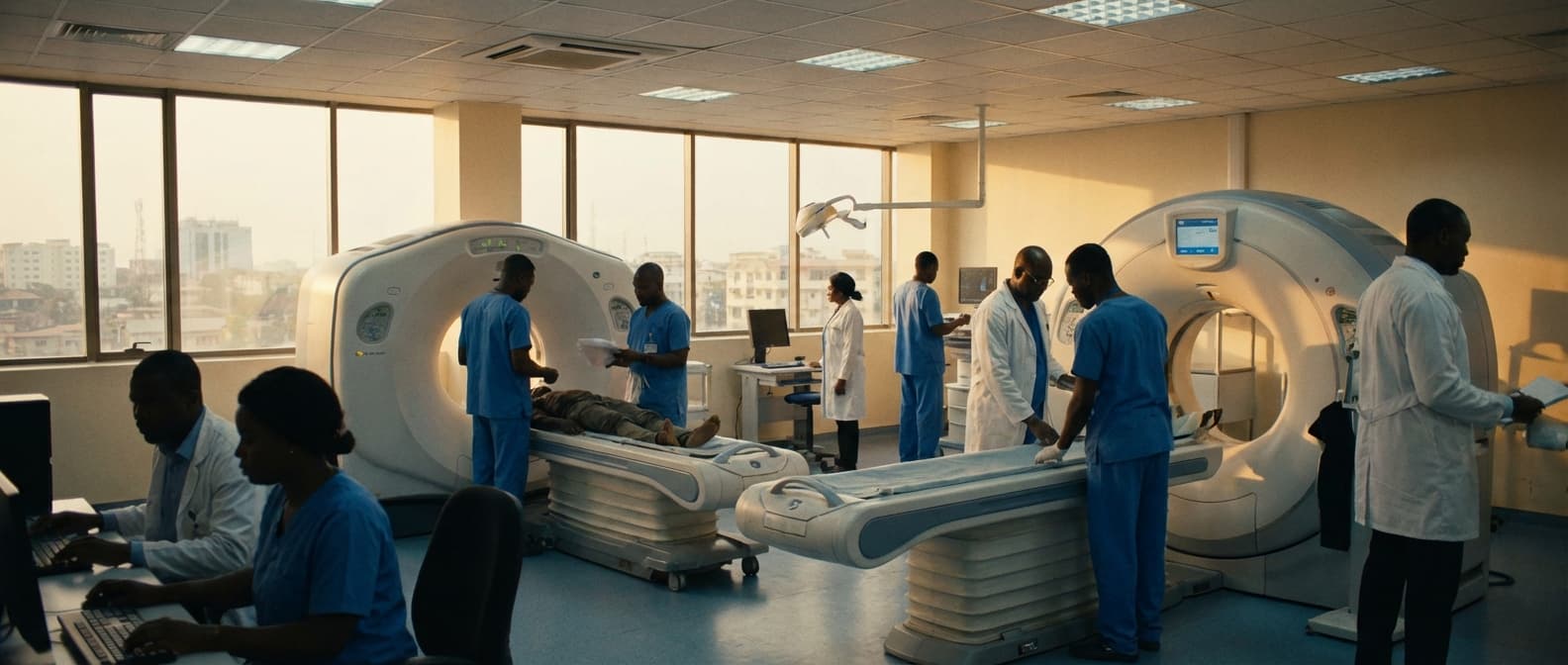
Radiology Room Design & Shielding Calculation in Equatorial Guinea
Engineering Excellence & Technical Support
Turnkey room planning, shielding drawings and approvals for imaging suites. High-standard technical execution following OEM protocols and local regulatory frameworks.
Optimized Radiation Shielding for Tropical Climate
Engineered bespoke lead shielding calculations for diagnostic radiology rooms in Equatorial Guinea, factoring in high ambient temperatures and humidity. This ensures optimal ALARA compliance and equipment longevity while mitigating structural load concerns unique to the region.
Solar Gain Mitigation in Room Layout
Developed radiology room layouts that strategically minimize direct solar heat gain through window placement and building orientation. This enhances patient and staff comfort, reduces HVAC operational costs, and maintains stable environmental conditions crucial for sensitive imaging equipment.
Scalable & Compliant Imaging Infrastructure
Designed flexible radiology room configurations and shielding strategies that adhere to international safety standards while anticipating future expansion needs in Equatorial Guinea's developing healthcare sector. This ensures a cost-effective and future-proof investment in diagnostic imaging.
What Is Radiology Room Design & Shielding Calculation In Equatorial Guinea?
Radiology room design and shielding calculation is a critical engineering service focused on the safe and effective installation of medical imaging equipment. It encompasses the architectural layout of the radiology suite, ensuring optimal workflow, patient comfort, and staff safety. A key component is the meticulous calculation of radiation shielding requirements for walls, doors, windows, and floors. This calculation is paramount to attenuate ionizing radiation (e.g., X-rays, gamma rays) produced by imaging modalities to levels that comply with national and international radiation protection standards, thereby safeguarding both the public and healthcare personnel from unnecessary radiation exposure. The design process also considers factors like ventilation, electrical infrastructure, lighting, and acoustic control to create a functional and compliant diagnostic environment.
| Who Needs This Service? | Typical Use Cases | |||
|---|---|---|---|---|
| Healthcare Facilities: Hospitals, diagnostic imaging centers, clinics, and private practices planning to install or upgrade diagnostic imaging equipment (e.g., X-ray, CT scanners, fluoroscopy, mammography, angiography, interventional radiology suites). | New Construction of Radiology Departments/Suites: Designing from the ground up to meet current standards and future needs. | Renovation and Expansion of Existing Radiology Facilities: Adapting existing spaces to accommodate new equipment or enhance safety. | Upgrades to Existing Imaging Equipment: When installing higher-power or different types of imaging modalities that may have different radiation output and shielding requirements. | Ensuring Compliance with Regulatory Bodies: Obtaining necessary permits and licenses for operation. |
| Installation of new X-ray units, CT scanners, or other ionizing radiation-based imaging equipment. | Retrofitting older facilities to meet modern radiation safety standards. | Designing shielded rooms for mobile imaging units or temporary diagnostic setups. | Performing safety assessments and re-shielding calculations for existing rooms due to changes in equipment or usage. | Developing designs for specialized imaging suites like interventional radiology labs or LINAC bunkers (for radiotherapy planning, though distinct from diagnostic radiology, similar shielding principles apply). |
Key Service Components
- Architectural Planning & Layout: Optimizing room dimensions, equipment placement, and workflow for efficient operation.
- Radiation Shielding Design: Determining the type and thickness of shielding materials (e.g., lead, concrete) for all potential radiation leakage points.
- Structural Analysis: Ensuring the building structure can support the weight of shielding and equipment.
- Electrical & Mechanical Systems Integration: Designing power, HVAC, and other essential systems for the specific imaging equipment.
- Compliance & Regulatory Adherence: Ensuring the design meets local and international radiation safety regulations and licensing requirements.
- Equipment Specification Support: Providing input on room requirements based on chosen imaging modalities.
- Construction Documentation: Generating detailed drawings and specifications for construction.
Who Needs Radiology Room Design & Shielding Calculation In Equatorial Guinea?
Radiology room design and shielding calculations are crucial for any medical facility that utilizes X-ray imaging equipment. This includes ensuring the safety of patients, staff, and the general public from ionizing radiation. In Equatorial Guinea, as healthcare infrastructure develops, the need for such specialized services becomes increasingly important for new hospitals, diagnostic centers, and existing facilities looking to upgrade or expand their radiology departments.
| Department | Specific Needs for Radiology Room Design & Shielding |
|---|---|
| Radiology/Imaging Department | Core facility requiring comprehensive design for various modalities (X-ray, CT, MRI, Fluoroscopy, Mammography). Shielding calculations are essential to contain radiation and ensure ALARA (As Low As Reasonably Achievable) principles are met for staff and patients. Proper room layout is vital for workflow efficiency and patient comfort. |
| Diagnostic Imaging Centers | Similar to hospital radiology departments, these centers are dedicated to imaging services. Design focuses on optimizing space for imaging equipment, patient reception, and staff areas, with a strong emphasis on radiation safety and compliance with national/international standards. |
| Cardiology Department | Often requires dedicated fluoroscopy rooms for interventional cardiology procedures. Shielding needs to be robust to protect staff from scattered radiation during lengthy procedures. Ergonomics and equipment placement are critical for the cardiology team. |
| Oncology Department | May utilize CT scanners for treatment planning and follow-up imaging. The design must accommodate the CT scanner and associated hardware, with appropriate shielding to protect both patients and staff. Accessibility for patients undergoing treatment is also a consideration. |
| Orthopedics Department | Often uses X-ray for pre and post-operative imaging, and sometimes specialized fluoroscopy for surgical guidance. Room design should facilitate easy patient positioning and access for orthopedic surgeons, along with adequate shielding. |
| Emergency Department | While not a dedicated radiology department, EDs frequently have portable X-ray units and sometimes dedicated X-ray rooms for rapid diagnostics. Design considerations include quick access, ease of cleaning, and appropriate (though possibly less complex than specialized rooms) shielding for frequent use. |
Target Customers and Departments in Equatorial Guinea
- Hospitals (Public and Private)
- Diagnostic Imaging Centers
- Specialized Clinics (e.g., Cardiology, Oncology, Orthopedics)
- Research Institutions (if applicable)
Radiology Room Design & Shielding Calculation Process In Equatorial Guinea
Designing and implementing radiology rooms, especially in terms of shielding, in a location like Equatorial Guinea requires a structured workflow that addresses local regulations, environmental factors, and logistical challenges. This process typically begins with an inquiry and culminates in the fully operational and shielded radiology suite.
| Phase | Key Activities | Considerations for Equatorial Guinea | Deliverables/Outcomes |
|---|---|---|---|
| Client expresses interest, defines scope (type of radiology, equipment, budget, timeline). | Understand local healthcare needs, existing infrastructure, and potential for future expansion. Clarify energy sources and voltage stability. | Project brief, initial budget estimate, preliminary timeline. |
| Detailed inspection of the proposed site (existing building, new construction). Measurement of dimensions, assessment of structural integrity, electrical, and HVAC systems. | Assess climate impact (humidity, temperature) on materials and equipment. Evaluate access for construction and equipment delivery. Identify potential seismic activity. | Site survey report, structural assessment, environmental data, access report. |
| Development of preliminary room layouts, equipment placement, patient flow, and workflow considerations. Compliance with international standards (e.g., NCRP, ICRP). | Adapt layout for specific tropical climate challenges (e.g., ventilation, natural light control). Ensure compliance with any nascent local health facility design guidelines. | Schematic drawings, 3D models, preliminary equipment specification. |
| Determine required shielding thickness for walls, doors, windows, and viewing areas based on x-ray tube potential (kVp), workload (mA-min/week), occupancy factors, and distance to occupied areas. Use of specialized software and adherence to international radiation protection standards. | Utilize established international standards (e.g., NCRP Report 147, ICRP Publication 107) as a baseline. Consult with local health physics experts if available or partner with international specialists. Factor in potential for dust and humidity affecting material performance over time. | Detailed shielding design report, material specifications for lead, concrete, etc., attenuation curves. |
| Selection of appropriate shielding materials (lead, concrete, specialized bricks), construction materials, and radiology equipment. Sourcing from reliable suppliers. | Identify suppliers with experience in exporting to Africa. Account for shipping times and potential import duties/regulations specific to Equatorial Guinea. Consider local availability of construction materials and skilled labor for installation. | Bill of materials, procurement plan, supplier list, lead time estimations. |
| Submission of design plans to relevant authorities for review and approval. Obtaining necessary construction and operational permits. | Engage with the Ministry of Health and any relevant regulatory bodies governing radiation safety. Understand the permit application process and required documentation, which may be less standardized. Proactive engagement is crucial. | Approved construction permits, radiation safety licenses (if applicable). |
| Building the radiology room structure, installing shielding materials, HVAC, electrical, plumbing, and other infrastructure. Installation of radiology equipment. | Supervise construction quality closely, especially for shielding integrity. Ensure proper sealing of lead joints. Manage logistics of equipment delivery and installation in potentially challenging terrain or with limited infrastructure. Employ and train local construction teams where feasible. | Constructed room shell, installed shielding, completed infrastructure, installed equipment. |
| Post-construction measurement of radiation levels in adjacent areas to verify the effectiveness of the installed shielding. This is a critical step for radiation safety. | Conduct measurements using calibrated survey meters. Compare results against calculated values and regulatory limits. If discrepancies arise, identify and rectify shielding deficiencies. | Radiation survey report, confirmation of shielding integrity. |
| Thorough testing of all radiology equipment and room systems to ensure they function as intended. Final inspection and handover to the client. | Verify all integrated systems (imaging, safety interlocks, ventilation) are operational. Provide client with all documentation, warranties, and operational manuals. | Commissioning report, operational readiness certificate, final project documentation. |
| Providing ongoing technical support, maintenance, and training for the facility staff on equipment operation and radiation safety protocols. | Establish a clear service and maintenance agreement. Offer training tailored to local staff, potentially in French or Portuguese depending on their primary language. Consider remote support capabilities. | Service agreements, training manuals, ongoing technical support. |
Radiology Room Design & Shielding Calculation Workflow in Equatorial Guinea
- Initial Inquiry & Requirements Gathering
- Site Survey & Assessment
- Conceptual Design & Layout
- Shielding Calculations
- Material Selection & Procurement
- Regulatory Approvals & Permitting
- Construction & Installation
- Shielding Verification & Testing
- Commissioning & Handover
- Post-Installation Support & Training
Radiology Room Design & Shielding Calculation Cost In Equatorial Guinea
Designing and equipping a radiology room, especially considering the critical aspect of radiation shielding, involves a complex interplay of factors that influence cost. In Equatorial Guinea, as in many developing economies, these costs can be significantly impacted by import duties, transportation logistics, and the availability of specialized expertise. The primary drivers of cost for radiology room design and shielding calculations revolve around the scope of the project (number and type of imaging modalities), the complexity of the shielding required, the choice of materials, and the professional fees for architects, medical physicists, and installers.
Pricing Factors:
- Imaging Modalities: The type and number of X-ray-producing equipment (e.g., standard X-ray, fluoroscopy, CT scanners, mammography units) dictate the required shielding levels. Higher energy and intensity equipment necessitate more robust shielding.
- Room Layout and Size: The dimensions of the radiology suite, including control rooms, viewing areas, and patient waiting spaces, directly influence the volume of materials needed for shielding.
- Shielding Materials: Common shielding materials include lead, concrete, and sometimes specialized composites. The thickness and density of these materials are determined by the radiation levels and desired attenuation. The cost of lead, in particular, can fluctuate.
- Structural Integrity: Existing building structures may require reinforcement to support the weight of shielding materials, adding to the overall cost.
- Ventilation and HVAC Systems: Specialized ventilation is often required for radiology rooms, especially those housing CT scanners, to manage heat and maintain air quality.
- Electrical and Data Cabling: Adequate power supply and data infrastructure for imaging equipment and associated systems are essential and contribute to the cost.
- Professional Fees: This includes architects for room design, medical physicists for radiation shielding calculations and compliance assessments, and specialized contractors for installation.
- Import Duties and Taxes: As Equatorial Guinea imports most specialized medical equipment and materials, import duties, VAT, and other taxes can significantly inflate prices.
- Transportation and Logistics: Shipping heavy shielding materials and specialized equipment to potentially remote locations within Equatorial Guinea can incur substantial transportation costs.
- Contingency: It is prudent to include a contingency for unforeseen issues during design and construction.
Cost Ranges (Estimates in Central African CFA Franc - XAF):
It's crucial to understand that these are broad estimates and actual costs can vary widely based on the specific project requirements and the suppliers engaged. Engaging local and international experts is essential for accurate quotations.
For a basic X-ray room, shielding calculations and design might start in the lower range, while a comprehensive CT scanner suite with advanced shielding will be at the higher end.
| Service/Component | Estimated Cost Range (XAF) | Notes |
|---|---|---|
| Radiation Shielding Calculations (Medical Physics) | 1,500,000 - 5,000,000 | Depends on complexity and number of rooms/modalities. May include initial assessment and final verification. |
| Radiology Room Design (Architectural/Engineering) | 2,000,000 - 7,000,000 | Varies with room size, complexity, and integration requirements. Includes basic layout to detailed plans. |
| Lead Shielding Materials (per square meter, installed) | 150,000 - 500,000+ | Highly dependent on lead thickness (e.g., 1mm, 2mm, 3mm) and global lead prices. Includes installation. |
| Concrete Shielding Materials (per cubic meter, installed) | 70,000 - 200,000 | Cost of concrete, rebar, formwork, and labor. Thickness determined by shielding calculations. |
| Installation of Shielding (Labor) | 1,000,000 - 5,000,000+ | Can be a significant portion of the shielding cost, depending on the volume and complexity of the work. |
| HVAC & Ventilation System Installation | 3,000,000 - 15,000,000+ | For a standard X-ray room vs. a CT suite. Includes equipment and ductwork. |
| Electrical & Data Infrastructure Upgrade | 1,500,000 - 8,000,000 | Ensuring adequate power capacity and network for imaging equipment. |
| Total Project Cost (Basic X-ray Room) | 20,000,000 - 70,000,000 | Includes design, calculations, materials, and basic installation. Excluding imaging equipment. |
| Total Project Cost (CT Scanner Suite) | 50,000,000 - 200,000,000+ | Significantly higher due to increased shielding requirements, complex HVAC, and higher-spec infrastructure. Excluding CT scanner. |
Key Components and Their Cost Implications
- {"item":"Radiation Shielding Materials (Lead, Concrete)","description":"The primary cost driver. Thickness and density are determined by shielding calculations. Lead prices are subject to global market fluctuations. Installation labor is also a significant factor."}
- {"item":"Architectural and Engineering Design","description":"Fees for designing the room layout, ensuring workflow efficiency, and integrating with existing building infrastructure."}
- {"item":"Medical Physics Consultation","description":"Crucial for accurate shielding calculations, compliance with international and local radiation safety standards, and final acceptance testing."}
- {"item":"Installation and Construction Labor","description":"Skilled labor is required for installing shielding, modifying structures, and general construction. Availability of specialized trades can impact cost."}
- {"item":"HVAC and Ventilation Systems","description":"Specialized systems to manage heat generated by equipment and maintain air quality."}
- {"item":"Electrical and Data Infrastructure","description":"Ensuring sufficient power and network connectivity for modern imaging equipment."}
- {"item":"Import Duties, Taxes, and Logistics","description":"A substantial portion of the final cost due to Equatorial Guinea's import-dependent economy."}
Affordable Radiology Room Design & Shielding Calculation Options
Designing and outfitting a radiology room involves careful consideration of functionality, patient comfort, and crucially, radiation shielding. Balancing these requirements with budget constraints is a common challenge. This guide explores affordable radiology room design and shielding calculation options, highlighting value bundles and cost-saving strategies to help facilities optimize their investments.
| Strategy | Description | Cost-Saving Potential | Considerations |
|---|---|---|---|
| Value Bundles (Design & Shielding) | Engaging a single vendor or team for both room design and radiation shielding calculations/material supply can lead to integrated solutions and potential discounts. | High - Reduced administrative overhead, streamlined communication, potential bulk material pricing. | Ensure the vendor has a strong track record in both areas. Review contracts carefully to understand what is included. |
| Standardized Shielding Designs | Utilizing pre-calculated and standardized shielding plans for common imaging modalities (e.g., X-ray, CT) can reduce the need for highly specialized, custom calculations. | Medium - Saves on specialized physics consultation fees. May require minor adjustments for unique room layouts. | Verify that standardized designs meet all local and national regulatory requirements. Consult a medical physicist for confirmation. |
| Material Optimization (Lead vs. Alternatives) | While lead is the traditional shielding material, explore options like concrete, steel, or specialized drywall composites for specific shielding needs. Analyze the cost-effectiveness and space requirements of each. | Medium to High - Lead prices fluctuate. Alternative materials can be more cost-effective or easier to install in certain situations. | Shielding effectiveness varies. Ensure the chosen material meets the required attenuation for the specific radiation energies. Consider installation complexity and space requirements. |
| Phased Implementation | For new facilities or major renovations, consider a phased approach. Implement essential shielding and room components first, with plans to add or upgrade as budget allows. | Medium - Spreads out capital expenditure over time. Allows for learning from initial implementation. | Requires careful planning to ensure the phased approach doesn't compromise safety or workflow. Potential for rework if initial planning is not robust. |
| Consultation with Medical Physicists | While there's a cost, engaging a qualified medical physicist early for shielding calculations is essential for compliance and to avoid over-shielding or under-shielding, both of which can be costly. | High (in the long run) - Prevents costly remediation, fines, and potential safety issues from incorrect shielding. | Obtain multiple quotes and verify credentials. Early engagement is key. |
| Rental or Leasing of Shielding Materials | In some cases, renting or leasing specialized shielding components might be more cost-effective than purchasing outright, especially for temporary installations or experimental setups. | Low to Medium - Reduces upfront capital investment. Can be cost-prohibitive for long-term use. | Understand the terms of the lease, maintenance responsibilities, and availability of the materials. |
Key Considerations for Affordable Radiology Room Design:
- Space Optimization: Efficient layout minimizes wasted space, reducing overall construction and material costs. Consider workflow for both staff and patients.
- Material Selection: Opt for durable yet cost-effective materials for finishes, flooring, and cabinetry. Look for bulk purchasing opportunities.
- Lighting and Ambiance: Strategic lighting can enhance the patient experience and improve imaging quality without high-end fixtures. Consider natural light integration where feasible.
- Equipment Placement: Thoughtful placement of imaging equipment can influence room size, power requirements, and shielding needs, impacting overall cost.
- Modular Design: Pre-fabricated or modular components can sometimes offer faster installation and predictable costs compared to traditional construction.
- Future-Proofing: Designing with future equipment upgrades or expanded services in mind can prevent costly retrofits later.
Verified Providers In Equatorial Guinea
In Equatorial Guinea, navigating the healthcare landscape can be challenging. Ensuring you're accessing quality medical services requires identifying verified providers who adhere to stringent standards. Franance Health stands out as a leading organization committed to facilitating access to reliable healthcare solutions, offering a robust credentialing process that assures patients of the highest quality of care.
| Provider Type | Franance Health Verification Standards | Why This Matters to Patients |
|---|---|---|
| Hospitals & Clinics | Accreditation, operational capacity, infection control protocols, staff qualifications. | Ensures a safe and well-equipped environment for treatment and recovery. |
| Specialist Physicians | Medical board certification, years of practice, peer review, ongoing professional development. | Guarantees access to highly skilled and up-to-date medical expertise. |
| Diagnostic Laboratories | Quality control measures, adherence to international standards, staff expertise, equipment calibration. | Provides accurate and reliable test results crucial for diagnosis and treatment planning. |
| Emergency Services | Availability of trained personnel, rapid response capabilities, essential medical equipment, established protocols. | Ensures prompt and effective care during critical medical situations. |
Key Benefits of Choosing Franance Health Verified Providers:
- Rigorous Vetting Process: Franance Health employs a comprehensive credentialing system that scrutinizes medical professionals and facilities based on their qualifications, experience, and adherence to ethical practices.
- Commitment to Quality: By partnering with verified providers, Franance Health ensures that patients receive evidence-based treatments and compassionate care, minimizing the risk of substandard services.
- Enhanced Patient Safety: The credentialing process includes checks on regulatory compliance and patient safety protocols, offering peace of mind to individuals seeking medical attention.
- Access to Specialized Expertise: Franance Health's network includes a diverse range of specialists, ensuring that patients can find the right expertise for their specific health needs.
- Streamlined Healthcare Navigation: Franance Health acts as a trusted intermediary, simplifying the process of finding and accessing qualified healthcare providers in Equatorial Guinea.
Scope Of Work For Radiology Room Design & Shielding Calculation
This Scope of Work (SOW) outlines the requirements for the design and shielding calculations for a new radiology room. The project encompasses all necessary design elements to create a safe and functional radiology suite, including architectural layouts, equipment placement, and comprehensive radiation shielding calculations. The objective is to ensure compliance with all relevant regulatory standards and best practices in radiation safety.
| Deliverable | Description | Format | Standard Specifications/References |
|---|---|---|---|
| Radiology Room Layout Drawings | Detailed floor plans indicating room dimensions, door/window locations, equipment placement (e.g., X-ray unit, control booth, viewing areas), and patient/staff workflow. | CAD (e.g., DWG, DXF) | ACR (American College of Radiology) guidelines, local building codes, architectural best practices. |
| Equipment Placement Schematics | Specific drawings showing the precise positioning of all radiology equipment, including mounting points and clearance requirements. | CAD (e.g., DWG, DXF) | Manufacturer specifications, workflow analysis. |
| Radiation Shielding Calculation Report | Comprehensive report detailing the methodology, assumptions, and results of the radiation shielding calculations for walls, floors, ceilings, doors, and windows. Includes material types, thicknesses, and exposure level justifications. | PDF Document | NCRP Report No. 147, NCRP Report No. 151, 21 CFR Part 1020.31, local/state/federal radiation safety regulations (e.g., FDA, IAEA). |
| Shielding Material Specifications | Detailed specifications for all shielding materials (e.g., lead-lined drywall, concrete density, lead glass specifications) required for the project. | PDF Document | ASTM standards, manufacturer data sheets, regulatory requirements. |
| Electrical & Mechanical Requirements | Outline of electrical power requirements for equipment and HVAC specifications to ensure proper ventilation and environmental control within the radiology suite. | PDF Document | Local electrical codes, ASHRAE standards, equipment manufacturer requirements. |
| Final Design Package | Consolidated set of all approved drawings, reports, and specifications for construction and regulatory submission. | PDF Document, CAD files | As per client requirements and regulatory bodies. |
Key Project Stages & Deliverables
- Phase 1: Conceptual Design & Requirements Gathering
- Phase 2: Detailed Design & Engineering
- Phase 3: Shielding Calculations & Reporting
- Phase 4: Final Documentation & Approval
Service Level Agreement For Radiology Room Design & Shielding Calculation
This Service Level Agreement (SLA) outlines the terms and conditions for the design and shielding calculation services provided for radiology rooms. It defines response times for requests and provides uptime guarantees for any associated digital platforms or communication channels. This SLA aims to ensure efficient and reliable service delivery to our clients.
| Service Element | Response Time Guarantee | Uptime Guarantee |
|---|---|---|
| Initial Consultation Request (email/phone) | Within 4 business hours | N/A (Human-dependent) |
| Request for Design Proposal/Quotation | Within 2 business days | N/A (Project-dependent) |
| Delivery of Preliminary Design Draft | Within 5-10 business days (depending on project complexity) | N/A (Project-dependent) |
| Delivery of Final Design & Shielding Report | Within 15-25 business days (depending on project complexity and client feedback turnaround) | N/A (Project-dependent) |
| Technical Support for Design/Shielding Queries (via designated portal/email) | Within 8 business hours | 99.5% during business hours (8 AM - 5 PM local time, Monday-Friday, excluding public holidays) |
| Access to Client Portal/Collaboration Platform (if applicable) | N/A | 99.8% (24/7/365, excluding scheduled maintenance) |
Key Service Components
- Radiology Room Design: Conceptualization and detailed design of radiology room layouts, considering workflow, patient comfort, equipment placement, and regulatory compliance.
- Shielding Calculation: Performing precise calculations for radiation shielding requirements for walls, doors, windows, and other structural elements to ensure ALARA (As Low As Reasonably Achievable) principles are met.
- Consultation & Support: Providing expert advice and addressing client queries related to room design and shielding.
- Documentation: Delivering comprehensive reports, blueprints, and calculation summaries.
Frequently Asked Questions

Ready when you are
Let's scope your Radiology Room Design & Shielding Calculation in Equatorial Guinea project in Equatorial Guinea.

Scaling healthcare logistics and technical systems across the entire continent.