
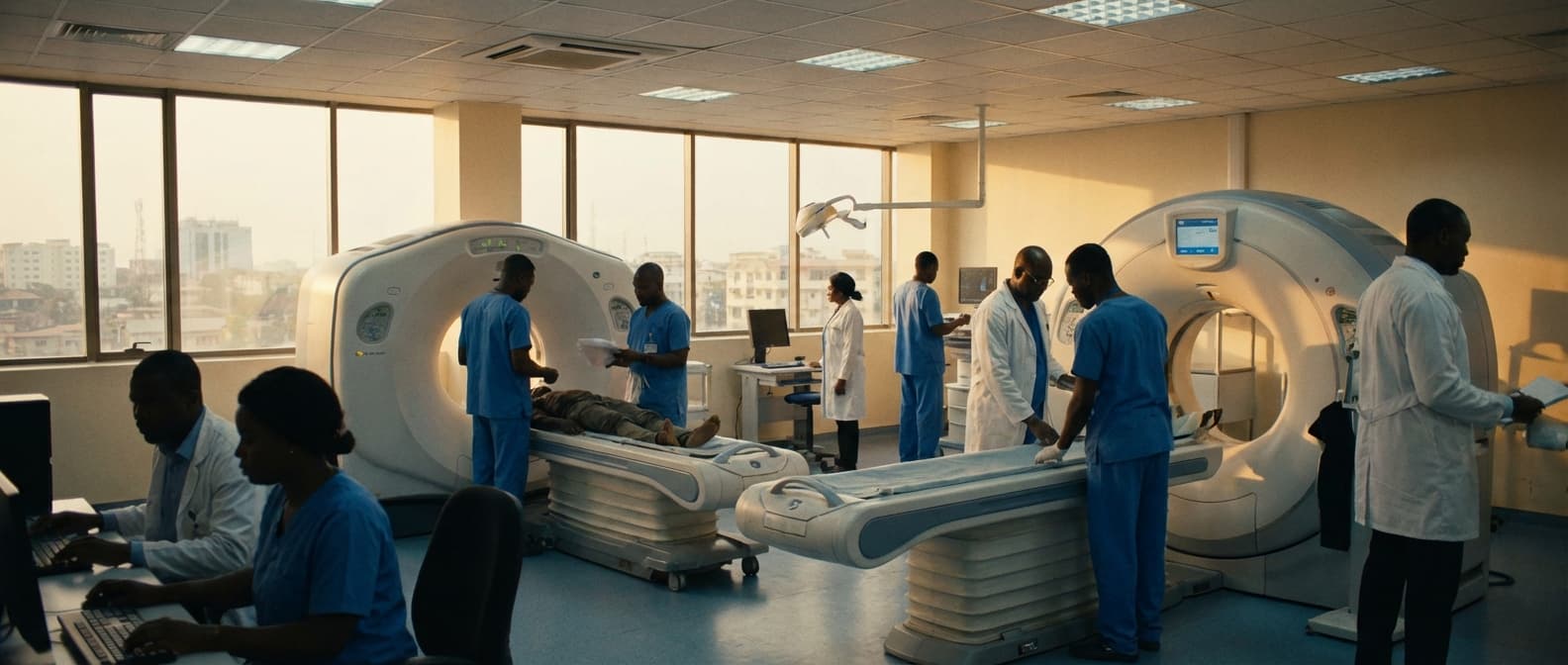
Imaging Acceptance Testing & QA in Equatorial Guinea
Engineering Excellence & Technical Support
Commissioning and periodic QA for CT/MRI/X‑ray/US/Mammo. High-standard technical execution following OEM protocols and local regulatory frameworks.
Advanced Imaging QA Framework
Implementation of a comprehensive imaging acceptance testing framework utilizing automated phantom studies and objective image quality metrics (e.g., MTF, SNR, CNR) to ensure diagnostic image fidelity and consistency across all installed medical imaging modalities (X-ray, CT, MRI, Ultrasound) within Equatorial Guinea's healthcare facilities.
Radiological Workflow Validation
Rigorous validation of the end-to-end radiological workflow, from image acquisition parameters and protocol adherence to PACS integration and post-processing steps. This includes verifying correct patient data association, DICOM compliance, and artifact identification, ensuring data integrity and efficient diagnostic reporting.
Regulatory Compliance & Dose Management
Ensuring all imaging systems meet international and national regulatory standards for safety and performance. This includes meticulous testing of radiation dose optimization protocols (ALARA principle) for all CT and X-ray equipment, verifying dose accuracy and consistency to minimize patient exposure while maintaining diagnostic image quality.
What Is Imaging Acceptance Testing & Qa In Equatorial Guinea?
Imaging Acceptance Testing & QA in Equatorial Guinea refers to a comprehensive set of processes designed to verify and validate that imaging systems and workflows meet predefined technical specifications, operational requirements, and quality standards within the context of healthcare facilities, research institutions, or any organization utilizing medical imaging technology in Equatorial Guinea. This service ensures the integrity, accuracy, and reliability of captured images and the underlying systems that generate, process, store, and retrieve them. It encompasses both functional testing (does it work as intended?) and non-functional testing (performance, security, usability).
| Who Needs Imaging Acceptance Testing & QA? | Typical Use Cases | |||
|---|---|---|---|---|
| Hospitals and Clinics: Public and private healthcare facilities in Equatorial Guinea acquiring or upgrading imaging equipment (e.g., Radiology departments, Cardiology, Neurology). | New medical imaging equipment procurement and installation (e.g., CT scanner, MRI, digital radiography systems). | PACS (Picture Archiving and Communication System) and RIS (Radiology Information System) implementation or upgrades. | Integration of new imaging modalities or software into existing hospital IT infrastructure. | Ensuring ongoing compliance with quality standards and accreditation requirements. |
| Diagnostic Imaging Centers: Standalone facilities dedicated to providing imaging services. | Validation of newly installed specialized imaging equipment. | Testing of image processing software and AI-powered diagnostic tools. | Quality assurance audits for existing imaging services to maintain high standards. | |
| Research Institutions: Organizations conducting medical research requiring high-quality imaging data. | Validation of imaging protocols for research studies. | Ensuring image consistency and reliability for scientific analysis. | Testing of novel imaging techniques and equipment. | |
| Government Health Agencies: Ministry of Health and other regulatory bodies overseeing healthcare infrastructure. | Assessment of the quality and compliance of imaging services provided by public health facilities. | Setting and enforcing national standards for medical imaging technology. | ||
| Medical Device Manufacturers and Vendors: Companies providing imaging solutions in Equatorial Guinea. | Pre-installation testing and validation of their products before deployment at client sites. | Ensuring their systems meet local regulatory requirements and client specifications. | Post-installation acceptance testing to confirm successful implementation. |
Key Components of Imaging Acceptance Testing & QA
- System Functionality Verification: Rigorous testing of all hardware and software components of the imaging system (e.g., X-ray machines, CT scanners, MRI units, ultrasound devices, PACS, RIS) to ensure they operate according to manufacturer specifications and intended use.
- Image Quality Assessment: Evaluation of captured images for diagnostic quality, including resolution, contrast, signal-to-noise ratio, artifact reduction, and compliance with established imaging protocols and international standards (e.g., DICOM).
- Workflow Validation: Testing the end-to-end imaging workflow, from patient registration and study acquisition to image processing, archiving, retrieval, and reporting, ensuring seamless integration and efficiency.
- Data Integrity and Security: Verification of data accuracy, consistency, and secure storage and transmission in compliance with relevant data protection regulations.
- Interoperability Testing: Ensuring that the imaging system can effectively communicate and exchange data with other hospital information systems (e.g., EHRs) and external entities, adhering to standards like DICOM and HL7.
- Performance Testing: Assessing the speed and responsiveness of the system under various load conditions, including image acquisition times, processing speeds, and PACS query/retrieval times.
- Usability Testing: Evaluating the user interface and overall experience for clinicians and technical staff, ensuring ease of use and minimal error potential.
- Regulatory Compliance: Confirming adherence to national and international regulatory requirements for medical imaging equipment and data management within Equatorial Guinea.
Who Needs Imaging Acceptance Testing & Qa In Equatorial Guinea?
Imaging Acceptance Testing & Quality Assurance (QA) are critical for any organization that relies on accurate and reliable medical imaging for diagnosis, treatment, and research. In Equatorial Guinea, as healthcare infrastructure develops and the adoption of advanced medical technologies increases, the need for robust imaging acceptance testing and QA becomes paramount. This ensures that medical imaging equipment functions as intended, produces high-quality images, and meets regulatory standards, ultimately contributing to better patient care and outcomes.
| Target Customer/Department | Description of Need | Key Imaging Modalities of Interest |
|---|---|---|
| Public Hospitals | Ensuring diagnostic accuracy for a broad patient population, especially in areas with limited specialized personnel. Verification of performance after installation or maintenance is crucial for cost-effectiveness and patient safety. | X-ray, Ultrasound, CT Scans, MRI (where available) |
| Private Clinics | Maintaining a competitive edge through high-quality imaging services. Verifying new equipment purchases and ongoing service performance to meet patient expectations and international standards. | X-ray, Ultrasound, CT Scans, MRI, Mammography, Endoscopy imaging |
| Diagnostic Imaging Centers | Core business relies on the consistent and accurate performance of imaging equipment. Acceptance testing is vital before bringing new systems online to guarantee return on investment and patient trust. | CT Scans, MRI, X-ray, Mammography, Fluoroscopy, Nuclear Medicine (if present) |
| Research Institutions (if any) | Ensuring imaging data integrity for scientific studies and clinical trials. Consistent image quality is essential for reproducible research findings. | Specialized MRI, PET Scans, advanced X-ray techniques |
| Government Health Agencies | Overseeing the quality of healthcare services nationwide. Establishing and enforcing imaging QA standards for public health facilities to ensure equitable access to reliable diagnostics. | All modalities used in public healthcare |
| Medical Equipment Vendors & Service Providers | Fulfilling contractual obligations with clients by delivering and maintaining equipment to specified performance levels. QA processes are integral to their reputation and client satisfaction. | All modalities they install, service, and maintain |
Target Customers & Departments in Equatorial Guinea Needing Imaging Acceptance Testing & QA
- Hospitals and Clinics (Public and Private)
- Diagnostic Imaging Centers
- Research Institutions
- Government Health Agencies
- Medical Equipment Vendors and Service Providers
Imaging Acceptance Testing & Qa Process In Equatorial Guinea
This document outlines the Imaging Acceptance Testing & Quality Assurance (QA) process in Equatorial Guinea, detailing the workflow from initial inquiry to final execution. This process ensures that imaging equipment and related services meet specified requirements and perform optimally.
| Stage | Description | Key Activities | Responsible Parties | Deliverables/Outcomes |
|---|---|---|---|---|
| The process begins with a client (e.g., a hospital, clinic, or government agency) expressing interest in acquiring imaging equipment or services. | Client identifies needs, defines technical specifications, budget constraints, and desired functionalities. Vendor receives and analyzes the inquiry. | Client (End-user, Procurement Department), Vendor (Sales Team) | Formal inquiry, preliminary needs assessment report. |
| Based on the gathered requirements, the vendor prepares a detailed proposal and quotation. | Vendor designs a solution, specifies equipment/services, provides pricing, warranty terms, and delivery timelines. A site survey may be conducted. | Vendor (Sales Team, Technical Experts), Client (Procurement) | Comprehensive proposal, detailed quotation, technical specifications document, site survey report (if applicable). |
| Upon agreement on the proposal, a formal contract is established, and the order is placed. | Negotiation of terms and conditions, signing of the contract, purchase order issuance, and initial payment (if applicable). | Client (Legal, Procurement), Vendor (Sales, Legal) | Signed contract, confirmed purchase order, payment confirmation. |
| Ensuring the designated installation site is ready to receive the equipment. | Client prepares the physical space, including power supply, environmental controls (temperature, humidity), networking, and any necessary structural modifications. Vendor provides site preparation guidelines. | Client (Facilities Management, IT Department), Vendor (Installation Manager) | Ready installation site, confirmed compliance with vendor requirements. |
| The physical installation and initial configuration of the imaging equipment. | Vendor's certified technicians install the equipment, connect necessary peripherals, and perform initial software setup and basic diagnostics. | Vendor (Field Service Engineers, Installation Specialists) | Installed equipment, basic operational status report. |
| Rigorous testing to verify the equipment's functionality against predefined specifications. FAT (Factory Acceptance Test) might occur at the vendor's site, while SAT (Site Acceptance Test) is performed at the client's location. | Execution of pre-defined test protocols, simulating various imaging scenarios, checking image quality, performance metrics, and safety features. Client representatives participate. | Vendor (QA Team, Technical Experts), Client (Radiologists, Technicians, IT) | Test protocols, test results documentation, deviation reports, performance verification reports. |
| A comprehensive review of all testing results and documentation to ensure compliance with quality standards. | Independent QA team or designated personnel review FAT/SAT reports, validation certificates, and ensure all issues identified during testing are resolved. This includes software and hardware integrity checks. | Vendor (QA Department), Client (QA Representative) | QA sign-off report, validation documentation, final quality assessment. |
| Ensuring the client's personnel are proficient in operating and maintaining the equipment. | Vendor provides comprehensive training to end-users (technicians, radiologists) on equipment operation, basic troubleshooting, and maintenance. User manuals, service manuals, and training materials are provided. | Vendor (Application Specialists, Trainers), Client (End-users) | Trained personnel, training completion certificates, complete set of documentation. |
| Formal transfer of the installed and tested equipment to the client. | Client officially accepts the equipment after satisfactory completion of all tests, training, and QA. Sign-off signifies the end of the acceptance phase. | Client (Authorized Representative), Vendor (Project Manager) | Formal acceptance certificate, handover documentation. |
| Ongoing support and monitoring to ensure continued optimal performance. | Vendor provides warranty support, scheduled maintenance, remote monitoring (if applicable), and addresses any post-installation issues. Regular performance checks may be conducted. | Vendor (Service Department, Support Team), Client (End-users, IT Department) | Service level agreements (SLAs), maintenance logs, performance monitoring reports, issue resolution records. |
Key Stages in the Imaging Acceptance Testing & QA Process:
- Inquiry & Requirement Gathering
- Proposal & Quotation
- Contracting & Order Placement
- Pre-Installation & Site Preparation
- Installation & Initial Setup
- Acceptance Testing (FAT/SAT)
- Quality Assurance & Verification
- Training & Documentation
- Handover & Sign-off
- Post-Installation Support & Monitoring
Imaging Acceptance Testing & Qa Cost In Equatorial Guinea
Imaging Acceptance Testing and Quality Assurance (QA) costs in Equatorial Guinea can vary significantly based on several factors. These factors influence the complexity, duration, and resources required for the testing process. Understanding these drivers is crucial for accurate budgeting and project planning.
| Service Component | Estimated Cost Range (XAF - Central African CFA franc) | Notes |
|---|---|---|
| Manual Image Inspection (per image) | 1,000 - 5,000 XAF | For basic visual checks of clarity, artifacts, and basic content verification. |
| Automated Image Validation (setup & per image) | 500,000 - 2,500,000 XAF (setup) + 500 - 2,000 XAF (per image) | Includes development of automated scripts for format validation, basic quality checks, and metadata verification. |
| Functional Image Testing (per image/feature) | 2,000 - 10,000 XAF | Testing image loading, display within applications, zoom functionality, and interaction elements. |
| Specialized Imaging QA (e.g., DICOM verification) | 5,000 - 20,000+ XAF | Requires specialized tools and expertise for medical imaging, often billed per image or per complex test case. |
| Comprehensive QA Report Generation | 100,000 - 500,000+ XAF | Depends on the detail, frequency, and complexity of reporting required. |
| Hourly Rate for QA Engineer | 15,000 - 40,000+ XAF | Varies based on experience, specialization, and whether it's a local or international resource. |
| Project-Based QA Service (Full Package) | Negotiable (typically a significant portion of the overall project budget) | Includes planning, execution, reporting, and bug tracking for a complete imaging project. |
Key Pricing Factors for Imaging Acceptance Testing & QA in Equatorial Guinea:
- {"item":"Scope and Complexity of Imaging:","description":"The number of images to be tested, the resolution, file formats (e.g., JPEG, PNG, TIFF, DICOM), and the specific content of the images (e.g., medical scans, satellite imagery, product photos) will directly impact the testing effort and cost. Complex imaging with intricate details or specialized formats will command higher prices."}
- {"item":"Testing Methodologies:","description":"The chosen QA approaches, such as manual testing, automated testing, visual inspection, or functional testing (e.g., ensuring image loading, display, and interaction), will influence pricing. Automated testing might have higher initial setup costs but can reduce per-image costs for large volumes."}
- {"item":"Data Volume and Size:","description":"The sheer quantity of images and their individual file sizes will determine the time and computational resources needed for testing. Larger datasets require more storage and processing power."}
- {"item":"Testing Tools and Software:","description":"The requirement for specialized imaging software, testing frameworks, or compliance tools can add to the overall cost. Licensing fees for such tools need to be factored in."}
- {"item":"Expertise and Skill Level of Testers:","description":"The experience and specialized knowledge of the QA engineers are critical. Testers with expertise in specific imaging domains (e.g., medical imaging QA) will typically command higher rates."}
- {"item":"Reporting and Documentation Requirements:","description":"The level of detail required in test reports, bug tracking, and final QA sign-off documentation will impact the time spent by testers and therefore the cost."}
- {"item":"Project Timeline and Urgency:","description":"Rush projects or tight deadlines may incur premium charges for expedited services."}
- {"item":"Location within Equatorial Guinea:","description":"While generally less impactful than other factors, the cost of operations can slightly vary between major cities (like Malabo or Bata) and more remote areas due to logistical considerations and availability of resources."}
- {"item":"Vendor/Provider Type:","description":"Engaging with established QA service providers, freelance testers, or in-house teams will result in different pricing structures. Larger agencies often have overheads that influence their rates."}
Affordable Imaging Acceptance Testing & Qa Options
For organizations seeking robust imaging acceptance testing and quality assurance (QA) without breaking the bank, understanding value bundles and cost-saving strategies is crucial. This involves leveraging flexible service models, optimizing testing processes, and exploring strategic partnerships. Affordable options don't mean compromising on quality; they mean smart investment and efficient resource allocation.
| Value Bundle Type | Description | Cost-Saving Strategies within Bundle | Best For |
|---|---|---|---|
| Comprehensive QA Package | Includes routine performance testing, preventative maintenance checks, image quality assessments, and basic troubleshooting for a defined set of imaging equipment over a period (e.g., annual). | Bulk discounts for multiple modalities; scheduled maintenance alongside QA to reduce site visit frequency; standardized reporting templates. | Hospitals and imaging centers with a moderate to large fleet of diverse imaging equipment requiring ongoing, consistent QA. |
| On-Demand & Targeted Testing | Services activated for specific events such as new equipment installation, major upgrades, post-repair validation, or when specific issues arise. | Pay-per-use model; reduced overhead for the provider, translating to lower per-incident costs; focused expertise for critical situations. | Smaller clinics, facilities with infrequent new installations, or those with strong internal maintenance teams who only require external QA for specific events. |
| Remote Monitoring & Analysis Bundle | Utilizes remote access and data analysis tools to perform initial image quality checks, system performance monitoring, and data trend analysis. On-site visits are reserved for complex issues or scheduled maintenance. | Significant reduction in travel costs; faster response times for initial assessments; efficient identification of potential problems before they impact patient care. | Organizations prioritizing proactive maintenance and willing to invest in remote access technology; facilities with geographically dispersed sites. |
| Basic Acceptance Testing Package | Covers essential functional and performance tests for newly installed imaging equipment to ensure it meets baseline specifications before clinical use. | Streamlined, protocol-driven testing; focus solely on acceptance criteria, eliminating unnecessary extensive QA; potentially bundled with initial equipment training. | Facilities undergoing frequent new equipment acquisitions or those needing to validate a specific subset of tests for compliance. |
| Hybrid Managed Services | Combines a core set of remote monitoring and reporting with a pre-defined number of on-site visits annually for comprehensive checks. May include incident response. | Balances cost-effectiveness with essential hands-on validation; predictable annual cost; flexibility to allocate on-site resources where most needed. | Mid-sized organizations seeking a balance between cost control and thorough QA without the commitment of a fully managed service. |
Key Considerations for Affordable Imaging Acceptance Testing & QA
- Define Scope Clearly: Precisely outline the imaging modalities, tests, and reporting requirements to avoid scope creep and unnecessary expenses.
- Leverage Existing Resources: Utilize in-house IT, biomedical engineering, or clinical staff where appropriate for certain testing phases, guided by expert QA professionals.
- Phased Testing Approach: Break down testing into manageable phases, allowing for incremental investment and validation.
- Automation Opportunities: Identify repetitive tasks that can be automated to reduce manual effort and testing time.
- Remote & On-Site Hybrid Models: Combine remote analysis and reporting with targeted on-site visits for critical or complex equipment.
- Tiered Service Packages: Opt for service providers offering different levels of support and coverage to match specific needs and budgets.
- Long-Term Contracts & Retainers: Negotiate favorable rates for ongoing QA services through longer-term commitments.
- Focus on Critical Workflows: Prioritize testing on imaging equipment and workflows that have the highest impact on patient care and operational efficiency.
- Standardized Protocols: Implement standardized testing protocols to ensure consistency and efficiency across all imaging equipment.
- Vendor-Specific Expertise: Partner with specialists who have deep knowledge of specific imaging vendors and modalities for more targeted and efficient testing.
Verified Providers In Equatorial Guinea
Ensuring the quality and reliability of healthcare providers is paramount, especially in regions where access to verified medical professionals can be a challenge. Franance Health stands out in Equatorial Guinea as a beacon of trust, offering a network of credentialed and rigorously vetted healthcare providers. Their commitment to transparency and patient safety makes them the unparalleled choice for anyone seeking medical care in the country. This dedication to excellence is built upon a foundation of comprehensive verification processes that go far beyond basic licensing.
| Provider Type | Franance Health Verification Includes | Benefit for Patients |
|---|---|---|
| Physicians (General & Specialist) | Medical Degree, Board Certification, License, Experience Validation, Specialty Expertise | Access to highly qualified doctors with proven expertise in their field. |
| Nurses (RN, LPN, etc.) | Nursing Degree/Diploma, Licensing, Clinical Experience, Specialized Training | Confidence in receiving competent and compassionate nursing care. |
| Dentists | Dental Degree, Licensing, Specializations (e.g., Orthodontics, Periodontics) | Trustworthy dental care from licensed and experienced professionals. |
| Therapists (Physical, Occupational, etc.) | Relevant Degree/Certification, Licensing, Specialization in Rehabilitation | Effective rehabilitation and therapy services from certified practitioners. |
| Pharmacists | Pharmacy Degree, Licensing, Experience in Dispensing and Drug Knowledge | Safe and accurate medication management and advice. |
Why Franance Health Credentials Matter:
- Rigorous Verification of Qualifications: Franance Health meticulously checks educational degrees, specialized training, and professional certifications of all their affiliated providers. This ensures that doctors, nurses, and other healthcare professionals possess the required expertise and have undergone recognized training.
- License and Registration Confirmation: Beyond academic achievements, Franance Health confirms that all providers hold valid and current licenses and registrations with the relevant medical boards and regulatory bodies in Equatorial Guinea.
- Experience and Specialization Validation: The credentials also verify the practical experience and specific areas of specialization for each healthcare professional. This allows patients to find providers with the exact skills needed for their particular health concerns.
- Background Checks and Ethical Standards: Franance Health implements thorough background checks to ensure that providers adhere to high ethical standards and have no history of malpractice or disciplinary actions that could compromise patient care.
- Ongoing Professional Development Monitoring: Commitment to staying current in the medical field is crucial. Franance Health encourages and, where possible, monitors the ongoing professional development and continuing education of their affiliated practitioners.
Scope Of Work For Imaging Acceptance Testing & Qa
This document outlines the Scope of Work (SOW) for Imaging Acceptance Testing and Quality Assurance (QA). It details the technical deliverables, standard specifications, and the testing methodology to ensure the deployed imaging solution meets all functional, performance, and usability requirements before go-live.
| Phase | Description | Key Activities | Deliverables | Standard Specifications / Criteria |
|---|---|---|---|---|
| Define the testing strategy, scope, resources, and schedule. | Develop test plans and test cases. Identify test data requirements. Set up test environment. | Test Plan, Test Cases, Test Data Matrix, Test Environment Configuration Document. | Defined test scope, documented test cases aligned with requirements, validated test environment. |
| Verify core imaging functionalities against documented requirements. | Image capture, processing (e.g., enhancement, manipulation), storage, retrieval, viewing, and transmission testing. | Functional Test Results Report, Defect Log. | DICOM compliance, image quality metrics, functional workflow validation, successful data exchange. |
| Validate the seamless interaction between the imaging system and other connected systems. | Test integration points with EHR, RIS, PACS, and other relevant systems. Verify data synchronization and interoperability. | Integration Test Results Report, Interoperability Report. | Successful data flow between systems, accurate mapping of metadata, adherence to HL7/DICOM standards for interoperability. |
| Assess system responsiveness, throughput, and stability under various load conditions. | Load testing, stress testing, endurance testing. Measure image loading times, query response times, and system availability. | Performance Test Report, Bottleneck Analysis. | Response times within defined SLAs, system stability under peak load, acceptable throughput rates. |
| Ensure the system adheres to all security policies and regulatory requirements. | Access control testing, data encryption validation, audit trail verification, HIPAA/GDPR compliance checks. | Security Test Report, Compliance Checklist. | Role-based access control enforced, data encrypted in transit and at rest, comprehensive audit trails, adherence to relevant regulations. |
| Evaluate the ease of use and user experience for different roles (e.g., radiologists, technologists, referring physicians). | User acceptance testing (UAT) sessions, feedback collection. Task completion analysis. | Usability Test Report, User Feedback Summary. | Intuitive user interface, efficient workflow for common tasks, minimal training required, positive user feedback. |
| Ensure that changes or fixes do not introduce new defects or negatively impact existing functionalities. | Re-execution of critical test cases after defect resolution or system updates. | Regression Test Results Report. | No new critical defects found, all previously resolved defects remain fixed. |
| Formal review of all test results and formal acceptance of the system. | Review of all deliverable reports, defect resolution confirmation, stakeholder sign-off. | Final Acceptance Report, Signed-off Test Summary. | All critical and high-priority defects resolved, agreed-upon acceptance criteria met. |
Key Objectives
- Verify that the imaging system accurately captures, processes, stores, and retrieves images according to defined standards.
- Ensure seamless integration with existing healthcare IT systems (e.g., EHR, RIS, PACS).
- Validate system performance under expected load conditions.
- Confirm adherence to all regulatory and security requirements (e.g., HIPAA, DICOM).
- Establish confidence in the system's reliability and usability for end-users.
- Identify and document any defects or deviations from specified requirements.
Service Level Agreement For Imaging Acceptance Testing & Qa
This Service Level Agreement (SLA) defines the commitment for Imaging Acceptance Testing and Quality Assurance (QA) services. It outlines the guaranteed response times for issues reported and the required uptime of the testing environment.
| Service Component | Response Time Guarantee | Uptime Guarantee |
|---|---|---|
| Critical Issues: (e.g., System crash, complete loss of imaging functionality, data integrity breach) | Acknowledgement: Within 1 Business Hour; Resolution/Mitigation: Within 4 Business Hours | N/A (Focus is on immediate resolution of critical impact) |
| High Priority Issues: (e.g., Significant functional impairment, major workflow disruption) | Acknowledgement: Within 2 Business Hours; Resolution/Mitigation: Within 8 Business Hours | 99.5% |
| Medium Priority Issues: (e.g., Minor functional deviation, moderate workflow impact) | Acknowledgement: Within 4 Business Hours; Resolution/Mitigation: Within 24 Business Hours | 99.5% |
| Low Priority Issues: (e.g., Cosmetic defects, minor user interface suggestions) | Acknowledgement: Within 8 Business Hours; Resolution/Mitigation: Within 3 Business Days | 99.0% |
| Testing Environment Availability: (For planned testing sessions) | N/A | 99.8% |
Key Service Components
- Imaging Acceptance Testing: The process of verifying that newly developed or updated imaging functionalities meet specified requirements and are fit for purpose.
- Quality Assurance (QA): The ongoing process of ensuring the quality and reliability of imaging software and workflows.
- Issue Reporting: A formal channel for users to report defects, bugs, or deviations from expected behavior within the imaging system.
- Testing Environment Uptime: The guaranteed availability of the dedicated testing infrastructure for performing acceptance testing and QA activities.
Frequently Asked Questions

Ready when you are
Let's scope your Imaging Acceptance Testing & QA in Equatorial Guinea project in Equatorial Guinea.

Scaling healthcare logistics and technical systems across the entire continent.