
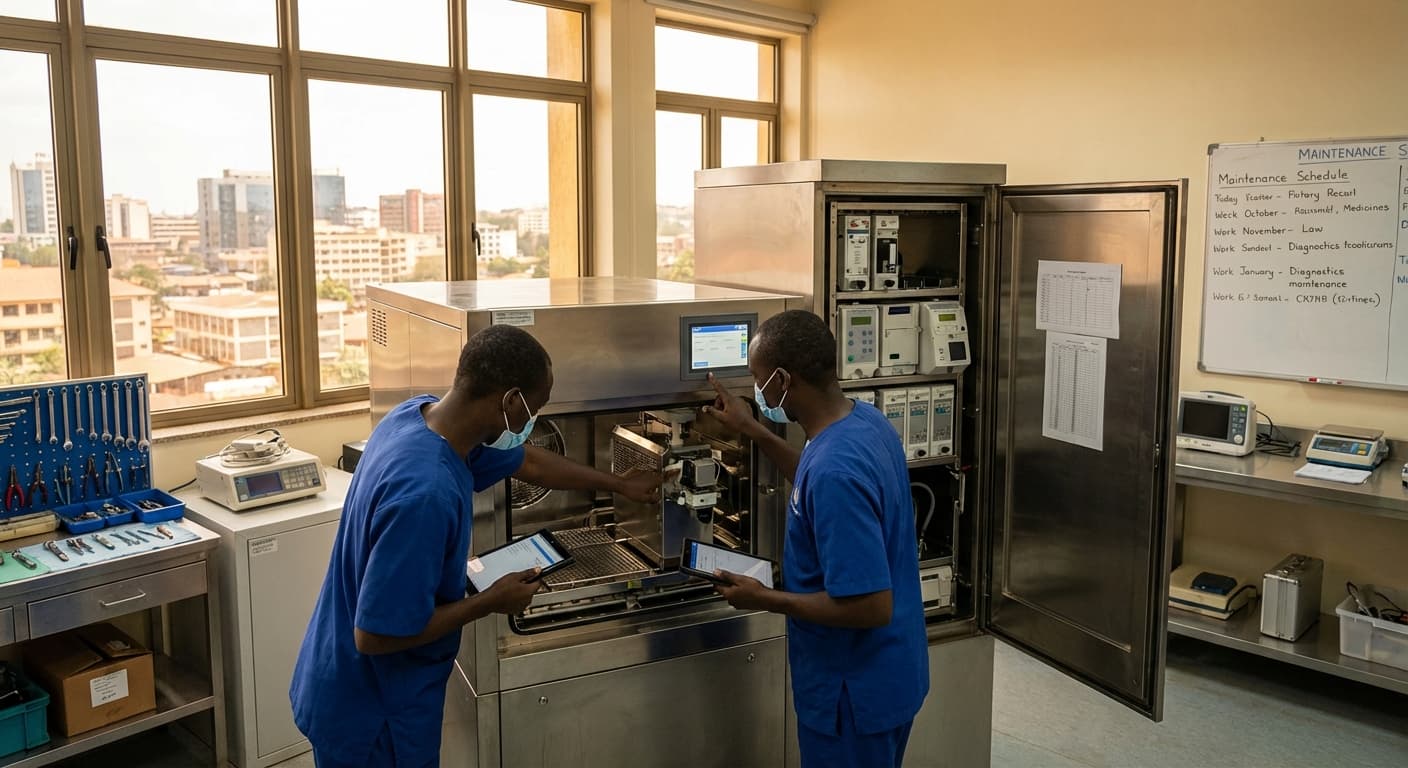
Total Cost of Ownership (TCO) & Lifecycle Budgeting Service in Equatorial Guinea
Engineering Excellence & Technical Support
Total Cost of Ownership (TCO) & Lifecycle Budgeting Service High-standard technical execution following OEM protocols and local regulatory frameworks.
Optimized Asset Lifecycle Costing
Leverage our expertise in Total Cost of Ownership (TCO) analysis for Equatorial Guinea's unique operational environment. We provide granular budgeting that accounts for acquisition, operation, maintenance, and disposal costs of critical infrastructure and equipment, ensuring predictable financial planning and mitigating unexpected expenditures throughout the asset's lifecycle.
Risk-Informed Lifecycle Budgeting & Mitigation
Our TCO service identifies and quantifies financial risks associated with asset operation in Equatorial Guinea, including supply chain volatility, regulatory changes, and infrastructure degradation. We develop proactive lifecycle budgeting strategies that incorporate contingency planning and risk mitigation measures, safeguarding project profitability and operational continuity.
Strategic Procurement & Vendor Management for Long-Term Value
Beyond initial purchase price, our TCO methodology evaluates the long-term value and operational impact of supplier choices and contract terms within Equatorial Guinea. We guide strategic procurement decisions and establish effective vendor management frameworks to secure favorable maintenance, support, and spare parts agreements, thereby minimizing lifecycle costs and maximizing return on investment.
What Is Total Cost Of Ownership (Tco) & Lifecycle Budgeting Service In Equatorial Guinea?
Total Cost of Ownership (TCO) and Lifecycle Budgeting is a comprehensive financial management service focused on understanding and projecting the total expenditure associated with an asset, project, or investment over its entire operational lifespan. In Equatorial Guinea, as in any jurisdiction, this service moves beyond the initial acquisition cost to encompass all direct and indirect costs incurred from procurement through disposal or decommissioning. This includes, but is not limited to, acquisition, implementation, operation, maintenance, repair, upgrades, training, and end-of-life costs. Lifecycle budgeting, intrinsically linked to TCO, involves the systematic allocation of financial resources across these distinct phases to ensure adequate funding and prevent unforeseen budgetary shortfalls. The service aims to provide stakeholders with a holistic financial perspective, enabling more informed strategic decision-making, risk mitigation, and optimized resource allocation within the Guinean economic and regulatory context.
| Who Needs TCO & Lifecycle Budgeting Service? | Typical Use Cases in Equatorial Guinea |
|---|---|
| Government & Public Sector Entities: Ministries, state-owned enterprises, and municipalities involved in infrastructure development, public services, and asset management. | Infrastructure Projects: Assessing the long-term financial viability of roads, bridges, power plants, water treatment facilities, and telecommunications networks. This includes evaluating the cost of construction, operation, maintenance, and eventual upgrades or replacements. |
| Oil & Gas Companies: Major players in Equatorial Guinea's economy, requiring TCO analysis for exploration equipment, production facilities, pipelines, and offshore platforms, including decommissioning liabilities. | Energy Infrastructure Development: Evaluating the full lifecycle costs of power generation (e.g., thermal, hydro, solar) and distribution systems to ensure long-term affordability and reliability of energy supply. |
| Mining & Extractive Industries: Assessing the total cost of equipment, operational expenses, and environmental management throughout the life of mines and processing plants. | Transportation & Logistics: Analyzing the TCO of fleets of vehicles, ships, and aircraft, including fuel, maintenance, insurance, and replacement cycles for national or regional logistics operations. |
| Large Industrial & Manufacturing Firms: For capital equipment, plant operations, and process optimization, ensuring cost-effectiveness over the asset's operational life. | Telecommunications Infrastructure: Determining the lifecycle costs of deploying and maintaining cellular towers, fiber optic networks, and data centers, considering technology obsolescence and upgrade cycles. |
| Real Estate Developers & Property Managers: For commercial and residential developments, factoring in construction, operational, maintenance, and eventual renovation or demolition costs. | Public Health & Education Systems: Budgeting for the long-term costs of healthcare facilities (hospitals, clinics) and educational institutions (schools, universities), including equipment, maintenance, and infrastructure upgrades. |
| Financial Institutions & Investors: To conduct due diligence on capital-intensive projects and assess investment risks and returns over the asset's lifecycle. | Asset Management & Procurement Departments: For any organization managing significant physical assets, to ensure optimal procurement decisions, operational efficiency, and strategic planning for asset replacement or disposal. |
Key Components of TCO & Lifecycle Budgeting Service
- Acquisition & Procurement Costs: Initial purchase price, taxes, duties, shipping, installation, and commissioning.
- Operational Costs: Energy consumption, consumables, licenses, permits, and routine operational staff.
- Maintenance & Repair Costs: Scheduled and unscheduled maintenance, spare parts, service contracts, and labor for repairs.
- Upgrade & Enhancement Costs: Costs associated with technology upgrades, expansions, or modifications to extend asset life or improve performance.
- Training & Skill Development: Costs for training personnel to operate, maintain, and manage the asset or system.
- Disposal & Decommissioning Costs: Costs for removal, demolition, environmental remediation, and asset resale or recycling at the end of its lifecycle.
- Indirect Costs & Overheads: Insurance, security, administrative overhead, and potential downtime costs.
- Financial Costs: Interest on financing, depreciation, and opportunity costs.
- Risk Assessment & Contingency Planning: Identification of potential cost overruns and establishment of contingency funds.
- Data Collection & Analysis: Establishing robust data collection mechanisms for accurate cost tracking and trend analysis.
Who Needs Total Cost Of Ownership (Tco) & Lifecycle Budgeting Service In Equatorial Guinea?
In Equatorial Guinea, businesses and organizations of all sizes and across various sectors can significantly benefit from Total Cost of Ownership (TCO) and Lifecycle Budgeting services. These services are crucial for informed decision-making, financial planning, and maximizing the long-term value of assets and projects. By understanding the full financial implications of an asset or project from acquisition to disposal, stakeholders can avoid hidden costs, optimize resource allocation, and ensure sustainable operations.
| Target Customer/Organization Type | Key Departments Benefiting from TCO & Lifecycle Budgeting |
|---|---|
| Large Corporations (Oil & Gas, Mining, Telecommunications, Banking, Construction) | Procurement, Finance, Operations, Engineering, Project Management, Asset Management, Strategic Planning |
| Government Ministries and Agencies (e.g., Ministry of Finance, Ministry of Infrastructure, Ministry of Energy) | Budgeting and Planning Departments, Public Procurement Units, Project Management Offices, Treasury, Infrastructure Development Divisions |
| State-Owned Enterprises (e.g., in energy, utilities, transportation) | Finance, Operations, Procurement, Strategic Planning, Capital Investment Committees |
| SMEs with Significant Capital Investments (e.g., manufacturing, large-scale agriculture, hospitality) | Finance, Operations Management, Purchasing, Business Development |
| Non-Governmental Organizations (NGOs) with Project Funding | Finance, Program Management, Grants Management, Procurement |
| International Development Organizations (e.g., World Bank, African Development Bank projects) | Project Management Units, Finance and Administration Departments, Procurement Specialists |
Target Customers and Departments in Equatorial Guinea:
- Large Corporations (Oil & Gas, Mining, Telecommunications, Banking, Construction)
- Government Ministries and Agencies
- State-Owned Enterprises
- SMEs with Significant Capital Investments
- Non-Governmental Organizations (NGOs) with Project Funding
- International Development Organizations
Total Cost Of Ownership (Tco) & Lifecycle Budgeting Service Process In Equatorial Guinea
This document outlines the workflow for our Total Cost of Ownership (TCO) & Lifecycle Budgeting Service in Equatorial Guinea, from initial inquiry to the final execution and reporting. Our process is designed to be transparent, collaborative, and to deliver actionable insights for your asset management and financial planning.
| Phase | Stage | Key Activities | Deliverables | Responsible Parties |
|---|---|---|---|---|
| Initiation | Inquiry & Needs Assessment | Client expresses interest; Initial consultation to understand objectives, scope, and specific assets (e.g., infrastructure, equipment, fleet). Discussion of current challenges and desired outcomes. Clarification of regulatory and operational context in Equatorial Guinea. | Initial understanding of client needs, preliminary scope definition. | Client, TCO & Lifecycle Budgeting Service Provider |
| Initiation | Proposal Development & Agreement | Provider develops a detailed proposal outlining methodology, scope of work, timeline, deliverables, and pricing. Contract negotiation and signing. Establishing communication protocols and key contacts. | Formal proposal, Service Level Agreement (SLA), Project charter. | TCO & Lifecycle Budgeting Service Provider, Client |
| Planning | Data Gathering & Validation | Collection of all relevant historical data (acquisition costs, operational expenses, maintenance records, disposal costs, energy consumption, performance metrics). Site visits and interviews with operational staff in Equatorial Guinea. Data validation and cleansing. | Validated asset inventory, comprehensive dataset. | Client, TCO & Lifecycle Budgeting Service Provider |
| Planning | Methodology & Model Design | Selection and adaptation of appropriate TCO and lifecycle budgeting methodologies. Design of the TCO model framework, including cost categories, discount rates, inflation assumptions, and risk factors relevant to Equatorial Guinea's economic and operational landscape. Defining key performance indicators (KPIs) for lifecycle management. | Defined TCO methodology, customized TCO model framework. | TCO & Lifecycle Budgeting Service Provider |
| Execution | TCO Calculation & Lifecycle Costing | Application of the TCO model to individual assets and asset portfolios. Forecasting future costs (operations, maintenance, repair, upgrades, decommissioning, disposal) over the asset's lifecycle. Incorporating local economic factors, import duties, and potential currency fluctuations specific to Equatorial Guinea. | Calculated TCO for each asset, lifecycle cost projections. | TCO & Lifecycle Budgeting Service Provider |
| Execution | Scenario Analysis & Risk Assessment | Developing and analyzing various 'what-if' scenarios (e.g., changes in energy prices, maintenance strategies, operational demands). Identifying and quantifying risks associated with asset lifecycle and budgeting. Assessing the impact of potential geopolitical or economic shifts in Equatorial Guinea. | Scenario analysis reports, risk register. | TCO & Lifecycle Budgeting Service Provider |
| Execution | Optimization & Strategy Development | Identifying cost-saving opportunities and areas for optimization. Developing strategies for asset acquisition, maintenance, replacement, and disposal to minimize TCO and maximize lifecycle value. Recommending best practices for asset management within the Equatorial Guinean context. | Recommended optimization strategies, lifecycle management roadmap. | TCO & Lifecycle Budgeting Service Provider |
| Closure | Reporting & Presentation | Preparation of a comprehensive TCO and Lifecycle Budgeting report, including findings, analysis, recommendations, and actionable insights. Presentation of results and recommendations to client stakeholders. Q&A session and clarification. | Final TCO & Lifecycle Budgeting Report, Executive Summary, Presentation deck. | TCO & Lifecycle Budgeting Service Provider, Client |
| Closure | Implementation Support & Review | Providing support for the implementation of recommended strategies. Conducting periodic reviews to track progress, assess the effectiveness of implemented strategies, and update the TCO model as needed. Addressing any emergent issues or new requirements. | Implementation progress reports, updated TCO models, ongoing advisory. | TCO & Lifecycle Budgeting Service Provider, Client |
Total Cost of Ownership (TCO) & Lifecycle Budgeting Service Process in Equatorial Guinea
- The service begins with a comprehensive understanding of the client's needs and objectives related to asset management and long-term financial planning.
- This involves detailed data collection, analysis, and the development of a robust TCO model tailored to the specific assets and operational environment in Equatorial Guinea.
- Throughout the process, we emphasize collaboration with client stakeholders to ensure accuracy and alignment.
- Upon completion, a detailed report is delivered, providing clear recommendations and strategies for optimizing asset performance and financial resources.
- Ongoing support and periodic reviews are available to adapt to changing circumstances and ensure continued value realization.
Total Cost Of Ownership (Tco) & Lifecycle Budgeting Service Cost In Equatorial Guinea
The Total Cost of Ownership (TCO) and Lifecycle Budgeting for services in Equatorial Guinea are complex to define due to a variety of factors influencing pricing. TCO encompasses not just the initial acquisition cost but also ongoing operational expenses, maintenance, support, upgrades, and eventual disposal or retirement. Lifecycle budgeting extends this by planning and allocating funds across the entire lifespan of a service, from inception to end-of-life. In Equatorial Guinea, pricing for these services is heavily influenced by the country's economic landscape, regulatory environment, local market maturity, and the specific nature of the services being procured.
Key pricing factors that significantly impact TCO and lifecycle budgeting in Equatorial Guinea include:
- Local Labor Costs and Availability: Skilled technical and managerial labor is often in high demand and short supply, leading to premium wages. The cost of training and retaining talent also adds to TCO.
- Import Duties and Taxes: Equatorial Guinea has import duties and taxes that can substantially increase the cost of acquiring hardware, software, and specialized equipment required for many services.
- Logistics and Infrastructure: The country's infrastructure, particularly outside major urban centers, can make logistics for equipment delivery, installation, and maintenance more challenging and expensive. This includes transportation costs, potential delays, and the need for specialized handling.
- Regulatory Compliance and Legal Fees: Navigating Equatorial Guinea's legal and regulatory framework can involve significant compliance costs, including obtaining permits, licenses, and engaging legal counsel for contract reviews and negotiations.
- Currency Fluctuations and Exchange Rates: The local currency, the Central African CFA franc (XAF), is pegged to the Euro. However, fluctuations in the Euro and the broader global economic environment can still impact the cost of imported goods and services.
- Provider's Geographic Presence and Local Expertise: Companies with a strong local presence and established operational capabilities in Equatorial Guinea may offer more predictable pricing. Conversely, relying on international providers who need to establish a local footprint can incur higher initial setup costs passed on to the client.
- Service Complexity and Scope: The more complex and comprehensive the service, the higher the TCO. This includes factors like customization, integration with existing systems, and the level of support required.
- Service Level Agreements (SLAs) and Support Levels: Higher levels of guaranteed uptime, response times, and proactive support will naturally command higher pricing. The cost of ensuring redundancy and disaster recovery also plays a role.
- Technology Obsolescence and Upgrade Cycles: For technology-dependent services, the cost of future upgrades and replacements must be factored into the lifecycle budget.
- Risk Mitigation: Costs associated with managing risks such as political instability, security concerns, and supply chain disruptions will be incorporated into the overall pricing structure.
Given these variables, providing precise pricing ranges in XAF is challenging without a detailed understanding of the specific service. However, for illustrative purposes, we can outline potential ranges based on typical service categories. It is crucial to obtain detailed quotes from local and international service providers operating in Equatorial Guinea for accurate budgeting.
| Service Category (Illustrative) | Typical TCO Range (XAF per annum, ex. VAT) | Lifecycle Budgeting Considerations |
|---|---|---|
| Basic IT Support & Maintenance (e.g., per workstation) | 150,000 - 500,000 XAF | Hardware refresh cycles (3-5 years), software licensing, skilled technician availability, remote vs. on-site support. |
| Cloud Infrastructure (IaaS/PaaS - e.g., for small/medium deployments) | 500,000 - 5,000,000 XAF+ | Data transfer costs, storage needs, compute power, security services, vendor lock-in, potential for local data residency requirements. |
| Managed Network Services (e.g., for multiple branches) | 1,000,000 - 10,000,000 XAF+ | Bandwidth requirements, equipment leasing/purchase, installation & configuration, ongoing monitoring & management, physical security of network devices. |
| Specialized Software Solutions (e.g., ERP, CRM - implementation & licensing) | 2,000,000 - 50,000,000 XAF+ (initial & annual) | Customization needs, integration with legacy systems, user training, ongoing vendor support, upgrade paths, potential for local language support. |
| Consulting & Project Management (per engagement) | 200,000 - 1,500,000 XAF (per day/week) | Expertise level required, duration of engagement, travel & accommodation costs, local vs. international consultants. |
Key Pricing Factors for TCO & Lifecycle Budgeting in Equatorial Guinea
- Local Labor Costs & Availability
- Import Duties & Taxes
- Logistics & Infrastructure Challenges
- Regulatory Compliance & Legal Fees
- Currency Fluctuations (CFA Franc/Euro Peg)
- Provider's Local Presence & Expertise
- Service Complexity & Scope
- Service Level Agreements (SLAs) & Support Tiers
- Technology Obsolescence & Upgrade Cycles
- Risk Mitigation Costs
Affordable Total Cost Of Ownership (Tco) & Lifecycle Budgeting Service Options
Our Affordable Total Cost of Ownership (TCO) & Lifecycle Budgeting Services are designed to provide organizations with comprehensive financial planning and management tools. We understand that true cost savings go beyond the initial purchase price. Our approach focuses on the entire lifecycle of an asset or project, from acquisition to disposal, identifying opportunities to reduce expenses and maximize value. We offer flexible service options, including tailored value bundles and proven cost-saving strategies, ensuring you receive the most cost-effective solution for your unique needs.
| Cost-Saving Strategy | Description | Lifecycle Stage Focus |
|---|---|---|
Key Value Bundles and Their Benefits
- {"title":"Essentials TCO Analysis Bundle","description":"Ideal for organizations needing a foundational understanding of their asset costs. This bundle includes initial TCO model development, key cost driver identification, and basic lifecycle stage breakdown. It provides a clear baseline for future financial planning and highlights immediate areas for potential savings."}
- {"title":"Strategic Lifecycle Budgeting Bundle","description":"Designed for proactive financial management. This bundle incorporates the Essentials TCO analysis with advanced forecasting, scenario planning for various lifecycle events (e.g., upgrades, replacements), and risk assessment related to budget fluctuations. It empowers strategic decision-making and long-term financial stability."}
- {"title":"Comprehensive Cost Optimization Bundle","description":"Our most robust offering, focused on driving significant cost reductions. This bundle includes all elements of the Strategic Lifecycle Budgeting Bundle, plus detailed analysis of operational efficiencies, maintenance optimization strategies, and vendor negotiation support. The goal is to identify and implement actionable plans for substantial TCO reduction."}
- {"title":"Customized TCO & Budgeting Solution","description":"For organizations with highly specific requirements. We work closely with you to define a unique service package that addresses your precise needs, whether it's for a specific department, a complex project, or a particular type of asset. This ensures maximum relevance and impact."}
Verified Providers In Equatorial Guinea
Finding reliable and credentialed healthcare providers in Equatorial Guinea can be a significant challenge for individuals and organizations seeking quality medical care. Franance Health stands out as a leading entity dedicated to verifying and promoting healthcare professionals who meet rigorous standards of expertise, ethical practice, and patient safety. Their comprehensive credentialing process ensures that all listed providers have undergone thorough background checks, license verifications, and competency assessments. This meticulous approach provides an unparalleled level of assurance for patients, expatriates, and businesses operating in the region. By prioritizing transparency and accountability, Franance Health empowers individuals to make informed decisions about their healthcare, minimizing risks associated with unqualified or unverified practitioners. Their commitment to excellence not only elevates the standard of healthcare delivery in Equatorial Guinea but also fosters trust and confidence within the medical community.
| Provider Type | Key Credentials Verified by Franance Health | Benefits of Choosing Verified Providers |
|---|---|---|
| Physicians (General & Specialists) | Valid Medical License, Board Certification/Specialty Training, Educational Degrees, Continued Medical Education (CME) records, Professional References | Access to qualified medical expertise, accurate diagnosis and treatment, reduced risk of medical errors, specialized care for complex conditions |
| Nurses | Valid Nursing License, Educational Qualifications (e.g., BSN, MSN), Professional Experience, Certifications in specialized areas (e.g., ICU, Pediatrics) | Competent and compassionate care, skilled patient support, adherence to safety protocols, effective patient education |
| Dentists | Valid Dental License, Educational Degrees, Postgraduate Training (if applicable), Professional Memberships | Oral health expertise, preventative care, restorative treatments, cosmetic dentistry |
| Pharmacists | Valid Pharmacy License, Educational Qualifications, Knowledge of drug interactions and regulations | Safe and accurate dispensing of medication, expert advice on drug usage and side effects, medication management |
| Allied Health Professionals (e.g., Therapists, Technicians) | Relevant Certifications and Licenses, Educational Background, Specific Training in their field | Supportive therapies (physical, occupational), diagnostic imaging accuracy, specialized health services |
Why Franance Health Credentials Represent the Best Choice:
- Rigorous Verification Process: Franance Health employs a multi-faceted credentialing system that includes verification of medical licenses, educational qualifications, professional experience, and adherence to ethical guidelines.
- Focus on Patient Safety: The paramount concern of Franance Health is patient well-being, achieved by ensuring that all listed providers demonstrate a commitment to best practices and patient care.
- Expertise and Specialization: Credentials often highlight specific areas of expertise, allowing patients to find specialists best suited to their medical needs.
- Transparency and Trust: Franance Health provides a transparent platform where patients can confidently access information about a provider's qualifications, fostering trust and reducing uncertainty.
- Promoting Quality Healthcare: By setting a high bar for credentialing, Franance Health actively contributes to the elevation of healthcare standards across Equatorial Guinea.
- Reduced Risk for Patients and Organizations: Utilizing Franance Health verified providers significantly mitigates the risks associated with seeking medical attention from unverified sources.
- Support for Expatriates and Businesses: Provides a crucial resource for individuals and companies operating in Equatorial Guinea who require access to dependable medical services.
Scope Of Work For Total Cost Of Ownership (Tco) & Lifecycle Budgeting Service
This document outlines the Scope of Work (SOW) for a Total Cost of Ownership (TCO) and Lifecycle Budgeting service. The service aims to provide a comprehensive understanding of the financial implications of an asset, project, or system throughout its entire lifespan, enabling informed decision-making, strategic planning, and optimized resource allocation. This SOW details the technical deliverables and standard specifications to be provided by the consultant/service provider.
| Section | Description | Technical Deliverables | Standard Specifications |
|---|---|---|---|
| Initial meetings to define project scope, objectives, critical success factors, and data requirements. Understanding the specific asset/project/system under review. | Project Kick-off Meeting Minutes, Stakeholder Register, Project Charter (if applicable), Data Request List. | Deliverables to be provided in editable digital formats (e.g., .docx, .xlsx). Meeting minutes to be distributed within 2 business days of the meeting. Stakeholder register to include contact information and roles. |
| Gathering all relevant financial, operational, and technical data across the entire lifecycle. This includes acquisition costs, operating expenses, maintenance records, energy consumption, personnel costs, etc. | Comprehensive Data Repository/Database, Data Validation Report, Identified Data Gaps & Mitigation Plan. | Data to be collected in standardized templates (provided by consultant or agreed upon). Validation report to include discrepancies, assumptions made, and sources of data. Data stored securely and in compliance with relevant data privacy regulations. |
| Development of a robust TCO model that systematically accounts for all cost categories across the lifecycle. This includes defining cost drivers, discount rates, inflation factors, and salvage value. | TCO Model Spreadsheet/Software Output, TCO Calculation Methodology Document, List of Assumptions and Dependencies. | Model to be built in industry-standard spreadsheet software (e.g., Microsoft Excel) or a specialized TCO software. Methodology document to clearly outline formulas, definitions, and sources for each cost element. Assumptions to be clearly documented and quantifiable where possible. |
| Forecasting costs for each phase of the lifecycle based on the TCO model. This includes developing annual or periodic budgets and projecting future financial needs. | Lifecycle Budget Report, Cash Flow Projections, Sensitivity Analysis Report. | Budget report to align with organizational fiscal periods. Cash flow projections to be presented in graphical and tabular formats. Sensitivity analysis to demonstrate the impact of changes in key variables (e.g., inflation, usage rates). |
| Analyzing different scenarios (e.g., different maintenance strategies, upgrade timelines, disposal options) to identify cost-optimization opportunities and risks. | Scenario Analysis Matrix, Optimization Recommendations Report, Risk Assessment Report. | Scenario matrix to present comparative cost outcomes for each scenario. Recommendations to be actionable and prioritized based on financial impact and feasibility. Risk assessment to include probability and impact of identified risks. |
| Summarizing findings, insights, and recommendations in a clear and concise manner. Presenting the results to key stakeholders. | Executive Summary Report, Detailed Technical Report, Stakeholder Presentation Deck, Final TCO & Lifecycle Budget Document. | Reports to be delivered in PDF and editable formats. Presentation deck to be engaging and tailored to the audience's technical and financial understanding. All deliverables to be consistent with the agreed-upon project scope and objectives. |
| Ensuring the client has the necessary understanding to utilize and maintain the TCO model and lifecycle budgets. | Training Session Materials, User Manual for TCO Model, Q&A Session Summary. | Training sessions to be interactive and hands-on. User manual to be comprehensive and easy to follow. All documentation to be provided in digital formats. |
Key Objectives of TCO & Lifecycle Budgeting Service
- To establish a clear and quantifiable understanding of all direct and indirect costs associated with an asset/project/system from acquisition/inception through disposal/decommissioning.
- To identify and analyze all phases of the asset/project/system lifecycle, including planning, acquisition, operation, maintenance, upgrade, and disposal.
- To develop accurate and realistic lifecycle budgets, projecting future expenditures and identifying potential cost drivers and risks.
- To provide data-driven insights for strategic investment decisions, vendor selection, and operational efficiency improvements.
- To facilitate informed trade-off analyses between initial capital costs and ongoing operational and maintenance expenses.
- To support the development of long-term financial planning and capital expenditure strategies.
- To enhance accountability and transparency in financial management related to assets and projects.
Service Level Agreement For Total Cost Of Ownership (Tco) & Lifecycle Budgeting Service
This Service Level Agreement (SLA) outlines the performance standards and guarantees for the Total Cost of Ownership (TCO) & Lifecycle Budgeting Service. It defines the expected response times for support requests and the uptime commitment for the service.
| Severity Level | Description | Target Response Time (during Business Hours) | Target Resolution Time (Initial Response/Workaround) | Uptime Guarantee |
|---|---|---|---|---|
| Critical (Severity 1) | Service is completely unavailable or a core functionality is non-operational, impacting all users and business operations. | 1 Hour | 4 Business Hours | 99.5% |
| High (Severity 2) | Significant functionality is impaired, impacting a large number of users or critical business processes. | 2 Business Hours | 8 Business Hours | 99.75% |
| Medium (Severity 3) | Minor functionality is impaired, impacting a limited number of users or non-critical business processes. | 4 Business Hours | 2 Business Days | 99.9% |
| Low (Severity 4) | General inquiries, feature requests, or minor cosmetic issues that do not impact functionality. | 8 Business Hours | 3 Business Days | 99.9% |
Service Overview
- Service Description: The TCO & Lifecycle Budgeting Service provides tools, methodologies, and expert support to enable organizations to accurately calculate, manage, and optimize the total cost of ownership for their assets and projects throughout their entire lifecycle.
- Scope: This SLA covers all functionalities and support provided by the TCO & Lifecycle Budgeting Service, including but not limited to data input, analysis, reporting, and technical assistance.
- Definitions:
- Downtime: Any period where the TCO & Lifecycle Budgeting Service is unavailable to the customer, excluding scheduled maintenance.
- Scheduled Maintenance: Pre-announced periods where the service may be unavailable for upgrades, patches, or other necessary maintenance. Customers will be notified at least [Number] business days in advance.
- Response Time: The maximum time allowed from when a support request is initiated by the customer until the service provider acknowledges the request and begins investigation.
- Resolution Time: The maximum time allowed from when a support request is initiated until a solution or workaround is provided by the service provider. (Note: Resolution time can be dependent on the complexity of the issue and customer's responsiveness).
- Business Hours: [Specify Business Hours, e.g., Monday to Friday, 9:00 AM to 5:00 PM in [Time Zone]]
- Severity Levels: A classification of support issues based on their impact on business operations.
Frequently Asked Questions

Ready when you are
Let's scope your Total Cost of Ownership (TCO) & Lifecycle Budgeting Service in Equatorial Guinea project in Equatorial Guinea.

Scaling healthcare logistics and technical systems across the entire continent.