
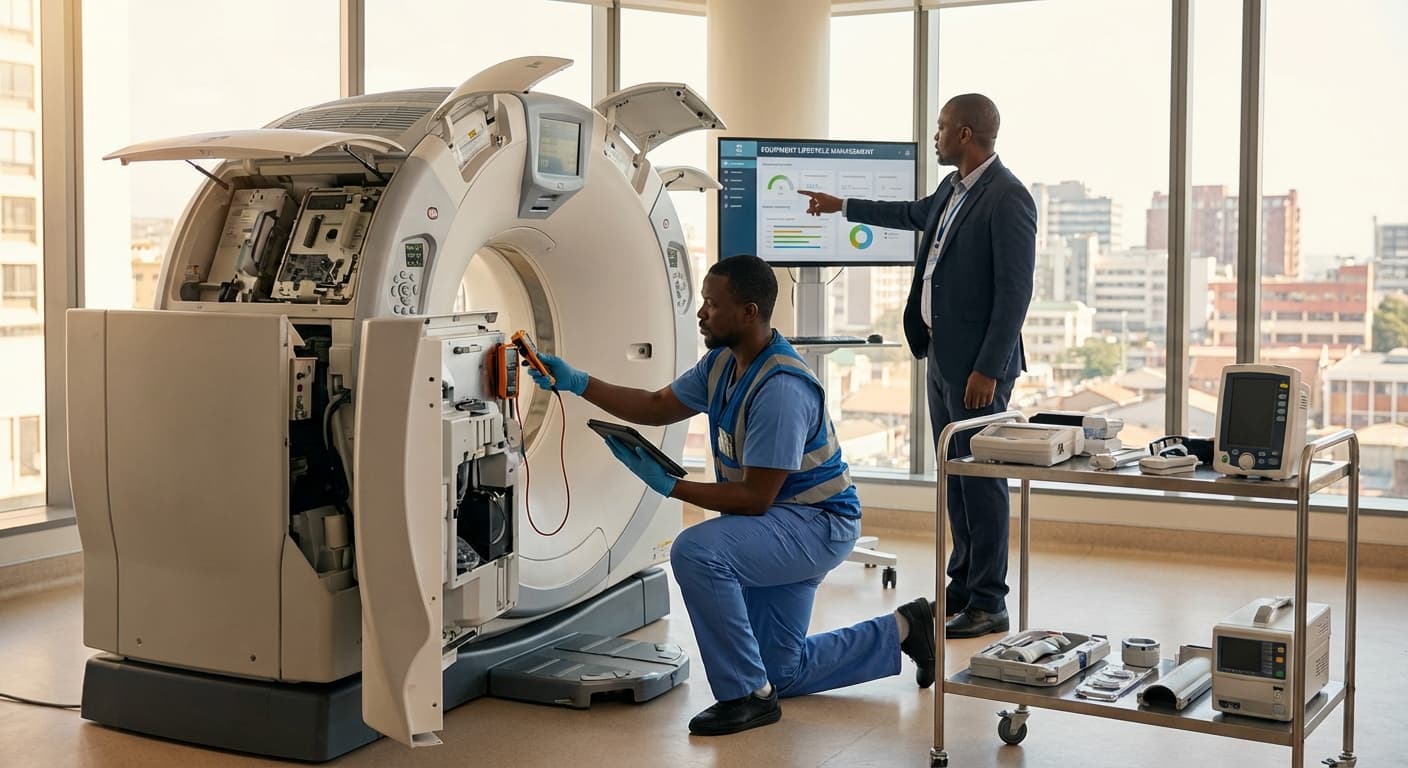
Equipment Replacement Planning & Obsolescence Strategy Service in Equatorial Guinea
Engineering Excellence & Technical Support
Equipment Replacement Planning & Obsolescence Strategy Service High-standard technical execution following OEM protocols and local regulatory frameworks.
Proactive Lifecycle Management
Leveraging advanced analytics and Equatorial Guinean operational data, we identify critical equipment nearing end-of-life, predicting failure points and obsolescence risks to facilitate timely and cost-effective replacement before disruptions occur.
Optimized Sourcing & Supply Chain
Our service navigates the complexities of international and local supply chains in Equatorial Guinea, securing access to compliant, compatible, and cost-effective replacement parts and equipment, mitigating long lead times and import challenges.
Enhanced Operational Resilience
By implementing a robust obsolescence strategy, we reduce the risk of critical system failures due to outdated technology, ensuring continued operational uptime and minimizing safety hazards across your Equatorial Guinean assets.
What Is Equipment Replacement Planning & Obsolescence Strategy Service In Equatorial Guinea?
Equipment Replacement Planning & Obsolescence Strategy Service in Equatorial Guinea refers to a structured approach to managing the lifecycle of industrial and commercial assets. It involves the systematic evaluation of existing equipment to determine optimal replacement intervals and proactively address the risks associated with technological obsolescence, diminishing performance, increasing maintenance costs, and regulatory non-compliance. This service aims to ensure operational continuity, maximize return on investment, and mitigate unforeseen disruptions within the economic landscape of Equatorial Guinea.
| Who Needs This Service? | Typical Use Cases in Equatorial Guinea |
|---|---|
| Oil and Gas Exploration and Production (E&P) Companies | Planning for the replacement of aging drilling equipment, production platforms, and refining machinery to maintain operational efficiency and safety standards in a demanding environment. Addressing obsolescence of critical control systems and instrumentation subject to evolving industry standards and cybersecurity threats. |
| Mining and Extractive Industries | Forecasting replacement cycles for heavy machinery (e.g., excavators, haul trucks, crushers) considering wear and tear in harsh environmental conditions. Developing strategies to replace obsolete processing plant equipment to improve yield and energy efficiency, and to comply with environmental regulations. |
| Power Generation and Utilities | Managing the lifecycle of turbines, generators, transformers, and transmission infrastructure to ensure grid stability and reliability. Planning for upgrades or replacements to accommodate new energy technologies or to meet increased demand, while also addressing the obsolescence of control and protection systems. |
| Telecommunications Providers | Strategizing the replacement of network infrastructure (e.g., base stations, switching equipment) to keep pace with technological advancements (e.g., 4G to 5G transitions) and to maintain competitive service offerings. Managing the obsolescence of legacy systems and ensuring interoperability with newer technologies. |
| Manufacturing and Industrial Plants | Optimizing the replacement of production line machinery, automated systems, and specialized processing equipment to enhance productivity, reduce downtime, and maintain product quality. Addressing the obsolescence of legacy manufacturing execution systems (MES) and enterprise resource planning (ERP) modules. |
| Logistics and Transportation Infrastructure Operators | Planning for the replacement of port equipment (e.g., cranes, conveyors), airport ground support equipment, and fleet vehicles to ensure efficient operations and safety. Managing the obsolescence of traffic control systems and navigation aids. |
| Government and Public Sector Entities | Developing long-term capital improvement plans for public infrastructure such as water treatment plants, public transportation fleets, and IT systems, considering the full lifecycle cost and the risk of obsolescence to ensure sustained public service delivery. |
Key Components of the Service
- Asset Inventory and Condition Assessment
- Performance and Reliability Analysis
- Total Cost of Ownership (TCO) Modeling
- Obsolescence Risk Assessment (Technological, Supply Chain, Regulatory)
- Replacement Strategy Development (Deferral, Repair, Upgrade, Replace)
- Capital Planning and Budgeting
- Implementation and Project Management of Replacements
- Disposal and Decommissioning Planning
Who Needs Equipment Replacement Planning & Obsolescence Strategy Service In Equatorial Guinea?
Equipment replacement planning and obsolescence strategy services are crucial for organizations in Equatorial Guinea to ensure operational continuity, minimize downtime, manage costs effectively, and leverage technological advancements. These services help businesses anticipate and address the end-of-life cycle of their critical assets, preventing unexpected failures and costly emergency replacements. A proactive approach allows for better budgeting, vendor negotiation, and the adoption of more efficient and sustainable technologies.
| Industry/Sector | Target Customer Examples | Key Departments Involved |
|---|---|---|
| Oil and Gas | National Petroleum Company (e.g., GEPetrol), International Oil Companies (IOCs) operating in EG, Service Companies | Operations & Maintenance (O&M), Engineering, Procurement, Asset Management, Finance, IT |
| Mining and Extractive | Mining companies operating in EG (e.g., for iron ore, diamonds) | Operations & Maintenance (O&M), Engineering, Asset Management, Procurement, Finance |
| Telecommunications | Mobile Network Operators (e.g., Orange, Moov Africa), Internet Service Providers (ISPs), Infrastructure providers | Network Operations, Engineering, Infrastructure Planning, Procurement, Finance, IT |
| Power Generation & Utilities | National Electricity Company (e.g., SEGESA), Independent Power Producers (IPPs) | Operations & Maintenance (O&M), Engineering, Asset Management, Planning, Finance, Procurement |
| Transportation & Logistics | National Airlines, Shipping companies, Port authorities, Major logistics providers | Fleet Management, Maintenance, Operations, Engineering, Procurement, Finance |
| Manufacturing & Industrial | Large-scale processors, factories (e.g., food processing, construction materials) | Production Management, Engineering, Maintenance, Quality Control, Procurement, Finance |
| Government & Public Sector | Ministries responsible for infrastructure (e.g., Public Works, Transport), State-owned enterprises managing public assets | Asset Management, Planning & Development, Procurement, Finance, IT |
| Large-Scale Agriculture | Agribusinesses, large commercial farms with mechanized operations | Farm Operations, Maintenance, Procurement, Finance |
| Healthcare Facilities | Major hospitals, diagnostic centers with advanced medical equipment | Biomedical Engineering, Facilities Management, Procurement, IT, Finance |
| Financial Institutions | Major banks, insurance companies with extensive IT infrastructure | IT Operations, Infrastructure Management, Procurement, Risk Management, Finance |
Target Customers & Departments in Equatorial Guinea for Equipment Replacement Planning & Obsolescence Strategy Services
- Oil and Gas Industry
- Mining and Extractive Industries
- Telecommunications Companies
- Power Generation and Utilities
- Transportation and Logistics
- Manufacturing and Industrial Plants
- Government and Public Sector Infrastructure
- Large-Scale Agricultural Operations
- Healthcare Facilities (hospitals, clinics)
- Financial Institutions (for IT infrastructure)
Equipment Replacement Planning & Obsolescence Strategy Service Process In Equatorial Guinea
This document outlines the service process for Equipment Replacement Planning & Obsolescence Strategy in Equatorial Guinea. It details the typical workflow from initial inquiry to the final execution of recommendations, ensuring clients can proactively manage their asset lifecycle, minimize downtime, and optimize capital expenditure.
| Phase | Key Activities | Deliverables | Typical Timeline (Equatorial Guinea Context) |
|---|---|---|---|
| 1. Inquiry & Initial Consultation | Client expresses interest in Equipment Replacement Planning & Obsolescence Strategy services. Initial meeting to understand client's objectives, scope, existing challenges, and industry context. Discussion of service offerings and potential value proposition. | Confirmation of service engagement. High-level understanding of client needs. Preliminary service proposal outline. | 1-3 Business Days |
| 2. Assessment & Data Gathering | Site visits (if applicable) to observe existing equipment and operational environments. Collection of detailed asset inventory, including equipment type, age, manufacturer, model, maintenance history, performance data, and current condition. Review of operational data, failure rates, and downtime records. Identification of critical equipment and potential obsolescence risks. Understanding of budgetary constraints and procurement policies. | Comprehensive Asset Register. Detailed Equipment Condition Report. Obsolescence Risk Assessment Matrix. Initial data validation report. | 1-4 Weeks (depending on asset volume and accessibility) |
| 3. Analysis & Strategy Development | Techno-economic analysis of equipment performance and remaining useful life. Evaluation of obsolescence trends for specific equipment categories. Development of replacement scenarios (e.g., immediate replacement, phased replacement, refurbishment). Cost-benefit analysis of different strategies, including TCO (Total Cost of Ownership). Identification of potential vendors and technology advancements. Risk assessment related to replacement strategies (e.g., supply chain, integration). Alignment with client's long-term business objectives and sustainability goals. | Equipment Replacement Prioritization List. Obsolescence Mitigation Plan. Recommended Replacement Scenarios with cost projections. Risk Mitigation Strategies. | 2-5 Weeks |
| 4. Proposal & Recommendation Presentation | Formal presentation of findings, analysis, and recommended strategies to key stakeholders. Detailed breakdown of proposed replacement timelines, costs, and expected benefits. Discussion of implementation risks and mitigation plans. Opportunity for client feedback and clarification. | Detailed Service Proposal & Technical Recommendations. Executive Summary of Findings. Q&A Session Minutes. | 1 Week |
| 5. Implementation Planning & Approval | Refinement of selected strategy based on client feedback. Development of detailed project implementation plan, including procurement, installation, commissioning, and training schedules. Securing necessary internal approvals and budget allocation. Finalization of vendor selection criteria and tender processes (if applicable). | Approved Implementation Plan. Procurement Strategy Document. Budget Approval Documentation. | 2-4 Weeks |
| 6. Execution & Monitoring | Procurement of new equipment. Installation and commissioning of replacement equipment. Decommissioning and disposal of old equipment. Training of operational and maintenance staff. Continuous monitoring of new equipment performance and integration into operations. Tracking against the implementation plan and budget. | New Equipment Installed & Operational. Training Records. Project Status Reports. Performance Monitoring Data. | Variable (highly dependent on equipment complexity and procurement lead times, potentially months to years) |
| 7. Review & Ongoing Support | Post-implementation review of project success against objectives. Gathering lessons learned for future planning. Providing ongoing support for new equipment and maintenance. Periodic reassessment of obsolescence risks for remaining assets. Recommendations for continuous improvement in asset management. | Post-Implementation Review Report. Lessons Learned Document. Ongoing Maintenance & Support Plan. Updated Obsolescence Risk Assessment (periodic). | Ongoing (as per service agreement) |
Equipment Replacement Planning & Obsolescence Strategy Service Process
- Phase 1: Inquiry & Initial Consultation
- Phase 2: Assessment & Data Gathering
- Phase 3: Analysis & Strategy Development
- Phase 4: Proposal & Recommendation Presentation
- Phase 5: Implementation Planning & Approval
- Phase 6: Execution & Monitoring
- Phase 7: Review & Ongoing Support
Equipment Replacement Planning & Obsolescence Strategy Service Cost In Equatorial Guinea
Planning and executing equipment replacement and obsolescence strategies is a critical service for businesses in Equatorial Guinea aiming to maintain operational efficiency, mitigate risks associated with aging machinery, and optimize capital expenditure. The cost of such services is influenced by several key factors, making it imperative for organizations to understand these drivers when budgeting and selecting service providers.
| Service Component | Typical Pricing Range (XAF) | Notes |
|---|---|---|
| Initial Consultation & Scoping | 250,000 - 750,000 | For initial understanding, defining objectives, and estimating project scope. |
| Asset Data Collection & Validation | 500,000 - 3,000,000+ | Highly dependent on the volume and accessibility of asset data. May include on-site inspections. |
| Condition Assessment & Risk Analysis | 750,000 - 5,000,000+ | Involves detailed analysis of asset health, failure probabilities, and operational risks. |
| Obsolescence Assessment (Technical & Commercial) | 600,000 - 4,000,000+ | Evaluates the availability of spare parts, technical support, and market viability. |
| Lifecycle Cost Analysis & Financial Modeling | 1,000,000 - 7,000,000+ | Develops cost-benefit analyses for replacement vs. repair, including TCO (Total Cost of Ownership). |
| Replacement Strategy Development (Roadmap) | 1,200,000 - 8,000,000+ | Creation of prioritized replacement plans, including budgetary estimates and timelines. |
| Full Service Package (End-to-End) | 5,000,000 - 50,000,000+ | Comprehensive service from initial assessment to strategic roadmap development for a significant asset portfolio. |
| Ongoing Support & Monitoring | Monthly/Quarterly Retainer (e.g., 500,000 - 2,000,000+) | For continuous tracking of asset health, market changes, and strategy updates. |
Key Pricing Factors for Equipment Replacement Planning & Obsolescence Strategy Services in Equatorial Guinea:
- {"title":"Scope and Complexity of the Asset Inventory","description":"The number, type, criticality, and geographical distribution of the equipment to be assessed significantly impact service costs. A larger and more diverse asset base will require more extensive data collection, analysis, and reporting."}
- {"title":"Level of Detail in Analysis","description":"Services can range from high-level strategic reviews to in-depth, granular analyses of individual assets, including detailed condition assessments, failure mode and effects analysis (FMEA), and lifecycle cost modeling. More detailed analyses command higher fees."}
- {"title":"Data Availability and Quality","description":"The ease of accessing and the quality of existing equipment data (maintenance records, purchase history, performance metrics) will influence the effort required. If significant data cleansing or gathering is needed, costs will increase."}
- {"title":"Methodology and Tools Employed","description":"The specific methodologies and software tools used by the service provider for asset management, risk assessment, and financial modeling will affect pricing. Advanced analytical platforms and specialized software can lead to higher costs."}
- {"title":"Expertise and Experience of the Service Provider","description":"Consulting firms with a proven track record, specialized expertise in asset management, and deep understanding of the Equatorial Guinean industrial landscape will typically charge more. The reputation and seniority of the consultants assigned also play a role."}
- {"title":"Project Timeline and Urgency","description":"Accelerated project timelines or urgent requirements may incur premium charges due to the need for resource prioritization and expedited delivery."}
- {"title":"Reporting and Deliverables","description":"The format and comprehensiveness of the final reports, including strategic recommendations, replacement roadmaps, financial justifications, and risk mitigation plans, will influence the overall service cost."}
- {"title":"On-site vs. Remote Services","description":"While some services can be delivered remotely, on-site assessments, data collection, and stakeholder consultations will incur additional costs for travel, accommodation, and local logistics within Equatorial Guinea."}
- {"title":"Integration with Existing Systems","description":"If the service requires integration with the client's existing Enterprise Asset Management (EAM) or Computerized Maintenance Management System (CMMS), this can add to the complexity and cost."}
Affordable Equipment Replacement Planning & Obsolescence Strategy Service Options
Our Affordable Equipment Replacement Planning & Obsolescence Strategy Service offers a structured approach to proactively manage your asset lifecycle, minimizing disruption and maximizing return on investment. We understand that budget constraints are a primary concern, and our service is designed with cost-effectiveness in mind. By anticipating equipment failures and obsolescence, we enable you to make informed decisions about upgrades and replacements, avoiding costly emergency repairs, production downtime, and the expense of rapidly depreciating or unsupported technology. Our strategies focus on extending the useful life of existing assets where feasible, negotiating favorable terms for new acquisitions, and optimizing maintenance schedules.
| Cost-Saving Strategy | Description | Estimated Impact (Percentage of Total Equipment Costs) |
|---|---|---|
| Preventive & Predictive Maintenance Optimization | Shifting from reactive repairs to scheduled maintenance and using data analytics to predict failures, reducing unexpected downtime and costly emergency fixes. | 5-15% |
| Extended Asset Lifespan Through Upgrades | Identifying opportunities to upgrade or refurbish existing equipment instead of outright replacement, leveraging cost-effective component upgrades. | 10-25% |
| Strategic Bulk Purchasing & Negotiation | Consolidating purchasing needs to negotiate better prices and terms with suppliers for new equipment and parts. | 5-10% |
| Standardization of Equipment Models | Reducing the variety of equipment types and brands to simplify maintenance, spare parts inventory, and training. | 3-7% |
| Phased Replacement Planning | Spreading capital expenditure over time by replacing equipment in stages, aligning with budget cycles and technological maturity. | Variable, but improves cash flow significantly. |
| Lease vs. Buy Analysis | Evaluating the financial benefits of leasing certain types of equipment versus purchasing, especially for rapidly evolving technology. | Variable, depending on asset type and market conditions. |
Service Value Bundles
- {"title":"Core Planning Bundle","description":"Includes initial asset inventory, basic risk assessment, and a 3-year rolling replacement plan. Ideal for smaller organizations or those new to proactive asset management."}
- {"title":"Advanced Strategy Bundle","description":"Builds on the Core bundle with detailed obsolescence forecasting, vendor negotiation support, and scenario planning for major capital expenditures. Suitable for growing businesses with critical infrastructure."}
- {"title":"Comprehensive Lifecycle Management Bundle","description":"Encompasses all aspects of the Advanced bundle, plus ongoing monitoring, predictive maintenance integration, and end-of-life disposal and recycling strategies. Best for organizations with complex operations and a long-term vision for asset optimization."}
Verified Providers In Equatorial Guinea
In Equatorial Guinea, ensuring access to reliable and credentialed healthcare providers is paramount. Franance Health has established itself as a leading entity in this domain, meticulously vetting and certifying healthcare professionals and facilities. Their rigorous credentialing process goes beyond basic licensing, encompassing verification of education, training, experience, and adherence to ethical standards. This commitment to thorough verification provides patients with the assurance that they are receiving care from qualified and trustworthy individuals. Choosing a Franance Health-credentialed provider means opting for a higher standard of care, marked by expertise, integrity, and a dedication to patient well-being. This approach is crucial in building confidence within the healthcare system and empowering individuals to make informed decisions about their health.
| Provider Type | Franance Health Verification Focus | Benefits to Patients |
|---|---|---|
| Doctors/Physicians | Specialization, board certifications, residency completion, peer reviews | Access to specialists with proven expertise in specific fields. |
| Nurses | Nursing degrees, specialized certifications (e.g., critical care, pediatrics), licensure | Care delivered by highly trained and certified nursing professionals. |
| Hospitals/Clinics | Accreditation, quality of facilities, adherence to safety protocols, medical equipment standards | Treatment in well-equipped facilities with robust safety measures. |
| Specialized Medical Services (e.g., labs, imaging) | Technologist certifications, equipment calibration, quality control procedures | Reliable diagnostic results and imaging with certified personnel and equipment. |
Why Franance Health Credentials Matter:
- Rigorous verification of educational qualifications and certifications.
- In-depth assessment of clinical experience and expertise.
- Confirmation of professional licenses and good standing.
- Emphasis on adherence to ethical medical practices.
- Ongoing monitoring to ensure continued compliance and quality.
- Enhanced patient confidence and trust in healthcare providers.
Scope Of Work For Equipment Replacement Planning & Obsolescence Strategy Service
This Scope of Work (SOW) outlines the services to be provided for Equipment Replacement Planning and Obsolescence Strategy. The objective is to develop a comprehensive and actionable strategy that minimizes operational disruptions, optimizes capital expenditure, and mitigates risks associated with aging and obsolete equipment. The service will involve assessing the current equipment inventory, forecasting future needs, and defining a phased approach for replacement and upgrade, while incorporating a robust obsolescence management plan.
| Deliverable | Description | Key Components/Sections | Format | Timeline |
|---|---|---|---|---|
| Equipment Inventory and Condition Assessment Report | Comprehensive listing of all relevant equipment, including age, condition, maintenance history, and performance data. | Equipment Register, Condition Grading, Failure Analysis, Remaining Useful Life (RUL) Estimates | PDF Document, Spreadsheet (for raw data) | Week 2-4 |
| Obsolescence Risk Assessment and Prioritization Matrix | Identifies equipment at risk of obsolescence due to vendor support, part availability, technological advancement, or regulatory changes, and prioritizes them. | Obsolescence Factors, Risk Scoring, Prioritization Ranking, Impact Analysis | PDF Document, Interactive Matrix | Week 4-6 |
| Equipment Replacement and Upgrade Roadmap (3-5 Year Horizon) | A phased plan detailing recommended equipment replacements and upgrades over a specified period, aligned with operational needs and strategic goals. | Phase Definitions, Recommended Equipment, Timelines, Dependencies, Technology Trends | PDF Document, Gantt Chart Visualization | Week 6-8 |
| Capital Expenditure (CAPEX) Forecast and Budget Recommendations | Projected costs associated with the replacement roadmap, including initial purchase, installation, commissioning, and potential training. | Cost Breakdown per Equipment Type, Phased CAPEX Projections, Budgetary Scenarios, ROI Considerations | PDF Document, Spreadsheet (for financial modeling) | Week 8-10 |
| Obsolescence Mitigation and Management Plan | Strategies for managing existing obsolete equipment, including extended support, spare parts management, reverse engineering, and disposal. | Spare Parts Strategy, Vendor Engagement Plan, Risk Mitigation Tactics, End-of-Life (EOL) Procedures | PDF Document | Week 10-12 |
| Performance Metrics and KPI Definition for Equipment Lifecycle Management | Key Performance Indicators to track the effectiveness of the replacement strategy and ongoing equipment management. | Availability, Reliability, Maintenance Costs, Obsolescence Incidence Rate, CAPEX vs. Budget | PDF Document | Week 12 |
| Final Project Report with Executive Summary and Recommendations | A consolidated report summarizing all findings, methodologies, and actionable recommendations for immediate and long-term implementation. | Executive Summary, Methodology Overview, Key Findings, Detailed Recommendations, Implementation Plan Outline | PDF Document | Week 14 |
Technical Deliverables
- Equipment Inventory and Condition Assessment Report
- Obsolescence Risk Assessment and Prioritization Matrix
- Equipment Replacement and Upgrade Roadmap (3-5 Year Horizon)
- Capital Expenditure (CAPEX) Forecast and Budget Recommendations
- Obsolescence Mitigation and Management Plan
- Performance Metrics and KPI Definition for Equipment Lifecycle Management
- Final Project Report with Executive Summary and Recommendations
Service Level Agreement For Equipment Replacement Planning & Obsolescence Strategy Service
This Service Level Agreement (SLA) outlines the performance commitments for the Equipment Replacement Planning & Obsolescence Strategy Service (the "Service"). It defines the expected response times for critical issues and the uptime guarantees for the Service's core functionalities. This SLA is intended to ensure the efficient and reliable operation of the Service, supporting informed decision-making in equipment lifecycle management.
| Service Component | Uptime Guarantee | Response Time (Critical Issues) | Response Time (Major Issues) |
|---|---|---|---|
| Core Planning & Strategy Platform Availability | 99.5% monthly uptime | 1 Business Hour | 4 Business Hours |
| Data Ingestion & Analysis Module | 99.0% monthly uptime | 2 Business Hours | 8 Business Hours |
| Reporting & Dashboard Generation | 99.0% monthly uptime | 2 Business Hours | 8 Business Hours |
| Support Portal & Knowledge Base Access | 99.9% monthly uptime | 4 Business Hours | 24 Business Hours |
Key Service Components and Definitions
- Equipment Replacement Planning: The process of forecasting, budgeting, and scheduling the replacement of equipment based on age, performance, cost of ownership, and strategic needs.
- Obsolescence Strategy: The proactive management of technology and equipment lifecycles to mitigate the risks associated with outdated or unsupported assets.
- Service Uptime: The percentage of time the Service is available and operational, excluding scheduled maintenance and events outside of our control.
- Response Time: The maximum time allowed from the initiation of a support request to the first substantive response from the Service provider.
- Resolution Time: The maximum time allowed to fully resolve a reported issue. (Note: While not a guaranteed metric in this SLA, efforts will be made to resolve issues promptly.)
- Critical Issue: A problem that renders a core Service functionality entirely unavailable or significantly degrades performance, impacting a substantial portion of users.
- Major Issue: A problem that affects a key Service functionality, causing significant disruption but not complete unavailability.
Frequently Asked Questions

Ready when you are
Let's scope your Equipment Replacement Planning & Obsolescence Strategy Service in Equatorial Guinea project in Equatorial Guinea.

Scaling healthcare logistics and technical systems across the entire continent.