
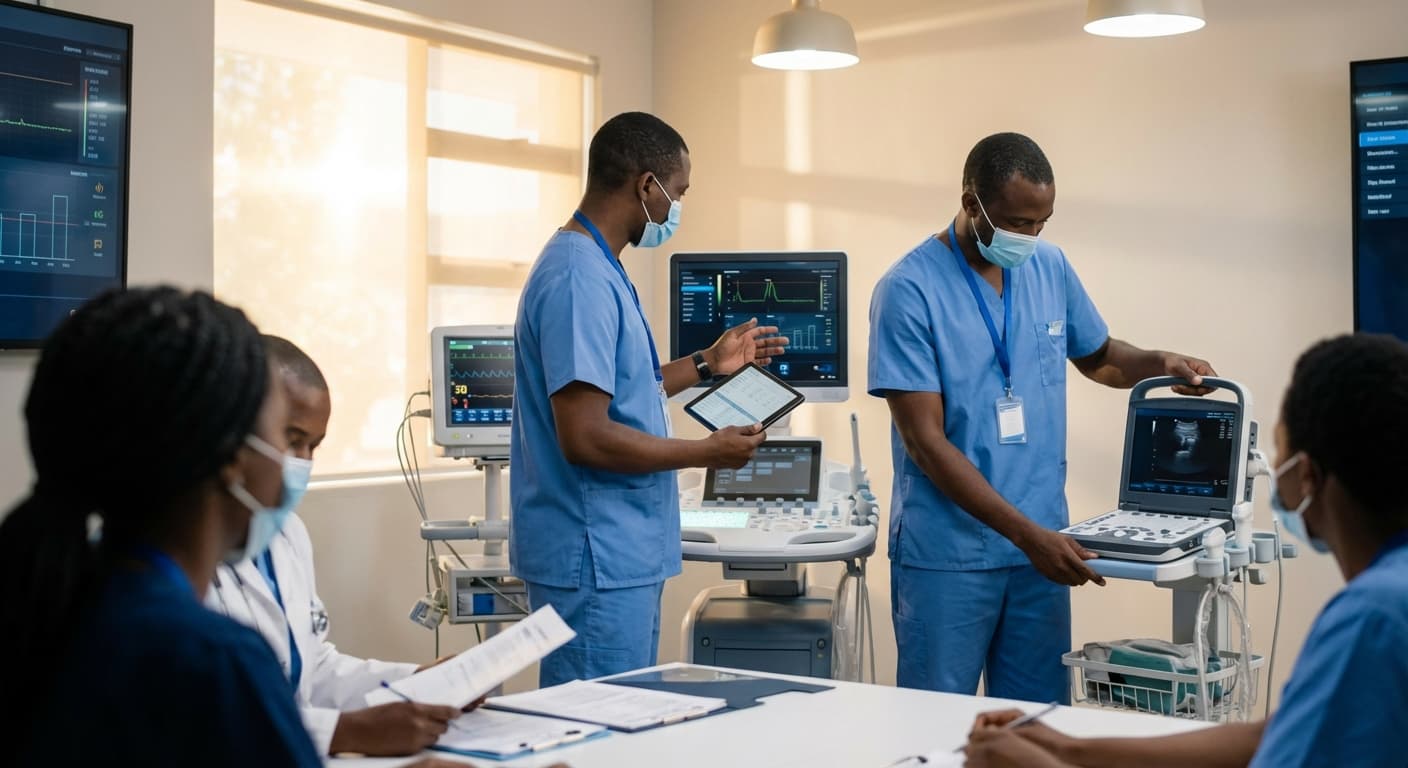
Clinical Needs Assessment for Medical Equipment in Equatorial Guinea
Engineering Excellence & Technical Support
Clinical Needs Assessment for Medical Equipment High-standard technical execution following OEM protocols and local regulatory frameworks.
Comprehensive Needs Assessment Framework
Developed a context-specific framework for clinical needs assessment of medical equipment in Equatorial Guinea, incorporating disease prevalence data (e.g., malaria, HIV/AIDS, neglected tropical diseases), existing healthcare infrastructure capacity, and national health priorities. This framework ensures a data-driven approach to identify critical equipment gaps at primary, secondary, and tertiary healthcare levels, prioritizing life-saving technologies and essential diagnostic tools.
Stakeholder Engagement & User Requirements Gathering
Implemented a multi-stakeholder engagement strategy, involving Ministry of Health officials, healthcare providers (doctors, nurses, technicians), biomedical engineers, and community health workers. Employed qualitative and quantitative methods, including surveys, interviews, and focus group discussions, to systematically gather user requirements, identify existing equipment usability challenges, and understand maintenance capacity, ensuring the procured equipment is appropriate, sustainable, and aligned with local clinical workflows.
Sustainability & Lifecycle Cost Analysis
Integrated a sustainability assessment into the needs assessment process by evaluating the total cost of ownership for proposed medical equipment. This includes initial procurement, installation, training, spare parts availability, maintenance contracts, and eventual disposal. Emphasis is placed on selecting equipment with robust design, readily available consumables, and local or regional technical support networks to ensure long-term operational viability and prevent equipment obsolescence in challenging logistical environments.
What Is Clinical Needs Assessment For Medical Equipment In Equatorial Guinea?
A Clinical Needs Assessment for Medical Equipment in Equatorial Guinea is a systematic process undertaken to identify, quantify, and prioritize the medical equipment requirements of healthcare facilities. This service aims to ensure that available and future medical technology aligns with the specific healthcare needs, disease prevalence, service offerings, and resource constraints of the country. The assessment involves a comprehensive review of existing infrastructure, human resource capacity, patient demographics, epidemiological data, and national health policies. It also considers the operational viability, maintenance capabilities, and sustainability of proposed equipment within the local context. The ultimate objective is to facilitate informed procurement decisions, optimize resource allocation, improve the quality and accessibility of healthcare services, and reduce the burden of preventable diseases in Equatorial Guinea.
| Who Needs It | Typical Use Cases | ||
|---|---|---|---|
| Ministry of Health and Public Hygiene (Equatorial Guinea): For national health sector planning, resource allocation, and policy development regarding medical technology. | Development of national medical equipment procurement strategies and master plans. | Identifying critical equipment shortages in public health facilities across various regions. | |
| Regional Health Authorities: To assess and address specific equipment needs within their designated geographical areas. | Prioritizing equipment for district hospitals and health centers based on local disease burden. | Planning for the expansion of specific clinical services within a region. | |
| Individual Healthcare Facilities (Hospitals, Clinics, Health Centers): To understand their immediate and future equipment requirements for optimal patient care. | Developing annual or biannual equipment procurement plans. | Identifying replacement needs for obsolete or non-functional equipment. | Justifying funding requests for new equipment based on clinical necessity. |
| International Development Partners and NGOs: To ensure their support aligns with the actual and prioritized needs of the healthcare system. | Guiding the donation or funding of medical equipment to specific facilities or programs. | Evaluating the effectiveness and appropriateness of previously supplied equipment. | |
| Medical Equipment Manufacturers and Suppliers: To understand the market demands and tailor their product offerings and support services. | Identifying opportunities for introducing new and appropriate medical technologies. | Developing targeted sales and after-sales service strategies. |
Key Components of a Clinical Needs Assessment for Medical Equipment
- Facility Audits: Detailed evaluation of existing healthcare facilities, including infrastructure, power supply, water access, and space for equipment installation and operation.
- Service Gap Analysis: Identification of current gaps in diagnostic, therapeutic, and rehabilitative services provided by healthcare facilities.
- Equipment Inventory and Condition Assessment: Cataloging of all existing medical equipment, assessing its functionality, age, maintenance history, and suitability for current needs.
- Epidemiological Data Review: Analysis of national and regional disease prevalence, incidence rates, and mortality data to prioritize equipment for common and impactful health conditions.
- Human Resource Capacity Assessment: Evaluation of the availability of skilled personnel to operate, maintain, and repair medical equipment.
- User Consultation: Engagement with healthcare professionals (doctors, nurses, technicians) to understand their clinical workflows, perceived needs, and challenges.
- Technological Trend Analysis: Consideration of relevant advancements in medical technology that could improve patient care and operational efficiency.
- Budgetary and Financial Resource Assessment: Understanding the financial capacity for acquisition, installation, training, maintenance, and consumables.
- Procurement and Supply Chain Feasibility: Assessing the availability of reliable suppliers, spare parts, and maintenance services.
- Sustainability Planning: Development of strategies for long-term operational viability, including training, maintenance contracts, and consumables management.
Who Needs Clinical Needs Assessment For Medical Equipment In Equatorial Guinea?
Clinical Needs Assessment (CNA) for medical equipment in Equatorial Guinea is a crucial process for ensuring that healthcare facilities are equipped with the right technology to effectively serve their patient populations. This assessment is particularly vital given the unique healthcare landscape, resource constraints, and specific disease burdens prevalent in the country. It goes beyond simply acquiring new equipment; it's about understanding existing capacities, identifying gaps, and prioritizing investments that will yield the greatest impact on public health. Without a robust CNA, resources can be misallocated, leading to underutilized or inappropriate equipment, ultimately hindering the quality of care and patient outcomes. Therefore, a systematic and comprehensive approach to assessing clinical needs is essential for optimizing healthcare delivery in Equatorial Guinea.
| Customer Type | Primary Role in CNA | Key Departments Influenced |
|---|---|---|
| Ministry of Health | Policy setting, resource allocation, national planning | All departments; strategic focus areas |
| Regional Health Directorates | Regional needs assessment, resource distribution, local implementation | All departments within their region |
| Public Hospitals/Health Centers | Direct user input, operational needs identification | All departments actively utilizing equipment |
| NGOs/International Aid | Funding, project-specific needs, technical support alignment | Departments relevant to their program areas |
| Private Healthcare Providers | Service-specific needs, patient volume driven procurement | Departments offering specialized services |
| Medical Training Institutions | Curriculum alignment, future workforce needs | Departments requiring practical training equipment |
Target Customers and Departments for Clinical Needs Assessment in Equatorial Guinea
- {"items":["Ministry of Health and Public Hygiene (Ministère de la Santé et de l'Hygiène Publique): As the primary governing body, they are responsible for national health policy, resource allocation, and overall healthcare infrastructure development. They will be the ultimate decision-makers for large-scale equipment procurement and strategic planning.","Regional Health Directorates (Directions Régionales de la Santé): These directorates oversee healthcare services within specific geographical regions. They need to understand the unique needs and challenges of their respective areas to tailor equipment procurement.","Public Hospitals and Health Centers: These are the direct recipients and users of medical equipment. Their staff (doctors, nurses, technicians) are the primary stakeholders in identifying specific equipment needs based on patient demographics, disease prevalence, and current service offerings.","Non-Governmental Organizations (NGOs) and International Aid Organizations: Many NGOs and international bodies contribute to the healthcare sector in Equatorial Guinea through funding, technical support, and direct provision of equipment. CNAs help them align their efforts with national priorities and maximize their impact.","Private Healthcare Providers: While smaller in scale, private clinics and hospitals also require appropriate medical equipment to serve their patient base. CNAs can inform their procurement strategies.","Medical Training Institutions: Universities and vocational schools that train healthcare professionals need to ensure their facilities are equipped with modern technology that mirrors what students will encounter in practice. This also helps in capacity building for equipment maintenance and operation."],"title":"Target Customers"}
- {"items":["Emergency Medicine and Trauma Units: Essential for immediate patient care, requiring equipment for resuscitation, stabilization, and life support.","Surgical Departments (General Surgery, Orthopedics, Obstetrics & Gynecology, etc.): Need a wide range of surgical instruments, anesthesia machines, operating room lights, patient monitors, and post-operative care equipment.","Internal Medicine/General Wards: Require patient monitoring devices, diagnostic equipment (e.g., ECG machines), infusion pumps, and basic diagnostic tools.","Pediatrics and Neonatal Units: Specialized equipment for infant and child care, including incubators, phototherapy units, neonatal ventilators, and pediatric vital signs monitors.","Maternal and Child Health (MCH) Services: Crucial for prenatal, intrapartum, and postnatal care, requiring ultrasound machines, fetal Dopplers, delivery room equipment, and contraception-related devices.","Diagnostic Imaging Departments (Radiology, Ultrasound): Need X-ray machines, CT scanners (if available/feasible), MRI scanners (if available/feasible), ultrasound machines, and associated consumables.","Laboratory Services: Require a range of analytical equipment for hematology, biochemistry, microbiology, and parasitology, including microscopes, centrifuges, and automated analyzers.","Outpatient Clinics and Primary Healthcare Centers: Focus on essential diagnostic tools, basic treatment equipment, and potentially equipment for screening and early detection.","Intensive Care Units (ICUs): Require advanced life support systems, ventilators, advanced patient monitoring, and specialized resuscitation equipment.","Rehabilitation Services (Physical Therapy, Occupational Therapy): Need exercise equipment, therapeutic modalities, and assistive devices.","Infectious Disease Control Units: May require specialized diagnostic equipment for specific pathogens and equipment for isolation and containment."],"title":"Key Departments Requiring Clinical Needs Assessment"}
Clinical Needs Assessment For Medical Equipment Process In Equatorial Guinea
This document outlines the workflow for conducting a clinical needs assessment for medical equipment in Equatorial Guinea, from the initial inquiry to the final execution of procured equipment. The process is designed to ensure that procured medical equipment aligns with the identified healthcare needs, clinical priorities, and resource availability within the country's healthcare facilities.
| Phase | Stage | Key Activities | Responsible Parties | Deliverables | Timeline (Illustrative) |
|---|---|---|---|---|---|
| Phase 1: Inquiry and Initial Scoping | Inquiry & Mandate | Formal request for needs assessment received from Ministry of Health or relevant authority. Define scope, objectives, and geographical coverage. | Ministry of Health, Requesting Institution | Terms of Reference (ToR) for the needs assessment. | Week 1 |
| Phase 1: Inquiry and Initial Scoping | Stakeholder Identification | Identify key stakeholders: healthcare providers (doctors, nurses, technicians), hospital administrators, Ministry of Health officials, finance departments, and potentially patient advocacy groups. | Assessment Team, Ministry of Health | List of key stakeholders. | Week 1-2 |
| Phase 2: Data Collection and Analysis | Information Gathering | Collect data through surveys, interviews, site visits, review of existing equipment inventories, patient demographics, disease prevalence data, and national health strategies. | Assessment Team, Healthcare Facility Staff | Raw data from surveys, interview transcripts, site visit reports, existing documentation. | Week 2-6 |
| Phase 2: Data Collection and Analysis | Needs Identification | Analyze collected data to identify current gaps in medical equipment, underutilized equipment, and essential equipment required to address prevalent diseases and improve healthcare service delivery. | Assessment Team | Identified clinical needs, gap analysis report. | Week 6-8 |
| Phase 2: Data Collection and Analysis | Resource & Infrastructure Assessment | Assess existing infrastructure (power, water, space), technical support capacity, and training availability at target facilities. | Assessment Team | Report on infrastructure and human resource capacity. | Week 7-9 |
| Phase 3: Prioritization and Recommendation | Prioritization Criteria | Develop and apply criteria for prioritizing equipment needs (e.g., impact on patient outcomes, cost-effectiveness, alignment with national health priorities, urgency). | Assessment Team, Ministry of Health | Defined prioritization matrix and criteria. | Week 9-10 |
| Phase 3: Prioritization and Recommendation | Equipment Recommendation | Generate a prioritized list of recommended medical equipment, including specifications, quantities, and justifications for each item. | Assessment Team | Prioritized list of medical equipment with specifications. | Week 10-12 |
| Phase 3: Prioritization and Recommendation | Cost Estimation | Estimate the cost of acquiring, installing, training, and maintaining the recommended equipment. | Assessment Team, Procurement Specialists | Budgetary estimates for recommended equipment. | Week 11-13 |
| Phase 3: Prioritization and Recommendation | Report Generation | Compile a comprehensive report detailing the needs assessment findings, prioritized equipment list, cost estimates, and recommendations. | Assessment Team | Clinical Needs Assessment Report. | Week 13 |
| Phase 4: Procurement Planning | Review & Approval | Submit the report to the Ministry of Health and relevant authorities for review and approval. | Assessment Team, Ministry of Health | Approved Needs Assessment Report and procurement plan. | Week 14 |
| Phase 4: Procurement Planning | Procurement Strategy | Develop a procurement strategy based on approved recommendations, considering donor funding, government budget, and procurement regulations. | Ministry of Health, Procurement Department | Procurement plan and strategy document. | Week 15-16 |
| Phase 5: Execution and Implementation | Tendering & Selection | Initiate the procurement process: prepare tender documents, solicit bids, evaluate proposals, and select suppliers. | Ministry of Health, Procurement Department, Tender Committee | Awarded contracts for equipment supply. | Week 17-25 |
| Phase 5: Execution and Implementation | Logistics & Delivery | Manage importation, customs clearance, transportation, and delivery of medical equipment to designated healthcare facilities. | Ministry of Health, Logistics Team, Suppliers | Received and documented medical equipment at facilities. | Week 26-30 |
| Phase 5: Execution and Implementation | Installation & Commissioning | Install and commission the equipment, ensuring it meets specified standards and is functional. | Suppliers, Biomedical Engineers, Facility Staff | Installed and commissioned equipment, test reports. | Week 30-32 |
| Phase 5: Execution and Implementation | Training | Provide comprehensive training to healthcare professionals and technicians on the operation, maintenance, and troubleshooting of the new equipment. | Suppliers, Trainers, Facility Staff | Trained personnel, training completion certificates. | Week 32-34 |
| Phase 6: Monitoring and Evaluation | Post-Implementation Review | Conduct a review to assess the effectiveness of the newly acquired equipment in addressing the identified clinical needs and its impact on healthcare service delivery. | Ministry of Health, Assessment Team | Post-implementation review report. | Month 3-6 post-installation |
| Phase 6: Monitoring and Evaluation | Ongoing Monitoring | Establish a system for ongoing monitoring of equipment performance, utilization, maintenance, and identification of any new needs or challenges. | Ministry of Health, Facility Management | Regular equipment performance reports, maintenance logs. | Ongoing |
Clinical Needs Assessment Workflow for Medical Equipment in Equatorial Guinea
- Phase 1: Inquiry and Initial Scoping
- Phase 2: Data Collection and Analysis
- Phase 3: Prioritization and Recommendation
- Phase 4: Procurement Planning
- Phase 5: Execution and Implementation
- Phase 6: Monitoring and Evaluation
Clinical Needs Assessment For Medical Equipment Cost In Equatorial Guinea
This document outlines a clinical needs assessment for medical equipment costs in Equatorial Guinea, focusing on pricing factors and estimated ranges in local currency (Central African CFA franc, XAF). Accurate pricing is crucial for effective healthcare planning and resource allocation. Several factors influence the cost of medical equipment in Equatorial Guinea, including import duties and taxes, shipping and logistics, currency exchange rates, supplier markups, the specific type and sophistication of the equipment, and the volume of the purchase. Furthermore, the availability of local distributors and authorized service providers can also impact pricing and long-term operational costs. The healthcare infrastructure in Equatorial Guinea, while developing, often necessitates the import of advanced medical technologies, contributing to higher overall costs compared to more established markets. Understanding these dynamics is vital for ministries of health, NGOs, and healthcare providers when budgeting for essential medical supplies and capital investments.
| Equipment Category | Estimated Price Range (XAF) | Notes on Typical Equipment |
|---|---|---|
| Basic Diagnostic Tools (e.g., Stethoscope, Sphygmomanometer, Thermometer) | 5,000 - 30,000 | Essential for primary healthcare; readily available but quality varies. |
| General Examination Equipment (e.g., Otoscope, Ophthalmoscope, Reflex Hammer) | 15,000 - 75,000 | Standard in clinics and hospitals for routine assessments. |
| Laboratory Equipment (Basic - e.g., Microscope, Centrifuge, Hematology Analyzer - manual/semi-auto) | 500,000 - 5,000,000 | Crucial for diagnostics; cost varies significantly with automation and testing capabilities. |
| Imaging Equipment (Basic - e.g., Portable Ultrasound) | 3,000,000 - 15,000,000 | Enables crucial diagnostic imaging; larger, more advanced units significantly higher. |
| Surgical Instruments (Basic Sets) | 100,000 - 500,000 | Depends on the type of surgery and number of instruments in a set. |
| Anesthesia Machines (Basic) | 2,000,000 - 10,000,000 | Essential for surgical procedures; modern, feature-rich models are at the higher end. |
| Patient Monitoring Systems (Basic - e.g., vital signs monitors) | 500,000 - 3,000,000 | Monitors heart rate, blood pressure, SpO2, etc.; advanced multi-parameter monitors are more expensive. |
| Infant Care Equipment (e.g., Incubators, Phototherapy Units) | 1,000,000 - 7,000,000 | Vital for neonatal care; specialized features increase cost. |
| Sterilization Equipment (e.g., Autoclaves - medium size) | 750,000 - 4,000,000 | Essential for infection control; capacity and automation are key price drivers. |
| Dental Equipment (Basic - e.g., Dental Chair, Handpieces) | 1,500,000 - 8,000,000 | Includes chair, light, handpieces, and basic instruments. |
Key Factors Influencing Medical Equipment Costs in Equatorial Guinea
- Import Duties and Taxes: Levied by the government on imported goods, significantly adding to the final price.
- Shipping and Logistics: Costs associated with transportation, insurance, and handling from the point of origin to Equatorial Guinea, often involving air or sea freight and local transportation.
- Currency Exchange Rates: Fluctuations in the XAF against major international currencies (USD, EUR) directly impact import costs.
- Supplier Markups: Local distributors and international suppliers add their profit margins.
- Equipment Type and Sophistication: More advanced, specialized, or technologically complex equipment will inherently be more expensive.
- Purchase Volume: Bulk purchases often result in discounts.
- After-Sales Service and Support: The availability and cost of maintenance, repairs, and spare parts from local or regional providers.
- Brand and Manufacturer: Reputable international brands may command higher prices.
- Warranty Period: Extended warranties can increase upfront costs.
Affordable Clinical Needs Assessment For Medical Equipment Options
Securing appropriate medical equipment is crucial for quality patient care, but budget constraints can be a significant hurdle. This guide focuses on affordable clinical needs assessment and explores how to maximize value through "value bundles" and implement effective cost-saving strategies. A thorough needs assessment ensures that equipment purchases are aligned with actual clinical requirements, preventing overspending on unnecessary or underutilized technology. Understanding the total cost of ownership, beyond the initial purchase price, is also paramount.
| Value Bundle Components | Benefits | Cost-Saving Strategies |
|---|---|---|
| Bundled Purchase: Negotiating the acquisition of multiple related equipment items or services from a single vendor. | Streamlined procurement process, potential for volume discounts, integrated training and support, simplified maintenance. | Bulk Discounts: Leverage economies of scale by purchasing multiple units or related items together. Long-term contracts: Negotiate favorable pricing for extended purchase agreements. |
| Service & Maintenance Packages: Including extended warranties, preventive maintenance plans, and on-site support as part of the equipment purchase. | Predictable maintenance costs, reduced downtime, extended equipment lifespan, access to expert technical support. | Negotiate Service Levels: Clearly define service response times and repair guarantees. Compare third-party maintenance providers: After the initial warranty, explore independent service organizations for potentially lower costs. |
| Training & Education Inclusion: Incorporating comprehensive training for clinical and technical staff on the operation and maintenance of new equipment. | Improved user proficiency, reduced errors, enhanced equipment utilization, increased staff confidence. | Train-the-Trainer Programs: Equip internal staff to train new hires, reducing reliance on external trainers. Leverage online resources: Utilize vendor-provided webinars and documentation. |
| Refurbished or Certified Pre-Owned Equipment: Purchasing equipment that has been previously used but professionally inspected, refurbished, and often comes with a warranty. | Significant upfront cost savings compared to new equipment, access to high-quality technology at a lower price point, environmentally friendly. | Vet Reputable Suppliers: Partner with trusted vendors specializing in certified refurbished medical equipment. Thorough Inspection: Ensure comprehensive inspection reports and warranties are provided. |
| Leasing vs. Purchasing: Evaluating the financial implications of leasing equipment versus outright purchase, considering obsolescence and capital expenditure. | Lower upfront costs, predictable monthly expenses, option to upgrade equipment at the end of the lease term, preservation of capital. | Compare Lease Terms: Analyze buyout options, residual values, and early termination clauses. Lease-to-own options: Consider arrangements that allow for ownership at the end of the lease at a reduced price. |
| Equipment Sharing & Standardization: Collaborating with other departments or institutions to share specialized equipment or standardizing on specific models to reduce inventory and maintenance complexity. | Reduced capital expenditure on underutilized equipment, simplified training and support, easier parts procurement. | Interdepartmental Agreements: Formalize sharing protocols and cost allocation. Standardized purchasing contracts: Negotiate favorable terms for commonly used equipment. |
Key Considerations for Affordable Clinical Needs Assessment
- Define Specific Clinical Needs: Clearly identify the diagnostic, therapeutic, or monitoring requirements of each department or service. Avoid generic requests.
- Quantify Patient Volume & Workflow: Estimate current and projected patient loads to determine the necessary capacity and throughput for equipment.
- Assess Existing Equipment: Evaluate the functionality, age, and maintenance costs of current equipment. Can upgrades or repairs extend their lifespan?
- Consult End-Users: Involve clinicians and technical staff in the assessment process. Their practical knowledge is invaluable for identifying needs and potential challenges.
- Consider Interoperability: Ensure new equipment integrates seamlessly with existing IT systems and other medical devices.
- Research Technology Trends: Stay informed about emerging technologies and their potential to improve efficiency or patient outcomes, but prioritize proven solutions for budget-conscious decisions.
- Evaluate Service & Support: Factor in warranty periods, maintenance contracts, and the availability of local technical support when comparing options.
Verified Providers In Equatorial Guinea
In Equatorial Guinea, ensuring access to quality healthcare is paramount. When seeking medical services, it is crucial to identify Verified Providers who adhere to stringent standards and offer reliable care. Among these, Franance Health stands out due to its comprehensive credentials and commitment to patient well-being, making them the best choice for your healthcare needs in the region.
| Credential/Aspect | Franance Health's Compliance | Benefit to Patients |
|---|---|---|
| Licensing and Regulatory Approval | Fully licensed and approved by Equatorial Guinean health authorities, adhering to all national regulations. | Guarantees legal and ethical operation, ensuring patient rights are protected and care is delivered according to established laws. |
| International Certifications (e.g., JCI, ISO) | Actively pursues and maintains accreditations from reputable international organizations that set rigorous standards for healthcare quality and patient safety. | Provides assurance of adherence to world-class medical practices, leading to higher quality care and improved patient outcomes. |
| Medical Staff Qualifications | Employs a team of highly skilled and credentialed medical professionals, including specialists with international experience and recognized qualifications. | Ensures access to expert medical advice and treatment from competent and experienced practitioners. |
| Equipment and Infrastructure | Maintains modern, well-equipped medical facilities with advanced diagnostic and therapeutic technologies. | Enables accurate diagnosis, effective treatment, and a comfortable patient experience. |
| Patient Feedback and Satisfaction | Regularly solicits and acts upon patient feedback to continuously enhance service delivery and patient experience. | Demonstrates a commitment to patient satisfaction and responsiveness to individual needs. |
Why Franance Health is the Best Choice for Verified Healthcare in Equatorial Guinea
- International Accreditation and Standards: Franance Health operates under internationally recognized accreditation bodies, ensuring their facilities, equipment, and medical practices meet global benchmarks for quality and safety.
- Highly Qualified Medical Professionals: Their team comprises experienced and board-certified physicians, specialists, and nurses, many of whom have international training and experience, bringing diverse expertise to patient care.
- State-of-the-Art Facilities and Technology: Franance Health invests in advanced medical technology and maintains modern facilities designed to provide accurate diagnoses and effective treatments, comparable to leading international healthcare institutions.
- Comprehensive Range of Services: From primary care to specialized medical fields, Franance Health offers a broad spectrum of services, catering to a wide array of health concerns and ensuring continuity of care.
- Robust Patient Safety Protocols: Adherence to strict infection control measures, patient safety protocols, and ethical medical practices is a cornerstone of Franance Health's operations, prioritizing your health and security.
- Commitment to Continuous Improvement: Franance Health actively engages in ongoing medical education, research, and quality improvement initiatives to stay at the forefront of medical advancements and best practices.
- Patient-Centric Approach: They emphasize personalized care, clear communication, and a supportive environment, ensuring patients feel informed, respected, and comfortable throughout their healthcare journey.
Scope Of Work For Clinical Needs Assessment For Medical Equipment
This document outlines the Scope of Work (SOW) for a Clinical Needs Assessment (CNA) to identify and specify medical equipment requirements for [Facility Name/Project Name]. The CNA will involve a comprehensive review of current clinical practices, patient demographics, future service expansion plans, and technological advancements to ensure the selection of appropriate, cost-effective, and future-proof medical equipment.
| Activity | Description | Deliverables | Timeline (Indicative) |
|---|---|---|---|
| Project Initiation and Planning | Define project scope, objectives, stakeholders, and communication plan. Establish project governance and kick-off meeting. | Project Charter, Stakeholder Register, Communication Plan, Project Schedule | Week 1 |
| Data Collection and Analysis | Gather data on patient demographics, service volumes, clinical workflows, existing equipment inventory, and budget constraints. Conduct interviews with clinicians, technicians, and administrators. | Clinical Service Profiles, Existing Equipment Audit Report, User Requirements Data | Weeks 2-5 |
| Needs Identification and Prioritization | Analyze collected data to identify gaps in current equipment, unmet clinical needs, and opportunities for technological upgrades. Prioritize equipment based on clinical impact, urgency, and strategic importance. | Gap Analysis Report, Prioritized Equipment List | Weeks 6-7 |
| Technical Specification Development | For each prioritized equipment item, develop detailed technical specifications, including functional requirements, performance characteristics, safety features, power requirements, environmental considerations, and compatibility with existing infrastructure. | Detailed Technical Specifications for each Equipment Category | Weeks 8-12 |
| Standard Specifications Integration | Ensure all technical specifications align with relevant industry standards (e.g., IEC, ISO, FDA, CE marking) and regulatory requirements. Document adherence to these standards. | Compliance Matrix, Reference to Applicable Standards | Ongoing throughout Specification Development |
| Cost Estimation and Budget Alignment | Provide indicative cost estimates for recommended equipment, including acquisition, installation, training, maintenance, and consumables. Align recommendations with the allocated budget. | Indicative Cost Estimates, Budget Alignment Report | Weeks 13-14 |
| Final Report and Presentation | Compile all findings, recommendations, and specifications into a comprehensive report. Present the findings to stakeholders for review and approval. | Final Clinical Needs Assessment Report, Presentation Slides | Weeks 15-16 |
Key Objectives of the Clinical Needs Assessment
- To identify the current and projected clinical service needs of the facility.
- To evaluate existing medical equipment for suitability, performance, and lifecycle.
- To define specific functional, technical, and performance requirements for new and replacement medical equipment.
- To recommend an optimal mix of medical equipment based on clinical utility, safety, reliability, and total cost of ownership.
- To develop a prioritized list of medical equipment to be procured.
- To ensure compliance with relevant national and international standards and regulations.
Service Level Agreement For Clinical Needs Assessment For Medical Equipment
This Service Level Agreement (SLA) outlines the guaranteed response times and uptime for the Clinical Needs Assessment service for Medical Equipment. This service ensures that healthcare providers receive timely and efficient assessments of their medical equipment requirements to optimize patient care and operational efficiency.
| Service Component | Response Time Guarantee | Uptime Guarantee |
|---|---|---|
| Initial Consultation Scheduling | Within 2 business days of request receipt | N/A |
| On-site/Remote Assessment Commencement | Within 5 business days of agreement on scope and schedule | N/A |
| Provision of Draft Assessment Report | Within 10 business days of assessment completion | N/A |
| Final Assessment Report Delivery | Within 3 business days of client feedback on draft report | N/A |
| Post-Assessment Support (Email/Phone) | Response within 4 business hours during standard business hours (9 AM - 5 PM local time, Monday-Friday) | 99.5% availability of communication channels during standard business hours |
Service Components and Scope
- Clinical Needs Assessment (CNA) for a specific medical equipment category or department.
- Identification of current equipment inventory and usage patterns.
- Evaluation of clinical workflows and patient care requirements.
- Determination of necessary equipment upgrades, replacements, or new acquisitions.
- Recommendations for equipment specifications, features, and quantities.
- Budgetary estimations and justification for proposed equipment.
- Post-assessment consultation and clarification.
Frequently Asked Questions

Ready when you are
Let's scope your Clinical Needs Assessment for Medical Equipment in Equatorial Guinea project in Equatorial Guinea.

Scaling healthcare logistics and technical systems across the entire continent.