
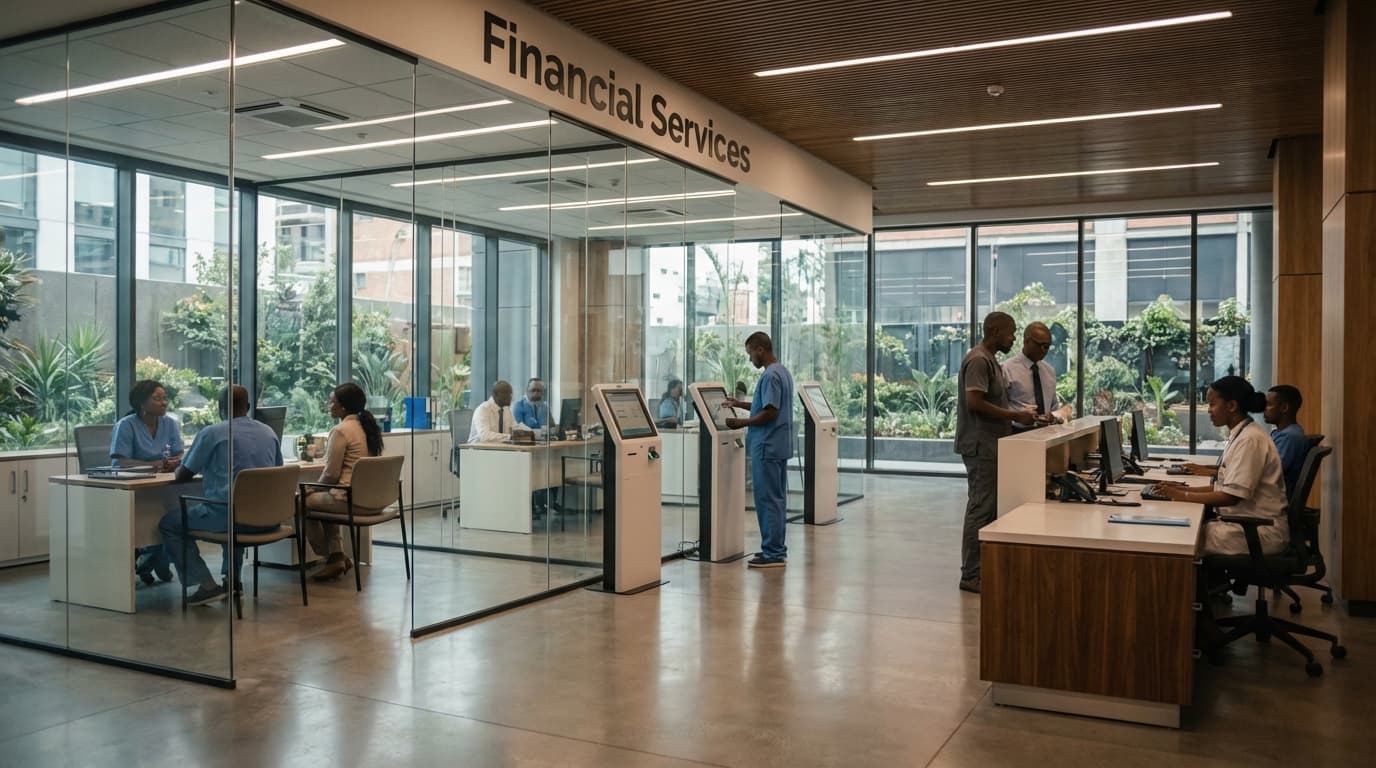
Medical Equipment Financing in Equatorial Guinea
Engineering Excellence & Technical Support
Leasing and financing solutions for medical equipment High-standard technical execution following OEM protocols and local regulatory frameworks.
Tailored Financing Solutions
Access flexible financing plans designed to acquire essential medical equipment, from diagnostic tools to surgical apparatus, directly addressing the unique needs and budget constraints of healthcare providers in Equatorial Guinea.
Accelerated Technology Adoption
Empower your facility to integrate the latest medical technologies through competitive financing, ensuring improved patient care, enhanced diagnostic accuracy, and greater operational efficiency across Equatorial Guinea's healthcare landscape.
Partnership for Health
Collaborate with financing experts who understand the regulatory and economic environment in Equatorial Guinea, providing seamless acquisition of critical medical equipment to strengthen public and private healthcare infrastructure.
What Is Medical Equipment Financing In Equatorial Guinea?
Medical Equipment Financing in Equatorial Guinea refers to the provision of capital by financial institutions to healthcare providers for the acquisition, upgrade, or replacement of medical devices and machinery. This service is designed to address the significant capital expenditure required for advanced medical technology, thereby enabling healthcare facilities to enhance their diagnostic, therapeutic, and surgical capabilities. The financing typically involves a structured loan or lease agreement, allowing healthcare providers to spread the cost of equipment over time, often with interest. This approach mitigates the immediate financial burden, making state-of-the-art medical technology accessible and promoting improved patient care outcomes within the nation's healthcare sector.
| Who Needs Medical Equipment Financing? | Typical Use Cases | ||
|---|---|---|---|
| Hospitals (Public & Private): Requiring a broad range of diagnostic imaging, surgical suites, intensive care units, and laboratory equipment. | Procurement of MRI and CT scanners to enhance diagnostic imaging capabilities. | Acquisition of modern surgical robots and laparoscopic equipment for minimally invasive procedures. | Upgrading of neonatal intensive care units (NICUs) with advanced incubators and monitoring systems. |
| Clinics & Specialized Medical Centers: Needing specific equipment for their respective specialties, such as cardiology, ophthalmology, or physiotherapy. | Financing for electrocardiogram (ECG) machines and echocardiography units for cardiology clinics. | Acquisition of phacoemulsification machines and optical coherence tomography (OCT) devices for eye care centers. | Purchasing physiotherapy equipment like ultrasound therapy units and treadmills. |
| Diagnostic Laboratories: Seeking to expand testing capacity and accuracy with advanced analytical instruments. | Investment in automated immunoassay analyzers for hormone and infectious disease testing. | Acquisition of high-throughput PCR machines for molecular diagnostics. | Upgrading to advanced microscopes and digital imaging systems for pathology. |
| Government Health Initiatives: For public health programs and the equipping of rural health posts. | Distribution of essential diagnostic kits and basic medical devices to underserved areas. | Establishment of mobile clinics equipped with portable diagnostic tools. | Procurement of essential life-saving equipment for emergency services. |
Key Aspects of Medical Equipment Financing in Equatorial Guinea
- Definition: Provision of debt or lease capital for the procurement of medical apparatus.
- Purpose: To facilitate the acquisition, modernization, and replacement of essential medical devices, diagnostic tools, and therapeutic equipment.
- Mechanism: Typically structured as term loans, operating leases, or finance leases, with repayment schedules aligned to revenue streams or asset lifespan.
- Benefits: Enhances access to advanced medical technology, improves diagnostic accuracy, expands treatment options, and elevates overall healthcare service quality.
- Risk Mitigation: Financial institutions often conduct thorough due diligence on the borrower's financial health, the operational viability of the equipment, and the projected return on investment.
Who Needs Medical Equipment Financing In Equatorial Guinea?
Medical equipment financing is crucial for healthcare providers in Equatorial Guinea to acquire, upgrade, and maintain essential medical technologies. This financing enables institutions to offer better patient care, expand their services, and remain competitive in a developing healthcare landscape. It addresses the significant capital investment required for modern medical devices, making them accessible even with limited upfront capital.
| Department | Typical Equipment Needs | Financing Benefits |
|---|---|---|
| Radiology/Imaging | X-ray machines, CT scanners, MRI machines, ultrasound devices, mammography units | Enables early and accurate diagnosis, expands diagnostic services. |
| Surgical Services | Surgical lights, operating tables, anesthesia machines, electrocautery units, surgical instruments | Improves surgical outcomes, allows for more complex procedures. |
| Intensive Care Unit (ICU)/Critical Care | Ventilators, cardiac monitors, defibrillators, infusion pumps, dialysis machines | Enhances patient survival rates for critically ill individuals. |
| Emergency Room (ER) | Trauma equipment, vital signs monitors, emergency carts, portable X-ray machines | Expedites emergency care, improves patient stabilization. |
| Laboratory Services | Hematology analyzers, chemistry analyzers, microscopes, centrifuges, PCR machines | Increases testing capacity, improves accuracy and speed of results. |
| Cardiology | ECG machines, echocardiogram machines, cardiac stress test equipment, pacemakers | Facilitates diagnosis and management of cardiovascular diseases. |
| General Wards/Inpatient Care | Hospital beds, patient monitors, infusion pumps, nebulizers | Improves patient comfort and continuous monitoring. |
| Maternity/Obstetrics | Fetal monitors, incubators, delivery tables, ultrasound for prenatal care | Enhances maternal and infant health outcomes. |
Target Customers for Medical Equipment Financing in Equatorial Guinea:
- Public Hospitals and Clinics: Government-funded facilities often face budgetary constraints and can benefit from financing to acquire necessary equipment for primary, secondary, and tertiary care.
- Private Hospitals and Clinics: For-profit healthcare providers looking to expand their service offerings, improve diagnostic capabilities, and enhance patient experience.
- Specialty Medical Centers: Facilities focusing on specific areas like cardiology, oncology, diagnostics, or maternity services that require specialized and often expensive equipment.
- Medical Laboratories and Diagnostic Centers: Institutions needing advanced imaging, testing, and analytical equipment to provide accurate and timely results.
- Rural Healthcare Providers: Remote clinics and health posts that may have limited access to modern medical technology and can leverage financing to bridge this gap.
- Medical Training Institutions: Universities and vocational schools that require up-to-date equipment for training future healthcare professionals.
Medical Equipment Financing Process In Equatorial Guinea
The medical equipment financing process in Equatorial Guinea, like in many developing economies, involves a structured workflow to ensure both the applicant's eligibility and the financier's security. This process is crucial for healthcare providers to acquire essential and advanced medical technology, thereby improving healthcare delivery. The workflow typically begins with an initial inquiry from a healthcare institution or individual seeking to finance medical equipment. This is followed by a series of due diligence steps, documentation review, credit assessment, and ultimately, the execution of financing agreements. The specific steps and their order might vary slightly depending on the financier (e.g., local banks, international development finance institutions, specialized equipment leasing companies), but the core principles remain consistent. Emphasis is placed on understanding the applicant's financial health, the viability of the equipment's intended use, and the ability to repay the loan or lease. Regulatory compliance and adherence to Equatorial Guinean financial and healthcare sector regulations are paramount throughout the entire process.
| Stage | Description | Key Activities | Responsible Parties |
|---|---|---|---|
| The prospective borrower expresses interest in financing medical equipment. | Understanding financing needs, available options (loan vs. lease), preliminary eligibility discussion. | Prospective Borrower, Financier (Bank/Leasing Company representative) |
| The borrower formally applies for financing. | Completing application forms, providing detailed information about the healthcare facility and the proposed equipment. | Prospective Borrower |
| The financier verifies the completeness and accuracy of submitted documents. | Review of financial statements, business plans, incorporation documents, licenses, purchase agreements for equipment, KYC documents. | Financier (Credit Analysts, Legal Team) |
| Assessing the value, condition, and suitability of the intended medical equipment. | Technical evaluation of the equipment, market value assessment, confirmation of supplier, warranty and service agreements. | Financier (Technical Experts, Appraisers), Borrower (providing equipment details and supplier information) |
| Evaluating the borrower's ability to repay the financing. | Analyzing credit history, cash flow projections, profitability, collateral assessment, industry risk assessment. | Financier (Credit Department) |
| The financier presents a financing proposal based on the assessment. | Structuring loan terms (interest rate, repayment period, collateral requirements) or lease terms, negotiation of terms and conditions. | Financier, Borrower |
| Ensuring all legal and regulatory requirements are met. | Review of financing agreements by legal counsel, compliance with Guinean financial regulations, AML/KYC checks. | Financier (Legal Department), Borrower (Legal Counsel, if applicable) |
| The financing request is formally approved by the financier's decision-making body. | Internal approval process, credit committee review and approval. | Financier (Credit Committee, Management) |
| Formal signing of the financing agreement. | Signing of loan/lease agreements, collateral documentation, and any other related legal instruments. | Financier, Borrower |
| Funds are released to the supplier, and the equipment is delivered. | Transfer of funds to the equipment supplier, coordination of delivery and installation. | Financier, Borrower, Equipment Supplier |
| Ongoing management of the financing and borrower's performance. | Monitoring loan/lease repayments, ensuring equipment maintenance, periodic reviews of the borrower's financial health. | Financier, Borrower |
Medical Equipment Financing Workflow in Equatorial Guinea
- Inquiry and Initial Consultation
- Application Submission
- Documentation Review
- Equipment Appraisal and Validation
- Credit Assessment and Risk Analysis
- Proposal Generation and Negotiation
- Legal and Compliance Checks
- Approval and Sanctioning
- Contract Execution
- Disbursement and Equipment Delivery
- Post-Disbursement Monitoring and Repayment
Medical Equipment Financing Cost In Equatorial Guinea
Securing medical equipment financing in Equatorial Guinea involves navigating a unique economic landscape. While specific, publicly available pricing for medical equipment financing is scarce due to the private nature of such agreements and the limited number of local financial institutions actively participating in this niche, several key pricing factors and general ranges can be extrapolated.
The cost of medical equipment financing is primarily influenced by the borrower's creditworthiness, the type and value of the equipment, and the prevailing economic conditions in Equatorial Guinea. Local banks, when they do offer such financing, will likely assess risk rigorously. Interest rates can be higher than in more developed economies due to perceived country risk, currency fluctuations (the CFA franc is pegged to the Euro), and the cost of capital for lenders. Financing terms, including repayment periods and down payment requirements, will also directly impact the overall cost.
| Financing Component | Estimated Percentage Range (Annualized) | Notes |
|---|---|---|
| Interest Rate | 12% - 25%+ | Highly dependent on borrower's credit, equipment, and lender. May be higher for new or less established entities. The CFA franc's stability with the Euro provides some predictability. |
| Loan Origination/Arrangement Fees | 1% - 5% | One-time fees charged by the lender for processing the loan. |
| Equipment Insurance | Variable (e.g., 0.5% - 2% of equipment value annually) | Mandatory for most financed equipment to protect the lender's asset. |
| Appraisal Fees | Variable (depending on equipment complexity) | To determine the market value of the equipment. |
| Administrative/Service Fees | Small monthly or annual charges | Covering ongoing loan management. |
Key Pricing Factors for Medical Equipment Financing in Equatorial Guinea
- Borrower's Creditworthiness: A strong financial history, established business operations, and demonstrable ability to repay are crucial. Businesses with a proven track record will command more favorable terms.
- Equipment Type and Value: High-value, specialized, or in-demand medical equipment may be viewed as a lower risk by lenders, potentially leading to slightly better financing terms. Conversely, older or less common equipment might incur higher costs.
- Economic Conditions and Currency Stability: The economic stability of Equatorial Guinea and the consistent peg of the CFA franc to the Euro play a role. Any perceived instability can increase borrowing costs.
- Lender's Risk Assessment: Local banks and financial institutions will conduct thorough due diligence, factoring in the specific risks associated with lending in the country.
- Market Interest Rates: While specific medical equipment financing rates are not readily published, general commercial lending rates in Equatorial Guinea provide a benchmark. These are typically higher than international averages.
- Financing Term and Down Payment: Longer repayment periods and smaller down payments generally increase the total interest paid over the life of the loan, thus increasing the overall financing cost.
- Insurance and Ancillary Fees: Costs associated with insuring the equipment, appraisal fees, and administrative charges from the lender will add to the overall financing expense.
Affordable Medical Equipment Financing Options
Acquiring necessary medical equipment is crucial for healthcare providers, but it can also be a significant financial undertaking. Fortunately, a range of affordable financing options exists, coupled with strategic value bundling and cost-saving measures, to make these investments more manageable. Understanding these strategies can empower healthcare organizations to optimize their budgets while ensuring they have the latest and most effective equipment to serve their patients.
| Financing Option | Description | Potential Cost Savings |
|---|---|---|
| Leasing | Acquire use of equipment for a set period without full ownership upfront. | Lower initial capital outlay, predictable monthly payments, easier upgrades, potential for bundled maintenance. |
| Refurbished Equipment | Purchasing pre-owned equipment that has been professionally inspected, repaired, and certified. | Significant reduction in purchase price compared to new equipment, often with a warranty. |
| Group Purchasing Organizations (GPOs) | Joining a network to leverage collective bargaining power for discounted prices. | Access to pre-negotiated lower prices on equipment and supplies through bulk purchasing power. |
| Vendor Financing | Direct financing solutions offered by equipment manufacturers or specialized lenders. | Potentially competitive interest rates and flexible repayment structures tailored to the equipment purchase. |
| Rent-to-Own | Rental agreement with an option to purchase the equipment at the end of the term. | Allows for equipment use with eventual ownership, often with a portion of rental payments credited towards the purchase price. |
Key Value Bundles and Cost-Saving Strategies
- Value Bundles: Healthcare providers can leverage 'value bundles' that combine multiple pieces of equipment or services into a single, often discounted, package. This can include a primary diagnostic machine paired with essential accessories, training, and ongoing maintenance. Bundles often represent a more cost-effective approach than purchasing individual components separately, simplifying procurement and potentially offering better overall pricing.
- Leasing vs. Purchasing: Exploring leasing agreements can be a significant cost-saving strategy. Leasing allows providers to use equipment for a set period without the upfront capital expenditure of purchasing. This frees up capital for other operational needs and allows for easier upgrades to newer technology at the end of the lease term. Many lease agreements also include maintenance and service, further reducing unexpected costs.
- Refurbished Equipment: For certain needs, purchasing certified refurbished medical equipment can offer substantial savings. Reputable vendors thoroughly inspect, repair, and certify pre-owned equipment, ensuring it meets high-quality standards and often comes with a warranty. This is an excellent option for non-critical equipment or for facilities with budget constraints.
- Extended Warranties and Service Contracts: While an upfront cost, strategically purchasing extended warranties and comprehensive service contracts can prevent costly breakdowns and repairs down the line. Bundling these with the initial equipment purchase or lease can sometimes unlock discounts.
- Group Purchasing Organizations (GPOs): Joining a GPO allows healthcare providers to benefit from the collective purchasing power of a large network. GPOs negotiate discounted prices with manufacturers and vendors for a wide range of medical equipment and supplies, leading to significant cost savings for individual members.
- Financing Vendor Options: Many medical equipment manufacturers and specialized financing companies offer tailored financing solutions. These can include term loans, operating leases, and even sale-and-leaseback options for existing equipment. Exploring these vendor-specific programs can reveal competitive rates and flexible repayment terms.
- Rent-to-Own Agreements: Similar to leasing, rent-to-own agreements allow providers to use equipment with the option to purchase it outright at a predetermined price after a specified rental period. This can be a good option for equipment that is needed for a defined project or for organizations unsure about long-term ownership needs.
- Government Grants and Programs: Depending on the type of healthcare facility and its location, government grants and specific programs may be available to assist with the acquisition of essential medical equipment. Researching these opportunities can lead to substantial financial support.
- Trade-in Programs: When upgrading older equipment, inquire about trade-in programs. Manufacturers and vendors often offer credit towards new purchases when you trade in your existing equipment, offsetting some of the cost of the new acquisition.
Verified Providers In Equatorial Guinea
In Equatorial Guinea, navigating the healthcare landscape can be challenging. Ensuring you are accessing services from verified and reputable providers is paramount for your well-being. Franance Health stands out as a beacon of trust and quality in this region, offering a comprehensive network of accredited healthcare professionals and facilities. Their rigorous vetting process guarantees that all listed providers meet stringent international standards for medical expertise, patient care, and ethical practices. Choosing Franance Health means prioritizing your health with the confidence that you are in capable and trustworthy hands.
| Benefit of Using Verified Providers | Franance Health's Assurance |
|---|---|
| Access to Qualified Professionals | Franance Health ensures all listed providers are licensed and certified, guaranteeing competence and expertise. |
| Enhanced Patient Safety | Rigorous checks by Franance Health minimize risks by partnering with facilities that adhere to strict safety protocols. |
| Reliable and Trustworthy Services | Franance Health's accreditation process builds trust, assuring patients they are receiving legitimate and high-quality medical care. |
| Peace of Mind | Knowing you are with a Franance Health verified provider eliminates uncertainty and allows you to focus on your recovery. |
| Comprehensive Care Options | Franance Health's network includes a broad spectrum of specialists and services, meeting diverse healthcare requirements. |
Why Franance Health Credentials Matter:
- Rigorous Vetting Process: Franance Health meticulously screens all partner providers, ensuring they possess valid licenses, relevant certifications, and a proven track record of excellent patient outcomes.
- International Standards: Adherence to globally recognized benchmarks in healthcare quality, safety, and patient confidentiality.
- Specialized Expertise: Access to a diverse network of specialists across various medical disciplines, catering to a wide range of health needs.
- Patient-Centric Approach: Providers affiliated with Franance Health are committed to providing compassionate, personalized care, focusing on individual patient needs and comfort.
- Transparency and Accountability: Franance Health promotes transparency in its network, allowing patients to make informed decisions about their healthcare providers.
- Continuous Quality Improvement: Regular evaluations and feedback mechanisms ensure that Franance Health's network maintains the highest levels of service.
Scope Of Work For Medical Equipment Financing
This Scope of Work (SOW) outlines the technical deliverables and standard specifications required for medical equipment financing. The objective is to ensure that financed medical equipment meets defined quality, performance, and safety standards, facilitating proper utilization and future maintenance. This document will guide both the financing institution and the equipment provider in establishing clear technical requirements.
| Category | Standard Specification Requirement | Description | Verification Method |
|---|---|---|---|
| Performance | Accuracy & Precision | Equipment must meet or exceed manufacturer's stated accuracy and precision benchmarks for its intended clinical application. | Factory acceptance testing (FAT), site acceptance testing (SAT), calibration certificates. |
| Safety | Electrical Safety | Compliance with IEC 60601-1 or equivalent national standards for electrical safety, electromagnetic compatibility (EMC), and usability. | Certified test reports, CE marking/FDA approval. |
| Safety | Biocompatibility | Materials in contact with patients must be biocompatible as per ISO 10993 standards or equivalent. | Manufacturer's declaration, material safety data sheets (MSDS). |
| Reliability | Mean Time Between Failures (MTBF) | Demonstrated MTBF values meeting or exceeding industry benchmarks for similar equipment. | Manufacturer's historical data, independent testing reports. |
| Usability | User Interface (UI) & User Experience (UX) | Intuitive and user-friendly interface, minimizing the risk of operational errors. | User trials, feedback from clinical staff. |
| Interoperability | Data Connectivity & Standards | Compatibility with existing hospital IT infrastructure (e.g., HL7, DICOM) where applicable. | Interface testing, certification of compatibility. |
| Durability | Construction & Materials | Robust construction using high-quality, medical-grade materials suitable for the intended environment (e.g., hospital settings, autoclaving). | Visual inspection, material certifications. |
| Maintainability | Ease of Service | Designed for ease of access to components for routine maintenance and repair. | Service manual review, physical inspection. |
Key Technical Deliverables
- Detailed Equipment Specifications: Comprehensive technical documentation for each piece of equipment, including make, model, serial numbers, key performance indicators (KPIs), and essential accessories.
- Compliance Certificates: Evidence of adherence to relevant national and international regulatory standards (e.g., FDA, CE Marking, ISO certifications) for medical devices.
- User Manuals and Technical Documentation: Complete sets of operating instructions, maintenance guides, and service manuals in an agreed-upon language (typically English or the local language).
- Installation and Commissioning Reports: Documentation confirming successful installation, calibration, and functional testing by certified technicians.
- Warranty Information: Clear details of the manufacturer's warranty period, coverage, exclusions, and claim procedures.
- Training Materials: Availability of training programs or materials for end-users and technical staff on the operation and basic maintenance of the equipment.
- Software Licenses and Updates: For equipment with integrated software, provision of valid licenses and information on future update policies.
- Maintenance and Service Agreements (if applicable): Signed agreements outlining the scope, frequency, and cost of routine maintenance and repair services.
- Spare Parts List: A recommended list of critical spare parts and their availability, along with contact information for ordering.
- End-of-Life (EOL) Policy: Information regarding the manufacturer's expected lifespan of the equipment and their support for obsolescence management.
Service Level Agreement For Medical Equipment Financing
This Service Level Agreement (SLA) outlines the response times and uptime guarantees for medical equipment financing services provided by [Your Company Name] to [Client Name]. This agreement is designed to ensure the optimal functionality and availability of financed medical equipment, minimizing disruption to patient care and operational efficiency. This SLA is an appendix to the main financing agreement.
| Equipment Type | Severity Level | Response Time (Business Hours) | Uptime Guarantee | Typical Resolution Time (Business Hours)* |
|---|---|---|---|---|
| Critical Equipment | Level 1 (System Down) | 1 Hour | 99.5% | 4-8 Hours |
| Critical Equipment | Level 2 (Partial Outage) | 2 Hours | 99.5% | 8-12 Hours |
| Non-Critical Equipment | Level 1 (Significant Impact) | 4 Hours | 98.0% | 12-24 Hours |
| Non-Critical Equipment | Level 2 (Minor Impact) | 8 Business Hours | 98.0% | 24-72 Hours |
Key Definitions
- Critical Equipment: Medical equipment whose failure or unavailability directly and immediately impacts patient safety or the ability to provide essential medical services.
- Non-Critical Equipment: Medical equipment whose failure or unavailability has a less immediate impact on patient safety or essential medical services, but still affects workflow or specialized treatments.
- Downtime: The period during which financed medical equipment is not operational or available for use due to a covered malfunction or failure.
- Response Time: The maximum time allowed for [Your Company Name] or its designated service partner to acknowledge and begin working on a reported equipment issue.
- Resolution Time: The maximum time allowed to resolve a reported equipment issue and restore functionality. This is often tiered based on severity.
- Uptime Guarantee: The percentage of time that the financed medical equipment is guaranteed to be operational and available for use.
Frequently Asked Questions

Ready when you are
Let's scope your Medical Equipment Financing in Equatorial Guinea project in Equatorial Guinea.

Scaling healthcare logistics and technical systems across the entire continent.