
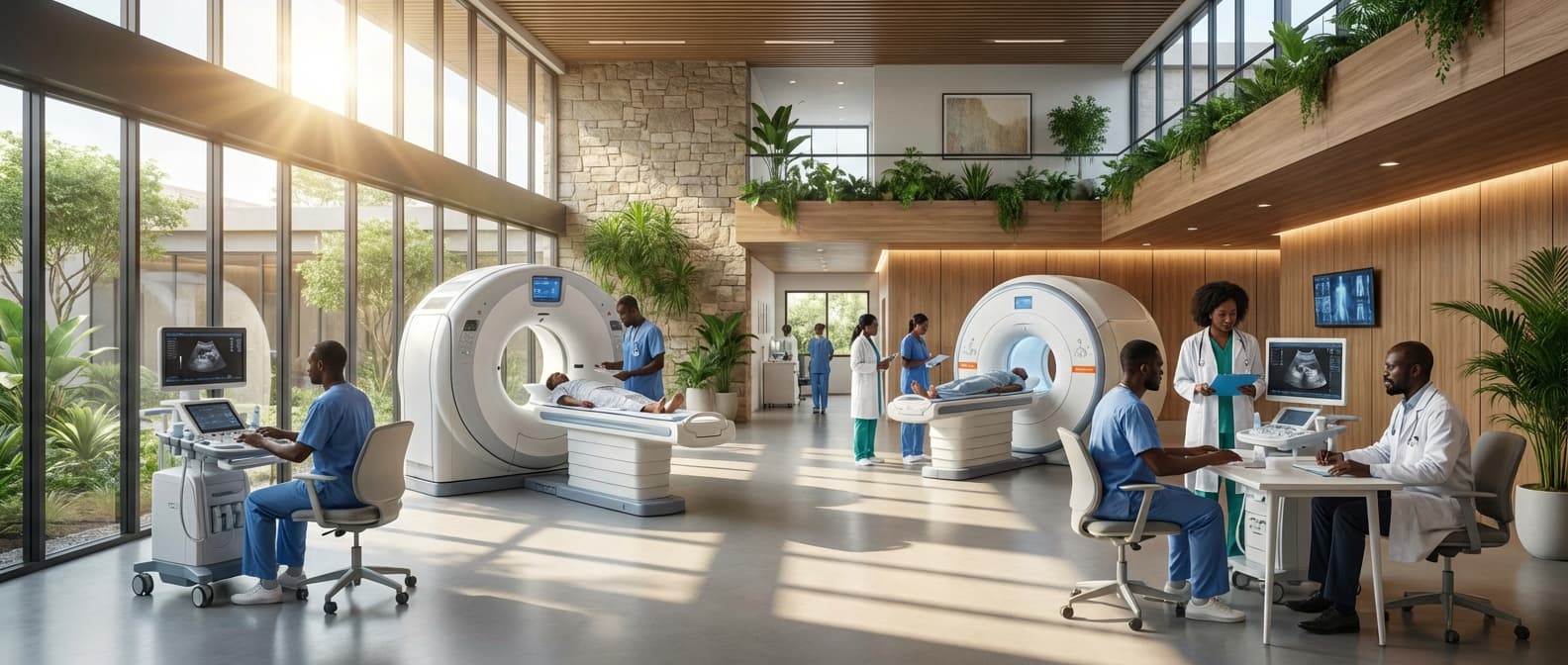
Endoscopy Solutions in Equatorial Guinea
Engineering Excellence & Technical Support
Advanced endoscopic equipment delivering superior visualization and diagnostic precision for minimally invasive procedures. High-standard technical execution following OEM protocols and local regulatory frameworks.
State-of-the-Art Diagnostic Imaging
Our advanced endoscopic imaging systems provide unparalleled clarity and detail, enabling early and accurate diagnosis of gastrointestinal conditions, even in challenging tropical environments. Enhanced visualization aids in precise lesion detection and characterization, leading to improved patient outcomes.
Minimally Invasive Therapeutic Procedures
We offer a comprehensive suite of endotherapy tools and platforms designed for minimally invasive interventions. From polyp removal and stricture dilation to sophisticated hemostasis techniques, our solutions empower clinicians to treat a wide range of pathologies without the need for open surgery, reducing patient recovery time and hospital stays.
Enhanced Training and Remote Support
Leveraging modern connectivity, we provide comprehensive training programs and remote technical support for endoscopic procedures. This ensures healthcare professionals in Equatorial Guinea have access to the latest best practices and immediate assistance, optimizing the utilization of advanced endoscopic technology and fostering local expertise.
What Is Endoscopy Solutions In Equatorial Guinea?
Endoscopy solutions in Equatorial Guinea refer to the provision and application of endoscopic procedures and related technologies for diagnostic and therapeutic purposes within the healthcare system of the country. Endoscopy involves the use of a flexible or rigid tube with a light and camera attached (an endoscope) to visualize the interior of a hollow organ or cavity within the body. This allows for minimally invasive examination, biopsy collection, and targeted interventions. The availability and implementation of these solutions are crucial for enhancing diagnostic accuracy, improving patient outcomes, and enabling advanced medical treatments in Equatorial Guinea.
| Service | Description | Target Population | Typical Use Cases |
|---|---|---|---|
| Upper Gastrointestinal Endoscopy (Esophagogastroduodenoscopy - EGD) | Visualizing the esophagus, stomach, and duodenum. | Patients with symptoms of dysphagia, dyspepsia, heartburn, nausea, vomiting, abdominal pain, or suspected upper GI bleeding. | Diagnosis of gastritis, peptic ulcers, gastroesophageal reflux disease (GERD), celiac disease, Barrett's esophagus, and upper GI malignancies. Biopsy for Helicobacter pylori testing. Management of upper GI bleeding. |
| Lower Gastrointestinal Endoscopy (Colonoscopy/Sigmoidoscopy) | Visualizing the rectum, colon, and terminal ileum. | Patients with changes in bowel habits, rectal bleeding, abdominal pain, unexplained weight loss, or family history of colorectal cancer. Screening for colorectal cancer. | Diagnosis of inflammatory bowel disease (IBD), diverticulosis, polyps, colorectal cancer. Polypectomy. Biopsy for diagnosis of inflammatory or neoplastic conditions. |
| Bronchoscopy | Visualizing the trachea, bronchi, and lungs. | Patients with persistent cough, hemoptysis, suspected lung mass, pneumonia, or interstitial lung disease. Evaluation of airway obstruction. | Diagnosis of lung cancer, infectious lung diseases (e.g., tuberculosis), interstitial lung diseases. Biopsy of suspicious lesions. Bronchoalveolar lavage (BAL) for infection detection. Airway clearance. |
| Cystoscopy and Ureteroscopy | Visualizing the bladder and ureters. | Patients with hematuria, recurrent urinary tract infections (UTIs), bladder pain, or suspected urinary tract malignancy. Evaluation of upper urinary tract stones. | Diagnosis of bladder cancer, urinary stones, recurrent UTIs. Biopsy of suspicious lesions. Management of ureteral stones (ureteroscopy). |
| ERCP (Endoscopic Retrograde Cholangiopancreatography) | Visualizing the bile ducts and pancreatic duct. | Patients with jaundice, suspected gallstones in the bile ducts (choledocholithiasis), strictures of the bile ducts, or pancreatic tumors. | Diagnosis and treatment of bile duct stones, bile duct strictures, and pancreatic duct abnormalities. Biliary drainage and stenting. |
Key Aspects of Endoscopy Solutions
- Diagnostic Endoscopy: Visualizing internal structures to identify abnormalities such as inflammation, ulcers, polyps, strictures, or tumors.
- Therapeutic Endoscopy: Performing interventions during the endoscopic procedure, including polyp removal (polypectomy), bleeding control (hemostasis), stricture dilation, stent placement, and foreign body retrieval.
- Equipment and Technology: Procurement, maintenance, and utilization of various endoscopes (e.g., gastroscopes, colonoscopes, bronchoscopes, cystoscopes), imaging systems, light sources, and accessory instruments.
- Skilled Personnel: Training and deployment of qualified gastroenterologists, pulmonologists, urologists, surgeons, and endoscopic technicians proficient in performing and managing endoscopic procedures.
- Infection Control and Sterilization: Adherence to strict protocols for cleaning, disinfection, and sterilization of endoscopic equipment to prevent healthcare-associated infections.
- Infrastructure and Facilities: Availability of dedicated endoscopy suites equipped with appropriate patient monitoring and recovery areas.
- Integration with Pathology and Radiology: Seamless integration with laboratory services for histopathological analysis of biopsies and radiological imaging for comprehensive diagnosis.
Who Needs Endoscopy Solutions In Equatorial Guinea?
Equatorial Guinea, a nation undergoing significant healthcare development, presents a growing need for advanced diagnostic tools like endoscopy. While the prevalence of specific gastrointestinal conditions may vary, the increasing awareness of non-communicable diseases, coupled with advancements in medical infrastructure, positions endoscopy solutions as a crucial investment for several key players in the country's healthcare landscape. Understanding who requires these solutions and within which departments they are most critical is essential for effective resource allocation and healthcare improvement.
| Customer Segment | Key Departments/Specialties | Rationale for Need |
|---|---|---|
| Hospitals (Public and Private) | Gastroenterology, General Surgery, Internal Medicine, Oncology, Pediatrics | Primary facilities for diagnosis and treatment of gastrointestinal disorders, offering a comprehensive range of procedures from diagnostic to therapeutic endoscopy. Essential for managing acute conditions and chronic diseases. |
| Specialized Clinics (e.g., Gastroenterology Clinics) | Gastroenterology, Endoscopy Units | Dedicated centers for specialized gastrointestinal care, focusing on early detection and management of conditions like ulcers, polyps, inflammatory bowel disease, and cancers. Drive efficiency through focused expertise. |
| Diagnostic Centers | Radiology, Endoscopy Services | Facilities focused on providing advanced diagnostic services. Endoscopy is a cornerstone for visualizing the gastrointestinal tract, complementing imaging techniques and offering direct tissue sampling. |
| Government Health Initiatives (Ministry of Health) | Preventive Medicine, Public Health Programs, Disease Control | Supports national health strategies for screening and early detection of gastrointestinal cancers (e.g., colorectal cancer) and other prevalent conditions. Crucial for improving population health outcomes and reducing healthcare burden. |
| Research and Training Institutions (if applicable/developing) | Medical Education, Research Departments | For training future medical professionals in endoscopic techniques and conducting research to improve diagnostic accuracy and treatment protocols within the country. |
Target Customers and Departments for Endoscopy Solutions in Equatorial Guinea
- Hospitals (Public and Private)
- Specialized Clinics
- Diagnostic Centers
- Government Health Initiatives
Endoscopy Solutions Process In Equatorial Guinea
This document outlines the comprehensive workflow for Endoscopy Solutions in Equatorial Guinea, covering the process from initial inquiry to successful execution. It details the steps involved, key stakeholders, and critical considerations for ensuring efficient and effective delivery of endoscopy services.
| Stage | Description | Key Activities | Responsible Parties | Considerations/Notes |
|---|---|---|---|---|
| The process begins with a prospective client (hospital, clinic, or government health body) expressing interest in endoscopy solutions. | Contacting Endoscopy Solutions provider, discussing general needs, service types, and preliminary information gathering. | Prospective Client, Endoscopy Solutions Sales/Inquiry Team | Initial contact can be via email, phone, or website. Understanding the client's primary motivation (e.g., upgrading existing equipment, establishing new services, specific diagnostic needs). |
| A detailed understanding of the client's requirements, existing infrastructure, and operational environment is crucial. | On-site visit to assess space, power, plumbing, IT infrastructure, and current workflow. Detailed discussions about desired procedures, patient volume, and budget. Technical requirements definition. | Endoscopy Solutions Technical Team, Clinical Specialist, Client's Medical & Facilities Staff | Essential for accurate equipment selection and service design. Identification of any infrastructural gaps that need addressing. |
| Based on the needs assessment, a tailored solution is designed and presented to the client. | Developing a comprehensive proposal including recommended equipment, service packages (installation, training, maintenance), consumables, and projected costs. Creating a detailed quotation. | Endoscopy Solutions Technical & Sales Team, Finance Department | Proposal must be clear, detailed, and address all client requirements. Quotations should be transparent with breakdown of costs. |
| Formalizing the agreed-upon terms and conditions between the client and Endoscopy Solutions. | Reviewing and negotiating contract terms (payment schedules, service level agreements (SLAs), warranty, delivery timelines). Finalizing and signing the contract. | Endoscopy Solutions Legal & Management Team, Client's Legal & Procurement Department | Crucial for ensuring mutual understanding and mitigating future disputes. Adherence to local Equatorial Guinean legal frameworks is essential. |
| Acquiring the necessary equipment and arranging for its safe and timely delivery to Equatorial Guinea. | Ordering equipment from manufacturers, managing import/export procedures, customs clearance, and transportation to the client's site. Obtaining necessary permits and certifications. | Endoscopy Solutions Procurement & Logistics Department, Third-Party Logistics Providers, Equatorial Guinean Customs Authorities | Complex due to import regulations, potential shipping delays, and customs duties. Early planning and experienced logistics partners are vital. |
| Setting up the endoscopy equipment and ensuring the client's staff are proficient in its use and maintenance. | On-site installation of equipment, integration with existing systems, calibration. Comprehensive training for medical and technical staff on equipment operation, troubleshooting, infection control, and basic maintenance. | Endoscopy Solutions Technical Installation Team, Clinical Educators, Client's Medical & Technical Staff | Training must be hands-on and adapted to the client's specific workflows and language capabilities. Certification of training completion may be required. |
| The formal start of endoscopy services with continuous support from Endoscopy Solutions. | Official launch of endoscopy services. Providing ongoing technical support, preventative maintenance, repair services as per the SLA, and supply of consumables. | Endoscopy Solutions Technical Support Team, Field Service Engineers, Customer Service Department, Client's Medical & Technical Staff | Proactive maintenance is key to minimizing downtime. Establishing clear communication channels for support requests. |
| Ensuring client satisfaction and identifying opportunities for improvement. | Regular check-ins with the client, gathering feedback on equipment performance and service delivery. Conducting periodic performance reviews against agreed-upon metrics. Discussing potential upgrades or additional services. | Endoscopy Solutions Account Manager, Client's Management & Medical Staff | Builds long-term relationships and allows for continuous service optimization. |
Endoscopy Solutions Workflow in Equatorial Guinea
- Inquiry & Initial Consultation
- Needs Assessment & Site Evaluation
- Proposal Development & Quotation
- Contract Negotiation & Agreement
- Procurement & Logistics
- Installation & Training
- Service Commencement & Ongoing Support
- Follow-up & Performance Review
Endoscopy Solutions Cost In Equatorial Guinea
Endoscopy solutions encompass a range of diagnostic and therapeutic procedures that utilize endoscopes to visualize internal organs and tissues. In Equatorial Guinea, the cost of these solutions can vary significantly due to several factors. Access to advanced medical technology, the availability of specialized medical personnel, and the specific type of endoscopic procedure are key determinants of pricing. Private hospitals and clinics, often equipped with more modern facilities and a higher concentration of skilled specialists, generally command higher prices than public health institutions. Furthermore, the complexity of the procedure, including the need for sedation or anesthesia, biopsy, or therapeutic interventions, will also impact the overall cost. The cost is typically quoted in the local currency, the Central African CFA franc (XAF). While precise, up-to-date pricing is difficult to ascertain without direct consultation with healthcare providers in Equatorial Guinea, general price ranges can be estimated based on regional economic factors and the typical cost of medical services. It's important for patients to seek direct quotes from their chosen healthcare facility for accurate cost estimations.
| Procedure Type (Estimated) | Estimated Price Range (XAF) |
|---|---|
| Basic Diagnostic Gastroscopy/Colonoscopy | 75,000 - 150,000 |
| Gastroscopy/Colonoscopy with Biopsy | 90,000 - 180,000 |
| Therapeutic Endoscopy (e.g., polyp removal) | 120,000 - 250,000+ |
| Other Specialized Endoscopies (e.g., Bronchoscopy) | 100,000 - 200,000+ |
Key Pricing Factors for Endoscopy Solutions in Equatorial Guinea
- Type of endoscopic procedure (e.g., gastroscopy, colonoscopy, bronchoscopy)
- Facility type (private vs. public hospital/clinic)
- Inclusion of anesthesia or sedation
- Need for biopsies or therapeutic interventions
- Experience and specialization of the medical team
- Inclusion of pre- and post-procedure consultations
- Cost of disposable supplies and consumables
Affordable Endoscopy Solutions Options
Navigating the costs of medical procedures like endoscopy can be daunting. Fortunately, there are several affordable endoscopy solutions and strategies to help manage expenses. Understanding these options and employing smart cost-saving measures can significantly reduce your out-of-pocket expenditure.
| Cost Component | Explanation | Cost-Saving Strategy |
|---|---|---|
| Physician Fee | The fee charged by the gastroenterologist or surgeon performing the endoscopy. | Choose in-network providers; inquire about package deals. |
| Facility Fee | The charge for using the operating room, equipment, and staff at the hospital or surgical center. | Compare facility fees between hospitals and outpatient centers; ask about cash discounts. |
| Anesthesia Fee | The cost for the anesthesiologist's services, if sedation or general anesthesia is used. | Often included in value bundles; verify if it's a separate charge and compare if possible. |
| Pathology Fee | If biopsies are taken, there will be a separate charge from the lab for analysis. | Understand if this is included in the bundle; some insurance plans may have different co-pays for lab services. |
| Pre- and Post-Procedure Care | Consultations, follow-ups, and any prescribed medications. | Inquire about bundled pricing; ask for generic medication alternatives. |
Affordable Endoscopy Solutions & Cost-Saving Strategies
- Value Bundles: Many healthcare providers and facilities offer "value bundles" or "all-inclusive packages" for endoscopic procedures. These bundles typically combine the cost of the procedure itself (physician fee), facility fees, anesthesia, and sometimes even pre- and post-procedure consultations. Bundling can provide a predictable upfront cost and often represents a discount compared to paying for each component separately.
- In-Network Providers: Always verify if your chosen facility and physicians are in-network with your health insurance plan. In-network providers have negotiated rates with your insurer, leading to substantially lower costs than out-of-network providers.
- Compare Facility Fees: Different types of facilities can have varying costs. Outpatient surgical centers often have lower overhead than large hospitals. Inquire about the specific facility where the endoscopy will be performed and compare costs if you have options.
- Negotiate Cash Prices: If you are uninsured or have a high deductible and plan to pay out-of-pocket, ask about discounted "cash prices" or self-pay rates. Many facilities offer significant discounts for immediate payment.
- Explore Non-Profit Hospitals and Clinics: Some non-profit healthcare organizations and community clinics may offer lower-cost services or financial assistance programs for eligible patients.
- Check for Promotions and Discounts: Occasionally, facilities or physician groups may run promotional discounts or offer package deals for certain procedures. It's worth inquiring about any current offers.
- Utilize Health Savings Accounts (HSAs) or Flexible Spending Accounts (FSAs): If you have an HSA or FSA, these pre-tax accounts are designed for medical expenses, including endoscopies, and can significantly reduce your net cost.
- Seek Second Opinions (for planned procedures): For non-emergency endoscopies, getting a second opinion from another physician can not only confirm the necessity of the procedure but also provide a comparison of costs and potentially lead to alternative, less expensive treatment plans if applicable.
- Understand Your Insurance Coverage: Thoroughly review your insurance policy to understand your co-pays, deductibles, co-insurance, and any pre-authorization requirements for endoscopy. Knowing your benefits upfront can prevent unexpected bills.
- Ask About Generic vs. Brand-Name Medications: While less common for the procedure itself, if any medications are prescribed post-procedure, always ask about generic alternatives for cost savings.
Verified Providers In Equatorial Guinea
In Equatorial Guinea, ensuring access to quality healthcare is paramount. When seeking medical services, it is crucial to identify Verified Providers who adhere to high standards of care and possess the necessary credentials. Franance Health stands out as a leading organization in this regard, consistently demonstrating a commitment to excellence and patient well-being. Their rigorous vetting process and dedication to partnering with qualified medical professionals make them a trusted source for healthcare solutions in the region. Understanding their credentials and the principles they uphold will illuminate why they represent the best choice for individuals and organizations seeking reliable and competent medical assistance in Equatorial Guinea.
| Credential Type | Verification Aspect | Franance Health's Assurance |
|---|---|---|
| Medical Licenses | Valid and current professional medical licenses issued by recognized authorities. | Franance Health rigorously verifies the authenticity and validity of all medical licenses to ensure providers are legally qualified to practice. |
| Professional Certifications | Specialty certifications and accreditations from reputable medical boards and organizations. | They ensure providers hold relevant and current certifications demonstrating specialized knowledge and expertise in their respective fields. |
| Educational Background | Accredited medical degrees and postgraduate qualifications from recognized institutions. | Franance Health reviews educational transcripts and degrees to confirm the foundational knowledge and training of their medical professionals. |
| Clinical Experience | Demonstrated practical experience in various medical settings and patient care. | They assess the extent and nature of a provider's clinical experience, often through reference checks and case reviews, to gauge their practical competency. |
| Continuing Medical Education (CME) | Evidence of ongoing participation in educational programs to stay updated with medical advancements. | Franance Health promotes and verifies participation in CME activities, ensuring providers are committed to lifelong learning and staying abreast of the latest medical developments. |
| Professional Affiliations | Membership in respected national and international medical associations. | They consider affiliations with reputable professional bodies as an indicator of a provider's commitment to professional standards and ethical conduct. |
| Criminal Background Checks | Screening for any past professional misconduct or legal issues. | To ensure patient safety and trust, Franance Health may implement background checks to identify any concerning history. |
Franance Health Credentials and Why They Represent the Best Choice
- Rigorous Vetting Process: Franance Health employs a comprehensive and stringent vetting process for all their partnered healthcare providers. This includes verifying medical licenses, professional certifications, educational backgrounds, and practical experience.
- Commitment to Quality Standards: They prioritize partnering with providers who consistently meet and exceed international healthcare quality standards. This ensures that patients receive evidence-based and up-to-date medical care.
- Focus on Specialized Expertise: Franance Health actively seeks out and partners with specialists across a wide range of medical disciplines, ensuring access to the most appropriate expertise for diverse healthcare needs.
- Continuous Professional Development: They encourage and support continuous professional development for their network of providers, ensuring they remain at the forefront of medical advancements and best practices.
- Patient-Centric Approach: Franance Health's core philosophy revolves around a patient-centric approach, emphasizing compassionate care, clear communication, and respectful treatment for all individuals.
- Ethical Practices and Integrity: Providers affiliated with Franance Health are expected to adhere to the highest ethical standards and demonstrate unwavering integrity in all their professional dealings.
- Cultural Competency: Franance Health recognizes the importance of cultural sensitivity in healthcare delivery and partners with providers who are equipped to serve the diverse population of Equatorial Guinea with understanding and respect.
- Accessibility and Reach: Through their extensive network, Franance Health strives to improve accessibility to quality healthcare services across various regions of Equatorial Guinea, including remote areas.
- Technological Integration: They encourage the adoption of modern medical technologies and practices by their partnered providers, enhancing diagnostic capabilities and treatment efficacy.
- Partnerships with Reputable Institutions: Franance Health may also collaborate with and accredit facilities and institutions that demonstrate excellence in healthcare delivery and patient safety.
Scope Of Work For Endoscopy Solutions
This document outlines the Scope of Work (SOW) for the provision and implementation of Endoscopy Solutions. It details the technical deliverables required, along with standard specifications to ensure quality, compatibility, and adherence to industry best practices. The goal is to equip healthcare facilities with state-of-the-art endoscopy systems that enhance diagnostic capabilities, patient safety, and procedural efficiency. The project encompasses the supply, installation, integration, training, and ongoing support of endoscopy equipment and associated software.
| Category | Specification Area | Standard/Requirement | Notes |
|---|---|---|---|
| Imaging Systems | Image Resolution | Minimum 1920x1080 (Full HD) | Higher resolution preferred for detailed visualization. |
| Imaging Systems | Color Reproduction | High fidelity, accurate color rendition (e.g., >95% of sRGB) | Crucial for accurate diagnosis. |
| Imaging Systems | Field of View (FOV) | Minimum 120 degrees | Wider FOV facilitates better situational awareness. |
| Imaging Systems | Working Channel Diameter | Refer to specific procedural needs (e.g., 2.8mm for biopsy, 3.2mm for therapeutic) | Interchangeable working channels may be required. |
| Imaging Systems | Light Source Type | LED or Xenon (with high lumen output) | LED offers longer lifespan and lower heat generation. |
| Recording & Archiving | Video Format | H.264 or H.265 compressed format | Ensures efficient storage and playback. |
| Recording & Archiving | Storage Capacity | Sufficient to store [Specify number] procedures per year for [Specify retention period] years | Scalable storage solutions are desirable. |
| Recording & Archiving | Metadata Integration | Patient demographics, procedure details, physician ID, date/time | Standard DICOM tagging for PACS integration. |
| Integration | PACS/EMR Compatibility | DICOM 3.0 compliant for image transfer, HL7 for patient data | Seamless integration is paramount. |
| Integration | Network Connectivity | Gigabit Ethernet | High-speed reliable network connection. |
| Sterilization | Type | High-level disinfection (HLD) or sterilization (e.g., Ethylene Oxide, Vaporized Hydrogen Peroxide) | Must comply with local regulatory standards and manufacturer guidelines. |
| Sterilization | Validation | Validated cycle parameters and documentation | Proof of effective disinfection/sterilization. |
| Accessories | Biopsy Forceps | Variety of sizes and jaw types (e.g., alligator, fenestrated) | Single-use or reusable options as per facility policy. |
| Accessories | Snares | Loop size and type for polypectomy | Electrosurgical compatibility. |
| Training | Content | System operation, troubleshooting, cleaning/disinfection procedures, image interpretation | Hands-on training and competency assessment required. |
| Training | Certification | Certified trainers to provide documentation of training completion | Ensures skilled personnel. |
| Support | Response Time | Critical issues: within [Specify hours], non-critical: within [Specify hours] | 24/7 availability for critical issues may be required. |
| Support | Maintenance | Preventive maintenance schedule, on-site support | Service Level Agreements (SLAs) to be clearly defined. |
| Quality Assurance | CE Marking / FDA Approval | All equipment must have relevant regulatory approvals | Ensures safety and efficacy. |
| Quality Assurance | Performance Validation | Post-installation testing and validation of all system components | Confirms system meets all specified requirements. |
Key Technical Deliverables
- Endoscopic Imaging Systems (e.g., Endoscopes, Processors, Light Sources)
- Endoscopic Video Recording and Archiving Solutions
- Integration with Picture Archiving and Communication Systems (PACS) and Electronic Medical Records (EMR)
- Sterilization and Cleaning Equipment/Systems
- Endoscopic Accessories and Consumables
- User Training and Competency Assessments
- Post-Installation Support and Maintenance Services
- System Validation and Calibration Reports
- Technical Documentation and User Manuals
Service Level Agreement For Endoscopy Solutions
This Service Level Agreement (SLA) outlines the guaranteed response times and uptime for the Endoscopy Solutions service provided by [Your Company Name]. It is designed to ensure the reliability and availability of our platform for your critical endoscopic procedures.
| Service Component/Severity | Uptime Guarantee | Response Time (Target) | Resolution Time (Target - Best Effort) |
|---|---|---|---|
| Core Endoscopy Solutions Platform (e.g., data storage, viewing, basic reporting) | 99.9% Monthly Uptime | 1 hour for Critical Incidents | 4 business hours for Critical Incidents |
| Advanced Features (e.g., AI analysis, complex integrations) | 99.5% Monthly Uptime | 2 business hours for High Priority Incidents | 8 business hours for High Priority Incidents |
| Routine Inquiries/Feature Requests | N/A (Service is expected to be available) | 4 business hours for Acknowledgment | 1-2 business days for Initial Assessment/Information |
Key Definitions
- Downtime: Any period where the Endoscopy Solutions service is unavailable or significantly degraded, preventing users from accessing core functionalities such as data recording, image viewing, or reporting.
- Emergency: A situation where the Endoscopy Solutions service is completely unavailable and directly impacting patient care or the ability to perform procedures.
- Incident: Any event that causes or may cause an interruption to or a reduction in the quality of the Endoscopy Solutions service.
- Maintenance: Scheduled periods where the Endoscopy Solutions service may be unavailable for updates, upgrades, or essential system maintenance. Advance notice will be provided for scheduled maintenance.
- Uptime: The percentage of time the Endoscopy Solutions service is available and functioning as expected.
- Response Time: The maximum time it takes for [Your Company Name]'s support team to acknowledge and begin addressing a reported incident.
- Resolution Time: The maximum time it takes for [Your Company Name] to resolve a reported incident and restore service functionality.
Frequently Asked Questions

Ready when you are
Let's scope your Endoscopy Solutions in Equatorial Guinea project in Equatorial Guinea.

Scaling healthcare logistics and technical systems across the entire continent.