
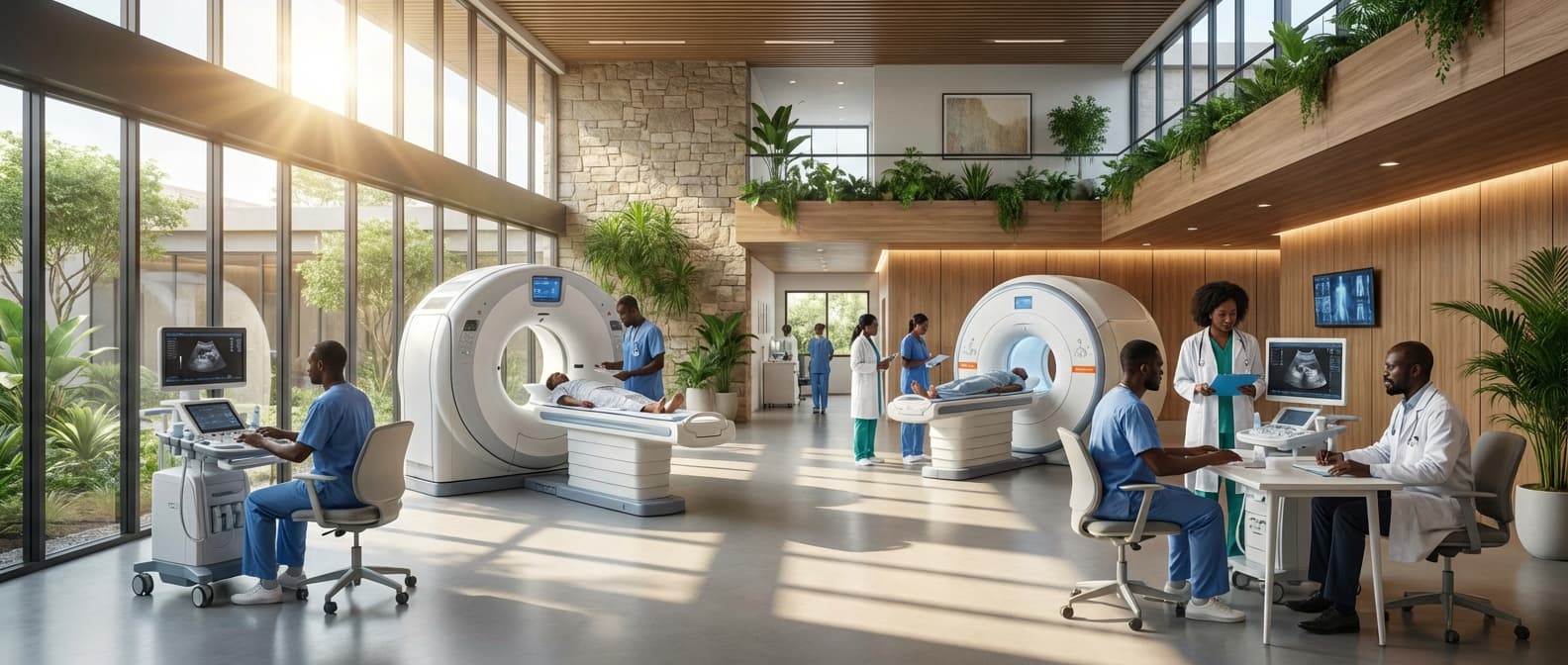
Diagnostic Imaging in Equatorial Guinea
Engineering Excellence & Technical Support
High-resolution imaging systems including CT scanners, MRI, X-ray, and ultrasound technology for accurate clinical diagnosis. High-standard technical execution following OEM protocols and local regulatory frameworks.
Enhanced Diagnostic Capabilities with Mobile X-ray Units
Deployment of advanced mobile X-ray units equipped with digital radiography technology, significantly expanding access to crucial diagnostic imaging services in remote and underserved regions of Equatorial Guinea. This initiative reduces patient travel time and allows for immediate image acquisition and preliminary interpretation in localized health posts.
Nationwide Ultrasound Training & Equipment Rollout
A comprehensive program providing state-of-the-art ultrasound machines and specialized training to healthcare professionals across Equatorial Guinea. This empowers local practitioners to perform essential diagnostic ultrasounds for obstetrics, gynecology, abdominal conditions, and more, improving early detection and management of critical illnesses.
Introduction of Portable CT Scanner Technology
Introduction of portable Computed Tomography (CT) scanner technology to key regional hospitals. This allows for rapid on-site CT imaging in trauma cases and for neurological assessments, crucial for timely interventions and improved patient outcomes in a geographically dispersed nation. It bypasses the logistical challenges of transporting patients to specialized imaging centers.
What Is Diagnostic Imaging In Equatorial Guinea?
Diagnostic imaging in Equatorial Guinea encompasses a range of medical procedures that utilize non-invasive or minimally invasive techniques to visualize the internal structures of the human body for the purpose of diagnosis, assessment, and monitoring of diseases and injuries. This service is critical for a comprehensive understanding of a patient's health status, particularly when clinical examination alone is insufficient to establish a definitive diagnosis. The deployment and utilization of diagnostic imaging modalities in Equatorial Guinea are subject to the availability of advanced medical equipment, trained radiographers and radiologists, and the necessary healthcare infrastructure. Challenges may include the procurement and maintenance of sophisticated technology, ensuring adequate power supply, and the establishment of robust referral pathways for specialized interpretation and treatment planning.
| Imaging Modality | Principle of Operation | Common Clinical Applications in Equatorial Guinea |
|---|---|---|
| X-ray Radiography (including Fluoroscopy) | Utilizes electromagnetic radiation (X-rays) that are differentially absorbed by tissues of varying density. | Fracture detection, pneumonia assessment, gastrointestinal studies (barium swallows/enemas), foreign body localization. |
| Ultrasound (Sonography) | Employs high-frequency sound waves that reflect off tissues, creating real-time images. | Obstetric and gynecological evaluations, abdominal organ assessment (liver, kidneys, gallbladder), thyroid imaging, vascular studies, musculoskeletal assessment. |
| Computed Tomography (CT) Scan | Combines multiple X-ray images taken from different angles to create cross-sectional views (slices) of the body. | Trauma assessment (head, chest, abdomen), oncological staging, detection of internal bleeding, evaluation of complex fractures, diagnosis of stroke and pulmonary embolism. |
| Magnetic Resonance Imaging (MRI) Scan | Uses strong magnetic fields and radio waves to generate detailed images of organs and soft tissues. | Neurological evaluation (brain tumors, multiple sclerosis), spinal cord imaging, detailed assessment of joints and ligaments, evaluation of abdominal and pelvic organs (especially soft tissues). |
Key Aspects of Diagnostic Imaging in Equatorial Guinea
- Definition: Diagnostic imaging refers to the use of various technologies to create visual representations of the interior of the body. These technologies employ different physical principles, such as X-rays, magnetic fields, sound waves, or radioactive isotopes, to generate images.
- Involves: The service typically involves the operation of imaging equipment by trained radiographers, the administration of contrast agents if required, image acquisition, and subsequent interpretation by qualified radiologists. The process is designed to detect abnormalities, determine the extent of disease, guide interventions, and monitor treatment efficacy.
- Who Needs It: Diagnostic imaging is indicated for a broad spectrum of patients across all age groups. This includes individuals presenting with acute trauma, chronic pain, suspected infections, suspected malignancies, pre-operative assessment, and for routine health screenings where indicated.
- Typical Use Cases: Common applications span various medical specialties, including but not limited to, assessing skeletal fractures (X-ray), evaluating abdominal and pelvic organs for masses or inflammation (ultrasound, CT), diagnosing neurological conditions and tumors (MRI, CT), and detecting cardiovascular abnormalities (echocardiography, CT angiography).
Who Needs Diagnostic Imaging In Equatorial Guinea?
Diagnostic imaging plays a crucial role in modern healthcare, offering non-invasive methods to visualize internal bodily structures. In Equatorial Guinea, understanding who requires these services and within which departments they are most utilized is key to optimizing resource allocation and improving patient outcomes. This analysis targets key customer segments and departments that would benefit most from accessible and advanced diagnostic imaging capabilities.
| Department/Service Area | Primary Imaging Modalities Needed | Key Patient Conditions Addressed |
|---|---|---|
| Emergency Department (ED) | X-ray, Ultrasound, CT (where available) | Trauma, fractures, acute abdomen, head injuries, chest pain |
| General Surgery | X-ray, Ultrasound, CT (where available) | Appendicitis, cholecystitis, bowel obstruction, abscesses |
| Internal Medicine / General Practice | X-ray, Ultrasound | Pneumonia, pleurisy, organomegaly, fluid collections |
| Orthopedics | X-ray, Ultrasound | Fractures, dislocations, ligament tears, joint abnormalities |
| Neurology / Neurosurgery | CT (where available), MRI (ideal but less common) | Stroke, head trauma, tumors, spinal cord injuries |
| Obstetrics & Gynecology (OB/GYN) | Ultrasound | Pregnancy monitoring, ectopic pregnancy, gynecological masses |
| Pediatrics | X-ray, Ultrasound | Congenital abnormalities, childhood injuries, infections |
| Pulmonology / Respiratory Medicine | X-ray | Pneumonia, tuberculosis, lung masses, pleural effusions |
Target Customers for Diagnostic Imaging in Equatorial Guinea
- {"item":"Patients with Suspected Fractures and Injuries","description":"Individuals presenting with trauma, falls, or sports-related injuries requiring imaging to identify bone breaks, dislocations, or soft tissue damage. This includes emergency room patients and those in orthopedic clinics."}
- {"item":"Patients with Suspected Infections and Inflammatory Conditions","description":"Individuals exhibiting symptoms of pneumonia, appendicitis, abscesses, or other localized infections. Imaging can help pinpoint the source and extent of the infection."}
- {"item":"Patients with Suspected Tumors and Cancers","description":"Individuals experiencing unexplained weight loss, persistent pain, or palpable masses. Imaging is vital for early detection, staging, and monitoring of various cancers."}
- {"item":"Patients with Neurological Concerns","description":"Individuals presenting with symptoms of stroke, head injuries, seizures, or neurological disorders. Imaging of the brain and spine is essential for diagnosis and management."}
- {"item":"Patients with Cardiovascular Issues","description":"Individuals with chest pain, shortness of breath, or suspected heart conditions. While advanced cardiac imaging might be limited, basic X-rays for chest conditions and potentially ultrasound for cardiac assessments are relevant."}
- {"item":"Pregnant Women for Prenatal Monitoring","description":"Ultrasound is routinely used during pregnancy to monitor fetal development, identify potential complications, and assess placental health."}
- {"item":"Patients Requiring Pre-operative and Post-operative Assessment","description":"Imaging is used to plan surgical procedures and to assess the outcome and healing process after surgery."}
- {"item":"Individuals for Routine Health Screenings (with specific indications)","description":"While not universal, specific screenings like mammography for women over a certain age or chest X-rays for individuals with a history of lung disease may be required."}
Diagnostic Imaging Process In Equatorial Guinea
The diagnostic imaging process in Equatorial Guinea, like in many developing nations, is characterized by varying levels of infrastructure, resource availability, and trained personnel. The workflow from inquiry through execution is generally a sequential process, though bottlenecks and delays can occur due to these factors. Understanding this workflow is crucial for healthcare providers, patients, and administrators to navigate the system effectively. The process begins with a physician's referral based on clinical suspicion, progresses through scheduling and preparation, the actual imaging procedure, and finally, the interpretation and reporting of the results.
| Stage | Key Activities | Potential Challenges/Considerations in Equatorial Guinea | ||
|---|---|---|---|---|
| Inquiry | Physician referral based on clinical suspicion. | Limited access to specialist physicians for initial diagnosis; reliance on general practitioners. | Patient understanding of need for imaging may be lower due to educational disparities. | |
| Scheduling | Contacting imaging facility, booking appointment. | Limited availability of imaging centers and specific modalities (CT, MRI); long waiting times. | Manual scheduling systems; potential for lost or misplaced appointments. | Geographic accessibility for remote populations. |
| Preparation | Fasting, dietary changes, contrast administration. | Unavailability of contrast agents and necessary medications. | Lack of clear patient education materials or resources for preparation. | |
| Execution | Patient positioning, image acquisition. | Older, less advanced imaging equipment; frequent breakdowns. | Shortage of trained radiographers/technologists. | Power supply inconsistencies affecting equipment operation. |
| Interpretation | Radiologist reviews images, dictates report. | Severe shortage of qualified radiologists; potential for over-reliance on general radiologists for complex cases. | Limited access to advanced diagnostic software for image analysis. | |
| Reporting & Delivery | Generating and transmitting report. | Manual transcription of reports; potential for errors and delays. | Challenges with reliable communication channels for report delivery (fax machines, postal service). |
Diagnostic Imaging Workflow in Equatorial Guinea
- Physician Referral: The process initiates when a clinician suspects a medical condition requiring imaging. This is based on patient symptoms, medical history, and physical examination.
- Patient Inquiry/Informed Consent: The patient is informed about the recommended imaging procedure, its purpose, potential risks, and benefits. Informed consent is obtained. In resource-limited settings, communication might be more direct and less formalized.
- Scheduling/Appointment: If available, a radiology department or a designated imaging center is contacted to schedule the appointment. This can involve direct phone calls, in-person visits, or referral slips. The availability of specific equipment and trained technologists dictates scheduling feasibility.
- Preparation (Pre-Imaging): Depending on the imaging modality (e.g., ultrasound, X-ray, CT scan), specific patient preparation may be required. This could include fasting, dietary restrictions, or administration of contrast agents. Access to contrast agents can be a challenge.
- Patient Registration and Check-in: Upon arrival, the patient is registered, their details are confirmed, and their referral is verified. This may involve manual record-keeping.
- Imaging Procedure Execution: The technologist guides the patient through the imaging process. This involves positioning the patient correctly and operating the imaging equipment. The quality and availability of equipment are critical at this stage.
- Image Acquisition and Quality Control: The technologist acquires the images and performs initial quality checks to ensure they are diagnostic. Limited resources might mean less sophisticated quality control measures.
- Image Archiving/Storage: Images are stored, often on local hard drives, external drives, or sometimes on PACS (Picture Archiving and Communication System) if available. Challenges with digital storage and retrieval can arise.
- Radiologist Interpretation: A radiologist reviews the acquired images. This is a critical step where expertise is paramount. The availability of qualified radiologists can be a significant constraint.
- Report Generation: The radiologist dictates or writes a report detailing their findings and diagnosis. This report is then transcribed or documented.
- Report Delivery: The diagnostic imaging report is sent back to the referring physician. This can be via paper copy, fax, or a more advanced electronic system if in place.
- Clinical Integration and Treatment Planning: The referring physician integrates the imaging report with other clinical information to make a definitive diagnosis and plan the patient's treatment.
- Follow-up Imaging (if necessary): If further evaluation or monitoring is required, the process may be repeated.
Diagnostic Imaging Cost In Equatorial Guinea
Diagnostic imaging plays a crucial role in modern healthcare, enabling timely and accurate diagnoses. In Equatorial Guinea, the cost of these services is influenced by several factors, leading to a range of prices for common procedures. These factors include the type of imaging technology used, the complexity of the examination, the location and reputation of the healthcare facility, the expertise of the radiologist, and the availability of specialized equipment. Furthermore, the overall economic conditions and the prevailing exchange rates can impact the pricing in local currency, the Central African CFA franc (XAF). Due to limited infrastructure and the reliance on imported equipment and consumables, costs can be higher compared to more developed nations. Availability of advanced imaging modalities like MRI and PET scans might be limited to major cities and private hospitals, often resulting in higher associated costs.
| Imaging Modality | Estimated Cost Range (XAF) | Notes |
|---|---|---|
| X-ray (e.g., Chest X-ray) | 20,000 - 50,000 | Basic diagnostic, widely available. |
| Ultrasound (e.g., Abdominal Ultrasound) | 30,000 - 70,000 | Common for abdominal, pelvic, and obstetric imaging. |
| CT Scan (e.g., Head CT) | 100,000 - 300,000 | Requires more advanced equipment, available in larger hospitals/clinics. |
| MRI Scan | 250,000 - 700,000+ | High-end imaging, availability is limited, significantly more expensive. |
| Mammography | 40,000 - 90,000 | Specific to breast imaging. |
Factors Influencing Diagnostic Imaging Costs in Equatorial Guinea
- Technology Type (X-ray, Ultrasound, CT, MRI)
- Procedure Complexity
- Healthcare Facility Location and Reputation
- Radiologist Expertise
- Equipment Availability and Maintenance
- Importation Costs of Equipment and Consumables
- Economic Conditions and Exchange Rates
- Demand for Services
Affordable Diagnostic Imaging Options
Diagnostic imaging plays a crucial role in healthcare, but costs can be a significant concern for patients. Fortunately, various affordable diagnostic imaging options and cost-saving strategies are available. Understanding these can empower individuals to make informed decisions and manage their healthcare expenses effectively. Value bundles and proactive cost-saving measures can lead to substantial savings.
| Strategy | Description | Potential Savings | Considerations |
|---|---|---|---|
| Value Bundles | Pre-packaged services at a reduced price. | Moderate to Significant | Ensure all necessary components are included. |
| Free-Standing Imaging Centers | Independent facilities with lower overhead. | Significant | Verify insurance acceptance and reputation. |
| Negotiating Cash Prices | Asking for discounts when paying out-of-pocket. | Moderate to Significant | Best for self-pay or high-deductible plans. |
| Comparing Providers | Researching prices across different facilities. | Moderate | Requires time and effort. |
| Using HSAs/FSAs | Pre-tax savings for medical expenses. | Tax Savings | Funds can only be used for qualified medical expenses. |
Value Bundles and Cost-Saving Strategies
- {"title":"Understanding Value Bundles","description":"Value bundles are pre-packaged groups of services offered at a reduced price compared to purchasing each service individually. In diagnostic imaging, this might include a scan (like an MRI or CT) combined with a radiologist's interpretation and potentially a follow-up consultation. These bundles often aim to simplify billing and encourage integrated care."}
- {"title":"Out-of-Network Providers","description":"While in-network providers are generally preferred for insurance coverage, sometimes out-of-network imaging centers may offer significantly lower cash prices. It's crucial to compare cash rates and understand your out-of-pocket maximum if you have insurance before opting for this route."}
- {"title":"Free-Standing Imaging Centers","description":"These centers, often not affiliated with a hospital, typically have lower overhead costs, which can translate into lower prices for imaging services compared to hospital-based departments. Many offer transparent pricing and competitive rates."}
- {"title":"High-Deductible Health Plans (HDHPs) and Health Savings Accounts (HSAs)","description":"For those with HDHPs, paying out-of-pocket for imaging can be more affordable at centers offering discounted cash prices. HSAs allow you to set aside pre-tax dollars specifically for qualified medical expenses, including diagnostic imaging, further reducing your net cost."}
- {"title":"Negotiating Prices","description":"Don't hesitate to ask for discounts, especially if you are paying out-of-pocket or have a high deductible. Many imaging centers are willing to negotiate, particularly if you are paying upfront. Inquire about 'self-pay' rates."}
- {"title":"Comparing Prices","description":"Similar to shopping for any other service, compare prices across different imaging providers in your area. Online tools and healthcare transparency websites can help you find the most affordable options for your specific imaging needs."}
- {"title":"Generic vs. Brand-Name Procedures (where applicable)","description":"While less common in imaging than with medications, some imaging techniques or contrast agents might have 'generic' or less expensive alternatives that still provide effective diagnostic results. Discuss options with your doctor."}
- {"title":"Second Opinions and Necessity","description":"Before undergoing any imaging, ensure it's medically necessary. Sometimes a less expensive imaging modality might be sufficient, or a second opinion from your doctor could confirm the need for a particular scan, potentially avoiding unnecessary procedures."}
- {"title":"Advance Payment Discounts","description":"Some facilities offer discounts if you pay for the service in full before the procedure. This can be a straightforward way to reduce the overall cost."}
- {"title":"Medical Tourism","description":"For certain complex or elective procedures, traveling to another region or country where imaging services are significantly cheaper might be a viable option, though this requires careful planning and consideration of associated travel costs and quality of care."}
Verified Providers In Equatorial Guinea
Navigating the healthcare landscape in Equatorial Guinea can be challenging, but identifying verified providers is crucial for ensuring quality and safety. Franance Health stands out as a premier choice due to its rigorous credentialing process and commitment to excellence. This document outlines the importance of verified providers and details why Franance Health's credentials make them the superior option for healthcare services in Equatorial Guinea.
| Credential Aspect | Franance Health's Commitment | Why it Matters for Patients |
|---|---|---|
| Medical Licensure & Certification | Rigorous verification of all medical practitioners' licenses and board certifications from recognized international bodies. | Ensures practitioners are legally qualified and have met stringent professional standards. |
| Education & Training | Thorough vetting of educational backgrounds and specialized training, including continuous professional development. | Confirms that providers have up-to-date knowledge and skills in their respective fields. |
| Experience & Track Record | Evaluation of clinical experience and a history of successful patient outcomes. | Indicates a proven ability to diagnose and treat a wide range of medical conditions effectively. |
| Ethical Conduct & Professionalism | Adherence to a strict code of ethics and ongoing monitoring of professional conduct. | Guarantees respectful, compassionate, and trustworthy patient care. |
| Facility Standards & Equipment | Ensures that partner facilities meet high standards for hygiene, safety, and are equipped with modern medical technology. | Provides a safe and effective environment for diagnosis and treatment. |
| Insurance & Malpractice Coverage | Verification of adequate professional liability insurance for all providers. | Offers financial protection and recourse for patients in the unlikely event of an adverse outcome. |
Why Verified Providers Matter
- Ensures adherence to international quality standards.
- Guarantees that medical professionals possess the necessary qualifications and experience.
- Reduces the risk of medical errors and malpractice.
- Promotes patient safety and confidence in the healthcare system.
- Facilitates access to specialized and advanced medical treatments.
Scope Of Work For Diagnostic Imaging
This Scope of Work (SOW) outlines the requirements for the provision of diagnostic imaging services. It details the technical deliverables expected from the vendor and the standard specifications that must be adhered to. The objective is to ensure high-quality, accurate, and timely diagnostic imaging services that support effective patient care and clinical decision-making.
| Imaging Modality | Standard Specifications / Protocols | Image Acquisition Parameters | Image Processing / Reconstruction | Storage Format | Reporting Requirements |
|---|---|---|---|---|---|
| X-ray (General) | All examinations performed according to ACR guidelines and relevant professional society standards. | kVp, mAs, SID, detector type, collimation, filtration as appropriate for the examination. | Contrast and brightness adjustment, edge enhancement as needed. Standardized windowing where applicable. | DICOM 3.0. | Radiologist's interpretation, findings, impression, recommendations. Include anatomical labels and measurements where relevant. |
| CT Scan | Protocols optimized for dose reduction and image quality, based on ACR guidelines and vendor best practices. | Slice thickness, pitch, kVp, mAs, reconstruction kernel, field of view (FOV), contrast agent protocols. | Multiplanar reformation (MPR), 3D reconstructions (e.g., MIP, SSD) as clinically indicated. Noise reduction algorithms. | DICOM 3.0, including secondary capture for non-diagnostic images if required. | Detailed description of findings, anatomical landmarks, measurements, and clinical correlation. Inclusion of specific reconstruction parameters used. |
| MRI Scan | Protocols adapted for patient comfort and scan time, while maximizing diagnostic information. Adherence to ACR guidelines. | Pulse sequences (T1, T2, FLAIR, DWI, etc.), TR, TE, flip angle, FOV, slice thickness, NEX, contrast agent administration. | Coil selection, parallel imaging techniques, phased array processing. Post-processing for artifact reduction. | DICOM 3.0. | Comprehensive description of signal intensities, anatomical variations, presence of pathology, and contrast enhancement patterns. Inclusion of specific pulse sequence parameters. |
| Ultrasound | Standardized scanning planes and terminology for each anatomical region. Adherence to AIUM and other relevant guidelines. | Frequency, depth, gain, focus, power, color Doppler parameters (gain, PRF, wall filter). | Image optimization, harmonic imaging, compounding, speckle reduction. Doppler spectral analysis. | DICOM 3.0, with options for JPEG or TIFF for specific annotations/reporting. | Description of echogenicity, vascularity, size of lesions, flow characteristics. Inclusion of representative still images and cine loops where applicable. |
| Mammography | Compliance with MQSA regulations. Use of dedicated mammography units with appropriate compression and imaging parameters. | kVp, mAs, compression force, detector type, magnification (if used). | Image enhancement algorithms specific to mammography. Contrast and brightness adjustments for subtle findings. | DICOM 3.0. | Detailed assessment of breast tissue composition, presence of masses, calcifications, architectural distortion, and skin thickening. Comparison with prior studies is mandatory. |
Key Technical Deliverables
- Radiology Reports: Comprehensive, accurate, and timely interpretation of all imaging studies. Reports shall be digitally signed by a board-certified radiologist.
- Images: Access to high-resolution digital images (DICOM format) for all performed procedures.
- PACS Integration: Seamless integration with the existing Picture Archiving and Communication System (PACS) for image retrieval and storage.
- Reporting Turnaround Time (TAT): Adherence to agreed-upon TAT for routine, urgent, and STAT interpretations. Specific TATs will be defined in the Service Level Agreement (SLA).
- Quality Assurance (QA) Reports: Regular reports detailing imaging quality metrics, error rates, and any identified areas for improvement.
- Equipment Maintenance Logs: Documentation of all preventive maintenance and repair activities performed on imaging equipment.
- Personnel Qualifications: Verification of credentials and qualifications for all imaging technologists and radiologists involved in service provision.
- Billing and Administrative Reports: Accurate and detailed billing information, along with any required administrative reports.
- Data Security and Privacy Compliance: Adherence to all relevant data security and patient privacy regulations (e.g., HIPAA, GDPR).
- Emergency Response Plan: A documented plan for responding to equipment failures or other emergencies that could impact service delivery.
Service Level Agreement For Diagnostic Imaging
This Service Level Agreement (SLA) outlines the performance standards and commitments for the provision of Diagnostic Imaging services. It defines the agreed-upon response times for critical requests and establishes uptime guarantees for the imaging systems to ensure timely and reliable patient care.
| Service Component | Service Level Objective (SLO) | Measurement Method |
|---|---|---|
| Emergency Imaging Request Response Time | Within 30 minutes of request submission for initial image acquisition. | System logs tracking request submission time and image acquisition completion time. |
| Urgent Imaging Request Response Time | Within 2 hours of request submission for initial image acquisition. | System logs tracking request submission time and image acquisition completion time. |
| Routine Imaging Request Response Time | Within 8 business hours of request submission for initial image acquisition. | System logs tracking request submission time and image acquisition completion time. |
| Diagnostic Imaging System Uptime | 99.8% uptime during scheduled operational hours (24/7/365). | Network monitoring tools, system availability reports, and incident logs. |
| PACS/RIS Availability | 99.9% uptime during scheduled operational hours (24/7/365). | Network monitoring tools, system availability reports, and incident logs. |
| Image Archiving and Retrieval | Successful image retrieval within 5 minutes for 98% of requests. | PACS query logs and retrieval time measurements. |
| Reporting Availability | Radiologist reporting platform accessible 99.9% during scheduled operational hours. | System monitoring and user access logs. |
Key Service Metrics
- Diagnostic Imaging Services
- Response Times
- Uptime Guarantees
- Critical Imaging Requests
Frequently Asked Questions

Ready when you are
Let's scope your Diagnostic Imaging in Equatorial Guinea project in Equatorial Guinea.

Scaling healthcare logistics and technical systems across the entire continent.