
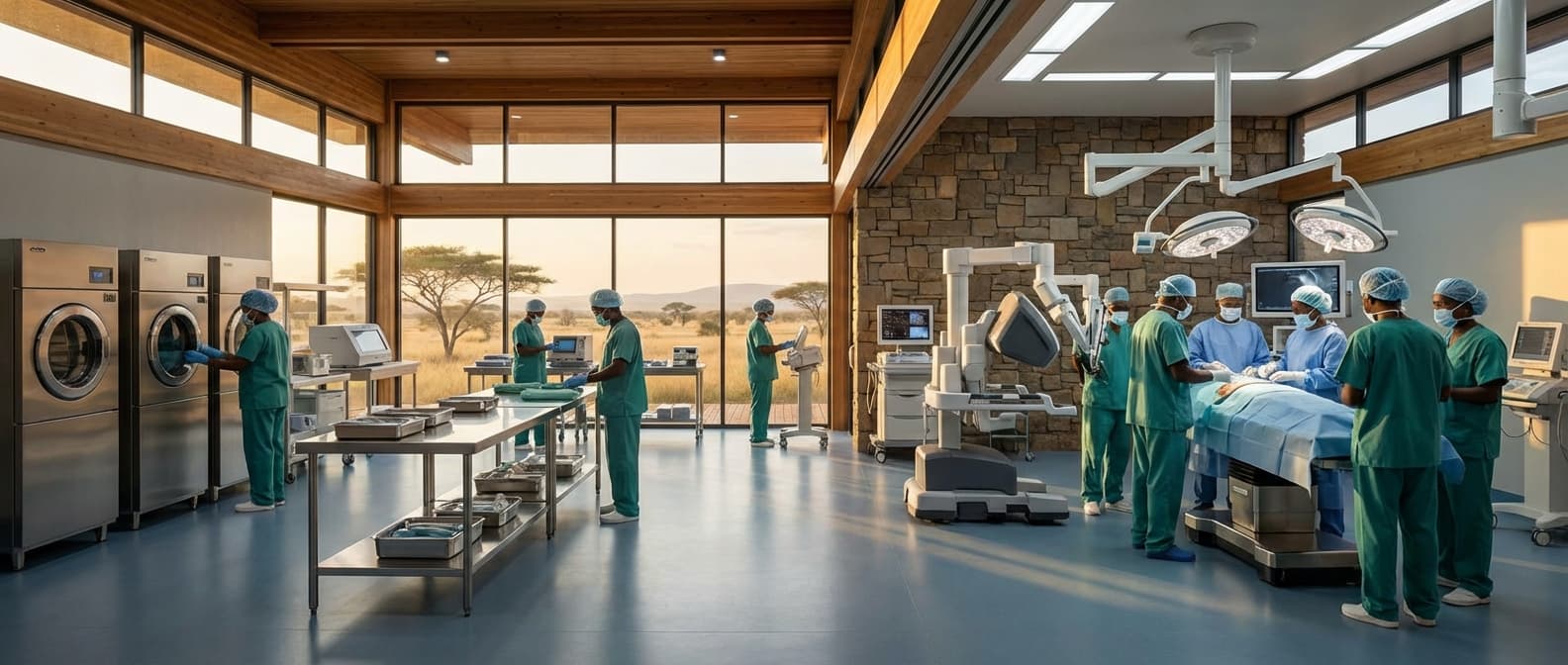
Medical Gas System Design & Installation in Equatorial Guinea
Engineering Excellence & Technical Support
Medical gas pipeline systems: O2, N2O, air, vacuum High-standard technical execution following OEM protocols and local regulatory frameworks.
Advanced Medical Gas Manifold Design for Tropical Resilience
Engineered dual-redundant manifold systems with automated switchover and remote monitoring capabilities, specifically designed to ensure uninterrupted supply of critical medical gases (Oxygen, Medical Air, Nitrous Oxide, Vacuum) in Equatorial Guinea's humid and challenging climate. Incorporates corrosion-resistant materials and advanced filtration to prevent contamination and ensure system longevity.
Robust Medical Gas Piping Installation with Environmental Acclimation
Implementation of seamless copper piping network adhering to ISO 7396-1 standards, utilizing specialized brazing techniques for superior integrity. Installation includes thermal expansion management and UV-resistant insulation to mitigate degradation from equatorial sun exposure and temperature fluctuations, guaranteeing safe and efficient gas distribution throughout healthcare facilities.
Purity-Focused Medical Air Generation and Distribution
Design and installation of medical air compressors with integrated multi-stage filtration and dew point control systems, ensuring medical air purity meets ISO 7396-2 standards, even in high humidity environments. Advanced pressure monitoring and alarm systems are integrated to maintain optimal and consistent supply for life-support equipment.
What Is Medical Gas System Design & Installation In Equatorial Guinea?
Medical Gas System Design & Installation in Equatorial Guinea refers to the specialized engineering and construction process of creating and implementing integrated systems for the safe, reliable, and compliant delivery of medical gases within healthcare facilities. This encompasses the entire lifecycle from conceptualization and schematic design, through detailed engineering, procurement of equipment and materials, fabrication, on-site installation, rigorous testing and commissioning, to final handover and ongoing maintenance planning. The primary objective is to ensure a continuous and precisely controlled supply of vital gases such as oxygen, medical air, nitrous oxide, vacuum, and potentially specialized mixtures, meeting stringent international and local standards for patient care and operational efficiency. The design phase meticulously considers factors like patient population, anticipated gas demands, facility layout, available infrastructure, regulatory compliance (e.g., WHO guidelines, local health ministry mandates), and future expansion capabilities. Installation involves the precise routing of piping, the integration of control panels, alarms, outlets, and the connection to central supply sources (e.g., bulk liquid oxygen tanks, medical air compressors, cylinder banks). Commissioning is a critical step involving comprehensive performance verification to guarantee system integrity, purity of gases, correct pressure regulation, and alarm functionality before the system is placed into service.
| Service Component | Description | Key Considerations in Equatorial Guinea |
|---|---|---|
| Design & Planning | Developing the architectural and engineering blueprints for the medical gas system, including layout, pipe sizing, and equipment selection. | Adherence to international standards (e.g., NFPA 99, HTM 02-01) adapted to local climate conditions (humidity, temperature) and potential logistical challenges for material import and specialized labor. |
| Material Procurement | Acquisition of all necessary components, from medical-grade piping and fittings to regulators, alarms, and gas sources. | Ensuring availability and quality of materials, potentially requiring robust supply chain management and vetting of suppliers to mitigate risks of counterfeit or substandard products in the local market. |
| Installation & Fabrication | The physical construction and assembly of the medical gas pipeline network and associated equipment within the healthcare facility. | Utilizing certified and experienced technicians, with stringent quality control to prevent contamination, ensure leak-proof connections, and minimize disruption to ongoing facility operations. Local labor training and capacity building are important. |
| Testing & Commissioning | Rigorous validation of the system's performance, safety, and compliance with design specifications and regulatory requirements. | Independent testing and verification of gas purity (especially critical for oxygen in humid environments), pressure stability, alarm functionality, and flow rates to guarantee patient safety and regulatory adherence. Documentation of results is paramount. |
| Maintenance & Training | Establishing protocols for ongoing system upkeep and providing comprehensive training to facility staff. | Developing preventative maintenance schedules tailored to the local environment, and empowering local biomedical engineers and technicians with the knowledge to operate and maintain the system effectively and safely. |
Key Components of Medical Gas System Design & Installation
- Needs Assessment & Feasibility Study: Evaluating current and future gas requirements, site conditions, and regulatory landscape.
- System Design & Engineering: Developing detailed plans, schematics, P&IDs (Piping and Instrumentation Diagrams), and specifications.
- Equipment & Material Procurement: Sourcing high-quality, certified medical-grade components, piping, and accessories.
- System Installation: Professional execution of piping networks, gas source connections, valve assemblies, and terminal units.
- Testing & Commissioning: Comprehensive verification of gas purity, pressure, flow rates, alarm systems, and leak detection.
- Training & Handover: Educating facility personnel on system operation, maintenance, and emergency procedures.
- Certification & Documentation: Providing all necessary permits, approvals, and as-built documentation.
Who Needs Medical Gas System Design & Installation In Equatorial Guinea?
Medical gas systems are critical for the functioning of modern healthcare facilities. In Equatorial Guinea, where healthcare infrastructure is developing, the need for expertly designed and installed medical gas systems is paramount. This ensures safe, reliable, and efficient delivery of life-sustaining gases to patients in a range of clinical settings.
| Customer Type | Key Departments/Areas of Need | Specific Gas Requirements |
|---|---|---|
| Public Hospitals | Operating Rooms, ICUs, Emergency Department, Respiratory Therapy, Wards (general and specialized) | Oxygen, Medical Air, Nitrous Oxide, Vacuum, potentially specialized gases like CO2 for labs. |
| Private Hospitals & Clinics | Operating Rooms, ICUs, Recovery Rooms, Maternity, General Wards, Diagnostic Imaging | Oxygen, Medical Air, Nitrous Oxide, Vacuum, specialized gases for imaging (e.g., Helium for MRI if applicable). |
| Specialized Medical Centers (e.g., Cardiac, Oncology) | Cath Labs, Surgical Suites, Intensive Care Units, Radiation Therapy Rooms | High-purity Oxygen, Medical Air, Nitrous Oxide, potentially other gases for specific equipment. |
| Government Health Institutions | Rural clinics, District hospitals, National referral hospitals | Reliable Oxygen and Medical Air are essential for basic life support and emergency care. |
| International Aid Organizations & NGOs | Facilities supporting public health initiatives, mobile clinics, emergency response units | Focus on robust, low-maintenance systems for Oxygen and Medical Air in diverse settings. |
| New Healthcare Facility Developments | All clinical areas requiring respiratory support or anesthetic gases | Design from inception to ensure compliance with international standards and future scalability. |
| Existing Facility Upgrades | Areas with aging or non-compliant medical gas infrastructure | Modernization of Oxygen, Medical Air, Vacuum, and Nitrous Oxide systems to improve safety and efficiency. |
Target Customers and Departments for Medical Gas System Design & Installation in Equatorial Guinea
- Hospitals (Public and Private)
- Surgical Centers and Operating Theaters
- Intensive Care Units (ICUs) and Critical Care Units
- Emergency Rooms and Trauma Centers
- Maternity Wards and Neonatal Intensive Care Units (NICUs)
- Outpatient Clinics with Specialized Procedures
- Rehabilitation Centers
- Research Laboratories within Healthcare Institutions
- Dental Clinics with Anesthesia Services
- Ambulance Services and Medical Transport Fleets (for onboard systems)
Medical Gas System Design & Installation Process In Equatorial Guinea
The process of designing and installing a medical gas system in Equatorial Guinea, like any other specialized engineering project, follows a structured workflow to ensure safety, compliance, and functionality. This workflow encompasses several key stages, beginning with initial client engagement and culminating in the final commissioning and handover of the operational system.
| Phase | Description | Key Activities | Deliverables/Outcomes | Considerations for Equatorial Guinea |
|---|---|---|---|---|
| The process begins when a healthcare facility or project developer in Equatorial Guinea expresses interest in a new or upgraded medical gas system. | Understanding client requirements (e.g., types of gases, number of outlets, future expansion), budget, and project timeline. Gathering preliminary information about the facility. | Clear scope of work, preliminary budget estimate, and project brief. | Understanding local healthcare infrastructure, existing medical practices, and potential regulatory bodies. Language barriers may require translation services. |
| A thorough assessment of the proposed installation site to determine the viability and best approach for the system. | Physical inspection of the facility, assessment of available space for plant room and pipelines, structural integrity, accessibility, and existing utilities. Identifying potential challenges and risks. | Feasibility report, site layout recommendations, preliminary risk assessment. | Logistical challenges due to infrastructure, climate considerations (humidity, temperature), and potential need for robust materials and protective measures. |
| Developing a high-level design based on the needs assessment and site survey. | Defining the overall system architecture, selecting primary gas sources (e.g., medical air compressors, oxygen generators, cylinders, bulk storage), specifying pipe materials, pressure regulations, and alarm systems. Ensuring compliance with relevant international standards (e.g., HTM, NFPA, ISO). | Conceptual design drawings, preliminary Bill of Quantities (BoQ), system specifications. | Availability and reliability of power supply for compressors/generators. Local availability of specific medical gas types and consumables. |
| Translating the conceptual design into detailed technical drawings and specifications. | Creating detailed P&ID (Piping and Instrumentation Diagrams), pipe routing layouts, zone classifications, valve schedules, electrical schematics for controls and alarms, and structural support details. Obtaining necessary approvals from regulatory bodies if applicable. | Complete set of detailed engineering drawings, technical specifications, material lists, construction method statements. | Ensuring designs account for seismic activity (if applicable in the region), fire safety regulations, and local building codes. Need for qualified local engineering input or collaboration. |
| Sourcing and acquiring all necessary components and equipment for the system. | Tendering and selecting suppliers for medical gas equipment (compressors, generators, regulators, valves, alarms), piping, fittings, and accessories. Manufacturing of custom-designed components if required. Quality control and inspection of manufactured items. | Procured materials and equipment, manufacturing quality certificates. | Lead times for international shipping, customs clearance procedures, and import duties. Identifying reliable local suppliers for consumables or basic materials if possible. |
| The physical installation of the medical gas system within the healthcare facility. | Installation of medical gas pipelines, valves, outlets, alarms, and plant room equipment according to the detailed engineering drawings. Adherence to strict quality control procedures, welding standards, and safety protocols. Supervision by experienced engineers. | Installed medical gas piping network, plant room setup, operational equipment. | Skilled labor availability and training needs. Site safety management in challenging environmental conditions. Coordination with other construction trades. Potential for localized construction materials or methods. |
| Verifying the integrity, performance, and safety of the installed system. | Pressure testing, leak testing, purging of pipelines, gas purity analysis, flow rate verification, alarm system functionality checks, and system performance validation against design specifications. Compliance with international standards and regulatory requirements. | Test reports, commissioning certificates, validation reports, as-built drawings. | Availability of specialized testing equipment and trained personnel. Documentation requirements for local health authorities. |
| Ensuring that facility staff are competent to operate and maintain the system. | Providing comprehensive training to biomedical engineers, technicians, and nursing staff on the operation, routine maintenance, and emergency procedures for the medical gas system. Handover of all relevant documentation. | Trained personnel, operational manuals, maintenance schedules, spare parts list, final handover documentation. | Tailoring training materials to local language and technical understanding. Ensuring ongoing availability of training resources. |
| Providing ongoing support to ensure the long-term reliability of the system. | Scheduled preventative maintenance, on-demand repair services, spare parts management, and system upgrades. Establishing a service contract. | Ongoing system reliability, reduced downtime, extended system lifespan. | Availability of local support technicians and spare parts. Establishing a reliable supply chain for consumables and maintenance services. Long-term maintenance planning considering potential difficulties in accessing expertise or parts. |
Medical Gas System Design & Installation Process in Equatorial Guinea: Workflow
- Initial Inquiry & Needs Assessment
- Site Survey & Feasibility Study
- Conceptual Design & System Specification
- Detailed Engineering Design
- Procurement & Manufacturing
- On-Site Installation & Construction
- Testing, Commissioning & Validation
- Training & Handover
- Post-Installation Support & Maintenance
Medical Gas System Design & Installation Cost In Equatorial Guinea
Designing and installing a medical gas system in Equatorial Guinea involves a complex interplay of factors that significantly influence the overall cost. These systems are critical for healthcare facilities, providing essential gases like oxygen, medical air, vacuum, and nitrous oxide. The pricing is not uniform and can vary widely based on project scope, the specific technologies employed, and the logistical challenges inherent in the region. Understanding these pricing factors is crucial for accurate budgeting and project planning.
Key Pricing Factors:
- System Complexity and Scope: The number of medical gases required, the size of the facility (number of beds, operating rooms, specialized units), and the extent of the distribution network (piping length, number of outlets) are primary cost drivers. Larger, more comprehensive systems naturally incur higher expenses.
- Equipment Selection and Quality: The choice of medical gas source (e.g., liquid oxygen tanks, medical air compressors, vacuum pumps, concentrators), the brand and quality of valves, alarms, regulators, and terminal units will impact the price. High-end, reliable equipment often comes with a higher upfront cost but can offer better long-term performance and reduced maintenance.
- Regulatory Compliance and Standards: Adherence to international and local medical gas standards (e.g., NFPA 99, HTM 02-01) dictates the quality of materials, installation practices, and testing procedures. Meeting these stringent requirements can add to the cost, particularly in terms of specialized materials and rigorous testing protocols.
- Installation Expertise and Labor: Sourcing qualified and experienced medical gas installers in Equatorial Guinea can be challenging, potentially leading to higher labor rates. The remoteness of some locations might also necessitate travel and accommodation expenses for specialized teams.
- Logistics and Transportation: Importing specialized medical gas equipment and materials into Equatorial Guinea can be subject to import duties, taxes, and significant shipping costs, especially if projects are located outside major urban centers like Malabo or Bata. Infrastructure limitations can further complicate transportation.
- Site Conditions and Infrastructure: The existing infrastructure of the healthcare facility, including power supply reliability, structural integrity for mounting equipment, and the ease of access for installation, can influence costs. Retrofitting existing buildings often presents more challenges than new constructions.
- Testing and Commissioning: Thorough testing and commissioning of the medical gas system are mandatory to ensure safety and performance. This involves specialized equipment and qualified personnel, contributing to the overall project expense.
- Project Management and Consultancy: Engaging project managers and specialized consultants for system design and oversight can add to the cost but is often essential for successful project delivery and compliance.
- Inflation and Exchange Rates: As with any construction project, prevailing inflation rates and fluctuations in currency exchange rates (particularly against the US Dollar, which is often used for international sourcing) can impact the final cost. The local currency is the Central African CFA franc (XAF).
| Cost Component | Typical Range (XAF) | Notes |
|---|---|---|
| Medical Gas System Design & Consultancy | 1,500,000 - 5,000,000+ | Varies significantly based on facility size and complexity of design requirements. |
| Medical Gas Source Equipment (e.g., Oxygen Concentrators/Tanks, Air Compressors) | 3,000,000 - 15,000,000+ | Depends on the type, capacity, and number of gas sources. Liquid oxygen systems are generally more expensive initially. |
| Piping & Distribution Network (materials, installation) | 500,000 - 3,000,000+ per 100 meters | Influenced by the type of gas, material of pipes (copper is standard), number of outlets, and installation difficulty. |
| Terminal Units (outlets, alarms, shut-off valves) | 50,000 - 250,000+ per unit | Price varies by brand, type (e.g., oxygen, medical air), and features. Alarm systems add to the cost. |
| Installation Labor | 500,000 - 2,000,000+ per month per skilled worker | Higher rates due to specialized skills required and potential remoteness. Can include expatriate labor premiums. |
| Testing & Commissioning | 1,000,000 - 5,000,000+ | Includes specialized testing equipment, certification, and validation procedures. |
| Logistics, Shipping & Import Duties | 10-30% of equipment cost | Significant factor due to the island nation's location. Can be higher for remote project sites. |
| Contingency ( unforeseen issues, site modifications) | 10-15% of total project cost | Recommended to account for unexpected challenges during installation. |
| Total System Cost (Small to Medium Facility) | 20,000,000 - 100,000,000+ | A rough estimate. Larger hospitals or specialized units will exceed this significantly. |
| Total System Cost (Large Hospital/Complex Facility) | 100,000,000 - 500,000,000+ | Includes multiple gas systems, advanced monitoring, and extensive distribution. |
Factors Influencing Medical Gas System Costs in Equatorial Guinea
- System Complexity & Scope (facility size, number of gases, network extent)
- Equipment Selection & Quality (source, valves, alarms, regulators, terminal units)
- Regulatory Compliance & Standards (NFPA 99, HTM 02-01)
- Installation Expertise & Labor (availability of qualified professionals, travel/accommodation)
- Logistics & Transportation (import duties, shipping costs, infrastructure challenges)
- Site Conditions & Infrastructure (existing building, power reliability, accessibility)
- Testing & Commissioning (specialized equipment, personnel)
- Project Management & Consultancy (design, oversight)
- Inflation & Exchange Rates (impact of economic conditions and currency fluctuations)
Affordable Medical Gas System Design & Installation Options
Designing and installing a medical gas system can be a significant investment for healthcare facilities. However, several options and strategies exist to make this process more affordable without compromising safety or regulatory compliance. This guide explores value bundles and cost-saving strategies for medical gas system design and installation, aiming to provide a comprehensive overview for facility managers and procurement specialists.
| Value Bundle Type | Description | Cost-Saving Benefits | Considerations |
|---|---|---|---|
| Design & Engineering Package | Combines architectural, mechanical, and medical gas system design services into a single contract. | Reduced coordination overhead, potentially better integrated design, streamlined communication. | Ensure the vendor has strong expertise in all involved disciplines. Verify clear scope and deliverables. |
| Turnkey Installation Solution | Encompasses design, procurement, installation, testing, and commissioning of the entire medical gas system. | Single point of accountability, reduced project management complexity, potentially faster project completion. | Thorough due diligence on vendor's track record and experience. Clear contract with defined milestones and warranties. |
| Equipment & Installation Bundle | Includes the supply of major medical gas equipment (manifolds, compressors, vacuum pumps) along with the installation services. | Potential for bulk purchasing discounts, streamlined logistics, consistent quality of equipment and installation. | Verify equipment specifications meet facility needs and regulatory standards. Compare pricing with independent equipment suppliers. |
| Maintenance & Monitoring Integration | Bundles initial installation with ongoing preventative maintenance and remote monitoring services. | Reduced downtime, proactive issue identification, optimized system performance, predictable operating costs. | Understand the scope of maintenance services and monitoring capabilities. Evaluate the cost-effectiveness over the system's lifecycle. |
Key Considerations for Affordable Medical Gas Systems
- Understanding Regulatory Requirements: Thorough knowledge of NFPA 99, ASSE standards, and local building codes is crucial to avoid costly redesigns and penalties.
- System Scalability: Designing a system that can accommodate future growth and technological advancements can prevent expensive retrofits.
- Material Selection: Choosing durable yet cost-effective materials for piping and outlets can impact long-term maintenance costs.
- Vendor Selection: Partnering with reputable vendors offering comprehensive services and competitive pricing is essential.
- Phased Installation: For larger projects, breaking down the installation into phases can help manage cash flow and budget allocation.
Verified Providers In Equatorial Guinea
In Equatorial Guinea, finding reliable and credentialed healthcare providers is paramount for quality medical care. Franance Health stands out as a leading entity dedicated to ensuring that healthcare professionals operating within the nation meet rigorous standards of qualification, ethical practice, and operational excellence. This commitment translates to a significantly enhanced patient experience and improved health outcomes. By prioritizing verification, Franance Health not only safeguards public health but also fosters trust and confidence in the healthcare system.
| Provider Type | Key Verification Criteria | Franance Health Assurance |
|---|---|---|
| General Practitioners | Valid medical license, verified degree from accredited institution, good standing with medical board. | Confirmation of all listed qualifications and adherence to ethical practice guidelines. |
| Specialist Physicians (e.g., Cardiologists, Neurologists, Pediatricians) | All GP criteria plus board certification in their specialty, proof of advanced training and residency. | Verified specialization, documented expertise, and commitment to patient-centered care within their field. |
| Surgeons | All specialist criteria plus documented surgical training, successful completion of residency, and active surgical practice. | Confirmation of surgical competency, safety record, and appropriate accreditation for surgical procedures. |
| Dentists | Valid dental license, verified degree from an accredited dental school, specialization if applicable (e.g., orthodontics, periodontics). | Assurance of dental qualifications, ethical procedures, and patient safety in dental treatments. |
| Pharmacists | Valid pharmacy license, verified degree from accredited pharmacy program, understanding of local regulations. | Ensures dispensing of authentic medications and adherence to safe pharmaceutical practices. |
Why Franance Health Credentials Matter:
- Rigorous Qualification Checks: Franance Health meticulously verifies the educational background, medical licenses, and specializations of all affiliated providers, ensuring they meet international and national standards.
- Ethical Practice Standards: Beyond academic and professional qualifications, Franance Health assesses providers for adherence to a strict code of medical ethics and professional conduct.
- Continuous Professional Development: Verified providers are often required to demonstrate ongoing engagement in continuing education and training, keeping them abreast of the latest medical advancements and techniques.
- Patient-Centric Approach: The verification process often includes an evaluation of a provider's commitment to patient care, including communication skills, empathy, and patient safety protocols.
- Access to Trusted Networks: Partnering with Franance Health provides patients with direct access to a network of demonstrably competent and trustworthy healthcare professionals.
- Enhanced Patient Safety: By weeding out unqualified or unethical practitioners, Franance Health significantly reduces the risks associated with seeking medical treatment.
Scope Of Work For Medical Gas System Design & Installation
This Scope of Work (SOW) outlines the requirements for the design and installation of a comprehensive medical gas system, including all associated technical deliverables and adherence to standard specifications. The project aims to ensure the safe, reliable, and compliant delivery of medical gases throughout the facility.
| Deliverable | Description | Applicable Standards |
|---|---|---|
| Detailed Design Drawings | Includes piping layouts, isometric drawings, riser diagrams, valve schedules, and pressure drop calculations for all medical gases. | NFPA 99, CSA Z7396.1, ASSE Series |
| Equipment Specifications | Detailed specifications for all medical gas equipment, including manifolds, regulators, alarms, shut-off valves, and outlets. | Manufacturer's specifications, NFPA 99 |
| Material Submittals | All materials used for piping, fittings, and brazing must be submitted for approval. | ASTM B819, ASTM B819/B819M, NFPA 99 |
| Test and Balance Report | Comprehensive report detailing all pressure, leak, purity, and performance tests conducted. | NFPA 99, ASSE 1001, ASSE 1003, ASSE 1004 |
| As-Built Drawings | Final drawings reflecting the exact installed configuration of the medical gas system. | As per design drawings |
| Operation and Maintenance Manuals | Detailed manuals covering the operation, maintenance, and troubleshooting of the entire medical gas system. | Manufacturer's documentation, NFPA 99 |
| Training Program | Training sessions for facility maintenance staff on system operation, maintenance, and emergency procedures. | NFPA 99 |
Key Project Phases and Activities
- Design Phase: Detailed engineering design, including system layout, pipe sizing, material selection, and equipment specifications, in accordance with all applicable codes and standards.
- Procurement Phase: Sourcing and acquisition of all necessary materials, equipment, and components for the medical gas system.
- Installation Phase: Professional installation of all medical gas piping, outlets, alarms, shut-off valves, manifolds, and associated appurtenances.
- Testing and Commissioning Phase: Rigorous testing, including pressure testing, leak testing, purity testing, and performance verification of the entire system.
- Documentation and Training Phase: Provision of comprehensive as-built drawings, operation and maintenance manuals, and training for facility personnel.
- Closeout Phase: Final inspections, punch list completion, and official project handover.
Service Level Agreement For Medical Gas System Design & Installation
This Service Level Agreement (SLA) outlines the expected response times and uptime guarantees for the design and installation services provided for medical gas systems. It aims to ensure timely project completion and a reliable operational system.
| Service Component | Response Time (Business Hours) | Uptime Guarantee |
|---|---|---|
| Initial Design Consultation & Proposal Submission | Within 2 business days of request | N/A |
| Design Review & Feedback Incorporation | Within 3 business days of receiving client feedback | N/A |
| Site Survey & Assessment Completion | Within 5 business days of site access confirmation | N/A |
| Detailed Design Drawings & Documentation Submission | Within 10 business days of final design approval | N/A |
| Pre-Installation Planning & Scheduling | Within 3 business days of contract signing | N/A |
| Installation Commencement Notification | At least 5 business days prior to scheduled start | N/A |
| On-site Technical Support (during installation) | Within 4 business hours of critical issue notification | N/A |
| Post-Installation System Testing & Commissioning | As per project schedule, with proactive updates | N/A |
| Handover Documentation & Training | Within 5 business days of successful commissioning | N/A |
| Medical Gas System Operational Uptime (post-commissioning) | N/A | 99.5% during operational hours (defined as 24/7 for critical care areas) |
| Emergency Support (post-commissioning, system failure) | Critical Issue: Within 2 business hours. Non-critical: Within 8 business hours. | N/A |
Key Performance Indicators
- Response Times: Definitions and expected timelines for addressing queries, issues, and requests during the design and installation phases.
- Uptime Guarantees: Assurance of system availability and performance after successful installation and commissioning.
Frequently Asked Questions

Ready when you are
Let's scope your Medical Gas System Design & Installation in Equatorial Guinea project in Equatorial Guinea.

Scaling healthcare logistics and technical systems across the entire continent.