
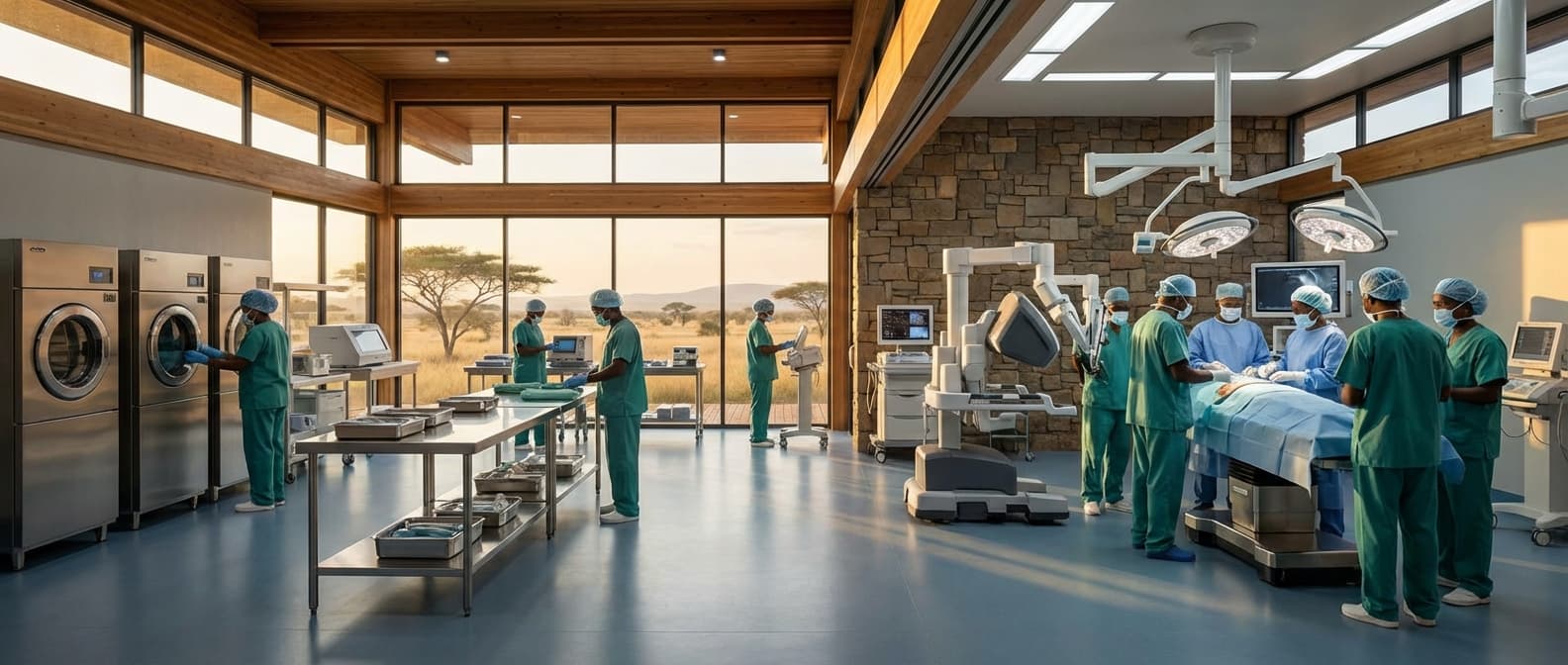
Endoscopy Reprocessing Validation in Equatorial Guinea
Engineering Excellence & Technical Support
AER validation, SOP development and compliance High-standard technical execution following OEM protocols and local regulatory frameworks.
Sterilization Efficacy Validation (Equatorial Guinea)
Ensuring all reprocessed endoscopes achieve a validated Sterility Assurance Level (SAL) of 10^-6 through rigorous biological indicator testing in accordance with international standards, adapted for local environmental conditions in Equatorial Guinea.
Automated Cleaning Cycle Verification (Equatorial Guinea)
Implementing and validating automated endoscope reprocessors (AERs) with precise cycle parameters and chemical concentration monitoring to guarantee consistent removal of bioburden, critical for preventing cross-contamination in Equatorial Guinean healthcare facilities.
High-Level Disinfection Temperature & Time Validation (Equatorial Guinea)
Validating critical disinfection parameters, including temperature and contact time, for High-Level Disinfection (HLD) processes, ensuring effective inactivation of pathogens relevant to Equatorial Guinea's epidemiological profile, even with potential fluctuations in ambient temperature.
What Is Endoscopy Reprocessing Validation In Equatorial Guinea?
Endoscopy reprocessing validation in Equatorial Guinea refers to the rigorous testing and documentation process required to confirm that flexible and rigid endoscopes, along with their associated accessories, have been effectively cleaned and disinfected or sterilized. This validation is a critical component of infection prevention and control protocols within healthcare facilities, ensuring patient safety by eliminating the risk of transmitting infectious agents between procedures. The process aims to verify that the multi-step reprocessing cycle, encompassing pre-cleaning, manual or automated cleaning, high-level disinfection (HLD) or sterilization, rinsing, and drying, consistently achieves the necessary log reductions of microbial contaminants to safe levels, as defined by international standards and national regulatory guidelines relevant to Equatorial Guinea.
| Aspect | Description | Relevance to Equatorial Guinea |
|---|---|---|
| Definition | A systematic process to confirm that endoscopes and accessories are rendered safe for reuse through validated cleaning and disinfection/sterilization procedures. | Essential for preventing healthcare-associated infections (HAIs) and ensuring patient safety in all healthcare settings performing endoscopic procedures. |
| Who Needs It | All healthcare facilities in Equatorial Guinea that utilize flexible and rigid endoscopes for diagnostic and therapeutic procedures, including hospitals, specialized clinics, and diagnostic centers. | Mandatory for facilities accredited or licensed by the Ministry of Health and Public Hygiene, and for any facility seeking to adhere to international best practices. |
| Typical Use Cases | Post-procedural reprocessing of gastrointestinal endoscopes (gastroscopes, colonoscopes), bronchoscopes, cystoscopes, laparoscopes, and other surgical endoscopes, followed by validation testing before subsequent patient use. | Routine validation campaigns, validation following equipment malfunction or repair, validation of new reprocessing equipment or chemistries, and validation as part of regulatory audits or accreditation processes. |
| Validation Methods | Includes macro-visual inspection, critical process parameter monitoring (e.g., temperature, time, chemical concentration), residual protein testing, microbial challenge testing (e.g., using biological indicators or surrogate organisms), and process documentation review. | Implementation of these methods ensures compliance with both local regulations and international standards such as those from AAMI, CDC, and WHO, adapting them to the local resource context. |
| Regulatory Context | Adherence to guidelines from the Ministry of Health and Public Hygiene, potentially referencing international standards if specific local protocols are not comprehensively defined. Focus on demonstrating a robust infection control program. | Healthcare providers must demonstrate due diligence in infection prevention, with validated reprocessing being a key indicator. This also supports the development of national guidelines for medical device reprocessing. |
Key Components of Endoscopy Reprocessing Validation
- Verification of cleaning efficacy (removal of visible soil and bioburden).
- Assessment of disinfection or sterilization efficacy (elimination of viable microorganisms).
- Evaluation of the entire reprocessing workflow, including equipment and consumables.
- Confirmation of adherence to manufacturer's instructions for use (IFU) for both the endoscope and reprocessing equipment.
- Documentation of all validation activities and results for regulatory compliance and quality assurance.
Who Needs Endoscopy Reprocessing Validation In Equatorial Guinea?
Endoscopy reprocessing validation is a critical safety measure for any healthcare facility performing endoscopic procedures. In Equatorial Guinea, given the potential for infectious disease transmission and the importance of patient safety, rigorous validation of endoscopy reprocessing is paramount. This validation ensures that reusable endoscopes are thoroughly cleaned and disinfected, eliminating the risk of patient-to-patient infection. Therefore, it's not a question of 'who needs it' but rather 'which facilities are equipped to perform endoscopic procedures and thus require this validation'.
| Department | Typical Procedures Requiring Endoscopy | Rationale for Validation |
|---|---|---|
| Gastroenterology | Upper endoscopy (EGD), Colonoscopy, Sigmoidoscopy, Bronchoscopy (if performed by gastro) | High risk of pathogen transmission due to direct contact with gastrointestinal tract. |
| Pulmonology | Bronchoscopy | Direct access to the respiratory system, a high-risk area for infections. |
| Urology | Cystoscopy, Ureteroscopy | Involves instrumentation of the urinary tract, susceptible to infections. |
| Gynecology | Hysteroscopy | Internal examination of the reproductive organs requires sterile instrumentation. |
| Surgery (Minimally Invasive) | Laparoscopy, Arthroscopy (though often rigid, reprocessing is still crucial) | Although often rigid scopes, proper disinfection of reusable components is essential to prevent surgical site infections. |
| Infection Control Department | Oversight and compliance monitoring of all reprocessing procedures | Ensures adherence to national and international guidelines and protects patient safety. |
| Central Sterile Supply Department (CSSD) | The primary unit responsible for the cleaning, disinfection, and sterilization of all reusable medical devices, including endoscopes. | Directly involved in the reprocessing process; validation confirms the effectiveness of their protocols. |
Target Customers and Departments Requiring Endoscopy Reprocessing Validation in Equatorial Guinea:
- {"title":"Hospitals","description":"All hospitals, both public and private, that offer diagnostic or therapeutic endoscopic procedures will require validated reprocessing. This is the primary setting for such services."}
- {"title":"Specialty Clinics","description":"Clinics focusing on gastroenterology, pulmonology, urology, or gynecology that utilize flexible or rigid endoscopes for procedures."}
- {"title":"Diagnostic Centers","description":"Facilities that provide endoscopic services as part of their diagnostic offerings, even if they do not perform surgical interventions."}
Endoscopy Reprocessing Validation Process In Equatorial Guinea
The Endoscopy Reprocessing Validation Process in Equatorial Guinea is a critical multi-stage procedure designed to ensure the safety and efficacy of reprocessed endoscopic equipment. This process, initiated by an inquiry, meticulously moves through planning, execution, and final reporting to guarantee compliance with established guidelines and minimize the risk of Healthcare-Associated Infections (HAIs).
| Stage | Description | Key Activities | Responsible Parties | Deliverables/Outcomes |
|---|---|---|---|---|
| Inquiry and Initial Assessment | Formal request to initiate the validation process, typically from a healthcare facility or regulatory body. | Receive and review the inquiry, identify the scope of validation (specific endoscopes, reprocessing methods), assess existing documentation and resources. | Healthcare Facility Management, Ministry of Health/Regulatory Authority, Technical Support Team. | Confirmation of request, preliminary understanding of validation needs. |
| Protocol Development and Approval | Creation of a detailed plan outlining the validation methodology and acceptance criteria. | Define validation objectives, select appropriate validation methods (e.g., biological indicators, chemical indicators, process monitoring), establish sampling plans, develop Standard Operating Procedures (SOPs) for reprocessing and testing, define acceptance criteria based on international standards (e.g., CDC, WHO, ISO). | Reprocessing Technicians, Infection Prevention and Control (IPC) Team, Biomedical Engineers, Quality Assurance Team, Ministry of Health/Regulatory Authority. | Approved Validation Protocol, Updated SOPs. |
| Equipment Preparation and Staging | Ensuring all equipment and materials are ready for the validation tests. | Gather and verify the availability of all required endoscopes, cleaning and disinfection agents, sterilizers, testing equipment (e.g., incubators, microscopes, chemical indicator readers), and consumables. Ensure equipment is calibrated and in good working order. | Reprocessing Technicians, Biomedical Engineers, Supply Chain Management. | Ready-to-use equipment and materials. |
| Validation Testing Execution | Performing the actual tests as defined in the protocol. | Carry out manual and automated cleaning steps, execute high-level disinfection or sterilization cycles, apply biological and chemical indicators at critical points, collect samples for microbiological testing, monitor critical parameters (temperature, time, chemical concentration, pressure). | Reprocessing Technicians, Laboratory Technicians, Biomedical Engineers. | Raw test data, physical and chemical indicator results, microbiological sample results. |
| Data Analysis and Interpretation | Evaluating the collected data against the established acceptance criteria. | Analyze results from chemical and biological indicators, interpret microbiological findings, compare process parameters against protocol specifications, identify any deviations or failures. | IPC Team, Quality Assurance Team, Data Analysts, Microbiologists. | Interpreted test results, identification of compliance or non-compliance. |
| Report Generation and Review | Documenting the entire validation process and its outcomes. | Compile a comprehensive validation report including the protocol, executed steps, raw data, analysis, interpretation, and conclusions. Present findings to relevant stakeholders for review. | Quality Assurance Team, IPC Team, Ministry of Health/Regulatory Authority. | Validation Report, Summary of Findings. |
| Corrective Actions and Re-validation (if necessary) | Addressing any identified issues and re-testing to confirm improvements. | If non-compliance is detected, identify root causes, implement corrective actions (e.g., retraining staff, adjusting reprocessing parameters, equipment maintenance), re-execute relevant validation tests to demonstrate effectiveness of corrective actions. | Reprocessing Technicians, IPC Team, Biomedical Engineers, Ministry of Health/Regulatory Authority. | Corrective Action Plan, Results of Re-validation. |
| Final Approval and Implementation | Formally accepting the validated reprocessing process and integrating it into routine practice. | Upon successful validation and resolution of any issues, the reprocessing protocol is formally approved. This approval allows for the routine use of the validated reprocessing method for endoscopy equipment, with ongoing quality monitoring. | Ministry of Health/Regulatory Authority, Healthcare Facility Management. | Approved Reprocessing Protocol, Integration into Routine Practice, Ongoing Monitoring Plan. |
Endoscopy Reprocessing Validation Workflow
- Inquiry and Initial Assessment
- Protocol Development and Approval
- Equipment Preparation and Staging
- Validation Testing Execution
- Data Analysis and Interpretation
- Report Generation and Review
- Corrective Actions and Re-validation (if necessary)
- Final Approval and Implementation
Endoscopy Reprocessing Validation Cost In Equatorial Guinea
The cost of endoscopy reprocessing validation in Equatorial Guinea is influenced by several key factors, leading to a variable pricing structure. These factors include the specific type of reprocessing method used (e.g., manual vs. automated), the scope of validation required (e.g., initial validation, periodic revalidation, or validation after equipment repair), the number of endoscopes to be validated, the laboratory or service provider chosen, and the complexity of the validation protocol itself. Geographic location within Equatorial Guinea can also play a minor role due to transportation and logistical costs. As of late 2023 and early 2024, specific, publicly listed prices for this specialized service are scarce in Equatorial Guinea. However, based on regional trends and the general cost of specialized medical equipment validation, estimated price ranges in the local currency, the Central African CFA franc (XAF), can be inferred.
| Service Component | Estimated Price Range (XAF) |
|---|---|
| Initial Validation (Per Endoscope) | 300,000 - 750,000 |
| Periodic Revalidation (Per Endoscope) | 150,000 - 400,000 |
| Validation of Automated Reprocessing Equipment (Initial) | 800,000 - 2,500,000 |
| Validation of Automated Reprocessing Equipment (Periodic) | 400,000 - 1,200,000 |
| Microbiological Testing (per test) | 25,000 - 75,000 |
| Chemical Indicator Testing (per test) | 15,000 - 40,000 |
Key Pricing Factors for Endoscopy Reprocessing Validation in Equatorial Guinea
- Type of Reprocessing Method (Manual vs. Automated): Automated systems often require more complex validation protocols.
- Scope of Validation: Initial validation is typically more comprehensive and costly than periodic revalidation.
- Number of Endoscopes: Bulk validation may offer slight per-unit cost savings.
- Service Provider/Laboratory: Reputation, expertise, and overhead of the chosen provider impact pricing.
- Validation Protocol Complexity: Non-standard or highly specific protocols can increase costs.
- Geographic Location: Potential impact on transportation and logistics.
- Reagents and Consumables: Cost of specialized cleaning agents, disinfectants, and testing materials.
- Personnel Expertise: Skilled technicians and microbiologists are required, influencing labor costs.
Affordable Endoscopy Reprocessing Validation Options
Endoscopy reprocessing validation is a critical aspect of patient safety, ensuring that reusable medical devices are properly cleaned and sterilized between uses. While comprehensive validation can be costly, several affordable options and cost-saving strategies exist. Understanding value bundles and implementing smart purchasing decisions can significantly reduce expenses without compromising quality or regulatory compliance.
| Strategy | Description | Potential Cost Savings |
|---|---|---|
| Value Bundles | Purchasing reprocessing validation services or consumables as a package deal from a single vendor. This often includes discounts for combined purchases of cleaning agents, disinfectants, test strips, and validation services. | Negotiated discounts, reduced administrative overhead from managing multiple vendors. |
| Consumable Optimization | Strategically purchasing cleaning and disinfection supplies in bulk, or exploring private-label alternatives that meet performance standards. | Lower per-unit cost of consumables, reduced shipping costs. |
| In-House Testing Kits | Utilizing readily available and cost-effective test strips (e.g., for enzymatic cleaning verification, high-level disinfectant concentration) for routine daily checks, supplementing more comprehensive periodic validations. | Reduced cost per test compared to sending samples to external labs. |
| Manufacturer's Validation Services | Exploring validation services offered by the endoscope manufacturer. While sometimes perceived as premium, these can be cost-effective if bundled with equipment maintenance or training. | Potentially lower integration costs, bundled service efficiencies. |
| Third-Party Validation Specialists (Group Purchasing Organizations - GPOs) | Working with independent validation companies that offer competitive pricing, especially when procured through a GPO. GPOs leverage collective buying power to secure discounts. | Bulk purchasing discounts, competitive market pricing. |
| Standardized Protocols & Training | Developing and strictly adhering to standardized reprocessing protocols. Well-trained staff are less likely to make errors that necessitate re-validation. | Reduced errors, fewer costly repeat validations, improved efficiency. |
| Routine Equipment Maintenance | Regularly scheduled maintenance of automated endoscope reprocessors (AERs) and other reprocessing equipment. Well-maintained machines perform more reliably, leading to fewer validation failures. | Reduced equipment downtime, fewer costly emergency repairs, consistent validation results. |
Key Considerations for Affordable Endoscopy Reprocessing Validation
- Regulatory Compliance: Ensure all chosen validation methods meet current guidelines from bodies like the FDA, CDC, and relevant professional societies.
- Internal Expertise: Leverage in-house expertise for training and routine monitoring, reducing reliance on external consultants.
- Scalability: Choose validation methods that can scale with your facility's needs.
- Record Keeping: Implement efficient digital record-keeping systems to minimize administrative overhead.
- Supplier Relationships: Build strong relationships with suppliers to negotiate better pricing and access to bundled services.
- Preventative Maintenance: Proactive maintenance of reprocessing equipment reduces downtime and the need for emergency repairs or repeat validations.
Verified Providers In Equatorial Guinea
In Equatorial Guinea, ensuring access to reliable and accredited healthcare services is paramount. Verified providers offer a crucial layer of assurance, signifying adherence to stringent standards of quality, safety, and ethical practice. Franance Health stands out as a leading entity in this domain, providing a robust framework for credentialing and verification within the nation's healthcare sector. Their rigorous accreditation processes and commitment to excellence make them a cornerstone for identifying and promoting trustworthy healthcare institutions and professionals. Choosing healthcare services that are verified by organizations like Franance Health significantly mitigates risks, ensures patient safety, and ultimately leads to better health outcomes.
| Provider Type | Franance Health Verification Benefits | Why This Matters to You |
|---|---|---|
| Hospitals & Clinics | Indicates adherence to infrastructure, equipment, and staffing standards; rigorous patient care protocols. | Assurance of comprehensive medical services, modern facilities, and skilled medical teams for all your health needs. |
| Specialty Medical Centers | Confirms expertise in specific medical fields, availability of advanced diagnostic and treatment technologies. | Access to highly specialized care with cutting-edge technology and expert physicians for complex conditions. |
| Individual Medical Practitioners | Verification of licenses, qualifications, experience, and professional conduct. | Confidence in the competence, ethical practice, and specialized knowledge of the doctor treating you. |
| Diagnostic Laboratories | Ensures accuracy and reliability of tests, adherence to quality control measures, and proper equipment calibration. | Trustworthy and precise diagnostic results crucial for accurate diagnosis and effective treatment planning. |
| Emergency Medical Services | Confirms rapid response capabilities, trained personnel, and appropriate medical equipment for emergencies. | Prompt and effective medical attention during critical situations, potentially saving lives. |
Why Franance Health Credentials Matter:
- Ensures Quality of Care: Accreditation by Franance Health indicates that providers meet established benchmarks for medical expertise, patient management, and facility standards.
- Promotes Patient Safety: Verified providers have demonstrated adherence to safety protocols, infection control measures, and best practices designed to protect patients.
- Upholds Ethical Standards: Franance Health's credentialing process often includes an evaluation of ethical conduct and professional integrity.
- Facilitates Access to Competent Professionals: Accreditation helps identify healthcare professionals who have met specific qualifications and ongoing training requirements.
- Builds Trust and Confidence: The presence of verified credentials reassures patients and their families about the reliability and competence of the healthcare service they are receiving.
- Supports Regulatory Compliance: Franance Health's standards often align with or exceed national healthcare regulations, ensuring providers are operating legally and responsibly.
Scope Of Work For Endoscopy Reprocessing Validation
This Scope of Work (SOW) outlines the requirements for the validation of the endoscopy reprocessing procedures within [Healthcare Facility Name]. The objective is to ensure that the current or proposed reprocessing protocols consistently and effectively render flexible endoscopes free from infectious agents, meeting all applicable regulatory standards and best practices. This validation will cover the entire reprocessing cycle, from initial pre-cleaning through high-level disinfection (HLD) or sterilization, drying, storage, and transport.
| Deliverable | Description | Standard Specification / Acceptance Criteria |
|---|---|---|
| Validation Protocol Document | A comprehensive document detailing the validation methodology, study design, sample size, test methods, acceptance criteria, and timelines for the entire validation process. | Protocol must be reviewed and approved by relevant stakeholders (e.g., Infection Prevention, Clinical Engineering, SPD Management). Includes clear scope definition and objective statement. |
| Pre-Cleaning Efficacy Report | Data and analysis demonstrating the removal of simulated or actual biological soil from endoscope lumens and surfaces after the pre-cleaning step. | Reduction of bioburden (e.g., protein, hemoglobin, carbohydrates) below specified thresholds (e.g., < 20 µg protein per lumen). |
| Automated Endoscope Reprocessor (AER) Cycle Validation Report | Data and analysis from testing the AER cycles using biological and chemical indicators to confirm effective disinfection/sterilization under worst-case conditions. | Successful inactivation of representative microorganisms (e.g., Mycobacterium terrae, Geobacillus stearothermophilus spores) on test devices. Verification of disinfectant concentration and contact time. No viable microorganisms detected post-cycle. |
| Manual Cleaning Validation Report (if applicable) | Data and analysis demonstrating the effective removal of soil and bioburden from endoscopes processed using manual cleaning procedures. | Microbial load reduction below predefined limits. Visual inspection for residual soil. Lumens free of debris. |
| Rinsing Efficacy Report | Data demonstrating the removal of residual cleaning agents and disinfectants from endoscope lumens and surfaces after the rinsing cycle. | Residual chemical levels below maximum allowable limits as per manufacturer recommendations and regulatory guidelines. |
| Drying Process Validation Report | Data confirming the effectiveness of the drying process in achieving and maintaining a dry internal environment within the endoscope. | Internal lumens demonstrably dry upon inspection. Relative humidity within the endoscope below [X]% (specific threshold to be defined based on standards). |
| Storage and Transport Validation Report | Evaluation of the procedures and environment for storing and transporting reprocessed endoscopes to ensure they remain clean and protected. | No evidence of contamination or damage to reprocessed endoscopes upon retrieval for use. Compliance with sterile barrier integrity if applicable. |
| Final Validation Summary Report | A comprehensive report summarizing all validation activities, findings, deviations, and providing a conclusion on the overall validation status of the endoscopy reprocessing procedures. | Clear statement of validation status (validated, not validated, or requires revalidation). Recommendations for ongoing monitoring and quality assurance. |
| Microbiological Testing Plan and Results | Detailed plan for microbiological sampling and analysis at various stages of the reprocessing cycle, along with the obtained results. | Sampling from lumens, external surfaces, and rinse water. Use of validated testing methods. Results presented with statistical analysis. |
| Chemical Indicator Testing Results | Documentation of the performance of chemical indicators used within the AER and for other process steps. | Indicators demonstrate appropriate color change, confirming process parameters were met. |
| Biological Indicator Testing Results | Documentation of the performance of biological indicators used to challenge the effectiveness of the HLD/sterilization process. | Biological indicators show complete inactivation of target organisms. |
| Staff Training Records | Evidence of training provided to all staff involved in endoscopy reprocessing on the validated procedures. | Signed training logs, competency assessments, and attendance records. |
Key Objectives of Endoscopy Reprocessing Validation
- Verify the efficacy of the pre-cleaning process in removing gross soil and organic matter.
- Validate the effectiveness of the automated endoscope reprocessor (AER) cycle parameters (time, temperature, chemical concentration, flow rates) for achieving high-level disinfection or sterilization.
- Confirm the effectiveness of manual cleaning steps if applicable, ensuring removal of bioburden.
- Assess the efficacy of the rinsing steps to remove residual cleaning agents and disinfectants.
- Validate the drying process to prevent microbial proliferation.
- Evaluate the effectiveness of storage and transport procedures in maintaining endoscope cleanliness.
- Ensure compliance with relevant standards and regulations (e.g., FDA, CDC, APIC, AAMI ST91).
Service Level Agreement For Endoscopy Reprocessing Validation
This Service Level Agreement (SLA) outlines the response times and uptime guarantees for the Endoscopy Reprocessing Validation service. This service ensures that all validated reprocessing procedures meet regulatory and internal quality standards, minimizing the risk of infection transmission and ensuring patient safety.
| Service Component | Response Time Target | Uptime Guarantee |
|---|---|---|
| Initial Validation Deployment/Configuration | Within 2 business days of request | N/A (Project-based) |
| Routine Validation Testing (Scheduled) | N/A (Scheduled execution) | 99.8% |
| On-Demand Validation Testing (Ad-hoc) | Within 4 business hours of request | N/A (Tests are executed on demand) |
| Validation Failure/Alert Response | Within 1 business hour of notification | N/A (Focus on immediate investigation) |
| Report Generation (Standard) | Within 2 business days of test completion | N/A |
| Emergency Validation Assistance | Within 1 business hour (24/7 availability for critical issues) | N/A |
Key Service Components
- Endoscopy Reprocessing Validation: Regular and ad-hoc validation of automated and manual endoscopy reprocessing protocols.
- Data Logging and Reporting: Comprehensive logging of all validation tests and generation of detailed reports.
- Troubleshooting and Issue Resolution: Prompt investigation and resolution of any validation failures or deviations.
- System Monitoring: Continuous monitoring of the validation system for performance and availability.
Frequently Asked Questions

Ready when you are
Let's scope your Endoscopy Reprocessing Validation in Equatorial Guinea project in Equatorial Guinea.

Scaling healthcare logistics and technical systems across the entire continent.