
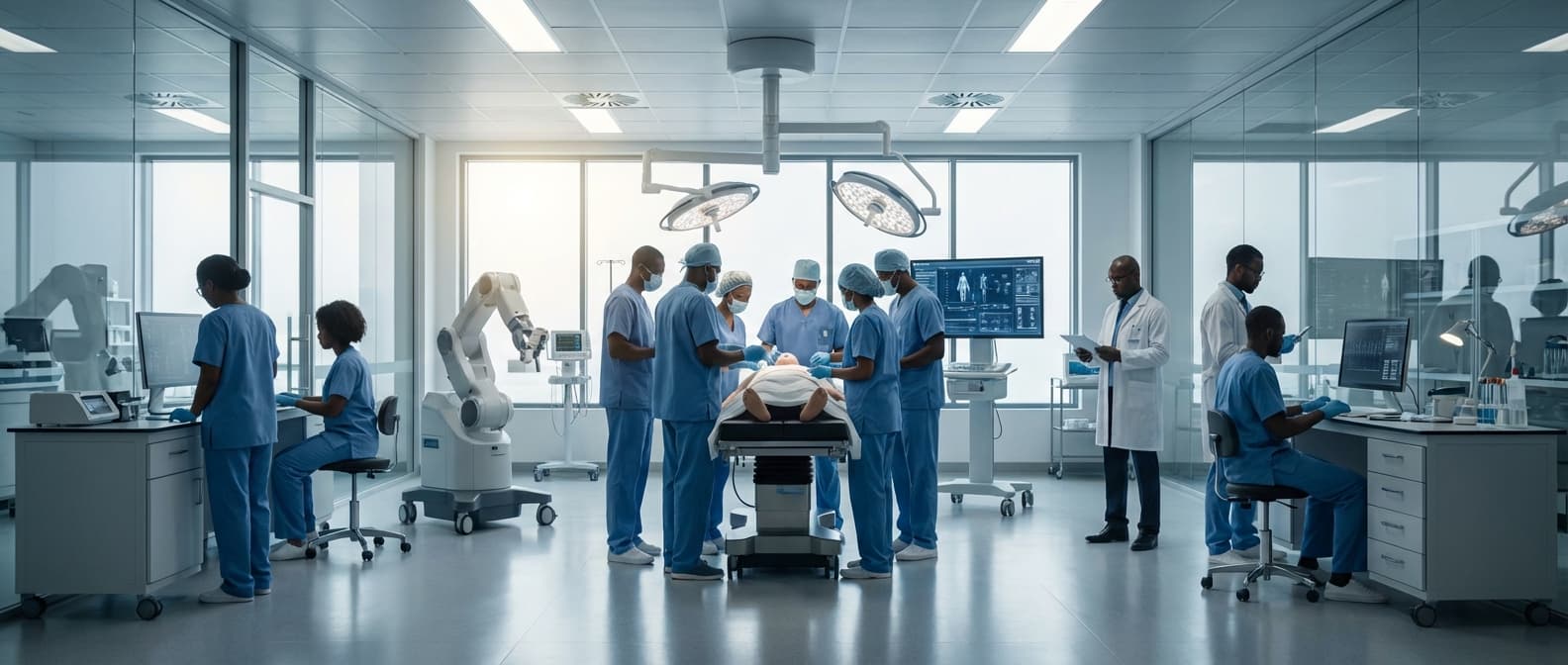
Managed Equipment Service (MES) in Equatorial Guinea
Engineering Excellence & Technical Support
Long‑term equipment provision with uptime SLAs and lifecycle management. High-standard technical execution following OEM protocols and local regulatory frameworks.
Remote Asset Monitoring & Predictive Maintenance
Leveraging IoT sensors and advanced analytics, we provide real-time visibility into equipment health across Equatorial Guinea, enabling proactive maintenance to prevent costly downtime and optimize operational efficiency for our clients.
Optimized Spare Parts Inventory Management
Through our MES, we implement intelligent spare parts management systems, forecasting demand and ensuring critical components are strategically stocked across your facilities in Equatorial Guinea, minimizing lead times and reducing inventory holding costs.
On-Site Technical Expertise & Rapid Response
Our highly skilled, locally-based technical teams in Equatorial Guinea offer on-site support and rapid response for all managed equipment. We ensure swift troubleshooting and repairs, maximizing uptime and guaranteeing adherence to stringent operational standards.
What Is Managed Equipment Service (Mes) In Equatorial Guinea?
Managed Equipment Service (MES) in Equatorial Guinea refers to a comprehensive outsourcing model where a third-party provider takes responsibility for the entire lifecycle of specific equipment or a fleet of equipment on behalf of a client. This encompasses acquisition, installation, operation, maintenance, repair, upgrades, and eventual decommissioning. MES shifts the operational and financial burden of equipment management from the client to the service provider, allowing the client to focus on their core business activities. The service is typically contracted for a defined period, with clear service level agreements (SLAs) defining performance metrics, uptime guarantees, and response times.
| Who Needs MES? | Typical Use Cases |
|---|---|
| Energy Sector (Oil & Gas, Power Generation): Companies operating in remote or challenging environments, requiring specialized and high-uptime equipment. | Industrial Manufacturing: Factories requiring specialized machinery for production lines, with a need for consistent operational availability. |
| Healthcare Sector: Hospitals and clinics needing reliable medical imaging equipment, laboratory instruments, and life support systems. | Mining and Extractive Industries: Operations in demanding physical locations relying on heavy-duty machinery for extraction and processing. |
| Telecommunications: Infrastructure providers managing large networks of base stations, data centers, and transmission equipment. | Logistics and Transportation: Companies operating large fleets of specialized vehicles or material handling equipment. |
| Government and Public Services: Agencies requiring specialized equipment for infrastructure projects, defense, or public utilities. | Large-scale agricultural operations utilizing advanced machinery for planting, harvesting, and processing. |
Key Components of Managed Equipment Service (MES):
- Equipment Sourcing and Procurement: Identifying, selecting, and acquiring the necessary equipment based on client requirements and operational needs.
- Installation and Commissioning: Professional installation, configuration, and testing to ensure optimal performance and integration with existing infrastructure.
- Preventive and Predictive Maintenance: Implementing regular maintenance schedules and employing advanced monitoring techniques to prevent failures and minimize downtime.
- Corrective Maintenance and Repair: Swift and efficient resolution of equipment malfunctions and breakdowns, including the provision of spare parts.
- Technical Support and Troubleshooting: Providing expert assistance to address operational issues and user queries.
- Performance Monitoring and Optimization: Continuous tracking of equipment performance against KPIs and implementing adjustments for efficiency gains.
- Logistics and Inventory Management: Managing the supply chain for spare parts and consumables to ensure availability.
- Reporting and Analytics: Providing detailed reports on equipment status, performance, maintenance activities, and costs.
- Technology Upgrades and Refresh: Planning and executing equipment upgrades or replacements to incorporate new technologies and maintain obsolescence management.
- Decommissioning and Disposal: Responsible removal and environmentally sound disposal or recycling of end-of-life equipment.
Who Needs Managed Equipment Service (Mes) In Equatorial Guinea?
Managed Equipment Service (MES) offers a comprehensive solution for organizations in Equatorial Guinea looking to optimize their medical device lifecycle, from acquisition and maintenance to upgrades and disposal. This service ensures that healthcare providers have access to reliable, up-to-date medical technology, thereby improving patient care and operational efficiency. MES addresses challenges such as high capital expenditure, the need for specialized technical expertise, and the complexities of managing a diverse medical equipment inventory.
| Department | Key Needs Addressed by MES | Examples of Equipment |
|---|---|---|
| Radiology/Imaging | Ensuring uptime and calibration of imaging equipment, access to latest technologies, cost predictability. | X-ray machines, CT scanners, MRI machines, Ultrasound devices, Mammography units. |
| Surgery/Operating Rooms | Reliability of surgical equipment, sterile maintenance, timely upgrades to advanced surgical tools. | Surgical tables, anesthesia machines, electrosurgical units, patient monitors, surgical lighting. |
| Intensive Care Units (ICU) / Critical Care | Continuous availability of life-support equipment, precise monitoring, rapid response to equipment failures. | Ventilators, defibrillators, ECG machines, infusion pumps, dialysis machines. |
| Laboratory & Diagnostics | Accuracy and reliability of diagnostic tests, maintenance of complex analyzers, inventory management. | Hematology analyzers, biochemistry analyzers, microscopes, PCR machines, immunoassay systems. |
| Emergency Services / Ambulatory Care | Durability and portability of emergency equipment, immediate readiness for deployment, efficient logistics. | Portable defibrillators, portable ultrasound, vital signs monitors, portable oxygen concentrators. |
| General Wards / Patient Care | Availability of essential patient care equipment, ease of use for nursing staff, regular servicing. | Hospital beds with controls, patient lifts, vital signs monitors, nebulizers. |
Target Customers and Departments for MES in Equatorial Guinea
- Government Hospitals: These are often the largest healthcare providers and can benefit significantly from MES to ensure a consistent standard of care across multiple facilities.
- Private Hospitals and Clinics: As the private healthcare sector grows, these institutions require advanced medical technology and reliable maintenance to compete and deliver quality services.
- Missions and Non-Governmental Organization (NGO) Hospitals: Organizations focused on providing healthcare in underserved areas can leverage MES to manage equipment effectively with limited in-house resources.
- Specialized Medical Centers: Facilities focusing on specific areas like diagnostics, surgery, or rehabilitation will have particular equipment needs that MES can address.
- Mines and Oil & Gas Companies (Occupational Health Departments): These companies often operate in remote locations and require robust occupational health services, including on-site medical facilities that rely on well-maintained equipment.
Managed Equipment Service (Mes) Process In Equatorial Guinea
The Managed Equipment Service (MES) process in Equatorial Guinea encompasses a comprehensive workflow designed to provide healthcare facilities with access to advanced medical equipment, along with its maintenance, operation, and upgrade. This service model aims to optimize equipment utilization, reduce operational costs, and ensure continuous availability of state-of-the-art technology. The process typically begins with an inquiry from a healthcare provider and culminates in the successful execution and ongoing management of the equipment service.
| Stage | Description | Key Activities | Responsible Parties | Potential Challenges/Considerations in Equatorial Guinea |
|---|---|---|---|---|
| Inquiry and Needs Assessment | The initial stage where a healthcare facility expresses interest in MES and defines its equipment requirements. | Hospital/clinic identifies needs, contacts MES provider, initial consultations, site surveys, needs analysis. | Healthcare Facility Management, Clinical Staff, MES Provider Business Development Team | Limited awareness of MES, budget constraints, complex existing infrastructure, identification of specific technology needs. |
| Proposal Development and Negotiation | The MES provider develops a tailored proposal based on the assessed needs, including equipment, services, and costs. | MES provider designs solution, calculates costs, develops service level agreements (SLAs), negotiates terms. | MES Provider Technical & Commercial Teams, Healthcare Facility Procurement & Finance Teams | Securing competitive pricing, ensuring alignment with local healthcare priorities, understanding long-term financial commitments. |
| Contracting and Procurement | Formalizing the agreement between the healthcare facility and the MES provider. | Legal review, contract finalization, signing of agreement, procurement of selected equipment. | Legal Departments (both parties), Ministry of Health (potentially for approval), MES Provider Supply Chain | Navigating local legal frameworks, import/customs regulations for equipment, payment terms and currency fluctuations. |
| Equipment Installation and Commissioning | The physical installation and testing of the procured medical equipment at the healthcare facility. | Site preparation, equipment delivery, installation, calibration, rigorous testing and validation. | MES Provider Technical Engineers, Biomedical Technicians, Healthcare Facility Estates/Infrastructure Team | Logistical challenges for remote locations, power supply stability, specialized installation requirements, availability of skilled on-site personnel. |
| Training and Handover | Ensuring that the healthcare facility's staff are adequately trained to operate and maintain the equipment. | Development of training materials, conducting training sessions (clinical & technical), practical demonstrations, final handover. | MES Provider Training Specialists, Clinical Educators, Healthcare Facility End-Users & Technicians | Language barriers, varying levels of existing technical expertise, ensuring long-term retention of knowledge. |
| Ongoing Operation and Maintenance | The continuous management, upkeep, and repair of the equipment throughout the contract period. | Preventive maintenance, corrective maintenance, spare parts management, remote monitoring (if applicable), on-call support. | MES Provider Field Service Engineers, Technical Support Team, Healthcare Facility Clinical & Technical Staff | Timely access to spare parts, availability of qualified technicians, response times for emergency repairs, geographical dispersion of facilities. |
| Performance Monitoring and Reporting | Tracking the performance of the equipment and the MES provider against agreed-upon SLAs. | Data collection on uptime, utilization, maintenance history, incident reports, regular performance reviews with the facility. | MES Provider Operations Management, Healthcare Facility Administration | Ensuring data accuracy and transparency, demonstrating value and return on investment (ROI), constructive feedback mechanisms. |
| Equipment Upgrade and Lifecycle Management | Planning for and executing upgrades or replacements of equipment as technology advances or needs change. | Technology scouting, obsolescence management, re-evaluation of needs, phased upgrades, planning for new procurement. | MES Provider Product Management, Healthcare Facility Strategic Planning, Ministry of Health | Budgeting for future upgrades, ensuring interoperability of new technologies, managing the transition smoothly. |
| Decommissioning and Replacement | The responsible removal and disposal of old equipment and the introduction of new systems. | Safe removal of old equipment, environmentally sound disposal, installation of new equipment, knowledge transfer. | MES Provider Logistics & Technical Teams, Healthcare Facility Management, Environmental Agencies (if applicable) | Compliance with disposal regulations, minimizing disruption to services during replacement, efficient asset management. |
Key Stages of the MES Process in Equatorial Guinea
- Inquiry and Needs Assessment
- Proposal Development and Negotiation
- Contracting and Procurement
- Equipment Installation and Commissioning
- Training and Handover
- Ongoing Operation and Maintenance
- Performance Monitoring and Reporting
- Equipment Upgrade and Lifecycle Management
- Decommissioning and Replacement
Managed Equipment Service (Mes) Cost In Equatorial Guinea
Managed Equipment Service (MES) in Equatorial Guinea, while a niche market, involves significant investment and relies on several key factors that influence its pricing. The cost of MES is highly variable and depends on the specific equipment, the level of service required, the duration of the contract, and the provider's operational overheads. The local currency is the Central African CFA franc (XAF). Pricing often involves a combination of upfront costs, recurring service fees, and potentially usage-based charges.
Several factors contribute to the overall cost of MES in Equatorial Guinea:
- Equipment Type and Complexity: High-value, specialized, or technologically advanced medical equipment (e.g., MRI scanners, CT scanners, advanced laboratory analyzers) will inherently command higher MES fees than simpler devices (e.g., basic patient monitors, X-ray machines). The complexity of maintenance and the need for specialized technicians play a crucial role.
- Number of Equipment Units: A larger volume of equipment under a single MES contract can sometimes lead to economies of scale, potentially reducing the per-unit cost. However, it also increases the provider's overall responsibility and resource allocation.
- Service Level Agreement (SLA): The scope and responsiveness of the SLA are paramount. Higher levels of service, such as 24/7 on-call support, guaranteed response times, preventive maintenance schedules, and comprehensive spare parts coverage, will naturally increase costs. Basic preventive maintenance and reactive repairs will be less expensive.
- Contract Duration: Longer-term MES contracts (e.g., 5-10 years) often allow providers to amortize their investments and offer more competitive pricing compared to shorter-term agreements. This also provides greater stability for both parties.
- Provider's Overhead and Expertise: The operational costs of the MES provider in Equatorial Guinea, including logistics, import duties on spare parts, local staffing, training, and administrative expenses, are factored into the pricing. Providers with established infrastructure and experienced local technical teams may offer more streamlined pricing.
- Geographic Location and Accessibility: The cost of deploying technicians and equipment to remote or difficult-to-access locations within Equatorial Guinea can add to the overall MES expenses.
- Training and Capacity Building: Some MES contracts may include components for training local hospital staff on equipment operation and basic maintenance, which adds to the service scope and cost.
- Spare Parts Inventory and Management: The cost of maintaining an adequate inventory of spare parts, including potential import challenges and lead times in Equatorial Guinea, directly impacts the pricing. Providers who absorb this risk will charge accordingly.
- Technology Upgrades and Obsolescence: MES contracts may also account for the eventual need for technology upgrades or the risk of equipment obsolescence, often through clauses for replacement or modernization within the contract term.
- Risk Transfer: A significant aspect of MES is the transfer of risk from the healthcare provider to the MES provider. This includes the risk of equipment downtime, unexpected repair costs, and the management of obsolescence. The pricing reflects this risk mitigation.
Pricing Ranges in Local Currency (XAF):
Due to the specialized nature and limited public data for MES in Equatorial Guinea, providing precise, universally applicable price ranges is challenging. The following are indicative estimates and can vary significantly based on the factors above. These figures typically represent annual costs per piece of equipment or as part of a larger portfolio.
For moderately complex medical equipment (e.g., standard X-ray, ultrasound, basic laboratory equipment) with a comprehensive SLA, annual MES costs could range from 5,000,000 XAF to 20,000,000 XAF per unit. For highly advanced and expensive equipment (e.g., MRI, CT scanners, sophisticated imaging systems), the annual MES costs could range from 25,000,000 XAF to 100,000,000 XAF or more per unit, depending on the manufacturer's service package and the criticality of the equipment to the facility's operations.
For large-scale projects encompassing a wide array of equipment across multiple departments, a custom-tailored pricing model would be developed, often involving a significant upfront investment for setup and a substantial annual service fee, potentially running into hundreds of millions of XAF per year.
| Equipment Category | Indicative Annual MES Cost Range (XAF) | Notes |
|---|---|---|
| Moderately Complex Equipment (e.g., X-ray, Ultrasound, Basic Labs) | 5,000,000 - 20,000,000 | Assumes comprehensive SLA, standard maintenance and parts. |
| Highly Advanced/Expensive Equipment (e.g., MRI, CT Scanners) | 25,000,000 - 100,000,000+ | Depends heavily on specific model, manufacturer service, and criticality. |
Key Factors Influencing MES Costs in Equatorial Guinea
- Equipment Type and Complexity
- Number of Equipment Units
- Service Level Agreement (SLA)
- Contract Duration
- Provider's Overhead and Expertise
- Geographic Location and Accessibility
- Training and Capacity Building
- Spare Parts Inventory and Management
- Technology Upgrades and Obsolescence
- Risk Transfer
Affordable Managed Equipment Service (Mes) Options
Managed Equipment Service (MES) offers a cost-effective and streamlined approach to acquiring, maintaining, and upgrading essential medical equipment. Instead of outright purchase, which ties up significant capital and incurs ongoing maintenance costs, MES shifts this responsibility to a third-party provider. This allows healthcare facilities to focus on patient care rather than equipment management. Affordable MES options are increasingly available through strategic planning, value bundles, and proactive cost-saving strategies. These strategies aim to optimize equipment utilization, reduce downtime, and ensure access to the latest technology without overwhelming budgets.
| Value Bundle Type | Included Services | Benefits | Cost-Saving Mechanism |
|---|---|---|---|
| Basic Maintenance Bundle | Scheduled preventative maintenance, on-demand repairs, basic parts replacement. | Ensures equipment reliability, reduces unexpected breakdowns. | Predictable maintenance costs, lower repair expenses due to early detection. |
| Comprehensive Care Bundle | Includes Basic Maintenance Bundle plus software updates, calibration, and limited equipment upgrades. | Maximizes equipment lifespan and performance, keeps technology current. | Avoids costly premature replacements, leverages vendor expertise for optimal performance. |
| Full-Service Solution | Encompasses Comprehensive Care Bundle plus proactive technology refresh, full parts and labor, and dedicated support. | Eliminates capital expenditure on new equipment, provides access to cutting-edge technology. | Spreads costs over time, eliminates obsolescence risk, improves operational efficiency through advanced features. |
| Usage-Based MES | Costs are tied to actual equipment usage (e.g., number of procedures, hours of operation). | Ideal for facilities with variable equipment needs, ensures payment for what is used. | Direct correlation between cost and utilization, prevents overspending on underutilized equipment. |
Key Components of Affordable MES
- Equipment Acquisition & Procurement
- On-site or Remote Maintenance & Repair
- Preventative Maintenance Programs
- Equipment Upgrades & Replacements
- Consumables Management (optional)
- Staff Training & Support (optional)
Verified Providers In Equatorial Guinea
In Equatorial Guinea's evolving healthcare landscape, identifying trustworthy and high-quality medical providers is paramount. Franance Health has emerged as a leader, distinguishing itself through its rigorous credentialing process and unwavering commitment to patient well-being. This dedication ensures that all providers associated with Franance Health meet the highest standards of medical expertise, ethical conduct, and patient care. When seeking medical services in Equatorial Guinea, choosing a Franance Health-verified provider offers peace of mind and access to exceptional healthcare.
| Provider Type | Franance Health Verification Criteria | Benefits for Patients |
|---|---|---|
| General Practitioners | Valid medical license, at least 3 years of clinical experience, positive patient feedback, adherence to national health guidelines. | Reliable primary care, early diagnosis and treatment, referral to specialists when needed. |
| Specialists (e.g., Cardiologists, Surgeons) | Board certification in their specialty, extensive post-graduate training, proven surgical outcomes (if applicable), membership in relevant professional bodies. | Expert diagnosis and treatment for specific conditions, advanced medical procedures, improved health outcomes. |
| Diagnostic Centers | Accredited facilities, use of certified equipment, qualified technical staff, adherence to quality control protocols. | Accurate and reliable diagnostic test results, timely identification of health issues. |
| Hospitals | Licensed healthcare facilities, availability of essential medical equipment and services, qualified medical and nursing staff, robust infection control protocols. | Comprehensive medical care, surgical services, emergency care, inpatient and outpatient treatments. |
Why Franance Health Credentials Matter
- Rigorous Vetting: Franance Health employs a multi-faceted vetting process that goes beyond basic licensing. This includes verifying educational qualifications, professional experience, board certifications, and a clean disciplinary record.
- Commitment to Excellence: Only providers who demonstrate a consistent track record of high-quality patient care, adherence to ethical guidelines, and a commitment to ongoing professional development are granted Franance Health credentials.
- Patient Safety Focused: The credentialing process prioritizes patient safety by thoroughly evaluating a provider's ability to deliver care competently and responsibly.
- Transparency and Trust: Franance Health's verification process provides a transparent assurance to patients, allowing them to make informed decisions about their healthcare providers.
- Access to Specialized Care: By partnering with a wide network of verified specialists, Franance Health ensures access to a comprehensive range of medical services, from general practice to complex surgical interventions.
Scope Of Work For Managed Equipment Service (Mes)
This document outlines the Scope of Work (SOW) for a Managed Equipment Service (MES) contract. It details the technical deliverables expected from the MES provider and the standard specifications that will govern the provision of these services. The MES provider will be responsible for the proactive management, maintenance, and optimization of a defined set of medical equipment, ensuring its availability, performance, and compliance with all relevant regulations and manufacturer guidelines.
| Technical Deliverable | Description | Standard Specification/Requirement |
|---|---|---|
| Equipment Inventory Database | A comprehensive, up-to-date database of all managed equipment, including serial numbers, manufacturer, model, acquisition date, location, and maintenance history. | Must be accessible via a secure online portal. Data to be updated within 2 business days of any equipment addition, removal, or significant change. Adherence to ISO 13485 standards for medical device inventory management. |
| Preventive Maintenance (PM) Schedules | Detailed, manufacturer-recommended PM schedules for each piece of equipment, tailored to usage and environmental factors. | PMs to be performed according to manufacturer specifications and regulatory requirements. Minimum of 95% PM completion rate within the scheduled timeframe. Records of all PM activities to be documented. |
| Corrective Maintenance Response Times | Defined timeframes for responding to and resolving equipment failures and breakdowns. | Critical equipment: 2-hour response, 8-hour resolution (e.g., life support). High-priority equipment: 4-hour response, 24-hour resolution. Standard equipment: 8-hour response, 48-hour resolution. Mean Time To Repair (MTTR) targets to be established and tracked. |
| Calibration Certificates | Provision of traceable calibration certificates for all calibrated equipment. | Calibration to be performed by accredited technicians using certified standards. Certificates to include measurement uncertainty and date of calibration. Valid for the period specified by manufacturer or regulatory body. |
| Service Reports and Performance Metrics | Regular reports detailing maintenance activities, equipment uptime, MTTR, PM completion rates, and other key performance indicators (KPIs). | Monthly reports provided within 10 business days of the end of the reporting period. Quarterly performance reviews to be conducted. Uptime targets to be defined per equipment category (e.g., 98% for critical equipment). |
| Equipment Decommissioning and Disposal | Safe and compliant decommissioning and disposal of end-of-life equipment. | Adherence to environmental regulations (e.g., WEEE directive) and data privacy standards. Records of disposal to be maintained. |
| Spare Parts and Consumables Management | Ensuring availability of necessary spare parts and consumables to minimize downtime. | Stock levels to be maintained at agreed-upon thresholds. Lead times for critical parts to be less than 48 hours. Use of OEM-approved or equivalent parts. |
| Training Records | Documentation of training provided to clinical staff on equipment operation and basic troubleshooting. | Training to be conducted by qualified personnel. Records of attendance and topics covered to be maintained. |
| Regulatory Compliance Documentation | Provision of documentation demonstrating compliance with all relevant healthcare regulations and standards (e.g., FDA, MDR, local health authority requirements). | All maintenance and calibration activities to be performed in accordance with current Good Manufacturing Practices (cGMP) and Good Clinical Practices (GCP) where applicable. Regular audits by the MES provider to ensure ongoing compliance. |
| Technology Refresh Plan | A proactive plan for the upgrade or replacement of aging or obsolete equipment. | Annual review of equipment lifecycle. Recommendations for replacement based on performance, cost of ownership, and technological advancements. Funding models to be discussed and agreed upon. |
Key Areas of Managed Equipment Service (MES)
- Equipment Inventory and Asset Management
- Preventive Maintenance (PM) and Calibration
- Corrective Maintenance and Repair
- Equipment Performance Monitoring and Optimization
- Compliance and Regulatory Adherence
- Training and Technical Support
- Consumables and Spare Parts Management
- Technology Refresh and Lifecycle Management
- Reporting and Performance Metrics
Service Level Agreement For Managed Equipment Service (Mes)
This Service Level Agreement (SLA) outlines the service standards for Managed Equipment Service (MES), focusing on critical response times and guaranteed uptime for all covered equipment. It is designed to ensure minimal disruption and maximum operational efficiency for the client.
| Service Component | Response Time Target | Uptime Guarantee | Notes |
|---|---|---|---|
| Critical Equipment Failure (Class A) | Within 4 business hours | 99.9% monthly | Equipment critical to core business operations. Service aims to restore functionality. |
| Major Equipment Malfunction (Class B) | Within 8 business hours | 99.5% monthly | Significant equipment degradation impacting workflow but not core operations. |
| Minor Equipment Issue (Class C) | Within 24 business hours | 99.0% monthly | Non-critical issues, cosmetic defects, or minor performance impacts. |
| Scheduled Maintenance | As per pre-agreed schedule | N/A (scheduled downtime accounted for) | Downtime communicated and approved in advance. |
| Preventative Maintenance | As per manufacturer recommendation/service plan | N/A (minimal impact expected) | Proactive measures to prevent failures. |
Scope of Service
- This SLA applies to all equipment designated as Managed Equipment Service (MES) under the primary agreement.
- It covers scheduled maintenance, unscheduled repairs, and preventative maintenance activities.
- The service provider is responsible for responding to and resolving issues within the defined timeframes.
- Client responsibilities include providing access to equipment, necessary documentation, and timely reporting of issues.
Frequently Asked Questions

Ready when you are
Let's scope your Managed Equipment Service (MES) in Equatorial Guinea project in Equatorial Guinea.

Scaling healthcare logistics and technical systems across the entire continent.