
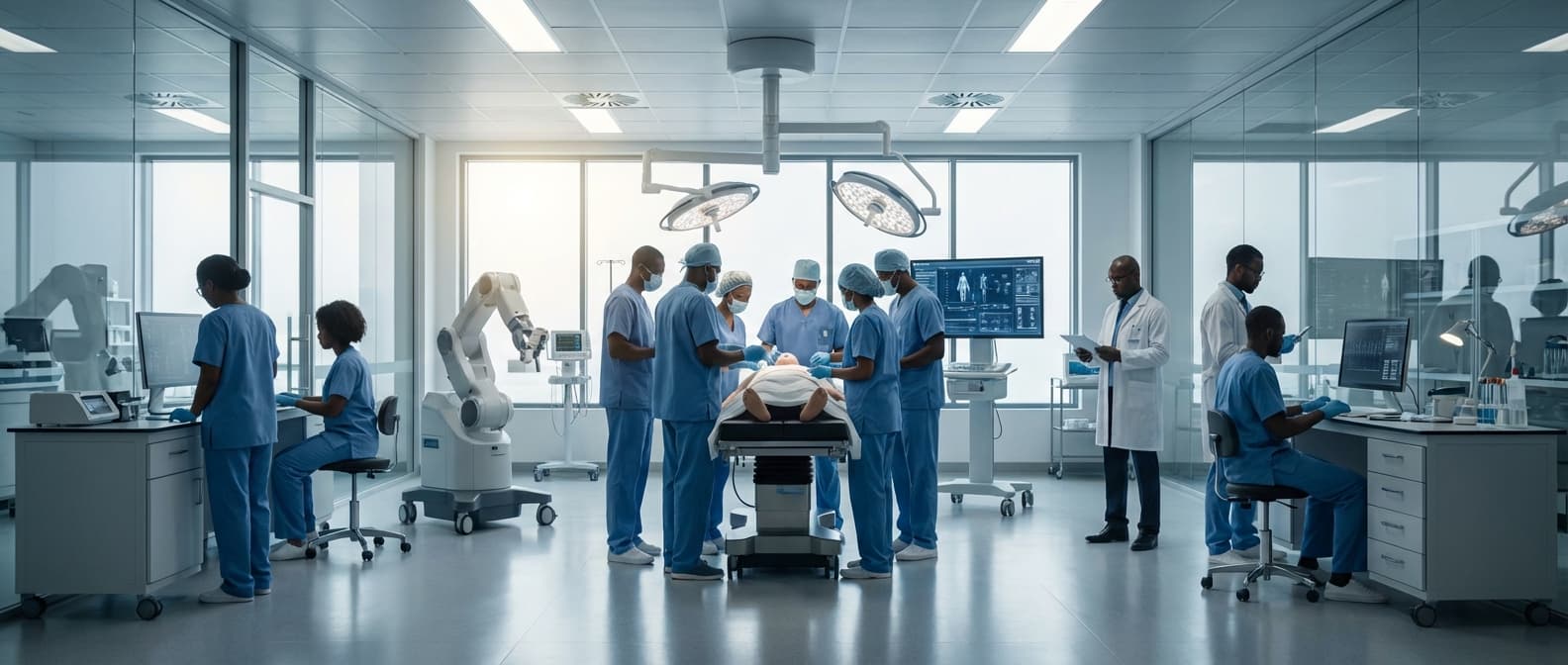
Calibration & Electrical Safety Testing in Equatorial Guinea
Engineering Excellence & Technical Support
Equipment calibration and IEC safety testing High-standard technical execution following OEM protocols and local regulatory frameworks.
Ensuring Reliable Power with Precision Calibration
Our expert calibration services for electrical measuring instruments are vital for Equatorial Guinea's energy sector. We ensure the accuracy of critical equipment like multimeters, oscilloscopes, and power analyzers, guaranteeing precise power delivery and minimizing operational risks for industries reliant on stable electricity.
Enhancing Workplace Safety Through Rigorous Electrical Testing
Prioritizing worker well-being, we conduct comprehensive electrical safety testing in Equatorial Guinea. Our inspections and certifications of electrical equipment, installations, and grounding systems identify potential hazards, preventing accidents and ensuring compliance with international safety standards for a secure working environment.
Boosting Industrial Efficiency with Accurate Measurement Systems
For Equatorial Guinea's growing industrial base, maintaining the integrity of measurement systems is paramount. Our calibration and testing services for process control instruments, sensors, and actuators lead to optimized production, reduced waste, and enhanced overall operational efficiency, supporting economic development.
What Is Calibration & Electrical Safety Testing In Equatorial Guinea?
Calibration and Electrical Safety Testing (EST) are critical procedures for ensuring the accurate functioning and safe operation of electrical equipment. Calibration involves the comparison of a measuring instrument's readings against a known standard, allowing for the adjustment of the instrument to minimize deviations and guarantee its accuracy over its intended operational range. Electrical Safety Testing, on the other hand, is a series of tests designed to verify that electrical equipment complies with relevant safety standards, identifying potential hazards such as inadequate insulation, grounding faults, or overcurrent protection failures. These services are paramount in maintaining the reliability, performance, and safety of a wide array of electrical assets, thereby preventing equipment malfunction, operational downtime, and ensuring the well-being of personnel and the public.
| Who Needs Calibration & EST? | Typical Use Cases | Regulatory/Industry Context in Equatorial Guinea |
|---|---|---|
| Manufacturing Facilities: Production lines, quality control laboratories. | Ensuring product quality and safety compliance for exported and domestically sold goods. Calibration of process control instruments and safety testing of manufactured electrical products. | Compliance with national and international quality standards (e.g., ISO certifications). Adherence to directives for product safety in target markets. |
| Oil & Gas Industry: Offshore platforms, onshore processing plants, refineries. | Calibration of critical measurement instruments (pressure, temperature, flow) for process control and safety. EST of electrical equipment operating in hazardous (explosive) environments, ensuring ATEX or IECEx compliance. | Strict adherence to international industry safety standards (API, IEC, ATEX, IECEx) and national regulations for offshore and onshore operations. Safety is paramount in this sector. |
| Healthcare Sector: Hospitals, clinics, diagnostic centers. | Calibration of medical equipment (e.g., patient monitors, imaging devices) for accurate diagnosis and treatment. EST of all medical electrical devices to prevent patient harm from electrical hazards. | Compliance with medical device regulations, national health authority guidelines, and international standards (e.g., IEC 60601 series). Patient safety is non-negotiable. |
| Telecommunications Companies: Network infrastructure, data centers. | Calibration of network testing equipment for signal integrity and performance. EST of power supplies, servers, and network devices to prevent system failures and fires. | Adherence to telecommunications standards and best practices. Ensuring reliable service delivery and preventing data loss or damage. |
| Power Generation & Distribution Companies: Power plants, substations, transmission lines. | Calibration of metering and protection relays for accurate power billing and grid stability. EST of switchgear, transformers, and control systems to ensure operational safety and prevent blackouts. | Compliance with national electricity regulations and international grid codes. Ensuring the reliable and safe supply of electricity to consumers. |
| Commercial & Industrial Facilities: Large buildings, hotels, shopping malls, industrial workshops. | Calibration of HVAC controls, lighting systems, and fire detection equipment. EST of portable appliances, fixed installations, and emergency lighting systems to ensure occupant safety and compliance with building codes. | Compliance with local building codes, fire safety regulations, and occupational health and safety legislation. Regular testing is often a legal requirement. |
Key Components of Calibration & Electrical Safety Testing
- Calibration:
- Traceability: Establishing a documented link between the instrument being calibrated and national or international standards.
- Verification: Checking if the instrument's readings fall within acceptable tolerances.
- Adjustment: Modifying the instrument's settings to bring its readings into compliance.
- Certification: Providing a formal document attesting to the calibration status and accuracy of the instrument.
- Electrical Safety Testing (EST):
- Insulation Resistance Testing: Assessing the integrity of electrical insulation to prevent leakage currents.
- Earth Bond Resistance Testing: Verifying the continuity and low resistance of protective earthing conductors.
- Dielectric Strength (Hipot) Testing: Applying a high voltage to test the insulation's ability to withstand electrical stress.
- Polarity Testing: Ensuring correct connections of live and neutral conductors.
- Leakage Current Testing: Measuring any unintended current flowing to earth or chassis.
- Functional Testing: Verifying the correct operation of safety features like emergency stop buttons.
Who Needs Calibration & Electrical Safety Testing In Equatorial Guinea?
In Equatorial Guinea, ensuring the accuracy and safety of electrical and electronic equipment is paramount for a wide range of industries and organizations. Calibration and electrical safety testing are not just regulatory requirements but essential for operational efficiency, employee well-being, and the integrity of sensitive processes. This service is crucial for any entity relying on precise measurements or operating with potentially hazardous electrical systems.
| Industry/Sector | Key Departments/Functions | Primary Need for Calibration | Primary Need for Electrical Safety Testing |
|---|---|---|---|
| Oil & Gas | Operations, Engineering, HSE, Maintenance | Flow meters, pressure gauges, gas detectors, analytical instruments | Drilling equipment, processing machinery, control systems, hazardous area equipment |
| Healthcare | Biomedical Engineering, Radiology, Laboratories, Nursing | Patient monitors, ventilators, diagnostic equipment, centrifuges | All medical devices, surgical equipment, imaging systems |
| Industrial Manufacturing | Production, Quality Assurance, Maintenance, Engineering | Temperature sensors, pressure transducers, flow meters, dimensional instruments | Production machinery, power distribution systems, control panels |
| Telecommunications | Network Operations, Field Maintenance, Engineering | Spectrum analyzers, power meters, signal generators | Base stations, transmission equipment, data centers |
| Food & Beverage | Production, Quality Control, Engineering | Temperature probes, pH meters, weight scales, humidity sensors | Processing lines, packaging equipment, refrigeration units |
| Water/Wastewater Treatment | Operations, Engineering, Environmental Services | Level sensors, flow meters, chemical dosing controllers, pH meters | Pumping stations, control panels, filtration systems |
Target Customers and Departments Requiring Calibration & Electrical Safety Testing in Equatorial Guinea
- Industrial Manufacturing: Factories and production facilities depend on calibrated instruments for quality control, process monitoring, and ensuring machinery operates within specified parameters. Departments like Production, Quality Assurance, and Maintenance are key stakeholders.
- Oil and Gas Sector: Given Equatorial Guinea's significant oil and gas industry, this sector has a critical need for calibrated measurement devices in exploration, production, refining, and transportation. Safety is paramount, making electrical safety testing for all equipment, especially in hazardous environments, a non-negotiable. Departments include Operations, Engineering, HSE (Health, Environment, and Safety), and Maintenance.
- Healthcare Facilities: Hospitals, clinics, and diagnostic laboratories require meticulously calibrated medical equipment (e.g., patient monitors, anesthesia machines, diagnostic imaging devices) to ensure accurate patient care and diagnosis. Electrical safety testing is vital to protect patients and staff from electrical hazards. Key departments are Biomedical Engineering, Radiology, Laboratories, and Nursing.
- Research and Development Institutions: Universities and R&D centers utilize sensitive laboratory instruments for experiments and analysis. Accurate calibration is essential for reliable research outcomes. Electrical safety testing ensures the safe operation of research equipment. Departments include Research Labs, Academic Departments, and Technical Support.
- Telecommunications Companies: Accurate calibration of transmission and network equipment is necessary for maintaining signal integrity and network performance. Electrical safety testing is important for the safety of technicians and the reliability of infrastructure. Departments include Network Operations, Field Maintenance, and Engineering.
- Food and Beverage Industry: Calibration of temperature, pressure, and other process control instruments is critical for food safety, quality, and consistency. Electrical safety testing ensures compliance with health and safety regulations. Departments include Production, Quality Control, and Engineering.
- Water and Wastewater Treatment Plants: Precise calibration of sensors and control systems is necessary for effective water purification and waste management. Electrical safety testing is crucial for the safety of operators in these potentially wet environments. Departments include Operations, Engineering, and Environmental Services.
- Government and Public Services: Agencies involved in metrology, public health, and infrastructure management may require calibration and testing services for official standards or public safety equipment. Departments include National Metrology Institutes, Public Works, and Health Departments.
- Construction and Engineering Firms: While not directly operating equipment for daily calibration needs, these firms often utilize calibrated surveying equipment and ensure the electrical safety of their temporary installations and machinery on-site. Departments include Surveying, Project Management, and Site Operations.
Calibration & Electrical Safety Testing Process In Equatorial Guinea
This document outlines the typical workflow for conducting calibration and electrical safety testing services in Equatorial Guinea, from the initial inquiry to the final execution and reporting. The process is designed to ensure compliance with relevant standards and client requirements, guaranteeing the accuracy and safety of electrical equipment.
| Stage | Key Activities | Deliverables/Outcomes | Responsible Parties |
|---|---|---|---|
| Inquiry & Consultation | Client expresses need, provides initial details. Service provider clarifies requirements. | Clear understanding of scope, initial client needs assessment. | Client, Service Provider |
| Scope Definition & Quotation | Detailed scope formulation, cost estimation, timeline projection. | Formal quotation, proposed terms and conditions. | Service Provider |
| Agreement & Scheduling | Contract finalization, scheduling of services, logistics planning. | Signed agreement, confirmed testing schedule. | Client, Service Provider |
| Pre-Testing Preparations | Equipment readiness check, technician briefing, site confirmation. | Calibrated test equipment, prepared technicians, confirmed site access. | Service Provider |
| Testing Execution | Performing calibration and/or electrical safety tests on equipment. | Measured data, initial test results. | Service Provider (Technicians) |
| Data Recording & Assessment | Meticulous recording of all readings, preliminary analysis of results. | Raw test data, initial compliance indications. | Service Provider (Technicians) |
| Reporting & Certification | Compilation of test results into a formal report, issuance of certificates. | Calibration certificate, electrical safety test report. | Service Provider (Reporting Team) |
| Review & Delivery | Internal quality review of documentation, client submission. | Approved reports and certificates, client understanding of results. | Service Provider, Client |
| Invoicing & Payment | Issuance of final invoice, client processing of payment. | Paid invoice. | Service Provider, Client |
| Record Keeping & Follow-Up | Archiving test records, scheduling future maintenance or testing. | Organized service history, scheduled future engagements. | Service Provider |
Calibration & Electrical Safety Testing Process in Equatorial Guinea
- {"title":"1. Inquiry & Initial Consultation","description":"The process begins with a client submitting an inquiry, typically via email, phone, or a dedicated inquiry form. This inquiry should include details about the equipment to be tested, the type of service required (calibration, electrical safety testing, or both), the quantity of items, desired timeframe, and any specific standards or certifications the client needs to meet."}
- {"title":"2. Scope Definition & Quotation","description":"Upon receiving the inquiry, the service provider will review the request and may schedule an initial consultation (phone or video call) to clarify any ambiguities. Based on the defined scope of work, a detailed quotation will be prepared, outlining the services to be performed, the estimated costs, payment terms, and the projected timeline. This quotation is then submitted to the client for review and approval."}
- {"title":"3. Agreement & Scheduling","description":"Once the client approves the quotation, a formal agreement or contract is established. This document will reiterate the scope of work, terms, and conditions. Following the agreement, the testing schedule is finalized, considering the client's operational needs and the service provider's availability. Logistics such as site access, personnel requirements, and any necessary permits are also addressed."}
- {"title":"4. Pre-Testing Preparations","description":"Before the on-site or off-site testing commences, preparatory work is undertaken. This includes ensuring all necessary testing equipment is calibrated and available, technicians are assigned and briefed on the specific requirements, and any client-provided documentation (e.g., equipment manuals, previous test reports) is reviewed. For on-site testing, the service provider confirms site readiness and safety protocols."}
- {"title":"5. On-Site or Off-Site Testing Execution","description":"This is the core phase where calibration and/or electrical safety testing is performed. Technicians will follow established procedures and relevant international or local standards (e.g., IEC standards for electrical safety). Calibration involves comparing the equipment's readings against a traceable reference standard and adjusting it to meet specified tolerances. Electrical safety testing assesses insulation resistance, earth continuity, dielectric strength, and other parameters to ensure the equipment is safe for use."}
- {"title":"6. Data Recording & Initial Assessment","description":"Throughout the testing process, all measurements and observations are meticulously recorded. This includes pre-test and post-test readings for calibration, and results for all safety tests. Technicians perform an initial assessment of the data to identify any immediate failures or out-of-tolerance conditions."}
- {"title":"7. Reporting & Certification","description":"Upon completion of the testing, a comprehensive report is generated. This report will detail the equipment tested, the methods used, the results obtained, and the compliance status. For successful calibration, a calibration certificate will be issued, indicating the traceability to national or international standards. For electrical safety testing, a compliance certificate or report will be provided."}
- {"title":"8. Review & Delivery","description":"The generated reports and certificates are reviewed internally by a qualified personnel to ensure accuracy and completeness. The final documentation is then delivered to the client, typically in digital format (PDF) with an option for hard copies if requested. This delivery often includes a debriefing session to explain the findings and recommendations."}
- {"title":"9. Invoicing & Payment","description":"Following the delivery of the reports and certificates, the service provider issues the final invoice according to the agreed-upon payment terms. The client then processes the payment."}
- {"title":"10. Record Keeping & Follow-Up","description":"The service provider maintains detailed records of all testing activities, reports, and certificates for future reference and potential audits. Clients may also be contacted periodically for follow-up to schedule future testing or to address any emerging needs."}
Calibration & Electrical Safety Testing Cost In Equatorial Guinea
Calibration and electrical safety testing are crucial for ensuring the accuracy and safe operation of electrical equipment in Equatorial Guinea. The cost of these services can vary significantly based on several factors. It's important to note that obtaining precise, up-to-date pricing can be challenging in Equatorial Guinea due to limited readily available public data. Therefore, the ranges provided are indicative and subject to negotiation with service providers.
| Service Type | Estimated Cost Range (XAF - Central African CFA franc) | Notes |
|---|---|---|
Key Pricing Factors for Calibration & Electrical Safety Testing in Equatorial Guinea
- {"item":"Type of Equipment/Instrument:","description":"More complex or specialized instruments (e.g., high-precision medical equipment, industrial measurement devices) will naturally incur higher calibration and testing costs compared to standard electrical tools."}
- {"item":"Number of Instruments:","description":"Bulk discounts may be available when multiple items are submitted for calibration and testing simultaneously. This often applies to businesses with extensive equipment inventories."}
- {"item":"Calibration Standards & Accuracy Requirements:","description":"The level of accuracy required for calibration (e.g., traceable to national or international standards) will influence the complexity and cost. Higher accuracy demands generally translate to higher prices."}
- Service Provider's Expertise & Reputation:
- Location of Service:
- Urgency of Service:
- Inclusions & Exclusions:
- Regulatory Compliance:
- Exchange Rates & Import Costs (for specialized parts/consumables):
Affordable Calibration & Electrical Safety Testing Options
Ensuring the accuracy and safety of your electrical equipment is paramount, but calibration and electrical safety testing can sometimes represent a significant investment. Fortunately, there are affordable options and strategic approaches to manage these essential services without breaking the bank. This guide explores value bundles and cost-saving strategies to help you maintain compliance and operational integrity efficiently.
| Service Type | Typical Cost-Saving Strategy | Potential Benefits |
|---|---|---|
| Annual Calibration & Safety Testing | Value Bundle: Combine all annual requirements into one service agreement. | Reduced per-item cost, simplified budgeting, ensures comprehensive coverage. |
| Multiple Instrument Calibration | Volume Discount: Negotiate a lower rate for calibrating a large number of similar instruments. | Significant savings on bulk calibrations, efficient use of technician time. |
| Emergency/Expedited Testing | Off-Peak Scheduling: Arrange for testing during less busy periods. | Lower hourly rates or service fees, reduced waiting times if planned strategically. |
| Basic Equipment Checks | In-House Training: Empower internal staff for initial checks and visual inspections. | Reduced external service calls, faster identification of minor issues, cost savings on routine tasks. |
| Comprehensive Service Package | Scheduled Maintenance Plan: Pre-paid contract for regular calibration and safety checks. | Predictable costs, prioritized service, extended equipment lifespan, compliance assurance. |
| Software & Support | Bundled Software & Training: Purchase calibration management software with integrated training. | Streamlined workflow, reduced training expenses, improved data management, cost-effective implementation. |
Understanding Value Bundles and Cost-Saving Strategies
- Value Bundles: Many service providers offer pre-packaged bundles that combine multiple calibration and testing services at a discounted rate compared to individual service pricing. These bundles are designed to meet common industry needs and can streamline your procurement process.
- Scheduled Maintenance Plans: Opting for a recurring maintenance plan can lock in lower rates and ensure your equipment is tested and calibrated on a proactive schedule, preventing costly downtime and potential failures.
- Off-Peak Scheduling: Inquire about discounts for scheduling services during non-peak hours or seasons. This can be a straightforward way to reduce costs if your operational demands allow for flexibility.
- Volume Discounts: If you have a large inventory of equipment requiring calibration or testing, negotiating volume discounts with your chosen provider can lead to substantial savings.
- In-House Training & Basic Checks: For certain non-critical or routine checks, training your internal team to perform basic visual inspections or functional tests can reduce the reliance on external calibration services for every single task.
- Comparison Shopping & Quotes: Always obtain quotes from multiple reputable calibration and testing laboratories. Prices and service offerings can vary significantly, allowing you to identify the most cost-effective option.
- Tiered Service Levels: Some providers offer different tiers of service (e.g., standard, expedited, premium). Understanding these tiers can help you choose the level that best balances cost and your urgency requirements.
- Software & Documentation Bundles: When selecting calibration software or documentation services, look for bundled packages that include initial setup, training, and ongoing support, often at a better price point than purchasing separately.
- Remote Calibration Options: For certain types of equipment, remote calibration or diagnostic services might be available, reducing travel costs for technicians and potentially offering faster turnaround times.
- Partnerships & Group Purchasing: Consider forming a purchasing group with other businesses in your industry or region to collectively negotiate better rates for calibration and electrical safety testing services.
Verified Providers In Equatorial Guinea
In Equatorial Guinea, ensuring access to reliable healthcare services is paramount. Franance Health stands out as a leading provider, distinguished by its rigorous credentialing process and unwavering commitment to quality. When seeking medical assistance, understanding what makes a provider 'verified' is crucial. For Franance Health, verification signifies a deep dive into their infrastructure, medical personnel, and operational standards, guaranteeing a high level of care.
| Key Benefit | Franance Health Assurance |
|---|---|
| Quality of Care | Guaranteed by adherence to international standards and continuous quality improvement initiatives. |
| Medical Expertise | Ensured through rigorous verification of all practitioners' licenses, certifications, and experience. |
| Technological Advancement | Confirmed by investment in modern medical equipment and diagnostic tools. |
| Patient Well-being | Prioritized through robust safety protocols and a patient-centric approach. |
| Trustworthiness | Built on a foundation of ethical practices and transparent operations. |
Why Franance Health Credentials Matter:
- Comprehensive Accreditation: Franance Health undergoes stringent accreditation processes, adhering to both national and international healthcare standards. This ensures their facilities and practices are up-to-date and meet best-in-class benchmarks.
- Expert Medical Staff: All healthcare professionals associated with Franance Health are thoroughly vetted. This includes verifying their licenses, qualifications, specializations, and ongoing professional development, ensuring you are treated by competent and experienced individuals.
- State-of-the-Art Facilities: Verification includes an assessment of their medical equipment, technology, and overall infrastructure. Franance Health consistently invests in modern facilities and cutting-edge medical technology to provide advanced diagnostic and treatment options.
- Patient Safety Protocols: Rigorous protocols for patient safety, infection control, and emergency preparedness are a cornerstone of Franance Health's verification. This commitment minimizes risks and ensures a secure environment for all patients.
- Ethical Practice and Transparency: Franance Health is committed to ethical medical practices and transparent patient communication. Their verification process includes an examination of their governance, ethical guidelines, and patient rights policies.
Scope Of Work For Calibration & Electrical Safety Testing
This Scope of Work (SOW) outlines the requirements for calibration and electrical safety testing services for medical devices and associated equipment. The objective is to ensure that all equipment is functioning within specified tolerances and meets regulatory safety standards. This SOW details the technical deliverables, standard specifications, and acceptance criteria for the services to be provided.
| Service Category | Description | Technical Deliverables | Standard Specifications/References |
|---|---|---|---|
| Calibration Services | Verification and adjustment of measuring instruments and medical devices to ensure they perform within their specified accuracy limits. |
| ISO/IEC 17025: General requirements for the competence of testing and calibration laboratories. ANSI/NCSL Z540.1: Calibration Laboratories and Measuring and Test Equipment. Manufacturer's specifications and recommended calibration intervals. |
| Electrical Safety Testing (EST) | Testing of medical electrical equipment to ensure it meets safety standards regarding electrical leakage current, grounding integrity, and insulation resistance. |
| IEC 60601-1: Medical electrical equipment - Part 1: General requirements for basic safety and essential performance. AAMI ES60601-1: Medical electrical equipment - Part 1: General requirements for basic safety and essential performance (US equivalent of IEC 60601-1). Relevant national and local electrical safety codes. |
| Preventive Maintenance (Optional) | Routine inspection, cleaning, lubrication, and minor adjustments to maintain equipment in optimal operating condition and prevent failures. |
| Manufacturer's recommended PM schedules and procedures. Internal hospital/clinic PM protocols. |
Key Objectives
- To verify and adjust measurement instruments and medical devices to ensure accuracy and precision.
- To confirm that electrical medical equipment meets all applicable safety standards to prevent harm to patients and users.
- To provide documented evidence of calibration and safety test results for regulatory compliance and quality assurance.
- To minimize downtime and ensure the reliability of critical medical equipment.
Service Level Agreement For Calibration & Electrical Safety Testing
This Service Level Agreement (SLA) outlines the terms and conditions for calibration and electrical safety testing services provided by [Your Company Name] to [Client Company Name]. It defines the expected response times for service requests and the uptime guarantees for any managed calibration programs or associated cloud platforms.
| Service Request Type | Response Time Guarantee (Business Hours) | Resolution/Action Time Guarantee (Business Hours) |
|---|---|---|
| Routine Calibration Request (Non-critical equipment) | Within 4 business hours of acknowledgement | Within 3 business days of scheduled service commencement |
| Urgent Calibration Request (Critical equipment outage) | Within 2 business hours of acknowledgement | Within 1 business day of scheduled service commencement |
| Electrical Safety Test Request (Routine) | Within 4 business hours of acknowledgement | Within 2 business days of scheduled service commencement |
| Electrical Safety Test Request (Urgent - regulatory compliance deadline) | Within 2 business hours of acknowledgement | Within 1 business day of scheduled service commencement |
| Technical Support/Inquiry | Within 4 business hours of acknowledgement | N/A (ongoing support) |
Scope of Services
- Calibration of specified equipment as per industry standards and manufacturer recommendations.
- Electrical safety testing of specified electrical equipment.
- Provision of calibration certificates and test reports.
- Management of calibration schedules (if applicable).
- Access to a client portal for managing test requests and viewing results (if applicable).
Frequently Asked Questions

Ready when you are
Let's scope your Calibration & Electrical Safety Testing in Equatorial Guinea project in Equatorial Guinea.

Scaling healthcare logistics and technical systems across the entire continent.