
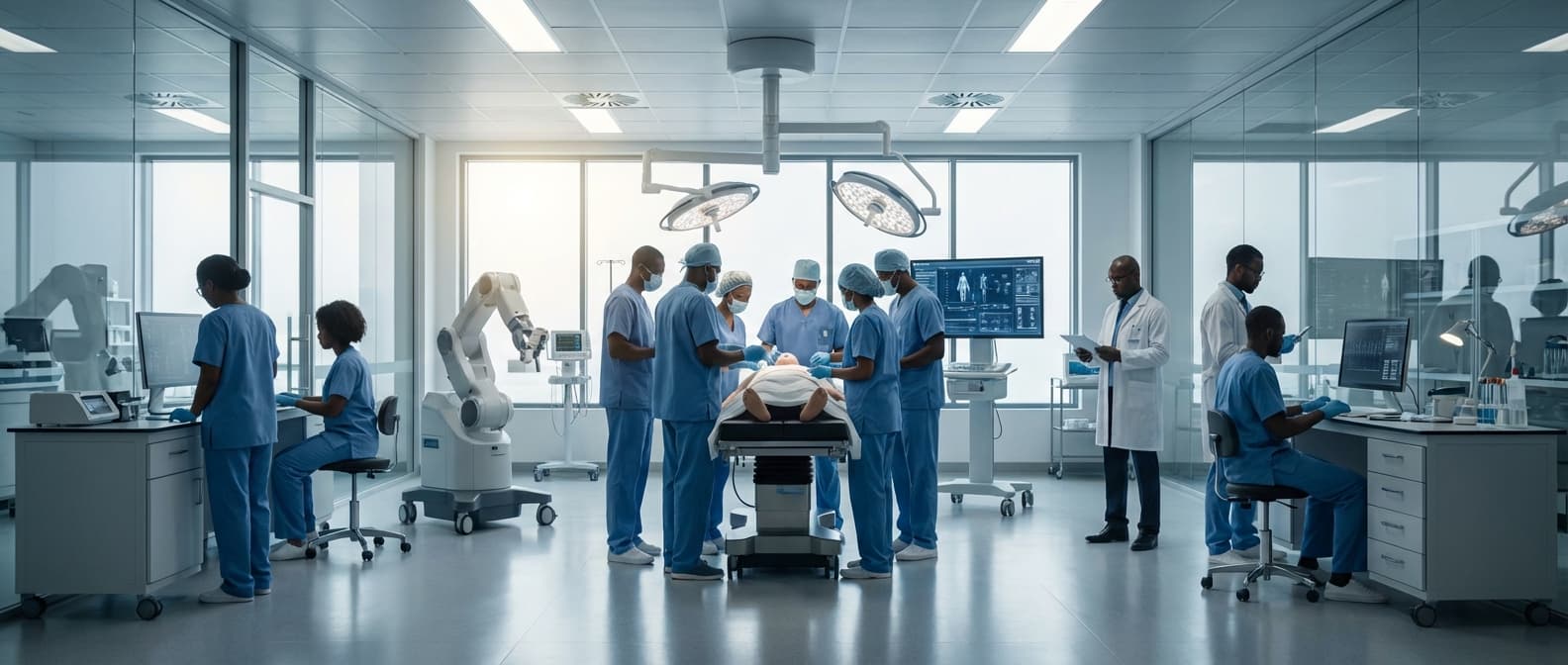
Biomedical Engineering Consulting in Equatorial Guinea
Engineering Excellence & Technical Support
Equipment selection, procurement and implementation consulting High-standard technical execution following OEM protocols and local regulatory frameworks.
Advanced Diagnostic Imaging Solutions
We specialize in implementing and optimizing state-of-the-art diagnostic imaging technologies, including MRI, CT, and ultrasound, tailored to the unique healthcare infrastructure and patient demographics of Equatorial Guinea. Our expertise ensures accurate diagnosis and improved patient outcomes by providing seamless integration, calibration, and ongoing technical support for these critical medical devices.
Healthcare Facility Design & Equipment Planning
Our team provides comprehensive consulting services for the design and equipping of new healthcare facilities and the modernization of existing ones. We leverage biomedical engineering principles to create efficient, safe, and technologically advanced medical environments, from concept to operational readiness, ensuring compliance with international standards and addressing the specific needs of Equatorial Guinean healthcare providers.
Biocompatibility & Medical Device Lifecycle Management
We offer expert guidance on biocompatibility testing and material selection for medical devices used in Equatorial Guinea, ensuring patient safety and regulatory compliance. Furthermore, our services encompass the full lifecycle management of medical equipment, including procurement, installation, maintenance, repair, and eventual decommissioning, to maximize lifespan and minimize operational costs for healthcare institutions.
What Is Biomedical Engineering Consulting In Equatorial Guinea?
Biomedical Engineering Consulting in Equatorial Guinea refers to the provision of expert technical and scientific advice, design, analysis, and implementation services related to medical devices, healthcare systems, and biological applications within the specific regulatory, economic, and infrastructure context of Equatorial Guinea. This service bridges the gap between cutting-edge biomedical technology and the practical needs of healthcare providers, manufacturers, and governmental bodies in the nation.
| Who Needs Biomedical Engineering Consulting in Equatorial Guinea? | Typical Use Cases |
|---|---|
| Hospitals and Clinics (Public & Private): Seeking to upgrade or expand medical equipment inventory, optimize patient care pathways, ensure regulatory compliance, and improve operational efficiency. | Hospital Infrastructure Upgrades: Modernizing diagnostic imaging suites (MRI, CT scanners), establishing new surgical theaters, implementing advanced laboratory automation, or setting up specialized intensive care units. Medical Equipment Procurement: Defining technical specifications, evaluating vendor proposals, and overseeing the installation and validation of new medical devices. Biomedical Equipment Management Programs: Developing strategies for preventative maintenance, repair, and calibration to maximize equipment uptime and lifespan. Patient Safety and Quality Assurance: Implementing protocols for medical device risk management, incident investigation, and adherence to quality standards. |
| Medical Device Manufacturers & Distributors: Aiming to enter or expand their presence in the Equatorial Guinean market, requiring guidance on local regulations, market access strategies, and after-sales support infrastructure. | Market Entry Strategy Development: Understanding import regulations, obtaining necessary certifications, and identifying distribution channels. Establishing Local Support Networks: Setting up and training local technicians for installation, maintenance, and repair services. Product Lifecycle Management: Advising on compliance with local service and disposal requirements. |
| Governmental Health Agencies & Ministries: Responsible for national healthcare policy, infrastructure development, and public health initiatives, requiring expertise in strategic planning and resource allocation for medical technology. | National Healthcare Infrastructure Planning: Developing long-term strategies for medical equipment acquisition and deployment across the country. Public Health Technology Assessment: Evaluating the appropriateness and cost-effectiveness of new technologies for public health programs. Development of Medical Device Regulations: Contributing to the formulation and implementation of national policies governing medical devices. |
| Research Institutions & Universities: Engaged in medical research and education, requiring assistance in setting up and maintaining advanced research laboratories and educational facilities. | Laboratory Design and Equipping: Establishing specialized research labs with cutting-edge analytical and imaging equipment. Curriculum Development: Advising on the inclusion of modern biomedical engineering principles and technologies in academic programs. |
| Investment Firms & Development Banks: Evaluating investment opportunities in the healthcare sector, requiring technical due diligence and market feasibility assessments. | Investment Due Diligence: Assessing the technical viability and operational potential of healthcare projects and businesses. Feasibility Studies: Analyzing the market and technical requirements for new healthcare ventures or expansions. |
Key Aspects of Biomedical Engineering Consulting in Equatorial Guinea:
- Technical Expertise: Offering in-depth knowledge of medical device design, manufacturing, validation, and lifecycle management, including diagnostic equipment, therapeutic devices, and implantable technologies.
- Regulatory Compliance: Navigating and advising on Equatorial Guinean healthcare regulations, import/export laws, and standards pertaining to medical devices and healthcare facilities. This is crucial for market access and operational legality.
- Healthcare System Optimization: Analyzing existing healthcare infrastructure, identifying areas for technological improvement, and recommending solutions for efficient patient care delivery, such as hospital automation, telemedicine integration, and advanced imaging modalities.
- Procurement and Project Management: Assisting in the selection, procurement, installation, and commissioning of biomedical equipment, ensuring alignment with budget constraints, technical specifications, and local maintenance capabilities.
- Risk Management and Safety: Developing and implementing protocols for the safe operation, maintenance, and decommissioning of biomedical equipment, adhering to international safety standards and local occupational health and safety requirements.
- Training and Capacity Building: Providing specialized training for healthcare professionals and technical staff on the operation, maintenance, and troubleshooting of advanced medical technologies, thereby enhancing local expertise and reducing reliance on external support.
- Market Analysis and Feasibility Studies: Conducting assessments of the market demand for specific biomedical technologies and services, evaluating the economic viability of new ventures, and identifying potential challenges and opportunities within Equatorial Guinea's healthcare sector.
- Facility Design and Planning: Advising on the design and layout of new or renovated healthcare facilities, ensuring optimal workflow, infection control, and integration of medical gas systems, electrical infrastructure, and IT networks to support advanced biomedical equipment.
Who Needs Biomedical Engineering Consulting In Equatorial Guinea?
Biomedical Engineering consulting services are crucial for advancing healthcare infrastructure and operational efficiency in Equatorial Guinea. These services cater to a range of stakeholders, from government bodies responsible for public health to private healthcare providers seeking to optimize their medical technology and patient care.
| Target Customer | Relevant Departments / Areas of Need | Key Services Required |
|---|---|---|
| Ministry of Health and Social Welfare | Planning & Infrastructure, Medical Equipment Procurement, Health Technology Assessment, Quality Assurance, Public Health Programs | Development of national health technology strategies, establishment of procurement guidelines, assessment of existing infrastructure, training needs analysis, regulatory framework development. |
| Public Hospitals & Health Centers (e.g., Central Hospital of Bata, Hospital General de Malabo) | Clinical Engineering, Biomedical Engineering Department (if existing or to be established), Procurement, IT, Maintenance & Biomedical Workshops, Quality Management | Medical equipment lifecycle management, preventative maintenance programs, repair services, equipment modernization and upgrades, needs assessments for new equipment, training for medical staff on equipment use, establishment of robust inventory management systems. |
| Private Hospitals & Clinics (e.g., Pan-African Hospital, various private clinics) | Operations Management, Medical Director's Office, Procurement, Facilities Management, IT | Selection and acquisition of specialized medical equipment, optimization of existing equipment utilization, implementation of digital health solutions, cybersecurity for medical devices, compliance with international standards, training for technical staff. |
| Medical Device Manufacturers & Distributors | Sales & Technical Support, Service Departments, Regulatory Affairs, Training & Development | Market entry strategies, understanding local regulatory requirements, establishing service and maintenance networks, training local technicians, post-market surveillance, local content development. |
| Research & Academic Institutions (e.g., University of Equatorial Guinea, research centers) | Research Departments, Laboratories, IT Infrastructure, Academic Administration | Acquisition and maintenance of specialized research equipment, integration of medical technologies in educational curricula, development of research infrastructure, collaboration on technology-driven health projects. |
| International Aid Organizations (e.g., WHO, NGOs operating in Equatorial Guinea) | Program Management, Logistics, Procurement, Health Systems Strengthening | Needs assessments for medical equipment in specific health programs, procurement support for donor-funded projects, capacity building for local healthcare professionals and technicians, evaluation of health technology interventions. |
Target Customers and Departments in Equatorial Guinea Requiring Biomedical Engineering Consulting
- Government Ministries & Agencies
- Public Hospitals & Health Centers
- Private Hospitals & Clinics
- Medical Device Manufacturers & Distributors
- Research & Academic Institutions
- International Aid Organizations
Biomedical Engineering Consulting Process In Equatorial Guinea
The workflow for biomedical engineering consulting in Equatorial Guinea follows a structured process, ensuring clarity, efficiency, and successful project outcomes. This process begins with an initial inquiry and culminates in the final execution and handover of services. Navigating this process effectively requires understanding each stage, from the initial contact to the detailed project implementation and ongoing support.
| Stage | Description | Key Activities | Deliverables/Outcomes | Typical Timeline |
|---|---|---|---|---|
| The client (e.g., a hospital, clinic, government health agency) contacts the consulting firm with a specific need or problem related to biomedical equipment, infrastructure, or healthcare technology. | Initial meeting, understanding client's goals, identifying pain points, preliminary scope discussion. | Understanding of client's core requirements, identification of potential service areas. | 1-3 days |
| Based on the initial assessment, the consulting firm develops a detailed proposal outlining the scope of work, methodology, deliverables, timelines, and fees. | Detailed scope definition, technical approach, team allocation, cost estimation, risk assessment, contract negotiation. | Formal proposal document, mutually agreed-upon contract/service agreement. | 3-10 days |
| Once the agreement is signed, a comprehensive project plan is created, detailing specific tasks, milestones, resources, and communication protocols. | Detailed project breakdown, resource allocation, timeline refinement, stakeholder identification, communication plan development. | Detailed Project Plan, Stakeholder Register, Communication Matrix. | 2-5 days |
| Consultants gather detailed information about the existing infrastructure, equipment inventory, operational procedures, and any relevant regulatory requirements in Equatorial Guinea. | Site visits, data collection (surveys, interviews, equipment audits), regulatory research, stakeholder consultations. | Comprehensive site assessment report, data analysis, identification of gaps and opportunities. | 5-15 days (depending on project complexity and location) |
| Based on the gathered information and the project objectives, the consulting team designs the proposed solutions, which could include equipment selection, infrastructure upgrades, workflow optimization, or training programs. | Conceptualization of solutions, technical design, development of specifications, vendor evaluation (if applicable), cost-benefit analysis. | Design documentation, technical specifications, equipment/solution recommendations, preliminary budget. | 7-20 days |
| This stage involves the execution of the designed solutions, which may include procurement, installation, configuration, and integration of new equipment or systems. | Procurement management, logistics, on-site installation, system configuration, integration with existing systems, quality control. | Installed and configured equipment/systems, integration reports, installation certificates. | Variable (weeks to months, depending on scope) |
| Ensuring that the implemented solutions meet the specified requirements and that end-users are adequately trained to operate and maintain them. | Performance testing, quality assurance, user acceptance testing (UAT), comprehensive training sessions, development of training materials. | Test reports, validation certificates, trained personnel, user manuals, training feedback. | 5-15 days |
| Formal handover of the completed project to the client, including all documentation, training, and final reports. | Final project review, documentation compilation, handover meeting, knowledge transfer, sign-off. | Final project report, as-built documentation, operational manuals, warranty information, project sign-off document. | 2-5 days |
| Providing ongoing support, troubleshooting, and evaluating the long-term impact and success of the implemented solutions. | Remote or on-site technical support, performance monitoring, post-implementation review, lessons learned documentation. | Ongoing support, performance metrics, post-implementation evaluation report. | Ongoing (as per contract) |
Biomedical Engineering Consulting Process in Equatorial Guinea: Workflow Stages
- Initial Inquiry and Needs Assessment
- Proposal Development and Agreement
- Project Planning and Scoping
- Information Gathering and Site Assessment
- Solution Design and Development
- Implementation and Installation
- Testing, Validation, and Training
- Project Completion and Handover
- Post-Project Support and Evaluation
Biomedical Engineering Consulting Cost In Equatorial Guinea
Biomedical engineering consulting costs in Equatorial Guinea can vary significantly based on several factors. These include the complexity and scope of the project, the specific expertise required, the duration of the engagement, and the reputation and experience of the consulting firm or individual. Given the developing nature of the healthcare infrastructure in Equatorial Guinea, specialized knowledge in areas like medical device procurement, installation, maintenance, regulatory compliance, and training is often in high demand, which can influence pricing. It's also important to consider logistical challenges within the country, such as travel and accommodation for consultants, which can add to the overall cost. Pricing is typically negotiated on a project-by-project basis, but general ranges can be estimated. The local currency is the Central African CFA franc (XAF).
| Service Type/Complexity | Estimated Daily Rate (XAF) | Estimated Project Fee Range (XAF) |
|---|---|---|
| Basic Needs Assessment/Feasibility Study | 150,000 - 300,000 | 500,000 - 2,000,000 |
| Medical Equipment Procurement & Sourcing Advice | 200,000 - 400,000 | 1,000,000 - 5,000,000 |
| Installation, Commissioning & Validation Support | 250,000 - 500,000 | 1,500,000 - 7,500,000 |
| Maintenance Strategy Development & Training | 200,000 - 450,000 | 1,000,000 - 6,000,000 |
| Regulatory Compliance & Quality Management | 300,000 - 600,000 | 2,000,000 - 10,000,000+ |
| Complex System Integration/Project Management | 400,000 - 800,000+ | 5,000,000 - 20,000,000+ |
Key Pricing Factors for Biomedical Engineering Consulting in Equatorial Guinea
- Project Scope and Complexity: Larger, more intricate projects requiring extensive analysis, design, or implementation will naturally incur higher costs.
- Required Expertise: Specialized skills in areas like advanced medical imaging, laboratory equipment, surgical robotics, or specific regulatory frameworks will command higher rates.
- Consultant Experience and Reputation: Highly experienced and well-regarded consultants or firms often charge a premium for their proven track record and expertise.
- Engagement Duration: Longer-term contracts may offer slightly reduced hourly or daily rates compared to short-term, intensive engagements.
- Travel and Logistics: Costs associated with travel to and within Equatorial Guinea, accommodation, and per diem expenses for consultants are significant contributors to the overall fee.
- Regulatory and Compliance Services: Consulting related to navigating local healthcare regulations, certifications, and standards can be a specialized and thus more expensive service.
- Technology and Equipment Involved: Projects involving the procurement, installation, or validation of high-value, complex medical equipment will naturally have higher consulting fees associated with them.
- Training and Capacity Building: If the consultancy includes training local staff on the use and maintenance of medical equipment, this will add to the cost.
Affordable Biomedical Engineering Consulting Options
Biomedical engineering consulting can be a significant investment, but it doesn't have to break the bank. By understanding various service models and employing smart cost-saving strategies, businesses can access expert guidance without exorbitant fees. This guide explores affordable options, focusing on value bundles and strategic approaches to minimize expenditure while maximizing the return on your consulting investment.
| Consulting Service Area | Potential Value Bundle Examples | Typical Cost-Saving Strategies |
|---|---|---|
| Product Design & Development | Feasibility Study + Initial Prototyping Package | Clearly define design inputs, leverage internal engineering resources for basic design tasks. |
| Regulatory Affairs | FDA 510(k) Submission Preparation Bundle (Documentation + Strategy) | Provide all existing documentation, utilize consultant's regulatory templates. |
| Quality Management Systems (QMS) | QMS Gap Analysis + Implementation Plan | Train internal staff to manage QMS after initial implementation. |
| Clinical Trials & Research | Protocol Development + Site Selection Strategy | Leverage internal clinical operations team, focus consultant on specialized statistical analysis. |
| Manufacturing & Scale-Up | Process Validation Planning + Equipment Specification | Provide existing manufacturing data, perform basic process mapping internally. |
| Market Access & Reimbursement | Health Economics Outcomes Research (HEOR) Strategy | Provide existing patient data, use consultant for specialized modeling. |
| Intellectual Property (IP) & Patenting | Prior Art Search + Provisional Patent Drafting | Ensure internal inventors clearly articulate their invention's novelty. |
Affordable Biomedical Engineering Consulting Options
- {"title":"Understanding Value Bundles","description":"Value bundles are pre-packaged sets of services offered at a discounted rate compared to procuring them individually. They are designed to address common project phases or needs, providing a cost-effective way to access comprehensive expertise."}
- {"title":"Common Value Bundle Examples","description":"These can include packages for early-stage product development (feasibility studies, market research, regulatory strategy), mid-stage development (design verification, prototyping, initial testing), or specific regulatory submissions (e.g., FDA 510(k) preparation). Some consultants offer 'maintenance' bundles for ongoing regulatory compliance or post-market surveillance."}
- {"title":"Cost-Saving Strategies","description":"Beyond bundles, several strategies can reduce consulting costs. These involve careful planning, clear communication, and leveraging internal resources effectively."}
- {"title":"Project Scope Definition","description":"A precisely defined project scope prevents 'scope creep,' which is a major driver of cost overruns. Clearly outline deliverables, timelines, and responsibilities upfront."}
- {"title":"Phased Approach","description":"Break down large projects into smaller, manageable phases. This allows for periodic review and adjustment, ensuring you're not overspending on an ill-defined or ultimately unnecessary phase."}
- {"title":"Leveraging Internal Expertise","description":"Identify areas where your internal team possesses sufficient knowledge. Consultants can then focus on specialized tasks or areas where external expertise is truly required."}
- {"title":"Off-the-Shelf Solutions & Templates","description":"For common tasks like documentation or certain testing protocols, inquire if consultants utilize pre-existing templates or standardized methodologies, which can reduce the time and cost involved."}
- {"title":"Retainer vs. Project-Based","description":"While project-based consulting is common, a retainer model can sometimes be more cost-effective for ongoing needs. Negotiate rates and scope carefully for both."}
- {"title":"Remote Consulting","description":"For many tasks, remote collaboration is highly effective and eliminates travel and accommodation expenses associated with on-site consultants."}
- {"title":"Negotiation & Comparison","description":"Don't be afraid to negotiate rates and compare proposals from multiple consulting firms. Highlight your budget constraints and explore creative solutions."}
Verified Providers In Equatorial Guinea
Finding reliable healthcare providers in Equatorial Guinea can be a challenge. Franance Health has emerged as a leading organization, distinguishing itself through its rigorous credentialing process and commitment to quality. This makes them a trusted partner for individuals and organizations seeking verified and competent medical professionals in the region. Their dedication to ensuring that all listed providers meet stringent standards for education, experience, and ethical practice provides a significant advantage in a market where such verification is crucial.
| Provider Aspect | Franance Health's Verification Standard | Benefit to You |
|---|---|---|
| Educational Qualifications | Verified degrees and certifications from accredited institutions. | Ensures providers have received proper foundational medical training. |
| Licensing and Registration | Confirmation of current and valid medical licenses in Equatorial Guinea. | Guarantees providers are legally permitted to practice medicine. |
| Professional Experience | Thorough review of previous work history, including specialist training. | Confirms practical skills and specialization in relevant fields. |
| Continuing Medical Education (CME) | Documentation of ongoing professional development and training. | Indicates providers stay updated with the latest medical advancements. |
| Ethical Conduct | Background checks and adherence to a strict code of medical ethics. | Promotes patient safety and trustworthy medical interactions. |
Why Franance Health is the Best Choice for Verified Providers:
- Rigorous Credentialing Process: Franance Health goes beyond basic checks, thoroughly vetting each provider's educational background, medical licenses, certifications, and professional experience.
- Commitment to Quality Care: By selecting only highly qualified professionals, Franance Health ensures access to competent and ethical healthcare services for its clients.
- Transparency and Trust: The verified status provided by Franance Health offers a layer of transparency and trust, reducing the risk of encountering unqualified practitioners.
- Access to a Network of Experts: Franance Health has cultivated a network of specialists and general practitioners across various medical disciplines.
- Streamlined Healthcare Navigation: They simplify the process of finding and accessing the right healthcare for individuals and expatriates.
Scope Of Work For Biomedical Engineering Consulting
This Scope of Work (SOW) outlines the consulting services to be provided by [Consulting Firm Name] for [Client Name]'s biomedical engineering project. The project aims to [brief project objective]. This SOW details the technical deliverables, standard specifications, and the overall project framework.
| Standard Specification | Description | Applicable Standards/Guidelines |
|---|---|---|
| ISO 13485:2016 | Quality management systems – Requirements for regulatory purposes for medical devices. | ISO 13485:2016 |
| IEC 60601 Series | Medical electrical equipment – Particular requirements for the basic safety and essential performance of medical electrical equipment. | IEC 60601-1, IEC 60601-1-2, etc. |
| ISO 14971:2019 | Medical devices – Application of risk management to medical devices. | ISO 14971:2019 |
| FDA 21 CFR Part 820 | Quality System Regulation for medical devices. | U.S. Food and Drug Administration |
| HIPAA | Health Insurance Portability and Accountability Act (for data privacy and security). | U.S. Department of Health and Human Services |
| Biocompatibility Standards (e.g., ISO 10993) | Evaluation of medical devices for biological effects. | ISO 10993 Series |
| Usability Engineering (e.g., IEC 62366-1) | Application of usability engineering to medical devices. | IEC 62366-1 |
Technical Deliverables
- Feasibility Study Report: Comprehensive analysis of project viability, including market research, technology assessment, regulatory landscape, and risk identification.
- Conceptual Design Document: Detailed description of the proposed medical device or system, including core functionalities, user interface, and preliminary material selection.
- Detailed Engineering Design Specifications: Complete set of drawings, schematics, Bills of Materials (BOM), and assembly instructions for manufacturing.
- Prototyping and Testing Protocols: Guidelines for building and rigorously testing prototypes to validate design and performance.
- Risk Management Plan: Identification, assessment, and mitigation strategies for potential risks throughout the product lifecycle.
- Regulatory Submission Dossier: Compilation of all necessary documentation for regulatory approval (e.g., FDA, CE marking).
- Manufacturing Transfer Package: Documentation required to facilitate smooth transition to manufacturing, including process flow diagrams and quality control procedures.
- User Manual and Training Materials: Comprehensive guides for end-users and technical support staff.
- Post-Market Surveillance Plan: Strategy for monitoring device performance and user feedback after market release.
Service Level Agreement For Biomedical Engineering Consulting
This Service Level Agreement (SLA) outlines the response times and uptime guarantees for biomedical engineering consulting services provided by [Your Company Name] to [Client Name]. This SLA is an addendum to the Master Services Agreement (MSA) dated [Date of MSA].
| Service Category | Response Time Target (during Business Hours) | Resolution Time Target (estimated) | Uptime Guarantee |
|---|---|---|---|
| Emergency Support | 15 minutes (initial acknowledgement) | Within 4 hours (depending on complexity and availability of resources) | N/A (focus is on rapid response and resolution) |
| Urgent Issue Support | 1 hour (initial acknowledgement) | Within 8 business hours (depending on complexity and availability of resources) | N/A (focus is on timely response and resolution) |
| Routine Issue Support | 4 business hours (initial acknowledgement) | Within 2 business days (depending on complexity and availability of resources) | N/A (focus is on efficient handling within standard service delivery) |
| Managed System Availability (if applicable) | N/A | N/A | 99.5% (excluding scheduled maintenance) |
Key Service Definitions
- Business Hours: Monday to Friday, 9:00 AM to 5:00 PM [Client's Time Zone], excluding public holidays recognized in [Client's Location].
- Emergency: A critical failure of a medical device or system that poses an immediate threat to patient safety or a significant disruption to critical clinical operations, as determined by the Client in good faith.
- Urgent Issue: A significant malfunction of a medical device or system that impairs the ability to perform core clinical functions or poses a moderate risk to patient safety.
- Routine Issue: A non-critical issue, such as a request for minor configuration changes, performance tuning, or a general inquiry about system functionality.
- Uptime Guarantee: The percentage of time that the contracted consulting services and any directly managed systems (if applicable) are available and operational, excluding scheduled maintenance and Force Majeure events.
Frequently Asked Questions

Ready when you are
Let's scope your Biomedical Engineering Consulting in Equatorial Guinea project in Equatorial Guinea.

Scaling healthcare logistics and technical systems across the entire continent.