
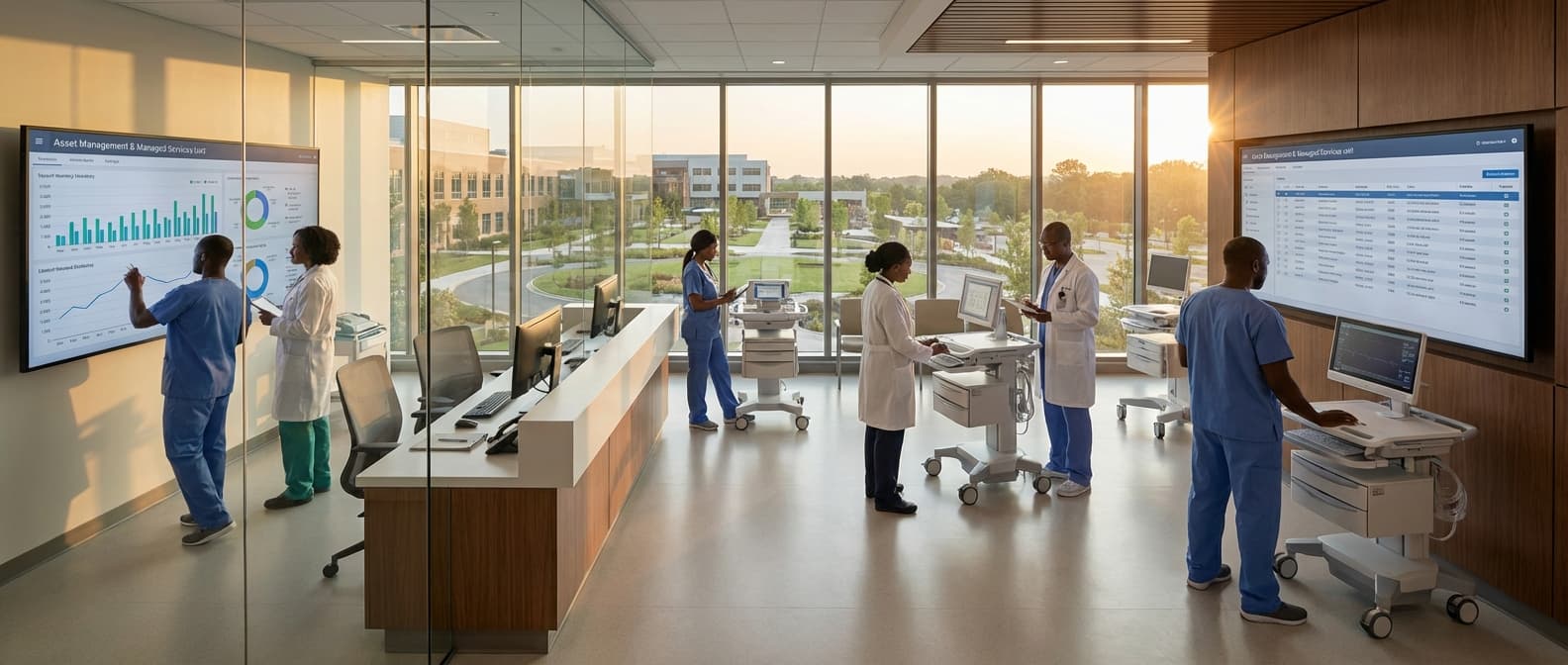
CMMS Setup & Configuration Service in Equatorial Guinea
Engineering Excellence & Technical Support
CMMS Setup & Configuration Service High-standard technical execution following OEM protocols and local regulatory frameworks.
Tailored CMMS Implementation
We deliver bespoke CMMS setup and configuration for Equatorial Guinea's unique industrial landscape, optimizing asset management and maintenance workflows for peak operational efficiency and compliance.
Seamless Data Migration & Integration
Our expert team ensures a smooth transition of your existing maintenance data into the new CMMS, alongside seamless integration with your current ERP and other critical business systems for a unified operational view.
Local Expertise & Global Standards
Leveraging deep understanding of Equatorial Guinean regulations and industry best practices, we configure your CMMS to not only meet local requirements but also adhere to international maintenance standards for robust and scalable asset performance.
What Is Cmms Setup & Configuration Service In Equatorial Guinea?
A CMMS (Computerized Maintenance Management System) Setup & Configuration Service in Equatorial Guinea is a specialized offering designed to implement, customize, and optimize a CMMS software solution for organizations operating within the country. This service encompasses a comprehensive approach to ensure the CMMS is tailored to the specific operational needs, regulatory environment, and business objectives of the client. It goes beyond basic installation, involving in-depth analysis, strategic planning, technical execution, and ongoing support to maximize the return on investment for the CMMS. The core objective is to transform how an organization manages its assets, maintenance activities, work orders, inventory, and workforce, thereby improving operational efficiency, reducing downtime, enhancing safety, and extending asset lifespan.
| Who Needs CMMS Setup & Configuration Service? | Typical Use Cases & Industries | ||||||
|---|---|---|---|---|---|---|---|
| Organizations with significant physical assets requiring structured maintenance planning and execution. | Oil & Gas (Onshore/Offshore): Managing offshore platforms, refineries, pipelines, and drilling equipment. Ensuring compliance with stringent safety and environmental regulations. Optimizing preventive maintenance schedules for critical machinery. | Mining Operations: Tracking and maintaining heavy machinery, processing plants, and infrastructure. Managing spare parts inventory for remote locations. Minimizing downtime in production cycles. | Manufacturing & Industrial Plants: Overseeing production lines, machinery, and facility maintenance. Improving Overall Equipment Effectiveness (OEE). Reducing unplanned breakdowns and associated costs. | Utilities (Power Generation, Water Treatment): Managing power plants, distribution networks, and water treatment facilities. Ensuring reliable service delivery through proactive maintenance. | Logistics & Transportation: Maintaining fleets of vehicles, aircraft, or vessels. Optimizing fleet availability and reducing operational expenses. | Hospitality & Large Facilities Management: Managing building maintenance, HVAC systems, and guest-facing infrastructure in hotels, resorts, and large commercial complexes. | Government & Public Sector: Maintaining public infrastructure, municipal vehicles, and facilities. |
| Companies experiencing high maintenance costs, frequent equipment failures, or operational inefficiencies. | Asset-Intensive Businesses: Any sector where the lifespan and performance of physical assets are critical to profitability and operational continuity. | Businesses aiming for digital transformation: Organizations seeking to leverage technology to modernize their maintenance operations. | New or expanding operations in Equatorial Guinea: Establishing robust maintenance practices from inception. | Companies facing challenges with manual or disparate maintenance tracking methods. | Organizations seeking to improve inventory control for spare parts and consumables. | Businesses focused on enhancing safety and reducing workplace accidents through scheduled inspections and maintenance. |
Key Components of CMMS Setup & Configuration Service
- Needs Assessment & Requirements Gathering: Detailed analysis of the client's existing maintenance processes, asset inventory, operational workflows, and specific pain points. This phase identifies critical functionalities required from the CMMS.
- System Design & Architecture: Designing the optimal CMMS structure, including defining user roles and permissions, establishing asset hierarchies, creating custom fields and data points, and configuring modules (e.g., work order management, preventive maintenance, inventory control, reporting).
- Data Migration & Integration: Planning and executing the transfer of existing asset data, maintenance history, parts inventory, and other relevant information into the new CMMS. This may also involve integrating the CMMS with other enterprise systems (e.g., ERP, SCADA).
- Customization & Configuration: Tailoring the CMMS software to align with specific business rules, reporting requirements, and industry best practices relevant to Equatorial Guinea's context (e.g., oil & gas, mining, utilities, manufacturing). This can include developing custom reports, dashboards, and workflows.
- User Training & Enablement: Comprehensive training programs for all user levels, from administrators to technicians, to ensure proficient and effective utilization of the CMMS. This often includes on-site and remote training sessions.
- Testing & Quality Assurance: Rigorous testing of the configured system to validate functionality, data integrity, and user experience before deployment. This includes user acceptance testing (UAT).
- Deployment & Go-Live Support: Managing the deployment of the configured CMMS into the live production environment and providing immediate post-implementation support to address any emergent issues.
- Ongoing Optimization & Support: Post-implementation services such as performance monitoring, system tuning, development of advanced reports, and continuous improvement strategies to ensure the CMMS remains effective and aligned with evolving business needs.
- Regulatory Compliance Assistance: Ensuring the CMMS configuration supports compliance with relevant local and international safety, environmental, and operational regulations applicable in Equatorial Guinea.
Who Needs Cmms Setup & Configuration Service In Equatorial Guinea?
Setting up and configuring a Computerized Maintenance Management System (CMMS) is a crucial step for any organization in Equatorial Guinea looking to optimize their maintenance operations, reduce downtime, and improve asset lifespan. While a CMMS can benefit a wide range of businesses, certain industries and departments stand to gain the most from professional CMMS setup and configuration services.
| Industry Sector | Target Departments | Key Benefits of CMMS Setup & Configuration |
|---|---|---|
| Oil & Gas | Production, Processing, Drilling, Refineries, Exploration, Pipelines, Maintenance Departments | Ensuring continuous operation, preventing costly downtime, managing complex equipment, compliance with stringent safety regulations, optimizing spare parts inventory for remote locations. |
| Mining | Extraction, Processing, Fleet Management, Workshop, Maintenance | Maximizing equipment availability, reducing wear and tear on heavy machinery, managing large fleets, optimizing maintenance schedules for remote sites, efficient spare parts management. |
| Power Generation & Utilities | Power Plants (Thermal, Hydro, Solar), Transmission & Distribution, Water Treatment, Electrical Maintenance | Maintaining critical infrastructure, preventing power outages, ensuring grid stability, managing complex machinery, optimizing maintenance for 24/7 operations, safety compliance. |
| Manufacturing & Industrial Plants | Production Lines, Machinery Maintenance, Quality Control, Operations, Plant Management | Increasing production uptime, reducing equipment failures, optimizing preventative maintenance schedules, managing diverse machinery, improving overall equipment effectiveness (OEE). |
| Logistics & Transportation | Fleet Management, Warehouse Operations, Vehicle Maintenance, Asset Management | Maximizing fleet uptime, reducing repair costs, optimizing vehicle maintenance schedules, ensuring timely deliveries, tracking asset performance. |
| Hospitality & Large Facilities | Building Maintenance, Facilities Management, Engineering, Operations | Ensuring guest comfort and safety, managing building systems (HVAC, electrical, plumbing), proactive maintenance of amenities, reducing operational disruptions, cost-effective repairs. |
| Telecommunications | Infrastructure Maintenance, Tower Maintenance, Network Operations, Equipment Management | Ensuring network uptime, managing maintenance of critical telecom infrastructure, scheduling preventative maintenance for towers and equipment, optimizing technician deployment. |
| Construction | Equipment Maintenance, Project Management, Site Operations, Fleet Management | Maximizing the availability of construction equipment, reducing downtime on project sites, managing maintenance for a diverse fleet, ensuring timely project completion. |
Target Customers and Departments for CMMS Setup & Configuration in Equatorial Guinea
- Organizations with significant physical assets requiring regular maintenance.
- Companies operating in industries with high operational uptime demands.
- Businesses aiming to improve efficiency and reduce operational costs through proactive maintenance.
- Entities seeking better inventory management for spare parts and consumables.
- Companies focused on compliance and regulatory adherence related to equipment.
- New facilities or expansions requiring a robust maintenance framework from inception.
Cmms Setup & Configuration Service Process In Equatorial Guinea
This document outlines the standard workflow for our CMMS (Computerized Maintenance Management System) Setup & Configuration service provided in Equatorial Guinea, from the initial client inquiry through to successful project execution and handover.
| Phase | Stage | Key Activities | Deliverables | Responsible Party | Estimated Timeline (General) |
|---|---|---|---|---|---|
| Initial Contact | Client expresses interest in CMMS setup. Initial discussion to understand high-level needs, existing systems, and goals. | Needs Assessment Summary (initial) | Client, Service Provider | 1-3 Business Days |
| Detailed Discovery | In-depth workshops and interviews with client stakeholders (maintenance, IT, operations) to gather detailed requirements, asset inventory, workflow mapping, and current pain points. | Detailed Requirements Document, Asset Hierarchy Definition, Workflow Diagrams | Service Provider, Client Stakeholders | 5-10 Business Days |
| Solution Design | Based on discovery, design a tailored CMMS solution, including software selection (if applicable), module configuration, integrations, and data migration strategy. | CMMS Solution Architecture | Service Provider | 3-5 Business Days |
| Proposal Generation | Develop a comprehensive proposal outlining the scope of work, proposed solution, timeline, pricing, and terms and conditions. | Formal Project Proposal, Costing Breakdown | Service Provider | 2-4 Business Days |
| Contract Negotiation & Signing | Review and finalize the proposal with the client. Sign contract and any necessary service level agreements (SLAs). | Signed Contract, Statement of Work (SOW) | Client, Service Provider | 3-7 Business Days |
| Project Planning | Develop a detailed project plan, including task breakdown, resource allocation, communication plan, risk assessment, and quality assurance procedures. | Detailed Project Plan, Communication Plan, Risk Register | Service Provider Project Manager | 3-5 Business Days |
| Project Kick-off Meeting | Formal meeting to introduce the project team, review the project plan, confirm objectives, and establish communication channels. This phase will be conducted virtually or in-person in Equatorial Guinea. | Kick-off Meeting Minutes, Confirmed Project Timeline | Service Provider Project Manager, Client Team | 1 Business Day |
| CMMS Installation & Setup | Install and configure the chosen CMMS software (on-premise or cloud-based) on the client's infrastructure or provided environment. Set up user roles and permissions. | Configured CMMS Environment | Service Provider Technical Team | 5-15 Business Days (variable based on complexity) |
| Core Module Configuration | Configure essential CMMS modules based on requirements: asset management, work order management, preventative maintenance scheduling, inventory management, etc. | Configured CMMS Modules | Service Provider Configuration Specialists | 10-20 Business Days (variable) |
| Customization & Workflow Automation | Implement any necessary customizations (custom fields, forms) and automate workflows as defined in the discovery phase. | Customized CMMS Features, Automated Workflows | Service Provider Configuration Specialists | 5-15 Business Days (variable) |
| Data Extraction & Cleansing | Extract existing asset data, maintenance history, spare parts inventory, etc., from client systems and perform data cleansing and standardization. | Cleaned & Standardized Data Files | Client (data owner), Service Provider Data Specialists | 5-10 Business Days |
| Data Import | Import the cleansed and formatted data into the configured CMMS system. | Populated CMMS Database | Service Provider Data Specialists | 3-7 Business Days |
| Data Validation & Verification | Thoroughly validate the imported data for accuracy, completeness, and integrity. Client review and sign-off. | Validated Data, Data Sign-off Report | Service Provider, Client Stakeholders | 5-10 Business Days |
| Training Material Development | Create user-specific training materials and documentation tailored to the configured CMMS and client processes. | Training Manuals, Quick Reference Guides | Service Provider Training Specialists | 3-5 Business Days |
| End-User Training | Conduct comprehensive training sessions for all user groups (operators, technicians, managers) in Equatorial Guinea. This can be on-site or remote. | Trained Users, Training Attendance Records | Service Provider Training Specialists, Client Users | 5-10 Business Days (depending on number of users and sessions) |
| Super User Training & Support | Provide advanced training to designated 'super users' who will act as first-line support for the CMMS within the client organization. | Empowered Super Users | Service Provider Training Specialists | 2-3 Business Days |
| Go-Live Readiness Assessment | Final review of system readiness, user preparedness, and data integrity before officially launching the CMMS. | Go-Live Readiness Checklist | Service Provider Project Manager, Client Lead | 1 Business Day |
| Go-Live | Official launch of the CMMS. The system becomes operational for day-to-day use. | Live CMMS System | Client, Service Provider | 1 Day |
| Post-Go-Live Support | Provide dedicated support for a defined period (e.g., 2-4 weeks) to address any immediate issues, answer user questions, and ensure smooth adoption. | Resolved Support Tickets, User Feedback | Service Provider Support Team, Client Users | 2-4 Weeks (Post-Go-Live) |
| Performance Monitoring | Monitor CMMS performance and user adoption. Identify areas for optimization or further training. | Performance Reports | Service Provider, Client IT | Ongoing (during support period) |
| Project Review Meeting | Conduct a post-implementation review with the client to discuss project success, lessons learned, and client satisfaction. | Project Review Report, Lessons Learned Document | Service Provider Project Manager, Client Lead | 1-2 Business Days |
| Final Handover | Formally hand over the fully configured and operational CMMS system, along with all documentation and training materials, to the client. | Final Project Documentation, System Handover Certificate | Service Provider Project Manager, Client Lead | 1 Business Day |
| Contract Closure | Finalize all contractual obligations and administrative tasks. | Project Closure Confirmation | Service Provider, Client Administration | 1-2 Business Days |
CMMS Setup & Configuration Service Workflow
- Phase 1: Inquiry & Scoping
- Phase 2: Proposal & Agreement
- Phase 3: Project Planning & Kick-off
- Phase 4: System Setup & Configuration
- Phase 5: Data Migration & Validation
- Phase 6: Training & User Adoption
- Phase 7: Go-Live & Post-Implementation Support
- Phase 8: Project Closure & Review
Cmms Setup & Configuration Service Cost In Equatorial Guinea
Setting up and configuring a Computerized Maintenance Management System (CMMS) in Equatorial Guinea involves various costs that are influenced by several key factors. These factors determine the overall pricing, which can range significantly depending on the complexity of the implementation, the chosen CMMS software, and the specific needs of the organization. Understanding these elements is crucial for budgeting and making informed decisions. The local currency for pricing is the Central African CFA franc (XAF).
| Service Component | Estimated Cost Range (XAF) | Notes |
|---|---|---|
| Basic CMMS Software Licensing (per user, annual subscription) | 50,000 - 200,000 | For smaller businesses with limited users and core features. Open-source options might be cheaper for software, but implementation costs would rise. |
| Mid-Range CMMS Software Licensing (per user, annual subscription) | 200,000 - 500,000 | Includes more advanced features, user roles, and standard integrations. Suitable for growing organizations. |
| Enterprise-Level CMMS Software Licensing (per user, annual subscription) | 500,000+ | For large organizations with extensive asset portfolios, complex workflows, and advanced integration needs. Perpetual licenses may have a higher upfront cost. |
| Basic Setup & Configuration (Vendor/Consultant, per hour) | 25,000 - 75,000 | Covers initial system setup, user provisioning, basic asset input, and initial workflow configuration for smaller projects. |
| Standard Setup & Configuration (Vendor/Consultant, per project) | 1,500,000 - 5,000,000 | Includes more detailed configuration, data migration assistance for a moderate dataset, and initial training for a team. |
| Complex Setup & Configuration (Vendor/Consultant, per project) | 5,000,000 - 20,000,000+ | Involves extensive customization, complex data migration, multiple integrations, advanced reporting setup, and comprehensive training for large organizations. |
| Data Migration Services (per project) | 500,000 - 5,000,000 | Dependent on the volume and complexity of data to be migrated. Includes data cleaning and validation. |
| Integration Services (per integration) | 750,000 - 10,000,000 | Cost varies significantly based on the complexity of the systems being integrated and the amount of custom development required. |
| User Training (per session/day) | 100,000 - 500,000 | Includes on-site or remote training for different user groups (operators, supervisors, administrators). |
| Ongoing Support & Maintenance (annual, % of software cost or retainer) | 10% - 25% of software cost | Covers software updates, bug fixes, and technical assistance. Often included in subscription models or as a separate annual fee for perpetual licenses. |
Key Pricing Factors for CMMS Setup & Configuration in Equatorial Guinea:
- Software Licensing Model: The pricing of the CMMS software itself is a primary driver. Options include perpetual licenses (one-time purchase), subscription-based models (SaaS, often monthly or annual), or even open-source solutions which may have lower initial software costs but potentially higher implementation and customization expenses.
- Number of Users: Most CMMS solutions are priced per user. The more individuals who require access to the system, the higher the overall software and potential training costs will be.
- Module Selection & Features: The breadth and depth of features required will impact cost. Basic CMMS functionalities (work order management, asset tracking) are generally less expensive than advanced modules like predictive maintenance, inventory management, advanced reporting, or integration with other business systems (ERP, IoT devices).
- Implementation Complexity & Customization: The effort required to tailor the CMMS to specific organizational workflows, asset hierarchies, and data migration needs significantly affects the service cost. Highly customized solutions will demand more professional services hours.
- Data Migration: Transferring existing maintenance data (asset details, historical work orders, spare parts inventory) from legacy systems or spreadsheets into the new CMMS can be a time-consuming and complex process, often incurring additional costs.
- Integration Requirements: If the CMMS needs to integrate with other existing software systems within the organization (e.g., accounting, HR, SCADA), this will add to the complexity and cost of the setup and configuration.
- Training & Support: The level of training required for end-users, administrators, and IT personnel, as well as the ongoing support package chosen (e.g., basic vs. premium support), will contribute to the overall expense.
- Consulting & Professional Services: Engaging with CMMS vendors or third-party consultants for implementation, configuration, and project management is a significant cost component. The hourly or project-based rates of these professionals will directly influence the final price.
- Hardware & Infrastructure (if applicable): While many modern CMMS solutions are cloud-based, on-premise deployments will require investment in server hardware, networking, and IT infrastructure, adding to the initial setup cost.
- Geographic Location & Logistics: For on-site implementation and training, travel and accommodation costs for consultants or vendor representatives within Equatorial Guinea will be a factor.
Affordable Cmms Setup & Configuration Service Options
Setting up and configuring a Computerized Maintenance Management System (CMMS) can be a significant undertaking, but it's crucial for optimizing your maintenance operations. We offer affordable CMMS setup and configuration service options designed to fit various budgets and needs. Our approach focuses on delivering maximum value through strategic planning, efficient implementation, and cost-saving measures.
| Service Tier | Key Features | Ideal For | Estimated Price Range |
|---|---|---|---|
| Basic Setup | System Installation, User Accounts, Basic Data Import | Small Businesses, Simple Maintenance Needs | $X00 - $XXX |
| Standard Configuration | Customization, PM Scheduling, Inventory Setup, User Training | Medium-Sized Businesses, Standard Maintenance Processes | $XXX - $XXXX |
| Advanced Implementation | Full Customization, Integrations, Advanced Reporting, Ongoing Support | Large Enterprises, Complex Operations, Specific Integration Needs | $XXXX+ |
| Module-Specific | Targeted support for specific CMMS modules | Organizations needing help with individual functionalities | Project-based pricing (varies) |
Our Affordable CMMS Setup & Configuration Service Options
- Basic Setup: Ideal for smaller organizations or those with straightforward maintenance needs. Includes core system installation, user account creation, and basic data import (e.g., assets, work orders).
- Standard Configuration: Builds upon the Basic Setup by including customization of key modules (e.g., preventive maintenance schedules, inventory management), user training, and initial report configuration.
- Advanced Implementation: A comprehensive solution for larger or more complex operations. Includes full system customization, integration with existing systems (if applicable), advanced reporting and analytics setup, and ongoing support options.
- Module-Specific Services: If you only need help with a particular aspect of your CMMS, we offer specialized services for areas like asset registry development, preventive maintenance planning, or inventory optimization.
Verified Providers In Equatorial Guinea
In Equatorial Guinea, ensuring access to quality healthcare is paramount. When seeking medical services, it's crucial to rely on verified providers who adhere to international standards and demonstrate a commitment to patient well-being. Franance Health stands out as a leading organization that not only meets these criteria but consistently exceeds them. Their rigorous credentialing process and dedication to excellence make them the premier choice for healthcare in the region.
| Provider Type | Franance Health Verification Status | Key Benefits of Choosing a Franance Health Verified Provider |
|---|---|---|
| Hospitals | Verified | State-of-the-art facilities, adherence to infection control standards, experienced medical teams, comprehensive diagnostic capabilities. |
| Clinics | Verified | Accessible primary care, preventative health services, qualified general practitioners, patient-centered approach. |
| Specialist Physicians | Verified | Advanced medical knowledge, specialized diagnostic and treatment techniques, personalized care plans, adherence to ethical medical practices. |
| Diagnostic Laboratories | Verified | Accurate and reliable test results, use of advanced technology, strict quality control measures, timely reporting. |
| Pharmacies | Verified | Authentic medications, professional dispensing services, patient counseling on medication use, adherence to safe storage practices. |
Why Franance Health Credentials Matter
- Rigorous Verification Process: Franance Health employs a comprehensive vetting system for all its affiliated healthcare professionals and facilities. This includes thorough background checks, verification of medical licenses and certifications, and assessment of clinical experience.
- Adherence to International Standards: Franance Health ensures that all its providers comply with globally recognized healthcare protocols and best practices, guaranteeing a high level of care.
- Commitment to Patient Safety: Patient safety is a cornerstone of Franance Health's operations. Their credentialing process specifically evaluates a provider's track record and commitment to safe medical practices.
- Continuous Quality Improvement: Franance Health actively monitors the performance of its network, fostering an environment of continuous improvement and professional development among its providers.
- Access to Specialized Expertise: Through their network, Franance Health connects patients with highly qualified specialists across a wide range of medical disciplines.
Scope Of Work For Cmms Setup & Configuration Service
This document outlines the Scope of Work (SOW) for the comprehensive setup and configuration of a Computerized Maintenance Management System (CMMS). This service aims to optimize maintenance operations, improve asset management, and enhance overall facility efficiency. The SOW details the technical deliverables and standard specifications that will be adhered to throughout the project lifecycle. The CMMS setup and configuration service encompasses a phased approach, from initial planning and data migration to system deployment and user training, ensuring a successful and sustainable implementation.
| Technical Deliverable | Description | Standard Specification |
|---|---|---|
| CMMS System Architecture Design Document | Detailed blueprint of the CMMS architecture, including modules, integrations, and data flows. | Adheres to industry best practices for scalability, security, and performance. Includes network diagrams, server configurations, and database schema outlines. |
| Configured CMMS Modules | Setup and configuration of core CMMS modules such as Asset Management, Work Order Management, Preventive Maintenance, Inventory Management, and Reporting. | Modules configured to align with client's operational workflows and organizational structure. Includes user-defined fields, dropdowns, and system parameters. |
| Asset Hierarchy and Data Population | Establishment of a comprehensive asset hierarchy and population of all relevant asset data into the CMMS. | Data accuracy and completeness verified against provided source documents. Follows a structured naming convention and categorization system. |
| Preventive Maintenance (PM) Schedules | Development and configuration of recurring PM schedules based on asset criticality, manufacturer recommendations, and operational needs. | PM tasks, frequencies, labor estimates, and required parts clearly defined. Schedules are validated by client stakeholders. |
| Inventory Management Setup | Configuration of spare parts, materials, and tools inventory, including stock levels, reorder points, and vendor information. | Integration with purchasing and work order modules for efficient inventory tracking. Standardized part numbering and categorization. |
| User Roles and Permissions Matrix | Definition and implementation of user roles, access levels, and permissions to ensure data security and operational control. | Matrix clearly outlines access rights for each user role across different CMMS modules. Complies with client's internal security policies. |
| Custom Reports and Dashboards | Development of custom reports and dashboards to provide key performance indicators (KPIs) and insights into maintenance operations. | Reports designed to meet specific client reporting requirements. Includes visual representations of data where applicable. |
| Integration Specifications Document | Documentation of any integrations with other systems (e.g., ERP, SCADA, IoT platforms). | Details data exchange protocols, API endpoints, data mapping, and error handling mechanisms. Ensures seamless data flow. |
| Test Plan and Test Cases | Comprehensive test plan outlining the testing methodology, scope, and success criteria, along with detailed test cases. | Covers functional, performance, security, and user acceptance testing. Test cases are traceable to requirements. |
| User Training Materials | Development of user manuals, quick reference guides, and training presentations tailored to different user groups. | Materials are clear, concise, and action-oriented. Designed for ease of understanding and practical application. |
| System Deployment Package | A secure and organized package containing all necessary files, configurations, and scripts for system deployment. | Includes installation guides and rollback procedures. Adheres to client's IT infrastructure and deployment standards. |
| Post-Go-Live Support Plan | Outline of the support services to be provided immediately following system deployment, including issue resolution and troubleshooting. | Defines support hours, contact methods, and escalation procedures. Service Level Agreements (SLAs) may be referenced. |
Project Phases and Key Activities
- Phase 1: Planning and Requirements Gathering
- Phase 2: CMMS Setup and Core Configuration
- Phase 3: Data Migration and Integration
- Phase 4: Workflow Development and Customization
- Phase 5: Testing and Quality Assurance
- Phase 6: User Training and Support
- Phase 7: Deployment and Go-Live
- Phase 8: Post-Implementation Review and Optimization
Service Level Agreement For Cmms Setup & Configuration Service
This Service Level Agreement (SLA) outlines the guaranteed response times and uptime for the CMMS (Computerized Maintenance Management System) Setup & Configuration Service provided by [Your Company Name]. This SLA is an addendum to the Master Service Agreement (MSA) between [Your Company Name] and [Client Company Name].
| Service Element | Guaranteed Response Time (Business Hours) | Uptime Guarantee (CMMS Platform Availability) |
|---|---|---|
| Initial CMMS Platform Setup & Core Configuration | Within 1 business day of receiving all necessary client information and access. | N/A (This is a project-based service, not a continuous uptime guarantee) |
| User Role & Permission Setup | Within 4 business hours of receiving all necessary client information. | N/A |
| Integration Configuration (if applicable) | Within 1 business day of receiving API keys, documentation, and successful access to third-party systems. | N/A |
| Data Import/Migration Support (if applicable) | Within 4 business hours of receiving properly formatted data and access to the target CMMS. | N/A |
| Troubleshooting & Issue Resolution during Setup/Configuration | Within 4 business hours of a reported issue that hinders the setup/configuration progress. | N/A |
| CMMS Platform Uptime (Post-Configuration) | N/A (This SLA focuses on the setup and configuration phase. Refer to the CMMS provider's separate SLA for platform uptime.) | 99.5% (for the configured CMMS platform, excluding scheduled maintenance and force majeure events) |
Scope of Service
- Initial CMMS platform setup and installation.
- Configuration of core CMMS modules (e.g., asset management, work order management, preventive maintenance scheduling, inventory management).
- User role and permission setup.
- Integration with specified third-party systems (if applicable and agreed upon).
- Data import and migration from existing systems (if applicable and agreed upon).
- Initial user training on the configured CMMS platform.
Frequently Asked Questions

Ready when you are
Let's scope your CMMS Setup & Configuration Service in Equatorial Guinea project in Equatorial Guinea.

Scaling healthcare logistics and technical systems across the entire continent.