
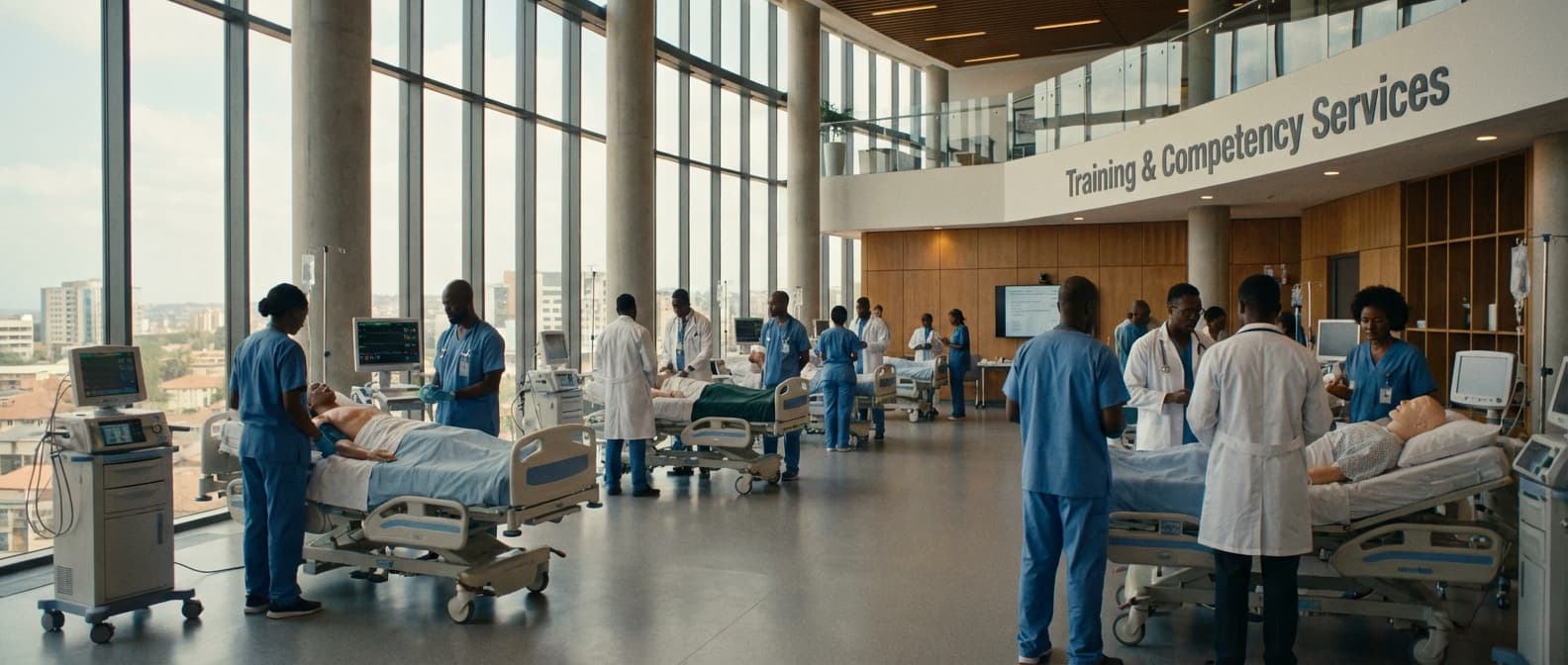
Ventilator User Training Service (Nurses) in Egypt
Engineering Excellence & Technical Support
Ventilator User Training Service (Nurses) High-standard technical execution following OEM protocols and local regulatory frameworks.
Mastering Lung Protective Ventilation
Understand and implement lung-protective strategies (low tidal volumes, appropriate PEEP) to minimize ventilator-induced lung injury (VILI), a critical skill for patient recovery in Egyptian ICUs.
Navigating Mechanical Ventilation Modes
Gain expertise in key ventilation modes (AC, SIMV, Pressure Support) and learn to select the optimal mode and settings based on patient's physiological status and clinical presentation, crucial for effective patient management in diverse Egyptian hospital settings.
Effective Weaning and Monitoring Techniques
Develop proficient skills in assessing readiness for weaning, implementing successful weaning protocols, and continuously monitoring patient response to extubation, ensuring safe and timely liberation from mechanical ventilation for Egyptian patients.
What Is Ventilator User Training Service (Nurses) In Egypt?
Ventilator User Training Service (Nurses) in Egypt refers to specialized educational programs designed to equip registered nurses with the knowledge, skills, and competencies required for the safe and effective operation and management of mechanical ventilators in a clinical setting. This service is crucial for ensuring optimal patient outcomes, minimizing the risk of ventilator-associated complications, and adhering to established critical care protocols within the Egyptian healthcare system. The training typically encompasses theoretical instruction on respiratory physiology, ventilator mechanics, modes of ventilation, patient monitoring, and alarm management, complemented by hands-on practical sessions using simulation equipment and, where applicable, supervised exposure to real-world clinical scenarios.
| Target Audience | Rationale for Need | Typical Use Cases |
|---|---|---|
| Newly graduated registered nurses entering critical care units (ICUs, CCUs, NICUs, PICUs). | Essential for the safe initiation and management of mechanical ventilation, a life-support modality. Lack of training poses significant risks to patient safety and clinical outcomes. | Management of patients with acute respiratory failure (e.g., ARDS, pneumonia, COPD exacerbations, sepsis-induced respiratory distress) requiring mechanical ventilatory support. |
| Existing critical care nurses requiring refresher training or certification on new ventilator models or evolving clinical guidelines. | Ensures competency in current best practices, adaptation to technological advancements in ventilator technology, and maintenance of professional standards. | Post-operative management of patients undergoing major surgeries with potential for respiratory compromise. |
| Nurses transitioning to specialized critical care areas (e.g., from medical-surgical to ICU). | Provides the foundational knowledge and practical skills necessary to effectively care for critically ill patients on ventilators, bridging knowledge gaps. | Care of pediatric and neonatal patients requiring ventilatory support due to prematurity, congenital anomalies, or respiratory distress syndrome. |
| Nurses in emergency departments or transport teams who may encounter patients requiring immediate ventilatory support. | Enables timely and appropriate initiation of ventilation in emergent situations and safe patient transfer while ventilated. | Management of patients with neuromuscular disorders affecting respiratory drive (e.g., Guillain-Barré syndrome, myasthenia gravis). |
Key Components of Ventilator User Training Service (Nurses) in Egypt:
- Physiological Basis of Mechanical Ventilation: Understanding gas exchange, respiratory mechanics, and the pathophysiology of respiratory failure.
- Ventilator Principles and Operation: Familiarization with different ventilator types, their components, and operational controls.
- Modes of Ventilation: Comprehensive coverage of various ventilation modes (e.g., Volume Control, Pressure Control, Assist/Control, Synchronized Intermittent Mandatory Ventilation (SIMV), Pressure Support Ventilation (PSV)), their indications, and parameters.
- Patient-Ventilator Interface: Techniques for proper endotracheal tube/tracheostomy management, cuff management, and humidification.
- Monitoring and Assessment: Interpretation of ventilator waveforms, pressure-volume loops, patient vital signs, and assessment of respiratory status.
- Alarm Management: Identification, troubleshooting, and appropriate response to common ventilator alarms.
- Ventilator-Associated Pneumonia (VAP) Prevention: Protocols and best practices for minimizing the incidence of VAP.
- Weaning from Mechanical Ventilation: Principles and strategies for successful ventilator liberation.
- Troubleshooting and Emergency Procedures: Management of common ventilator malfunctions and critical patient events.
- Ethical and Legal Considerations: Patient rights, informed consent, and documentation requirements.
- Hands-on Simulation and Practical Application: Practical exercises on ventilator setup, parameter adjustment, and patient management using simulators and potentially in supervised clinical settings.
Who Needs Ventilator User Training Service (Nurses) In Egypt?
Identifying the specific training needs for nurses regarding ventilator use in Egypt is crucial for ensuring patient safety, optimizing care delivery, and fostering professional development within the healthcare sector. This training is not a one-size-fits-all program; it needs to be tailored to the distinct roles, responsibilities, and existing skill sets of various nursing professionals across different healthcare settings.
| Target Customer Group | Relevant Departments/Settings | Primary Need for Training | Key Training Focus Areas |
|---|---|---|---|
| Critical Care Nurses | Intensive Care Units (ICUs), Coronary Care Units (CCUs), Surgical ICUs (SICUs), Medical ICUs (MICUs), Neonatal ICUs (NICUs), Pediatric ICUs (PICUs) | Advanced management of critically ill patients requiring mechanical ventilation, complex ventilator modes, weaning protocols, and troubleshooting. | Advanced ventilator modes, waveform analysis, hemodynamic monitoring integration,ARDS management, ventilator-associated pneumonia (VAP) prevention, high-frequency ventilation, non-invasive ventilation (NIV) management, emergency scenarios, and integration with advanced life support. |
| Emergency Department Nurses | Emergency Departments (EDs) | Rapid assessment and initial management of patients requiring mechanical ventilation due to acute respiratory distress. | Basic ventilator setup and initiation, understanding of common alarms, initial oxygenation strategies, and safe transfer of ventilated patients. |
| Anesthesia Nurses | Operating Rooms (ORs), Anesthesia Departments | Peri-operative management of ventilation, including induction, maintenance, and emergence from anesthesia. | Anesthesia-specific ventilators, airway management, monitoring of ventilation during surgery, and management of intra-operative respiratory complications. |
| PACU Nurses | Post-Anesthesia Care Units (PACUs) | Monitoring and management of patients recovering from anesthesia who may still require or have recently weaned from mechanical ventilation. | Post-operative respiratory assessment, recognizing signs of respiratory compromise, extubation readiness, and early identification of respiratory complications. |
| Respiratory Therapists | Pulmonary Departments, Respiratory Care Units, ICUs | While primarily responsible for ventilator management, nurses need a strong understanding of RT roles, collaborative protocols, and shared responsibilities. | Understanding of RT roles in ventilator setup, settings, troubleshooting, bronchodilator administration, secretion management, and effective communication for patient care. |
| General Medical/Surgical Ward Nurses | General Wards, Step-down Units | Management of patients on simpler forms of ventilation, or those who are transitioning from higher acuity settings. | Basic ventilator monitoring, recognition of common alarms, fluid and electrolyte balance, infection control, and patient mobilization for stable ventilated patients. |
| Home Healthcare Nurses | Patients' homes | Managing patients on mechanical ventilation in a home environment, requiring independent decision-making and patient/family education. | Long-term ventilator care, tracheostomy management, suctioning, recognizing early signs of deterioration, emergency preparedness, and patient/family education for self-care. |
| Nursing Educators and Clinical Nurse Specialists | Nursing Schools, Hospital Education Departments | Developing and delivering effective ventilator training programs, mentoring junior staff, and ensuring adherence to best practices. | Curriculum development, instructional design, advanced clinical knowledge, evidence-based practice, simulation training, and competency assessment for ventilator use. |
| Nursing Students | Clinical Rotations in various departments | Gaining foundational knowledge and practical experience in ventilator management as part of their overall nursing education. | Introduction to ventilator principles, basic settings, common alarms, patient monitoring, and understanding the nurse's role in collaborative ventilator care. |
Target Customers and Departments for Ventilator User Training Service (Nurses) in Egypt
- Critical Care Nurses (ICU, CCU, SICU, MICU, NICU, PICU)
- Emergency Department Nurses
- Anesthesia Nurses
- Post-Anesthesia Care Unit (PACU) Nurses
- Respiratory Therapists (often work closely with nurses in ventilator management)
- General Medical/Surgical Ward Nurses (in hospitals where ventilators are used for step-down care or during patient transfers)
- Home Healthcare Nurses (for patients discharged on ventilators)
- Nursing Educators and Clinical Nurse Specialists
- Nursing Students (as part of their clinical rotations)
Ventilator User Training Service (Nurses) Process In Egypt
This document outlines the workflow for the Ventilator User Training Service specifically for nurses in Egypt. It details the process from the initial inquiry to the successful execution of the training program, ensuring comprehensive and effective skill development for nursing staff.
| Phase | Step | Description | Responsible Party | Deliverables/Outcomes |
|---|---|---|---|---|
| 1. Inquiry and Needs Assessment | Initial Contact | Healthcare facility (e.g., hospital, clinic) expresses interest in ventilator user training for their nursing staff. This can be through phone, email, or a dedicated inquiry form. | Healthcare Facility / Training Provider | Initial acknowledgment of inquiry. |
| Information Gathering | Training provider requests details about the facility's current ventilator equipment, existing training protocols, number of nurses requiring training, specific clinical areas, and any particular challenges or skill gaps. | Training Provider | Understanding of training needs, equipment types, and target audience. | |
| Needs Analysis Meeting (Optional) | A meeting may be scheduled to delve deeper into the training requirements, discuss objectives, and assess the current skill level of the nursing staff. | Training Provider, Healthcare Facility Representatives | Detailed training needs assessment report. | |
| 2. Proposal and Agreement | Proposal Development | Based on the needs assessment, the training provider develops a comprehensive proposal outlining the training curriculum, duration, methodology (theoretical, practical, simulation), trainers' qualifications, required resources, proposed schedule, and cost. | Training Provider | Detailed training proposal. |
| Proposal Review and Negotiation | The healthcare facility reviews the proposal, and negotiations may occur regarding content, schedule, and cost. | Healthcare Facility, Training Provider | Agreed-upon training parameters. | |
| Contract/Agreement Signing | Once terms are finalized, a formal contract or agreement is signed by both parties, outlining responsibilities, payment terms, and cancellation policies. | Healthcare Facility, Training Provider | Signed training agreement. | |
| 3. Training Preparation | Curriculum Customization | The training curriculum is finalized and customized to match the specific ventilators used by the facility and their clinical protocols. | Training Provider | Finalized training curriculum. |
| Trainer Allocation | Qualified and experienced trainers are assigned to deliver the training. | Training Provider | Designated trainers with relevant expertise. | |
| Logistics and Scheduling | Training dates, times, venue (on-site or off-site), and required equipment (e.g., manikins, actual ventilators if available, audiovisual aids) are confirmed. | Training Provider, Healthcare Facility | Confirmed training schedule and logistics plan. | |
| Participant Identification and Registration | The healthcare facility identifies and registers the nurses who will attend the training. | Healthcare Facility | List of registered participants. | |
| Pre-Training Materials Distribution | Any preparatory reading materials or pre-assessments are sent to participants. | Training Provider | Pre-training materials. | |
| 4. Training Execution | Theoretical Sessions | Lectures, presentations, and discussions covering ventilator principles, modes, settings, patient assessment, troubleshooting, and safety protocols. | Trainer | Knowledge acquisition of theoretical concepts. |
| Practical Demonstrations | Hands-on demonstrations of ventilator operation, parameter adjustments, alarm management, and basic maintenance by the trainer. | Trainer | Visual understanding of ventilator operation. | |
| Hands-on Practice Sessions | Nurses practice operating the ventilators under the guidance of trainers, using manikins or actual equipment in a controlled environment. | Participants, Trainer | Development of practical skills and confidence. | |
| Simulation Exercises | Realistic patient scenarios are simulated to allow nurses to apply their knowledge and skills in a safe environment. | Trainer, Participants | Application of skills in simulated clinical situations. | |
| Q&A and Troubleshooting | Dedicated time for nurses to ask questions and for trainers to address common troubleshooting scenarios. | Participants, Trainer | Clarification of doubts and problem-solving skills. | |
| Knowledge and Skills Assessment | Post-training assessments, including written tests, practical evaluations, and competency checks, to gauge the effectiveness of the training. | Trainer | Assessment of learning outcomes. | |
| 5. Post-Training Follow-up and Evaluation | Certification and Feedback | Upon successful completion of assessments, participants receive certificates. Feedback forms are distributed to gather participant and facility input on the training. | Training Provider | Training certificates, feedback reports. |
| Post-Training Support (Optional) | Offering ongoing support, such as refresher courses, advanced modules, or a dedicated helpline for specific queries. | Training Provider | Continued skill enhancement. | |
| Evaluation Report | A comprehensive evaluation report is prepared, summarizing the training outcomes, feedback received, and recommendations for future training. | Training Provider | Training evaluation report. | |
| Follow-up Assessment (Optional) | A follow-up assessment conducted after a period to evaluate the long-term retention and application of learned skills in the clinical setting. | Training Provider, Healthcare Facility | Long-term impact assessment of training. |
Ventilator User Training Service (Nurses) Process in Egypt
- Phase 1: Inquiry and Needs Assessment
- Phase 2: Proposal and Agreement
- Phase 3: Training Preparation
- Phase 4: Training Execution
- Phase 5: Post-Training Follow-up and Evaluation
Ventilator User Training Service (Nurses) Cost In Egypt
Providing ventilator user training for nurses in Egypt involves a range of costs influenced by several factors. These costs are typically borne by healthcare facilities seeking to enhance their nursing staff's proficiency in operating and managing mechanical ventilators. The pricing is generally presented in the local currency, Egyptian Pounds (EGP).
| Training Scope | Estimated Cost Range (EGP) - Per Nurse | Notes |
|---|---|---|
| Basic Introduction (1-2 days) | 2,000 - 5,000 EGP | Covers fundamental principles, basic modes, and patient setup. |
| Intermediate Level (3-4 days) | 4,000 - 9,000 EGP | Includes advanced modes, weaning principles, and common complications. |
| Advanced/Comprehensive (5+ days or specialized modules) | 8,000 - 15,000+ EGP | Focuses on complex ventilation strategies, specific patient populations (e.g., pediatrics, neonates), and advanced troubleshooting. May include hands-on simulation with high-fidelity manikins. |
| On-site Group Training (e.g., for 10-15 nurses) | 15,000 - 40,000+ EGP (Total for the group) | This is a general range for a facility. The per-nurse cost decreases with larger groups. May be higher if travel/accommodation for trainers is needed. |
Key Pricing Factors for Ventilator User Training (Nurses) in Egypt:
- Duration and Depth of Training: A basic, introductory course will be less expensive than an in-depth, multi-day program covering advanced ventilation modes, troubleshooting, and emergency procedures.
- Trainer Expertise and Qualifications: Highly experienced and certified respiratory therapists or critical care nurses with specialized ventilator knowledge will command higher fees.
- Training Location: Whether the training is conducted on-site at the hospital, at a dedicated training center, or virtually can impact costs. On-site training might involve travel and accommodation expenses for the trainers.
- Number of Participants: While some trainers offer per-person rates, larger groups might benefit from package deals or reduced per-person costs.
- Training Materials and Equipment: The provision of comprehensive training manuals, simulation equipment (manikins, practice ventilators), and assessment tools can add to the overall cost.
- Certification and Accreditation: Training programs that lead to official certification or accreditation by recognized bodies may have higher fees due to the associated administrative and quality assurance processes.
- Customization of Curriculum: If the training needs to be tailored to specific types of ventilators used by a facility or to address particular clinical scenarios, this customization can increase the price.
- Provider Reputation and Demand: Established training providers with a strong reputation and high demand might charge a premium for their services.
Affordable Ventilator User Training Service (Nurses) Options
This document outlines affordable ventilator user training options specifically for nurses, focusing on value bundles and cost-saving strategies to maximize the return on investment for healthcare facilities. Effective ventilator training is crucial for patient safety, improved clinical outcomes, and efficient resource utilization. We offer flexible and cost-effective solutions designed to meet the diverse needs of nursing staff.
| Strategy | Description | Cost-Saving Benefit |
|---|---|---|
| Group Discounts | Reduced per-participant fees for training larger groups of nurses from the same facility. | Lower overall training expenditure per nurse. |
| Online & Asynchronous Learning | Leveraging pre-recorded modules, webinars, and interactive simulations that nurses can access at their convenience. | Reduces trainer travel costs, facility downtime, and allows for flexible scheduling. |
| Train-the-Trainer Model | Investing in a select group of nurses to become internal trainers, who then train their peers. | Significantly reduces external training fees and ensures ongoing internal expertise. |
| Blended Learning Approaches | Combining cost-effective online content with targeted, shorter in-person practical sessions. | Optimizes resource allocation by minimizing expensive in-person contact hours. |
| Simulation-Based Training | Utilizing high-fidelity simulators for hands-on practice without requiring actual patient equipment. | Reduces wear and tear on expensive ventilators, minimizes risk to patients, and allows for repetitive practice. |
| Partnerships with Medical Device Manufacturers | Exploring training programs offered directly by ventilator manufacturers, often at reduced costs or as part of equipment purchase agreements. | Potentially free or heavily discounted training specific to the equipment used. |
| Subscription-Based Training Platforms | Accessing a library of training content, updates, and resources on a recurring subscription basis. | Predictable costs and continuous access to updated training materials. |
| Grant & Funding Opportunities | Investigating available grants or funding for healthcare professional development and specialized training. | External financial support can offset training expenses. |
Value Bundles for Ventilator User Training (Nurses)
- Basic Operator Training Bundle: Covers fundamental ventilator settings, modes, patient interface, alarms, and basic troubleshooting. Ideal for new nursing staff or as a refresher.
- Advanced Modes & Troubleshooting Bundle: Builds upon basic training, delving into more complex ventilation modes, advanced patient management strategies, and in-depth troubleshooting of common ventilator-related issues.
- Specialty Population Training Bundle: Focuses on ventilator management for specific patient groups such as neonates, pediatrics, or patients with ARDS, addressing unique considerations and protocols.
- On-Site & Remote Hybrid Bundle: Combines the benefits of in-person, hands-on training with the flexibility and cost-effectiveness of remote, online modules and simulations.
- Train-the-Trainer Program Bundle: Empowers experienced nurses to become in-house trainers, fostering sustainable internal expertise and reducing ongoing training costs.
- Annual Refresher & Competency Verification Bundle: Ensures ongoing competency and familiarity with current best practices and equipment updates through regular training sessions and assessments.
- Customizable Bundle: Tailored to the specific needs of your facility, including training on particular ventilator models, specialized patient populations, or unique clinical scenarios.
Verified Providers In Egypt
In the dynamic landscape of healthcare in Egypt, discerning the quality and trustworthiness of medical providers is paramount. Franance Health stands out as a beacon of excellence, dedicated to ensuring Egyptians have access to the highest standards of medical care. This commitment is reflected in their rigorous credentialing process, which meticulously vets healthcare professionals and institutions. By partnering with Franance Health, patients gain access to a network of verified providers who not only possess exceptional clinical expertise but also adhere to strict ethical and operational guidelines. This rigorous verification is not merely a formality; it's a guarantee of quality, safety, and patient-centric care. Franance Health's credentialing process is designed to identify and promote providers who consistently demonstrate superior patient outcomes, advanced medical knowledge, and a commitment to continuous improvement, making them the unequivocally best choice for your health needs in Egypt.
| Provider Type | Franance Health Verification Includes | Benefits for Patients |
|---|---|---|
| Doctors (Specialists & General Practitioners) | Medical license, board certifications, academic qualifications, peer reviews, professional experience, hospital affiliations, adherence to ethical codes. | Access to highly qualified and experienced medical professionals, assurance of up-to-date knowledge and skills, reduced risk of misdiagnosis or treatment errors. |
| Hospitals & Clinics | Accreditation (national & international), compliance with healthcare regulations, quality management systems, patient safety protocols, infection control measures, staff qualifications, patient satisfaction scores. | Receiving care in safe, well-equipped facilities, assurance of standardized quality of care, improved patient outcomes, reduced risk of hospital-acquired infections. |
| Diagnostic Centers (Labs & Imaging) | Licensing and regulatory compliance, accuracy and reliability of testing, quality control measures, qualified technicians and radiologists, equipment calibration and maintenance. | Dependable and accurate diagnostic results, timely and efficient testing, confidence in the interpretation of medical tests. |
| Specialized Medical Services (e.g., Physical Therapy, Dental) | Professional licenses, certifications in specific modalities, experience in treating various conditions, patient feedback, adherence to professional standards. | Access to specialized care from certified professionals, effective rehabilitation and treatment plans, improved quality of life. |
Why Franance Health Credentials Matter:
- Rigorous Vetting: Franance Health employs a multi-faceted approach to verify the qualifications, experience, and licensing of all their partnered providers.
- Commitment to Quality: Credentials signify adherence to stringent quality standards, ensuring you receive care from experienced and competent professionals.
- Patient Safety First: Verification includes background checks and a review of professional conduct, prioritizing your safety and well-being.
- Access to Excellence: Franance Health curates a network of top-tier healthcare professionals and facilities, offering you the best available options.
- Transparency and Trust: Their credentialing process fosters transparency, building confidence in the healthcare providers you choose.
- Continuous Improvement: Verified providers are often encouraged and supported to engage in ongoing professional development, staying at the forefront of medical advancements.
Scope Of Work For Ventilator User Training Service (Nurses)
This Scope of Work (SOW) outlines the requirements for providing comprehensive ventilator user training services specifically tailored for registered nurses. The training will focus on the safe and effective operation, monitoring, and troubleshooting of the [Specify Ventilator Model(s) - e.g., 'Dräger Puritan Bennett 980', 'Hamilton C1'] ventilator. The objective is to equip nurses with the knowledge and practical skills necessary to manage patients requiring mechanical ventilation across various clinical scenarios. The training will encompass both theoretical understanding and hands-on practice, ensuring competency and adherence to best practices and manufacturer guidelines.
| Technical Deliverable | Description | Standard Specification / Requirement | Verification Method |
|---|---|---|---|
| Training Curriculum Development | A comprehensive curriculum designed for registered nurses, covering theoretical knowledge and practical skills related to ventilator operation. | Curriculum must align with current clinical guidelines, manufacturer's instructions for use (IFU), and relevant professional standards. Include modules on basic respiratory physiology, ventilator modes, alarm management, patient monitoring, and troubleshooting. | Review and approval of the training curriculum by the client's clinical education department or designated medical professional. |
| Training Materials (Participant) | Written and visual materials provided to each participating nurse. | Include a training manual, presentation slides, quick reference guides, case studies, and access to online resources (if applicable). Materials should be clear, concise, and easily understandable. Must be provided in [Specify Language - e.g., 'English']. | Review and approval of all participant training materials by the client. |
| Training Delivery (Instructor-Led) | On-site or virtual instructor-led training sessions conducted by qualified and experienced trainers. | Training should include lectures, interactive discussions, Q&A sessions, and demonstration of ventilator operation. Trainer-to-participant ratio not exceeding [Specify Ratio - e.g., '1:10'] for hands-on sessions. | Observation of training sessions by client representatives; evaluation forms completed by participants. |
| Hands-on Practice Sessions | Practical sessions utilizing actual ventilator units or high-fidelity simulators. | Each participant must have sufficient hands-on time with the ventilator. Training must cover setup, mode selection, parameter adjustment, alarm response, and disconnection/reconnection procedures. | Direct observation of participant proficiency during hands-on practice by the trainer and client observer. |
| Competency Assessment (Written/Online) | A written or online examination to evaluate theoretical knowledge retention. | Assessment to cover key concepts taught in the curriculum. Passing score required: [Specify Percentage - e.g., '80%']. | Review of assessment questions and results by the client. |
| Competency Assessment (Practical/Skills Check-off) | A practical skills assessment to evaluate the nurse's ability to perform essential ventilator management tasks. | Skills check-off list based on critical ventilator management procedures. Must demonstrate proficiency in at least [Specify Number - e.g., '90%'] of the critical tasks. | Sign-off by the trainer and/or client observer on the completed skills check-off form. |
| Training Certificate | A certificate of completion awarded to nurses who successfully pass both the written/online and practical assessments. | Certificate to include participant's name, training date, ventilator model(s) covered, and issuing organization's name/logo. Must be provided in digital and/or hard copy format. | Review and approval of certificate template by the client. |
| Post-Training Support (Optional) | Limited follow-up support for participants after the training. | May include access to a dedicated email or phone line for brief clarification questions for a period of [Specify Duration - e.g., '2 weeks'] post-training. | Confirmation of established support channel and response time. |
| Trainer Qualifications | Documentation of the qualifications and experience of the training personnel. | Trainers must possess a relevant clinical nursing license (e.g., RN), have extensive experience in critical care and mechanical ventilation, and ideally hold manufacturer-specific training certifications for the specified ventilator model(s). | Review of trainer resumes, licenses, and certifications by the client. |
Training Objectives for Nurses
- Understand fundamental principles of mechanical ventilation.
- Identify and interpret various ventilator modes and settings.
- Perform pre-use checks and setup of the ventilator.
- Initiate and manage mechanical ventilation for different patient populations.
- Monitor patient response to ventilation and interpret ventilator graphics and waveforms.
- Recognize and respond to common ventilator alarms and troubleshoot issues.
- Understand principles of ventilator weaning and extubation.
- Implement infection control measures related to ventilator use.
- Document ventilator settings, patient data, and interventions accurately.
- Adhere to institutional policies and manufacturer guidelines for ventilator operation.
Service Level Agreement For Ventilator User Training Service (Nurses)
This Service Level Agreement (SLA) outlines the response times and uptime guarantees for the Ventilator User Training Service specifically tailored for nurses. This document aims to ensure a consistent and reliable training experience, enabling nurses to competently operate and manage ventilators.
| Service Component | Response Time Guarantee | Uptime Guarantee |
|---|---|---|
| Online Training Platform & Modules | 99.9% availability during scheduled training hours (defined below). | The training platform will be accessible 24/7, with scheduled maintenance windows communicated at least 48 hours in advance. |
| Technical Support (Email/Chat) | Within 4 business hours during normal business hours (9 AM - 5 PM, Monday-Friday, excluding public holidays). | N/A (Support is provided reactively). |
| Technical Support (Phone) | Within 1 business hour during normal business hours (9 AM - 5 PM, Monday-Friday, excluding public holidays). | N/A (Support is provided reactively). |
| Content Updates | Major content updates will be released quarterly. Minor updates or corrections will be addressed within 10 business days of identification. | N/A (Content updates are scheduled releases). |
Key Service Components
- Training Module Availability: The online training platform and its associated modules will be accessible to registered nurses.
- Technical Support: Assistance for technical issues encountered during training access or module completion.
- Content Updates: Regular updates to training materials to reflect the latest ventilator models, protocols, and best practices.
Frequently Asked Questions

Ready when you are
Let's scope your Ventilator User Training Service (Nurses) in Egypt project in Egypt.

Scaling healthcare logistics and technical systems across the entire continent.