
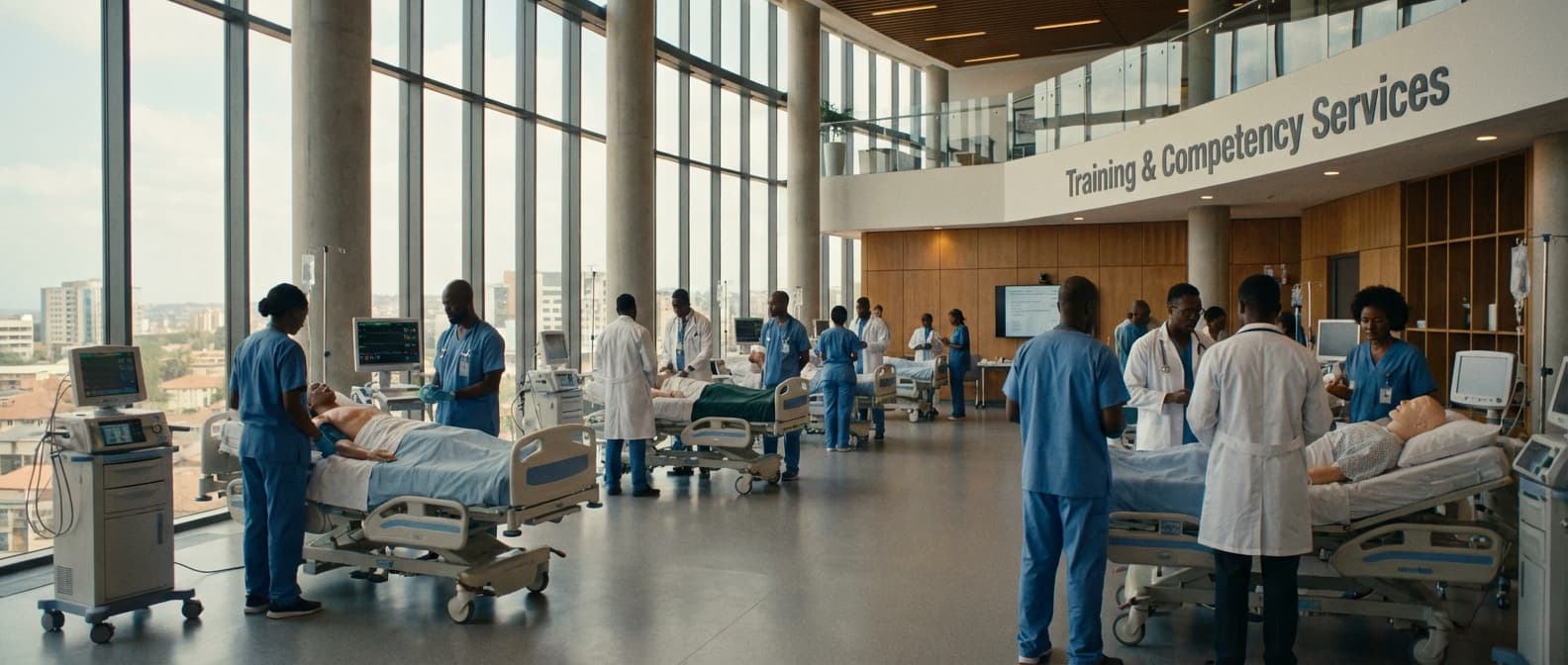
CT Operator Training Service (Radiographers) in Egypt
Engineering Excellence & Technical Support
CT Operator Training Service (Radiographers) High-standard technical execution following OEM protocols and local regulatory frameworks.
Advanced Imaging Protocols
Master cutting-edge CT imaging protocols tailored for Egyptian healthcare needs, covering a wide spectrum of diagnostic applications from routine screenings to complex interventional procedures.
Equipment Maintenance & Safety
Gain hands-on expertise in routine CT scanner maintenance, troubleshooting, and adherence to stringent radiation safety standards, ensuring optimal performance and patient well-being.
AI-Powered Image Enhancement
Explore the integration of AI algorithms for image reconstruction and enhancement, leading to improved diagnostic accuracy and reduced scan times for radiographers in Egypt.
What Is Ct Operator Training Service (Radiographers) In Egypt?
CT Operator Training Service (Radiographers) in Egypt refers to specialized educational programs designed to equip radiographers with the theoretical knowledge and practical skills necessary to safely and effectively operate Computed Tomography (CT) scanners. This training focuses on various aspects of CT technology, including image acquisition protocols, radiation safety, patient positioning, contrast media administration, image processing, and quality assurance. The service is crucial for ensuring competent CT operation, minimizing radiation dose to patients and staff, and producing diagnostic-quality imaging. In Egypt, this service is particularly relevant given the increasing adoption of advanced medical imaging technologies and the regulatory requirements for qualified personnel in diagnostic radiology.
| Who Needs CT Operator Training? | Typical Use Cases in Egypt | ||||
|---|---|---|---|---|---|
| Newly qualified radiographers entering CT departments. | Acquisition and operation of new CT scanner installations in hospitals and diagnostic centers. | Radiographers seeking to enhance their skills or specialize in CT imaging. | Training on advanced CT applications like dual-energy CT, CT angiography, or interventional CT procedures. | Healthcare institutions aiming to comply with national accreditation and regulatory standards for CT services. | Ongoing professional development and recertification requirements for radiographers. |
| Emergency departments: Rapid diagnosis of trauma, stroke, and acute abdominal conditions. | Oncology: Staging, treatment planning, and monitoring of cancer patients. | Cardiology: Coronary artery imaging, assessment of aortic aneurysms, and pulmonary embolism detection. | Neurology: Evaluation of intracranial hemorrhages, tumors, and degenerative diseases. | Gastroenterology: Diagnosis of appendicitis, diverticulitis, bowel obstruction, and pancreatic pathologies. | Pulmonology: Detection and characterization of lung nodules, interstitial lung disease, and pleural effusions. |
Key Components of CT Operator Training Service:
- Theoretical Foundation: Principles of CT physics, X-ray beam generation, detector technology, image reconstruction algorithms, and factors influencing image quality.
- CT Scanner Operation: Hands-on training on the specific CT scanner model, including console operation, parameter selection (kVp, mAs, pitch, slice thickness), and scan planning.
- Patient Care and Safety: Patient preparation, immobilization techniques, contrast media administration protocols (including contraindications and adverse reactions), and management of claustrophobic or uncooperative patients.
- Radiation Protection: Understanding radiation physics, dose estimation, optimization techniques (e.g., Automatic Exposure Control - AEC, dose reduction protocols), and compliance with Egyptian radiation safety regulations.
- Image Acquisition Protocols: Development and application of standardized protocols for various anatomical regions and clinical indications, ensuring optimal image quality and diagnostic yield.
- Image Processing and Manipulation: Techniques for windowing, leveling, MPR (Multi-Planar Reconstructions), 3D rendering, and artifact reduction.
- Quality Assurance and Control: Performing routine checks, troubleshooting common issues, and adhering to quality standards to ensure consistent and reliable imaging performance.
- Anatomical and Pathological Correlation: Understanding normal anatomy and common pathologies visualized by CT to guide protocol selection and image interpretation.
Who Needs Ct Operator Training Service (Radiographers) In Egypt?
CT Operator Training Service (Radiographers) in Egypt is crucial for enhancing the skills and knowledge of radiographers working with CT scanners. This specialized training ensures adherence to best practices, radiation safety protocols, advanced imaging techniques, and the effective use of modern CT technology. The demand for such services stems from the growing adoption of CT imaging across various healthcare settings in Egypt, the need for continuous professional development, and the desire to improve diagnostic accuracy and patient care.
| Target Customer Type | Specific Departments/Units | Reasons for Training Needs |
|---|---|---|
| Hospitals (Public) | Radiology, Emergency, Oncology, Neurology, Cardiology | Upgrade existing skills, comply with new protocols, manage increased patient load, introduce new CT technologies, radiation safety. |
| Hospitals (Private) | Radiology, Advanced Imaging Units, Specialized Clinics | Maintain competitive edge, master advanced CT applications (e.g., CT angiography, cardiac CT), ensure high-quality imaging for complex diagnoses, patient safety. |
| Diagnostic Imaging Centers | CT Scan Units, General Radiology | Standardize imaging quality, improve workflow efficiency, handle a diverse range of CT examinations, train new staff. |
| Specialized Clinics (e.g., Oncology, Neurology) | CT Imaging Staff within the clinic | Understand specific CT protocols for their specialty (e.g., tumor staging, stroke imaging), improve image interpretation support, reduce artifact. |
| University Teaching Hospitals | Radiology Departments, Research Units | Educate future radiographers, train staff on cutting-edge CT research protocols, integrate academic and clinical training. |
| Government Healthcare Facilities | Radiology Units in Ministry of Health Hospitals | Ensure access to quality CT imaging nationwide, standardize training across facilities, improve cost-effectiveness of CT services. |
| Radiology Training Institutes | Training Academies, Continuing Education Providers | Develop and deliver comprehensive CT operator training programs, offer specialized modules (e.g., advanced CT reconstruction, dose reduction techniques). |
Target Customers & Departments for CT Operator Training Service (Radiographers) in Egypt:
- Hospitals (Public and Private)
- Diagnostic Imaging Centers
- Specialized Clinics (e.g., Oncology Centers, Neurology Clinics)
- University Teaching Hospitals
- Government Healthcare Facilities
- Radiology Departments
- Emergency Departments
- Oncology Departments
- Neurology Departments
- Cardiology Departments
- Radiology Training Institutes
Ct Operator Training Service (Radiographers) Process In Egypt
This document outlines the typical workflow for CT Operator Training Services for Radiographers in Egypt, from the initial inquiry to the successful execution of the training program. The process is designed to ensure efficient communication, accurate needs assessment, and high-quality training delivery.
| Stage | Description | Key Activities | Responsible Parties | Deliverables |
|---|---|---|---|---|
| The process begins when a radiographer or their institution expresses interest in CT operator training. | Receive inquiry via phone, email, or website form. Acknowledge receipt and gather basic information. | Prospective Trainee/Institution, Training Provider | Confirmation of Inquiry, Initial Information Exchange |
| Understanding the specific requirements, existing skill levels, and learning objectives of the trainees. | Conduct detailed consultation calls/meetings. Assess current CT knowledge, experience, and desired outcomes. Identify specific CT equipment used, if applicable. | Training Provider, Prospective Trainee/Institution | Detailed Training Needs Analysis Report, Understanding of Skill Gaps |
| Based on the needs assessment, a comprehensive proposal is prepared. | Develop a tailored training proposal including curriculum outline, learning objectives, duration, methodology, trainer profiles, venue recommendations, and cost breakdown. | Training Provider | Formal Training Proposal, Quotation |
| Formalizing the terms and conditions of the training service. | Review and negotiate proposal details, including payment terms, cancellation policies, and liability. Finalize and sign a training agreement. | Training Provider, Trainee/Institution | Signed Training Agreement, Purchase Order (if applicable) |
| Tailoring the training content and setting the dates and location. | Finalize the training modules and practical exercises based on the agreement. Schedule training dates, times, and confirm the training venue (on-site, off-site, or virtual). | Training Provider, Trainee/Institution | Finalized Training Schedule, Customized Curriculum Outline |
| Ensuring all participants are registered and prepared for the training. | Collect participant details, pre-training materials, and any required documentation. Send welcome packs, pre-reading materials, and logistical information to participants. | Trainee/Institution, Training Provider | Participant Registration List, Pre-Training Information Pack |
| The core of the service, where knowledge and skills are imparted. | Conduct theoretical lectures, interactive discussions, case studies, and hands-on practical sessions on CT scanners (if feasible and agreed upon). Utilize qualified and experienced CT radiographers/trainers. | Training Provider (Trainers) | Delivered Training Sessions, Practical Demonstrations |
| Measuring the effectiveness of the training and the participants' understanding. | Conduct written/online assessments, practical skill evaluations, and competency checks. Gather feedback from participants on the training content, delivery, and trainers. | Training Provider, Participants | Assessment Results, Training Evaluation Forms |
| Formally recognizing the completion of training and offering ongoing assistance. | Issue certificates of completion to successful participants. Provide post-training support, such as answering follow-up questions or offering advanced training options. | Training Provider | Certificates of Completion, Post-Training Support Documentation |
CT Operator Training Service Workflow (Radiographers) in Egypt
- Inquiry & Initial Contact
- Needs Assessment & Consultation
- Proposal Development & Submission
- Contract Negotiation & Agreement
- Curriculum Customization & Scheduling
- Participant Registration & Pre-Training Communication
- Training Delivery (Theory & Practical)
- Assessment & Evaluation
- Certification & Post-Training Support
Ct Operator Training Service (Radiographers) Cost In Egypt
The cost of CT operator training for radiographers in Egypt can vary significantly based on several key factors. These include the training provider's reputation and accreditation, the duration and depth of the program, the location of the training facility (major cities often have higher costs), and whether the training is offered as part of a larger package (e.g., with equipment purchase or for hospital staff). Furthermore, the level of the course (basic, advanced, specialized) and the inclusion of hands-on practical sessions with actual CT scanners will influence the price. Government-subsidized programs or courses offered by professional societies might present more affordable options compared to private institutions.
| Training Type | Estimated Cost Range (EGP) | Notes |
|---|---|---|
| Basic CT Operator Certification (Short Course, ~1-2 weeks) | 10,000 - 25,000 | Focuses on fundamental principles and safe operation. May include limited practical exposure. |
| Comprehensive CT Operator Training (Extended Course, ~1 month) | 25,000 - 50,000 | Covers theoretical knowledge, image acquisition protocols, basic interpretation, and more extensive hands-on practice. |
| Advanced/Specialized CT Training (e.g., Cardiac CT, Interventional CT) | 40,000 - 80,000+ | Requires prior CT experience. In-depth study of specific applications and advanced techniques. |
| On-site Hospital Training (Group Rates) | Negotiable (per person basis often lower) | Costs are often customized based on the number of trainees, duration, and specific needs of the hospital. Can offer significant cost savings for institutions. |
| Workshops & Seminars (1-3 days) | 3,000 - 10,000 | Shorter, focused sessions on specific topics or new technologies. Usually for continuing professional development. |
Factors Influencing CT Operator Training Costs in Egypt:
- Training Provider Reputation & Accreditation
- Program Duration & Depth
- Location of Training Facility
- Inclusion of Hands-on Practical Sessions
- Course Level (Basic, Advanced, Specialized)
- Government Subsidies & Professional Society Offerings
- Customization for Hospital Staff
Affordable Ct Operator Training Service (Radiographers) Options
This guide outlines affordable CT operator training service (radiographer) options, focusing on value bundles and cost-saving strategies. Investing in specialized CT training is crucial for radiographers to enhance patient care, improve diagnostic accuracy, and maintain professional development. However, the cost can be a significant barrier. This document aims to provide a clear overview of how to approach CT operator training while managing expenses effectively.
| Value Bundle Components | Description | Cost-Saving Potential |
|---|---|---|
| Comprehensive Online Modules + Live Q&A Sessions | Includes self-paced online learning materials (videos, readings, quizzes) with scheduled live online sessions for interactive Q&A with instructors. | Reduces travel and accommodation costs associated with in-person training. Flexible scheduling fits around work commitments. |
| Simulation Training Access + Mentorship | Provides access to CT simulator software for hands-on practice, coupled with guidance from an experienced CT radiographer mentor. | Minimizes wear and tear on actual CT equipment. Mentorship offers personalized feedback and practical insights at a potentially lower cost than dedicated instructor-led sessions. |
| Blended Learning: Online Fundamentals + On-Site Practical | Combines foundational online knowledge with a concentrated on-site practical training session focused on hands-on scanner operation. | Reduces the duration and cost of on-site training by completing theoretical aspects remotely. Can be more efficient than a fully on-site program. |
| Group Discounts for Facility-Wide Training | Offers reduced per-person costs when multiple radiographers from the same facility enroll in a training program. | Significant cost reduction for employers looking to train their entire CT team. Fosters a consistent skill level across the department. |
| Early Bird Registration & Seasonal Promotions | Discounted fees for registering well in advance of the program start date or during specific promotional periods. | Direct financial savings for individuals or facilities who plan ahead. Requires monitoring of training provider announcements. |
| Bundled Certification Exam Fees | Includes the cost of the certification exam within the training program fee, often at a discounted rate. | Potentially lower overall cost compared to paying for training and the exam separately. Streamlines the certification process. |
| Access to Archived Webinars & Resource Library | Provides ongoing access to recorded training sessions and a digital library of CT protocols, case studies, and best practices. | Enables continuous learning and reference without incurring additional training costs. Supports refreshers and new team members. |
Key Considerations for Affordable CT Operator Training:
- Identify Training Needs: Determine the specific CT skills and knowledge required (e.g., basic operation, advanced protocols, specific modalities).
- Accreditation and Recognition: Ensure training programs are accredited by recognized bodies to guarantee quality and acceptance within the industry.
- Learning Modalities: Explore various training formats, including online courses, in-person workshops, simulation labs, and on-the-job training (OJT).
- Instructor Expertise: Prioritize training providers with experienced and qualified instructors who have practical CT experience.
- Curriculum Relevance: Verify that the curriculum aligns with current industry standards, technological advancements, and relevant regulatory requirements.
- Certification Opportunities: Look for programs that offer recognized certifications, which can boost career prospects and demonstrate proficiency.
- Location and Accessibility: Consider the geographical location of in-person training and the accessibility of online platforms for remote learners.
- Student Support: Evaluate the level of support provided by the training institution, including access to instructors, technical assistance, and career services.
Verified Providers In Egypt
In Egypt's burgeoning healthcare sector, the demand for reliable and accredited medical facilities is paramount. Verified providers offer a crucial assurance of quality, safety, and adherence to international standards. Franance Health stands out as a premier example of such a verified provider, distinguishing itself through a rigorous credentialing process and an unwavering commitment to patient well-being. This commitment translates into a superior healthcare experience, making Franance Health the best choice for individuals seeking exceptional medical services in Egypt.
| Franance Health Credential | Verification Aspect | Benefit to Patients |
|---|---|---|
| ISO 9001:2015 Certification | Quality Management Systems | Ensures consistent delivery of high-quality services and processes, leading to improved patient satisfaction and outcomes. |
| Accreditation by Ministry of Health (Egypt) | Regulatory Compliance and Safety Standards | Confirms adherence to national healthcare regulations, ensuring a safe and secure environment for all patients. |
| Partnerships with Leading International Healthcare Institutions | Global Best Practices and Knowledge Exchange | Facilitates access to cutting-edge medical knowledge, training, and treatment protocols, elevating the standard of care. |
| Credentialing of Medical Staff | Professional Competence and Experience | Guarantees that all doctors and healthcare professionals are highly qualified, licensed, and possess extensive experience in their respective fields. |
| Advanced Medical Equipment Certifications | Technological Sophistication and Reliability | Confirms that all medical equipment is up-to-date, regularly maintained, and meets stringent safety and performance standards for accurate diagnostics and treatments. |
Why Franance Health is the Best Choice for Verified Healthcare in Egypt
- Rigorous Accreditation and Certification
- Adherence to International Quality Standards
- Experienced and Qualified Medical Professionals
- State-of-the-Art Medical Technology
- Patient-Centric Approach and Comprehensive Care
- Transparent Pricing and Ethical Practices
- Commitment to Continuous Improvement
Scope Of Work For Ct Operator Training Service (Radiographers)
This Scope of Work (SOW) outlines the requirements for providing comprehensive CT Operator Training Services specifically designed for Radiographers. The objective is to ensure participants acquire the necessary theoretical knowledge and practical skills to safely and effectively operate CT scanners, adhering to established protocols and quality standards. This SOW details the technical deliverables and standard specifications for the training program.
| Deliverable | Description | Standard Specification | Format |
|---|---|---|---|
| Training Curriculum | Detailed outline of all training modules, learning objectives, and assessment methods. | Must align with current industry best practices, ACR guidelines, and relevant regulatory requirements. Include a breakdown of theoretical and practical components. | PDF Document |
| Training Manuals (Participant) | Comprehensive manuals for each participant covering all training modules. | Content must be accurate, up-to-date, and written in clear, concise language. Include diagrams, illustrations, and case studies. | Digital (PDF) and/or Printed Copies |
| Instructor-Led Training Sessions | Delivery of theoretical content and practical demonstrations by qualified instructors. | Sessions must be interactive, engaging, and tailored to the radiographer's existing knowledge base. Practical sessions must be conducted on actual CT scanner(s) or high-fidelity simulators. | On-site/Virtual Sessions |
| Hands-on Practical Sessions | Supervised practical training on CT scanners for image acquisition, protocol selection, and patient management. | Minimum of [X] hours of supervised hands-on experience per participant, covering a range of common examinations. Instructor-to-participant ratio not to exceed [Y]:1. | On-site Practical Training |
| Assessment Tools | Methods for evaluating participant comprehension and practical competency. | Includes written quizzes, practical skill assessments, and scenario-based evaluations. Pass mark for each assessment to be clearly defined. | Digital (Online platform) and/or Paper-based |
| Certificate of Completion | Formal recognition of successful completion of the training program. | Must include participant's name, training title, date of completion, and issuing organization's details. Must indicate the number of hours of training completed. | Digital (PDF) and/or Printed |
| Post-Training Support Plan | Outline of support mechanisms available to participants after the formal training period. | Includes access to instructors for Q&A, online resource portal, or refresher modules for a specified period (e.g., 30 days). | Documented Plan |
| Training Venue and Equipment Requirements | Specifications for the training environment and CT scanner(s) to be used. | Training room must be adequately equipped with A/V facilities. CT scanner(s) must be in good working order and represent current technology. Access to PACS/RIS for image review is required. | List of Requirements |
| Instructor Qualifications | Minimum qualifications and experience required for the training instructors. | Instructors must be certified radiographers with a minimum of [Z] years of experience in CT imaging, with demonstrated teaching ability. | CV/Resume of Instructors |
Key Training Modules
- CT Physics and Principles
- CT Scanner Anatomy and Operation
- Patient Positioning and Immobilization Techniques
- Contrast Media Administration and Safety
- Image Acquisition Protocols (e.g., head, chest, abdomen, pelvis)
- Image Reconstruction and Manipulation
- Artifact Recognition and Mitigation
- Radiation Safety and Dose Optimization
- Quality Assurance and Quality Control (QA/QC) Procedures
- Troubleshooting Common CT Scanner Issues
- PACS and RIS Integration
Service Level Agreement For Ct Operator Training Service (Radiographers)
This Service Level Agreement (SLA) outlines the guaranteed response times and uptime for the CT Operator Training Service provided to Radiographers. This SLA is an appendix to the Master Services Agreement (MSA) between [Your Company Name] and [Client Company Name].
| Service Component | Uptime Guarantee | Response Time (Critical Incident) | Response Time (Major Incident) | Response Time (Minor Incident/Request) |
|---|---|---|---|---|
| CT Operator Training Platform Access | 99.5% (Monthly Average) | 1 Hour | 4 Business Hours | 8 Business Hours |
| Access to Training Modules & Videos | 99.5% (Monthly Average) | 1 Hour | 4 Business Hours | 8 Business Hours |
| User Account Management (Login/Logout Issues) | 99.5% (Monthly Average) | 1 Hour | 4 Business Hours | 8 Business Hours |
| Technical Support (Platform-related) | N/A (Response times apply to issue resolution) | 1 Hour (Acknowledgement & Initial Assessment) | 4 Business Hours (Acknowledgement & Initial Assessment) | 8 Business Hours (Acknowledgement & Initial Assessment) |
Key Definitions
- {"title":"Service Uptime","description":"The percentage of time the CT Operator Training Service is available and fully functional, excluding scheduled maintenance and force majeure events."}
- {"title":"Response Time","description":"The maximum time within which [Your Company Name] will acknowledge and begin addressing a reported issue or service request."}
- {"title":"Critical Incident","description":"Any event that renders the CT Operator Training Service completely unavailable, significantly impacting the ability of radiographers to access training materials or functionalities."}
- {"title":"Major Incident","description":"Any event that significantly degrades the performance or functionality of the CT Operator Training Service, but does not render it completely unavailable. This may include partial access issues or significant performance slowdowns."}
- {"title":"Minor Incident","description":"Any issue or request that does not significantly impact the overall functionality or availability of the CT Operator Training Service. This typically includes minor bugs, feature requests, or general inquiries."}
- {"title":"Scheduled Maintenance","description":"Pre-announced periods during which the CT Operator Training Service may be unavailable for updates, upgrades, or essential maintenance. Notice will be provided at least [Number] business days in advance."}
Frequently Asked Questions

Ready when you are
Let's scope your CT Operator Training Service (Radiographers) in Egypt project in Egypt.

Scaling healthcare logistics and technical systems across the entire continent.