
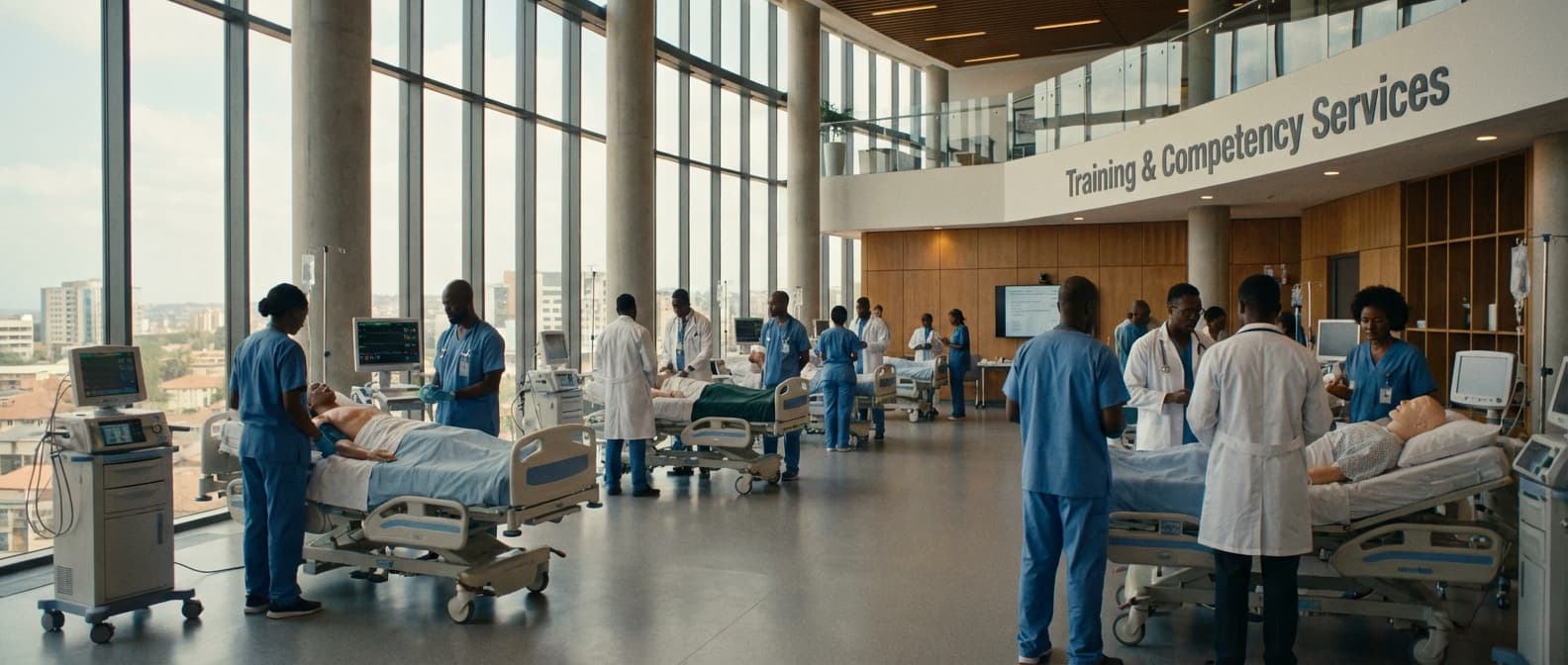
Anesthesia Workstation User Training Service in Egypt
Engineering Excellence & Technical Support
Anesthesia Workstation User Training Service High-standard technical execution following OEM protocols and local regulatory frameworks.
Master Anesthesia Workstation Operations
Gain proficiency in the advanced features and intuitive interface of modern anesthesia workstations, ensuring precise patient monitoring and ventilation control for optimal patient care in Egypt's healthcare settings.
Infection Control & Safety Protocols
Learn best practices for infection prevention and control specifically tailored for anesthesia workstations, including disinfection procedures and sterile technique application, vital for maintaining patient safety in Egyptian hospitals.
Troubleshooting & Emergency Preparedness
Develop critical skills in identifying and resolving common workstation malfunctions, as well as implementing effective emergency protocols to ensure uninterrupted and safe anesthesia delivery even in challenging situations within Egypt.
What Is Anesthesia Workstation User Training Service In Egypt?
The Anesthesia Workstation User Training Service in Egypt refers to a specialized educational program designed to equip healthcare professionals with the knowledge and practical skills necessary to operate and manage anesthesia workstations safely and effectively. This service is crucial for ensuring optimal patient care, minimizing procedural risks, and maximizing the lifespan and efficiency of complex medical equipment within the Egyptian healthcare system. The training typically covers the theoretical underpinnings of anesthesia delivery, the comprehensive functionality of specific workstation models, emergency procedures, troubleshooting, and adherence to regulatory standards. It aims to bridge the gap between the theoretical understanding of anesthesia principles and the practical application using advanced technological interfaces.
| Target Audience | Need for Training | Typical Use Cases |
|---|---|---|
| Anesthesiologists | Essential for safe and effective administration of anesthesia, optimizing patient outcomes, and adhering to best practices. | Operating rooms, intensive care units (ICUs), emergency departments, pain management clinics for all surgical and non-surgical procedures requiring monitored anesthesia care. |
| Anesthesia Residents and Fellows | Foundation for developing competency in advanced anesthesia delivery and equipment management during their training period. | Learning environments, simulation centers, and clinical rotations in various hospital settings. |
| Anesthesia Nurses / Nurse Anesthetists | To support anesthesiologists, manage equipment pre- and post-procedure, and handle specific monitoring and ventilation tasks under supervision. | Pre-operative assessment areas, operating rooms, recovery rooms, and ICUs. |
| Biomedical Engineers and Technicians | To understand the technical specifications, perform calibration, preventive maintenance, and repair of anesthesia workstations. | Hospital biomedical engineering departments, service centers, and equipment maintenance facilities. |
| Hospital Administrators and Procurement Officers | To understand the capabilities and training requirements of modern anesthesia equipment for informed purchasing decisions and resource allocation. | Hospital administrative offices, procurement departments, and strategic planning meetings. |
Key Components of Anesthesia Workstation User Training:
- Theoretical Foundations: Review of anesthetic agents, physiological monitoring, and pharmacodynamics/pharmacokinetics relevant to workstation use.
- Hardware and Software Operation: In-depth instruction on the physical components, user interface, display modes, ventilation modes (e.g., volume control, pressure control, SIMV, PSV), and gas delivery systems of the specific anesthesia workstation model.
- Patient Monitoring Integration: Understanding how the workstation integrates with and displays data from various patient monitors (e.g., ECG, SpO2, NIBP, EtCO2, anesthetic gas analysis).
- Alarm Management and Troubleshooting: Comprehensive training on recognizing, interpreting, and responding to various alarm conditions, as well as basic troubleshooting of common technical issues.
- Maintenance and Cleaning Protocols: Guidance on routine cleaning, disinfection, and preventive maintenance procedures to ensure equipment hygiene and longevity.
- Emergency Procedures: Simulation-based training on managing critical events and equipment malfunctions during anesthetic procedures.
- Regulatory Compliance: Education on relevant Egyptian healthcare regulations, safety standards, and documentation requirements related to anesthesia workstation usage.
Who Needs Anesthesia Workstation User Training Service In Egypt?
Anesthesia workstation user training services are crucial for ensuring the safe, efficient, and optimal utilization of these complex medical devices. In Egypt, a growing healthcare sector and increasing adoption of advanced medical technologies necessitate robust training programs for healthcare professionals operating anesthesia workstations. These services benefit a wide range of institutions and individuals involved in patient care, aiming to minimize errors, enhance patient outcomes, and maximize the lifespan and functionality of the equipment.
| Customer Segment | Relevant Departments | ||||
|---|---|---|---|---|---|
| Hospitals (Governmental, Private, University Affiliated) | Anesthesiology Department | Operating Rooms (ORs) | Intensive Care Units (ICUs) | Recovery Rooms (PACUs) | Pain Management Clinics |
| Specialized Surgical Centers | Anesthesiology Department | Specific surgical specialty ORs (e.g., Cardiac Cath Labs, Neuro-ORs) | Post-operative Care Units | ||
| Emergency Medical Services | Emergency Departments | Ambulance Services (advanced life support teams) | |||
| Medical Training and Simulation Centers | Simulation Labs | Continuing Medical Education (CME) Programs | |||
| Medical Equipment Distributors and Service Providers | Technical Support and Service Teams | Sales and Product Specialists | |||
| Individual Healthcare Professionals | Primarily Anesthesiologists, Anesthetists, Certified Registered Nurse Anesthetists (CRNAs) |
Target Customers and Departments Requiring Anesthesia Workstation User Training in Egypt
- Hospitals (Governmental, Private, University Affiliated)
- Specialized Surgical Centers (e.g., Cardiac, Neurosurgery, Transplant)
- Emergency Medical Services (for mobile units or advanced response teams)
- Medical Training and Simulation Centers
- Medical Equipment Distributors and Service Providers (for their technical and sales teams)
- Individual Anesthesiologists, Anesthetists, and CRNAs
Anesthesia Workstation User Training Service Process In Egypt
This document outlines the Anesthesia Workstation User Training Service Process in Egypt, detailing the workflow from initial inquiry to successful execution. The service aims to equip healthcare professionals with the necessary knowledge and practical skills to safely and effectively operate anesthesia workstations.
| Stage | Description | Key Activities | Responsible Parties | Timeline (Typical) |
|---|---|---|---|---|
| Initial Inquiry and Needs Assessment | The process begins when a healthcare facility or individual expresses interest in anesthesia workstation training. | Contacting the training provider, discussing specific workstation models, identifying training needs (e.g., basic operation, advanced features, troubleshooting), and understanding participant demographics. | Client (Hospital/Clinic/Individual), Training Provider Sales/Consultant | 1-3 Business Days |
| Proposal Development and Agreement | Based on the needs assessment, a tailored training proposal is developed and presented. | Developing a detailed proposal outlining training objectives, curriculum, duration, methodologies, trainer qualifications, proposed dates, and cost. Negotiation and finalization of the training agreement/contract. | Training Provider, Client | 3-7 Business Days |
| Training Schedule and Logistics | Once the agreement is signed, the practical arrangements for the training are made. | Confirming specific training dates and times, identifying the training location (on-site at the facility or at the provider's training center), arranging for equipment (anesthesia workstations, simulation tools), and confirming participant numbers. | Training Provider Logistics Coordinator, Client Facility Manager/HR | 1-2 Weeks (prior to training) |
| Pre-Training Preparation | Ensuring both participants and trainers are ready for the training session. | Participants: Receiving pre-reading materials, pre-course questionnaires, and information on accessing the training. Trainers: Preparing training materials, equipment, and ensuring all technical aspects are functional. | Training Provider, Participants, Client IT/Biomedical Department (for access) | 1 Week (prior to training) |
| Training Delivery | The core of the service where theoretical knowledge and practical skills are imparted. | Conducting lectures, demonstrations, hands-on practice sessions with anesthesia workstations, case study discussions, Q&A sessions, and simulation exercises. | Certified Trainers, Participants | Varies based on training scope (e.g., 1-5 Days) |
| Post-Training Support and Evaluation | Providing ongoing assistance and gathering feedback to improve future training. | Distributing post-training assessments (knowledge checks, skill evaluations), providing access to online resources or reference materials, offering limited remote support for follow-up queries, and collecting participant feedback through surveys. | Training Provider, Participants, Client | Ongoing (following training) |
| Certification and Record Keeping | Formalizing the completion of the training and maintaining records. | Issuing certificates of completion to participants who successfully pass assessments. Maintaining comprehensive training records for both participants and the training provider, including attendance, assessment results, and feedback. | Training Provider Administration, Client HR/Training Department | 2-5 Business Days (post-assessment completion) |
Key Stages of the Anesthesia Workstation User Training Service Process in Egypt
- Initial Inquiry and Needs Assessment
- Proposal Development and Agreement
- Training Schedule and Logistics
- Pre-Training Preparation
- Training Delivery
- Post-Training Support and Evaluation
- Certification and Record Keeping
Anesthesia Workstation User Training Service Cost In Egypt
The cost of anesthesia workstation user training services in Egypt can vary significantly based on several factors. These factors influence the overall price, making it essential for healthcare facilities to understand them when budgeting for training. The training aims to equip anesthesiologists, nurses, and technicians with the knowledge and practical skills to safely and effectively operate complex anesthesia workstations. Factors impacting cost include the vendor's reputation and experience, the level of detail and customization of the training program, the duration of the training, the number of participants, the location of the training (on-site at the hospital vs. off-site at the vendor's facility), and the inclusion of hands-on simulation or practical assessments. Additionally, the specific model and complexity of the anesthesia workstation being trained on will also play a role. Advanced workstations with more features or specialized functions may require more in-depth and therefore more costly training.
| Training Scope | Estimated Price Range (EGP) |
|---|---|
| Basic User Familiarization (Half-day to 1 day, single workstation model, standard curriculum) | 8,000 - 15,000 |
| Standard User Training (1-2 days, multiple participants, moderate customization, hands-on elements) | 15,000 - 30,000 |
| Advanced/Comprehensive Training (2-3 days, extensive customization, complex workstation features, simulation, certification) | 30,000 - 60,000+ |
| On-site Training (Additional cost, varies by location and duration) | 2,000 - 5,000+ |
| Customized/Specialized Modules (e.g., specific ventilation modes, troubleshooting) | 5,000 - 10,000+ per module |
Key Pricing Factors for Anesthesia Workstation User Training in Egypt
- Vendor Reputation and Expertise: Established and reputable training providers often command higher fees due to their proven track record and quality of instruction.
- Training Program Customization: Tailoring the curriculum to specific hospital protocols, workstation models, or staff experience levels can increase costs.
- Training Duration: The length of the training session, from half-day workshops to multi-day comprehensive courses, directly impacts the overall price.
- Number of Participants: Group discounts may be available, but larger groups generally lead to higher aggregate costs for the provider.
- Training Location: On-site training at the hospital often incurs additional travel and logistical costs for the vendor, which are passed on to the client.
- Hands-on Simulation and Assessment: Training incorporating practical simulation sessions and formal assessments will typically be more expensive than theoretical-only training.
- Anesthesia Workstation Model Complexity: Training on advanced, multi-functional workstations will be more costly than on simpler models.
- Inclusion of Training Materials: The cost may vary depending on whether comprehensive manuals, digital resources, or other training aids are provided.
- Post-Training Support: The availability and scope of ongoing technical support or refresher courses after the initial training can influence the price.
Affordable Anesthesia Workstation User Training Service Options
Providing effective and affordable user training for anesthesia workstations is crucial for patient safety and operational efficiency. This service focuses on equipping healthcare professionals with the necessary knowledge and skills to operate anesthesia machines safely and effectively. We offer flexible training options designed to meet the diverse needs and budgets of healthcare facilities.
| Training Package | Key Features | Ideal For | Estimated Price Range (USD) |
|---|---|---|---|
| Basic Operator Certification | Fundamental operation, safety checks, basic troubleshooting | New staff, refreshers | $200 - $500 per user |
| Advanced Functionality & Troubleshooting | Advanced modes, monitoring, error codes, simulations | Experienced staff, complex cases | $400 - $900 per user |
| Comprehensive On-Site Training Package | Full day, group training, scenarios, Q&A | Entire departments, new equipment rollout | $2,500 - $7,500 per session (group rate) |
| Train-the-Trainer Program | Develop internal trainers, curriculum support | Facilities with ongoing training needs | $1,000 - $3,000 per trainer |
| Remote/Virtual Learning Module | Online self-paced modules, simulations | Initial familiarization, geographically dispersed staff | $100 - $300 per user |
Cost-Saving Strategies for Anesthesia Workstation Training
- Leverage Group Discounts: Train multiple staff members simultaneously to reduce per-person costs.
- Bundle Training with Equipment Purchase: Negotiate training packages as part of a new workstation acquisition.
- Utilize Train-the-Trainer Programs: Invest in internal expertise to reduce reliance on external trainers for routine updates.
- Opt for Remote/Virtual Learning: Reduce travel and accommodation expenses for both trainers and trainees.
- Schedule Training During Off-Peak Hours: Minimize disruption to clinical operations and potentially secure better rates.
- Regular Refresher Courses: Prevent knowledge degradation, reducing the likelihood of costly errors or equipment misuse.
- Standardize Workstation Models: Training on a single or limited number of models simplifies curriculum development and delivery.
Verified Providers In Egypt
In the rapidly evolving landscape of healthcare, identifying trustworthy and competent medical service providers is paramount. In Egypt, the emergence of verified providers has significantly streamlined this process, offering patients greater confidence and access to quality care. Franance Health stands out as a leading example of such a verified entity. Their commitment to rigorous credentialing and patient-centric practices positions them as a premier choice for individuals seeking reliable healthcare solutions in Egypt. This document outlines the credentials that solidify Franance Health's reputation and explains why they represent the best choice for your healthcare needs.
| Credential/Aspect | Franance Health's Commitment | Why it Matters to Patients |
|---|---|---|
| Medical Licensing & Certification | Verifies all degrees, licenses, and specialized certifications of medical professionals. | Ensures competence and adherence to regulatory standards by all practitioners. |
| Educational Background Verification | Confirms degrees and training from reputable and accredited institutions. | Guarantees that healthcare providers possess a strong theoretical and practical foundation. |
| Experience and Specialization | Assesses the depth and breadth of a professional's experience in their area of expertise. | Connects patients with specialists best equipped to handle their specific medical conditions. |
| Professional Conduct & Ethics | Conducts background checks and assesses professional history for any disciplinary actions. | Provides assurance of ethical treatment and reliable patient care. |
| Patient Satisfaction & Feedback | Actively collects and analyzes patient feedback to drive service improvements. | Demonstrates a commitment to patient experience and continuous quality enhancement. |
| Compliance with Healthcare Regulations | Adheres to all relevant local and international healthcare regulations and standards. | Ensures a safe and legally sound healthcare environment for all patients. |
Franance Health Credentials and Why They Are the Best Choice
- Rigorous Medical Professional Vetting: Franance Health employs an exhaustive vetting process for all its affiliated healthcare professionals. This includes verifying medical licenses, educational qualifications from accredited institutions, and professional certifications. They ensure that every doctor, nurse, and specialist has a clean disciplinary record and maintains up-to-date knowledge in their respective fields.
- Accreditation and Compliance with International Standards: Franance Health aligns its operational standards with international benchmarks for healthcare quality and safety. This commitment to excellence ensures that patients receive care that is not only effective but also adheres to global best practices, fostering trust and minimizing risks.
- Patient-Centric Approach and Service Excellence: Beyond clinical expertise, Franance Health places a strong emphasis on the patient experience. This involves transparent communication, personalized care plans, efficient appointment scheduling, and accessible support systems. Their focus is on making the healthcare journey as smooth and comfortable as possible for every individual.
- Technological Integration for Enhanced Care: Franance Health leverages modern technology to improve healthcare delivery. This can include advanced diagnostic tools, secure electronic health records, and telemedicine options, all contributing to more efficient, accurate, and accessible medical services.
- Comprehensive Service Portfolio: Franance Health offers a wide spectrum of medical services, catering to diverse health needs. This comprehensive approach means patients can often find a range of specialists and treatments within a single, trusted network, simplifying their healthcare management.
- Commitment to Ethical Practices and Patient Advocacy: Ethical conduct is a cornerstone of Franance Health's operations. They are dedicated to patient advocacy, ensuring that individuals' rights are respected and that they receive fair and unbiased treatment. This commitment builds a strong foundation of trust and reliability.
- Positive Patient Testimonials and Reputation: The success and credibility of any healthcare provider are often reflected in the experiences of their patients. Franance Health boasts a strong reputation, backed by numerous positive testimonials from individuals who have benefited from their services. This real-world feedback underscores their consistent delivery of high-quality care.
- Continuous Quality Improvement Initiatives: Franance Health is not static; they are committed to ongoing learning and improvement. Regular reviews of their processes, feedback mechanisms, and adaptation to new medical advancements ensure that they consistently provide the highest level of care available.
Scope Of Work For Anesthesia Workstation User Training Service
This Scope of Work (SOW) outlines the requirements for providing comprehensive user training services for the Anesthesia Workstation. The training aims to ensure that all intended users are proficient in the safe, effective, and efficient operation of the Anesthesia Workstation, adhering to all relevant clinical protocols and safety guidelines. This document details the training objectives, target audience, training methodologies, technical deliverables, and standard specifications for the training program.
| Category | Description | Technical Deliverable | Standard Specification / Requirement |
|---|---|---|---|
| Training Program Design | Development of a structured and modular training curriculum tailored to the Anesthesia Workstation. | Training Manual / Curriculum Document | Comprehensive, clear, and concise curriculum covering all operational aspects. Aligned with manufacturer guidelines and best clinical practices. Includes learning objectives, modules, content outlines, and assessment strategies. |
| Training Delivery | Provision of instructor-led training sessions, either on-site or remotely. | Instructor-Led Training Sessions | Sessions conducted by certified and experienced anesthesia professionals. Appropriate instructor-to-participant ratio. Utilizes a mix of theoretical instruction, practical demonstrations, and hands-on exercises. |
| Hands-on Practice | Dedicated time for participants to practice using the Anesthesia Workstation under supervision. | Simulated Patient Scenarios | Realistic clinical scenarios designed to test user proficiency in normal and emergency situations. Requires access to functional Anesthesia Workstations or high-fidelity simulators. |
| Assessment and Evaluation | Methods to assess participant understanding and competency. | Competency Assessment Tools | Written examinations, practical skill evaluations, and case-based assessments. Post-training surveys for feedback. Minimum passing score defined. |
| Training Materials | Provision of all necessary documentation and resources for trainees. | Participant Handouts & Reference Materials | Printed or digital copies of training manuals, quick reference guides, and relevant safety checklists. Available in the primary language of the trainees. |
| Technical Support During Training | On-site or remote technical assistance during training sessions. | On-site/Remote Technical Support | Prompt resolution of technical issues related to the Anesthesia Workstation or training equipment. Available throughout the scheduled training hours. |
| Post-Training Support | Limited support provided after the formal training concludes. | Post-Training Q&A / Refresher Session (Optional) | Scheduled follow-up sessions or access to a dedicated support channel for a defined period (e.g., 30 days) to address lingering questions. |
| Trainer Qualifications | Ensuring trainers possess the necessary expertise and credentials. | Trainer CVs / Certifications | Proof of relevant clinical experience in anesthesiology and experience with the specific Anesthesia Workstation model. Valid teaching certifications (e.g., BLS, ACLS instructor where applicable). |
| Training Environment | Requirements for the physical or virtual space where training will take place. | Training Facility / Virtual Platform Requirements | Adequate space for lectures and hands-on practice, appropriate lighting, temperature control, power outlets, and internet connectivity (for remote sessions). Access to functioning Anesthesia Workstations, patient simulators, and audiovisual equipment. |
| Reporting | Documentation of training activities and outcomes. | Training Completion Reports | Summary reports including attendance records, assessment results, and overall training effectiveness. Reports submitted within a defined timeframe (e.g., 5 business days post-training). |
Key Training Objectives
- Familiarize users with the Anesthesia Workstation's hardware components, user interface, and essential functions.
- Train users on proper setup, calibration, and pre-use checks of the Anesthesia Workstation.
- Educate users on the safe and effective delivery of anesthetic gases and ventilation modes.
- Provide training on monitoring parameters, alarm management, and troubleshooting common issues.
- Ensure users understand and can implement appropriate patient safety features and protocols.
- Develop user competency in emergency procedures and ventilator weaning strategies.
- Familiarize users with data logging, record-keeping, and maintenance procedures.
- Promote best practices in anesthesia delivery and patient care utilizing the Anesthesia Workstation.
Service Level Agreement For Anesthesia Workstation User Training Service
This Service Level Agreement (SLA) defines the performance standards for the Anesthesia Workstation User Training Service. It outlines response times for support requests and uptime guarantees for the training platform, ensuring a reliable and effective learning experience for users.
| Service Component | Service Level Objective (SLO) | Measurement Metric | Reporting Frequency |
|---|---|---|---|
| Technical Support (System Access/Login Issues) | Acknowledge within 1 hour; Resolution within 4 business hours | Time to acknowledge ticket; Time to resolve ticket | Weekly |
| Content/Training Module Issues (e.g., broken links, incorrect information) | Acknowledge within 2 business hours; Resolution within 8 business hours | Time to acknowledge ticket; Time to resolve ticket | Weekly |
| General Inquiries (e.g., course navigation, certification process) | Acknowledge within 4 business hours; Resolution within 24 business hours | Time to acknowledge ticket; Time to resolve ticket | Weekly |
| Training Platform Uptime | 99.5% Monthly Uptime | Percentage of time the platform is accessible and functional for users | Monthly |
| Scheduled Maintenance Window | Announced 48 hours in advance; Limited to 2 hours per month during off-peak hours | Notification lead time; Total duration and timing of maintenance | Monthly |
Key Performance Indicators (KPIs) for Anesthesia Workstation User Training Service
- Response Times for Support Requests: Prompt and efficient resolution of technical and training-related queries.
- Uptime Guarantees: Availability of the training platform to ensure continuous learning access.
- Training Material Accessibility: Ensuring all training modules and resources are readily available.
Frequently Asked Questions

Ready when you are
Let's scope your Anesthesia Workstation User Training Service in Egypt project in Egypt.

Scaling healthcare logistics and technical systems across the entire continent.