
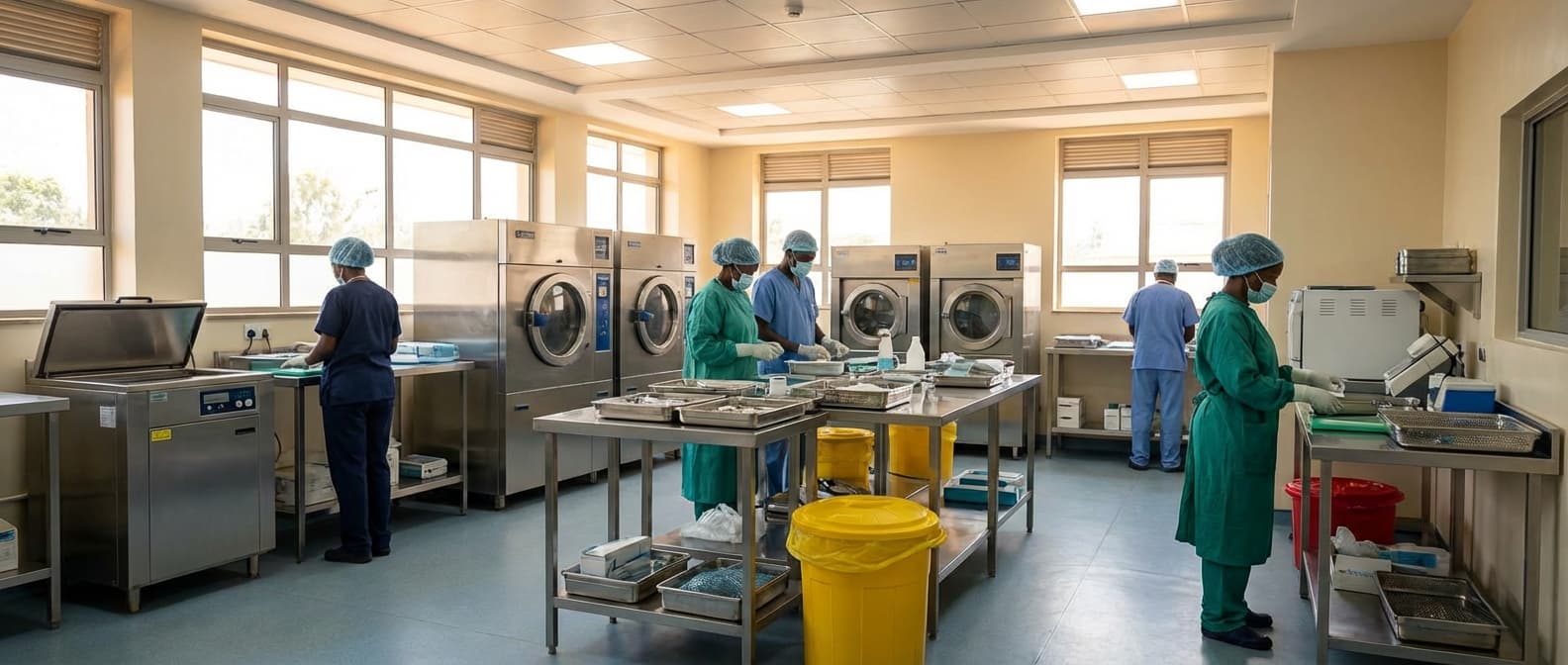
Medical Equipment Decontamination Service (Pre-Repair/Pre-Relocation) in Egypt
Engineering Excellence & Technical Support
Medical Equipment Decontamination Service (Pre-Repair/Pre-Relocation) High-standard technical execution following OEM protocols and local regulatory frameworks.
Advanced Bio-Decontamination
Leveraging cutting-edge disinfection technologies and EPA-approved agents, we ensure thorough elimination of pathogens and biohazardous materials from medical equipment, safeguarding healthcare professionals and preventing cross-contamination before repair or relocation.
Expedited Pre-Repair Logistics
Our specialized decontamination process is optimized for speed and efficiency, minimizing downtime for critical medical devices. We provide rapid, on-site or in-house decontamination to facilitate swift repair turnaround times, crucial for maintaining patient care continuity in Egypt's dynamic healthcare landscape.
Compliant Relocation Readiness
Ensuring full compliance with international and Egyptian health and safety regulations, our pre-relocation decontamination service prepares your medical equipment for safe transit. We offer certified documentation for a seamless and secure transfer, mitigating risks associated with bioburden during moves.
What Is Medical Equipment Decontamination Service (Pre-repair/pre-relocation) In Egypt?
Medical Equipment Decontamination Service (Pre-Repair/Pre-Relocation) in Egypt refers to the process of cleaning, disinfecting, and in some cases, sterilizing medical devices prior to their transportation for repair or relocation. This service is crucial for preventing the spread of healthcare-associated infections (HAIs), ensuring the safety of technicians and personnel involved in handling the equipment, and maintaining the integrity of the equipment itself during transit and subsequent servicing. The scope of decontamination typically includes the removal of visible soil, biological fluids, and microbial contaminants from both external and accessible internal surfaces of the medical equipment. Regulatory compliance with Egyptian healthcare standards and international best practices is a primary consideration in the execution of this service.
| Who Needs the Service? | Typical Use Cases | Importance |
|---|---|---|
| Hospitals and Healthcare Facilities (Public & Private) | Equipment being sent to a centralized repair facility or external service provider. | Minimizes risk of cross-contamination between facilities and to repair personnel. |
| Diagnostic Imaging Centers | Relocation of imaging equipment (e.g., X-ray, CT, MRI scanners) to a new wing or facility. | Ensures a bio-secure transition of sensitive and complex machinery. |
| Surgical Centers and Operating Theatres | Transport of surgical instruments and specialized equipment for maintenance or calibration. | Prevents the introduction of pathogens into sterile environments. |
| Laboratories and Research Institutions | Decontamination of analytical instruments and biosafety equipment before servicing. | Protects laboratory personnel and prevents contamination of research samples. |
| Medical Equipment Manufacturers/Distributors (for return/exchange) | Return of equipment for warranty repairs, upgrades, or end-of-life disposal. | Safeguards their internal handling and disposal processes. |
| Third-Party Biomedical Engineering Services | Collection of equipment from various healthcare sites for servicing. | Establishes a baseline level of safety for their field technicians. |
Key Components of Medical Equipment Decontamination Service (Pre-Repair/Pre-Relocation)
- Initial Assessment: Evaluating the type of equipment, its intended use, and the nature of potential contaminants.
- Cleaning: Mechanical removal of gross contamination (organic matter, particulate debris) using appropriate detergents and cleaning agents.
- Disinfection: Application of chemical disinfectants with validated efficacy against a broad spectrum of microorganisms (bacteria, viruses, fungi).
- Sterilization (if applicable): Employing methods like autoclaving, ethylene oxide (EtO), or hydrogen peroxide plasma for critical medical devices where sterilization is mandated.
- Rinsing and Drying: Thorough removal of cleaning/disinfection residues and ensuring the equipment is dry to prevent microbial regrowth.
- Packaging and Labeling: Secure packaging of decontaminated equipment for safe transport, with clear labeling indicating its decontamination status.
- Documentation: Maintaining detailed records of the decontamination process, including chemicals used, contact times, temperatures, and personnel involved.
- Waste Disposal: Proper segregation and disposal of contaminated waste in accordance with Egyptian environmental regulations.
Who Needs Medical Equipment Decontamination Service (Pre-repair/pre-relocation) In Egypt?
In Egypt, medical equipment decontamination services, particularly those focused on pre-repair and pre-relocation processes, are crucial for maintaining a safe and efficient healthcare environment. These specialized services ensure that medical devices are thoroughly cleaned and disinfected before being handled by repair technicians or moved to new locations. This prevents the spread of infections, protects staff from biohazards, and safeguards the integrity of the equipment itself. Several key stakeholders and departments within Egypt's healthcare sector actively require and benefit from these essential decontamination services.
| Customer Type | Key Departments/Areas Benefiting | Specific Needs/Reasons for Decontamination |
|---|---|---|
| Hospitals (Public and Private) | Operating Rooms, Intensive Care Units (ICUs), Emergency Departments (ERs), Outpatient Clinics, Central Sterilization Supply Departments (CSSDs), Biomedical Engineering Departments | Preventing cross-contamination during repairs, ensuring patient safety before equipment relocation within the hospital, managing biohazardous materials safely. |
| Clinics and Medical Centers | General Practice Clinics, Specialized Clinics (e.g., dental, ophthalmology, dermatology), Minor Procedure Rooms | Maintaining hygiene standards, protecting staff from potential pathogens, facilitating equipment maintenance and upgrades without compromising patient care. |
| Diagnostic Laboratories | Pathology Labs, Radiology Departments, Microbiology Labs | Ensuring accurate test results by preventing contamination, safe handling of potentially infectious samples and equipment, compliance with biohazard protocols before equipment servicing. |
| Surgical Centers | Operating Theaters, Recovery Rooms | Strict infection control requirements, protecting surgical teams and future patients, ensuring instruments and devices are safe for transport for repair or calibration. |
| Rehabilitation Facilities | Physical Therapy Departments, Occupational Therapy Units | Decontaminating equipment used by multiple patients, maintaining a safe environment for vulnerable individuals, preparing equipment for servicing or relocation. |
| Medical Equipment Manufacturers and Distributors | Service and Repair Centers, Warehouse and Logistics Departments | Receiving returned equipment for repair or refurbishment, ensuring technicians are not exposed to biohazards, preparing equipment for shipping to new clients or service depots. |
| Government Health Agencies | Public Hospitals, Health Directorates, Procurement Departments | Managing a large inventory of public health equipment, ensuring equitable access to safe and functional medical devices, facilitating large-scale equipment relocation or upgrades. |
| Non-Governmental Organizations (NGOs) | Mobile Clinics, Field Hospitals, Health Outreach Programs | Operating in resource-limited settings, ensuring the highest level of safety and hygiene for both staff and beneficiaries, essential for the maintenance and mobility of their equipment. |
Target Customers and Departments in Egypt Requiring Medical Equipment Decontamination (Pre-Repair/Pre-Relocation)
- Hospitals (Public and Private)
- Clinics and Medical Centers
- Diagnostic Laboratories
- Surgical Centers
- Rehabilitation Facilities
- Medical Equipment Manufacturers and Distributors (for return/refurbishment)
- Government Health Agencies (for public health initiatives and asset management)
- Non-Governmental Organizations (NGOs) involved in healthcare provision
Medical Equipment Decontamination Service (Pre-repair/pre-relocation) Process In Egypt
This document outlines the typical workflow for a Medical Equipment Decontamination Service in Egypt, specifically for equipment undergoing repair or relocation. The process ensures that equipment is safely disinfected and free from biohazardous materials before being handled by repair technicians or moved to a new location, minimizing risks to personnel and preventing cross-contamination. This comprehensive workflow covers all stages from the initial client inquiry to the final delivery of decontaminated equipment.
| Stage | Description | Key Activities | Responsible Party | Key Deliverables/Outcomes | Notes/Considerations |
|---|---|---|---|---|---|
| The process begins when a hospital, clinic, or medical equipment vendor contacts the decontamination service provider. | Client submits a request, specifying the type of equipment, quantity, and reason for decontamination (repair/relocation). | Client (Hospital/Clinic/Vendor) | Initial service request received. | Ensure clear communication channels are established. |
| The service provider gathers detailed information to assess the scope of work and provide a cost estimate. | Review equipment details, assess potential biohazards, determine required decontamination methods, and calculate costs. | Decontamination Service Provider | Formal quotation/proposal provided to the client. | Factors: equipment size, complexity, type of contamination, urgency. |
| Upon client approval, the service provider schedules the decontamination and plans the transportation. | Coordinate pickup/delivery dates and times, arrange transportation (specialized vehicles if needed), and prepare necessary equipment and personnel. | Decontamination Service Provider | Confirmed schedule and logistics plan. | Consider client's operational hours and equipment availability. |
| The decontaminated equipment is collected from the client's site or designated location. | Securely package and transport the equipment to the decontamination facility, ensuring safety protocols are followed during transit. | Decontamination Service Provider | Equipment safely transported to the decontamination facility. | Use appropriate PPE and handling procedures. |
| The core decontamination procedures are performed using approved methods. | Cleaning, disinfection (e.g., chemical, steam, UV), sterilization (if required), and thorough rinsing/drying. | Decontamination Service Provider | Equipment is decontaminated according to established protocols. | Follow manufacturer's guidelines for specific equipment and relevant Egyptian health regulations. |
| The effectiveness of the decontamination process is checked. | Visual inspection, biological indicator testing (if applicable), and validation of the disinfection efficacy. | Decontamination Service Provider | Verified decontaminated status of the equipment. | Maintain records of QC checks. |
| Formal documentation is provided to the client to confirm the decontamination. | Issuance of a decontamination certificate, including details of the equipment, methods used, and date of service. | Decontamination Service Provider | Decontamination certificate for each piece of equipment. | Certificate should be legally recognized and accepted by repair facilities. |
| The decontaminated and certified equipment is returned to the client or dispatched to the repair facility/new location. | Secure packaging for transport, delivery to the specified destination, and confirmation of receipt by the client. | Decontamination Service Provider | Equipment successfully handed over to the client or designated party. | Ensure clear handover procedures and sign-off. |
Medical Equipment Decontamination Service (Pre-Repair/Pre-Relocation) Workflow in Egypt
- Inquiry and Service Request
- Initial Assessment and Quotation
- Scheduling and Logistics Planning
- Equipment Pickup/Collection
- Decontamination Process Execution
- Quality Control and Verification
- Documentation and Certification
- Equipment Handover/Dispatch
Medical Equipment Decontamination Service (Pre-repair/pre-relocation) Cost In Egypt
The cost of medical equipment decontamination services in Egypt, particularly for pre-repair or pre-relocation purposes, is influenced by several key factors. These services are crucial to prevent the spread of infections and ensure the safety of technicians and the environment. Pricing typically considers the type and size of the equipment, the level of contamination, the decontamination method employed, the urgency of the service, and the location of the facility. While specific price lists are not readily available publicly, estimates can be provided based on industry standards and local market dynamics. It's important to note that these are general ranges and actual quotes should be obtained directly from service providers.
| Equipment Category | Estimated Cost Range (EGP) | Notes |
|---|---|---|
| Small Diagnostic Devices (e.g., Stethoscopes, BP Monitors, Thermometers) | 200 - 500 EGP | Basic disinfection, often a per-item charge. |
| Medium-Sized Equipment (e.g., Ultrasound Machines, ECG Machines, Infusion Pumps) | 500 - 1,500 EGP | More thorough cleaning, depending on complexity and potential contamination. |
| Large Medical Equipment (e.g., Endoscopes, Ventilators, Dialysis Machines) | 1,500 - 5,000+ EGP | Requires specialized procedures, potentially multiple stages, and skilled technicians. Costs can escalate significantly for high-risk equipment. |
| Complex Imaging Equipment (e.g., X-ray, CT, MRI - External Surfaces) | 3,000 - 10,000+ EGP | Focus on accessible external surfaces for pre-repair/relocation. Internal decontamination is a separate, more complex service. |
| Emergency/Rush Service Surcharge | Add 20% - 50% to base cost | Applies for urgent decontamination requests. |
Key Pricing Factors for Medical Equipment Decontamination in Egypt:
- Equipment Type and Size: Larger and more complex equipment (e.g., MRI machines, CT scanners, large surgical robots) will naturally incur higher decontamination costs than smaller, simpler devices (e.g., stethoscopes, blood pressure monitors). The number of components and accessibility for cleaning also plays a role.
- Level of Contamination: Equipment known to have been exposed to highly infectious agents (e.g., airborne pathogens, bodily fluids from critical care units) will require more rigorous and specialized decontamination protocols, leading to higher costs.
- Decontamination Method: Different methods have varying cost implications. Chemical disinfection, UV-C irradiation, and high-level sterilization (e.g., ethylene oxide) all have different material and labor expenses.
- Urgency of Service: Emergency or same-day decontamination services will typically command a premium over scheduled appointments.
- Location of Facility: For services required at remote hospitals or clinics, transportation costs for the decontamination team and specialized equipment can increase the overall price.
- Specialized Biohazard Handling: If the decontamination involves handling biohazardous waste, additional charges for proper disposal according to Egyptian regulations will apply.
- Certification and Documentation: Providers offering certified decontamination processes and detailed reporting may charge more for the added assurance and compliance.
Affordable Medical Equipment Decontamination Service (Pre-repair/pre-relocation) Options
Our affordable medical equipment decontamination service offers crucial pre-repair and pre-relocation cleaning solutions. This essential step ensures the safety of technicians, handlers, and the environment by removing biohazards, chemical contaminants, and particulate matter. Investing in professional decontamination before equipment servicing or relocation minimizes risks, prevents cross-contamination, and can often expedite the repair or moving process, ultimately saving you time and money.
| Cost-Saving Strategy | Description | Potential Savings |
|---|---|---|
| Proactive Decontamination | Cleaning equipment before it's sent for repair or moved prevents secondary contamination during the process, reducing the need for additional cleaning later. | Reduced labor costs, minimized risk of repair delays due to contamination, lower disposal costs for contaminated materials. |
| Bundle Services | Combining decontamination with repair or relocation services from a single provider can lead to package discounts and reduced administrative overhead. | Negotiated bundled pricing, streamlined logistics, fewer vendor management tasks. |
| Scheduled Maintenance | Regular, scheduled decontamination for frequently used or high-risk equipment prevents major contamination build-up, making each cleaning session more efficient and less costly. | Lower per-incident costs, predictable budgeting, prolonged equipment lifespan. |
| Tiered Service Levels | Choosing the appropriate decontamination level based on the equipment's use and anticipated contamination risk avoids overpaying for unnecessary services. | Optimized spending by matching service to need. |
| Partnerships with Repair/Moving Companies | Collaborating with trusted repair technicians and relocation specialists to offer integrated decontamination services can create efficiencies and shared cost benefits. | Streamlined workflow, potential for shared client referrals and discounts. |
Value Bundles for Decontamination Services
- {"title":"Standard Decontamination Package","description":"Includes basic cleaning and disinfection of external surfaces. Ideal for routine maintenance or minor moves."}
- {"title":"Enhanced Decontamination Package","description":"Adds specialized cleaning for high-touch areas and disinfection protocols for common pathogens. Recommended for equipment with potential biohazard exposure."}
- {"title":"Comprehensive Decontamination Package","description":"Encompasses deep cleaning, targeted disinfection, and material-specific treatments. Suitable for equipment undergoing major repairs, relocation between facilities, or after significant contamination events."}
- {"title":"Bulk Decontamination Discount","description":"Significant cost savings for sterilizing multiple pieces of equipment simultaneously or on a recurring basis. Tiered discounts available based on volume."}
- {"title":"Annual Service Contract","description":"Pre-paid decontamination services for a set period or number of equipment pieces, offering the best long-term value and predictable budgeting. Includes priority scheduling."}
Verified Providers In Egypt
In the evolving landscape of healthcare in Egypt, identifying and choosing verified healthcare providers is paramount for ensuring quality, safety, and effective treatment. This is where Franance Health distinguishes itself. As a leading platform dedicated to connecting individuals with trusted medical professionals, Franance Health's rigorous credentialing process sets a high bar for all providers listed on their network. This meticulous approach ensures that every doctor, clinic, and hospital featured undergoes thorough vetting, guaranteeing they meet stringent standards of expertise, experience, and ethical practice. Choosing Franance Health means opting for transparency, reliability, and ultimately, the best possible healthcare outcomes.
| Credential Type | Franance Health Verification Standard | Benefit to Patients |
|---|---|---|
| Medical Licenses & Certifications | Verified against official Egyptian Ministry of Health records and relevant professional bodies. | Ensures providers are legally qualified and possess the necessary expertise. |
| Educational Background | Cross-referenced with reputable medical institutions and universities. | Confirms the foundational knowledge and training of the healthcare professional. |
| Specialty Training & Fellowships | Validated through official accreditation and proof of completion. | Guarantees specialized knowledge for complex or specific medical conditions. |
| Professional Experience | Reviewed through documentation and references, where applicable. | Indicates practical application of skills and accumulated wisdom. |
| Reputation & Patient Feedback (where available) | Monitored through internal review and aggregated patient satisfaction metrics. | Provides insights into the provider's patient care approach and effectiveness. |
Why Franance Health Credentials Represent the Best Choice:
- Rigorous Verification Process: Franance Health doesn't simply accept providers at face value. They implement a comprehensive vetting procedure that examines educational qualifications, professional licenses, certifications, and adherence to ethical guidelines.
- Focus on Expertise and Experience: The platform prioritizes providers with proven track records and specialized knowledge in their respective fields, ensuring you are matched with the most competent professionals for your specific health needs.
- Commitment to Patient Safety: Patient well-being is at the core of Franance Health's mission. Their credentialing process includes checks on malpractice history and patient feedback mechanisms, fostering a safe and trustworthy healthcare environment.
- Transparency and Accessibility: By clearly displaying verified credentials, Franance Health empowers patients to make informed decisions. Easy access to provider information and specialties simplifies the search for the right healthcare professional.
- Upholding Ethical Standards: Franance Health is dedicated to ensuring all listed providers adhere to the highest ethical principles, promoting integrity and professionalism within the Egyptian healthcare sector.
Scope Of Work For Medical Equipment Decontamination Service (Pre-repair/pre-relocation)
This Scope of Work (SOW) outlines the requirements for providing professional medical equipment decontamination services prior to repair or relocation. The primary objective is to ensure the safety of personnel, the environment, and the integrity of the equipment by effectively removing biohazardous materials, chemical residues, and other contaminants. This service is crucial for minimizing risks during subsequent handling, repair, or transportation of medical devices.
| Section | Description | Standard Specifications / Technical Deliverables |
|---|---|---|
| 1.0 Service Overview | Provision of on-site or off-site decontamination services for a defined list of medical equipment, prior to scheduled repair or relocation activities. | Services to be performed by certified and trained decontamination specialists using approved protocols and equipment. A Certificate of Decontamination will be issued for each serviced item. |
| 2.0 Equipment Identification and Pre-Assessment | Identification of all medical equipment requiring decontamination. Initial assessment to determine the type and level of contamination. | Detailed equipment inventory list provided by the client. On-site visual inspection by the service provider to confirm equipment type, model, and potential contamination. Risk assessment based on equipment use history and visible signs of contamination. |
| 3.0 Decontamination Process | Application of approved cleaning, disinfection, and/or sterilization methods to render the equipment safe for handling. | Selection of decontamination agents and methods based on equipment material compatibility, type of contaminant, and level of disinfection required (e.g., high-level disinfection, sterilization). Adherence to manufacturer's guidelines and regulatory standards (e.g., CDC, OSHA, EPA). Specific protocols for different equipment categories (e.g., surgical instruments, diagnostic imaging, patient monitoring). |
| 4.0 Cleaning Agents and Disinfectants | Use of EPA-registered and FDA-approved cleaning agents and disinfectants. | Material Safety Data Sheets (MSDS) or Safety Data Sheets (SDS) for all chemicals used to be available upon request. Agents must be effective against a broad spectrum of pathogens relevant to medical environments. Concentration and contact time to be strictly followed. |
| 5.0 Safety Procedures and Personal Protective Equipment (PPE) | Implementation of stringent safety protocols to protect personnel and prevent environmental contamination during the decontamination process. | All personnel to wear appropriate PPE, including gloves, gowns, eye protection, and respiratory protection as dictated by the risk assessment. Proper disposal of contaminated materials in accordance with hazardous waste regulations. Spill containment procedures to be in place. |
| 6.0 Waste Management | Proper collection, segregation, and disposal of all contaminated waste generated during the decontamination process. | Use of designated biohazard waste containers. Transportation and disposal to be handled by licensed medical waste disposal contractors. Manifests or disposal certificates to be provided. |
| 7.0 Verification and Documentation | Verification of the decontamination process and provision of comprehensive documentation. | Visual inspection to confirm cleanliness. If applicable, biological or chemical indicators used to validate disinfection/sterilization efficacy. Certificate of Decontamination issued for each item, detailing equipment identification, date of service, decontaminating agent used, and technician signature. Final report summarizing all serviced equipment and waste disposal details. |
| 8.0 Post-Decontamination Handling | Procedures for handling decontaminated equipment to maintain its sterile or disinfected state. | Equipment to be handled with clean gloves and placed in appropriate protective packaging or containment for transport or repair. Clear labeling indicating 'Decontaminated'. |
| 9.0 Service Area and Access | Requirement for access to the equipment location and appropriate workspace for decontamination activities. | Client to provide a safe and accessible work area. Adequate lighting and ventilation. Access to water and power if required for certain processes. Coordination of site access and work schedule with client. |
| 10.0 Training and Certification | Ensuring service personnel are adequately trained and certified. | Proof of certification for decontamination specialists (e.g., IAHCSMM, CBSPD). Documentation of ongoing training in infection control, chemical handling, and biohazard management. |
Key Objectives and Benefits
- Minimize health risks to technicians, transport personnel, and end-users.
- Prevent cross-contamination of equipment and facilities.
- Ensure compliance with relevant health and safety regulations.
- Facilitate safe and efficient equipment repair and relocation processes.
- Protect the environment from potential biohazardous or chemical release.
Service Level Agreement For Medical Equipment Decontamination Service (Pre-repair/pre-relocation)
This Service Level Agreement (SLA) outlines the terms and conditions governing the decontamination of medical equipment by [Service Provider Name] ("Provider") for [Client Name] ("Client"). This SLA specifically applies to decontamination services performed prior to equipment repair or relocation, ensuring a safe and sterile environment for subsequent handling. The SLA details response times for service requests and defines uptime guarantees related to the availability of the decontamination service.
| Service Type | Response Time Target (Business Hours) | Uptime Guarantee (Applicable Period) |
|---|---|---|
| Routine Decontamination Request (Pre-Repair/Pre-Relocation) | Within 4 business hours of confirmed request receipt | N/A (Service is on-demand) |
| Emergency Decontamination Request (Outside Business Hours/Critical Equipment) | Within 2 business hours of confirmed request receipt (additional charges may apply) | N/A (Service is on-demand) |
| Scheduled Preventive Decontamination (if applicable) | As per agreed schedule | N/A (Service is on-demand) |
| Availability of Decontamination Personnel/Resources for Scheduled Services | N/A | 98% within scheduled service windows |
Key Service Parameters
- Scope of Service: Pre-repair and pre-relocation decontamination of specified medical equipment as detailed in individual service orders.
- Service Hours: Standard service hours are Monday to Friday, 8:00 AM to 5:00 PM (Client's local time), excluding public holidays.
- Emergency Service: Emergency decontamination services outside standard hours are available upon request and may incur additional charges.
- Decontamination Standards: All decontamination procedures will adhere to [Relevant Regulatory Bodies/Standards, e.g., CDC, WHO, ISO 13485] guidelines and best practices.
Frequently Asked Questions

Ready when you are
Let's scope your Medical Equipment Decontamination Service (Pre-Repair/Pre-Relocation) in Egypt project in Egypt.

Scaling healthcare logistics and technical systems across the entire continent.