
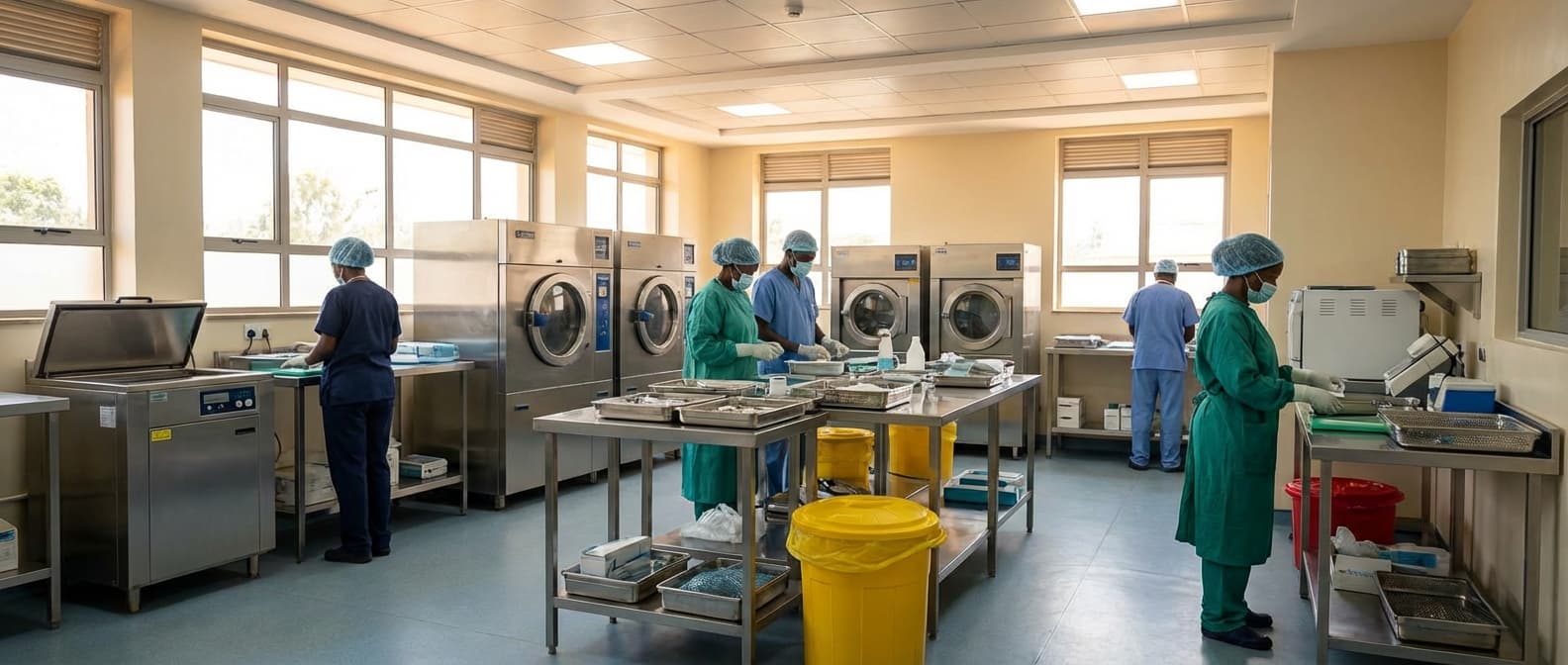
Infection-Control Readiness Support Service for Reusable Equipment in Egypt
Engineering Excellence & Technical Support
Infection-Control Readiness Support Service for Reusable Equipment High-standard technical execution following OEM protocols and local regulatory frameworks.
End-to-End Sterilization Verification
Our service provides comprehensive real-time monitoring and validation of all reusable medical equipment sterilization processes, ensuring adherence to international standards (e.g., ISO 13485, WHO guidelines) and Egyptian Ministry of Health regulations, thereby guaranteeing zero risk of cross-contamination.
Advanced Microbial Contamination Detection
Leveraging cutting-edge rapid diagnostic technologies, we offer swift and accurate detection of microbial contaminants on reusable equipment. This proactive approach minimizes the window of potential transmission and empowers healthcare facilities with immediate actionable data for prompt intervention.
Predictive Maintenance & Compliance Analytics
We deliver data-driven insights into equipment maintenance schedules and sterilization cycles. Our platform analyzes performance trends to predict potential failures, optimize resource allocation, and ensure continuous compliance with evolving infection control protocols, reducing operational downtime and enhancing patient safety.
What Is Infection-control Readiness Support Service For Reusable Equipment In Egypt?
Infection-Control Readiness Support Service (ICRSS) for Reusable Equipment in Egypt refers to a specialized consultancy and implementation framework designed to ensure that healthcare facilities possess the necessary infrastructure, protocols, standardized operating procedures (SOPs), trained personnel, and quality control mechanisms to safely and effectively reprocess reusable medical devices. This service aims to mitigate the risk of healthcare-associated infections (HAIs) transmitted through inadequately sterilized or disinfected equipment, thereby enhancing patient safety and public health outcomes within the Egyptian healthcare sector. The service encompasses a comprehensive assessment of current practices, identification of gaps against international and national guidelines (e.g., those from the Egyptian Ministry of Health and Population, WHO, CDC), and the development of tailored strategies for improvement.
| Who Needs the Service | Typical Use Cases | ||||||||
|---|---|---|---|---|---|---|---|---|---|
| Hospitals (Public and Private): Particularly those with surgical departments, intensive care units, and emergency rooms where a high volume of reusable instruments is processed. | Specialty Clinics (e.g., Dental, Ophthalmology, Endoscopy Centers): Facilities performing procedures requiring sterile or disinfected reusable instruments. | Ambulatory Surgical Centers: Facilities performing same-day surgeries with a reliance on reusable surgical tools. | Central Sterile Supply Departments (CSSDs) / Operating Room Support Services: The core departments responsible for the reprocessing of reusable medical equipment. | Healthcare Facility Management and Administration: Responsible for ensuring patient safety, regulatory compliance, and operational efficiency. | Medical Device Manufacturers and Suppliers (indirectly): May utilize such services to ensure their equipment is being utilized and maintained optimally by end-users. | New Healthcare Facility Start-ups: To establish best practices from the outset. | Facilities Undergoing Accreditation or Re-accreditation Processes: To demonstrate robust infection control standards. | **Facilities Experiencing an Increase in Healthcare-Associated Infections (HAIs) linked to equipment reprocessing. | Facilities Adopting New Medical Technologies or Procedures: Requiring assessment of new reprocessing protocols for novel instruments. |
| Establishing a new CSSD or upgrading an existing one: Designing workflows, selecting equipment, and developing SOPs. | Implementing automated cleaning and disinfection systems: Ensuring proper integration and validation. | Troubleshooting persistent HAIs related to reusable instruments: Investigating process failures and implementing corrective actions. | Ensuring compliance with new national guidelines or international standards: Updating protocols and staff training. | Training newly recruited staff on sterilization and disinfection procedures: Building a competent workforce. | Conducting periodic audits of reprocessing practices: Verifying adherence to SOPs and identifying areas for improvement. | Validating the efficacy of new sterilization or disinfection agents/methods: Ensuring they meet required standards. | Developing contingency plans for equipment failure or downtime: Maintaining operational continuity while ensuring patient safety. | Implementing a robust system for tracking and managing reusable medical devices: Enhancing accountability and recall capabilities. |
Key Components of Infection-Control Readiness Support Service for Reusable Equipment
- Assessment and Gap Analysis: Evaluation of existing sterilization and disinfection processes, equipment inventory, facility design, workflow, waste management, and staff competency.
- Policy and Protocol Development/Revision: Creation or refinement of SOPs for cleaning, disinfection, sterilization, packaging, storage, and distribution of reusable medical devices.
- Infrastructure and Equipment Evaluation: Assessment of the suitability, functionality, and maintenance status of sterilization and disinfection equipment (e.g., autoclaves, washer-disinfectors, low-temperature sterilizers). Recommendations for upgrades or new acquisitions.
- Staff Training and Competency Assurance: Development and delivery of training programs for all personnel involved in the reprocessing cycle, covering theoretical knowledge and practical skills. Implementation of competency assessment tools.
- Quality Assurance and Monitoring Systems: Establishment of robust quality control measures, including process monitoring (e.g., chemical indicators, biological indicators), equipment calibration, and documentation review.
- Regulatory Compliance Guidance: Support in adhering to relevant Egyptian regulatory requirements and international best practices.
- Supply Chain Management: Optimization of the procurement and management of reprocessing consumables (e.g., detergents, disinfectants, packaging materials).
- Risk Management: Identification and mitigation of potential risks associated with the reprocessing of reusable equipment.
Who Needs Infection-control Readiness Support Service For Reusable Equipment In Egypt?
Infection-control readiness is paramount for the safe and effective use of reusable medical equipment in healthcare settings. Facilities in Egypt that rely heavily on reusable items, such as surgical instruments, endoscopes, respiratory therapy devices, and sterilization equipment, are prime candidates for specialized support services. These services are crucial for ensuring proper cleaning, disinfection, and sterilization protocols are followed to prevent the transmission of healthcare-associated infections (HAIs).
| Target Department | Key Reusable Equipment | Infection Control Needs |
|---|---|---|
| Operating Rooms/Surgical Suites | Surgical instruments, scopes, anesthetic circuits, sterilization equipment (autoclaves, washer-disinfectors) | Validation of sterilization processes, proper decontamination, instrument tracking, staff training on sterile processing. |
| Endoscopy Units | Endoscopes (gastroscopes, colonoscopes, bronchoscopes, etc.), associated accessories | High-level disinfection (HLD) protocols, leak testing, reprocessing cycles validation, staff competency assessment. |
| Intensive Care Units (ICUs) | Ventilator circuits, nebulizers, suction equipment, patient monitoring devices | Cleaning and disinfection of shared equipment, timely reprocessing, proper storage of sterile items. |
| Emergency Departments (EDs) | Trauma kits, wound care instruments, respiratory support equipment | Rapid and effective cleaning/disinfection, adherence to protocols under high-pressure situations. |
| Sterilization Central Supply Departments (CSDs/CSSDs) | All reusable medical devices requiring reprocessing | Validation of cleaning and sterilization equipment, development and implementation of Standard Operating Procedures (SOPs), quality control monitoring, compliance with national and international standards. |
| Dental Clinics | Dental instruments (handpieces, mirrors, explorers), impression trays | Proper cleaning, disinfection, and sterilization of dental instruments, compliance with dental-specific guidelines. |
| Dialysis Centers | Dialyzers (if reusable), bloodlines, access devices | Strict protocols for cleaning and disinfection of reusable components, prevention of cross-contamination, staff training. |
| Infection Control Department/Committee | All reusable equipment across the facility | Oversight, policy development, staff education, risk assessment, outbreak investigation related to equipment, auditing of practices. |
| Procurement/Materials Management | All reusable medical equipment | Ensuring purchase of equipment that can be effectively reprocessed, understanding reprocessing capabilities when selecting new devices. |
Target Customers for Reusable Equipment Infection-Control Readiness Support in Egypt
- Hospitals (Public and Private)
- Surgical Centers and Clinics
- Dental Practices
- Endoscopy Units
- Dialysis Centers
- Laboratories
- Ambulatory Care Facilities
- Specialized Treatment Centers (e.g., ophthalmology, physiotherapy)
Infection-control Readiness Support Service For Reusable Equipment Process In Egypt
This workflow outlines the process of providing Infection-Control Readiness Support Services for Reusable Equipment in Egypt. It details the steps from an initial inquiry from a healthcare facility to the final execution and reporting of the support services.
| Phase | Step | Description | Key Activities | Deliverables | Responsible Party |
|---|---|---|---|---|---|
| Inquiry and Initial Assessment |
| A healthcare facility expresses interest in the infection control readiness support service for their reusable equipment processes. | Contact initiated by the facility, clarification of service scope and objectives. | Initial understanding of facility needs. | Healthcare Facility |
| Inquiry and Initial Assessment |
| A preliminary discussion to understand the facility's current practices, challenges, and specific needs regarding reusable equipment infection control. | Needs assessment meeting, data collection (e.g., existing policies, equipment inventory). | Preliminary needs assessment report. | Support Service Provider, Healthcare Facility |
| Service Proposal and Agreement |
| Based on the initial assessment, a detailed proposal is created outlining the scope of services, methodology, timeline, and costs. | Tailoring of services to identified needs, cost estimation, proposal drafting. | Detailed Service Proposal. | Support Service Provider |
| Service Proposal and Agreement |
| The facility reviews the proposal, and upon agreement, a formal contract or Memorandum of Understanding (MoU) is signed. | Negotiation of terms, contract finalization, signing of agreement. | Signed Service Agreement/MoU. | Healthcare Facility, Support Service Provider |
| On-site Readiness Assessment |
| Detailed planning for the on-site assessment, including logistics, team composition, and specific areas to be evaluated. | Logistics coordination, team mobilization, pre-assessment checklist development. | Assessment Plan. | Support Service Provider |
| On-site Readiness Assessment |
| A thorough evaluation of the facility's current reusable equipment reprocessing practices against national and international infection control standards. | Observation of workflows, interviews with staff, review of documentation, inspection of equipment and facilities. | Detailed On-site Assessment Findings. | Support Service Provider Team |
| Gap Analysis and Recommendation Development |
| Identification of discrepancies between current practices and recommended infection control standards for reusable equipment. | Data analysis from the on-site assessment, comparison with best practices. | Identified Gaps. | Support Service Provider Team |
| Gap Analysis and Recommendation Development |
| Formulation of specific, actionable, and contextually relevant recommendations to address identified gaps. | Developing solutions for procedural, training, equipment, and infrastructure issues. | List of Recommendations. | Support Service Provider Team |
| Training and Capacity Building |
| Identifying specific training needs of the healthcare facility staff related to reusable equipment reprocessing. | Analyzing assessment findings, identifying skill gaps. | Training Needs Report. | Support Service Provider Team |
| Training and Capacity Building |
| Development and delivery of tailored training programs for different staff categories (e.g., nurses, technicians, infection control practitioners). | Curriculum development, training material preparation, interactive training sessions, practical demonstrations. | Delivered Training Sessions, Training Materials. | Support Service Provider Trainers |
| Equipment and Protocol Review |
| Assessment of the suitability, maintenance status, and proper utilization of reprocessing equipment. | Equipment inspection, functionality checks, review of maintenance logs. | Equipment Evaluation Report. | Support Service Provider Technical Experts |
| Equipment and Protocol Review |
| Review and revision of existing standard operating procedures (SOPs) and policies related to reusable equipment reprocessing. | Alignment of protocols with current guidelines, development of new SOPs if necessary. | Revised/New Protocols and Policies. | Support Service Provider Team |
| Implementation Support and Monitoring |
| Collaborative development of an implementation plan for the recommended changes. | Setting timelines, assigning responsibilities, resource allocation. | Implementation Plan. | Healthcare Facility, Support Service Provider |
| Implementation Support and Monitoring |
| Providing ongoing guidance and support to the facility during the implementation phase. | On-site support visits, remote consultations, troubleshooting. | Progress Updates, Support Documentation. | Support Service Provider |
| Implementation Support and Monitoring |
| Tracking the progress of implementation, assessing the effectiveness of introduced changes, and making necessary adjustments. | Regular check-ins, data collection on key performance indicators, observation of practice changes. | Monitoring Reports. | Support Service Provider, Healthcare Facility |
| Final Reporting and Follow-up |
| Compilation of a comprehensive report detailing the entire process, findings, implemented changes, and impact. | Documenting the assessment, training, implementation, and outcomes. | Final Service Report. | Support Service Provider |
| Final Reporting and Follow-up |
| Presenting the final report to the healthcare facility management and handing over all relevant documentation. | Presentation meeting, Q&A session, document handover. | Final Report, Supporting Documents. | Support Service Provider |
| Final Reporting and Follow-up |
| Discussing strategies for long-term sustainability of improved infection control practices and offering post-service follow-up if agreed upon. | Developing maintenance plans for improved practices, identifying champions within the facility. | Sustainability Plan Recommendations. | Support Service Provider, Healthcare Facility |
Infection-Control Readiness Support Service Workflow for Reusable Equipment in Egypt
- Inquiry and Initial Assessment
- Service Proposal and Agreement
- On-site Readiness Assessment
- Gap Analysis and Recommendation Development
- Training and Capacity Building
- Equipment and Protocol Review
- Implementation Support and Monitoring
- Final Reporting and Follow-up
Infection-control Readiness Support Service For Reusable Equipment Cost In Egypt
Providing infection-control readiness support services for reusable equipment in Egypt is crucial for patient safety and operational efficiency in healthcare facilities. The cost of such services is influenced by several factors, leading to a range of pricing in Egyptian Pounds (EGP). These services typically encompass training, auditing, equipment assessment, and the implementation of disinfection and sterilization protocols. The specific needs of a healthcare facility, the type and volume of reusable equipment, the desired level of service, and the expertise of the service provider all play significant roles in determining the final cost.
| Service Component/Scope | Estimated Price Range (EGP) - Low | Estimated Price Range (EGP) - High | Notes |
|---|---|---|---|
| Basic Infection Control Awareness Training (per session/group) | 3,000 | 8,000 | Covers fundamental principles for nursing and support staff. |
| Specialized Disinfection & Sterilization Training (per session/group) | 5,000 | 15,000 | Focuses on specific equipment types and protocols. |
| Initial Reusable Equipment Assessment & Inventory | 10,000 | 30,000 | Includes visual inspection and categorization of equipment. |
| Protocol Development & Customization (per department/area) | 7,500 | 25,000 | Tailoring protocols to specific facility workflows and equipment. |
| On-site Infection Control Auditing (per visit) | 8,000 | 20,000 | Assesses compliance with existing protocols and identifies gaps. |
| Comprehensive Readiness Support Package (e.g., 6-month contract) | 50,000 | 200,000+ | Can include a combination of training, assessment, protocol development, and regular monitoring. |
| Consultancy for Setting up a Central Sterilization Supply Department (CSSD) | 75,000 | 300,000+ | Includes planning, equipment selection advice, and protocol implementation. |
Key Pricing Factors for Infection-Control Readiness Support Services in Egypt:
- Facility Size and Complexity: Larger hospitals with multiple departments and a higher volume of reusable equipment will generally incur higher costs than smaller clinics.
- Type and Volume of Reusable Equipment: The number and variety of instruments, devices, and equipment requiring infection control support directly impact service time and resource allocation.
- Scope of Services Required: Basic training will be less expensive than comprehensive auditing, protocol development, and ongoing monitoring.
- Frequency of Service: One-time assessments will differ in cost from recurring training sessions, audits, or maintenance support.
- Provider Expertise and Reputation: Established, specialized infection control consultants or companies with a strong track record may command higher fees.
- Customization of Protocols: Developing bespoke infection control protocols tailored to specific equipment and facility needs adds to the cost.
- Training Modalities: On-site training, virtual sessions, or a blended approach can influence pricing.
- Equipment Assessment and Testing: If specialized testing or performance evaluations of disinfection/sterilization equipment are included, this will add to the cost.
- Geographic Location within Egypt: While less significant than other factors, travel and logistics for service providers in remote areas might subtly influence pricing.
- Regulatory Compliance Requirements: Adherence to specific Egyptian Ministry of Health (MOH) guidelines or international standards can necessitate more in-depth service and thus higher costs.
Affordable Infection-control Readiness Support Service For Reusable Equipment Options
Our Affordable Infection-Control Readiness Support Service for Reusable Equipment Options empowers healthcare facilities to maintain the highest standards of patient safety while optimizing their budget. We understand that rigorous infection control for reusable equipment is crucial but can be resource-intensive. Our service provides comprehensive support, from establishing robust cleaning and sterilization protocols to offering advanced equipment and consumables. We focus on delivering value through flexible pricing models and strategic cost-saving initiatives, ensuring you receive top-tier infection control without compromising financial stability. This service is designed for facilities looking for efficient, cost-effective solutions to manage their reusable medical device lifecycle, thereby reducing the risk of healthcare-associated infections (HAIs) and improving operational efficiency.
| Cost-Saving Strategy | Description | Impact on Affordability |
|---|---|---|
| Bulk Purchasing of Consumables | Negotiating discounted rates for high-volume purchases of cleaning agents, sterile packaging, and personal protective equipment (PPE). | Directly reduces operational expenses, making routine infection control more economical. |
| Equipment Leasing vs. Outright Purchase | Offering flexible leasing options for specialized infection control equipment (e.g., autoclaves, ultrasonic cleaners) instead of requiring significant upfront capital investment. | Lowers initial capital outlay, improving cash flow and making advanced technology accessible. |
| Preventative Maintenance Contracts | Bundling equipment maintenance with our support service to ensure optimal performance and minimize costly emergency repairs and downtime. | Reduces unexpected repair costs and extends equipment lifespan, providing long-term savings. |
| Optimized Workflow Design | Analyzing and streamlining existing processes for cleaning, disinfection, and sterilization to improve efficiency and reduce labor costs. | Increases throughput and reduces the time and resources required for each cycle, leading to operational savings. |
| Consolidated Service Provider | Acting as a single point of contact for multiple infection control needs, reducing administrative overhead and contract management complexities for the facility. | Simplifies vendor management and can lead to bundled service discounts. |
| Remote Monitoring & Support | Utilizing technology for remote monitoring of equipment and providing virtual consultations to reduce the need for frequent on-site visits. | Decreases travel costs and allows for quicker issue resolution, saving time and resources. |
Value Bundles Offered:
- Basic Readiness Bundle: Includes protocol development, staff training on standard cleaning and disinfection procedures, and a comprehensive equipment audit. Ideal for facilities needing to establish foundational infection control practices.
- Standard Preparedness Bundle: Builds upon the Basic bundle with the addition of access to advanced disinfection equipment rental, a starter pack of approved cleaning agents, and ongoing remote consultation. Suitable for facilities looking to upgrade their current capabilities.
- Comprehensive Compliance Bundle: Encompasses all features of the Standard bundle plus on-site validation of sterilization processes, customized training modules, proactive equipment maintenance contracts, and bulk purchasing discounts on high-volume consumables. Best for facilities aiming for full compliance and continuous improvement.
- Customizable Solution: Tailored bundles designed to meet the specific needs and budget of individual healthcare facilities. We work with you to identify your unique challenges and provide a bespoke support package.
Verified Providers In Egypt
Navigating the Egyptian healthcare landscape can be a challenge, and ensuring you're receiving care from verified and reputable providers is paramount. Franance Health stands out as a beacon of trust and quality, meticulously vetting its network of healthcare professionals and facilities. Their rigorous credentialing process guarantees that all listed providers meet the highest standards of medical expertise, ethical practice, and patient safety. Choosing Franance Health means opting for peace of mind, knowing you're connected to the best the Egyptian healthcare system has to offer. This commitment to verification translates directly into superior patient outcomes and an overall enhanced healthcare experience.
| Credential Category | Franance Health Verification Standard | Benefit to Patient |
|---|---|---|
| Medical Licenses & Certifications | Up-to-date, valid, and recognized by Egyptian authorities. | Ensures practitioners are legally qualified and hold the necessary expertise. |
| Professional Experience | Minimum years of practice and proven track record in their specialty. | Connects patients with seasoned and experienced doctors and surgeons. |
| Continuing Medical Education (CME) | Demonstrated commitment to ongoing learning and staying abreast of medical advancements. | Guarantees access to care informed by the latest medical knowledge and techniques. |
| Ethical Conduct & Reputation | Background checks and review of patient feedback and professional standing. | Provides confidence in the provider's integrity and patient-centered approach. |
| Facility Standards (for hospitals/clinics) | Adherence to national safety regulations, cleanliness, and modern equipment standards. | Ensures a safe, hygienic, and technologically advanced environment for treatment. |
Why Franance Health is Your Best Choice:
- Unwavering Commitment to Quality: Franance Health prioritizes patient well-being by only partnering with providers who have demonstrated excellence in their fields.
- Rigorous Vetting Process: Each provider undergoes a comprehensive background check, verification of licenses, certifications, and continuous professional development.
- Access to Specialized Care: Our network encompasses a wide range of medical specialties, ensuring you can find the right expert for your specific needs.
- Enhanced Patient Safety: By selecting verified providers, you significantly reduce the risk of encountering substandard care or unqualified practitioners.
- Streamlined Healthcare Journey: Franance Health simplifies the process of finding and accessing top-tier healthcare in Egypt, saving you time and stress.
Scope Of Work For Infection-control Readiness Support Service For Reusable Equipment
This Scope of Work (SOW) outlines the services to be provided for Infection-Control Readiness Support for Reusable Equipment. The service aims to ensure that healthcare facilities have robust and compliant processes in place for the decontamination and sterilization of reusable medical devices, minimizing the risk of healthcare-associated infections (HAIS). This SOW details the technical deliverables and standard specifications that will be adhered to throughout the engagement.
| Deliverable Title | Description | Standard Specifications / Compliance |
|---|---|---|
| Current State Assessment Report | A comprehensive report detailing the existing processes for reusable equipment reprocessing, including workflow analysis, equipment inventory, staff competency, and compliance with current guidelines. This report will identify strengths, weaknesses, opportunities, and threats (SWOT) related to infection control readiness. | ISO 13485 (Quality Management Systems for Medical Devices), AAMI ST79 (Comprehensive guide to sterilization and sterile tissue processing in health care facilities), CDC Guidelines for Disinfection and Sterilization in Healthcare Facilities, local regulatory requirements. |
| Gap Analysis and Risk Assessment Report | An in-depth analysis identifying discrepancies between current practices and best practices/regulatory requirements. This will include a qualitative and quantitative risk assessment of identified gaps, prioritizing areas for intervention. | ISO 14971 (Application of risk management to medical devices), WHO guidelines on infection prevention and control. |
| Revised Infection Control Protocols and SOPs | Development or revision of detailed Standard Operating Procedures (SOPs) for all stages of reusable equipment reprocessing, including pre-cleaning, manual cleaning, disinfection, sterilization, packaging, storage, and distribution. Protocols will be clear, concise, and easily accessible. | Manufacturer's Instructions for Use (IFU) for all reprocessing equipment and medical devices, AAMI ST79, CDC guidelines, local regulations. |
| Training Materials and Delivery Plan | Creation of engaging and effective training materials (presentations, handouts, visual aids) covering all aspects of the revised protocols. A detailed plan for the delivery of training, including scheduling, target audiences, and assessment methods, will be provided. | Adult learning principles, evidence-based practices in infection control, competency assessment frameworks. |
| Staff Competency Assessment Tools | Development of standardized tools and methods to assess staff competency in performing reusable equipment reprocessing procedures. This may include written tests, practical demonstrations, and observational checklists. | Validated competency assessment methodologies, focus on practical application of SOPs. |
| Monitoring and Auditing Framework | Establishment of a systematic framework for ongoing monitoring of reprocessing processes and regular internal audits. This includes defining key performance indicators (KPIs), data collection methods, and reporting mechanisms. | Lean Six Sigma principles (for process improvement), internal auditing standards, regular review cycles. |
| Post-Implementation Review Report | A final report summarizing the implemented changes, outcomes achieved, and recommendations for continuous improvement. This report will assess the effectiveness of the support services in enhancing infection control readiness. | Benchmarking against national/international best practices, analysis of HAI rates (if measurable). |
Project Objectives
- To assess current infection control practices for reusable equipment.
- To identify gaps and areas for improvement in decontamination, sterilization, and storage processes.
- To develop and implement enhanced infection control protocols and Standard Operating Procedures (SOPs).
- To provide training and competency assessment for relevant staff.
- To establish a framework for ongoing monitoring and auditing of reusable equipment reprocessing.
- To ensure compliance with relevant national and international standards and guidelines.
Service Level Agreement For Infection-control Readiness Support Service For Reusable Equipment
This Service Level Agreement (SLA) outlines the response times and uptime guarantees for the Infection-Control Readiness Support Service for Reusable Equipment. This service is designed to ensure that reusable equipment meets all necessary infection control standards, minimizing the risk of healthcare-associated infections.
| Service Component | Response Time Target | Uptime Guarantee | Notes |
|---|---|---|---|
| Proactive Monitoring Alerts | Within 4 business hours of alert generation | 99.5% | Applicable during standard business hours (Mon-Fri, 8 AM - 5 PM local time). |
| On-Demand Support Requests (Non-Critical) | Within 8 business hours of request submission | 99.0% | Covers routine inquiries and minor issues. |
| On-Demand Support Requests (Critical) | Within 2 business hours of request submission | 99.9% | Includes situations posing immediate risk to patient safety or operational continuity. |
| Expert Consultation and Guidance | Within 1 business day of request submission | N/A | Standard availability for expert advice. |
| Troubleshooting and Resolution (Non-Critical Issues) | Within 1 business day of issue identification | N/A | Aim is to provide initial diagnosis and mitigation strategy. |
| Troubleshooting and Resolution (Critical Issues) | Within 4 business hours of issue identification | N/A | Aim is to provide immediate mitigation and a path to resolution. |
| Reporting and Analytics Availability | N/A | 99.8% | Ensures access to generated reports and system dashboards. |
Scope of Service
- Proactive monitoring of reusable equipment for infection control compliance.
- On-demand support for addressing identified infection control breaches or concerns.
- Provision of expert advice and guidance on best practices for reusable equipment sterilization and handling.
- Troubleshooting and resolution of issues related to infection control equipment malfunctions.
- Regular reporting on infection control readiness metrics.
- Escalation procedures for critical infection control incidents.
Frequently Asked Questions

Ready when you are
Let's scope your Infection-Control Readiness Support Service for Reusable Equipment in Egypt project in Egypt.

Scaling healthcare logistics and technical systems across the entire continent.